الوسم: hackers

  • European Airports Race to Fix Check-In Glitch Post-Cyberattack

    European Airports Race to Fix Check-In Glitch Post-Cyberattack

    Several major European airports, including London’s Heathrow—Europe’s busiest—scrambled on Sunday to resume normal operations following a cyberattack that disrupted automated check-in systems. The breach targeted Collins Aerospace, a check-in and boarding system provider owned by RTX, leading to chaos at Heathrow, Berlin Brandenburg Airport, and Brussels Airport, where travelers experienced long lines, flight cancellations, and delays.

    By early Sunday morning, disruptions had decreased significantly, with airport officials and data indicating that delays were still occurring but fewer in number. Authorities confirmed they are investigating the cyberattack’s origin. Brussels Airport canceled 45 of its 257 scheduled departures for the day but managed to keep delays manageable through operational adjustments. A spokesperson mentioned delays ranged from 30 to 90 minutes and that the duration of disruptions remains uncertain.

    One Brussels passenger reported minimal disruption, describing their experience as “business as usual,” though acknowledging some travelers without online check-in or checked baggage might face longer waits.

    This incident marks the latest in a string of cyberattacks impacting sectors such as healthcare and automotive manufacturing. For example, Jaguar Land Rover had to halt production due to a breach, and Marks & Spencer suffered hundreds of millions of pounds in losses. RTX labeled the event a “cyber-related disruption,” noting that it affected its MUSE software, which services multiple airlines. The company did not respond immediately to inquiries on Sunday.

    Berlin Brandenburg Airport has confirmed ongoing issues but assured the public that it is working with RTX to resolve the matter. A manual workaround is in place, and there are currently no significant delays or cancellations. Heathrow also reported ongoing efforts early Sunday to recover from the check-in system outage, emphasizing that the majority of flights continued to operate smoothly.

    An aviation data analysis by Cirium indicated that Heathrow’s delays are minimal, Berlin is experiencing moderate delays, and Brussels has seen significant delays that are gradually decreasing.

  • Ransomware Became Hackers’ Choice in 2024 for Quick Attacks

    Ransomware Became Hackers’ Choice in 2024 for Quick Attacks

    A recent research study has revealed a troubling trend: ransomware attacks are not only increasing in frequency but are also being executed at an unprecedented speed. Experts indicate that malicious actors are launching attacks even quicker than security teams can address them.

    Ransomware-as-a-service is a prevalent method used by cybercriminals, offering a variety of harmful tools and services to customers on a subscription basis. The latest comprehensive analysis from the Barracuda Managed XDR team indicates that the number of ransomware assaults in 2024 surged fourfold compared to the previous year.

    2024 Cyberattacks statistics by Barracuda Managed XDR.
    Barracuda Managed XDR

    In their investigation, researchers analyzed 11 trillion IT events in 2024, identifying 1 million as potentially risky. Among these, 16,812 events were classified as “high-severity threats that required immediate defensive measures.”

    While the availability of Ransomware-as-a-Service offerings may contribute to this upward surge in attacks, the Barracuda Managed XDR team noted that the rapid evolution of ransomware is particularly striking when compared to other forms of cyber threats.

    According to their findings, actors attempting ransomware deployments typically operate undetected for periods ranging from 74 minutes to 2 hours before their activities are uncovered. “This operational model not only broadens the landscape of individuals who can access and execute ransomware but also enhances the complexity and sophistication of the attacks,” the team added.

    Data suggests that while malicious actors can implement malware in just over a minute, the Barracuda Managed XDR can effectively monitor up to 350,000 IT events every second to spot significant threats. Yet despite ongoing advancements in cybersecurity methodologies, hackers are consistently employing more advanced and expedited tactics.

    The security professionals emphasize that organizations can still adopt crucial safety strategies. Implementing multifactor authentication, robust access controls, regular patch management, data protection measures, and conducting cybersecurity awareness training for staff are all effective ways to bolster defenses against these fast-evolving threats.

  • Hackers Caught Hiding Password Tricks in Physical Mail

    Hackers Caught Hiding Password Tricks in Physical Mail

    QR Code scam alert.
    Digital Trends

    Just when you think you’ve heard it all about hackers and password theft, new tactics emerge. In a surprising twist, some hackers are now utilizing traditional mail, disguised as a trustworthy source, to lure victims into downloading malicious applications for obtaining sensitive information.

    According to a report from The Register, unsuspecting individuals have received letters purportedly from the “Federal Office of Meteorology and Climatology in Switzerland.” Enclosed in the envelope is a document urging them to scan a QR code and download the “Severe Weather Warning App” on Android devices. However, the QR code leads to a third-party website rather than the legitimate Google Play Store, and the National Cyber Security Centre (NCSC) of Switzerland has cautioned about a nearly identical counterfeit application harboring the Coper malware, also referred to as Octo2.

    The Coper trojan is particularly hazardous as it intercepts two-factor authentication messages and push notifications. It targets banking applications on Android devices, pilfering credentials and other essential information to access user accounts. Additionally, it can receive commands from external servers and seeks broad permissions to execute its malicious activities.

    Distinguishing between authentic applications and fraudulent ones can be subtle yet crucial. For instance, the legitimate application is labeled “Alertswiss,” while the counterfeit version has the name “AlertSwiss” with a capital “S.” Deviations in logos and the presence of physical mail should raise red flags; after all, sending out physical letters incurs costs, indicating a serious commitment by the fraudsters.

    “This is the first instance the NCSC has observed malware being distributed in this manner,” the agency noted to The Register. “The letters appear official, displaying the legitimate logo of the Federal Office for Meteorology, thereby gaining trust. Additionally, the scammers create a sense of urgency to prompt hasty decisions from recipients.”

    While QR code scams are not new, this is the first incidence involving physical mail as the delivery method.

    Although this news is troubling, there is a small silver lining: the reported attacks have been localized to Switzerland and primarily impact Android users. QR codes are not inherently malicious, as they have enhanced conveniences such as donating money and viewing restaurant menus. However, it’s essential to exercise caution regarding the origin of any QR code before scanning and following the associated instructions.


  • Beware: These Passwords Are Hacker Favorites

    Beware: These Passwords Are Hacker Favorites

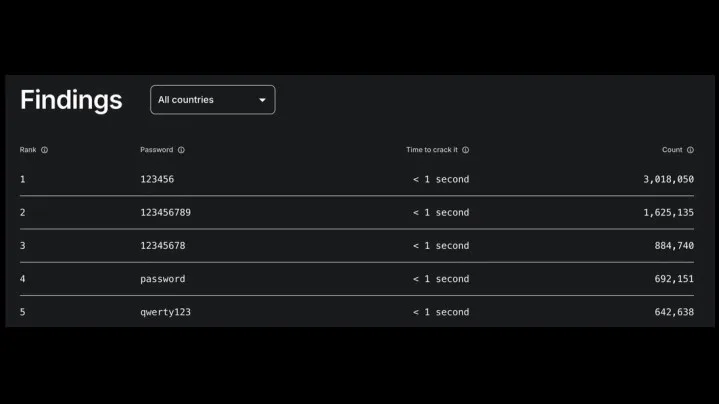
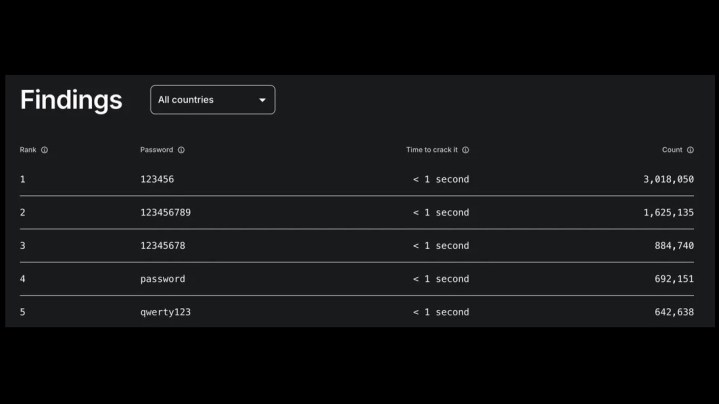
    Top five popular passwords according to NordPass.
    NordPass

    One might assume that by now, stronger passwords would be the norm. However, the annual report from NordPass reveals that popular password choices remain rather uninspired.

    The clear winner and reigning champion for the easiest password is still 123456. On a positive note, “password” has dropped from its top position; however, many equally weak alternatives continue to dominate, including:

    • 123456789
    • 12345678
    • password
    • qwerty123

    If you find yourself using any of these weak passwords, it is crucial to take the time to create a more secure option. While crafting a strong password may seem cumbersome, it is far preferable to dealing with the aftermath of a hacker accessing your accounts and files.

    The extended list of passwords is even more revealing, showcasing some surprising entries. Other commonly used weak passwords include:

    • iloveyou
    • monkey
    • dragon
    • 11111111
    • secret
    • abc123
    • 00000000
    • tinkle
    • 88888888
    • pokemon
    • superman
    • baseball

    These examples highlight just how easy it is for hackers to break in, often in just seconds. Many passwords reflect personal interests, while others appear to be chosen as a means of expressing frustration. For a deeper dive into the most popular passwords in your area, you can consult the filter tool available on NordPass’s site.

    Creating a strong password can be daunting, especially when you might resort to commonly used options like “secret” or “123456,” which are prevalent in the U.S. Fortunately, password managers like 1Password can assist you in generating secure passwords. Additionally, consider utilizing a new email address as part of a layered security strategy. This method can significantly enhance the safety of your online accounts. Remember to steer clear of using personal information, such as your address, when setting up your next password.

  • Worldwide Sweep Targets ‘Ghost’ Cybercrime Network: 51 Arrested

    Worldwide Sweep Targets ‘Ghost’ Cybercrime Network: 51 Arrested

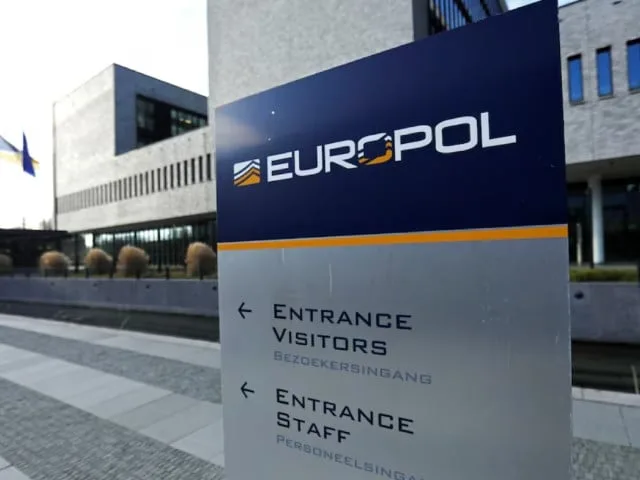
    Law enforcement agencies from several countries have taken down an encrypted communication platform known as Ghost, which had become a vital resource for criminal groups involved in drug trafficking and money laundering.

    Coordinated by Europol, this operation led to the arrest of 51 suspects across various nations, and more arrests are expected to follow.

    Ghost was notorious for its sophisticated security features, allowing criminals to operate discreetly while planning extensive illegal activities.

    The platform’s shutdown marks a major blow to international organized crime networks that depended on it for their operations.

    Jean-Philippe Lecouffe, the Deputy Executive Director of Europol, referred to the operation as “a global game of cat and mouse,” stressing that this round has come to an end. The crackdown successfully dismantled the platform and disrupted numerous criminal operations.

    Authorities have confiscated weapons, drugs, and over 1 million euros (approximately $1.11 million) in cash. Furthermore, the operation led to the shutdown of a drug lab in Australia and helped avert several potential public safety threats.

    Catherine De Bolle, Europol’s Executive Director, underscored the significance of the operation, stating that Ghost served as “a lifeline for serious organized crime.”

    She assured the public that no matter how concealed they think their activities are, criminal networks cannot escape the united efforts of international law enforcement.

    This extensive operation involved collaboration from law enforcement agencies in Australia, Canada, France, Iceland, Ireland, Italy, the Netherlands, Sweden, and the United States.

    This global teamwork highlights a shared commitment to fighting international organized crime.

    As the investigation progresses, additional disruptions to illegal activities are expected, representing a significant victory in the battle against global criminal networks.