
LG SIGNATURE DLEX9900S
MSRP $2,099.00
“Smart, stunning, and worth the premium it demands.”
Pros
- Impressive capacity
- Elegant design
- TurboSteam is quite handy
- Numerous smart features
Cons
- AI sensors need some refinement
- Remote start isn’t fully automatic
Quick Summary
The LG SIGNATURE DLEX9900S is the dryer companion to LG’s flagship laundry duo, making an immediate impact similar to its washer counterpart, the WM9900HSA. It features a massive 9.0-cubic-foot brushed platinum steel drum and a sleek 7-inch touchscreen where traditional knobs would be. It effortlessly handles king-sized comforters and pet beds, quickly de-wrinkles shirts with TurboSteam, and when paired with the matching washer, they communicate seamlessly, simplifying laundry days. After extensive family laundry testing, it’s become the most enjoyable dryer I’ve owned.
While not the most advanced in intelligence, this is where LG emphasizes its expertise. The AI Sensor Dry detects fabric type and moisture levels to automatically adjust drying times and temperature, generally working well but occasionally requiring manual intervention for stubborn loads. Sometimes, load information isn’t transferred properly to the dryer, likely due to timing issues between paired units.
If you opt for the matching washer, the DLEX9900S becomes essential; together, they form an exceptional, large-capacity, well-crafted laundry system. On its own, it remains a top-tier, beautifully designed electric dryer, only requiring occasional oversight on the AI features. It has truly become one of my favorites.
Specifications of the LG SIGNATURE DLEX9900S
| Type | Vented Electric Dryer |
| Capacity | 9.0 cu. ft. |
| Voltage | 240V, 26 amps |
| Sensor Drying | Yes (AI Sensor Dry) |
| Steam Options | Yes (TurboSteam, SteamFresh, SteamSanitary) |
| Dry Programs | 25 + 15 options |
| Efficiency | ENERGY STAR certified; CEF 3.94 |
| Display | 7-inch full-touch LCD |
| Venting | Vented, 4-way options; FlowSense duct indicator |
| Dimensions (WxHxD) | 29 x 40.88 x 31.5 inches (53.4 inches deep open door) |
| Weight | 145.3 pounds |
| Finish | Brushed Platinum Steel |
| Warranty | 1 year parts/labor, 3 years drum |
| Price | $2,099 (as of July 3, 2026; MSRP $2,499); Gas model available |
Design and Construction
The dryer resembles a piece of furniture, with my daughter joking that it looks like the “Cybertruck of dryers,” which I take as a compliment. Its Brushed Platinum Steel cabinet, tempered-glass door, and minimal button design set it apart from typical dryers. It holds up well with no dents over time. Inside, a NeveRust stainless steel drum boasts an interior light; the door is reversible, offering flexible placement options, and the lint filter located at the drum’s mouth is easy to access and clean.
The 7-inch LCD touchscreen offers responsive, clear navigation, with customizable cycle lists for quick access to favored programs. However, visibility can be hampered under bright sunlight, so you might need to shade the screen occasionally near large windows. An update to increase screen brightness could improve this issue.
Installation and Venting
Like the paired washer, the dryer was professionally installed. It’s a standard vented unit, requiring a 240V outlet and an outdoor duct, with flexible, 4-way venting options. A side vent kit is available. For homes without a 240V circuit, hiring a licensed electrician is advised; installing gas models (DLEX9901S) also requires professional hookup to a gas line.
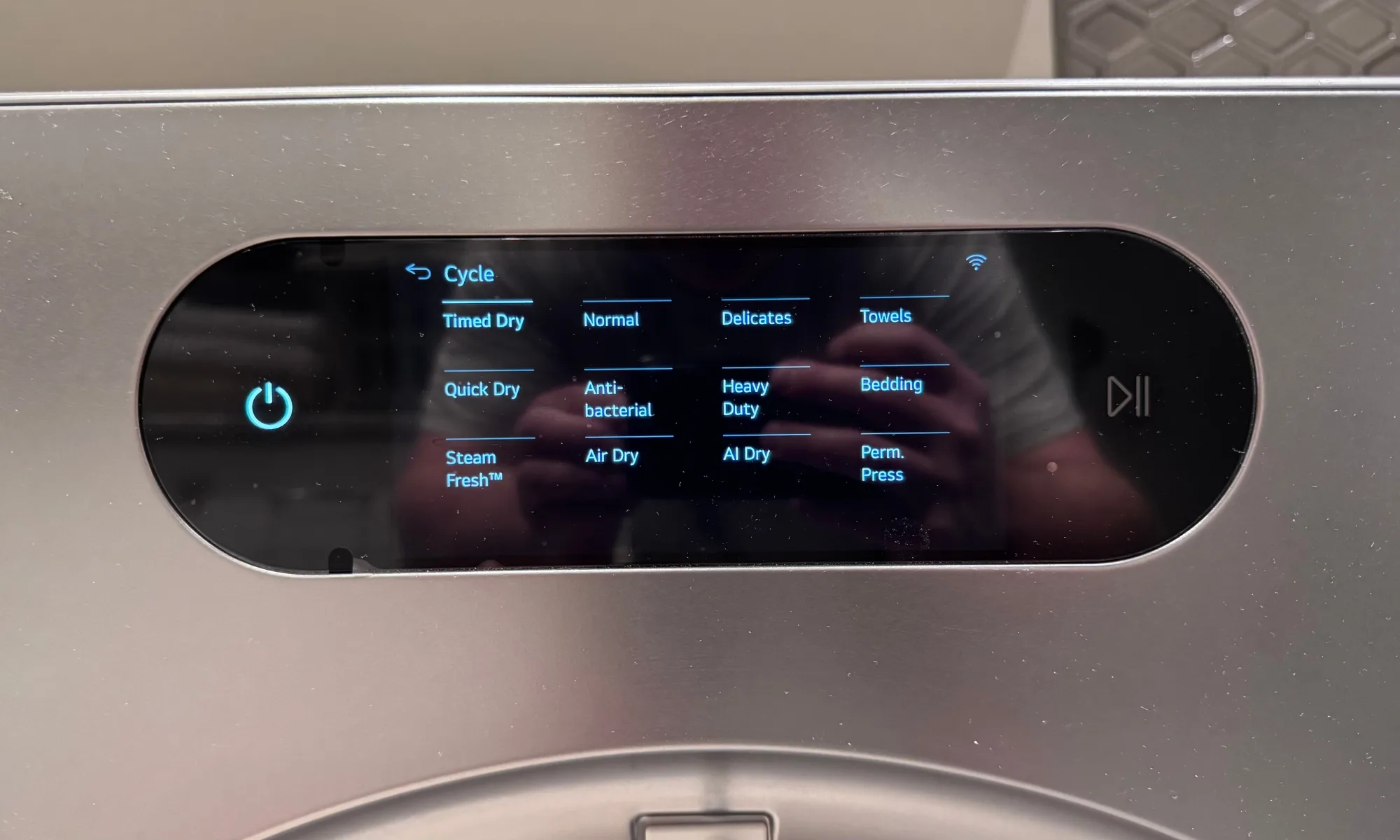
Drying Performance
The large drum comfortably handles large loads like comforters and multiple family items, often drying them thoroughly in a single cycle. Paired with an extractor-powered washer, it minimizes the number of loads needed each week. The size and efficiency make it a significant upgrade from older models.

Test results confirmed consistent performance with manual cycles, but sensor-based drying sometimes left dense or mixed loads slightly damp, requiring additional time or cycles. Using the “More Dry” setting mitigates this but defeats some of the AI’s convenience. Manual timed settings are useful for delicate or stubborn loads.
Steam Features: TurboSteam and More
TurboSteam significantly reduces wrinkles in about 12 minutes, a real boon for quick touch-ups. SteamFresh refreshes garments and non-washables like decorative pillows, while SteamSanitary offers high-temperature sanitizing options. Wrinkle Care tumbles clothes intermittently after the cycle if you can’t unload immediately. I found no shrinking during testing. Use these features on less valuable items first to gauge effects before treating your best clothes.
Noise Levels and Vibration
The tumbling is quite subdued, producing a low rumble that is barely noticeable from nearby rooms. No excessive noise or rattling occurs, though vibrations might be more noticeable on upper floors, especially in homes with echoing spaces.
Smart Capabilities and App Integration
The ThinQ platform offers reliable cycle monitoring, notifications, downloadable programs, energy tracking, and diagnostic support. Integration with Google Assistant and Alexa is supported, though I couldn’t test these features directly. The best aspect is the pairing: when the washer finishes, it transfers cycle data to the dryer, which automatically pre-selects the right cycle. Occasionally, this transfer failed if the dryer was delayed in starting, but generally, it streamlined laundry routines significantly.
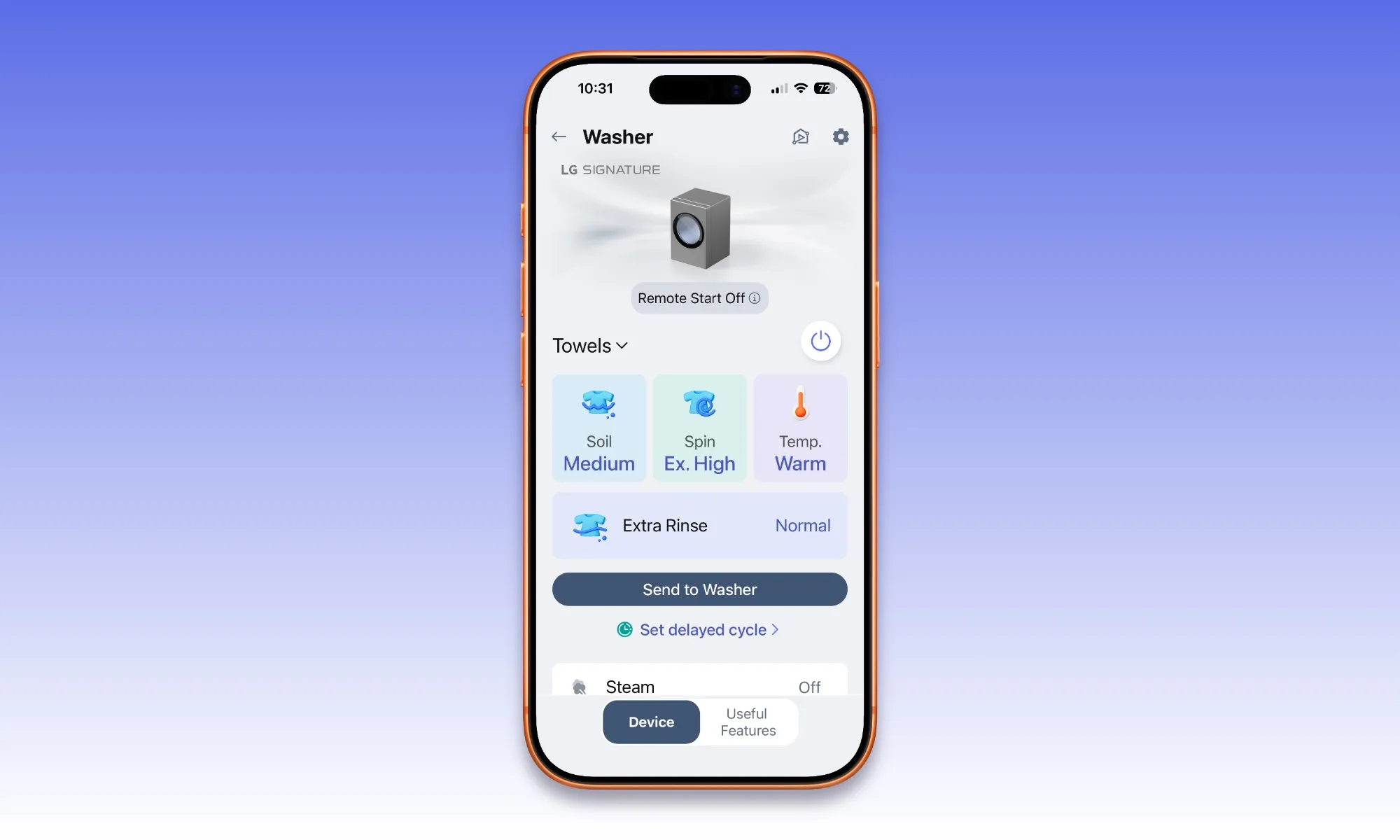
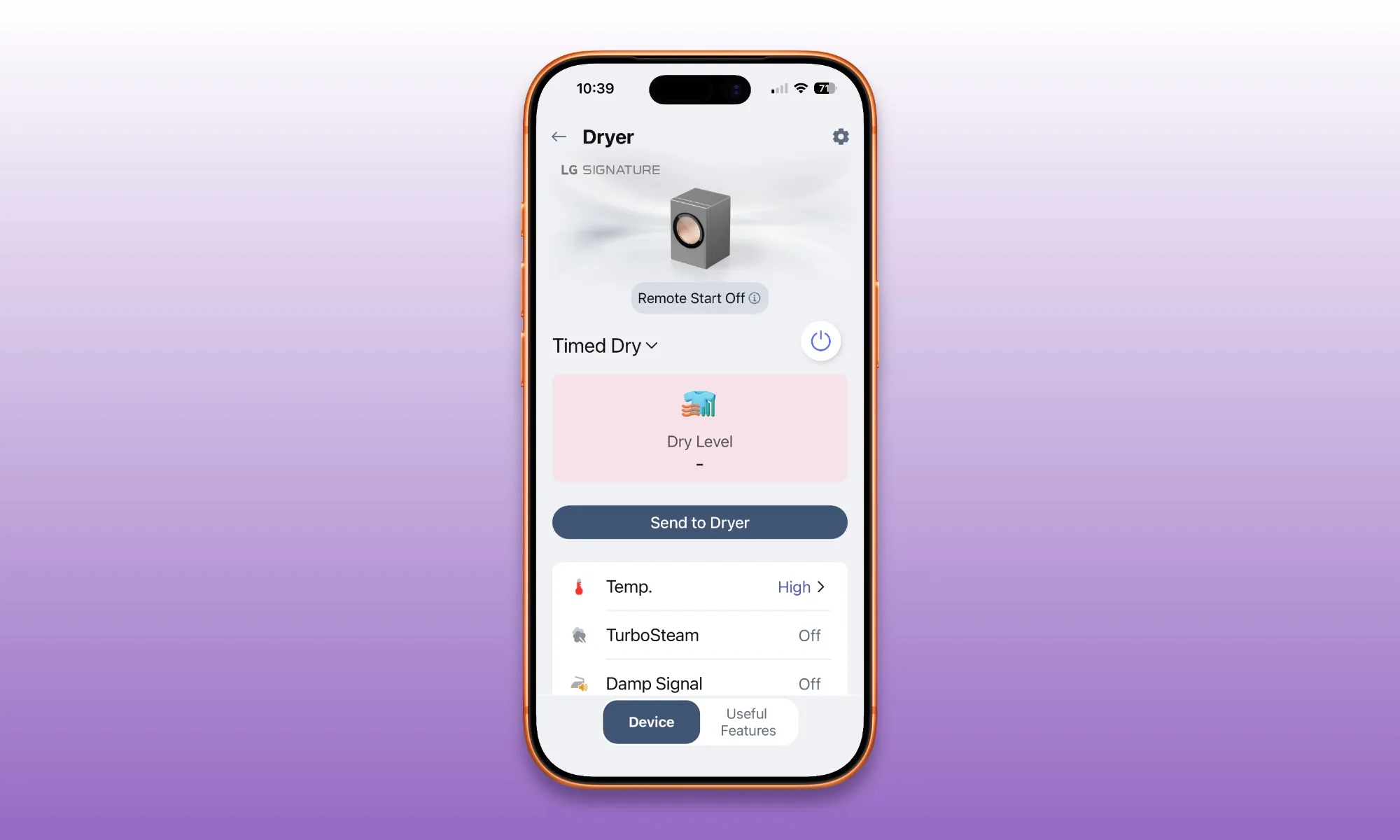
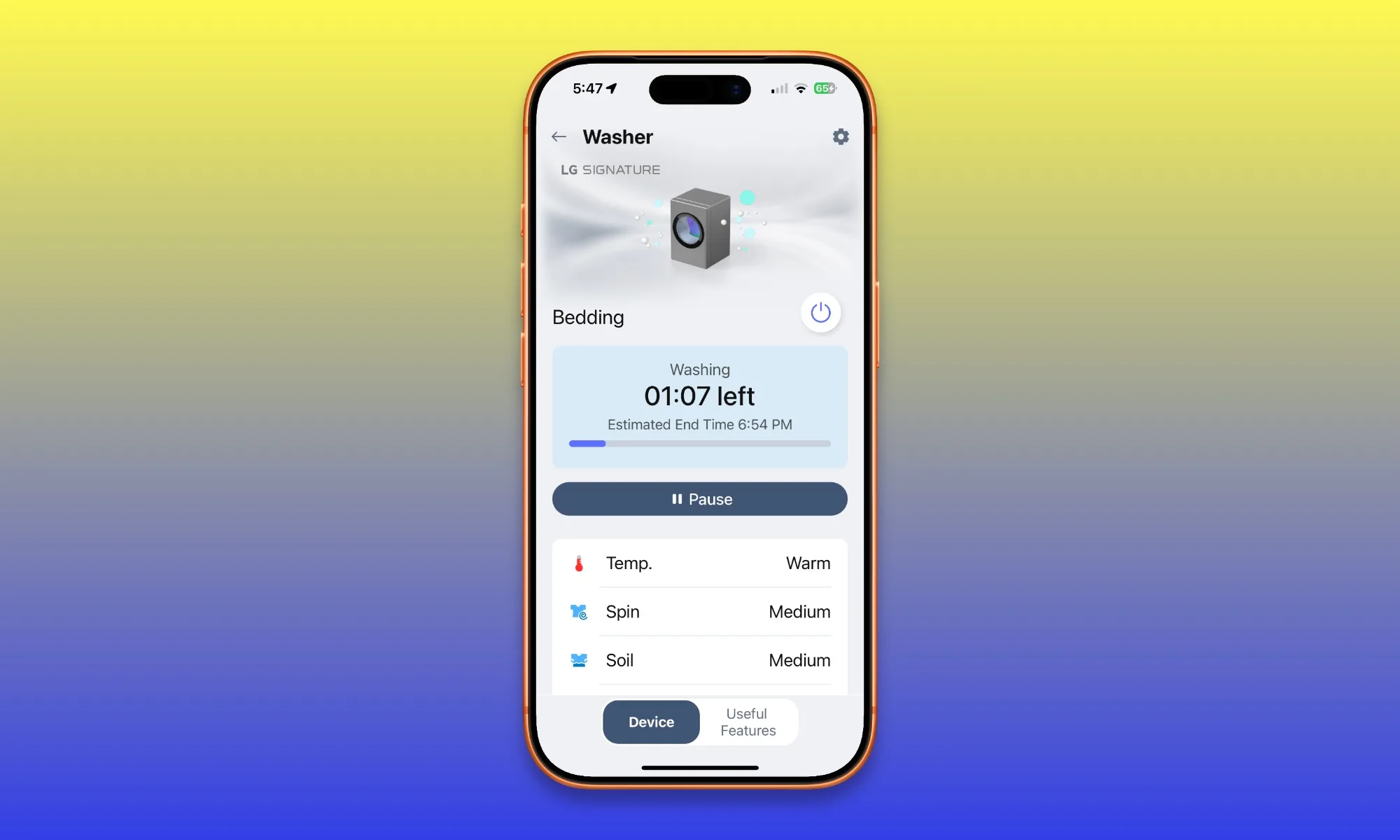
One notable flaw remains—the remote start feature requires manual activation on the dryer every time before initiating remote control, which diminishes its usefulness. Standing at the machine, you might as well start it directly without the app.
Maintenance is straightforward—clean the lint filter regularly, heed airflow warnings, and inspect the duct annually. The FlowSense indicator is a valuable safety feature warning of potential blockages, helping prevent fire hazards. Aside from routine cleaning, the dryer requires minimal upkeep. I appreciated the option to choose different tunes for end-of-cycle alerts, including festive options. Phone notifications are handy for reminding me when the cycle ends, and the sleep mode keeps noise and alerts quiet during night runs.
Testing Procedure
I used the dryer as my primary household unit for around six months, testing it with everyday loads—cottons, linens, synthetics, delicates, towels, king-size bedding, pet beds, and mixed family loads. Cycles tested included Normal, Heavy Duty, Delicates, Quick Dry, Bedding, TurboSteam, and SteamFresh while tracking sensor-dry performance across multiple normal loads. The dryer worked seamlessly with LG’s matching washer, which spins at up to 1,300 RPM.
Competitors and Alternatives
The main rival to the DLEX9900S is LG’s own lineup: the DLEX8900B offers a smaller 7.4 cu. ft. capacity with sensor dry and steam at a lower price but sacrifices the sleek SIGNATURE finish and larger drum. Samsung’s Bespoke DVE53BB8700 (7.6 cu. ft.) offers similar smart features and steam options at a more affordable price point, though its service network is less extensive than LG’s.
Final Recommendation
The LG SIGNATURE DLEX9900S is an exceptional dryer boasting a useful AI system that sometimes overestimates, but overall provides a premium experience. Its large capacity, superior craftsmanship, TurboSteam feature, minimal maintenance, and seamless pairing with the matching washer make it well worth the price of $2,099, especially when bundled with the full laundry set. Ideal for those who value aesthetics, capacity, and smart tech, it elevates laundry to a refined experience.
FAQs
Is a 9.0-cubic-foot dryer excessive for most homes? Probably for small households. For larger families or those who frequently wash bulky items, the oversized drum reduces loads, prevents uneven drying, and handles comforters and bedding efficiently.
Electric vs. Gas? If your home already has a 240V outlet, the electric model is straightforward. Gas versions (DLEX9901S) tend to cost less to operate but require professional installation and are less common in newer constructions.
Does it need venting? Yes. This is a traditional vented dryer requiring an exhaust duct outside.
Why might sensor drying leave clothes damp? Dense or mixed loads may fool the moisture sensors, causing early cycle termination. Sorting heavier items and using the “More Dry” setting can help, but occasional damp outcomes are possible.
How to maintain safety? Regularly clean the lint trap after each load, check the exhaust duct annually, and heed FlowSense alerts. Proper maintenance reduces fire risk and maintains optimal airflow.