Tag: Google Pixel

  • Google Pixel 10 Loses Handy Tech Lifesaver Feature

    Google Pixel 10 Loses Handy Tech Lifesaver Feature

    With the release of the Pixel 10 series smartphones, Google adopted the newer and faster Qi2 wireless charging standard. This shift also paved the way for magnet-based accessories like the Pixelsnap series, which serve both as charging docks and protective covers. However, these magnets have also interrupted a longstanding feature—reverse wireless power sharing—that has been available on Pixel devices for over five years.

    What’s Changed?

    When the Pixel 5 debuted, it introduced a battery-sharing capability that allowed the phone to wirelessly charge other Qi-compatible devices, like earbuds or another phone. To use this feature, you simply placed the device with a low battery on the back of the Pixel phone, and power would transfer wirelessly.

    (Image showing Battery Share on the Pixel 5, used to top up earbuds)

    On the latest Pixel 10 models, this Battery Share feature no longer exists. Google explains on its support page that the absence of reverse wireless power sharing in this series is due to the magnets that enable Qi2 wireless charging. These built-in magnets create a secure connection when placing accessories like the PixelSnap or other compatible chargers, but they also prevent power transfer between devices—particularly when trying to share power wirelessly with another phone. The lack of a bi-directional magnetic lock appears to be a key reason why the feature was dropped.

    Why Did Power Sharing Disappear?

    The strong magnetic connection, which is helpful for aligning and securing chargers, unfortunately creates a physical barrier to reverse wireless charging. While these magnets make for a sturdy hold during charging, they impede the necessary magnetic flux for pulling power from one device to another—effectively ending the era of reverse wireless power sharing on the Pixel 10 lineup.

    The future of this feature remains uncertain. As more Android brands adopt Qi2 technology and integrate magnets near wireless charging coils on the back of their phones, it will be interesting to see whether reverse wireless sharing becomes a thing of the past or if new innovations might find a way around these obstacles.

    In the meantime, while Google’s Pixel phones no longer support power sharing, other devices, such as Samsung’s Galaxy Z Fold series, continue to offer this handy feature—saving users in moments where their accessories are running low on battery. Only time will tell how the ecosystem evolves as manufacturers settle on design choices that balance magnetic attachment with wireless power capabilities.

  • Pixel 9a: The Top Budget Android Phone for AI Enthusiasts

    Pixel 9a: The Top Budget Android Phone for AI Enthusiasts

    Sure! Here’s a unique rewrite in American English:

    With the Pixel 9a, Google is redefining its approach to the A-series smartphone lineup. This isn’t just an affordable device; it combines impressive performance, fantastic camera capabilities, and the essence of the Android experience. Plus, it gives you access to Google’s cutting-edge AI features without breaking the bank.

    ### Communicate with Gemini Directly from Your Phone

    A highlight of the Pixel 9a is its seamless integration with Gemini, Google’s AI assistant. Unlike traditional voice assistants like Google Assistant or Siri, Gemini goes beyond mere command responses—it comprehends context, generates content, and can assist with creative or complicated tasks all right from your device.

    Gemini marks a significant advancement in conversational AI, allowing for more natural and context-aware interactions through text, voice, or visual input. Need help brainstorming for a project? Gemini can serve as your intelligent collaborator, offering ideas and refining your thoughts. Confused by a complex news article? Ask Gemini for a summary or seek clarifications in simpler terms. Planning a getaway? Gemini can assist with researching destinations, identifying attractions, and even drafting itineraries based on your preferences. The Pixel 9a brings all this functionality to you at an affordable price point.

    Being an integral part of the Pixel experience, Gemini is embedded deeply within the Android interface. On the Pixel 9a, holding down the power button activates Gemini instantly, granting you direct access to Google’s AI capabilities without navigating through apps or menus.

    This assistant can pull information from your calendar, Gmail, and Google Docs, enabling it to provide contextually relevant assistance—ideal if you’re fully immersed in the Google ecosystem.

    By incorporating Gemini into a budget-friendly device like the Pixel 9a, Google is democratizing access to sophisticated conversational AI experiences. You also get early access to features typically reserved for premium devices with Google’s Pixel-first benefits.

    For those seeking enhanced performance, a Gemini Advanced subscription is available for $19.99 per month, offering advanced reasoning and research capabilities, plus broader context windows. Fortunately, a one-month trial is included with the phone, allowing you to evaluate its value without commitment.

    ### Effortless Photo Editing at Your Fingertips

    Google’s Pixel phones have earned a reputation for excellence in computational photography, delivering a reliable point-and-shoot experience, with the A-series standing out for their camera performance. The Pixel 9a enhances this tradition with AI-driven photo editing tools that borrow from Google’s higher-end models—the Pixel 9 and Pixel 9 Pro.

    Most notably, the Pixel 9a introduces Magic Editor, a powerful generative AI tool that makes advanced photo editing accessible to everyone. With this feature, you can reposition subjects, resize elements, remove background distractions, and even fill in missing sections of images—all with remarkably realistic results.

    Magic Editor doesn’t merely shuffle pixels; it appears to understand the context of the image, filling in gaps with AI-generated visuals that blend seamlessly. Coupled with Best Take, which combines multiple shots for optimal expressions in group photos, and Photo Unblur for refining shaky or out-of-focus images, this tool gives you significant creative control over your memories through the AI features integrated into Google Photos.

    This level of intuitive photo manipulation, once reserved for complex desktop applications, is now right at your fingertips with the Pixel 9a, without straining your budget.

    ### Enhanced Call Management with Premium Features

    Google has also leveraged AI to improve call management on the Pixel 9a. The inclusion of advanced call assist features on such an affordable phone is a welcome enhancement, tackling the common nuisance of unwanted calls and the waste of time spent on hold.

    With Call Screen, you can identify who’s calling and for what reason even before you answer. Google’s AI can engage unknown callers and provide you with a transcript of the conversation to help screen spam effectively.

    Additionally, the Hold for Me feature allows Call Assist to wait on hold for you, notifying you when the representative is available. When you make a call, Wait Times gives you an estimate of your hold time. Direct My Call makes navigating automated menus easier by displaying transcripts and options on your screen, so you can select menu items with a single tap.

    Moreover, the Clear Calling feature helps reduce background noise while enhancing voices, ensuring you can hear the other person clearly, even in loud environments.

    ### Five Reasons Why the Google Pixel 9a Is the Ideal Mid-Range Smartphone

    With the Pixel 9a, Google is sending a clear message: AI should be accessible to everyone, not just a select few who can invest in high-end smartphones.

    The Pixel 9a is an attractive mid-range option, especially for those who appreciate the benefits of artificial intelligence. It offers a smart, intuitive smartphone experience without sacrificing affordability.

    Feel free to modify any parts as needed!

  • Google Pixel Emergency SOS Shared Nudes With Friends

    Google Pixel Emergency SOS Shared Nudes With Friends

    Google Pixel devices are equipped with an emergency SOS feature designed to alert emergency services while notifying friends and family about your situation. Additionally, there’s an optional video recording capability that captures your environment during an emergency and shares the footage with your designated contacts.

    In case you have this feature activated—preferably after heeding Google’s caution to proceed with care—let’s hope it never activates by mistake. A particular individual found this out the hard way when the SOS function was unintentionally triggered, sending intimate footage of themselves to a dozen friends.

    This comical incident was shared on Reddit, along with a screenshot and the video that their Pixel phone inadvertently broadcasted, showcasing them in the buff.

    An image showing a censored version of an accidental naked photo sent to emergency contacts.
    Nadeem Sarwar / Digital Trends

    “Suddenly, my phone starts ringing and texts flood in. Friends appear concerned, but more about the fact that MY PIXEL JUST SENT EVERYONE A PHOTO/VIDEO OF ME NAKED,” reads the post.

    Apparently, the emergency SOS feature was mistakenly activated while the user attempted to silence their morning alarm, repeatedly pressing the power button. On Pixel phones, pressing the power button five times in quick succession activates the emergency function.

    Upon activation, a countdown begins to place a call to 911. Additionally, if emergency sharing is enabled, a notification is dispatched to all emergency contacts set up in advance.

    Social media post about an accidental emergency SOS trigger.
    Nadeem Sarwar / Digital Trends

    It’s important to note that Pixel’s Personal Safety app includes the option for sharing video. This feature captures footage while conversing with emergency responders, sharing your location, or even while using other applications.

    These emergency recordings can last up to 45 minutes, and once uploaded, a link is shared with all your emergency contacts. You have the option to disable the link at any time, and if it receives excessive visits (over 120, per Google’s policy), the link will automatically expire.

    User account illustrating an accidental emergency SOS trigger.
    Nadeem Sarwar / Digital Trends

    This video-sharing feature is only active if you have set up emergency contacts and enabled it within the Personal Safety app. It’s particularly beneficial for those who have medical conditions, travel often, or otherwise might need to quickly communicate their circumstances to receive assistance.

    However, in this instance, it turned out to be an amusing faux pas. “My embarrassment provided a light-hearted shock to everyone that morning or turned into a fun late-night call, depending on their time zone,” the Reddit user noted, drawing several similar stories from other users in the comments section.

    It seems that emergency alerts have caught several individuals in rather intimate predicaments.

    “My ex triggered it when the SOS feature first debuted. For some reason, she decided to test it while in the restroom and ended up sending me some rather awkward images from both cameras. Thankfully, she had only listed me as an emergency contact, and we both had a good laugh about it,” recounted a fellow Redditor.

    User account illustrating an accidental emergency SOS trigger.
    Nadeem Sarwar / Digital Trends

    “You’re not alone. My friend did something similar! Both her husband and I received a nude image of her,” commented another user in the thread. It seems that mistakenly activating emergency helplines is a pattern that extends beyond just Pixel phones, also affecting Apple products like the iPhone and Apple Watch.

    In one instance, someone’s Apple Watch unintentionally triggered an emergency alert during an intimate moment. Another user shared that their dog activated a 911 call while they were engaged in playful interaction, causing an unintended call for help.

    An Apple Watch user reported accidently summoning emergency services a staggering 43 times. Emergency responders are aware of this situation and suggest that individuals answer the call to clarify it was a mistake rather than disconnecting, which prompts them to check on the caller’s well-being.

  • iPhone 17 Air Design Leak Shows Google Pixel Influence

    iPhone 17 Air Design Leak Shows Google Pixel Influence

    Apple appears poised for a design overhaul, moving away from the aesthetics that debuted with the iPhone 11 series. Interestingly, the new direction may not be kicked off by a flagship device but rather by a much-anticipated mid-range model that could introduce a fresh design language for the brand’s smartphones.

    Leakster MajinBu, known for a mixed record in revealing Apple information, posted what seems to be the unibody frame for the iPhone 17 series Air. Notably, it features a prominent pill-shaped camera bar at the top, drawing remarkable similarities to the Pixel 9 series smartphones.

    The iPhone 17 Air has been surrounded by more mixed rumors than any Apple device in recent years, so it’s wise to take this latest leak with a degree of skepticism. However, this design has been spotted in alleged schematics over the past few months, suggesting it might have some credibility.

    Alleged shell depicting the iPhone 17 Air.
    X / @MajinBuOfficial

    The leaked image reveals a single large cutout for the camera lens, aligning with rumors that the iPhone 17 Air will feature only one rear camera due to constraints in its design.

    Sources indicate that the phone may be as thin as 5.5 millimeters, potentially making it the sleekest device Apple has ever produced. Bloomberg recently reported that Apple is trialing a model which is almost 2 millimeters thinner than its current flagships, positioning the iPhone 17 Air similarly to the iPhone 6 and Samsung’s anticipated Galaxy S25 Slim.

    This new model is expected to replace the “Plus” variant in Apple’s lineup, marking the second time the company has abandoned a fourth model after the brief stint of the “mini” series.

    New iPhone 17 Pro details, via @theinformation ‼️

    👀 Most significant redesign in years
    🆕 Aluminum frame on all models
    📷 Rectangular aluminum camera bump
    ⚡ Partly glass back for wireless charging pic.twitter.com/JjImhsb1zY

    — AppleTrack (@appltrack) November 26, 2024

    The proposed design raises eyebrows for a few reasons. Firstly, it bears a striking resemblance to the Pixel 9 series, which established a unique identity for Google’s smartphones while maintaining excellent build quality.

    Personally, I am a fan of the Pixel 9 and would choose it over any member of the iPhone 16 series without hesitation. Google’s approach feels fresh, distinctive, and exceptionally well-crafted. While iPhones are impressive pieces of technology, it seems unusual for Apple’s design to echo that of a direct competitor.

    Apple has typically been an innovator, preferring to observe industry trends and later refine those ideas for its products with a measured strategy. Historically, the company has excelled at standing apart with its design philosophy, making the latest leak regarding the iPhone 17 Air feel somewhat questionable. While it’s certainly not unattractive, I advise waiting until the fall to see how it all plays out—no need for a social media frenzy over Apple potentially losing its design prowess.

  • How to Use Audio Magic Eraser on Google Pixel: A Step-by-Step Guide

    How to Use Audio Magic Eraser on Google Pixel: A Step-by-Step Guide

    Audio Magic Eraser is an innovative feature designed for Android devices that enhances video audio quality by removing unwanted background sounds. By leveraging cutting-edge AI technology, this tool can detect and suppress distracting noises—like wind, conversation, or other sudden sounds—resulting in a clearer, more focused listening experience.

    Difficulty

    Moderate


    Duration

    10 minutes

    What You Need

    • A compatible Google Pixel phone

    This feature is currently limited to the Google Pixel 8 and Google Pixel 9 series smartphones. If you don’t own a Pixel device, Samsung might be introducing a similar feature in some of its upcoming models. Whether capturing a precious memory or recording an outdoor event, this feature ensures that your audio is maintained with clarity.

    What is Audio Magic Eraser?

    Audio Magic Eraser is seamlessly integrated into the Google Photos app for straightforward use. This function intelligently assesses videos, recognizing various audio elements such as dialogue, music, and ambient noise. Users can choose to diminish or remove distracting sounds—like noise from the wind or background chatter—while enhancing important sounds, like voices. This results in a significant improvement in audio clarity, streamlining the audio enhancement process without the need for complex software or specialist knowledge.

    Pixel 8 (left) and Pixel 9
    Ajay Kumar / Digital Trends

    Which phones support Audio Magic Eraser?

    Currently, Audio Magic Eraser is primarily available on the Pixel 8. While there are indications that it may extend to other devices, like the Galaxy S25, here’s a list of the smartphones that currently have this feature:

    • Google Pixel 8
    • Google Pixel 8 Pro
    • Google Pixel 8a
    • Google Pixel 9
    • Google Pixel 9 Pro
    • Google Pixel 9 Pro Fold

    How to Use Audio Magic Eraser

    Follow these steps to utilize the Audio Magic Eraser feature:

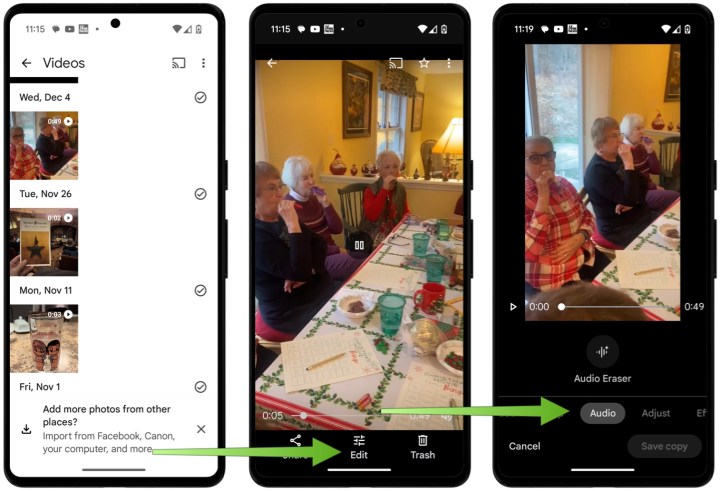
    Step 1: Launch Google Photos and select the desired video you wish to modify.

    Step 2: Tap on the Edit button located at the bottom of the interface.

    Step 3: Navigate through the editing options horizontally until you find the Audio section. Click on it.

    Screenshots showing how to use Audio Magic Eraser on Google phones.
    Bryan M. Wolfe / Digital Trends

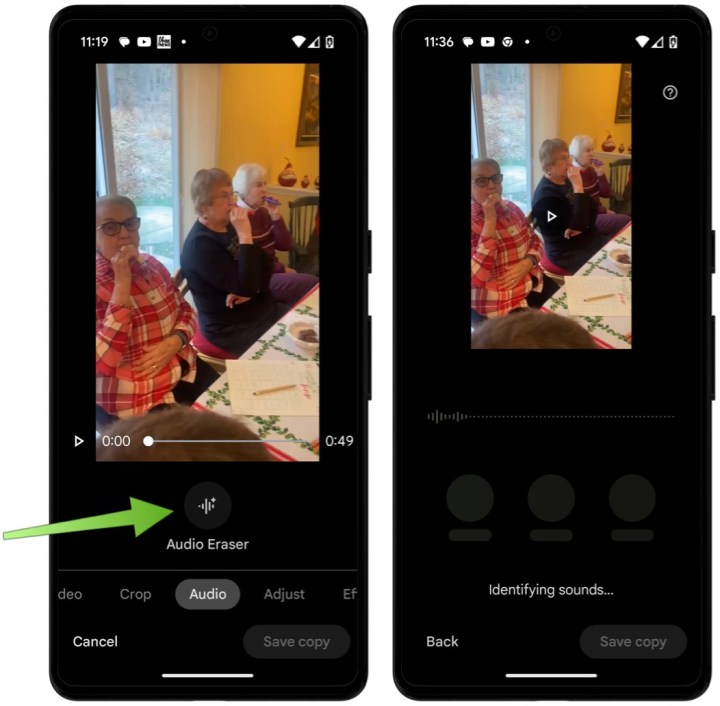
    Step 4: Choose the Audio Eraser button. The device will then analyze the audio from your video, which may take a few minutes depending on video length.

    Screenshots showing how to use Audio Magic Eraser on Google devices.
    Bryan M. Wolfe / Digital Trends

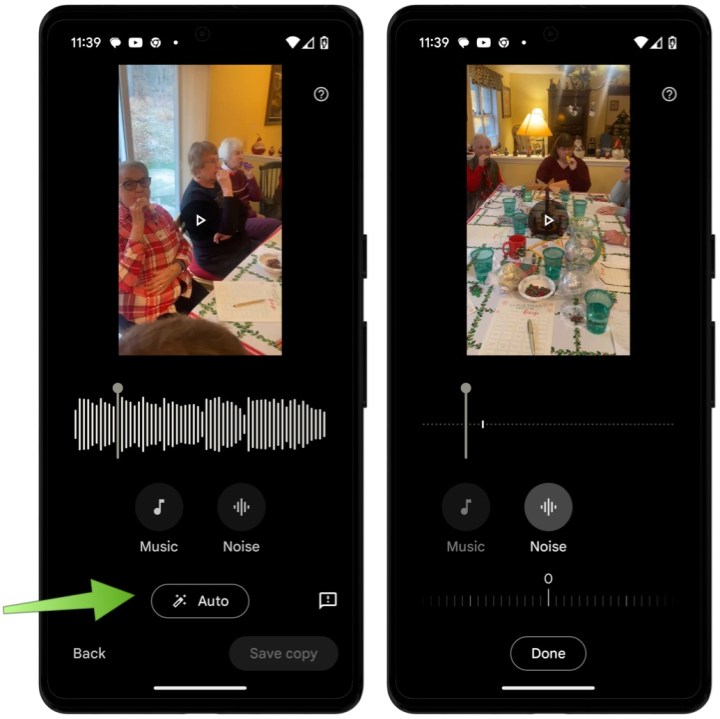
    Step 5: Here, you can adjust the audio using either the Auto or Manual setting.

    Selecting the Auto option allows Google's AI to handle background noise removal automatically. For more precise control, you can choose either the Music or Noise buttons to make gradual adjustments as preferred. You can also listen to real-time changes by pressing the Play button above the video.

    Screenshots showing how to use Audio Magic Eraser on Google devices.
    Bryan M. Wolfe / Digital Trends

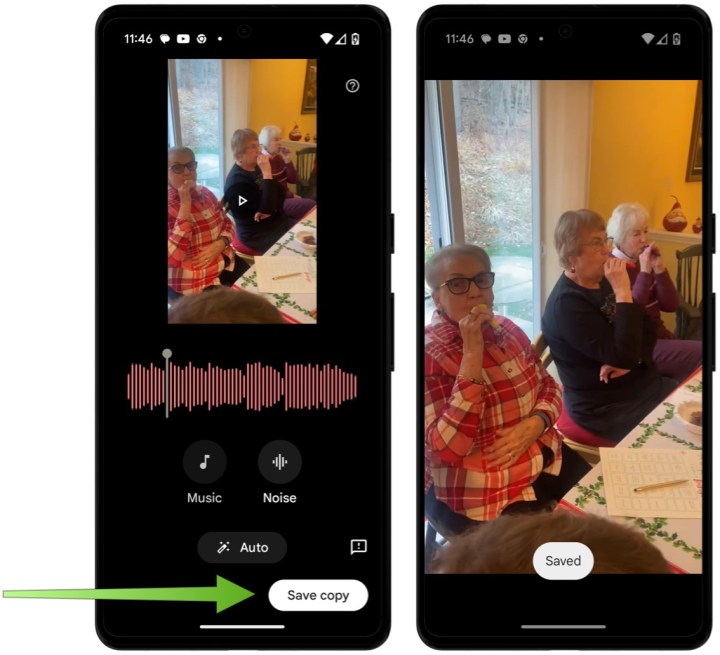
    Step 6: Finally, tap on Save copy to save your changes.

    Screenshots showing how to use Audio Magic Eraser on Google devices.
    Bryan M. Wolfe / Digital Trends

    An Important Consideration

    The performance of the Audio Magic Eraser largely hinges on the initial quality of the video and the variety of sounds it captures. It performs most effectively when there is a clear contrast between the sounds you wish to retain and those you wish to filter out.

    It is wise to experiment with different settings and to preview various adjustments before finalizing, as the changes may be subtle.

    This feature is still evolving, and Google is expected to enhance its effectiveness and features over time.

  • Google’s December Pixel Updates Focus on Gemini Features

    Google’s December Pixel Updates Focus on Gemini Features

    Occasionally, Google unveils a series of new features for its Pixel devices through a release known as a “Pixel Drop.” The most recent update emphasizes enhancements in the phone’s camera capabilities, audiovisual tools, and, most notably, improvements to Gemini, Google’s AI-driven assistant.

    The Pixel Enhances Its Compatibility with Gemini

    Google has eagerly showcased upgrades to its generative AI assistant, including a new Spotify integration for Gemini and a lock screen feature that simplifies mobile calling. However, these advancements are only useful if the devices themselves can support them. That’s where the latest Pixel Drop comes into play, enabling Pixel users to fully utilize Gemini’s enhanced features.

    Your Information is Secure with Gemini

    Your Google Pixel can now tap into a feature called Saved info, which brings Gemini’s “memory” capabilities to life. This means that when you’re conversing with Gemini on your Pixel, you can instruct the AI assistant to remember specific details about yourself, such as your dietary restrictions or your daily schedule. Consequently, future interactions will be tailored to your preferences, making them more relevant and helpful.

    In addition to indicating what details Gemini should remember during a conversation, you can also manage and adjust these preferences at gemini.google.com by selecting Settings > Saved info.

    To use the Saved info feature, you’ll need to subscribe to Gemini Advanced, which is priced at $19.99 per month.

    Expanded App Integration

    The latest updates for Pixel devices also mean that Gemini can now interact with a greater variety of apps, including Contacts, Google Messages, and the Clock. Some of the neat functions you can utilize include asking Gemini to draft messages, place calls, or set alarms.

    According to a post on Google’s blog, the company plans to “add support for even more applications in the upcoming weeks.”

    Pixel Captions Are More “Expressive” Than Ever

    With Gemini’s new memory features emphasizing the importance of context, Google’s latest Pixel updates take this to heart in various ways. Alongside its Gemini-related enhancements, Google has launched Expressive Captions for users in the U.S. with a Pixel 6 or newer model.

    This feature generates captions for any content you view on your phone, utilizing unique font styles, bracketed sound descriptions, and capitalization to convey emotions behind the dialogue rather than just delivering a straightforward transcript.

    New Camera Features Enhance Organization and Accessibility

    Renowned for its impressive camera capabilities, the Pixel is set to gain even more advanced photography features with this update. Key highlights include a Dual Screen function and fresh integrations for Pixel Screenshots.

    Dual Screen

    If you own a Pixel Fold or Pixel 9 Pro Fold, you can take advantage of the new Dual Screen feature. This display option allows both you and your subject to preview the shot before actually capturing it, ensuring that your subject knows exactly how to pose (and that you won’t have to direct them too much).

    Enhanced Pixel Screenshots

    The latest updates feature an integration between Pixel Screenshots and the Circle to Search function. Now, with just a tap, you can incorporate search results into your screenshots, eliminating the frustration of trying to remember that recipe you found yesterday.

    Google is also improving the organization of Pixel Screenshots by introducing image categories. As someone who routinely takes numerous screenshots and struggles to locate them later, I find this addition especially useful.

    Of course, while these exciting new features serve as a “gift” to existing Pixel users, they also aim to attract new customers. In a time when AI capabilities are paramount, the enhanced support for Gemini is a significant advantage for Pixel hardware. After all, even though you can technically use the Gemini app on an iOS device, its functionality is greatly enhanced when integrated with Pixel devices.

  • Transform Your Pixel to Look More Like an iPhone

    Transform Your Pixel to Look More Like an iPhone

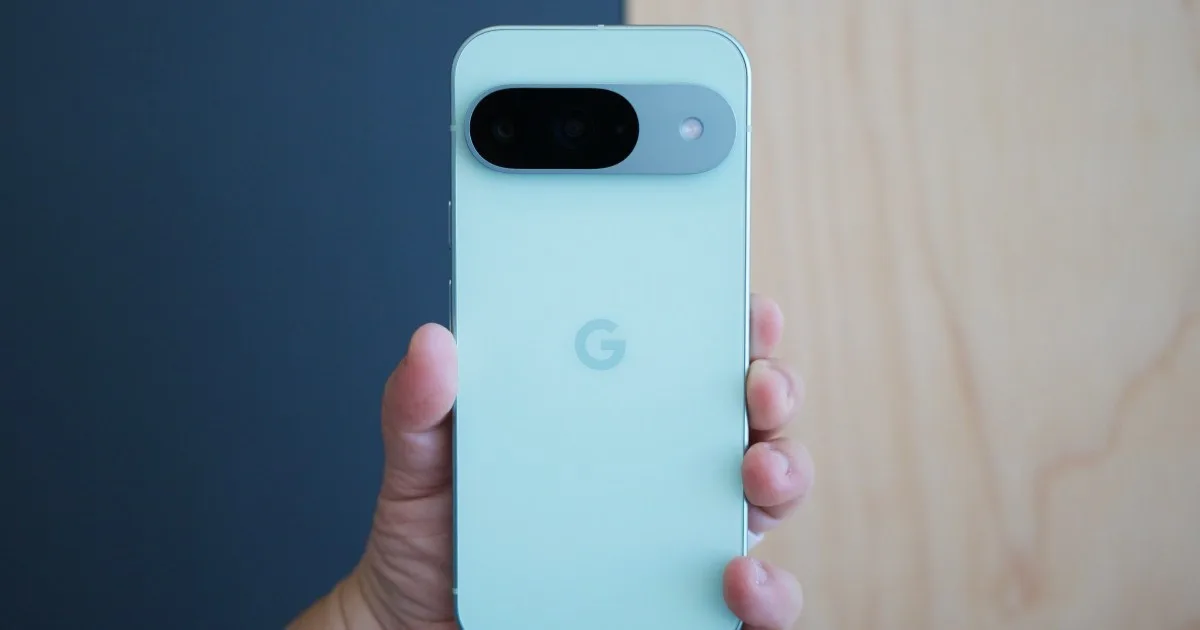
    Over the years, as Google’s Pixel phone lineup has expanded, many enthusiasts have noted an increasingly similar design to that of the iPhone. The smooth contours, modern aesthetics, and protruding camera design particularly echo Apple’s flagship model, especially with the recent Google Pixel 9.

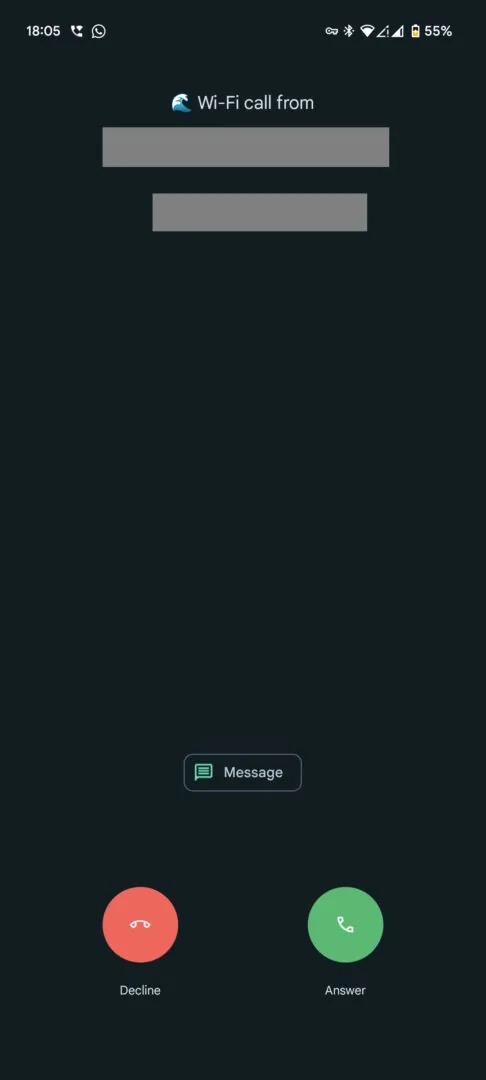
    Now, it seems that the incoming call interface in the Google Phone app is also set to adopt an iPhone-esque look. This revelation comes from a breakdown of an APK by Android Authority.

    According to the findings from Android Authority, Google appears to be experimenting with a new user interface for incoming calls, which could be part of the update version 145.0.672690850. This new design departs from the current Pixel system, where users swipe up to answer or swipe down to decline calls. The upcoming interface will replace those gestures with a simple answer and decline button, much like what iPhone users experience.

    If this layout seems reminiscent of Samsung devices, it is with a notable distinction: Samsung places the decline button on the right and the accept button on the left, while the opposite is true for Apple’s design.

    Android Authority was unable to activate this user interface feature during testing, and Google has not yet officially commented on it, suggesting that the feature is still under development and may evolve based on user feedback.

    While some users might find this change peculiar, it aligns with Google’s strategy to attract iPhone users and encourage them to switch platforms. A more familiar interface could facilitate this transition, especially as the Pixel line offers competitive flagship alternatives at a lower price point than the iPhone.

    Moreover, this move might herald a future where mobile device interfaces become more standardized. Although hardware and software variations will persist, it seems reasonable that fundamental functionalities, such as handling incoming calls, remain consistent across different devices.

  • Google Pixel 9a Leaked With A Sneak Peek At Its Design

    Google Pixel 9a Leaked With A Sneak Peek At Its Design

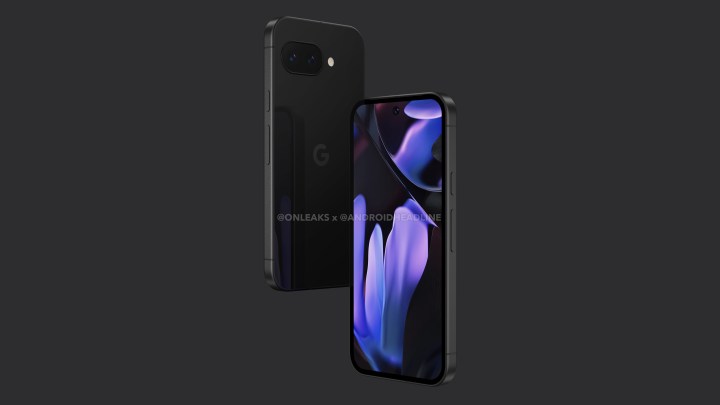
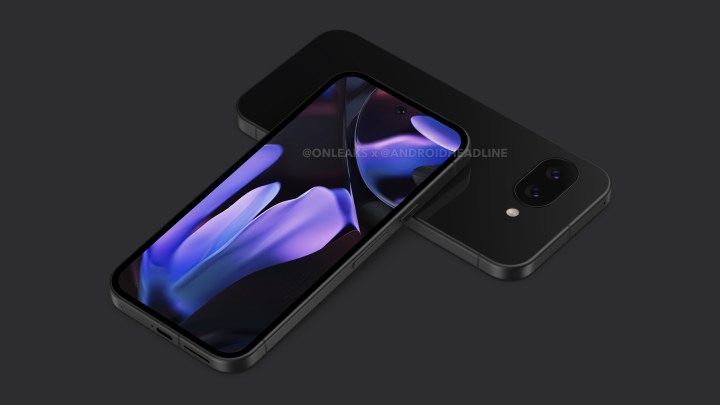
    Although Google just unveiled the Pixel 9 lineup in August, the excitement doesn’t stop there. According to a report by Android Headlines and OnLeaks, high-resolution images of the forthcoming Pixel 9a have surfaced. The anticipated launch is set for 2025, likely coinciding with Google I/O in spring.

    Interestingly, the Pixel 9a is breaking from the tradition established by previous A-series models. While earlier iterations closely mirrored the main Pixel series’ design, this year’s Pixel 9 lineup features a fresh remodel with a pill-shaped camera bar instead of one extending into the frame.

    Pixel 9a 5K render.
    OnLeaks x Android Headlines

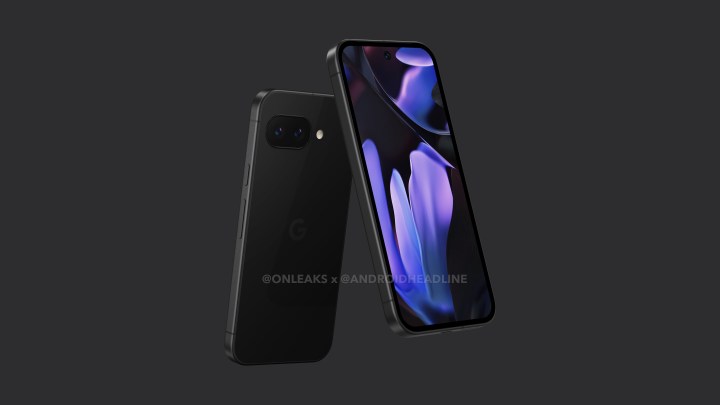
    The Pixel 9a appears to have undergone yet another transformation in its camera bar design, setting it apart from the Pixel 9. This new device is poised to feature a dual-camera layout that sits seamlessly with the back of the phone, diverging from the more prominent camera island module prominent in the Pixel 9. It may include a slight ring around the camera, but it will be less obtrusive compared to its predecessors.

    Another notable aspect is the dual-camera setup on the Pixel 9a, which seemingly combines a primary and an ultrawide lens, potentially omitting a telephoto option. Additionally, the display seems to have noticeable bezels, which is typical for more budget-friendly devices, likely priced under $500.

    Pixel 9a 5K render.
    OnLeaks x Android Headlines

    Though I have come to appreciate the iconic camera bar of Pixel devices, it’s refreshing to see a design that conforms more closely to the back surface. Nostalgia hits when I think of earlier smartphone models with simpler camera setups that didn’t disrupt the device’s stability when placed flat on a surface. Assuming these renders are accurate, kudos to Google for embracing this change.

    In contrast to the standard Pixel 9 lineup, the Pixel 9a is set to debut with Android 15. Although Android 15 has yet to launch officially and is currently in beta, its release is anticipated in October, making it logical for the Pixel 9a to be introduced with the new OS. It’s also predicted to receive seven years of updates, adhering to Google’s commitment.

    Pixel 9a 5K render.
    OnLeaks x Android Headlines

    It’s worth noting that the Pixel 9a may be among the final devices to utilize a Samsung-manufactured processor. The upcoming Pixel 10, slated for release next fall, is expected to feature a fully customized Google chip produced by TSMC.

    Specifications for the Pixel 9a are likely to mirror those of the recently introduced Pixel 8a, including a 6.1-inch display, 8GB of RAM (or possibly more), and a minimum of 128GB of storage. Like its Pixel 9 counterparts, the device will incorporate a Tensor G4 chipset, with some improvements to battery longevity compared to the previous model.

    For context, the Pixel 8a was unveiled on May 7, 2024, just prior to Google I/O 2024. While we don’t have specific dates yet, it’s reasonable to expect the Pixel 9a to launch around a similar window.

  • New Android Phone May Challenge Google Pixel 8a

    New Android Phone May Challenge Google Pixel 8a


    In the United States, there’s an impressive range of smartphones available. However, many budget-friendly options that offer great value remain elusive to consumers, particularly those in other regions. A prime example is the Infinix Zero 40 5G, which serves as a reminder of robust low- to midrange devices that often don’t make it to the Western market. This phone could easily give the Google Pixel 8a a run for its money.

    With a price tag ranging from about $335 to $370 based on its configuration, the Infinix Zero 40 5G is a compelling choice compared to the Pixel 8a, which is currently priced at $399 on sale. One unique feature this phone introduces is its GoPro mode, allowing users to manage their cameras effortlessly while traveling.

    When it comes to specifications, the Infinix Zero 40 5G holds its own. It sports a 6.78-inch AMOLED display with a stunning 144Hz refresh rate, ensuring smooth visuals. Plus, it comes in three attractive colors: Violet Garden (a lovely pink), Moving Titanium (a sleek silver), and Rock Black (which is exactly what it sounds like).

    On the flip side, the Pixel 8a has a smaller 6.1-inch display with a maximum refresh rate of 120Hz but edges out the Zero 40 5G in brightness, reaching a maximum of 2,000 nits compared to the Infinix’s 1,300 nits.

    Support is another area where the Pixel 8a leads; Infinix’s device is set to receive two major Android updates over three years, while Google promises an impressive seven years of support for its Pixel devices.

    Render of the Infinix Zero 40 5G
    Infinix Zero 40 5G Infinix

    For photography enthusiasts, the Infinix Zero 40 5G features a fantastic 50MP front camera that can shoot 4K video at 60 frames per second. The rear camera boasts a triple setup with an impressive 108MP primary sensor, complemented by a 50MP ultra-wide camera and a 2MP depth sensor.

    The phone includes a standard 5,000mAh battery along with quick charging capabilities at 45W and reverse wired charging support at 10W, making it a practical choice for daily use.

    This isn’t Infinix’s first impressive offering; the earlier launched Infinix GT 20 Pro established itself as a remarkable budget gaming phone, and the Infinix Note 40 Pro+ made waves with its detailed charging controls.

    Regrettably, there’s no indication that the Infinix Zero 40 5G will be available in the U.S. market. It’s always exciting to explore the smartphone innovations emerging from different parts of the globe, and this model stands as an excellent example of what consumers are missing out on.

  • Google Pixel 9 Pro Fold Price

    Google Pixel 9 Pro Fold Price

    With the increasing popularity of foldable smartphones, Google is expected to join the competition with the anticipated release of the Pixel 9 Pro Fold.

    As excitement builds, one of the most common questions is, “What will the price of the Pixel 9 Pro Fold be?” In this article, we’ll explore the expected pricing, key features, and how it stands up against other foldable phones currently available.

    Expected Price of Pixel 9 Pro Fold

    Google has not officially announced the price of the Pixel 9 Pro Fold. However, based on market trends and the pricing of previous Pixel models, we can make an educated guess.

    Price Predictions

    Considering the premium features expected in the Pixel 9 Pro Fold, it is likely to be positioned in the higher price range. Foldable smartphones generally come with a premium price tag due to their advanced technology and unique design. The Pixel 9 Pro Fold is expected to be priced between $1,500 and $2,000, aligning it with other high-end foldable phones from competitors like Samsung and Huawei.

    Comparison with Other Foldables

    To give you a clearer picture, here’s a comparison of the expected price of the Pixel 9 Pro Fold with other popular foldable smartphones:

    • Samsung Galaxy Z Fold 4: $1,799
    • Huawei Mate Xs 2: $1,999
    • Microsoft Surface Duo 2: $1,499

    The Pixel 9 Pro Fold is expected to be competitively priced within the range of other premium foldable smartphones.

    Key Features of Pixel 9 Pro Fold

    Price is a critical factor, but it’s also important to understand what features you’ll be getting for that price. Here are some of the key features anticipated in the Pixel 9 Pro Fold:

    Display and Design

    • Flexible OLED Display: Offering a seamless folding experience.
    • Display Size (Unfolded): Approximately 7.6 inches.
    • External Display Size (Folded): Approximately 6.2 inches.

    Camera System

    • High-Resolution Main Sensor
    • Ultra-Wide Lens
    • Telephoto Lens
    • Advanced computational photography features for enhanced image quality.

    Performance

    • Google Tensor Chipset: Ensures top-notch performance.
    • RAM: 12GB
    • Internal Storage: Up to 512GB
    • 5G Connectivity: For fast and reliable network performance.

    Battery Life

    • Battery Capacity: Approximately 4,500 mAh.
    • Charging Capabilities: Fast charging and wireless charging.

    Software and Updates

    • Latest Android Version: For a clean and intuitive user experience.
    • Timely Software Updates: Directly from Google.

    With its features and expected high performance, the Pixel 9 Pro Fold stands out as a top contender in the foldable smartphone market.

    The Pixel 9 Pro Fold is shaping up to be an exciting addition to the foldable smartphone market. With an expected price range of $1,500 to $2,000, it offers competitive pricing compared to other high-end foldable devices.

    Its advanced features, including a flexible OLED display, powerful camera system, and the latest Google Tensor chipset, make it a strong contender for those looking to invest in a premium foldable smartphone.

  • Top 5 Features Of AI Core Update On Google Pixel 8 Pro

    Top 5 Features Of AI Core Update On Google Pixel 8 Pro

    The AI Core update on Google Pixel 8 Pro brings new and improved features to the phone. Here are the top 5 features you should know about.

    The Google Pixel 8 Pro, equipped with the powerful Tensor G3 chip, has elevated its capabilities with the introduction of the AI Core update. This update not only enhances the overall performance and functionality of the device but also brings forth several innovative features. The first of its kind AI Core update introduces a dedicated app, making it easier for users to access and control the AI-driven features. Here, we delve into the top 5 features that set the Pixel 8 Pro apart after the implementation of the AI Core update.

    1. Best Take and Magic Editor

    At the heart of the Pixel 8 Pro’s appeal is its remarkable camera, now even more impressive with the AI Core update. Two standout features, Best Take and Magic Editor, transform your photography experience.

    Best Take intelligently merges multiple photos, selecting the optimal facial expressions, poses, and lighting foreach subject, creating a stunning composite image.

    Magic Editor, powered by the Tensor G3 chip, empowers users to make dramatic edits effortlessly. From changing backgrounds to adding or removing objects, the Pixel 8 Pro’s camera capabilities reach new heights with these exclusive features.

    2. Audio Magic Eraser

    Another noteworthy addition from the AI Core update is the Audio Magic Eraser feature in the Google Photos app.

    This tool allows users to eliminate unwanted background sounds from their videos, regardless of whether they were shot with the Pixel 8 Pro or not.

    By simply tapping on the audio wave in the video, distracting noises such as car horns or conversations become a thing of the past. Audio Magic Eraser is a significant enhancement for video quality, ensuring clear and pristine audio in every recording.

    3. Google Assistant Improvements

    The Pixel 8 Pro’s Google Assistant becomes even more intelligent and user-friendly with the AI Core update. Now, users can enjoy features such as summarization, reading aloud, and webpage translation.

    The Assistant recognizes natural speech patterns, including pauses and filler words, providing a more seamless conversational experience.

    Additionally, the AI-driven improvements enable the Assistant to detect and filter out spam calls more effectively, enhancing its overall utility in daily tasks.

    4. Video Boost and Night Sight Video

    The AI Core update significantly elevates the Pixel 8 Pro’s video capabilities with two standout features: Video Boost and Night Sight Video.

    Video Boost utilizes the Tensor G3 chip and Google’s data centers to apply HDR enhancements to videos, enhancing color, lighting, stabilization, and reducing graininess.

    Night Sight Video, designed for low-light environments, employs AI to brighten and enhance video details, ensuring impressive quality even in the darkest settings. These features, currently exclusive to the Pixel 8 Pro, are set to expand to the Pixel 8 with the upcoming December Feature Drop update.

    5. AI Core App

    The AI Core update introduces a dedicated app, aptly named AI Core, providing users with centralized control over all AI-driven features on the Pixel 8 Pro.

    From Best Take to Video Boost, this app offers a convenient way to explore, customize, and optimize the performance of these features.

    Users can also monitor the utilization of the Tensor G3 chip’s power, allowing for fine-tuning settings to achieve optimal performance and battery life. The AI Core app is a key component in unlocking and maximizing the full potential of the Pixel 8 Pro’s advanced features.

    The AI Core update on Google Pixel 8 Pro is a major upgrade that brings new and improved features to the phone. These features use the power of the Tensor G3 chip and AI to enhance the camera, video, audio, and assistant capabilities of the device. The AI Core app lets you access and control these features more easily, and also lets you see how much of the chip’s power is being used. The AI Core update makes the Pixel 8 Pro a smarter and more capable phone, and one of the best Android devices on the market.

  • 10 Things To Know About Google Pixel 8

    The Google Pixel 8 is the newest and most powerful smartphone. It has a dual-lens camera with optical zoom, wireless charging, and a unique design that’s more durable than previous models.

    The Pixel phones are amazing, and this one is no exception. When it comes to great phones, the Pixel has you covered. Plus, it’s got some great features you’ll love.

    Here are 10 things you need to know about Google Pixel 8:

    1. Pixel 8 and Pixel 8 Pro are to be released in 2023

    As of right now, we don’t have any confirmation of when the official Pixel 8 models will be released. However, since every Pixel flagship so far has been released in October, like clockwork, it is safe to assume that the Pixel 8 series will also be released during that month.

    2. Google Pixel 8 will have a new HDR upgrade

    Undoubtedly, Google has brought HDR photography to our smartphones, and the new code in the camera app hints at a new method in the next-generation camera.

    Using staggered HDR involves capturing short and long exposures of a scene almost simultaneously. It uses HDR Plus Bracketing, which takes individual photos in rapid succession and combines them to create a final image with a wide dynamic range – meaning both shadows and highlights are present.

    As a result, the system has a harder time dealing with moving subjects since separate frames are being used. Staggered HDR involves using short exposures immediately following long exposures – before the long exposure has finished.

    There may also be a new camera sensor if Google plans to add staggered HDR support. A Samsung Isocell GN1 is used for the main camera sensor of the Pixel 7costs Pro, which does not support staggered HDR.

    Accordingly, the Isocell GN2 appears to be a likely candidate for the Pixel 8. As a result of a tweaked phase-detection array with a heightened sensitivity to horizontal movement, the GN2 would also provide some enhancements in autofocus.

    3. It will be lighter in weight

    The Google Pixel 8 is estimated to be around 198.9 grams.

    4. 6.4” screen size

    In terms of the display, it is expected that this upcoming phone will have a 6.4-inch (16.25-cm) display with a resolution of 1080 x 2340 pixels and is expected to have a total of 6GB of RAM. In this way, you will be able to watch videos or play games while having an immersive viewing experience.

    5. Google Pixel 8 and 8 Pro price

    The price tag for Google’todevices has yet to be announced by the company, and we haven’t heard anything about its possible price yet. Certainly, we can use the prices of the last few models as a guide to how much you will need to save in order to afford the latest model.

    The price of the Pixel 8 should be $599/£599, and the cost of the Pixel 8 Pro should be $899/£849.

    6. Google’s Tensor chip

    As part of the Pixel 8 launch, Google will introduce its third-generation Tensor chipset. On test boards, an S5P9865-coded chip already appears, indicating Samsung as the manufacturer. S5P9845 and S5P9855 were the naming sequences for Tensor 1 and 2 processors.

    There is hope that the next generation of Tensor 2 will be even more powerful and energy efficient than the previous iteration featured in the Pixel 7 and 7 Pro.

    Using “publicly available code sources,” WinFuture found code names for two handsets: ‘Shiba’ and ‘Husky.’ This is not the first time Google has used animal names for Pixel flagships – Cheetah and Panther for the Pixel 7 series.

    Both phones will run the same chipset (Zuma) as the Tensor 2 – another hint that the next Pixels are on the way. Android 14 runs on both phones.

    7. Android 14 support

    The new Google Pixel 8 and Pixel 8 Pro smartphones will be the first to run on Android 14. The company announced the latest version of Android at its I/O developer’s conference keynote, where it also released a new version of its Daydream VR platform.

    Android 14 includes several features that will make it easier for users to take advantage of the camera features and artificial intelligence capabilities available in today’s smartphones. For example, users can take pictures using the AI-powered Portrait Mode, which automatically determines the best angle to shoot people and objects based on their size and distance from the camera.

    8. 120Hz display

    There is nothing too complicated about this one these days. Because so many mid-range Android phones are equipped with 120Hz refresh rates to make scrolling smoother, it makes sense that the Pixel 8 Pro and the standard Pixel 8 should also have this capability. This feature is already available in the Pixel Pro 7 and Pixel Pro 6, but we would like to see it step up to 90Hz when the Pixel 7 is replaced with the new device.

    9. Powerful RAM

    Interestingly, both phones are equipped with 12GB of RAM and high display resolution: 2268 x 1080 for Shiba and 2822 x 1344 for Husky, suggesting that the latter phone is the Pro edition.

    10. Fast charging

    The main complaint that both our Pixel 7 Pro and Pixel 7 reviews had was the time it took to charge the device. There is no doubt that the Pixels look doddery compared to smartphones these days, which can go from 0% to 100% in around half an hour. So, we think it’s very important that Google addresses this in the Pixel 8 devices, as we believe it’s very important.

    Google Pixel 8 is a phone that can meet all your needs. It has a stunning camera, great performance, and an excellent display. If you are looking for a phone that can do everything, this is the one for you.

    Google Pixel 8 is designed to give you a full range of features for your everyday needs. This phone is perfect for anyone who wants an easy-to-use device with great features. Inexpensive, but fully capable.


    Google Pixel 8 and Pixel 8 Pro release date

    October 2023.
  • Google Pixel 6 To Release With The 4K Selfie Video

    With Pixel 6, Google would allow users to record videos in 4K with the selfie camera. In any case, this is what the last update of the Camera application made for Pixels suggests. In the process, the leak reveals a hole placed on the top center of the screen.

    (more…)
  • Google Pixel Foldable Phone To Release in 2022

    Currently, Google is working on their foldable pixel phone. However, the company yet to confirm that they were exploring the idea based on a Google Pixel foldable phone patent. Whether or not such a device will materialize remains to be seen, but now it looks like a chance.

    (more…)
  • Google Pixel 5 Price in Singapore Will Be SGD$960

    The latest Android flagship, Pixel 5 has been announced officially by Google. Google Pixel 5 Price in Singapore will be SGD$960 (USD $699).

    (more…)
  • Google Is Manufacturing a 5G Pixel Smartphone

    5G Pixel Smartphone is on the way! As most of the world is moving towards 5G, and now google smartphones have joined the 5G race as they continue to work on 5G Pixel smartphones. The latest Google Pixel 4 will have about Two versions.

    (more…)
  • Google Pixel 4 and Google Pixel 4 XL Price with Specifications

    The Google Pixel 4 and Pixel 4 XL will be officially released by Google in early October 2019 and yet, phones today have no secrets. Indeed, after many leaks, a prototype of the Pixel 4 XL has had the right to a full grip by the Vietnamese site Genk.

    (more…)