الوسم: German Election

  • Polls Predict CDU/CSU Leads with 20% for AfD in Germany Election

    Polls Predict CDU/CSU Leads with 20% for AfD in Germany Election

    Understanding Germany’s Upcoming Snap Election: A Snapshot of Polls and Predictions

    As Germany gearing up for its snap election, political analysts and citizens alike are closely monitoring the polls and what they suggest about the future of the nation’s governance. This election arrives at a critical juncture, with various parties positioning themselves for what promises to be a highly contentious and pivotal event in German politics.

    Polling Insights: The Dominance of the CDU/CSU

    Recent surveys indicate that the Christian Democratic Union (CDU) and its Bavarian counterpart, the Christian Social Union (CSU), under the leadership of Friedrich Merz, are projected to secure the largest share of votes in the upcoming election. This projection is noteworthy as it reflects a shift from previous months, where margins were expected to be much wider.

    What This Means for Voter Sentiment

    The enthusiasm for the CDU/CSU suggests a potential resurgence for the party after years of fluctuations in public support. Such a return to prominence could signal a shift in voter sentiment towards more familiar conservative policies, especially in light of the coalition government’s challenges.

    The Rise of the AfD: A Far-Right Challenge

    One of the most significant developments in the current political landscape is the anticipated performance of the far-right Alternative für Deutschland (AfD). Polls indicate they may emerge as the second strongest faction in the Bundestag, possibly securing around 20 percent of the vote.

    Implications of the AfD’s Surge

    The rise of the AfD reflects a growing discontent among segments of the population, particularly concerning issues like immigration, economic policy, and national security. Their increasing support poses challenges for traditional parties that have historically dominated German politics, as many have ruled out forming coalitions with the AfD due to its controversial stances.

    The Decline of the Traffic Light Coalition

    The current governing coalition, often referred to as the "traffic light coalition" comprising the Social Democratic Party (SPD), the Liberal Democrats (FDP), and the Greens, is facing a potential rout in this election cycle. Polls suggest that both the SPD and FDP are expected to suffer significant losses compared to their performance in the 2021 elections.

    The Fate of the FDP

    Particularly concerning for the FDP is the possibility that it may not even clear the critical 5 percent threshold required for representation in the Bundestag. If current trends hold, the implications for the party’s future could be dire, leading to questions about its viability in German politics moving forward.

    The Coalition Conundrum: A Grand Coalition on the Horizon?

    Should the polls accurately reflect the election results, forming a stable government could be a complex challenge for the CDU. Traditionally, they have preferred to align with the FDP; however, the potential loss of the latter from the parliament complicates matters significantly.

    The Likelihood of a Grand Coalition

    In this scenario, one of the more viable options may involve a grand coalition between the CDU and SPD. While pragmatic, this approach carries significant political baggage. Past experiences of grand coalitions under Angela Merkel resulted in periods of stagnation, leading to public dissatisfaction with political leadership.

    Overcoming Historical Differences

    Should a grand coalition come to fruition, the CDU and SPD would need to navigate their ideological differences carefully. The prospect of cooperating to advance national interests could inspire hope for a stable government, but it also carries the risk of reinforcing the AfD’s position if the coalition fails to deliver desirable results to the electorate.

    Navigating Public Sentiment

    One of the essential factors in this electoral landscape is public sentiment regarding collaboration among major parties. Any perceived ineffectiveness or stagnation could further empower the AfD, illustrating the delicate balance that the major parties must achieve in managing governance and public satisfaction.

    Final Thoughts

    Germany’s political scene is at a crossroads as the snap election approaches. With significant shifts in party dynamics and voter expectations, the outcome will likely reshape the nation’s governance for years to come. As the electorate gears up for a critical decision, the implications of their choices will reverberate throughout the German political landscape and beyond.
  • Young German Voters: Only 13% of Electorate Under 30

    Young German Voters: Only 13% of Electorate Under 30

    The Dynamics of Germany’s Electoral Landscape: A Closer Look at Ageing Voters and the Youth’s Concerns

    Germany’s political environment stands at a crucial inflection point, characterized by shifting voter demographics and rising tensions. The upcoming snap election, prompted by dissatisfaction with the recent coalition government, underscores these changes, revealing a complex interplay of age, concerns, and party politics.

    Background: The Political Climate in Germany

    Angela Merkel’s Long Tenure and Its Aftermath

    After 16 years of Angela Merkel, whose leadership was marked by stability and continuity, Germany has entered a new chapter that has proven to be less favorable for many constituents. The subsequent coalition government—comprising the Social Democrats, the Greens, and the Free Democrats—has often been criticized and viewed as less effective. This discontent has led to rising political polarization in the country.

    The Influence of the Covid-19 Pandemic

    The Covid-19 pandemic has exacerbated existing divisions within German society. Restrictions and governmental decisions have sparked debates over personal freedoms, economic policy, and the state’s role in crisis management. This growing unease has opened the door for alternative parties, particularly the far-right Alternative for Germany (AfD), which has capitalized on public dissatisfaction.

    The Rise of the AfD: Populism Takes Center Stage

    A Growing Support Base

    Recent polls indicate that the AfD is poised to secure approximately 20% of the popular vote in the upcoming election. This marks a significant rise in support, reflecting the frustrations of voters grappling with inflation and economic recession. The party’s right-wing populist platform resonates with segments of the electorate that feel overlooked by traditional political parties.

    Opposition to Progressive Values

    The AfD has positioned itself against core tenets of the European Union, advocating for policies that run counter to inclusivity and environmental stewardship. Their denial of climate change and calls to roll back existing climate policies directly clash with the priorities of younger generations, who view climate action as a crucial element for the future.

    The Youth Vote: Concerns and Disenfranchisement

    A Marginalized Demographic

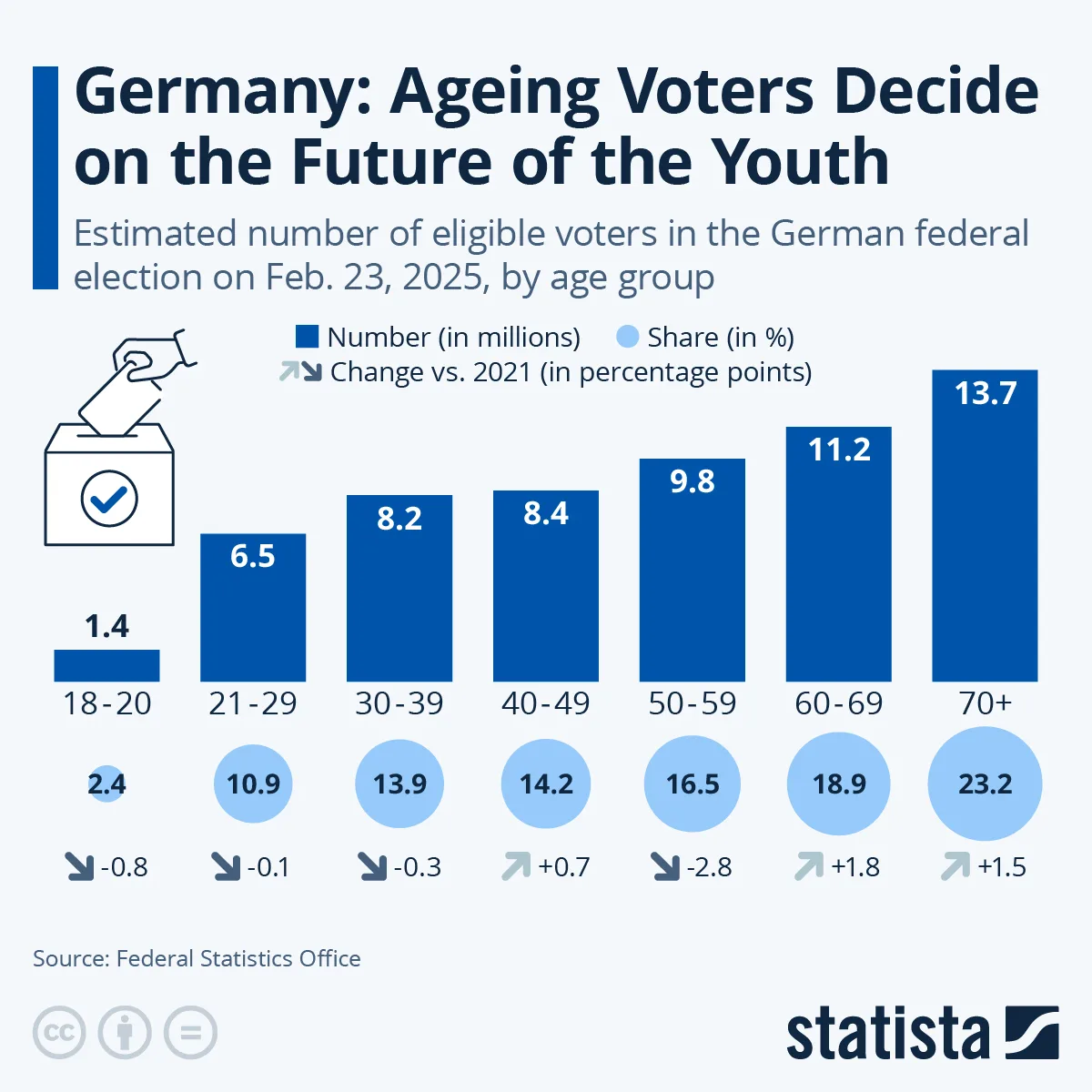
    Despite their active engagement in political discourse, young voters in Germany face significant challenges in influencing electoral outcomes. Statistics from the Federal Statistics Office reveal that only 13% of eligible voters are under 30, while those over the age of 60 comprise more than 40% of the electorate. This stark demographic reality raises concerns about the representation of progressive values that many young people champion.

    Echoes of the Brexit Referendum

    The situation bears similarities to the 2016 Brexit vote in the UK, where youthful proponents of staying in the EU found themselves outnumbered by older voters favoring departure. The implications of demographic power imbalances resonate in both cases, affecting future policy directions and national discourse.

    Youth Engagement and Counter-Movements

    Mobilization for Progressive Change

    In response to the rise of the AfD, a significant counter-movement has emerged in Germany. Recent weeks have seen over a million demonstrators advocating for a society that embodies open-mindedness and diversity. This mobilization, largely driven by younger citizens, highlights their urgency to shape policy discussions around critical issues such as immigration, climate change, and social justice.

    The Future of Political Engagement

    Despite feelings of powerlessness, young Germans continue to express their concerns and hopes for the future. Activism, civil engagement, and grassroots movements are just some of the ways in which they seek to influence the political landscape. Yet, the looming question remains: will their collective voice be enough to sway a predominantly older electorate in this election?

    Summary

    Germany’s snap election reflects a nation grappling with profound demographic shifts and ideological divides. As the country approaches this pivotal moment, the interplay between ageing voters and an impassioned youth presents a unique political conundrum, shaping the future of governance and society at large in Germany. The coming days will certainly be telling, not just for the immediate electoral outcomes but for the overarching trends in German politics as well.