Tag: geopolitical

  • US Imposes New Iran Sanctions Amid Rising Tensions

    US Imposes New Iran Sanctions Amid Rising Tensions

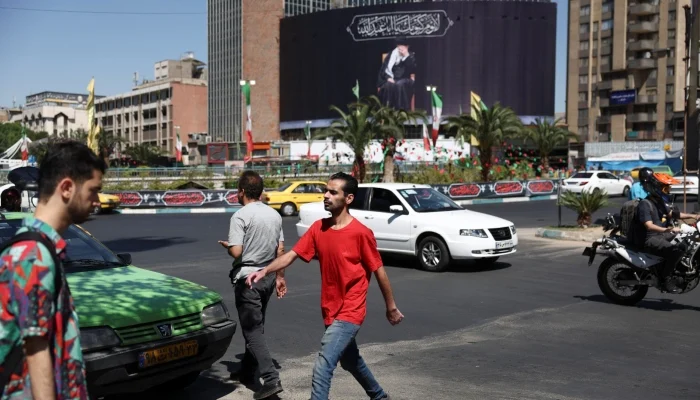
    People walk past a billboard featuring a photo of Iran’s late Supreme Leader Ayatollah Ali Khamenei, following reports that the U.S. and Iran have reached an agreement to end their conflict and reopen the Strait of Hormuz in Tehran, Iran, on June 15, 2026. — Reuters

    – The U.S. has targeted a major financier supporting Iran’s Supreme Leader among a new set of sanctions.
    – Dubai-based banker Ali Ansari is sanctioned by the U.S. due to alleged links to Iran, including supporting Iran’s Revolutionary Guards and other entities.
    – The Treasury Department’s Bessent states that the U.S. aims to isolate Iran’s leadership financially.
    – New sanctions target Ali Ansari, an Iranian banker and businessman based in Dubai, previously sanctioned by Britain, for diverting public funds into a vast overseas portfolio of real estate and commercial assets to benefit himself, Iranian officials, and the IRGC.
    – The Treasury also sanctioned three Iran-based currency exchange houses and foreign front companies that process billions of dollars annually for sanctioned Iranian banks, often hiding activities behind shell companies.
    – State Department spokesperson Tommy Pigott emphasized that these measures are intended to cut off Iran’s ruling elite from their financial channels and disrupt their access to foreign currency and international banking.
    – The sanctions coincide with a relatively quiet period following a week of heightened tensions, including Iranian attacks on Qatari and Saudi commercial tankers and subsequent U.S. strikes on Iranian targets in response, with Iran retaliating against U.S. military facilities in Gulf nations.
    – President Donald Trump announced that the ceasefire with Iran had ended but indicated that negotiations would continue at Iran’s request.
    – Treasury Secretary Scott Bessent reaffirmed ongoing efforts to isolate Iranian leaders from the global financial system.
    – Iran’s Foreign Minister Abbas Araghchi claimed that Bessent’s actions broke the agreement outlined in their recent memorandum, accusing the U.S. of violations.
    – Araghchi insisted that Iran has kept its commitments and warned that Iran is prepared for total defense if the U.S. breaches the deal, with top negotiator Mohammad Baqer Ghalibaf asserting that Tehran will never capitulate.
    – Risk analyst Brett Erickson commented that the new sanctions signal a shift from trying to maintain the current framework to actively replacing it.
    – Under the terms of the U.S.-Iran agreement, the U.S. agreed not to impose new sanctions or deploy additional military forces in the region.
    – The Treasury highlighted that Ansari formerly owned and directed Ayandeh Bank, which was sanctioned and liquidated in mid-October 2025.
    – Ansari was found to have used numerous shell companies and bank accounts across various jurisdictions to amass millions in assets through the Saint Kitts and Nevis-based holding company, Smart Global Limited, established in 2011, which invested in real estate and commercial properties across Europe, the Gulf, and other regions.
    – Despite holding assets in his name, many operated for the benefit of Mojtaba Khamenei, his family, and Iranian elite groups including the IRGC, who have shielded Ansari from repercussions despite his widespread corruption and the economic damage caused.
    – The Office of Foreign Assets Control also imposed penalties on Iranian nationals associated with exchange houses and on foreign companies such as Hong Kong’s CDM Trading Limited and UAE-based Naba Alzaki Raw Materials Trading LLC, for facilitating financial transactions related to Iranian sanctions.
  • Iran declares Strait of Hormuz closed following Israel’s Lebanon strikes

    Iran declares Strait of Hormuz closed following Israel’s Lebanon strikes

    Iran announced the closure of the Strait of Hormuz again on Saturday, citing Israeli attacks in Lebanon as the reason, shaking an already delicate US-Iran agreement just as negotiators headed to Switzerland to attempt to de-escalate the ongoing Middle East conflict.

    Scheduled talks in Switzerland were postponed at the last minute after Israel carried out deadly strikes in Lebanon following the loss of four Israeli soldiers in combat. The US later announced a renewed ceasefire in Lebanon, aligning with the terms of its agreement with Iran. However, fighting broke out again on Saturday as Israeli forces clashed with Hezbollah militants, each accusing the other of violating the truce.

    Iran’s military command cited a breach of the agreement by the US and ongoing violations by Israel’s government, saying that “the Strait of Hormuz will be closed to vessel traffic.” The Revolutionary Guards naval forces warned ships to stay away from the waterway, warning that their security could be compromised.

    The Strait of Hormuz, a crucial passageway for global oil and gas shipments, had been blockaded by Iran for much of the recent conflict, causing ripples across international energy markets. Tehran had agreed to reopen the strait under a preliminary deal signed earlier this week by President Donald Trump and Iran’s President Masoud Pezeshkian. Shipping traffic was beginning to pick up again before Iran’s decision to close it once more.

    The US Central Command stated that international shipping remained safe despite Iran’s announcement and that US forces in the region remained alert and present. President Trump warned that if the negotiations do not succeed, Washington might impose its own tolls on the corridor—defining “tolls” as measures solely imposed by the United States.

    A delegation representing Iran left for Switzerland on Saturday afternoon, reportedly including parliamentary speaker Mohammad Bagher Ghalibaf and Foreign Minister Abbas Araghchi. The delegation intends to push for Iran’s implementation of its commitments under the deal, warning that failure to do so could jeopardize the entire agreement.

    Meanwhile, Vice President JD Vance flew from Washington to Switzerland to join the talks, expressing hope for progress on nuclear issues and the Lebanon ceasefire. US negotiators Jared Kushner and Steve Witkoff were already in Switzerland handling technical details and reported that negotiations were progressing smoothly.

    Pakistan, acting as a mediator, indicated that technical talks would resume this Sunday in Burgenstock, with representatives from Pakistan, Qatar, the US, and Iran, aiming to negotiate unresolved issues related to Iran’s nuclear program—a key sticking point left from the initial deal.

    In Lebanon, fighting persisted in the south with Israel and Hezbollah exchanging accusations. One Israeli soldier has been killed—the fifth since the recent escalations began. Israeli troops have received orders from political leadership to cease proactive operations, operating now only in defense. Reports emerged of ongoing hostilities following Hezbollah’s launch of over 50 projectiles overnight, with Hezbollah accusing Israel of infiltrating strategic areas. Israel responded with airstrikes on approximately 20 sites across Lebanon, resulting in more than 20 civilian casualties, including 16 in Nabatieh and seven near Sidon. The total death toll from the renewed violence has now surpassed 4,000.

    Lebanese officials and Hezbollah representatives asserted their right to defend themselves, blaming Israel entirely for breaking the ceasefire. Israel’s ambassador to the US claimed Hezbollah was responsible for violations, while Hezbollah held Israel accountable. The group had previously escalated tensions in March by firing rockets into Israel in retaliation for the killing of Iran’s supreme leader via US and Israeli military actions. Attempts at a ceasefire earlier this year failed, with both sides citing violations by the other.

  • US-Iran Deal Talks May Open Strait During Ceasefire Extension

    US-Iran Deal Talks May Open Strait During Ceasefire Extension

    The US is nearing an agreement to lift restrictions on Iranian ports, with a proposed 60-day ceasefire extension. During this period, the Strait of Hormuz would reopen to shipping, allowing Iran to freely sell oil again. Negotiations focus on restricting Iran’s nuclear program, and in the meantime, the strait would be open without tolls. Iran has agreed to remove mines blocking the passage, enabling ships to pass safely.

    In exchange, the United States would lift sanctions on Iranian ports and provide some waivers to facilitate oil exports. Iran has also committed not to develop nuclear weapons and to negotiate a suspension of uranium enrichment, along with the removal of highly enriched uranium stockpiles. Iranian officials have verbally assured mediators of their willingness to limit nuclear activities.

    The US is also expected to negotiate the unfreezing of Iranian assets during this period. The White House has not immediately commented on the reports. Meanwhile, President Donald Trump mentioned that a draft memorandum on Iran peace talks could reopen the Strait of Hormuz, a vital shipping lane whose closure has contributed to a global energy crisis since early this year. Trump stated that details are still being finalized and will be announced soon.

    Secretary of State Marco Rubio, visiting India, indicated more updates could come as soon as Sunday, with potential positive news regarding the Strait. Iran has expressed that progress in diplomatic talks has been made this week, though several key issues still need resolution through mediators. Iran’s Foreign Ministry spokesperson noted that while disputes have lessened, talks will continue over the next few days. Their priorities remain ending the threat of renewed US attacks and addressing ongoing conflict in Lebanon, where Hezbollah is fighting Israeli forces in the south.

  • Pentagon Chief Hegseth: Iran Ceasefire Not Yet Over

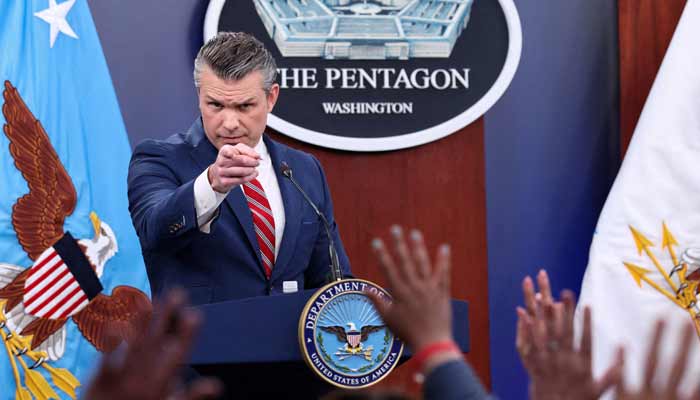
    US Secretary of Defense Pete Hegseth holds a briefing on the Iran war, with Chairman of the Joint Chiefs of Staff General Dan Caine (not pictured), at the Pentagon in Washington, DC, US, May 5, 2026.— Reuters
    US Secretary of Defense Pete Hegseth leads a briefing about the Iran conflict, with Chairman of the Joint Chiefs of Staff General Dan Caine (not shown), at the Pentagon in Washington, DC, on May 5, 2026.— Reuters

    • US Successfully Secures Passage Through Hormuz: Hegseth
    • Defense Secretary States Iran Does Not Control Hormuz
    • Iran Has Attacked US Forces Over 10 Times: General Caine

    On Tuesday, US Defense Secretary Pete Hegseth emphasized that the ceasefire with Iran remains intact, despite ongoing exchanges of fire in the Gulf as both nations vie for control of the Strait of Hormuz.

    According to Hegseth, the U.S. has successfully secured a safe route through this vital waterway, with hundreds of commercial ships queued to pass. This move aims to dismantle Iran’s blockade of the Strait of Hormuz, which began on February 28.

    “Iran is clearly embarrassed by this outcome. They claimed control over the Strait, but that’s not the case,” Hegseth stated during a Pentagon press briefing.

    The U.S. military reports it sank six Iranian small boats and intercepted Iranian cruise missiles and drones after President Donald Trump directed the navy to escort stranded tankers through the Strait in a mission dubbed “Project Freedom.”

    On Monday, several ships in the Gulf experienced explosions or fires, and Iranian missiles set an oil port in the United Arab Emirates, home to a significant U.S. military base, ablaze.

    General Dan Caine, Chair of the Joint Chiefs of Staff, revealed that since the ceasefire’s announcement on April 7, Iran has fired upon commercial vessels nine times and seized two container ships.

    He also noted that Iran has attacked U.S. forces more than ten times, though these assaults have so far fallen “below the threshold to restart major combat operations,” Caine explained.

    When asked if the ceasefire is still in effect, Hegseth reaffirmed, “The ceasefire is not over.”

    “We committed to defending ourselves aggressively, and we have. Iran knows this. Ultimately, the president will decide if any escalation breaches the ceasefire,” he added.

    This operation continues Trump’s efforts to halt the disruption of global energy supplies caused by Iran’s blockage of the Strait — which previously carried 20% of the world’s oil and LNG. The U.S. Navy is also enforcing a maritime blockade preventing ships from traveling to or from Iranian territories.

  • Iran Alerts of Ceasefire Breach as US Prepares to Escort Hormuz Vessels

    Iran warned Monday that any US attempt to interfere in the Strait of Hormuz would be seen as a breach of the regional ceasefire. Meanwhile, President Donald Trump announced that the U.S. plans to start escorting ships through the waterway, which has been blocked. Negotiations between the US and Iran have been at a standstill since a ceasefire took effect on April 8, with Iran maintaining tight control over the strategic strait following US-Israeli strikes on Tehran. Trump described this new maritime effort, dubbed “Project Freedom,” as a humanitarian effort to help ships caught in the blockade, some of which may be running low on essentials like food. He pledged that efforts would be made to safely escort ships and crew out of the area, with operations set to commence on Monday.

    Iran’s parliamentary security chief responded sharply, warning that any interference by the US would violate the ceasefire. By blocking the strait, Iran has significantly disrupted global supplies of oil, gas, and fertilizer, while the US has countered with sanctions targeting Iranian ports. Trump hinted that talks with Iran are ongoing and possibly promising, though he did not directly reference Iran’s proposal for ending the conflict and reopening the strait, which reportedly includes a 14-point plan. The US Central Command will deploy guided-missile destroyers, more than 100 aircraft, unmanned platforms, and 15,000 personnel in the region.

    As of late April, maritime intelligence estimates indicated more than 900 commercial vessels in the Gulf. Reports suggest Iran may have set a one-month deadline for negotiations to resolve the situation, involving reopening the strait, ending the US naval blockade, and ceasing hostilities. The Revolutionary Guards have warned that President Trump faces a stark choice between an “impossible operation” or a “bad deal” with Iran. US allies in Europe, notably Germany, are concerned about the economic fallout from the continued closure and are calling for the Strait’s reopening, emphasizing the importance of a diplomatic solution while insisting Iran must fully renounce nuclear weapons and reopen the waterway.

    Oil prices have surged approximately 50% above pre-conflict levels due to supply disruptions. President Trump, who spent the weekend at his Mar-a-Lago estate in Florida, declined to specify what might trigger further military action but warned that any interference with the humanitarian shipping process would be dealt with force. The Treasury Secretary highlighted that the US naval blockade is part of a broader economic embargo aimed at weakening Iran’s regime and constraining their ability to fund military activities. Iranian military officials have escalated rhetoric, with some promising to sink US ships and warning that they possess the capability to confront American warships, including aircraft carriers.

  • Trump halts Iran energy plant attacks for 10 days

    Trump halts Iran energy plant attacks for 10 days

    Protesters gather in Tehran to attend an anti-U.S. and anti-Israeli demonstration amid escalating tensions between the United States, Israel, and Iran, March 26, 2026. — Reuters

    – President Donald Trump reports that negotiations with Iran are “progressing very well.”
    – An Iranian official dismisses the U.S. peace proposal as “unfair.”
    – The Wall Street Journal cites mediators indicating that Iran has not requested a pause in hostilities.

    DUBAI/TEL AVIV/WASHINGTON: President Donald Trump announced a 10-day suspension of attacks on Iran’s energy infrastructure at Tehran’s request, asserting that discussions with Iran are going “very well.” However, an Iranian official called the U.S. proposal to end the conflict “one-sided and unfair.”

    Since U.S. and Israeli strikes began on February 28 following failed nuclear talks with Tehran, the conflict has resulted in thousands of deaths, spread to neighboring countries, and driven global energy prices upward.

    On Thursday, Trump threatened during a White House cabinet meeting to intensify pressure on Iran if no deal is reached, later posting on social media that he would pause strikes on Iranian energy facilities until April 6, 2026, at 8:00 p.m. EDT (midnight GMT on April 7).

    “Negotiations are ongoing, and despite false reports by the Fake News Media and others, they are going very well,” he stated on his Truth Social account.

    He also told Fox News’s “The Five” that Iran requested a seven-day ceasefire, with no immediate response from Tehran. According to Wall Street Journal sources, Iran did not ask for a 10-day halt on attacks on its energy plants; mediators say Tehran has not formally requested such a pause.

    Drone speedboats are being used for patrol operations as part of U.S. efforts against Iran, marking the first confirmation of Washington deploying these vessels in active conflict. The ongoing war has significantly disrupted shipping lanes, leading to approximately a 40% increase in crude oil prices and a two-thirds rise in liquefied natural gas shipments to Asia. Fertilizer prices, vital for food production, have surged around 50%.

    Despite Trump’s optimistic tone, Iran continues to retaliate by striking Israeli and U.S. military targets, as well as Gulf states. Additionally, Iran has effectively blocked Middle East fuel exports through the Strait of Hormuz. The Pentagon confirmed that the U.S. has deployed uncrewed drone speedboats to patrol the area.

    Trump has warned that the United States could become Iran’s “worst nightmare” if Tehran fails to meet demands, which include reopening the strait and ending the nuclear program. There was also mention of the possibility of U.S. taking control over Iran’s oil reserves, though no details were provided.

    An Iranian official told Reuters that a U.S. 15-point proposal, relayed via Pakistan, was thoroughly reviewed by senior Iranian officials and the country’s Supreme Leader’s representative. While they consider it primarily in U.S. and Israeli interests, diplomacy is ongoing amidst persistent fighting.

    Iran launched multiple missile attacks against Israel on Thursday, hitting locations including Tel Aviv, Haifa, and a Palestinian town in central Israel. At least one ballistic missile struck Tel Aviv, with others dispersing cluster munitions that damaged homes and vehicles. Israel’s emergency services reported a fatality in Nahariya caused by Hezbollah rockets.

    Within Iran, strikes targeted Bandar Abbas and a village near Shiraz, with reports of damage to a university in Isfahan.

    The Strait of Hormuz remains a critical issue. Trump proposed that Iran allow ten oil tankers, including some with Pakistani flags, to pass through as a gesture of goodwill. The U.S. has massed thousands of troops in the Middle East, leading to speculation of a potential ground invasion, though specifics remain undisclosed.

    Special U.S. envoy Steve Witkoff confirmed the delivery of a 15-point negotiation plan, which includes demands such as dismantling Iran’s nuclear capabilities, curbing missile programs, and gaining control of the Strait. Pakistan has facilitated indirect talks through messaging, with Turkey and Egypt also supporting mediation.

    Iran’s position has hardened, demanding security guarantees against future military actions, compensation for damages, and formal control over the Strait. They have insisted that Lebanon be included in any ceasefire agreement, according to regional sources.

    The U.S. has not publicly identified its negotiating partners but has been involved in enduring hostilities across the Middle East, resulting in mass casualties and ongoing conflict.

  • UK and Ukraine to Sign Defense Pact Targeting Drone Threats

    UK and Ukraine to Sign Defense Pact Targeting Drone Threats

    Britain and Ukraine are preparing to sign a defense partnership focused on countering low-cost drones, according to an announcement from Downing Street ahead of Ukraine’s leader’s visit on Tuesday.

    Since the recent outbreak of the US-Israeli conflict with Iran last month, Tehran has primarily used ballistic missiles to target Israel, while relying on drones to strike targets within Gulf states.

    The UK-Ukraine agreement aims to enhance global defense capabilities against the spread of affordable, high-tech military equipment, including drones, the British Prime Minister’s office stated.

    The deal intends to utilize Ukraine’s expertise gained from its prolonged conflict with Russia to develop counter-drone strategies, combined with Britain’s manufacturing infrastructure to produce and deliver drones and advanced military technologies.

    Starmer emphasized that drones, electronic warfare, and rapid battlefield innovations have become central to national and economic security—issues amplified by the ongoing Middle East conflict.

    “By strengthening our defense collaborations, we’re empowering Ukraine to defend itself against Russia’s relentless attacks, while also ensuring that the UK and our allies are better equipped to face future threats,” he said.

    The agreement also allocates 500,000 pounds ($670,000) to establish an “AI Centre of Excellence,” which will be incorporated into Ukraine’s Ministry of Defense.

    Ukrainian President Volodymyr Zelensky’s visit to London comes after he voiced concerns that the spotlight on the Middle East conflict might overshadow Ukraine’s ongoing war with Russia.

    Despite challenges, Ukraine’s European allies have committed to maintaining their support for Kyiv, even as the US has scaled back some sanctions on Moscow in an effort to stabilize soaring oil prices driven by Middle East tensions.

  • Iran Calls for Gulf Relations Review, Denies Saudi Oil Attack Role

    Iran Calls for Gulf Relations Review, Denies Saudi Oil Attack Role

    Iran has announced that its relationship with Gulf nations will need a “serious review” due to the ongoing US-Israeli conflict, emphasizing the importance of minimizing external influences to foster regional prosperity. Tehran’s ambassador to Saudi Arabia, Alireza Enayati, conveyed that despite concerns about potential damage to diplomatic ties, Iranians and Gulf neighbors are interconnected and must reassess their partnerships.

    He pointed out that regional issues over the past fifty years have resulted from exclusionary policies and excessive dependence on outside powers. Enayati called for stronger cooperation among the Gulf Cooperation Council member states, along with Iraq and Iran.

    Since the conflict began on February 28, the Gulf Arab states have endured over 2,000 missile and drone strikes. Targets have included U.S. diplomatic missions, military installations, and critical oil infrastructure, ports, airports, and hotels. The United Arab Emirates, which normalized relations with Israel in 2020, has suffered the most, but all Gulf countries have been affected and uniformly condemn Iran.

    Behind closed doors, analysts suggest there is mounting frustration with the United States, which has long been the security guarantor for the region, for involving Gulf nations in a conflict they did not support but are paying dearly for.

    Attacks have primarily targeted Saudi Arabia’s eastern oil-rich region, as well as the Prince Sultan Airbase near Riyadh and the Diplomatic Quarter on the city’s western side, according to Saudi authorities. Saudi Arabia and Iran renewed full diplomatic ties in 2023 after years of hostility.

    Enayati denied Iran’s involvement in attacks on Saudi oil facilities, including the Ras Tanura refinery and attempted drone strikes near the UAE border on the Shaybah oil field. He stated, “Iran is not responsible for these attacks. If we had carried them out, we would have claimed responsibility.” He refused to name those responsible.

    Saudi defense officials have not officially blamed Iran for specific incidents. Enayati emphasized that Iran’s targets are primarily U.S. and Israeli interests and claimed that Iran maintains ongoing communication with Saudi officials, including cooperation on religious pilgrimages and medical aid. Discussions are also reportedly ongoing regarding Saudi Arabia’s public assurance that its territory will not be used to attack Iran.

    He reiterated that the war is an imposed conflict on the region and stressed the need for the US and Israel to cease their attacks. He called on regional countries to stay out of the conflict and urged international guarantees to prevent further escalation. Only by doing so, he said, can the region focus on building prosperity.

  • Trump Allies Seek Influence as Iran War Exit Remains Elusive

    Trump Allies Seek Influence as Iran War Exit Remains Elusive

    A complex internal struggle within the White House is influencing President Donald Trump’s public statements about the Iran conflict, as advisers debate strategies for when and how to declare victory amid ongoing regional hostilities. Some officials caution that rising fuel prices could harm Trump politically, especially following U.S.-Israeli strikes on Iran. Meanwhile, other hawks urge continuing military pressure to weaken Iran’s nuclear and regional influence, according to sources close to the discussions and a Trump adviser.

    These insights offer an uncommon look into the White House’s evolving approach to what is the largest U.S. military engagement since the Iraq invasion in 2003. The backroom maneuvering reveals the high stakes Trump faces, especially two weeks into a war that has unsettled global markets and disrupted oil supplies—a notable shift from his campaign promise to steer clear of unnecessary military conflicts.

    Despite Trump’s initial broad goals announced on February 28, recent days have seen him frame the conflict as limited, claiming “we won” yet also suggesting he might need to “finish the job.” This has caused volatility in energy markets, which responded unpredictably to his shifting tone. During a rally in Kentucky, Trump declared victory but then hinted at the possibility of extending the conflict, shifting the narrative once again. Economic aides warn that an oil-price shock could erode support at home, urging Trump to signal that the operation is nearing its end, even as some military and political figures advocate for sustained pressure.

    The division within the administration reflects the complex realities of modern warfare—while U.S. and Israeli strikes have eliminated some Iranian leaders and degraded its military capabilities, Iran has retaliated with attacks on tankers and Gulf shipping, pushing oil prices upward. Trump maintains he will decide when the campaign concludes, claiming significant progress over an initially expected four- to six-week timeline. Yet, shifting justifications for the war—ranging from stopping Iran’s nuclear ambitions to regime change—have made future steps uncertain.

    Iran’s recent actions, including tanker attacks and a vow from Supreme Leader Khamenei to keep the Strait of Hormuz closed, threaten to escalate the conflict further. A blockade that raises U.S. gas prices could sway domestic politics before the midterm elections, prompting Trump to distance himself from the idea of regime change and focus on avoiding an extended war. Intelligence reports suggest Iran’s leadership remains stable, challenging arguments that the government is near collapse.

    Some officials compare the current situation to the swift U.S. success in Venezuela earlier this year, where political goals were quickly achieved with minimal firefighting. Iran, with its extensive military and embedded security forces, presents a much tougher challenge. Despite claims by some aides that Iran’s nuclear program was close to weaponization, most experts believe key stockpiles remain buried and unprocessed, keeping the threat alive but unconfirmed by independent assessments.

    As the conflict persists, the toll could mount in both lives and economic costs, potentially alienating Trump’s base. Still, many loyal supporters, including prominent figures within his movement, continue to back him, offering him some room to maneuver. The administration remains cautious about how to frame the endgame—whether to claim victory prematurely or proceed with a more prolonged engagement—while Iran seeks to claim resilience by surviving the assault and demonstrating its capacity to strike back.

    The outcome hinges heavily on control of the Strait of Hormuz, where Iran’s recent actions threaten to choke off a significant portion of global oil shipments, adding pressure on Trump to find an exit route that balances military objectives with domestic political considerations.

  • Strategic US-Iran Oil Route at Center of Tensions

    Strategic US-Iran Oil Route at Center of Tensions

    The Strait of Hormuz is a critical maritime corridor for oil transportation, often leveraged by Iran as a geopolitical tool. Tehran has repeatedly threatened to shut it down during crises, though such threats have so far remained empty. In late January, a senior naval commander from Iran’s Revolutionary Guard reiterated the warning, signaling potential closure if attacked, amid U.S. President Donald Trump’s earlier threats of military intervention if Iran didn’t agree to curb its nuclear activities.

    While Iran has occasionally hinted at blockades, it has yet to take definitive action, although it did briefly close part of the strait during recent military exercises citing safety concerns. Here’s what you need to know about this vital waterway.

    Gateway to the Persian Gulf
    The Strait of Hormuz connects the Persian Gulf to the Indian Ocean, situated between Iran and Oman’s Musandam Peninsula. Its narrow width—about 31 miles (50 kilometers)—and shallow depth—no more than 200 feet (60 meters)—make it susceptible to military blockage. The area includes several strategically significant islands, such as Iran’s Hormuz, Qeshm, and Larak. Disputed territories like Greater Tunb, Lesser Tunb, and Abu Mussa, controlled by Iran since 1971, lie in proximity and provide vantage points overlooking the Gulf.

    Major Oil Transit Route
    This strait is among the world’s most crucial energy chokepoints, serving as a corridor for oil produced in the Gulf to reach markets across Asia, Europe, North America, and beyond. According to the U.S. Energy Information Administration, approximately 20% of global oil consumption—around 20 million barrels daily in 2024—flows through this passage. Nearly as much liquefied natural gas (LNG), primarily from Qatar, also transits these waters. Although Saudi Arabia and the UAE have infrastructure to reroute oil shipments, their capacity—about 2.6 million barrels daily—is limited. The EIA emphasizes that large volumes of oil depend on this route, with few alternatives if it gets blocked. Over 80% of the oil and gas passing through the strait is destined for Asian markets, with China importing over 90% of Iran’s oil exports, according to industry sources.

    Military Dynamics
    Iran’s Revolutionary Guard oversees naval operations in the region, frequently criticizing the presence of foreign military forces—including the U.S. Fifth Fleet based in Bahrain and the U.S.’s largest Middle Eastern base in Qatar. Tensions have escalated, especially after 2018, when the U.S. disavowed the Iran nuclear deal and reimposed sanctions, leading to increased confrontations. Historical incidents include attacks on ships during the Iran-Iraq War, mines laid in the strait in the late ‘80s, and the tragic shootdown of Iran Air Flight 655 by USS Vincennes in 1988, which resulted in 290 deaths.

    Recurring Maritime Incidents
    The strait frequently witnesses ship seizures, attacks, and confrontations. Post-2018, these events intensified, with attacks on vessels and the downing of unmanned drones raising fears of broader escalation. Highlights include the 2021 attack on an Israeli-affiliated tanker in the Gulf of Oman that resulted in two deaths, with accusations directed at Iran. In 2024, Iran’s Revolutionary Guards seized a Portuguese-flagged cargo ship, alleging ties to Israel. Early February saw a U.S.-flagged tanker challenged by Iranian gunboats but allowed to proceed. Tensions continue to shape this strategic passage, underscoring its importance and volatility.

  • Trump Claims to Have Resolved Many Wars — Is He Right?

    Trump Claims to Have Resolved Many Wars — Is He Right?

    President Donald Trump claims he deserves the Nobel Peace Prize after engaging in eight conflicts since assuming office last January. However, many of the underlying issues remain unresolved, and hostilities have reignited in some areas, including the Democratic Republic of Congo and along the Cambodia-Thailand border.

    Here are some of the key international disputes Trump has involved himself in:

    Armenia and Azerbaijan
    On August 8 of the previous year, Trump facilitated a meeting between Armenian and Azerbaijani leaders to sign a joint declaration promising to pursue peaceful relations, ending decades of hostility. Later, Trump explained on a radio show that he got to know the leaders through trade dealings. He questioned their ongoing conflict, saying, “Why are you guys fighting? I told them, ‘I won’t do a trade deal if you’re fighting — it’s crazy.’” The two nations agreed to a ceasefire in 2023 and drafted a peace agreement in March, though it remains unsigned. The White House-backed declaration stops short of a formal treaty and includes unresolved issues, such as Armenia possibly needing to revise its constitution. Economic deals were also made, granting the U.S. development rights through a strategic transit corridor in southern Armenia, purportedly to boost energy exports. Vice President JD Vance visited both countries in February, signing strategic partnerships and a nuclear accord.

    Cambodia and Thailand
    Tensions persist between Thailand and Cambodia despite a fragile ceasefire brokered in part by Trump. After a five-day military clash along the border in July—the worst in over ten years—Trump reached out to then-acting Thai Prime Minister Phumtham Wechayachai two days after hostilities began. He conditioned trade deals on an end to the conflict. Trump oversaw a ceasefire agreement signed in Malaysia in October, but it collapsed within weeks, prompting a new ceasefire on December 27.

    Israel, Iran, and Palestinian Territories
    Trump chaired a meeting of his Peace Initiative aimed at resolving conflicts in Gaza. In October, Israel and Hamas agreed to a first-phase ceasefire and hostage deal, but fighting persists. The agreement marked progress in ending a two-year conflict that resulted in over 67,000 Palestinian casualties, with both sides exchanging accusations of breach. Fundamental issues remain unresolved, including Hamas’ disarmament, governance of Gaza, and the presence of international security forces. Trump also sought to expand the Abraham Accords, normalizing relations between Israel and Arab countries. Initially, he engaged with Iran over its nuclear program, but Israel’s aerial strikes on Iran’s nuclear facilities in June, with U.S. support, intensified tensions. Trump claimed to have obliterated Iran’s key nuclear sites, though reports suggest the program was only temporarily damaged. Recently, Trump has threatened Iran with increased military pressure, including a significant buildup in the Middle East.

    Rwanda and Democratic Republic of the Congo
    This year, Rwanda-backed M23 rebels launched a swift offensive, controlling more territory in eastern Congo than ever before, raising fears of regional spillover. Under Trump’s influence, Rwanda and Congo signed a U.S.-brokered peace deal on June 27, though implementation remains incomplete. Trump hosted Congo and Rwandan leaders at a Washington event in December, where they reaffirmed their commitment to his peace plan. Nevertheless, fighting continues, with accusations from Congo and the U.S. of Rwanda violating commitments. Rwanda denies backing M23, but UN experts and Congolese officials dispute this. Separate talks mediated by Qatar are underway. A December agreement between Congo and the U.S. on critical minerals faces constitutional questions, casting doubt on its durability. The conflict ties back to the 1994 Rwandan genocide, with the U.S. keen on accessing Congo’s strategic minerals to compete with China.

    India and Pakistan
    In May, tensions between nuclear-armed India and Pakistan surged following an attack India blamed on Pakistan. Trump, along with Marco Rubio and JD Vance, urged de-escalation. A ceasefire was declared after four days of fighting, though fundamental disputes remain unaddressed. Trump later claimed that U.S. threat of trade sanctions helped secure the truce, a point India disputes.

    Egypt and Ethiopia
    Long-standing tensions over Ethiopia’s Grand Ethiopian Renaissance Dam continue, with Egypt fearing water shortages in the Nile. Trump expressed confidence in a resolution, saying, “We’re working on that one problem, but it’ll be solved.” Later, the White House suggested the conflict was formally resolved, though details remain unclear. Ethiopia’s Prime Minister Abiy Ahmed proceeded with dam filling in September despite objections from Egypt and Sudan. Egypt’s President Abdel Fattah al-Sisi has vowed to defend Egypt’s interests.

    Serbia and Kosovo
    Five years after Trump brokered peace agreements to enhance economic ties, tensions still simmer. Trump claimed to have halted a war between them during his first term and intended to fix the situation again. Kosovo declared independence in 2008, but Serbia views it as part of its territory, and no peace treaty exists. Prime Minister Albin Kurti seeks greater control over northern Kosovo, inhabited mainly by ethnic Serbs skeptical of independence. President Vjosa Osmani credited Trump with preventing escalation recently, though Serbian President Aleksandar Vucic denied concerns of imminent conflict.

    Russia and Ukraine
    During his 2024 campaign, Trump controversially claimed he could resolve the Ukraine conflict within a day. The nearly four-year war has left over a million casualties, and efforts to end it have stalled. Trump has oscillated between calls for a ceasefire and insisting negotiations could still succeed amid ongoing combat. He imposed sanctions on Russia’s largest oil firms in October and recently pushed Ukraine’s leader to accept a deal favoring Moscow, causing concern among European allies. Recently, no significant progress has emerged from these efforts.

    South Korea and North Korea
    Trump expressed intentions to meet North Korean leader Kim Jong Un once more to push for peace. During his presidency, Trump held three summits with Kim, but talks ultimately broke down over nuclear disarmament demands. North Korea has since advanced its missile and nuclear programs. Trump acknowledged North Korea’s nuclear capabilities in his second term and supported Seoul’s pursuit of nuclear submarines, while Kim suggested negotiations could resume if the U.S. dropped its nuclear demands.

    Additional Notes:
    Many conflicts Trump engaged with remain unresolved or have seen renewed hostilities, emphasizing the challenges of his interventionist approach on the global stage.

  • US Jet Intercepts Iran Drone Amid Ongoing Talks

    US Jet Intercepts Iran Drone Amid Ongoing Talks

    A US fighter jet shot down an Iranian drone after it approached an American aircraft carrier in the Middle East on Tuesday, according to official statements. This incident marks the second clash between the two nations in Middle Eastern waters on the same day, following attempts by Iranian forces to detain a US-flagged tanker in the Strait of Hormuz.

    White House spokesperson Karoline Leavitt told Fox News that US envoy Steve Witkoff still plans to hold discussions with Iranian officials later this week despite the recent confrontations. Washington has expressed the desire for Tehran to limit its large-scale ballistic missile programs as diplomatic talks are scheduled for Friday. However, President Trump has avoided ruling out military action ahead of these negotiations, while Iranian President Masoud Pezeshkian insists talks will only proceed if they are conducted without threats.

    In a statement, Central Command announced that “an F-35C fighter jet from the USS Abraham Lincoln shot down the Iranian drone in self-defense.” The aircraft carrier had been deployed to the Arabian Sea last month amid increased US military presence in the region.

    Tensions soared after Trump publicly told Iranians that “help is on its way” amid protests and a harsh crackdown in Iran last month. Pezeshkian confirmed that he had authorized the start of US-Iran negotiations, provided the talks remain free of threats. Iran has indicated that the talks could be hosted in Turkey, Oman, or other regional countries, with the specifics yet to be finalized.

    Meanwhile, Iran has demanded that any discussions this week take place in Oman rather than Turkey, focusing solely on nuclear issues and excluding other regional concerns, according to a regional source. Israeli Prime Minister Benjamin Netanyahu met with Witkoff in Jerusalem, warning that Iran “cannot be trusted,” emphasizing the mistrust surrounding Iran’s nuclear ambitions.

    While both nations have reiterated their commitment to dialogue, there are active military exchanges at sea. Iranian gunboats challenged a US-flagged tanker in the Strait of Hormuz, with US forces responding with air support and escorting the vessel away. According to British maritime security firm Vanguard Tech, armed small boats from Iran’s Revolutionary Guards approached the Stena Imperative 16 nautical miles north of Oman, but the ship maintained course and speed, not entering Iranian waters. Iran’s state news agency Fars reported that an unidentified vessel entered Iranian territorial waters but left immediately after warnings.

  • A third of Americans support US strike on Venezuela: Reuters poll

    A third of Americans support US strike on Venezuela: Reuters poll

    A Reuters/Ipsos poll, completed on Monday, found that about one-third of Americans support the US military action that ousted Venezuela’s president. Meanwhile, 72% are concerned that the US might become too involved in the South American nation. The two-day survey indicates that 65% of Republicans endorse the military intervention ordered by Republican President Donald Trump, compared to just 11% of Democrats and 23% of independents.

    US forces launched a pre-dawn raid in Caracas on Saturday, resulting in the capture of Venezuelan President Nicolas Maduro. The US handed Maduro over to federal authorities to face charges related to alleged drug trafficking. This operation, along with Trump’s statement that the US would now “manage” Venezuela, marks a notable shift for a president who has previously criticized other US leaders for foreign interventions.

    The move followed signals from Trump’s administration that their main focus would be on the domestic economy, a critical issue as voters prepare for midterm elections later this year that will determine congressional control for the remainder of Trump’s term.

    Support for aggressive foreign policies among Republicans is notable in the poll. About 43% agree with the statement: “The United States should have a policy of dominating affairs in the Western Hemisphere,” while 19% disagree. The rest were unsure or declined to answer. On Saturday, Trump said the US would “run” Venezuela for an unspecified period and mentioned the possibility of deploying ground troops. He also emphasized plans to overhaul Venezuela’s oil industry, stating the US needs “full access” to its vast oil reserves.

    In the poll, 60% of Republicans supported sending US troops to Venezuela, compared to 30% of the general American population. Additionally, 59% of Republicans favored the US taking control of Venezuela’s oil fields. While Trump has not specified exact plans, he suggested that US influence would be exercised more through intimidation of Venezuelan leaders rather than direct governance, saying, “If they don’t behave, we will launch a second strike.” Despite this ambiguity, the survey shows that 65% of Republicans favor US oversight of Venezuela.

    However, opinion within the party is divided on potential risks. Over half—54%—express concern that US involvement might become excessive, and the same percentage worry about the financial costs. Sixty-four percent are also concerned about the risk to military personnel in Venezuela.

    The poll surveyed 1,248 adults nationwide, showing Trump’s approval rating at 42%, the highest since October and an increase from 39% in December. The survey was conducted online with a margin of error of roughly 3 percentage points.

  • Venezuela Denounces US Military Threat Following Loud Explosions in Capital

    Venezuela Denounces US Military Threat Following Loud Explosions in Capital

    Smoke rising from buildings in Caracas, Venezuela, on January 3, 2026. —X@@AbujomaaGaza

    • Column of smoke visible, loud noises reported in Caracas.
    • U.S. Pentagon is holding back from official comments on the attack.
    • Trump administration officials acknowledge reports of explosions.

    Early Saturday morning, Caracas residents heard loud booms and saw at least one smoke column near a key military installation, with some areas in the south of the city losing power, according to Reuters witnesses.

    U.S. President Donald Trump has committed to possible military action in Venezuela, intensifying pressure on President Nicolas Maduro through increased sanctions, a growing military presence in the Caribbean and Pacific, and over 25 strikes on ships suspected of drug trafficking in regional waters.

    Venezuela has condemned what it calls “U.S. military aggression,” with President Maduro’s government stating Thursday’s attacks targeted Caracas and neighboring states Miranda, Aragua, and La Guaira, prompting Maduro to declare a national emergency and rally social and political groups to activate mobilization plans.

    CBS reporter Jennifer Jacobs tweeted that U.S. officials are aware of explosions and aircraft activity in Caracas early Saturday.

    The Pentagon has not yet issued an official statement.

    Nicolas Maduro has accused the Trump administration of trying to oust his government to seize Venezuela’s vast oil reserves.

    Colombian President Gustavo Petro issued a warning on X, stating, “They are bombing Caracas with missiles. The Organization of American States and the United Nations should meet immediately.”

    Petro, who hasn’t provided details or sources for his claims, has long opposed U.S. efforts to pressure Caracas.

    The U.S. has increased military assets in the region, including aircraft carriers, warships, and advanced fighters stationed in the Caribbean.

    President Trump announced a blockade of Venezuelan oil exports, tougher sanctions, and over two dozen strikes on vessels suspected of drug trafficking, claiming to have targeted a drug-loading area last week—marking the first known U.S. land operation in Venezuela since the pressure campaign began.

    It remains unclear whether the strikes were conducted by the CIA or other U.S. agencies. Some media reports suggest federal involvement.

    Trump has alleged Venezuela’s role in flooding U.S. markets with drugs. For months, the administration has been attacking vessels linked to South American drug trafficking, though Maduro’s government denies involvement in drug crimes.


  • US Seizes Sanctioned Oil Tanker Near Venezuela, Trump Confirms

    US Seizes Sanctioned Oil Tanker Near Venezuela, Trump Confirms

    The United States has confiscated a sanctioned oil tanker off the coast of Venezuela, President Donald Trump announced on Wednesday. This action caused oil prices to climb and significantly heightened tensions between Washington and Caracas.

    “We just seized a large tanker near Venezuela—actually the largest one ever—and other developments are underway,” Trump stated, reaffirming his administration’s continued pressure on Venezuelan President Nicolás Maduro to resign. When asked about the fate of the oil, Trump responded, “I guess we’ll keep it.”

    This incident marks the first known seizure of a tanker since the U.S. increased its military presence in the region. Previously, the U.S. had conducted strikes against suspected drug vessels, raising legal and ethical concerns among lawmakers and experts.

    U.S. Attorney General Pam Bondi shared on X (formerly Twitter) that the FBI, Homeland Security, Coast Guard, and military forces executed a warrant to seize a crude oil tanker involved in transporting sanctioned oil from Venezuela and Iran. A short video released by Bondi depicted two helicopters approaching a vessel, with armed personnel rappelling onto it.

    The vessel’s identity has not been officially disclosed by the Trump administration. However, British maritime risk analysts believe the tanker Skipper was seized early Wednesday off Venezuela. Previously, the tanker, called Adisa, was involved in Iran-Venezuela oil trades and had left Venezuela’s main port, Jose, after loading roughly 1.1 million barrels of heavy crude according to satellite data and shipping records.

    Oil futures responded positively to the news. Brent crude climbed 27 cents (0.4%) to close at $62.21 per barrel, while U.S. West Texas Intermediate futures increased by 21 cents (0.4%) to finish at $58.46.

    Venezuela’s President Maduro addressed a military march Wednesday, avoiding topics related to the seizure. The country’s oil exports last month averaged over 900,000 barrels per day, the third-highest monthly total this year, despite the U.S. sanctions that have driven Venezuela to sell heavily discounted crude, particularly to China. Competition from Iran and Russia has further pressured prices.

    Analyst Rory Johnston commented that the seizure exacerbates existing concerns about oil supply but doesn’t drastically change the overall situation because these barrels were already in transit or stored. Meanwhile, Chevron, a key partner with Venezuela’s state oil company PDVSA, reported no disruption in its operations, which include exports to the U.S.

    Maduro alleges that the U.S. military buildup aims to overthrow his government and seize Venezuela’s substantial oil reserves. Since early September, the U.S. has conducted more than 20 strikes targeting suspected drug vessels in the Caribbean and Pacific, reportedly killing over 80. Critics argue these strikes are illegal, as they lack transparent evidence and involve lethal force that could have been replaced with seizure and interrogation.

    Public opinion polls indicate that many Americans oppose these aggressive tactics, with about 20% of Trump’s Republican supporters expressing disapproval. Last week, Trump’s foreign policy strategy emphasized reasserting American dominance in the Western Hemisphere.

  • MBS Meet Sparks U.S.-Saudi F-35 and Nuclear Cooperation Deals

    MBS Meet Sparks U.S.-Saudi F-35 and Nuclear Cooperation Deals

    During a visit by Crown Prince Mohammed bin Salman, the United States and Saudi Arabia reached agreements on civil nuclear energy and the sale of advanced U.S. F-35 fighter jets, according to the White House. They officially endorsed a “joint declaration” on civil nuclear energy, establishing a legal framework for a multi-billion-dollar partnership that meets strict nonproliferation standards. Furthermore, President Donald Trump authorized a significant defense package, including future F-35 aircraft deliveries.

    Earlier, Trump praised the prince’s $1 trillion investment commitment amid a grand welcome at the White House. He showcased his growing camaraderie with the Saudi leader, who is visiting the Oval Office for the first time in seven years. The celebrations included a parade of horseback soldiers and a military flyover involving F-35 jets, which Trump said would soon be sold to Riyadh.

    The president opened the meeting by complimenting the prince’s “incredible” human rights record. The Crown Prince then excited Trump by announcing plans to boost Saudi investments from $600 billion to nearly $1 trillion—an increase he confirmed with a confident “Definitely,” after Trump asked for verification.

    In a display of hospitality, Trump arranged a full ceremonial treatment normally reserved for a formal state visit. He greeted bin Salman on the White House lawn as cannon fire echoed and flanked him with a noisy flyover. Trump also revealed a new gallery of presidential portraits in the Rose Garden, including one portraying his predecessor, Joe Biden, in a manner suggesting he was signed into office by an autopen—a device often used to sign documents automatically. Trump has publicly questioned Biden’s use of such devices for signing presidential pardons and cast doubt on their legality.

    Later in the day, First Lady Melania Trump is scheduled to host a gala dinner. Notably, soccer legend Cristiano Ronaldo, who now plays in Saudi Arabia, will attend the event, a White House official confirmed.

    The focus of U.S.-Saudi relations remains on strengthening ties, especially as Trump pushes for long-term peace between Israel and Hamas, aiming to expand the Abraham Accords initiated during his first term. While Prince Mohammed expressed intent to normalize relations with Israel swiftly, he emphasized the importance of first establishing a clear path toward a two-state solution for Palestine.

  • US to Deploy 200 Troops for Gaza Security Mission

    US to Deploy 200 Troops for Gaza Security Mission

    The United States plans to send 200 troops to support efforts in Gaza, forming a joint task force focused on stability in the region. However, no U.S. troops will be physically present inside Gaza itself. These troops, whose exact deployment location is still undecided, will work alongside security forces from Egypt, Qatar, Turkey, and possibly the United Arab Emirates. They will establish a centralized command and coordinate with Israeli forces to prevent any clashes.

    White House spokesperson Karoline Leavitt clarified that up to 200 existing personnel from CENTCOM will oversee a ceasefire in Gaza alongside international allies. This confirms the first stage of a U.S.-mediated agreement between Israel and Hamas, announced by President Trump on October 8, 2025. The agreement includes the release of hostages and a partial Israeli withdrawal from Gaza, which Israel approved earlier today.

    Officials hope the ongoing Gaza negotiations will reduce regional tensions, paving the way for broader normalization agreements between Israel and neighboring Arab countries. During his first term, President Donald Trump facilitated the Abraham Accords, which established relations between Israel and Bahrain, the UAE, Morocco, and Sudan. Currently, Saudi Arabia, Indonesia, Mauritania, Algeria, Syria, and Lebanon are all being considered as potential partners for similar accords.