Whether welcomed or not, the AI wave has officially hit Hollywood, and Netflix is choosing to ride the wave rather than resist it.
After announcing impressive earnings for the second quarter, co-CEO Ted Sarandos unveiled Netflix’s strategic integration of AI moving forward. While the focus on cost savings is significant, Sarandos is optimistic that AI will enhance the overall quality of the films and series Netflix produces.
“We firmly believe AI is a tremendous opportunity that can help creators elevate their filmmaking, not just reduce costs,” Sarandos conveyed to financial analysts, as noted by The Hollywood Reporter. “The tools available are empowering real people to do authentic work. Our creators are already experiencing advantages in areas like pre-visualization and shot planning, especially in visual effects.”
Netflix has already made strides in this direction. Earlier this year, the platform debuted The Eternaut, an Argentine sci-fi narrative inspired by the comic work of Héctor Germán Oesterheld and Francisco Solano López. The storyline unfolds with a toxic snowfall that decimates the population, leaving the survivors to discover that this deadly storm is merely the opening act of an alien invasion.
Netflix
In a pioneering move, Argentinian visual effects artists collaborated with Netflix using GenAI to portray a building collapse in Buenos Aires for one of the episodes. This marked the first instance of an AI-generated sequence featured in a Netflix original project. Sarandos suggests that this is likely the beginning of more AI integrations in their productions.
“Thanks to AI-driven tools, the team achieved outstanding results in a fraction of the time, completing that visual effects sequence ten times faster than traditional methods would have allowed,” Sarandos stated.
While Netflix thrives with its AI initiatives, other studios are facing challenges. Disney and Universal have taken legal action against the GenAI platform Midjourney, accusing it of being a “quintessential copyright free-rider” and contributing to widespread plagiarism.
Concerns surrounding copyright and automation weigh heavily on many creators when discussing AI. Nadeem Sarwar, a tech and science journalist at Digital Trends, argues that Netflix’s approach may ultimately harm creators rather than help them.
“The focus on efficiency signals Netflix’s effort to hasten the creative process, but this undermines the meticulous work that artists typically invest in their craft,” Sarwar noted. “It primarily benefits Netflix, not the talent.”
With technological advancements, AI is unlikely to fade from the scene anytime soon. The potential implications for artists looms large, fostering unease about the future.
“The trend was inevitable,” Sarwar commented. “Even with the backlash Marvel faced, we hoped that Netflix and other studios would learn from those missteps. Clearly, that’s not happening.”
The Growing Influence of AI in the Travel Booking Process
As technology continues to evolve, artificial intelligence (AI) is becoming an integral part of many industries, including travel. A recent study by Deloitte highlights a compelling trend: a significant number of travelers are acting on AI-generated tips when it comes to booking their trips. This blog explores the implications of this trend, breaking down how AI impacts travel planning and booking behaviors.
Understanding the Role of AI in Travel
AI technologies are being utilized in various ways within the travel industry. From personalized recommendations to streamlined booking processes, AI is helping travelers make informed decisions quickly and efficiently. As a result, a newer form of decision-making is observed—many travelers are now willing to book accommodations and activities directly based on the suggestions provided by AI systems.
AI Systems: How They Operate
These AI systems analyze vast amounts of data to generate insights that cater to individual preferences. They take into account a user’s past travel behavior, preferences, and even real-time conditions to provide tailored recommendations that can enhance the travel experience. This not only saves time but also helps users discover options they might not have considered otherwise.
Booking Trends Based on AI Recommendations
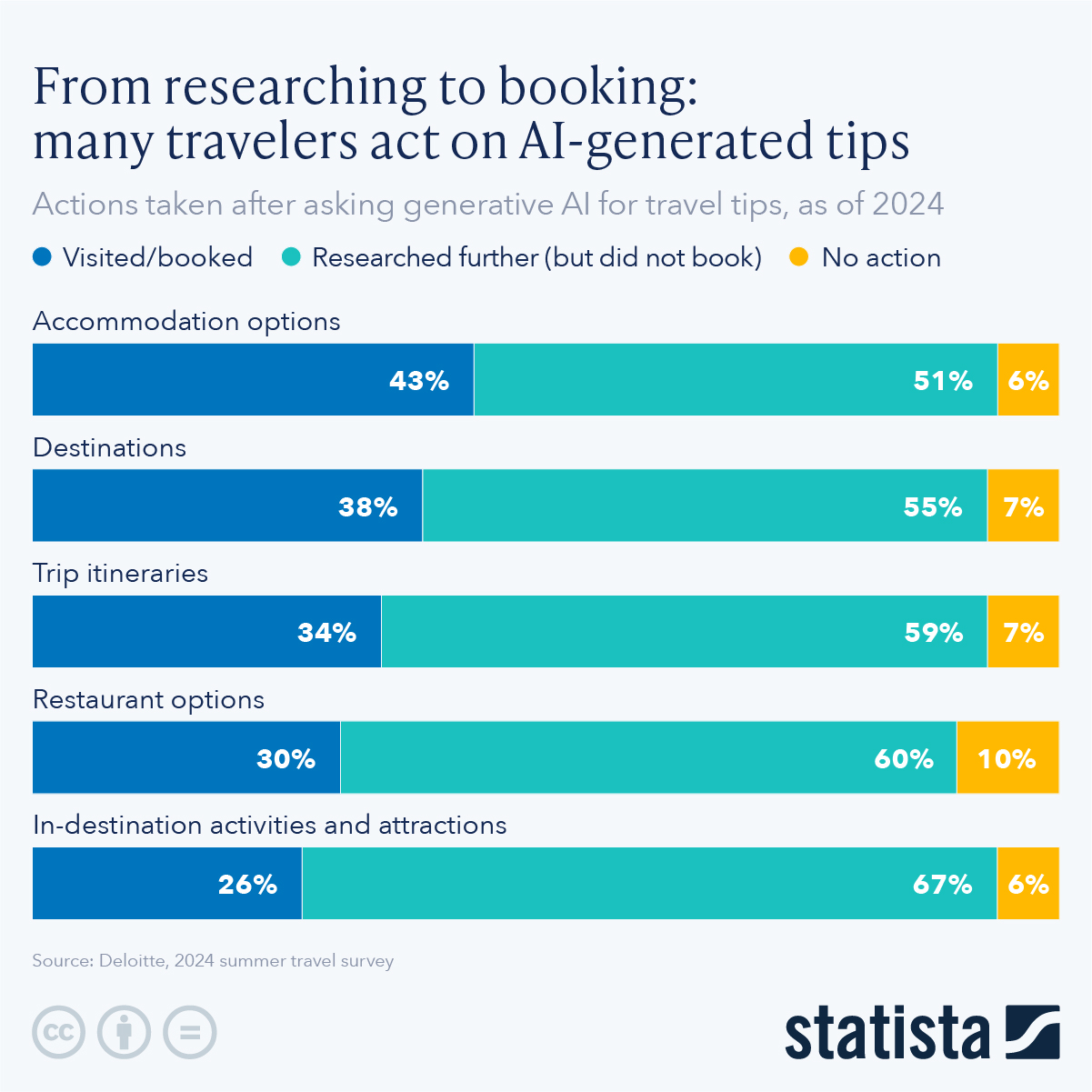
According to the Deloitte study, at least one-third of respondents reported proceeding with AI recommendations for travel bookings. This statistic underlines an essential shift in how travelers approach planning their trips.
Accommodation Recommendations
The study revealed that accommodation bookings are often made with minimal additional research after receiving AI-generated suggestions. This indicates a growing trust in AI systems to provide reliable and relevant options for travelers, streamlining the booking process significantly. Travelers might appreciate the convenience of selecting a place to stay based on personalized recommendations, allowing them to spend less time searching through countless listings.
Dining and Activity Choices
In contrast to accommodation bookings, dining and activity suggestions appear to prompt more thorough research among travelers. This difference can be attributed to the nature of these experiences—travelers may want to explore menus, read reviews, or consider location factors before making dining or entertainment decisions. As such, while AI influences initial suggestions, many users still prefer to validate those options through additional resources before committing.
Trust in Technology: A Double-Edged Sword
While travelers are increasingly relying on AI-generated recommendations, it raises questions about the implications of such trust in technology. The convenience offered by AI systems can enhance the travel experience, but it also necessitates a level of caution.
Balancing AI Usage with Human Input
Travelers must balance AI suggestions with their own intuition and preferences. The best outcomes often come from blending AI insights with personal research. This behavior not only empowers travelers but also encourages them to engage more deeply with their travel plans.
Future Implications for the Travel Industry
The impact of AI on travel booking is still unfolding. As AI technologies continue to advance, the potential for even more sophisticated recommendations and interactions with travelers grows. For travel companies, adapting to these changes will be key to staying relevant and competitive in a rapidly evolving market.
Opportunities for Travel Companies
With the rise of AI in the travel sector, companies have a unique opportunity to enhance their services. By integrating AI tools effectively, travel companies can provide hyper-personalized experiences that cater to the needs of their customers. In addition, leveraging data analytics can help companies anticipate trends and consumer behavior, leading to better service delivery and customer satisfaction.
By understanding and adapting to the growing role of AI in travel booking, both travelers and industry professionals can navigate this changing landscape more effectively, ultimately leading to better travel experiences across the board.
Key Findings from the Deloitte Study
One-third of travelers are booking based on AI recommendations.
Accommodation bookings are frequently made with minimal additional research.
Dining and activity choices prompt more thorough investigations before confirmation.
The integration of AI in travel planning is reshaping the industry, prompting a need for continued adaptation and consideration of the best practices in leveraging technology for optimal travel experiences.
In recent years, the travel industry has witnessed a profound transformation, largely fueled by advancements in artificial intelligence (AI). As travel companies strive to enhance customer experiences and streamline operations, AI has emerged as a valuable ally. According to a recent study by Amadeus, customer service chatbots represent the most prevalent application of generative AI in the travel sector. This post delves into the overarching role of AI in travel, focusing on its applications in customer support, marketing, product development, operations, and human resources.
The Dominance of AI in Customer Support
Chatbots at the Forefront
The findings from the Amadeus study highlight that a significant 69% of travel industry respondents utilize AI for customer support. The rise of customer service chatbots has revolutionized how businesses interact with their clients. These AI-driven bots provide instant responses to common queries, ensuring that travelers receive timely assistance regardless of the hour.
Enhancing Customer Experience
By employing AI in customer support, travel companies can offer personalized experiences, addressing individual traveler preferences and concerns. Chatbots analyze customer interactions to provide tailored recommendations, thus making the booking and travel experience more enjoyable and efficient. The ability to handle multiple inquiries simultaneously ensures that no customer is left waiting unduly for assistance.
Beyond Customer Support: AI in Marketing
Targeted Campaigns
AI’s potential in marketing within the travel industry is substantial. More than half of the surveyed travel companies reported the use of AI in their marketing strategies. AI enables businesses to analyze large sets of data to identify customer behavior patterns, allowing for more effective targeting of advertising campaigns.
Predictive Analytics
The integration of predictive analytics further strengthens marketing efforts. By forecasting travel trends and customer preferences, travel companies can proactively modify their offerings and communication strategies, which enhances consumer engagement and improves conversion rates.
Operational Efficiency through AI
Streamlining Processes
The application of AI in operations is also gaining momentum, with over half of the respondents acknowledging its presence in their operational framework. From optimizing flight schedules to managing inventory systems, AI helps streamline complex processes, minimizing delays and reducing operational costs.
Data-Driven Decision Making
AI’s data processing capabilities empower travel companies to make informed decisions. By analyzing historical data and real-time information, businesses can adjust operations to meet fluctuating demands, ultimately leading to improved operational efficiency.
AI’s Role in Product Development
Innovative Offerings
Product development is another area where AI is making inroads. By leveraging data analytics, travel companies can identify gaps in their offerings and develop new products that cater to emerging trends and customer needs. For instance, AI can help delineate which travel packages or experiences are gaining popularity, thus guiding the creation of new, attractive travel options.
Enhancing Product Features
Additionally, AI can enhance existing products by integrating features that meet modern travelers’ expectations. This might include features such as user-friendly mobile apps or personalized travel suggestions based on accumulated customer data.
Human Resources and AI Integration
Recruitment and Onboarding
Interestingly, AI’s influence extends beyond customer-facing services into human resources. Just over a quarter of respondents reported utilizing AI in HR functions. AI-driven recruitment tools can streamline the hiring process by automating candidate screening and shortlisting based on predefined criteria, thus saving valuable time for HR professionals.
Employee Engagement and Retention
Moreover, AI can assist in improving employee engagement and retention strategies. By analyzing employee feedback and performance data, HR departments can better understand staff needs and develop programs that foster a positive workplace culture.
Conclusion
As demonstrated by the Amadeus study, the integration of AI into the travel industry is multifaceted, enhancing customer support and driving efficiencies across marketing, operations, product development, and human resources. The potential of AI to reshape the travel landscape is vast, and as technologies continue to evolve, travel companies are well-positioned to harness these advancements to create superior customer experiences and achieve operational excellence.
The Role of Generative AI in Modern Travel Planning
As we move deeper into the digital age, the travel industry is witnessing a significant transformation, largely driven by advancements in technology. Among these innovations, generative AI has emerged as a game-changer, influencing how we plan, book, and experience our journeys. A recent survey conducted in 2024 highlights that an impressive 80% of international travelers are open to integrating AI into their holiday planning process. This trend is not just a passing phase; it’s a fundamental shift in travel dynamics that promises to reshape our experiences.
AI-Driven Inspiration for Travel Destinations
One of the primary ways travelers are utilizing generative AI is for inspiration when selecting travel destinations. According to the Phocuswright Travelers and Tech 2024 report, a significant percentage of U.S. travelers are turning to AI tools to help them decide where to go. The allure of AI lies in its ability to analyze vast amounts of data, providing personalized recommendations based on user preferences, past travel experiences, and even trending locations.
This systematized approach to discovering new places not only enhances the excitement of planning a trip but also ensures that travelers can explore options they might not have considered otherwise. Whether it’s a hidden gem in a foreign country or an up-and-coming city, AI has the capacity to broaden the horizons for many travelers.
Comparing Travel Destinations
Beyond inspiration, generative AI is also being leveraged to facilitate more complex tasks such as comparing destinations. In the 2024 survey findings, around 45% of travelers reported using AI to assess and contrast different locations before making a decision. This feature allows travelers to evaluate key factors such as safety, cost of living, local attractions, and climate. By providing a comprehensive overview of potential locations, AI empowers users to make more informed choices that align with their specific preferences and needs.
Imagine planning a trip where AI analyzes factors like travel budget, desired experiences, and even traveler reviews, presenting a tailored comparison that highlights the pros and cons of each choice. This capability greatly enhances the travel planning process, making it efficient and data-driven.
Crafting Personalized Itineraries
Further advancing the travel planning process, generative AI is being harnessed to create personalized itineraries—a task previously dominated by travel agents and manual planning efforts. Approximately 38% of respondents in the Phocuswright report indicated that they were using AI for this meticulous aspect of travel planning. By integrating various elements such as accommodation options, activities, and travel times, AI tools can craft detailed itineraries that fit the traveler’s needs perfectly.
The beauty of using AI for itinerary planning is its adaptability. If plans change or if travelers wish to explore different activities, AI can quickly reconfigure suggestions to fit the new parameters. This flexibility removes much of the stress associated with planning a trip, allowing travelers to focus on enjoying their experiences instead.
The Future of Travel with Generative AI
The implications of generative AI in travel planning extend beyond mere convenience; they signify a broader evolution in how we approach travel itself. The technology is not only enhancing the way we discover and plan journeys but is also invaluable in creating seamless and personalized travel experiences. As we continue to integrate AI into our daily lives, including travel planning, we are likely to see even more innovative applications that cater to the ever-evolving needs of modern travelers.
By leveraging the power of generative AI in travel, we are stepping into a realm where personalized experiences take precedence, and the process of planning becomes not only easier but also more enjoyable. The ongoing evolution of this technology promises to enrich our future travels, making it more accessible, efficient, and tailored to individual preferences. As we look forward, the synergy between AI and travel will likely lead to unprecedented opportunities for exploration and adventure.
In an exciting development for content creators, Instagram is set to introduce a groundbreaking generative AI tool by 2025, which will simplify video editing to the point of just entering a text prompt, as announced by CEO Adam Mosseri on Thursday.
This innovative tool, powered by Meta’s Movie Gen model, will give users the ability to modify nearly every aspect of their videos, according to Mosseri’s demonstration. The alterations can range from minor tweaks, such as adding a gold chain to his existing outfit or placing a hippo in the background, to significant transformations like changing his wardrobe or giving himself a whimsical, Muppet-like appearance.
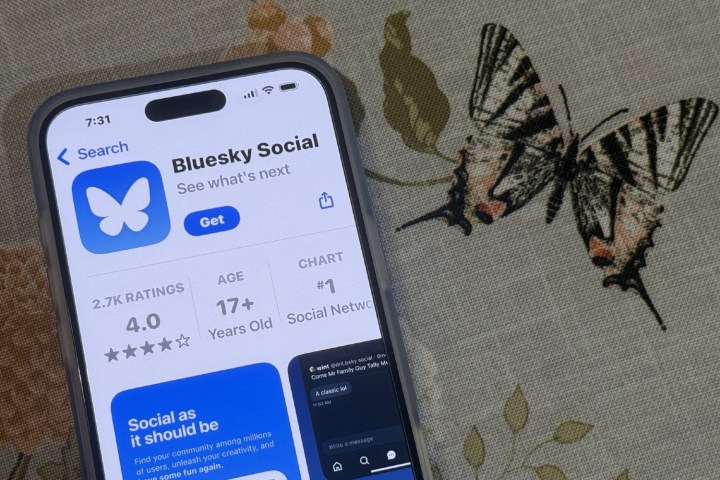
After welcoming its 16 millionth user early Friday morning, the social media platform Bluesky addressed worries from numerous artists and content creators migrating from X.com. The company assured that it has “no intention” of using the content shared by users to train generative AI systems.
A range of artists and creators have established themselves on Bluesky, and we recognize their concerns regarding other platforms utilizing their data for training. We do not make use of your content for generative AI purposes, nor do we have plans to do so.
The Bluesky team elaborated, stating, “We employ AI internally to aid in content moderation, allowing us to prioritize posts and protect human moderators from disturbing material.” They added, “AI is also used in our Discover algorithm to enhance the user experience by suggesting posts. None of these systems involve generative AI trained on user-generated content.”
However, some users, such as Casey Johnston, highlight that the assurances provided do not categorically prevent Bluesky from changing its position in the future. This announcement contrasts sharply with the recent policy updates from X. Under the leadership of billionaire owner Elon Musk, X has revealed plans to adapt its privacy terms, enabling the platform to utilize its vast repository of user-generated content for training its upcoming Grok large language model.
This isn’t the first instance of X.com attempting to leverage its users’ contributions for profit. Earlier in July, the platform quietly adjusted its privacy policy to allow access to user data for training purposes. Most recently, in mid-October, the company went a step further by permitting third-party “partners” to train their AI models using X data unless users opted out:
“Depending on your settings, or if you decide to share your data, we may share or disclose your information with third parties. If you do not opt out, in some instances the recipients of the information may use it for their own independent purposes in addition to those stated in X’s Privacy Policy, including, for example, to train their artificial intelligence models, whether generative or otherwise.”
These policy changes are set to take effect on Friday, November 15, meaning that all public posts, including text, images, and interactions, can now be utilized to train Grok and any other models that the company may pursue. Users wishing to prevent their content from being harvested might want to consider reviewing their social media privacy settings.
Understanding the Impact of Generative AI on Economic Inequality
The Rise of Generative AI
Generative AI technologies, such as ChatGPT and similar large language models, are rapidly transforming the landscape of various industries. As these technologies continue to evolve, their implications for economic equality are becoming a focal point of discussion among industry leaders and researchers alike.
The Deloitte Survey Insights
A recent survey conducted by Deloitte at the end of 2023 has revealed some provocative insights regarding the potential societal impacts of generative AI. The survey included feedback from over 2,800 respondents in key roles across various companies. The findings indicate a deep divide in perceptions:
Perceived Risks vs. Opportunities: Half of the respondents expressed concern that generative AI could exacerbate power consolidations and contribute to increased economic inequality.
Diversity of Perspectives: Contrarily, about 30% of participants believed that the implementation of generative AI could promote a fairer distribution of power, potentially reducing disenfranchisement.
The Dichotomy of Opinions
These contrasting opinions reflect a broader uncertainty in how generative AI will influence economic structures. The uncertainty is compounded by a lack of concrete mechanisms outlined in the survey regarding how these technologies might achieve the alleged benefits.
The Positive Outlook
The belief that generative AI could aid in distributing power more fairly stems from its potential to democratize access to information and decision-making processes. For instance, AI-driven tools can enable smaller companies to leverage sophisticated insights that were once available only to larger enterprises due to resource constraints.
The Skeptical Viewpoint
On the flip side, concerns about generative AI leading to further economic disparity are grounded in the realities of resource allocation. Industries and economies that have access to advanced technological infrastructures are poised to reap the benefits, leaving those without the necessary support behind.
Economic Factors Influencing Outcomes
Tech Sector Robustness
The survey results also hint at a critical relationship between the infrastructure investment in various regions and the outcomes for economic equality. Generative AI technologies typically require powerful computational resources:
Access to Chipsets: Companies with access to dedicated chipsets, particularly in robust tech economies, will likely leverage generative AI to enhance their operations.
Data Center Infrastructure: The decision to build or rent data center capacities can significantly influence a company’s success in adopting generative AI tools. Those with the ability to invest in this infrastructure are in a favorable position to harness AI technologies fully.
The Role of Government and Regulation
The implications of these findings underscore the need for government oversight in the realm of generative AI:
Monitoring Developments: As highlighted by Deloitte analysts, there is a pressing need for governments and regulators to monitor advancements in generative AI closely.
Striking a Balance: Policymakers may need to find a delicate balance between fostering innovation and ensuring equitable access to the benefits of these technologies. The complexities of international regulatory frameworks add an additional layer of challenge to the conversation.
Addressing Economic Disparities
While the discussions surrounding generative AI often center on its transformative potential, the specter of inequality looms large. Ensuring that the advantages of generative AI are shared across various sectors of society requires thoughtful consideration of strategies aimed at mitigating disparities.
Developing Supportive Frameworks
To navigate the potential pitfalls of generative AI, a multi-faceted approach involving collaboration between organizations, governments, and tech leaders is essential. This approach should aim to:
Encourage Inclusive Access: Programs that provide access to AI tools for underrepresented communities can help mitigate historical inequalities.
Foster Innovation with Equity in Mind: Aligning innovation efforts with equitable access can enable broader societal benefits and prevent the concentration of advantages in the hands of a few.
The Future of Generative AI and Economic Factors
As generative AI continues to evolve, so too will the conversations surrounding its societal impact. Continuous dialogue among stakeholders—business leaders, policymakers, and the public—is vital to navigate the complexities of this technology’s role in shaping economic equality.
In summary, the interplay between generative AI advancements, economic inequality, and regulatory oversight is intricate and warrants continued exploration and proactive engagement from all sectors of society.
YouTube has implemented a new policy from March 18, 2024, which will force users to mention if their video is AI-generated, such as AI-generated people, places, or events.
The policy is to ensure transparency and to stop the spread of misinformation or confusion among viewers. Recently, a lot of users have users have been uploading AI videos that looked real to spread misinformation. After the release of OpenAI’s SORA, netizens were concerned about differentiating between what is real and what is generated by an AI.
Creators on YouTube will be using a new option in the Creator Studio to disclose if their content is assisted by an AI or not. If someone ticks AI-assisted content, a declaimer will show on the video player informing the viewer that some parts or the entire video are being generated by AI.
Currently, YouTube is focusing more on topics such as health, news, elections, and finance.
Type of Videos Requires AI-Labeling on YouTube
Videos that contain a real-life person or show something that never happened or has never been captured on the camera.
Altered footage of real events and places (such as creating an image of people dancing during World word 2 etc).
Real-looking scenes that never happened (such as snow falling in a desert in Dubai).
YouTube doesn’t require the disclosure for something that looks AI-generated such as Anime or anything related to cartoons or 3D footage.
Penalties
Creators who do not label their AI-generated video as AI-video will face penalties from Google such as:
Removal of videos
Suspension of account
Demonetization
To make sure your YouTube’s Partner Program stays intact, creators will need to start labeling their AI-generated videos.
Above all of this, YouTube also allows individuals to initiate the request to remove any video that contains their face or voice without their approval.
Google is also de-indexing several websites that are actively using AI-generated content on search, months after declaring that AI is safe to use. To make sure your content stays relevant and you continue making money out of your content, you need to avoid excessive use of AI.
Apple has acquired the Canada-based AI startup DarwinAI. The acquisition is a step towards Apple’s strategy to incorporate generative AI in 2024–2025.
What is Darwin AI?
DarwinAI specializes in making AI applications faster and smaller, which accurately aligns with Apple’s current focus on AI on devices for privacy reasons rather than relying on cloud-based processing.
Several of DarwinAI’s employees have already joined the AI division, including Alexander Wong, a renowned AI researcher. Wong has also accepted the role of director of the AI division.
The company’s AI technology includes Ai for visually investigating components during the manufacturing process. The same process will now also support Apple in various industries and will also empower AI-driven activities within iOS devices.
Apple is making a huge generative AI push with its’ upcoming iOS 18, which will come with an upgraded AI version of Siri, Messages, iWork, Apple Music, and other famous applications.
Apple is also integrating AI technology into Xcode. Apple’s CEO, Tim Cook, has also hinted at a lot of AI announcements from Apple in 2024.
It has not yet been disclosed what sum Apple actually paid DarwinAI to buy their start-up. While Apple once stated that they “buy smaller technology companies from time to time,” this acquisition is also part of their long-term plan.
Discover the 10 key differences between DALL E 2 and DALL E 3, the latest text-to-image generation model from OpenAI, and how these advancements impact image quality and diversity.
Table of Contents
DALL-E is a neural network introduced by OpenAI in January 2021, capable of creating images from text descriptions. Over time, OpenAI has refined this technology, resulting in DALL E 2, released in April 2022, and the more recent DALL E 3, launched in September 2023.
In this article, we’ll delve into the primary distinctions between DALL E 2 and DALL E 3, and how these differences influence the quality and variety of generated images.
1. Resolution
The most striking disparity between DALL E 2 and DALL E 3 is the resolution of the images they produce. DALL E 2 generates images at a resolution of 512×512 pixels, a significant improvement over the original DALL-E’s 256×256 pixels. However, DALL E 3 takes it further, offering an impressive 1024×1024 pixel resolution, enabling more detailed and realistic images.
DALL E 3DALL E 2
2. Diffusion
Another significant contrast lies in the method of image synthesis. DALL E 2 employs a discrete variational autoencoder (VAE) for image compression and decompression into discrete latent codes. In contrast, DALL E 3 utilizes a diffusion model, allowing it to create images from noise by reversing a stochastic process. This shift to diffusion models enhances flexibility and expressive capabilities, making DALL E 3 adept at handling complex scenes and textures.
3. DALL E 3 ChatGPT Integration
DALL-E 3 features integration with ChatGPT, OpenAI’s conversational AI system, capable of generating natural language responses based on user input. This synergy empowers users to utilize ChatGPT for brainstorming and refining prompts for DALL E 3.
Users can engage ChatGPT to articulate their ideas, from simple sentences to detailed paragraphs, and ChatGPT will craft tailored prompts for DALL E 3 to bring those ideas to life. Moreover, users can request minor adjustments to generated images via ChatGPT, offering greater creative control.
4. Prompt Adherence
DALL E 3 excels at faithfully adhering to complex prompts, a challenge for its predecessor, DALL E 2. For instance, DALL E 3 can accurately depict scenes with specific objects and their relationships, such as “a cat sitting on a couch next to a lamp” or “a blue car parked in front of a red house.” In contrast, DALL E 2 occasionally misinterprets or ignores certain prompt elements, necessitating user expertise in prompt engineering.
DALL E 2DALL E 3
5. Text Generation
DALL E 3 showcases significant improvements in generating text within images, such as labels, signs, logos, or captions. It produces legible, contextually relevant text consistent with image content and style. For example, when prompted for “a poster for a movie called The Matrix,” DALL E 3 generates text matching the font, color, and layout of the original movie poster. In contrast, DALL E 2 often generates blurry, irrelevant, or inconsistent text.
DALL E 3DALL E-2
6. Human Details
DALL E 3 elevates the rendering of human details, including faces, hands, hair, and clothing. It creates realistic and diverse human faces with various expressions, poses, angles, and lighting conditions.
Additionally, it generates authentic human hands with different gestures, orientations, and accessories, along with realistic hair and clothing options. In contrast, DALL E 2 struggles with these aspects, sometimes producing distorted or unnatural results.
7. Engaging Images
DALL E 3 stands out by default in generating engaging images, eliminating the need for hacks or prompt engineering. It crafts images that are creative, humorous, surprising, or emotionally resonant without explicit user instructions.
For example, a prompt for “a cute dog” can yield images of dogs with various expressions, poses, accessories, or scenarios that evoke cuteness. In contrast, DALL E 2 often generates images lacking such inherent engagement.
DALL E 2DALL E 3
8. Safety Mitigations
DALL-E 3 incorporates more extensive safety mitigations compared to DALL-E 2 to prevent the generation of harmful content. It can decline requests for violent, adult, hateful, or political content, as well as requests for images of public figures by name.
Safety enhancements in areas such as the generation of public figures and the mitigation of harmful biases related to visual representation have been developed in collaboration with domain experts and red teamers. DALL E 2, with fewer safety measures, is more susceptible to generating inappropriate or offensive images.
9. Provenance Classifier
DALL E 3 introduces a provenance classifier, an internal tool designed to identify whether an image was generated by DALL E 3. This tool serves multiple purposes, aiding OpenAI in understanding potential uses and abuses of generated images and assisting users in verifying the authenticity of generated images and their sources.
DALL-E 2 lacks such a tool, making it more susceptible to misuse or deception.
10. Creative Control
DALL E 3 emphasizes respect for the creative rights of living artists and creators. It will decline requests for images in the style of living artists, and creators can opt their images out from being used in training future image generation models by OpenAI.
DALL E 2 lacks these features, potentially generating images that infringe on the intellectual property or moral rights of living artists or creators.
DALL-E 3 represents the latest evolution in text-to-image generation from OpenAI, pushing boundaries in detail, prompt adherence, text generation, human details, engagement, safety, provenance, and creative control.
Integrated with ChatGPT, it offers a seamless interaction experience, enabling users to refine their prompts and images through natural language. Currently, in the research preview, DALL-E 3 will be available to ChatGPT Plus and Enterprise customers via the API in October, with a broader release planned for later this fall.
Google Bard is a smart assistant that can answer your questions and help you with various tasks. You can use Google Bard to find information, summarize articles, create content, and more. But did you know that you can also use Google Bard to access your Gmail, Drive, Maps, and Search accounts?
Table of Contents
By enabling Google Bard Extensions, you can allow Google Bard to access the information in your Gmail, Drive, Maps, and Search accounts when you ask it questions. This way, you can use Google Bard to find emails, files, directions, and web pages without leaving the Bard website.
How to enable Google Bard Extensions
Visit the official Bard website.
To enable Google Bard Extensions, you need to visit the Bard website.
Navigate to the Extensions tab.
Click on the Extensions tab. There, you will see a list of extensions that you can enable for Gmail, Drive, Maps, and Search.
Enable Access
You can enable each extension by clicking on the Enable button next to it.
Once you have enabled the extensions, Bard will be able to access the information in your Gmail, Drive, Maps, and Search accounts when you ask it questions.
Using Bard Extensions
Bard Extensions offer a wide range of functionalities that can significantly improve your workflow. Here are some examples of how you can leverage these extensions:
Gmail: Need to find an important email from your boss about an upcoming meeting? Simply ask Bard: “Find the email from my boss about the upcoming meeting.”
Drive: Looking for a resume you worked on last week? Ask Bard: “Find the resume I worked on last week.”
Maps: Need directions to the nearest coffee shop? Just ask Bard: “Give me directions to the nearest coffee shop.”
Search: Want a summary of an article about climate change that you read yesterday? Ask Bard: “Summarize the article about climate change that I read yesterday.”
These are just a few examples of how you can utilize Bard Extensions to streamline your daily tasks and access information more efficiently.
Enabling Access to Google Drive
If you are using a Workspace account, you will need to enable access to Google Drive for Bard Extensions. Here’s how:
Go to the Google Admin console.
Click on Apps, then select Google Workspace > Gmail > Settings.
Scroll down to the Bard Extensions section and click on Enable.
Enabling access to Google Drive for Bard Extensions will allow Bard to access the files in your Google Drive account when you ask it questions.
How to disable Google Bard Extensions
If you want to disable Google Bard’s access to your Gmail, Drive, Maps, and Search accounts, you can do so at any time. To disable Google Bard Extensions, you need to visit the Bard website and click on the Extensions tab. There, you will see a list of extensions that you have enabled for Gmail, Drive, Maps, and Search. You can disable each extension by clicking on the Disable button next to it.
Once you have disabled the extensions, Google Bard will no longer be able to access the information in your Gmail, Drive, Maps, and Search accounts. You can still use Google Bard for other purposes, such as finding information or creating content.
You can also revoke Google Bard’s access to your accounts from your Google Account settings. To do so, go to https://myaccount.google.com/permissions and click on Third-party apps with account access.
Enabling Google Bard to access your Gmail, Drive, Maps, and Search accounts can greatly enhance your productivity and make information retrieval more convenient. By following the steps outlined in this article, you can unlock a range of features that will streamline your daily tasks and help you stay organized.
Welcome to the exciting world of AI voice technology! With the incredible advancements in artificial intelligence, you can now use the voice of none other than President Joe Biden himself.
Table of Contents
This revolutionary technology allows you to bring your creative projects to life and make them truly captivating.
Joe Biden AI Voice Generator
Find a Reliable AI Voice Platform (Such as Typecast)
To access the incredible AI Joe Biden voice, you need to Typecase AI voice platform that offers this specific voice. Look for platforms that provide a wide range of AI voices and ensure they have a good reputation for quality and accuracy.
Choose Your Text
Think of the message you want to convey using Joe Biden’s voice. It could be anything from a creative project, educational content, or even a voice-over for a video. Once you have your text ready, make sure it is in a format compatible with the chosen AI voice platform.
Customize and Generate
Now, it’s time to let Joe Biden’s voice shine! Many AI voice platforms allow you to customize the tone, pacing, and emphasis to make the voice sound just the way you want. Once you’ve made your desired adjustments, hit the generate button, and witness the magic as President Biden’s voice brings your words to life!
The Future is Here: Harness the Power of Joe Biden AI Voice!
The power of Joe Biden AI Voice lies in its ability to make your creative projects stand out. Whether you’re working on a podcast, video production, or even an advertising campaign, having the voice of President Biden can add a touch of sophistication and authority to your work.
Imagine the impact of Joe Biden’s voice narrating your latest documentary or providing a voice-over for your animated character. With this AI voice, you have the opportunity to captivate your audience and make your content truly unforgettable.
Say It Like Biden: Master the Art of Using AI Voice!
To make the most of Joe Biden AI Voice, it’s crucial to master the art of using it effectively. Experiment with different tones and pacing to match the mood of your content. If you’re working on a heartfelt message, you may want to choose a more empathetic and compassionate tone. On the other hand, if you’re creating a persuasive speech, emphasizing certain words and using a confident tone can help convey your message more convincingly.
Remember, practice makes perfect! Spend some time exploring different ways of using Joe Biden AI Voice until you find the perfect combination that brings your creative vision to life. With dedication and a little imagination, you can become a maestro in harnessing the power of AI voice technology.
So, what are you waiting for? Unleash your creativity and let Joe Biden’s distinctive voice elevate your projects to new heights. Follow this step-by-step guide, harness the power of AI voice, and bring your ideas to life in a truly unique way. With President Biden as your virtual voice, the possibilities are endless. Embrace the future and transform your work with Joe Biden AI Voice today!
Twitter has evolved into a strong communication tool that also aids in brand marketing and sharing of content today.
Table of Contents
Though it is really difficult to craft eye-catching and compelling tweets but Twitter AI Prompt Generator has made this process streamlined and simple.
This cutting-edge program uses artificial intelligence to produce interesting and relevant tweet prompts, allowing users to improve their tweeting experience and attract their audience.
Twitter AI Prompts Generator
[wpaicg_chatgpt id=60660]
The Twitter AI Prompts Generator acts as a virtual assistant for Twitter users, providing them with an array of tweet ideas based on their preferences. With a user-friendly interface, the generator presents a box where users can input their desired topic, theme, or idea.
By leveraging sophisticated AI algorithms and models, the generator analyses the provided information and produces a range of compelling tweet prompts that are tailored to resonate with the target audience.
From thought-provoking questions to catchy statements, the Twitter AI Prompts Generator serves as a valuable resource for users seeking inspiration and guidance in creating captivating tweets.
Features
AI-Powered Tweet Generation: The Twitter AI Prompts Generator utilizes advanced artificial intelligence technologies to generate original and engaging tweet prompts. By leveraging cutting-edge algorithms, it ensures that the generated prompts are relevant, diverse, and compelling.
Customization Options: Users have the flexibility to input their desired topic or theme, enabling the generator to provide tweet prompts that align with their specific interests or objectives. This customization feature ensures that the generated content remains relevant and targeted.
Time-Saving Solution: Crafting creative tweets can be a time-consuming process. The Twitter AI Prompts Generator eliminates the need for extensive brainstorming by instantly providing users with a wide range of tweet ideas. This saves valuable time and allows users to focus on other aspects of their social media strategy.
Enhanced Engagement: The produced tweet prompts are intended to start conversations, create likes and retweets, and ultimately increase user engagement. The generator assists users in connecting with their audience on a deeper level by including interesting and attention-grabbing information.
How to Use
Using the Twitter AI Prompts Generator is simple and straightforward. Follow these steps to make the most of this powerful tool:
Visit the Twitter AI Prompts Generator website or access it through a compatible platform.
Locate the input box or field provided on the generator's interface.
Enter your desired topic, theme, or idea that you want the tweet prompts to be based on.
Click the "Generate" button or equivalent to initiate the AI's analysis process.
Wait for a few moments as the generator processes your input and generates a series of tweet prompts.
Review the generated prompts and select the ones that resonate with your objectives and target audience.
Customise and refine the selected prompts as needed to align them with your brand voice and style.
Copy and paste the finalized tweet prompts into your Twitter account or social media management platform.
FAQs (Frequently Asked Questions)
Is the Twitter AI Prompts Generator free to use?
Yes, the Twitter AI Prompts Generator offers free access to users.
How does the AI generate tweet prompts?
The AI-powered generator employs advanced algorithms and models that analyze the user-provided input to generate tweet prompts. These algorithms consider factors such as relevance, engagement, and audience appeal.
Can I customize the generator to match my writing style?
While the Twitter AI Prompts Generator primarily focuses on generating relevant and engaging tweet prompts, personalization options may vary. However, the tool aims to provide a wide range of prompts that can be adapted to various writing styles.
Are the tweet prompts generated by the AI original?
Yes, the AI-powered generator creates original tweet prompts based on user-provided input. The AI models are trained to generate unique and compelling content to ensure the prompts are fresh and relevant.
The Twitter AI Prompts Generator transforms the way users approach tweet creation. By utilizing the power of AI the process of tweet creation has been streamlined.
If you are looking to increase your Twitter presence as a social media manager, content creator, brand manager, or influencer then this Twitter AI Prompts Generator can be of extreme help to not only improve your tweeting experience but also connect you with your targeted audience on a deeper level