الوسم: gender pay gap

  • Gender Pay Gap: Women Earn 83% of Men’s Wages in 2023

    Gender Pay Gap: Women Earn 83% of Men’s Wages in 2023

    Understanding the Gender Pay Gap: An Overview

    The gender pay gap has been a longstanding issue in the workforce, and efforts to raise awareness about this disparity are still crucial today. March 25, 2025, will mark Equal Pay Day in the United States—a poignant reminder that women must often work significantly longer than men to earn the same income.

    The Origin of Equal Pay Day

    Equal Pay Day was established in 1996 by the National Committee on Pay Equity with the aim of spotlighting the ongoing wage gap between male and female workers. This symbolic day highlights how far into the following year women must labor to earn what men made in the previous year. For example, if men earned a certain annual salary in 2023, women had to work until March 25, 2025, to earn the same amount.

    Current Wage Statistics

    Comparing Men and Women’s Earnings

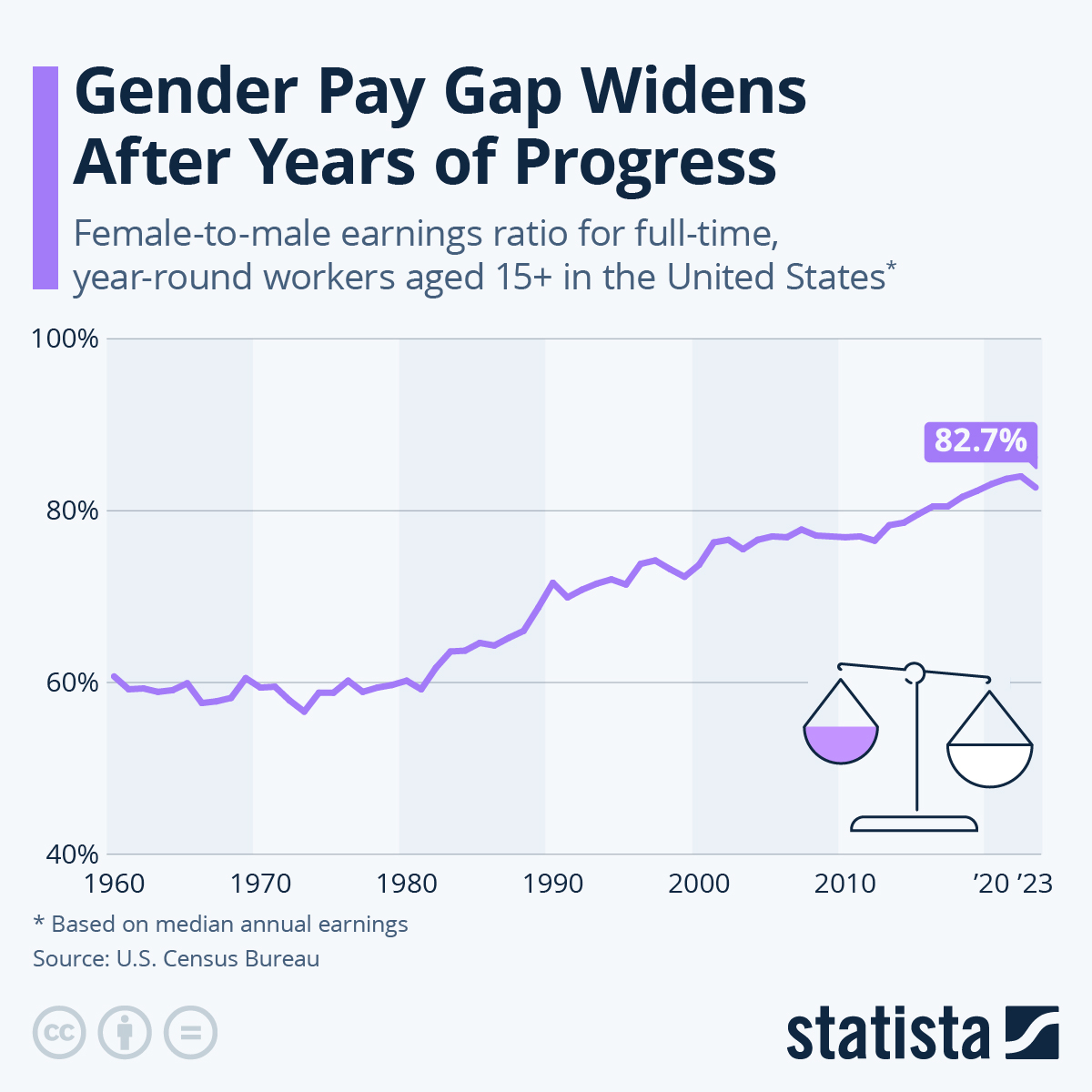
    According to the U.S. Census Bureau’s Current Population Survey, the stark realities of the gender pay gap are evident in the statistics. In 2023, female full-time, year-round workers aged 15 and older earned a median annual pay of $55,240, while their male counterparts earned $66,790. This discrepancy signifies that women earned approximately $0.83 for every dollar men earned. Consequently, women would need to work an additional 21 percent, which translates into roughly 11 weeks longer, to reach the same earnings as men.

    Progress Over the Decades

    While there has been some progress since the 1960s, with the female-to-male pay ratio increasing from less than 60 percent to over 80 percent, the journey toward full pay equality has been painfully slow. The year 2023 marked a notable setback, as the pay gap widened for the first time in years, bringing attention to the fact that even in a generally improving trend, setbacks can still occur.

    The Intersectionality of Wage Disparities

    The Variance Among Women

    The gender pay gap does not affect all women uniformly. Disparities are much more pronounced for women of color, particularly for Black, Hispanic, and Native American women. Additionally, working mothers often experience an even larger wage gap, illustrating that intersectionality plays a vital role in understanding the complexities of wage disparities.

    Education and the Pay Gap

    Academic Credentials vs. Earnings

    Interestingly, one might assume that higher levels of education would correlate with reduced wage gaps. Yet data indicates otherwise. A thorough examination conducted by the U.S. Census Bureau demonstrated that regardless of educational attainment—be it a bachelor’s degree or higher—the gender pay gap persists across various fields, both high- and low-earning.

    The Widening Gap with Higher Education

    Adding to the uncomfortable reality, research from the Economic Policy Institute shows that the gender pay gap even widens with increased education levels. For instance, the gap stands at approximately 20 percent for workers lacking a high school diploma, but this discrepancy rises to around 30 percent for those holding advanced degrees. This suggests that education alone cannot bridge the wage divide; other systemic factors contribute to ongoing inequities.

    The Road Ahead

    The gender pay gap is a multifaceted issue that presents challenges at both societal and organizational levels. As we recognize Equal Pay Day and the persistent pay inequities that many individuals face, it is clear that continued advocacy, reform, and awareness are essential to drive meaningful change and foster an equitable workforce for all.

  • U.S. Women Earn 83 Cents per Dollar Compared to Men

    U.S. Women Earn 83 Cents per Dollar Compared to Men

    Understanding the Gender Pay Gap in the United States

    The gender pay gap remains a critical issue in the United States, reflecting disparities in earnings between men and women across various sectors and demographics. This blog delves into the current state of the gender pay gap, highlighting the statistics and implications for different demographic groups.

    Current Wage Disparities

    In 2024, women in the U.S. were faced with a significant challenge regarding their earnings compared to their male counterparts. On average, American working women earned 83 cents for every dollar earned by men. This statistic becomes even more alarming when viewing it through the lens of deeper racial and ethnic divisions. The average wage gap indicates that women, particularly women of color, experience a significantly larger disparity in earnings.

    U.S. Equal Pay Day

    In the ongoing fight for equal pay, the U.S. Equal Pay Day symbolizes how far into the new year women must work to earn what men earned in the previous year. This day serves as a stark reminder of the ongoing struggle for wage equality. For 2024, the Equal Pay Day moved from March 12 to March 25, marking a setback in the fight for equal pay.

    Subsequent Equal Pay Days

    The American Association of University Women (AAUW) has also proposed specific Equal Pay Days for women of various racial and ethnic backgrounds. These dates illustrate the widening gaps and inequities that exist not just by gender but also by race:

    • Asian, Pacific Islander & Native Hawaiian Women’s Equal Pay Day: April 7, 2025
    • Black Women’s Equal Pay Day: July 10, 2025
    • Latina’s Equal Pay Day: October 8, 2025
    • Native American Women’s Equal Pay Day: November 18, 2025

    These dates highlight the prolonged challenges that women of color face in achieving wage parity, underscoring the need for targeted initiatives to address these disparities.

    Breaking Down the Numbers

    The statistics surrounding the gender pay gap reveal significant inequalities based on race as well:

    • Black Women: On average, Black women earn only 66 cents for every dollar earned by white, non-Hispanic men.
    • Native American Women: Their earnings are similarly staggering, with a mere 58 cents for every dollar earned by their white male counterparts.
    • Latinas: They face an identical situation, earning just 58 cents for each dollar.
    • Asian, Pacific Islander & Native Hawaiian Women: In contrast, this demographic earns more, with 97 cents for every dollar men make, which places them above the national average but emphasizes racial disparities still exist.

    Trends in Earnings Over Time

    Historically, the pay gap for women in the U.S. has shown a gradual improvement, particularly for Asian women, whose earnings have seen a notable increase over recent decades. However, recent statistics indicate that this progress has stagnated. In recent years, the increase in earnings has slowed to just one or two cents annually, and a recent decline was observed with a drop of one cent.

    Factors Contributing to the Gender Pay Gap

    Several factors contribute to the persistent gender pay gap, including:

    1. Occupational Segregation: Women and men often work in different industries and occupation types, with traditionally female roles generally paying less.
    2. Work Hours: Women are more likely to work part-time or in seasonal positions, which tend to offer lower wages and fewer benefits.
    3. Negotiation Disparities: Studies suggest that women are less likely to negotiate salaries than men, potentially leading to lower starting salaries and wage growth over time.

    The Impact of Legislation

    Recent legislative efforts to promote pay equity and address these disparities are vital. Proposed bills and reforms seek to mandate pay transparency and equitable hiring practices, aiming to bridge the wage gap. Advocacy from organizations continues to pressure lawmakers to create lasting changes that can benefit working women across the nation.

    The Path Ahead

    While the statistics around the gender pay gap paint a concerning picture, it highlights the ongoing need for advocacy, policy change, and societal shifts to create a more equitable workforce. By understanding the landscape of the gender pay gap and the complexities surrounding it, we can begin to take action towards a more balanced and fair economic future for all.

  • 2023 Gender Pay Gap: South Korea’s 29.3% Disparity Unveiled

    2023 Gender Pay Gap: South Korea’s 29.3% Disparity Unveiled

    Understanding the Gender Pay Gap: A Global Perspective

    The gender pay gap is a critical issue impacting economies worldwide, defining disparities in wages earned by men and women for similar work. This blog delves into the recent findings on this phenomenon, drawing on the latest data to illustrate where we currently stand in the quest for equality in the workplace.

    The Current Landscape of the Gender Pay Gap

    Recent statistics shed light on the gender pay gap globally, with varying degrees of disparity across different countries. According to the OECD, South Korea emerged as a country with a significant struggle in this area, showcasing the largest gender wage gap among developed nations.

    South Korea: A Deep Divide

    In 2023, South Korean male workers earned approximately 29.3% more than their female counterparts, highlighting a stark contrast in earnings. This discrepancy points to systemic issues that have persisted within the workforce, reflecting broader cultural and societal norms that impact women’s employment opportunities and income potential.

    Trend Analysis: Japan’s Gender Pay Gap

    Following closely behind South Korea is Japan, where the gender pay gap has been reported at 22.0% in 2023. This gap signals ongoing challenges in achieving parity, even in a region known for its economic advancements. Cultural factors, workplace structures, and gender norms continue to contribute to this disparity, making it a concern that requires further examination and policy intervention.

    North America: A Moderate Gap

    Turning our focus to North America, the United States displays a gender pay gap of roughly 16%. While this figure is better than that of South Korea and Japan, it highlights significant room for improvement. Notably, limited data from 2023, coupled with the 2022 OECD average of approximately 11%, suggests an ongoing issue wherein women frequently find themselves in lower-paid or part-time positions.

    The Dynamics of Employment

    One of the central contributors to the gender pay gap is the distribution of women in lower-paying jobs. This trend indicates that women are often engaged in roles that are under-appreciated in terms of compensation but are essential for societal functioning—such as healthcare, education, and administrative positions. In contrast, men tend to occupy higher-paid roles or those linked with economic volatility, such as manufacturing.

    The Impact of Economic Conditions

    An interesting phenomenon arises when considering economic downturns. When crises hit, competitive and higher-paid positions traditionally held by men can vanish. In some cases, this leads to women out-earning men as they find stable employment in essential services. This observation points to the necessity for a nuanced understanding of the gender pay gap—while disparities may suggest an issue of inequality, they can also reflect broader economic challenges.

    Profiles of Progress: New Zealand’s Achievement

    Among highly developed nations, New Zealand stands out as a positive example with a minimal gender pay gap of just 4.2%. This relatively low figure indicates successful interventions and progressive policies aimed at promoting gender wage equality. Understanding how New Zealand achieved this could offer valuable lessons to other countries grappling with larger gaps.

    Broader Implications: The Need for Action

    The evidence suggests a complex interplay of social, economic, and cultural factors driving the gender pay gap. This issue extends beyond mere statistics; it represents a significant challenge to achieving true workplace equality. Continued dialogue, research, and active policy measures are necessary to close these gaps and create a fairer economic landscape for all workers.

    Conclusion

    The gender pay gap remains a pressing global concern, marked by significant variations between different regions and countries. Understanding these dynamics is crucial as we strive for a more equitable future in the workforce. Formulating targeted strategies and policies can help mitigate disparities, leading toward enhanced economic stability and fairness for everyone involved.