الوسم: Gaza

  • Gaza Zoo Animals Suffer Amid War’s Devastation

    Gaza Zoo Animals Suffer Amid War’s Devastation

    When children arrive at the zoo near Gaza’s Nuseirat refugee camp, they often see a lion staring vaguely through the bars and chimpanzees sitting listlessly in their enclosure. Many animals are undernourished and weakened due to shortages of food, medicine, and vaccines, yet they persist, largely thanks to the efforts of zoo owner Mahmoud Gomaa.

    Originally, Gomaa operated the zoo in Rafah, a southern city, but he was forced to flee when Israeli troops attacked and took control of parts of the area in 2024. As the conflict intensified, he relocated the surviving animals from one town to another before settling in Nuseirat in central Gaza earlier this year.

    In Gaza, Gomaa reopened the zoo with hopes of providing some relief for traumatized children after nearly three years of destruction. He shared that at the start of the war, his priority was to save the animals, even more than himself, as the struggle for survival engulfed everyone.

    Prior to the outbreak of conflict between Israel and Hamas, Gaza boasted a number of zoos showcasing exotic and wild animals like lions and eagles, according to municipal records. Now, maintaining such facilities faces enormous obstacles, especially in sourcing sufficient food for the animals amid a strained food supply for the human population.

    Veterinarian Nidal Fadel explained that animals are being fed frozen meat, which is harmful because they naturally hunt fresh prey: “This is a catastrophe and a poor nutritional plan.” The war has taken a direct toll on the animals, with Gomaa recalling leaving behind lions, crocodiles, and ostriches when he fled Rafah. When he returned months later, only bones remained of the crocodiles and ostriches, and the lions were gone.

    The trauma inflicted by the sounds and sights of ongoing conflict profoundly impacts the animals. Veterinarian Amir Khalil, who has organized rescue missions into Gaza, noted that lions are particularly sensitive, detecting sounds and disturbances humans often miss. “Constant bombing and conflict create tremendous stress and fear for them,” Khalil said.

    Inside the zoo in Nuseirat, the solitary lion barely acknowledged visitors, but children found joy in interacting with other animals—parrots perched on shoulders and smaller monkeys that they could pet. Despite the ongoing hostilities and a fragile ceasefire, the zoo provides a rare spot of respite, although Israel’s military, claiming its strikes target Hamas, hasn’t responded to inquiries about civilian infrastructure like zoos and their animals.

    Karam Al-Mazin, a 42-year-old visitor, lamented the current situation: “Today, there’s no place for children to play. All that’s left are rubble, stones, and tents. The kids are bored and going through a tough time.”
  • Cairo Talks Challenge Trump’s Gaza Peace Plan Amid Renewed Israeli Airstrikes

    Cairo Talks Challenge Trump’s Gaza Peace Plan Amid Renewed Israeli Airstrikes

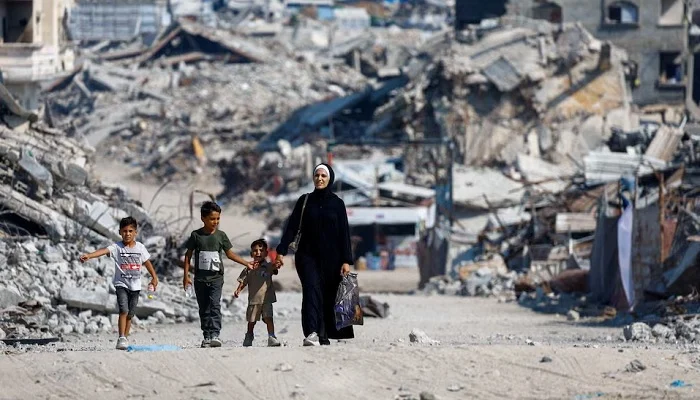
    Palestinians walk past the rubble of residential buildings destroyed during the conflict in Gaza City, August 15, 2026.— Reuters

    – Trump’s proposal calls for an immediate halt to military operations in Gaza.
    – Envoys are set to meet with Netanyahu on Monday, according to an Israeli official.
    – Israel claims it targeted militants in its recent Gaza strikes.

    Donald Trump’s representatives met with mediators from Egypt, Qatar, and Turkey in Cairo on Sunday, an anonymous diplomatic source revealed. The goal was to push forward with the U.S. president’s peace initiative for Gaza, despite ongoing Israeli airstrikes in the region.

    Hamas officials attended some of the talks that Trump’s envoy and his son-in-law, Jared Kushner, as well as Nickolay Mladenov—Trump’s representative for Gaza—conducted with mediators.

    An Israeli official stated that Kushner and Mladenov were scheduled to meet with Prime Minister Benjamin Netanyahu on Monday. Netanyahu had previously dismissed Trump’s recent peace plan for Gaza as “unacceptable” on August 9.

    The Israeli source expressed concerns over Washington’s insistence on ending targeted killings of Hamas fighters, as the group works to rebuild its strength.

    Trump’s peace proposal demands an immediate end to hostilities in Gaza, envisioning Hamas disarming as Israeli forces withdraw and Gaza undergoes reconstruction under a new civilian Palestinian government.

    Israel has resumed airstrikes after a brief reduction earlier this month. The military reported hitting two militants from Islamic Jihad and Hamas in Khan Younis and Nuseirat, injuring at least five Palestinians in the process. Medics noted that one of the wounded in Khan Younis later died from their injuries.

    Another strike targeted a different fighter, hitting an apartment in Nuseirat in central Gaza and wounding several individuals, according to medical personnel.

    Earlier, Hamas leader Khalil Al-Hayya met with Egypt’s intelligence chief, Hassan Rashad, in Cairo. Hamas spokesperson Hazem Qassem mentioned that Al-Hayya would update mediators on alleged violations of the ceasefire by Israel.

    Last month, Trump announced a major breakthrough in his effort to end the conflict. Hamas indicated it had agreed to the peace plan to avoid further fighting but emphasized that Israel must first meet its commitments by withdrawing its forces and ceasing attacks.

    Five Arab nations along with Turkey, Pakistan, and Indonesia condemned Israel’s rejection of the plan. In a joint statement issued Sunday, they warned that this move jeopardizes Trump’s peace efforts.

    Netanyahu’s Likud party, which faces tough polls ahead of the October 27 national election, claimed that Arab countries aim to topple Netanyahu so that his political opponents can “give them everything they want.”

    Hamas also called on mediators and the Peace Board—established under Trump’s plan—to pressure Israel into fulfilling its initial obligations, ending ceasefire violations, and approving the next phase of the roadmap.

    A ceasefire in October halted the intense two-year conflict that began after Hamas launched an attack on Israel on October 7, 2023. However, the ceasefire failed to stop all Israeli attacks entirely.

    Since October 2025, Israeli forces have killed over 1,250 Palestinians in Gaza, most of whom were civilians. The exact number of militants among the dead remains unclear, as Hamas typically does not disclose such details. Meanwhile, four Israeli soldiers have been killed by Gaza-based fighters during the same period, according to Israeli reports.

  • Key Highlights of the Peace Board’s Gaza Ceasefire Proposal

    Key Highlights of the Peace Board’s Gaza Ceasefire Proposal

    The Board of Peace has issued a 15-point “roadmap” to implement President Donald Trump’s Gaza ceasefire proposal. This plan outlines steps toward disarming Hamas and gradually withdrawing Israeli forces from Palestinian territories.

    Key highlights include:

    • Both Israel, Hamas, and other Palestinian factions will cease military activities.
    • The timeline and detailed procedures will be established within 14 days once all parties endorse the plan; extensions may be possible.
    • The National Committee for the Administration of Gaza (NCAG) will deploy into Gaza and begin assuming governing responsibilities.
    • Progress to subsequent phases depends on verified completion of prior commitments.
    • An International Verification Committee (IVC) will oversee verification and monitor violations during the process.
    • Gaza will be managed under the principle of “One Authority, One Law, One Weapon,” with NCAG operating according to Palestinian laws and international standards.
    • Newly trained police officers will integrate into existing structures after thorough vetting; personnel not meeting standards will be reassigned civilian roles. All police weapons will transfer to NCAG control.
    • A process to decommission, store, and manage Hamas’s heavy weapons, military sites, depots, and tunnels will be gradually implemented by NCAG, tied to phased Israeli withdrawals.
    • Weapons will not be transferred to Israel or other non-Palestinian entities; ultimately, NCAG will hold all weapons.
    • A temporary International Stabilization Force (ISF) will be stationed in Gaza to separate Israeli forces from NCAG-controlled areas.
    • The ISF will monitor ceasefire compliance, train Palestinian police, secure humanitarian aid, and support NCAG, but will not perform policing or societal security functions.
  • Who is Khalil Al-Hayya, Hamas’ New Leader?

    Who is Khalil Al-Hayya, Hamas’ New Leader?

    Khalil al-Hayya, a prominent Hamas leader who survived an Israeli raid in Qatar last September and is considered to have strong connections with Iran, was officially appointed as the overall head of the Palestinian organization on Monday.

    Hayya, who lost a son in the Gaza conflict and two others in previous wars, has been residing with other Hamas leaders in Doha. His influence within the group has grown as several top Hamas officials, including Ismail Haniyeh during his visit to Iran and Yahya Sinwar in Gaza, have been killed by Israeli strikes.

    Throughout the Gaza war that began when Hamas launched a surprise attack on Israel on October 7, 2023, Hayya played a central role in ceasefire negotiations. These talks, which were mostly indirect and facilitated by the United States, resulted in a ceasefire in October 2025 that ended major hostilities in Gaza. Despite this, Israel has continued its strikes against Hamas and other groups it claims pose an immediate threat.

    Hayya, 64 years old, has become regarded as the most influential Hamas figure abroad, especially following Haniyeh’s death in Iran in July 2024. He is part of a five-member leadership council based in Qatar, which has led the organization since Sinwar was martyred last year. Originally from Gaza, Hayya is a seasoned member of Hamas and maintains close ties to Iran. He has been actively involved in multiple efforts to broker ceasefires with Israel, including ending the 2014 conflict and trying to halt the current Gaza violence.

    Since Hamas’s founding in 1987, Hayya has been a key member. In the early 1980s, he joined the Muslim Brotherhood alongside Haniyeh and Sinwar. His history with Israel includes multiple detentions, and in 2007, an Israeli airstrike targeted his family home in Gaza, killing several relatives. His son Hamza was also killed by an Israeli strike in 2008. During the 2014 Gaza war, Hayya’s eldest son Osama’s house was bombed, killing him, his wife, and their three children.

    Hayya has spent time outside Gaza, serving as Hamas’s liaison to the Arab and Islamic worlds, and has been based in Qatar. He accompanied Haniyeh on a trip to Tehran in July, during which Haniyeh was martyred. Hayya has publicly stated that the October 7 attack was intended as a limited operation to seize soldiers for a hostage exchange, but he claims the Israeli military “completely collapsed.” He believes this attack has reignited the international focus on the Palestinian cause.

    Since Hamas’s attack on Israel, over 67,000 Palestinians have been killed in the Israeli response, according to Gaza’s health ministry. Besides engaging in mediated negotiations for a ceasefire, Hayya has carried out significant political activities for Hamas, including a 2022 mission to Syria to repair diplomatic ties with Bashar al-Assad, which had been strained after Hamas endorsed the uprising against Assad a decade earlier. This reconciliation was crucial in restoring a regional alliance formed by Iran to oppose Israel and the United States.

  • UN Inquiry: Israel’s Actions in Gaza Lead to Child Genocide

    UN Inquiry: Israel’s Actions in Gaza Lead to Child Genocide

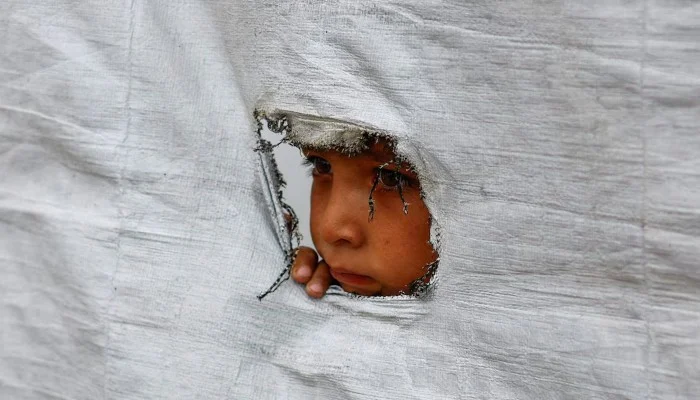
    A displaced Palestinian boy looks through a tear in a tent wall in Gaza City, May 6, 2026. — Reuters

    The UN independent inquiry accuses Israeli authorities and security forces of intentionally targeting Palestinian children, resulting in acts classified as genocide, crimes against humanity, and war crimes in Gaza, with additional war crimes in the occupied West Bank. The report examines violations against Palestinian children since the outbreak of hostilities between Israel and Hamas on October 7, 2023.

    The findings reveal that approximately 30% of those killed during the Gaza conflict were children. A prior report from September alleged that Israel committed genocide in Gaza, with high-ranking officials, including Prime Minister Benjamin Netanyahu, inciting such actions. Israel responded sharply, dismissing the report as “defamatory” and emphasizing that children deserve protection, accusing the commission of overlooking Hamas’s brutal tactics.

    According to the UN, Palestinian children were deliberately targeted and killed even after a ceasefire was declared in October 2025. This was seen as evidence of genocidal intent by Israeli forces to wipe out or weaken the Palestinian population in Gaza. Srinivasan Muralidhar, chair of the commission, stated, “The evidence shows that Palestinian children have been deliberately targeted and killed by Israeli security forces.”

    Regarding child fatalities, the report highlights that the proportion of children among conflict casualties has increased compared to previous conflicts. Between October 7, 2023, and October 7, 2025, over 20,179 children lost their lives, making up about 30% of the total death toll. In earlier hostilities during 2008–2009 and 2014, children accounted for roughly 24% of casualties. Despite rising child casualties, Israeli forces continued to employ high-impact munitions and wide-area weapons in crowded residential areas, actions that the commission views as intentional, aimed at civilians perceived to be linked to Hamas or other armed groups.

    Israel’s mission in Geneva defended its tactics, emphasizing efforts to minimize harm to children during conflicts and strongly denying deliberate targeting. Muralidhar added that targeting children undermines the future and existence of the Palestinian people.

    The report also detailed how Israeli-imposed conditions, including ongoing violence, displacement, and a blockade restricting aid, food, and medicine, have severely impacted children’s health and development, leading to preventable deaths, trauma, and decreased well-being. Healthcare facilities and reproductive services had been attacked, affecting newborn survival and increasing miscarriages. Nearly all Gaza children are reported to need psychological support.

    Israel’s response criticized the report for not mentioning its role in supporting vaccinations, facilitating medical aid, and establishing field hospitals, countering claims that Hamas diverts humanitarian aid and fuel, allegations Hamas has denied.

    In the West Bank and East Jerusalem, the commission observed a significant rise in violence by Israeli settlers against Palestinian children, including systematic abuses such as forced strip searches, beatings, and food deprivation during arrests and detention. These acts, the report states, constitute crimes against humanity, such as torture and inhumane treatment, causing great suffering and injury. Israel’s rebuttal argued that the report lacked context regarding the constant threat of terrorism that its security forces respond to.

  • Jerry Seinfeld Sparks Backlash Over blunt Response to ‘Free Palestine’

    Jerry Seinfeld Sparks Backlash Over blunt Response to ‘Free Palestine’

    Digital Phablet – Jerry Seinfeld Sparks Controversy After Dismissing a Viral ‘Free Palestine’ Campaign

    In a recent turn of events, comedian Jerry Seinfeld drew criticism after dismissing a social media plea for support of Palestine. The incident unfolded when influencer Finesse Fave posted a TikTok clip asking, “Can we get a ‘free Palestine’?” to which Seinfeld responded with a laugh, saying, “Come on, give us a ‘free Palestine.’” He then bluntly stated, “It doesn’t exist.”

    Seinfeld’s stance was further highlighted during an incident leaving a New York Knicks game in May. Wearing a Knicks cap, he encountered hecklers who accused him of supporting “the genocide of babies in Gaza.” While facing hostility, Seinfeld maintained a humorous demeanor, chuckling off the accusations.

    A video circulating on the Palestinian Assembly for Liberation’s Instagram shows Seinfeld heading to his vehicle when someone off-camera shouts, “F— you! Free Palestine! You support the genocide of babies in Gaza.” The comedian remains unshaken amidst the confrontation.

    In a September appearance at Duke University, Seinfeld criticized the “free Palestine” movement. He was at the event honoring Omer Shem Tov, an Israeli hostage held captive by Hamas for 505 days following her kidnapping on October 7, 2023.

    Seinfeld introduced Shem Tov before making provocative remarks about anti-Israel protests, asserting that the Ku Klux Klan was “honest” about their hatred. Comparing the movements, Seinfeld remarked, “To me, ‘Free Palestine’ essentially just means you can openly express your dislike for Jews. Just say you don’t like Jews. When you say ‘Free Palestine,’ you’re not admitting your true beliefs. Honestly, compared to the KKK, which openly states its hate for Blacks and Jews, I think the Klan is somewhat more honest.”

    Apart from his comedy, Seinfeld has an interest in classic cars, notably a collection of rare Porsches. He recently shared his thoughts on electric vehicles, expressing disdain. In an interview with AirMail, he said, “I’m not interested in electric cars. If others want to drive them, that’s fine. I believe it’s a foolish virtue signal—trying to show you’re protecting the Earth. But what about lithium? It’s all nonsense.”

    Regarding autonomous cars, Seinfeld joked that he tells his children they will someday say, “You mean, when you grew up, they’d let people drive at any speed and steer the wheel themselves? Didn’t they always crash and kill themselves? Yeah.” He admitted not knowing the exact number of cars in his collection, humorously stating, “If you saw the number, you’d think it doesn’t make any sense.”

    Seinfeld with a rare Porsche


    Note: All images and content are sourced from the original article.

  • Global Conflicts Surge to Peak in 2025: Report

    Global Conflicts Surge to Peak in 2025: Report

    In 2025, the number of global conflicts involving states reached its highest level since World War II, according to a Norwegian study published on Tuesday. Experts warn this surge has led to an increase in violence against civilians. The annual “Conflict Trends” report by the Peace Research Institute Oslo (PRIO) states that 65 conflicts involving at least one government entity were documented last year, marking a peak since 1946.

    The data also shows a record number of interstate conflicts for the past 80 years, doubling from the previous year to eight. These include border clashes between India and Pakistan, Afghanistan and Pakistan, Cambodia and Thailand, along with Russia’s invasion of Ukraine and Israeli military actions against Syria.

    “Unfortunately, there’s not much positive to report,” said researcher Siri Aas Rustad to various media outlets, including AFP. “Usually, I find some silver lining, but this year the numbers are quite shocking.”

    Last year ranked as the third deadliest since the Cold War ended, with approximately 245,000 deaths from direct combat or political violence. Of these, nearly 76,500 were civilians targeted specifically in attacks, compared to around 14,200 in 2024. A significant rise in civilian casualties is tied to the ongoing conflict between the military and paramilitary groups in Sudan, where sieges and massacres in El-Fasher, in the Darfur region, are believed to have killed around 60,000 people.

    Since the Cold War’s conclusion, only 1994 and 2021 have seen higher casualties due to the Rwandan genocide and the Ethiopian Tigray conflict, respectively.

    Africa continues to be the most affected region by conflicts involving at least one state, with 29 such disputes, followed by Asia, the Middle East, the Americas, and Europe. Rustad highlighted Israel as an especially aggressive country at present, citing its involvement in various conflicts across Gaza, Syria, Lebanon, Iran, and Yemen’s Houthi rebels.

    She also pointed to the U.S., noting that the return to power of President Donald Trump has not only escalated violence but also increased trade restrictions. “We’re shutting down cooperation. The UN Security Council isn’t functioning effectively, and the world is becoming more polarized,” Rustad added.

  • UN to Blacklist Israel Over Sexual Violence in Conflict, Envoy Says

    UN to Blacklist Israel Over Sexual Violence in Conflict, Envoy Says

    Israeli soldiers embrace upon returning from Gaza amid ongoing conflict between Israel and Hamas in southern Israel, February 29, 2024. — Reuters

    – This is a political decision, says Israeli envoy, disconnected from facts and reality.
    – “Israel has decided to sever all ties with the UN Secretary-General’s Office.”
    – Guterres expresses grave concern over violations by Israeli forces.

    GENEVA: Israel’s UN ambassador announced his country has been placed on a UN blacklist for sexual violence in conflict zones, alongside Hamas.

    “This is a political move, completely detached from facts and reality,” said Danny Danon on X, referencing a report scheduled for publication soon. He added he learned about it during a phone call with UN Secretary-General Antonio Guterres, according to a statement from the Israeli UN mission.

    Guterres’ annual report to the Security Council on conflict-related sexual violence, released last August, warned that Israel and Russia could be added to a list of parties “credibly suspected” of committing patterns of sexual violence, including rape and other abuses, during the current year.

    The UN in Geneva and Hamas have not immediately responded to Reuters’ inquiries.

    Danon also criticized the comparison of Israel to Hamas, calling it a “new low,” and said Israel had responded in detail to each allegation, inviting UN officials for visits that were declined.

    Late Thursday, Israel’s foreign ministry said it would cut all contact with Guterres, citing his alleged dishonesty and unprofessionalism. “Given Antonio Guterres’s actions, Israel will sever all ties with his office and wait for a new UN Secretary-General,” the ministry posted on X.

    In response to Danon’s comments, UN spokesperson Stephane Dujarric stated, “From the Secretary-General’s perspective, his door remains open to Israeli representatives, as well as the other 192 member states and two observer states.”

    Guterres’ warning in August stemmed from documented concerns over certain patterns of sexual violence, which he called “significant.” At the time, Danon dismissed these concerns as unfounded.

    Guterres noted concerns about credible reports of violations by Israeli armed and security forces against Palestinians in various detention facilities and bases. Hamas, which launched a retaliatory attack on southern Israel on October 7, 2023, sparking the Gaza conflict, was listed in the report as a group “credibly suspected” of sexual violence during wartime. Hamas has firmly denied these allegations.

  • Gaza War Amputees Struggle for Prostheses Due to Israeli Limits

    Gaza War Amputees Struggle for Prostheses Due to Israeli Limits

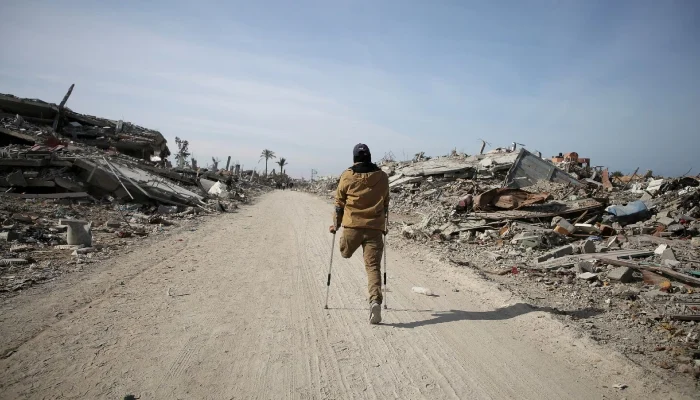
    Fourteen-year-old Fadel Al-Naji, once an avid soccer player, now mostly stays at home in Gaza City after both his legs were amputated in an Israeli drone strike last September. He sits quietly on a sofa, one empty pant leg hanging loose, the other tucked into his waist, next to his 11-year-old brother Amir, who lost an eye in the same attack.

    His mother, Najwa Al-Naji, shares old videos on her phone of Fadel juggling a ball, describing him as increasingly withdrawn and isolated. She hopes prosthetic limbs can be fitted for him, but supplies are scarce in Gaza, where nearly 5,000 amputees, including many children like Fadel, struggle due to Israeli restrictions on essential materials like plaster of Paris.

    Israeli rules, citing security reasons, limit imports of many construction and medical items, affecting access to prosthetic components. Although plaster of Paris isn’t explicitly listed as a dual-use item, other plastic parts needed for prosthetics are restricted, leaving aid organizations and medical centers with limited supplies and outdated equipment.

    Gaza’s amputee population, already substantial before the conflict, now has a higher per capita rate than Cambodia—long notorious for landmine-related amputations—according to aid group Humanity & Inclusion. In response, medical centers have resorted to reusing old prosthetics from war casualties or crafting makeshift limbs from plastic piping and wood, which carry risks of infection or further injury.

    The promised aid under the October ceasefire and the U.S. Trump administration’s plan to provide full assistance with minimal interference remain unfulfilled. The reopening of the Rafah border crossing to Egypt, crucial for evacuations and supplies, has been inconsistent. Israel continues to restrict items it deems dual-use, including construction materials, while claiming to allow medical supplies to enter Gaza.

    The Israeli military agency COGAT states it facilitates medical equipment imports but blocks materials that could aid Hamas’s military build-up. Meanwhile, organizations like the International Red Cross report that plaster supplies are nearly exhausted, with only minimal stock left for the coming months, leaving prosthetic manufacturing severely limited. Local hospitals have run out of supplies altogether, capable only of maintaining existing prosthetics.

    Since early 2025, Humanity & Inclusion has managed to fit just 118 temporary prostheses in Gaza, with dwindling supplies from their last shipment in December 2024. The lack of proper limbs hampers recovery, prolongs trauma, and increases the risk of additional injuries from ongoing Israeli strikes, which have resulted in over 750 Palestinian deaths since the ceasefire.

    Some amputees are on waiting lists, awaiting surgeries like stump revisions or the fitting of prosthetic limbs. Hazem Foura, a 40-year-old ex-office worker, lost his left leg above the knee in a December 2024 bombing that he says was an Israeli attack on his home. Now unable to work, he pleads, “I’m not asking for luxury items—just a limb so I can regain my humanity.”

    Without access to proper prostheses, amputees face not only physical and emotional setbacks but also heightened vulnerability amidst continuing hostilities. Only a handful of prosthetists remain in Gaza, and for children who need frequent adjustments as they grow, the lack of specialized care compounds their suffering.

    Heba Bashir, a technician with Humanity & Inclusion, explains, “Losing a limb isn’t just about the physical loss; it’s about losing hope and independence. For children, it means losing the future they deserve.”

  • US Public Shows Growing Support for Palestinians: Survey

    US Public Shows Growing Support for Palestinians: Survey

    A recent national survey indicates that Americans’ perceptions of Israel have significantly declined in recent years, with notable shifts among Democrats and independents, according to Fox News. The NBC News-sponsored poll was conducted from February 27 to March 2 and coincides with ongoing debates within the Democratic Party over support for Israel, more than two years after the Israel–Hamas conflict in Gaza erupted.

    Currently, only 32% of Americans view Israel positively, while 39% hold negative opinions—a stark contrast to three years ago when 47% saw Israel favorably and 34% negatively. The decline is especially pronounced among Democrats and independents. In 2023, Democrats were split evenly with 34% viewing Israel positively and 35% negatively, but the latest results show only 13% positive and 57% negative opinions. Independents’ favorable views have dropped from 40% to 21%, with negative opinions rising from 22% to 48%.

    In comparison, Republican attitudes have remained relatively stable, with positive views decreasing slightly from 63% to 54%, and negative opinions increasing modestly from 12% to 18%. The survey also reveals that during a period when the U.S. and Israel launched military strikes against Iran, Americans are now almost evenly divided over whether they sympathize more with Israelis or Palestinians. In 2013, there was a stronger tilt in favor of Israel, at 45% to 13%. Today, support for Palestine and Israel is nearly even, with 40% sympathizing more with Israel and 39% with Palestinians.

    This shift is particularly striking among Democrats, who in 2013 favored Israel by a 34% to 18% margin. The latest polling shows Democrats now predominantly sympathize with Palestinians—67% compared to just 17% for Israel. Independents have also shifted, moving from a 37% to 10% favoring Israel to a 37% to 27% leaning toward Palestinians. Meanwhile, Republicans maintain strong support, with 69% favoring Israel now, consistent with past levels.

    The study underscores a clear generational gap, with younger Americans showing a more considerable decline in positive views and sympathy for Israel than older generations. Although most Republicans remain largely supportive of Israel, the ongoing conflict in Gaza has intensified disagreements among Democrats. This division is becoming a key issue in the upcoming 2026 Democratic primaries.

    Over the past two and a half years, Israeli military operations in Gaza have resulted in more than 72,000 deaths, according to Palestinian health authorities.

  • Experts Warn Iran War Threats Endanger Netanyahu’s Political Future

    Experts Warn Iran War Threats Endanger Netanyahu’s Political Future

    As elections draw near in Israel, President Benjamin Netanyahu sees the ongoing conflict with Iran as a chance to repair his image, which was heavily damaged by the October 7, 2023, Gaza attack, analysts say.

    However, the extent of any political gain will rely on how the conflict develops and its duration, they add.

    Following Iran’s supreme leader, Ayatollah Ali Khamenei’s, martyrdom during a series of US-Israeli airstrikes, Netanyahu asserted that his strong relationship with the US has allowed Israel to accomplish a goal he has pursued for four decades: decisively targeting the terrorist regime.

    The Gaza conflict has hurt Netanyahu’s standing with voters. Critics accuse him of trying to sidestep accountability for the government’s failure on the deadliest day in Israeli history.

    At 76, Netanyahu, who leads the right-wing Likud party, is Israel’s longest-serving prime minister, with over 18 years in office spread across multiple terms.

    He’s known for his political stamina but has been governing without a parliamentary majority since this summer due to disputes with ultra-Orthodox religious allies.

    Additionally, he is on trial for longstanding corruption charges and has sought a presidential pardon, with former President Donald Trump often urging President Isaac Herzog to grant one.

    “Total Victory”

    Elections are required to be conducted by October 27 at the latest.

    Political analyst Emmanuel Navon of Tel Aviv University predicts Netanyahu will call early elections.

    “It’s clear he won’t wait until October, especially with the anniversary of October 7 approaching,” Navon stated.

    “Although Netanyahu’s popularity plummeted after the Gaza attack, he has been gradually regaining ground,” he continued.

    Polls currently favor a Likud victory led by Netanyahu, which would likely result in him being tasked with forming the next government. Nonetheless, he still would not have enough seats to command a majority with his current coalition.

    A successful campaign against Iran could alter that scenario, experts suggest.

    “This operation clearly bolsters the image Netanyahu wants to project—the idea of a ‘total victory,’” explained independent geopolitical analyst Michael Horowitz to AFP.

    “Netanyahu aims to demonstrate that this isn’t just a campaign slogan but a reality; it’s part of his national agenda and electoral strategy,” he added.

    “Iran Remains Iran”

    Journalist Raviv Druker from Channel 13 remarked that Netanyahu might try to convince the public that victory is complete, even if it’s an illusion, noting that Hamas still controls Gaza and Iran remains a threat even after Saturday’s strikes.

    On the popular news site Walla, reporter Ouriel Deskal suggested that Netanyahu might have timed the hostilities to delay the March 30 deadline for passing a budget—one he has struggled to pass due to a fragile majority—by invoking a state of emergency.

    Without a budget, the government would collapse on April 1, triggering new elections.

    In this context, Netanyahu could enter the election campaign in a weakened position.

    Conversely, Navon said, “If this war against Iran proves successful for Israel, it would be a political victory for Netanyahu.”

    Yet, if the conflict prolongs, the political landscape could shift dramatically, Horowitz warned.

    “Public support for a prolonged war with significant casualties and rising living costs is very low,” he explained.

    During last June’s conflict, Iranian missiles killed 30 Israelis. Since Saturday, Iran has retaliated with strikes that have resulted in 10 deaths.

    Horowitz pointed out that Israel’s victories are largely credited to its military and civil resilience, enabling it to sustain its longest conflict in history.

    “While military approval is increasing, Netanyahu’s popularity isn’t necessarily rising accordingly,” he added.

  • US Appreciates Pakistan’s Support for Gaza Plan and Peace Efforts

    US Appreciates Pakistan’s Support for Gaza Plan and Peace Efforts

    The United States has expressed gratitude to Pakistan for backing President Donald Trump’s peace initiative for Gaza and for becoming part of the Peace Board.

    In a post on X, U.S. Secretary of State Marco Rubio shared a photo alongside Prime Minister Shehbaz Sharif and Deputy Prime Minister and Foreign Minister Ishaq Dar. Rubio noted that he met with PM Shehbaz to acknowledge Pakistan’s ongoing support for the President’s Gaza Peace Plan and its involvement in the Peace Board.

    He emphasized that their discussion covered the strategic partnership between the two nations, focusing on critical minerals development and counterterrorism efforts.

    Deputy Prime Minister Dar responded to Rubio’s tweet, thanking the U.S. Secretary of State for the fruitful conversations on key shared interests. Dar highlighted Pakistan’s longstanding relationship with the United States and appreciated the meaningful dialogue aimed at advancing peace, strengthening counterterrorism cooperation, and expanding trade and economic ties. He expressed optimism about further deepening the strategic alliance with Washington in all areas of mutual concern.

    Prime Minister Shehbaz and other global leaders attended the inaugural session of Trump’s Peace Board in Washington on Thursday. During his speech, Shehbaz described his participation as an honor and reaffirmed Pakistan’s dedication to achieving lasting peace in Gaza.

    He stated that pursuing sustainable peace in Gaza is a shared mission and called the day a historic milestone for Middle East peace efforts. He hoped the initiative would bring long-term stability to the conflict-ridden region.

    Trump also praised Shehbaz and selected military leader Chief of Defence Forces and Army Chief Field Marshal Asim Munir as “tough, serious fighters.” Trump expressed his fondness for Prime Minister Shehbaz personally.

    Meanwhile, Federal Minister for Information Attaullah Tarar said Pakistan received an exceptional welcome during the Peace Board meeting in Washington. In a video message, he shared that Trump appreciated Pakistan’s role in global peace, enhancing Pakistan’s international standing.

    Tarar added that due to successful diplomatic efforts, Pakistan is emerging as an influential and effective player on the world stage. The Board was first proposed by Trump last September as part of his plan to end the Gaza conflict, with plans to expand its remit to address other global conflicts.

  • Menna Shalaby and Eyad Nassar to Lead Gaza-Centered ‘Sahab El Ard’

    Menna Shalaby and Eyad Nassar to Lead Gaza-Centered ‘Sahab El Ard’

    Digital Phablet – Menna Shalaby and Eyad Nassar star in Gaza drama.

    The show “Sahab El Ard” (Landowners) will air during the 2026 Ramadan season on Al Hayat TV, DMC, and the Watch It streaming platform. “Sahab El Ard”: Egyptians Continue to Support Gaza’s Suffering Through Art

    For over two years, the Egyptian government has actively supported the Palestinian cause, and the series “Sahab El Ard” is part of this effort. This backing goes beyond political or diplomatic maneuvers; it employs the “soft power” of arts to highlight Egypt’s commitment to aiding the Palestinian people, revealing the truth, and addressing the pain and civilian suffering caused by bombings in Gaza.

    Eyad Nassar

    Menna Shalaby plays Salma Shawky, an Egyptian doctor working in Gaza’s emergency unit, who is part of an Egyptian relief convoy.

    When the Egyptian doctor’s journey intersects with that of the Palestinian man trying to save his nephew from the bombing, a profound human bond develops, illustrating how pain and hope can manifest differently during wartime. “The Landowners” is a documentary that sheds light on how the Israeli occupation infringes on human rights, demonstrating the resilience of the Palestinian people and emphasizing Egypt’s crucial role in supporting the cause and opposing plans to displace people.

    “Sahab Al Ard” features many talented artists, including Eyad Nassar, Menna Shalaby, Kamel El Basha, Essam El Sakka, Tara Abboud, among others. The project is written and directed by Ammar Sabry.

  • UAE Calls for Diplomatic Solutions to Gaza and Iran, Warns of New Conflicts

    UAE Calls for Diplomatic Solutions to Gaza and Iran, Warns of New Conflicts

    The UAE has issued a warning emphasizing that stabilizing Gaza hinges on parallel progress toward Palestinian statehood and Israeli security, achieved through regional and international collaboration. The message underscores the need for the same political urgency to prevent tensions with Iran from escalating into another crisis in the Middle East.

    Dr. Anwar Gargash, the diplomatic adviser to President Sheikh Mohamed bin Zayed Al Nahyan, delivered this message at the World Government Summit in Dubai on Tuesday. He stressed that the region cannot afford to resolve issues in Gaza or with Iran solely through force or repeated clashes.

    “The path forward in Gaza is political,” Gargash stated. “The Middle East has already suffered devastating conflicts, and it cannot afford another escalation, whether in Gaza or with Iran.”

    He explained that any lasting solution for Gaza must be based on a collaborative framework involving Palestinians, Egypt, Israel, Jordan, and key international players, with the United States playing a central role in shaping a political resolution.

    Gargash reaffirmed that the UAE has no intention of ruling Gaza, dismissing speculation that Abu Dhabi might take on a civilian governing role in the enclave.

    “The UAE does not have a separate national agenda for Gaza,” he said. “While we are a significant humanitarian donor, governance and reconstruction must be rooted in a broader political process.”

    Regarding Iran, Gargash warned that unresolved issues surrounding Tehran’s nuclear program and regional stance threaten to ignite a second major crisis in an already turbulent Middle East, strained by the Gaza conflict.

    “From what I understand, Iran needs to reach an agreement now,” he stated, referencing the economic and geopolitical pressures facing Tehran. He emphasized that restoring Iran’s relations with the United States through a comprehensive political and strategic deal is essential for long-term stability.

    Gargash called for direct negotiations between the U.S. and Iran, warning that without mutual understanding, Iran’s nuclear ambitions will continue to be a regional source of instability.

    He reiterated that both the futures of Gaza and Iran’s nuclear program should be addressed through political means rather than ongoing confrontation. A credible pathway toward Palestinian statehood, ensuring Israel’s security, alongside measures to limit Iran’s nuclear development and reduce its regional isolation, would help ease regional tensions and create opportunities for reconstruction and economic growth.

  • IPI Denounces Israel’s Effort to Expand Media Shutdown Powers

    IPI Denounces Israel’s Effort to Expand Media Shutdown Powers

    The IPI global network has criticized the Israeli government for continuing its ban on unrestricted media access to Gaza, expressing disappointment.

    “IPI is deeply disappointed with the Israeli government’s decision to extend and expand a temporary order granting authorities unilateral authority to shut down foreign media outlets perceived as threats to national security,” the organization stated.

    Last Sunday night, the government informed the Supreme Court that the ban should stay in effect, citing security concerns in Gaza.

    Since the conflict in Gaza began in October 2023, foreign journalists have been barred from entering the area independently. Instead, Israel has permitted only a few reporters inside on a case-by-case basis, embedding with the military in the sealed-off Palestinian territory.

    The court set January 4 as the final date for the government to submit a plan for media access to Gaza. The government reiterated that the ban remains necessary, citing security risks identified by the defense establishment.

    Additionally, the government stated that efforts to locate the remains of the last hostage held in Gaza are ongoing, implying that allowing journalists in now could interfere with this operation.

    The Foreign Press Association (FPA) also voiced strong opposition to the decision.

    “The Foreign Press Association is profoundly disappointed with the Israeli government’s latest response to our appeal for full and free access to Gaza,” the FPA said Tuesday.

    “Instead of developing a plan to allow journalists into Gaza independently and work alongside brave Palestinian colleagues, the government has chosen once again to exclude us, despite the ceasefire,” they added.

  • UN Narrows 2026 Aid Appeal Amid Rising Needs

    UN Narrows 2026 Aid Appeal Amid Rising Needs

    The UN has announced that it is now requesting an aid budget significantly lower than previous years, only half of what was initially expected for this year. This reduction reflects a substantial decrease in funding from donors during a period when humanitarian needs are at an all-time high.

    The current appeal, totaling $23 billion, admits it cannot serve tens of millions of people urgently needing assistance, as dwindling support forces prioritization of only the most critical cases.

    Aid organizations face additional hurdles, including security threats to personnel in conflict zones and limited access to affected areas.

    “Ultimately, these funding cuts are forcing us to make incredibly difficult decisions,” said UN aid chief Tom Fletcher. “We’re stretched thin, underfunded, and under threat. We’re working tirelessly on your behalf, but we’re also being asked to put out fires with a limited supply of water—and we’re under attack.”

    Last year, the UN aimed for a $47 billion relief effort for 2025. However, a combination of aid cuts from the U.S. and other Western nations such as Germany caused that number to be scaled back. As of November, only $12 billion has been received—a record low over the past decade—covering just over 25% of the needs.

    For the upcoming year, the $23 billion plan highlights 87 million individuals classified as urgent cases where their lives are at risk. It estimates that approximately a quarter of a billion people are in immediate need of assistance, with a target to help 135 million of them at a cost of $33 billion, contingent on available resources.

    The largest portion of funding, $4 billion, is dedicated to the occupied Palestinian territories, primarily Gaza. The area has been ravaged by a two-year conflict involving Israel and Hamas, leaving nearly all 2.3 million residents homeless and heavily reliant on aid.

    Following Gaza, the next most urgent needs are in Sudan, then Syria.

    Fletcher emphasized the bleak outlook, with increasing hunger, the spread of disease, and record levels of violence, underscoring the critical importance of the aid appeal. “Our focus is on saving lives in the areas hit hardest by crises—wars, climate disasters, earthquakes, epidemics, and crop failures.”

    The UN’s humanitarian funding largely depends on voluntary contributions from Western countries, with the United States historically being the leading donor. Despite ongoing aid cuts, the U.S. remains the top supporter in 2025, though its share has shrunk from over a third of total donations to just 15.6% this year.

  • ‘I Butterfly’: Israeli Girl Group Destroys Building in Music Video

    ‘I Butterfly’: Israeli Girl Group Destroys Building in Music Video

    Digital Phablet – An Israeli girl group called “I Butterfly” is currently facing worldwide criticism from pro-Palestine activists due to their debut music video, which shows a building exploding.

    The activists have connected this imagery to real hospitals and homes in Gaza that were previously bombed during the two-year conflict. According to Ynet News, I Butterfly is composed of four members and was created by Israeli talent agent Roberto Ben Shushan. Their debut single, “Mi Ata” (Who Are You), was released this week on multiple platforms but did not garner the positive response they expected.

    ‘I Butterfly’: Israeli girl group ignites controversy with music video featuring building explosion

    The music video, which was uploaded to YouTube, received a flood of negative comments, with many critics calling the song a “parody” with AI-generated lyrics and a “cheap” imitation of K-pop. Several viewers also commented with phrases like “Free Palestine” and “From the river to the sea, Palestine will be free.”

    One YouTube user remarked, “This sounds so good on mute.” On X (formerly Twitter), another person said, “What could be more Israeli than four white girls dancing badly to soulless music while a building explodes behind them?”

    Since October 7, 2023, the ongoing Israeli escalation in Gaza has resulted in over 69,000 Palestinians killed and more than 170,000 injured. Additionally, Al Jazeera reported that 125 hospitals and clinics have been damaged, and nearly all homes have been destroyed or damaged due to relentless bombings.