Tag: futuristic

  • Warhammer 40K: Dawn Of War – Completing Challenges & Solving Secrets

    Warhammer 40K: Dawn Of War – Completing Challenges & Solving Secrets

    Warhammer 40,000: Dawn of War – Definitive Edition is a remastered version of the original Dawn of War game along with all its expansions. It features improved graphics and includes every expansion, making it a great entry point for newcomers interested in Dawn of War, real-time strategy games, or Warhammer 40,000 lore. If you’re new to Dawn of War and missed its initial release, don’t worry. This game is highly accessible, though it can be challenging for beginners to learn how to command their armies effectively. Follow these tips to quickly improve and compete against AI or human opponents.

    Aggression Is Key to Victory
    Unlike many RTS games, Dawn of War encourages aggressive play. Your resource income depends on capturing Control Points scattered on the map. Sending units to take and defend these points allows you to earn Requisition, the main resource for building and reinforcing units. Control over the map leads to more resources, while the opponent’s control provides a resource advantage. You can’t simply turtle in your base; gaining map control early snowballs into victory. The game progresses from capturing and spreading control early on, contesting key locations like Relics in mid-game, and then using large armies and Relic units to dominate late-game enemies.

    Start with Dark Crusade’s Campaign
    The Dawn of War Definitive Edition includes the base game and three expansions: Winter Assault, Dark Crusade, and Soulstorm. Each features its own single-player campaign. For beginners, starting with Dark Crusade is recommended. Unlike a linear campaign, it functions more like a 4X game, where you conquer a planet through a turn-based system. The campaign offers good tutorials and engaging storyline missions, making it easier for new players to learn the game mechanics, especially on Normal or Easy difficulty.

    Maintain Morale
    Dawn of War introduces a morale system where infantry units have two health meters: hit points and morale. Morale influences combat effectiveness; full morale means maximum accuracy and performance. Taking damage or casualties reduces morale. If a squad’s morale hits zero, accuracy drops by 80%, but they gain a small boost to movement speed to help them withdraw and recover. Morale isn’t permanent; units regenerating morale over time, provided they aren’t actively under fire. Monitoring morale helps keep your units fighting effectively, especially in difficult battles.

    Utilize Environmental Cover
    Although the original Dawn of War lacks a cover system seen in later titles, terrain features like craters and structures provide defensive bonuses. Units in cover boost their damage resistance, indicated by blue pips below their banners. One pip grants +25% ranged damage resistance; two pips double that to +50%. Vehicles get a 25% damage resistance with cover. Stacking this with other mitigation methods, like smoke grenades or special gear, greatly increases durability. Units in cover also recover morale faster, which is especially useful during intense combat.

    Use Hotkeys
    Most RTS games rely on mouse commands, but hotkeys streamline gameplay, especially on higher difficulties or multiplayer. On easier modes, mouse control may suffice, but hotkeys save time and improve efficiency. Key functions include cycling through dormant units with the period (.) key, switching between unit groups with Ctrl + number, changing combat stances with F1-F5, and queuing commands with Shift + Right-Click. Customizing keybinds is possible in options, and mastering hotkeys will make your play much smoother.

    Try Every Faction
    Dawn of War offers nine playable factions, each with unique playstyles and strengths. While mastering them all can be ambitious, experimenting helps you understand how different units and tactics work. Learning the strengths and weaknesses of each faction allows you to develop your preferred style and respond effectively to opponents. For example, Space Marines are versatile, Chaos emphasizes damage and late-game relics, Orks rely on melee swarms, and Tau excel at long-range firepower.

    Faction Playstyle Signature Feature
    Space Marines Versatile across all categories Drop Pods for deployment anywhere on the map
    Chaos Similar to Space Marines but focuses on damage Demon units and powerful relics
    Orks Melee-focused with high numbers Waaagh! banners increase army capacity
    Eldar Hit-and-run tactics with high mobility Fleet of Foot for fast movement
    Imperial Guard (Dark Crusade only) Ranged swarm, support vehicles Cheap units, fast reinforcement
    Tau (Dark Crusade) Long-range attack, infiltration Extreme attack range
    Necrons Tough, resilient, late-game unstoppable Resurrection ability to revive units
    Sisters of Battle (Soulstorm) Weaker Space Marines with Faith mechanics Faith points for special abilities
    Dark Eldar (Soulstorm) Fragile glass cannons, souls harvesting Soul Essence for empowering units

    Learning these factions and their individual strategies will deepen your understanding of the game and improve your skills. Each faction’s unique abilities and units shape how you approach battles, positioning, and resource management.


  • Samsung Plans To Ship Ballie AI Robot This Year

    Samsung Plans To Ship Ballie AI Robot This Year

    Close-up perspective of Ballie.
    Samsung
    CES 2025 logo.
    CES 2025
    Catch all our complete coverage from CES here
    Updated recently

    Initially introduced by Samsung at CES 2020, Ballie seemed to vanish for a while, but it made a comeback with a revamped design at CES 2024. Now, at CES 2025, Samsung has announced that this charming robot is set for a retail release later this year. After a lengthy wait, it appears that Ballie is poised to become your next domestic companion, and we are thrilled about the smart home possibilities it presents.

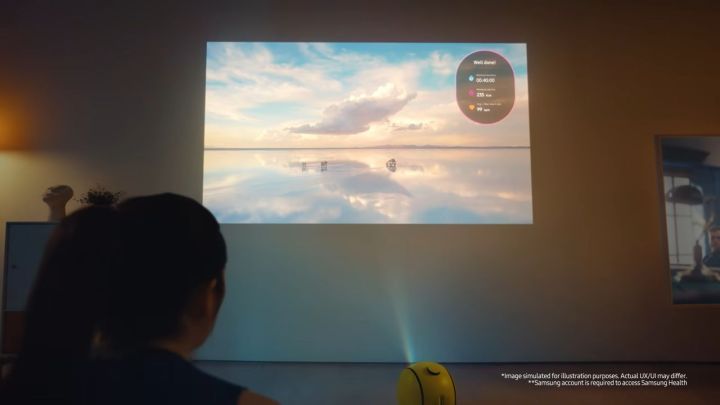
    Ballie is an innovative home robot that leverages AI technology extensively. Touted as an “autonomous, self-propelled home assistant,” it aims to enhance daily life through features that provide companionship, health tracking, and entertainment. It utilizes a built-in projector and speakers for communication, showcasing impressive functionality.

    A Samsung demonstration highlighted Ballie’s ability to project information about local Las Vegas attractions onto the ground when prompted. The robot can cleverly redirect its projector to a blank wall for map directions, utilizing the larger space for a more detailed display.

    Ballie projecting images onto a wall.
    Samsung

    In addition to providing directions, Ballie can function as a projector for movies. It’s designed to adjust its screen size through voice commands. While its projection quality may not match dedicated home theaters, its versatility in projecting onto various surfaces, combined with capable speakers, makes it a useful addition to any household.

    Ballie is also compatible with an array of smart devices, enabling you to control them using only your voice.

    Samsung has infused Ballie with advanced visual AI capabilities, allowing it to respond to inquiries about its environment. During a CES demo, for example, a user asked Ballie which wine would best complement a meal while holding two bottles; the robot acted as a knowledgeable sommelier.

    Unfortunately, no specific release date or pricing information was disclosed at CES 2025. Given that most household robots tend to cost over $1,000—such as the Enabot X, and Amazon’s Astro priced at $1,600—it’s reasonable to anticipate Ballie may fall into a similar price range. More details from Samsung are expected in the upcoming months.


  • Apple’s Futuristic iPhone Display May Be Delayed

    Apple’s Futuristic iPhone Display May Be Delayed

    If you’re eager to own an iPhone that features a completely bezel-less display, you might have to adjust your expectations for the timeline. Recent reports indicate that the anticipated launch of Apple’s innovative OLED display designed to eliminate bezels has been pushed even further into the future than previously anticipated.

    According to a South Korean news source, The Elec, which first brought attention to the possibility of a bezel-free display for the iPhone, the release date is now uncertain as the necessary technology has yet to reach a sufficient level of maturity for production.

    The source did not entirely negate the existence of this sought-after iPhone display. Both Samsung and LG are reported to be actively developing potential designs. However, production on a large scale has not commenced, meaning that a true all-screen iPhone model might not materialize until 2025 or even beyond.

    The idea of a bezel-less iPhone has been a vision for many concept designers for nearly a decade. Recently in 2023, rumors surfaced from the South Korean supply chain suggesting that Apple has become genuinely intrigued by the idea, leading to projections for a launch between 2025 and 2026.

    Vivo Nex 3 bezel less display.
    Vivo Nex 3, a 2019 smartphone featuring a display with minimal bezels on two sides.Vivo

    In contrast to certain Chinese manufacturers who have attempted extreme curvature to achieve high screen-to-body ratios, Apple is rumored to prefer a design with flat edges and subtle curves akin to the Apple Watch Series 10. This choice aims to reduce optical distortions that may occur at the edges when viewed from various angles.

    Despite the excitement surrounding this potential advancement, manufacturers like Samsung are encountering significant technical hurdles with the zero-bezel display. One major challenge includes integrating not only the front-facing camera but also the Face ID sensors beneath the display area. Samsung is reportedly facing difficulties with the “transmittance” issue, which is the front camera’s capability to function effectively while hidden behind active pixels.

    Moreover, Apple has specifically requested the use of thin film encapsulation (TPE) – a protective coating preventing moisture from reaching the organic LEDs – along with optical clear adhesive (OCA) to ensure vibrant colors and eliminate chromatic distortions along the gently curved edges.

    Durability of these displays is also a concern that Apple must address before unveiling this technology to consumers. Until these challenges are resolved, it seems unlikely that Apple will make any drastic changes, regardless of how appealing the concept may be.