Tag: full-time workers

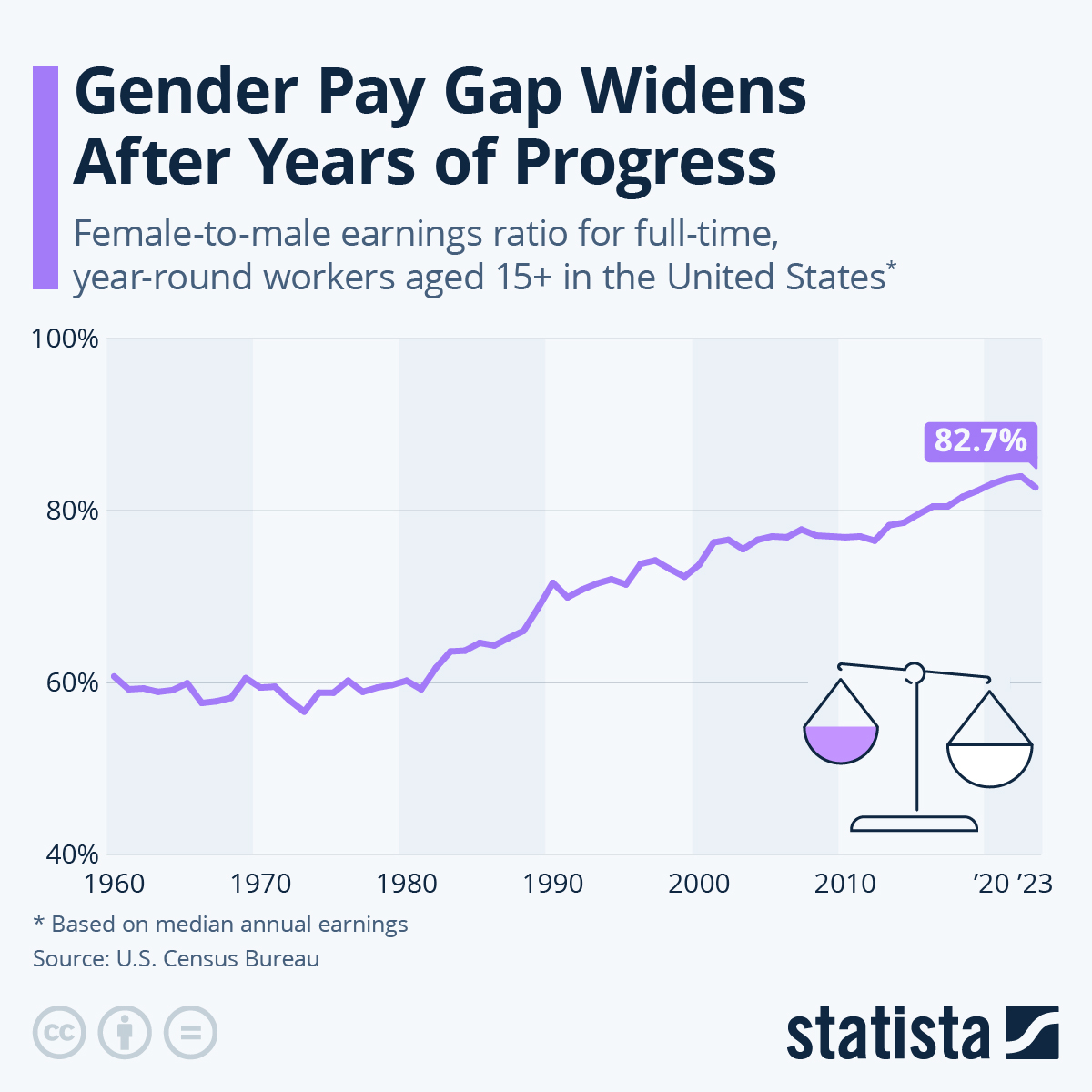
  • Gender Pay Gap: Women Earn 83% of Men’s Wages in 2023

    Gender Pay Gap: Women Earn 83% of Men’s Wages in 2023

    Understanding the Gender Pay Gap: An Overview

    The gender pay gap has been a longstanding issue in the workforce, and efforts to raise awareness about this disparity are still crucial today. March 25, 2025, will mark Equal Pay Day in the United States—a poignant reminder that women must often work significantly longer than men to earn the same income.

    The Origin of Equal Pay Day

    Equal Pay Day was established in 1996 by the National Committee on Pay Equity with the aim of spotlighting the ongoing wage gap between male and female workers. This symbolic day highlights how far into the following year women must labor to earn what men made in the previous year. For example, if men earned a certain annual salary in 2023, women had to work until March 25, 2025, to earn the same amount.

    Current Wage Statistics

    Comparing Men and Women’s Earnings

    According to the U.S. Census Bureau’s Current Population Survey, the stark realities of the gender pay gap are evident in the statistics. In 2023, female full-time, year-round workers aged 15 and older earned a median annual pay of $55,240, while their male counterparts earned $66,790. This discrepancy signifies that women earned approximately $0.83 for every dollar men earned. Consequently, women would need to work an additional 21 percent, which translates into roughly 11 weeks longer, to reach the same earnings as men.

    Progress Over the Decades

    While there has been some progress since the 1960s, with the female-to-male pay ratio increasing from less than 60 percent to over 80 percent, the journey toward full pay equality has been painfully slow. The year 2023 marked a notable setback, as the pay gap widened for the first time in years, bringing attention to the fact that even in a generally improving trend, setbacks can still occur.

    The Intersectionality of Wage Disparities

    The Variance Among Women

    The gender pay gap does not affect all women uniformly. Disparities are much more pronounced for women of color, particularly for Black, Hispanic, and Native American women. Additionally, working mothers often experience an even larger wage gap, illustrating that intersectionality plays a vital role in understanding the complexities of wage disparities.

    Education and the Pay Gap

    Academic Credentials vs. Earnings

    Interestingly, one might assume that higher levels of education would correlate with reduced wage gaps. Yet data indicates otherwise. A thorough examination conducted by the U.S. Census Bureau demonstrated that regardless of educational attainment—be it a bachelor’s degree or higher—the gender pay gap persists across various fields, both high- and low-earning.

    The Widening Gap with Higher Education

    Adding to the uncomfortable reality, research from the Economic Policy Institute shows that the gender pay gap even widens with increased education levels. For instance, the gap stands at approximately 20 percent for workers lacking a high school diploma, but this discrepancy rises to around 30 percent for those holding advanced degrees. This suggests that education alone cannot bridge the wage divide; other systemic factors contribute to ongoing inequities.

    The Road Ahead

    The gender pay gap is a multifaceted issue that presents challenges at both societal and organizational levels. As we recognize Equal Pay Day and the persistent pay inequities that many individuals face, it is clear that continued advocacy, reform, and awareness are essential to drive meaningful change and foster an equitable workforce for all.

  • Low-Wage Earners: 24.7% in the UK, 22.7% in the US

    Low-Wage Earners: 24.7% in the UK, 22.7% in the US

    Understanding Low-Wage Earners: Insights from OECD Data

    The phenomenon of low-wage earners is a pressing issue in various economies around the globe. According to a detailed analysis conducted by the Organisation for Economic Co-operation and Development (OECD), a significant portion of wage earners in various nations are earning substantially less than the median full-time earnings. This blog delves into the statistics surrounding low-wage earners in select countries and highlights trends that emerge from this data.

    The Landscape of Low Earnings in the UK and the US

    The UK: A Closer Look

    In the United Kingdom, the situation for low-wage earners is quite concerning. The OECD data indicates that 24.7% of wage earners earn less than two-thirds of the gross median pay. This substantial percentage signifies that nearly one in four workers in the UK struggles to attain a livable wage, leading to increased discussions regarding wage policies and economic inequality.

    The United States: A Comparable Scenario

    The United States presents a similarly alarming picture. With 22.7% of wage earners categorized as low-wage earners, the gap in earnings again raises questions about minimum wage laws and the economic conditions that perpetuate low earnings. The close similarity between the two nations in the percentage of low-wage earners suggests a shared challenge in addressing income inequality and ensuring fair compensation for workers.

    Other Nations with Notable Low-Wage Statistics

    Israel: An Emerging Economy Struggling with Wages

    The data also highlights Israel as another nation grappling with low wage issues. While specific figures are not detailed, it is important to note that Israel’s high costs of living coupled with lower wages indicate a challenging economic environment for many workers. This scenario complicates the question of sustainable growth and equitable income distribution.

    European Context: Poland and Germany

    Turning to Europe, Poland and Germany also reveal significant figures regarding low-wage earners, with 18.5% and 16% respectively falling under this classification. The presence of low-wage earners in these countries illustrates that even within more developed economies, income disparities persist, hinting at the necessity for robust employment policies that uplift the financially vulnerable.

    High-Wage Earners: A Parallel Discussion

    Understanding High Pay in the UK and Israel

    Interestingly, while discussing low wages, it is also vital to consider the landscape of high pay. In the UK, 26.4% of individuals are identified as high earners, sitting above the average. Israel follows closely with 24.0%, indicating that these nations have a notable share of high-income earners alongside the low-wage segment. This duality raises important questions about wealth distribution, economic mobility, and the structures that perpetuate disparities between the high and low wage earners.

    Average OECD Trends: A Broader Perspective

    On an average OECD scale, 21.9% of citizens are classified as high-wage earners, those making 1.5 times the median gross pay or higher. Meanwhile, 13.5% are considered low-income earners, again illustrating that a certain segment of labor markets struggles significantly when it comes to meeting standard living costs despite the presence of high wage earners.

    Countries with Minimal Low-Wage Earners

    France, Norway, and New Zealand: An Anomaly?

    In contrast to the high percentages observed in other countries, France, Norway, and New Zealand present results in the single digits for low-wage earners. This data invites exploration into the wage structures, labor laws, and quality of life in these nations, as well as how their policies might serve as models for addressing low earnings elsewhere.

    Denmark: A Unique Case

    Oddly enough, Denmark exhibits a unique scenario among the nations surveyed. With 9.8% of workers categorized as low-wage earners and only 2.5% as high-wage earners, it becomes a point of interest in discussions about workers’ rights and fair pay. Such numbers could be a reflection of the country’s labor market policies, which are often viewed as progressive compared to other nations.