الوسم: foldable

  • Samsung Likely To Launch New Foldable In US This Year With No Competition

    Samsung Likely To Launch New Foldable In US This Year With No Competition

    Samsung’s highly anticipated tri-fold smartphone (technically a dual-fold device, but that’s a debate for another time) is expected to be released before the end of this year. Fresh reports indicate that the United States may be among the first countries to receive this innovative folding phone.

    What’s the Latest?

    According to a CNN report, citing “a person familiar with the company’s plans,” Samsung is actively considering initial launch markets for its multi-folding device. The US is believed to be a strong candidate to be one of the first nations to get the new model.

    Unlike traditional foldables—like Samsung’s Galaxy Z Fold 7 and Google’s Pixel 10 Pro Fold—this new device will feature two hinges, allowing users to expand a larger internal display by unfolding the device further.

    Why This Matters

    Samsung isn’t the first company to introduce a multi-fold smartphone—Huawei’s Mate XT has been available in select markets for nearly a year. However, Huawei’s devices are not sold in the US, which opens a clean playing field for Samsung.

    If Samsung launches its multi-fold device in the US before 2026, it will face no direct competitors, giving the South Korean brand a significant advantage in this small but growing market segment.

    Expect the price to be steep. The most expensive version of Samsung’s Galaxy Z Fold 7 (with 1TB storage) currently costs around $2,119.99, even with a $300 discount. This suggests the new multi-fold could carry a similarly high price tag.

    Why Should You Care?

    The upcoming release of Samsung’s multi-fold phone, which was first previewed during the Galaxy S25 launch in January, marks another bold step in folding technology. A major shift in the foldable phone market is anticipated in 2026, especially as Apple is rumored to unveil the iPhone Fold—the company’s first foldable device—possibly setting off a new wave of popularity for foldable smartphones.

    Samsung will likely want to solidify its leadership position in this niche before Apple makes its entrance. Currently, the main rivals in the US market are Google, which offers foldable models that compete with Samsung’s Z Fold series, and Motorola, which focuses mainly on Z Flip-style foldables.

    What’s Next?

    Rumors point to an Unpacked event possibly happening on September 29, but nothing has been officially confirmed by Samsung yet. If you’re considering a foldable phone soon, options like the Galaxy Z Fold 7 and Pixel 10 Pro Fold are worth exploring. Alternatively, it might be wise to start saving up for the tri-fold once it becomes available.

    Options to Consider

    This development was first reported by Phandroid, highlighting how significant this new device could be for the foldable market.


    Published by Digital Trends

  • Samsung Fans Anticipate New Larger Foldable Model

    Samsung Fans Anticipate New Larger Foldable Model

    Over the last few years, Samsung has introduced a variety of innovative display types, including foldable OLED panels and sliding screen concepts. However, so far, the company has only released basic book-style and clamshell foldable phones. Looking ahead, there’s speculation that next year Samsung may unveil an even larger foldable device that could revolutionize the lineup.

    Could a massive new foldable device be on the horizon?

    According to ETNews in South Korea, Samsung’s mobile division is considering three different foldable phone designs for 2026. While the popular Flip and Fold models will continue, there are reports of a new book-style device featuring an extensive, oversized screen that might make a bold statement in the market.

    The idea is to create a wide-format foldable similar to a laptop or widescreen monitor, possibly by combining two nearly square screens with an 18:9 aspect ratio. This approach would produce a large, flexible display with a broad viewing surface, paving the way for a tablet-like experience in a device that folds into a manageable size.

    This concept isn’t entirely far-fetched—Huawei has already blurred the lines with its Mate XT, which features a flexible panel that folds twice to unfold into a sizable canvas boasting a 1:1.4 aspect ratio. Just recently, Huawei introduced the upgraded Mate XTs, with a similar 10.2-inch foldable screen, pushing the boundaries of what’s possible in foldable tech.

    Could this outlandish idea actually work?

    Recent reports from Samsung’s home market, citing anonymous industry insiders, suggest the company plans to firm up the technical details for this large foldable within the next two months. The plan is to launch this new class of foldables sometime in the second half of 2026, alongside upcoming versions of the Galaxy Z Flip and Galaxy Z Fold.

    While a large, rectangular foldable might sound unconventional, several factors could make it viable. With a compatible stylus, improved multitasking capabilities, and a refined user interface, this device could serve as a fully functional tablet for both work and entertainment. Additionally, Samsung’s DeX system, which allows a desktop-like experience on larger screens, could further enhance its appeal. It raises the question of whether Samsung can achieve what earlier attempts like the Microsoft Surface Neo couldn’t—creating a compelling large-screen foldable device.

    In essence, even though the concept may seem outlandish at first glance, the technology and features in development suggest this could be a significant step forward in mobile device innovation.

  • Apple Might Surprise Us with Unexpected Foldable iPhone

    Apple Might Surprise Us with Unexpected Foldable iPhone

    Apple looks set to enter the foldable smartphone market next year, despite its late start. The buzz surrounding its upcoming release is enormous. Based on early leaks and expert predictions, the device is expected to be a sleek, refined foldable that addresses the notorious display crease problem. It might also be one of the slimmest foldable phones available.

    However, not every feature is expected to push the boundaries. According to a recent Bloomberg report by Mark Gurman, the new foldable iPhone may not redefine benchmarks. Instead, it could involve some compromises or stick with older technologies, even by Apple’s standards.

    Are the cameras falling short?

    The rumored camera setup includes four lenses: one on the front, one inside, and two on the back. This configuration aligns with the current iPhone 16 models and their upcoming successors, which also feature dual-lens rear cameras.

    In comparison, Samsung’s Galaxy Z Fold 7 boasts three cameras, including a massive 200-megapixel sensor. Honor has packed a 64-megapixel periscope-style zoom lens into its Magic V5 foldable, and Google’s Pixel 10 Pro Fold features a triple-camera system.

    Interestingly, similar to the upcoming iPhone 17 Air, this foldable iPhone might eliminate the physical SIM slot altogether, opting solely for an eSIM. This could stir controversy, considering many foldables on the market—like Google’s Pixel 10 Pro—offer both physical nano SIM and eSIM options.

    Will Touch ID make a comeback?

    Another notable rumor suggests Apple will switch back to a Touch ID fingerprint sensor, replacing the face recognition system that’s become standard on recent iPhones. The last Apple device with Touch ID was the iPhone SE.

    For foldable phones, a side-mounted fingerprint sensor makes practical sense. The full-screen Face ID module takes up precious space and would need to be implemented twice—once on the cover display and again inside the foldable panel.

    A physical fingerprint sensor integrated into the power button on the device’s edge would provide quick and easy biometric authentication, whether you’re using the outer screen or working on the inner display.

    This isn’t entirely new for Apple. The company continues to include Touch ID on the power buttons of some iPads, like the iPad mini, iPad Air, and entry-level iPad models. It also remains a feature on MacBooks and Magic Keyboards, albeit in different forms.

    What about connectivity and color options?

    Apple is reportedly planning to use a second-generation in-house cellular modem for the foldable iPhone—a more advanced successor to the C1 modem in the iPhone 16e. As for colors, the new foldable is expected to be offered primarily in classic shades like black and white, with a limited palette.

    Looking ahead

    It will be intriguing to see what software features Apple introduces for its first foldable. Enthusiasts remain hopeful, especially given the steep price—nearly two thousand dollars—for what could be a groundbreaking device in the making. All eyes will be on how Apple balances innovation with practicality in this next-generation foldable phone.

  • Slim And Foldable iPhones May Soon Be The New Standard

    Slim And Foldable iPhones May Soon Be The New Standard

    Apple is on the verge of a significant transformation with its iPhone lineup, according to recent leaks. Analyst Ming-Chi Kuo has shared a projected timeline for the release of iPhones through the latter half of 2027. This suggests a shift from Apple’s conventional release strategy, as new product introductions are becoming the norm.

    Building on an earlier report from The Information, Kuo detailed Apple’s plans for future iPhones, revealing some intriguing changes. Notably, Apple may abandon the release schedule that fans have become accustomed to since 2011. The iPhone models are now expected to be divided into two categories: budget versions will debut early in the year, while the premium models will follow in the latter half. It seems that this familiar release rhythm may conclude in 2025, paving the way for a new approach in 2026.

    Based on Kuo’s forecasts, we can expect the iPhone 17 to launch in the second half of 2025. This includes models like the iPhone 17 Pro Max, iPhone 17 Pro, iPhone 17 Slim, and the standard iPhone 17. The release of the iPhone 17e is anticipated in the first half of 2026, which fits neatly into a predictable timeline, coming about a year after its predecessor.

    The latter half of 2026 marks the onset of a significant shift, placing an emphasis on newer products like the foldable iPhone and the iPhone Slim. The first foldable iPhone, along with the iPhone 18 Pro Max, iPhone 18 Pro, and iPhone 18 Slim, are set to make their debut. However, those eager for the standard iPhone 18 will have to wait longer.

    This strategic pivot allows Apple to highlight its innovative foldable devices and slimmer models, acknowledging the excitement surrounding these releases. The first half of 2027 is expected to see the launch of the base iPhone 18 and iPhone 18e, while the latter half will introduce additional products like the second-generation foldable iPhone, iPhone 19 Pro Max, iPhone 19 Pro, and iPhone 19 Slim.

    By focusing on more premium offerings in the latter part of the year, Apple can capitalize on the holiday shopping season, showcasing its pricier and newer devices. Meanwhile, the base models will be introduced later when consumer demand might be lower, effectively keeping Apple in the spotlight throughout the year.

  • Apple May Split iPhone 18 Launch to Highlight Foldable Device

    Apple May Split iPhone 18 Launch to Highlight Foldable Device


    The upcoming year, 2026, is poised to be significant for the iPhone's future. Apple is anticipated to revamp the Siri assistant, enhancing its AI capabilities. Additionally, a foldable iPhone seems set for release in 2026, although this busy schedule may lead to some adjustments in launch timelines.

    Apple usually debuts its mainline iPhone models in the Fall, around September. With the iPhone 18 series expected to have a larger lineup, reports indicate that the entry-level models may be postponed to 2027, according to reports from The Information.

    “The iPhone 18 series will launch updated versions of Apple’s slim iPhone, Pro, and Pro Max, along with a new foldable model,” as stated by sources. “In Spring 2027, Apple is set to introduce the base iPhone 18 and a successor to the iPhone 16e aimed at budget-conscious consumers.”

    Why does it make sense?

    In recent years, Apple has launched multiple smartphones at the same time. Besides their entry-level model, they have introduced “Pro” versions in two sizes, alternating between “mini” and “Plus” forms. Historically, the previous iPhone SE and the recent “e” series phones have been unveiled in the Spring.

    Apple is not unlike other brands in this aspect. However, as the competition to release annual upgrades intensifies, the opportunity for innovation diminishes. Consumers often feel their devices become outdated quickly as new features and software perks are reserved for the latest models.

    For instance, the standard iPhone 15 series lacked key features present in the Pro models, which only came out a year after their launch. Similarly, the most recent Photographic Styles are exclusive to the iPhone 16 series, overlooking even the newly released iPhone 16e.

    What to expect from Apple in 2027?

    By moving the launch of the entry-level iPhone 18 to 2027, Apple can allocate more time and attention to its other devices. At the next Fall launch event, the focus will likely be on the iPhone 18 Pro range, the streamlined “Air” model, and the much-anticipated foldable device.

    The foldable iPhone could play a pivotal role in Apple’s future strategy. While the company is significantly behind Android competitors in this market, it aims for a noteworthy entry. Rumors hint that Apple has addressed one of the main issues plaguing foldable displays, achieving nearly seamless hinges.

    Success in the foldable iPhone segment could potentially shape Apple’s plans for a foldable iPad and even MacBooks in the future. However, this phone will need to excel in various aspects, particularly regarding software optimization.

    Given Apple's history, the foldable iPhone is expected to come with a premium price tag. Furthermore, the iPhone 18 Pro models are rumored to replace the pill-shaped display cutout with an under-screen Face ID and a small circular cutout for the front camera positioned in one of the upper corners.

    With a significant overhaul planned for 2027, it is understandable that Apple would delay the basic iPhone 18 to a Spring release, possibly coinciding with next-gen iPad and Mac hardware announcements. However, it's important to note that these are early speculations, and plans may change as the launch date approaches.

  • Samsung’s Exciting Budget Foldable Phone Finally Revealed

    Samsung’s Exciting Budget Foldable Phone Finally Revealed


    Samsung is reportedly gearing up to introduce its budget-friendly foldable phone under the “Fan Edition” title later this year. Recent whispers hint at the development of a Galaxy Z Flip 7 FE, and we might have a first glimpse of its design.

    The team at SammyGuru, along with tipster OnLeaks, have unveiled what they assert are CAD-based renders of the upcoming device, complemented by a video showcasing it from various angles. The Galaxy Z Flip 7 FE appears set to mimic the design aesthetics of the standard Galaxy Z Flip 6.

    Staying Close to Home

    According to the latest leaks, the entry-level foldable is expected to feature a 3.4-inch cover display and a 6.7-inch inner foldable screen. The FE variant may have a slightly narrower and thicker build compared to the Galaxy Z Flip 6, measuring 7.4mm instead of 6.9mm.

    Alleged render of Samsung Galaxy Z Flip 7 FE.
    SammyGuru

    Samsung is expected to utilize an armor aluminum chassis for the device, alongside offering seven years of Android operating system upgrades. The anticipated debut is during the next Unpacked event, which will also likely see the announcement of the Galaxy Z Fold 7 and its Flip counterpart, both exhibiting a refined design.

    Samsung's budget-focused foldable might be powered by the Exynos 2400e chip, a slightly toned-down edition of the Exynos 2400. Built on a 4nm process, the major difference lies in the marginally slower Cortex-X4 Prime core.

    This chip has already been successfully used in the Galaxy S24 FE, yielding reliable performance according to our evaluations. For the upcoming Galaxy Z Flip 7 and Fold 7, it seems likely that Samsung will opt for Qualcomm’s premier Snapdragon 8 Elite processor.

    The Biggest Mystery

    Leaked product renders of Samsung Galaxy Z Flip 7 FE.
    SammyGuru

    Details on the pricing of the device remain elusive. However, an informed guess suggests it could be priced below $1,000, potentially enabling Samsung to tap into a broader audience of foldable phone enthusiasts.

    Currently, the Galaxy Z Flip 6 carries a price tag of $1,100 in the U.S., while Motorola's Razr 50 starts at approximately $700. Even Motorola's higher-end Ultra model costs $100 less than Samsung's offering.

    Chinese smartphone manufacturers tend to adopt even more aggressive pricing strategies. For instance, the Nubia Flip is priced at a mere $500, and BlackView's clamshell-style foldable phone shares a similar price point. It will be interesting to see how low Samsung can go and whether it can surpass Motorola in terms of pricing.

  • Apple’s Rumored Foldable May Be The Priciest iPhone Yet

    Apple’s Rumored Foldable May Be The Priciest iPhone Yet

    If you’re holding out for Apple’s anticipated foldable iPhone, it’s time to start setting aside some cash. Analyst Tim Long reported to Barclays that the initial price for this innovative device could hover around $2,300. This would nearly double the cost of the current priciest iPhone, the iPhone 16 Pro Max, positioning it as one of the costliest smartphones available.

    This news aligns with speculation that the foldable iPhone may go into mass production as early as 2026 or 2027, echoing earlier predictions by analyst Ming-Chi Kuo regarding the pricing. The excitement surrounding this potential device indicates that the strong interest from iPhone enthusiasts may make even the steep price more palatable.

    It seems likely that the entry-level price of $2,300 is only the starting point, with more advanced models likely commanding an even higher price. In comparison, the Samsung Galaxy Z Fold begins at $1,899 and can reach up to $2,259, which some may attribute to the so-called “Apple tax.” However, the foldable iPhone wouldn’t hold the title of the most expensive option in this category.

    Huawei Mate XT Ultimate fully unfolded.
    Prakhar Khanna / Digital Trends

    The Huawei Mate XT currently stands as one of the few tri-fold models on the market and carries a hefty price tag of $2,800. On the horizon, rumors suggest Samsung’s multi-fold device could exceed the $2,000 threshold as well.

    For context, the OnePlus Open starts at $1,700, and its successor, whenever it makes an appearance, is expected to be priced even higher. Generally, book-style foldables tend to fetch higher prices than flip-style ones.

    Apple is known for taking existing technologies and enhancing them, often justifying a premium price. With any luck, the iPhone foldable will distinguish itself from competitors by offering features that warrant spending a substantial amount on a smartphone.

    For those with a seriously hefty budget, Huawei offers a lavish $18,000 smartphone that is plated in 24-carat gold.

  • Apple’s Foldable iPhone Could Bring Price Shock

    Apple’s Foldable iPhone Could Bring Price Shock

    Apple’s endeavor to create a foldable iPhone has largely existed in the realm of speculation and anticipation among tech enthusiasts. Yet, insights from industry analysts occasionally shed light on its potential features and pricing. The most recent forecasts come from Ming-Chi Kuo, and they might not cheer fans of the brand.

    In his latest note to investors, Kuo estimates that the price for Apple’s flip-style phone could fall between $2,000 and $2,500. For context, Samsung’s newest flagship foldable device, the Galaxy Z Fold 6, is priced at around $1,900.

    Kuo identifies several reasons for this steep price point. He suggests that Apple aims to uphold its premium brand reputation, suggesting that to maintain its high-end status, the pricing will be higher than competitors, assuming the phone will offer enticing hardware quality in return.

    Additionally, despite the potential for higher costs, Kuo believes there will be substantial demand for a foldable iPhone among consumers.

    Conceptual render of a foldable iPhone.
    Screenshot Foldable News / Roy Gilsing

    However, several features could warrant this premium price. Kuo mentions that Apple is pursuing a design without creases for its foldable device, a challenge that no other smartphone manufacturer has fully conquered yet, although Oppo’s Find N5 has come the closest.

    Moreover, Apple is focusing on a high-quality build, potentially incorporating a titanium alloy for the chassis, and might utilize a stainless steel-titanium composite for some internal components, similar to what is seen in the iPhone 16 Pro models.

    Furthermore, this device is expected to be remarkably thin, measuring just 4.5 to 4.8 mm when opened, comparable to the latest models from Honor and Oppo. In regard to power, Apple plans to use a high-density battery technology, aligned with what it’s targeting for the rumored iPhone 17 Air.

    That said, many details are still uncertain. Kuo mentions that final specifications won’t be finalized until the second quarter of 2025, with mass production anticipated to start in late 2026. As for when the foldable iPhone might actually be available for purchase, Kuo suggests that it could debut in the latter half of 2027.

  • OnePlus Open 2 Could Be Thinnest Foldable Yet

    OnePlus Open 2 Could Be Thinnest Foldable Yet

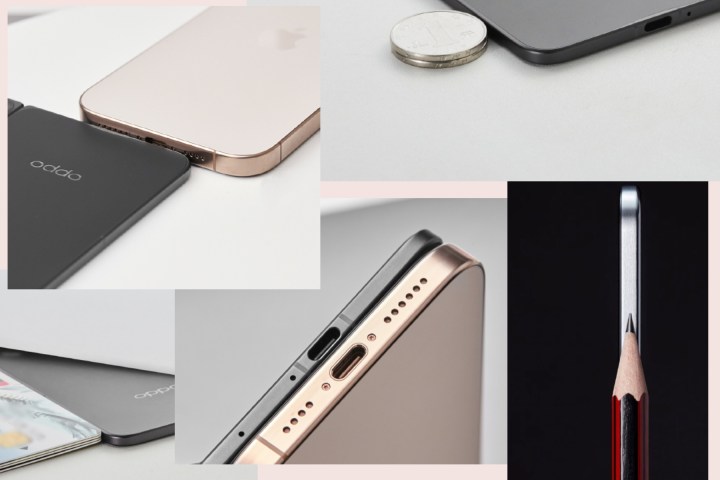
    The OnePlus Open 2 is expected to be an exceptionally sleek device, potentially the slimmest smartphone to date. Earlier leaks indicated a thickness of just 9.2mm, and a recent image shared by Oppo executive Billy Zhang showcases how slim this phone really is.

    Believed to share a nearly identical design with the OnePlus Open 2, the Oppo Find N5 is notably smaller than the iPad Pro, which has a thickness of 5.3mm. When folded, the OnePlus Open 2 reportedly measures less than 9.2mm, while its unfolded form is expected to be under 5mm, weighing in at less than 219 grams.

    Tipster Digital Chat Station confirmed some of this information in a Weibo post, stating that the smartphone will be powered by the Snapdragon 8 Elite processor, support 80W wired charging, 50W wireless charging, and feature a triple-camera setup.

    I can’t believe how slim our latest foldable is. We’ve pushed our engineering to ensure an optimal experience, whether it’s folded or unfolded, and I can’t wait for users to get their hands on it next month. #OPPOFindN5 pic.twitter.com/8j0zEO2gEf

    — Billy Zhang (@BillyZhangOPPO) January 24, 2025

    However, the real competition for the OnePlus Open 2 isn’t the iPad Pro M4, but rather the Honor Magic v3, which currently holds the title of the “thinnest phone” at just 4.4mm in thickness when unfolded. Given the latest images of the Find N5, it may be possible for OnePlus to challenge this record. It’s worth noting that the original post discussing this was deleted after the tipster, Chen Zhen, faced penalties for leaking early information.

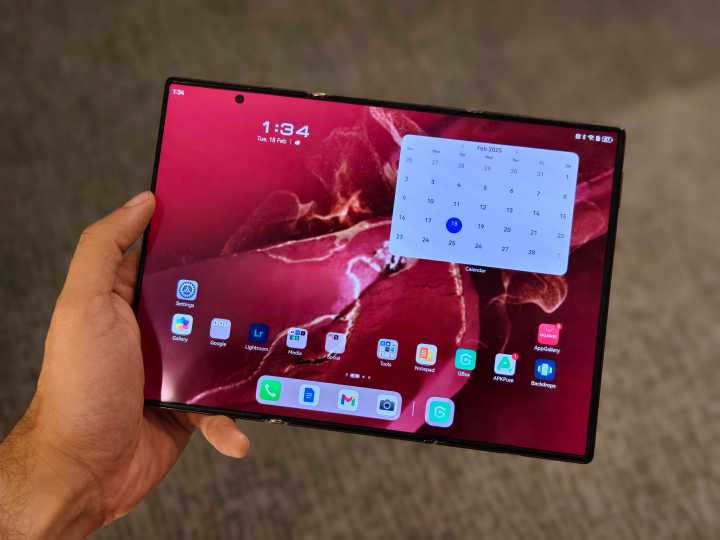
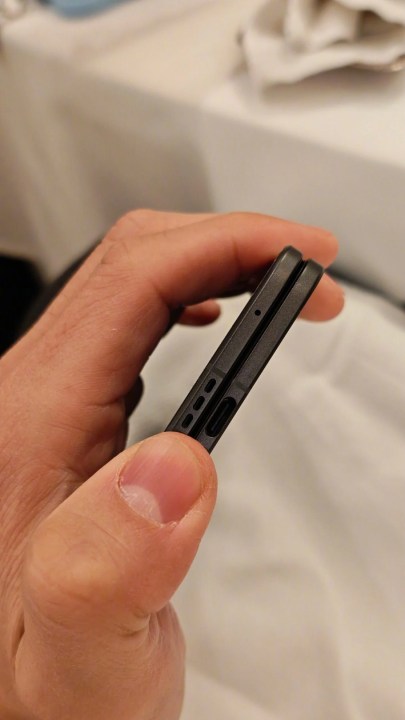
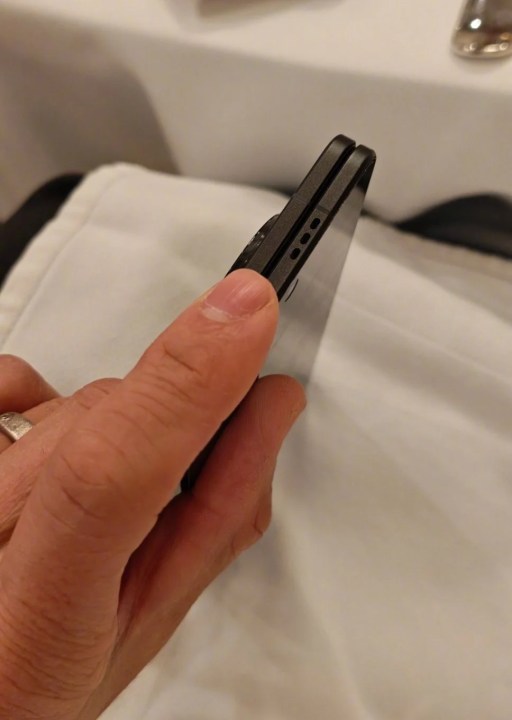
    Nevertheless, images have circulated widely online. From these visuals, we can see that the Find N5 includes an alert slider, a volume rocker, and a built-in fingerprint scanner. Observant users have also identified a microphone and USB-C port, while reports from Gizmodo China indicated there might even be a SIM card slot, albeit obscured by a thumb in the images.

    It’s wise to approach such leaks with a bit of skepticism. Until OnePlus officially confirms the details, much of what we know is theoretical, even if derived from known trends. The company is expected to reveal the device sometime in the first quarter of 2025, likely following the official announcement of the Find N5 by Oppo.

  • Oppo’s New Ultra-Thin Foldable Is Ready for Water Fun

    Oppo’s New Ultra-Thin Foldable Is Ready for Water Fun

    Foldable smartphones have gained attention for their innovative designs; however, one significant concern for potential buyers is their vulnerability to environmental factors. For instance, the Samsung Galaxy Z Fold 6 has an IP48 rating, which offers only basic water resistance and fails to provide dust protection.

    In contrast, Oppo’s upcoming foldable device, along with OnePlus’ version, promises to be much more durable. The new model, called the Find N5, has been officially confirmed to feature IPX6, IPX8, and IPX9 ratings, making it suitable for experiences such as using it in the bathtub, shower, or even capturing videos underwater.

    User utilizing the Oppo Find N5 underwater.
    Oppo / Weibo

    The International Electrotechnical Commission (IEC) defines level 9 protection against liquid ingress as “protected against high-pressure and temperature water jets.” This rating is unprecedented for foldable devices and even regular smartphones.

    A series of posts on the Chinese social media platform Weibo by an Oppo executive confirmed that their upcoming foldable phone will not only be the slimmest on the market but also capable of withstanding high-speed water exposure without issue.

    In addition to enhancing water resistance, Oppo is addressing another significant shortcoming by adding support for wireless charging, and they’re doing it in a major way.

    Side profile of the Oppo Find N5.
    Oppo / Weibo

    The Oppo Find N5 will support 50W wireless charging, which rivals the OnePlus 13 and surpasses the capabilities of both Apple and Samsung flagship models. Constructed with a titanium chassis, this device mirrors the approach taken by Apple in its iPhone 15 Pro, known for its strength and exceptional heat dissipation.

    Oppo plans to unveil the Find N5 next month. Given their historical relationship, it’s likely that the forthcoming OnePlus Open 2 will essentially be a variant of the Find N5. In terms of design, Oppo seems to be favoring a squarish layout for the internal foldable screen, while the outer display maintains a compact design.

    Thin profile and wireless charging capabilities of the Oppo Find N5.
    Oppo / Weibo

    However, it’s not just impressive hardware that makes Oppo and OnePlus devices highly competitive in the foldable market. Both companies have excelled in optimizing software for a large-screen Android experience.

    The Open Canvas system, for instance, is known for its outstanding multi-tasking capabilities, surpassing even Apple’s offerings with iPadOS on their premium tablets. With the enhancements observed in OxygenOS 15, the Oppo Find N5 is poised to be a leading foldable smartphone this year.