الوسم: Farming Simulator

  • Cattle Care, Feeding, and Breeding in Farming Simulator 25

    Cattle Care, Feeding, and Breeding in Farming Simulator 25

    Farming Simulator 25 isn’t just about traditional farming; it’s a multifaceted game that requires you to master various aspects, including livestock management, for success. Understanding how to raise cattle is essential if you want to develop your farming venture.

    Cows are often the first animals that come to mind when envisioning a farm. They play a vital role on your property by providing essential products. This guide will walk you through the basics of managing cattle, enhancing your gaming experience.

    A Guide to Cow Ranching

    To successfully manage cows in Farming Simulator 25, keep these essential tips in mind:

    • Construct a shelter for your cows and focus on breeding.
    • Ensure they have access to fresh water and quality feed.
    • Monitor their health closely for optimal productivity.
    • Consider selling raw milk or creating additional products.
    • Plan your sales strategically based on the game’s economy.

    Creating a Shelter for Your Cattle

    Start by setting up a designated shelter for your cattle. If you lack a pen, you will need to build one.

    To do this, access the build mode from the store menu. You’ll see an aerial view of your farm with various options on the left.

    In the left menu bar, click on the cow icon to access the Animal Pasture menu. In the first tab, you will find cow pastures and barns available for purchase:

    Item Price Capacity
    Cow Pasture $15,000 7
    Cow Barn $85,000 35
    Large Cow Barn $170,000 99
    Hormann Cow Barn $254,000 50
    Large Hormann Cow Barn $518,500 96
    Hormann Cow Barn with Feeding Robot $722,500 93

    You can adjust the capacity of your animal pens by building custom fences. Additionally, adding meadow grass to your pens can help to automatically feed the cows to some extent.

    Once the pen is in place, you won’t start with any cows. You’ll need to purchase animals from Animal Dealers and transport them manually. Alternatively, you can buy them directly from the barn’s interactive menu, though this incurs a delivery fee.

    Look for a floating green paw icon near your pasture or barn and interact with it to open a menu for buying cows and other animals.

    Feel free to also house water buffaloes in cow pastures.

    Feeding Your Cows

    Grass and hay are the primary food options for cows in Farming Simulator 25, each yielding different results. You’ll need to be strategic about your choices:

    • Only Hay: 80 percent effective.
    • Only Silage: 80 percent effective.
    • Only Grass: 40 percent effective.
    • Only Meadow Grass: 40 percent effective.
    • Mixed Ration: 100 percent effective.

    Good quality feed leads to healthier cows, which is essential for consistent produce. For optimal results, aim to provide your cattle with mixed rations. If you have meadow grass in your barn or pasture, adding hay or silage will achieve full effectiveness.

    Cows that haven’t reached puberty only need one type of feed, as they won’t produce milk until they do. Making sure your mature cows are well-fed is crucial for generating quality yield.

    If necessary, all types of feed, including mixed rations, can be purchased at the shop.

    Providing Water for Cows

    Unlike barns, cow pastures require manual watering since they’re not linked to a water delivery system. Fortunately, this task is straightforward.

    Start by buying a portable water barrel from the Vehicle Shop under the Animal category. Once you have the barrel, attach it to a tractor and head to a nearby water source. Position the barrel so that it just touches the water to access the refill option.

    After refilling, drive the barrel back to your pasture and deliver it by placing it on the water drop icon. When the dump option appears, interact with it to fill your pasture with water.

    Managing Animal Waste

    In addition to milk, cows generate manure and slurry, both of which can be used as fertilizers for your fields, saving you money on commercial products.

    To obtain manure, provide straw bedding in the barn. Slurry is created by feeding the cows.

    To utilize your homemade fertilizer, you’ll need either a Manure Spreader or Slurry Tanker, which can be found in the Yield Improvement category of the Vehicle Shop.

    Keep in mind that manure isn’t stored at the barn automatically; you’ll need to add a manure storage extension. Enter build mode, find the barn icon, select it, and scroll through the tabs to find Silo Extensions. Choose the Manure Heap Extension and place it near your Cow Barn for automatic storage.

    To collect manure from your storage extension, use a Manure Spreader and park a trailer next to it. An option to pick up the manure should appear for your selected vehicle.

    Avoid using the Manure Heap, as it is not connected to storage. The Manure Heap Extension links to a barn for automatic manure storage, which is different from the Manure Heap itself.

    You can sell both slurry and manure in the game, converting your cattle’s waste into profit. For slurry, you’ll need a Slurry Transport to deliver it to buyers, found in the same category at the Vehicle Shop.

    To collect slurry, approach the cow dung icon with your tanker parked nearby to access the refill option. You can then transport the slurry to sellers for profit.

    How to Get Your Cows to Produce Milk

    Farming Simulator 25 features four types of cows, but only two of them produce milk. The available breeds are:

    • Brown-Swiss (Produces milk)
    • Holstein (Produces milk)
    • Angus (Can be sold for a good price when grown)
    • Limousin (Can be sold for a good price when grown)

    Cows will start producing milk once they reach 18 months of age. At that point, they can also give birth to calves after a few months. Additionally, you’ll need a proper space for the cows to produce milk, which means that having them in Cow Pastures won’t suffice.

    To sell milk, you’ll need a portable barrel. Position the barrel on the milk logo near your barn to refill it.

    Afterward, transport the tanker to buyers or processing facilities to sell it or convert it into refined products like bottled milk. Either way, you’re bound to make a profit.

    Tips for Growing Your Cattle Business

    When selling milk, be aware that selling prices fluctuate by season. The best months to sell are generally January to March and September to October. The average price tends to hover around $2,096, so aim to sell when prices are close to this to avoid losses.

    Also, try to process the milk to improve profitability; processed products often fetch higher prices.

    Since only two breeds can produce milk, consider expanding your inventory by acquiring non-milk-producing breeds like Angus and Limousin. Buy them young and watch their value increase as they mature. You can fill half your barn with milk producers and the rest with cattle meant for sale. Breeding these animals offers additional hustle and solid income potential when they grow.

  • The Ultimate Guide to Pigs in Farming Simulator 25

    The Ultimate Guide to Pigs in Farming Simulator 25

    Quick Links

    Farming Simulator 25 offers players more than just the chance to grow crops. It includes a variety of livestock that players can manage. Just like in real farming, the livestock can provide various resources—from meat to supplementary products and passive benefits.

    Pigs are one type of animal you can farm in the game. They strike a balance in terms of management: not as easy as bees but not overly complicated either. The investment of time and effort in caring for pigs can yield significant returns, both financially and in useful byproducts.

    Construction for Keeping Pigs

    There are several structures you can build for housing pigs. Most of these structures operate similarly and serve as upgrades, which is reflected in their pricing.

    Building Price Description
    Pig Pasture 20,000 Holds 36 pigs. This is the most basic structure for keeping pigs, requiring manual water filling and offering no slurry collection.
    Pigsty 67,000 Holds 50 pigs. The first pig building that automatically provides water and allows slurry collection.
    Shed With Pig Pasture 44,000 Holds 25 pigs. The smallest option but includes automatic watering and allows for slurry collection, an upgrade from the Pig Pasture.
    Pigsty 2 109,000 Holds 109 pigs. A larger version of the original pigsty with an increased capacity.
    Pigsty 3 164,000 Holds 275 pigs. The most expensive pigsty with the highest capacity, maintaining the same functions as its predecessors.

    How to Feed Your Pigs

    Feeding pigs is straightforward as they are not picky eaters. You can sustain them using two primary methods.

    Feeding Your Pigs with Crops

    Pigs can consume a variety of crops you cultivate, including:

    • Corn
    • Wheat
    • Barley
    • Canola
    • Sunflowers
    • Soybeans
    • Potatoes
    • Sorghum
    • Sugar Beets

    These crops can serve as a steady food source. However, if you aim to sell crops for profit or use them in other supply chains, this approach could lead to conflicts with your profit goals.

    A smart way to manage feeding is to keep dedicated fields close to your pig enclosures. This will help you avoid mixing up crop purposes or forgetting to feed pigs before selling a crop.

    Rotating Crops

    If you’ve activated seasonal growth, be aware that during winter months, the necessary crops for feeding pigs will not grow. During this period, you have the option to either purchase pig feed in the store or store enough food in a silo throughout the year.

    It’s also crucial to pay attention to your pig’s nutritional needs. A consistent diet of just one type of feed, like sunflowers, won’t promote optimal growth. Rotating between staple foods, grains, root vegetables, and proteins will keep your pigs healthy and productive.

    Feeding Your Pigs with Pig Feed

    You can conveniently purchase pig feed from the Packs > Animals section in the store. It costs €1,000, making it an affordable option for easy pig care. However, using purchased feed may decrease your overall profits since you’re not utilizing homegrown crops.

    Storing Your Pig Food and Straw

    Loading food for your pigs is largely similar across different types of enclosures. For each building, an area marked with a food symbol indicates where to unload the pig food. Simply drive your transport vehicle to this symbol, drop off the food, and it will automatically load into the pig’s storage.

    Straw is handled similarly but does not need to be loaded in the Pig Pasture. For other structures that require straw, deliver the straw in the same manner as the food.

    How to Collect Slurry

    Collecting slurry is straightforward but requires the right equipment. You’ll either need a slurry tanker for transporting large amounts or a slurry spreader for smaller quantities. Pricing starts at €31,500 for a spreader and €37,500 for a tanker, both available in the Yield Improvements section of the store. A tractor is necessary for towing either of these vehicles.

    How to Buy Pigs

    You have two options for purchasing pigs, with one being more convenient than the other.

    You can buy pigs that are either zero months old or three months old, with older pigs priced higher.

    Buying Pigs at Your Pigstys

    Purchasing pigs directly at your pigsty ensures they load instantly into their new home, blending convenience with a slight increase in per-pig cost, eliminating the need for an animal transport vehicle.

    Buying Pigs from an Animal Dealer

    Alternatively, you can acquire pigs from an animal dealer in town. They offer various animals and allow you to bypass the delivery charges associated with transporting pigs to your operation.

    The Life of a Pig

    In the game, there are three cosmetic varieties of pigs:

    • German Landrace
    • Bentheim Black Pied
    • Berkshire

    Young Pigs

    Pigs aged zero to six months cannot reproduce and will spend their time eating, sleeping, and playing. Once they reach six months, they start reproducing, providing you with additional pigs without needing to purchase new ones.

    Adult Pigs

    Adult pigs can be sold for profit. However, consider that selling pigs without transporting them will yield lower profits. Furthermore, maintaining a healthy pig population is essential for sustained reproduction and future profitability.

  • Mastering Grape Cultivation in Farming Simulator 25

    Mastering Grape Cultivation in Farming Simulator 25

    Farming Simulator 25 offers a mix of straightforward and intricate tasks. While activities like planting wheat, cultivating fields, and managing seasonal crops are fairly easy, growing grapes presents a unique challenge. However, creating a flourishing vineyard can be a rewarding experience. Once you become familiar with the necessary equipment and processes, grape farming can be incredibly profitable.

    Optimal Times to Plant and Harvest Grapes


    You can plant grapes from March to May and expect to harvest them in September and October. Outside of these windows, planting is not an option, and unharvested grapes will wither. If you’ve disabled seasonal growth, you can plant and harvest grapes anytime.

    Essential Equipment for Your Vineyard

    To establish a vineyard, you’ll need several specific machines. If you don’t already own some of the required equipment, the initial setup can be quite costly. Here’s a list of essential items and their prices:

    You can purchase everything in one section of the store. Head to the shop, select the middle option labeled Packs, and then choose grapes for all necessary items.

    Item Price Description
    Rex 4 GT $39,500 A suitable tractor that can maneuver in tight spaces—especially important for a vineyard.
    Braud 9070L $242,000 The primary harvester specifically designed for grape harvesting.
    MP 122 OCEA $16,000 This pre-pruner prepares your vines for the next harvest by trimming them after each cycle.
    MERCURY 4000L $28,000 A liquid fertilizer sprayer that enhances grape yield, worth the investment.
    MRWK 6000 $16,500 A tipper specifically designed for transporting grapes.
    TMC CANCELA $4,500 A mulcher used to keep your vines from overgrowing.
    AGRISEM $7,500 A subsoiler for preparing rows without disturbing your grapevines.

    Total Equipment Cost: $354,000

    This total does not cover the cost of the grapevines, which can vary based on how you design your layout. You should expect around $370,000 for a decent-sized vineyard.

    Selecting a Location for Your Vineyard

    Early stages of a vineyard in Farming Simulator 25.

    Before anything else, you need to identify a suitable area for your vineyard. A large, flat space is ideal, although you can afford some flexibility with a vineyard compared to other crops requiring a perfectly flat surface.

    When planting the grapevines, use the first selection for the start of the row and the second for the end. Aim to place them as close to each other as possible, making each subsequent row tightly spaced.

    Mulching Between the Rows

    A tractor mulching between grapevine rows in Farming Simulator 25.

    The mulcher is only necessary if there’s overgrowth between your rows. If you encounter this issue, operate the mulcher between rows to maintain proper growth.

    Cultivating Between the Rows

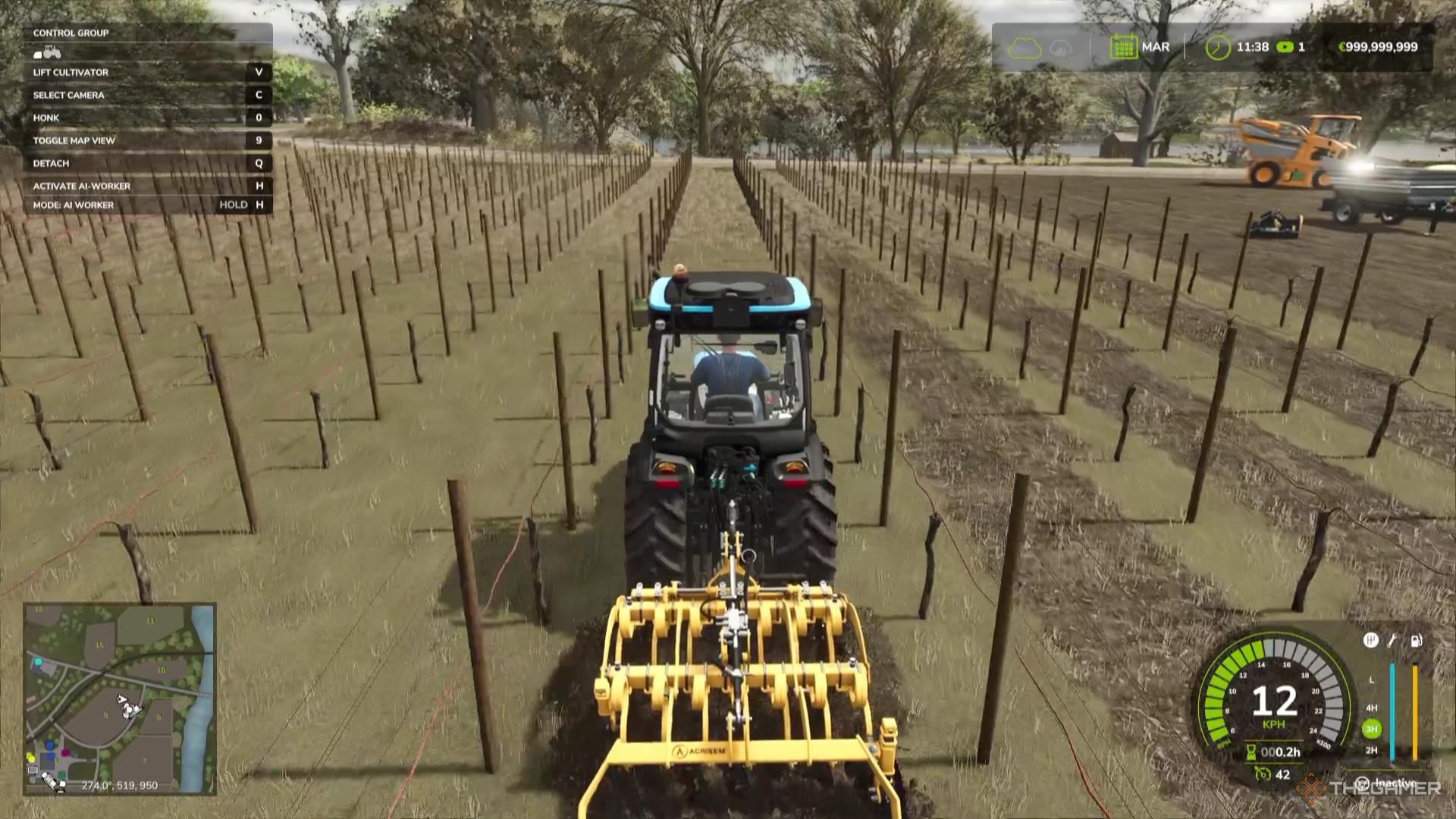
    Cultivating between grapevine rows in Farming Simulator 25.

    For this task, you’ll need to use the subsoiler instead of a traditional cultivator since standard equipment may not fit in the narrow spaces between your grapevines. The subsoiler will accomplish the job that a regular cultivator would do in a wider setup.

    Applying Liquid Fertilizer

    Using liquid fertilizer in a vineyard in Farming Simulator 25.

    As soon as your grapevines begin sprouting leaves, it’s time to apply liquid fertilizer. Attach the MERCURY 4000L to your tractor, fill it up with fertilizer, and drive through your vineyard’s rows while spraying. This practice will significantly boost your grape yield, making the effort worthwhile.

    Harvesting Grapes at the Right Moment

    When your grapes are ripe, it’s time to use the grape harvester. Unfold it to raise the collection mechanism from the ground. Activate the harvester and carefully guide it through the rows of grapevines, allowing the machine to collect grapes as you drive straight down each row. Depending on your vineyard’s size, you may need to make multiple trips.

    When your harvester fills up, position it close to the tipper to unload. Each load will fill half the tipper’s capacity, so once the tipper is full, sell your grapes.

    Selling Grapes or Processing Them into Juice or Raisins?

    You have the option to sell your grapes immediately or process them into grape juice or raisins. To check the current market prices, refer to the menu above your settings for the best offers available. If you choose to process your grapes further, locate a grape processing unit to convert them into juice or raisins, then sell these products using the same pricing strategy.

    Preparing Your Vineyard for the Next Harvest

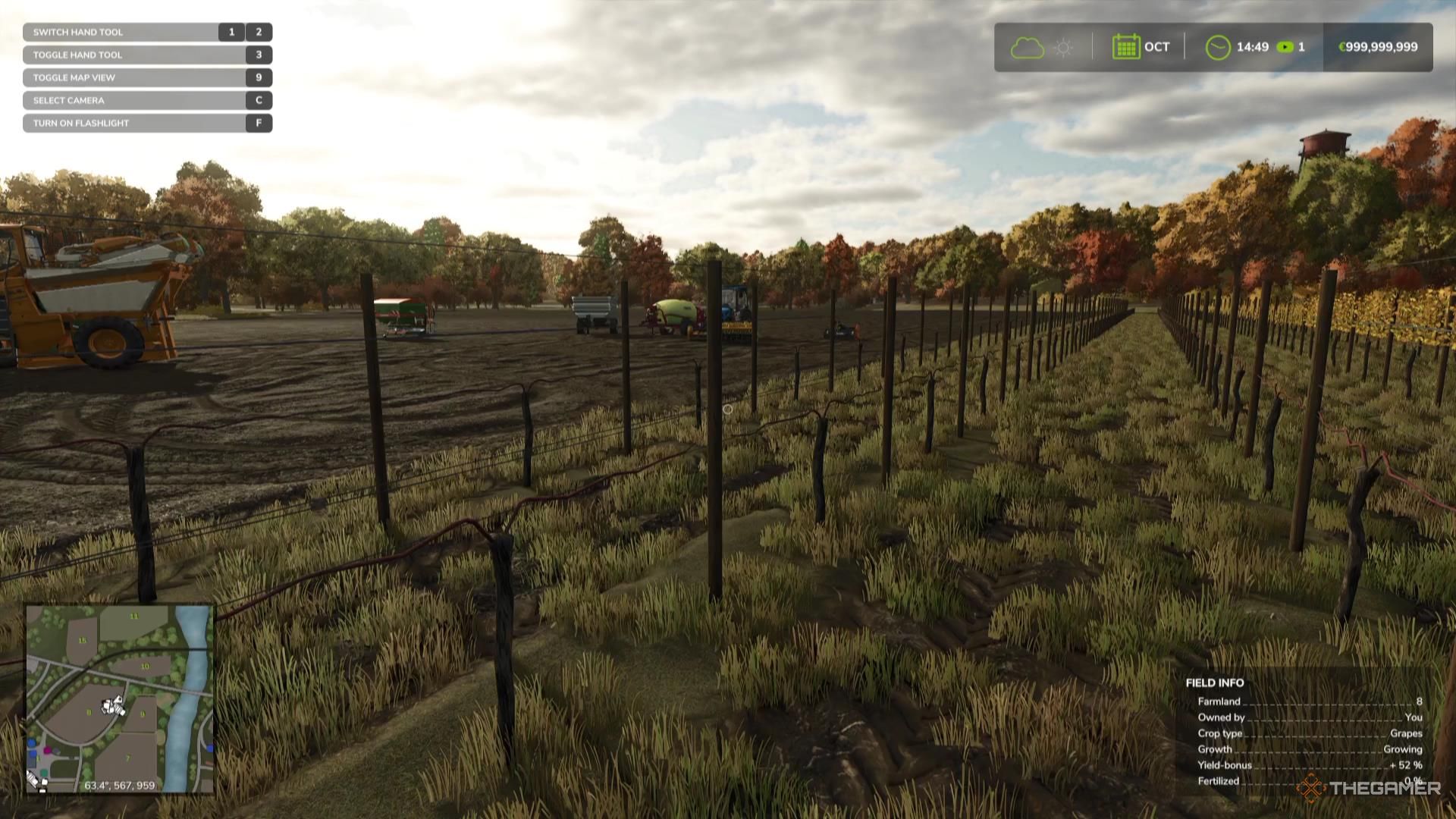
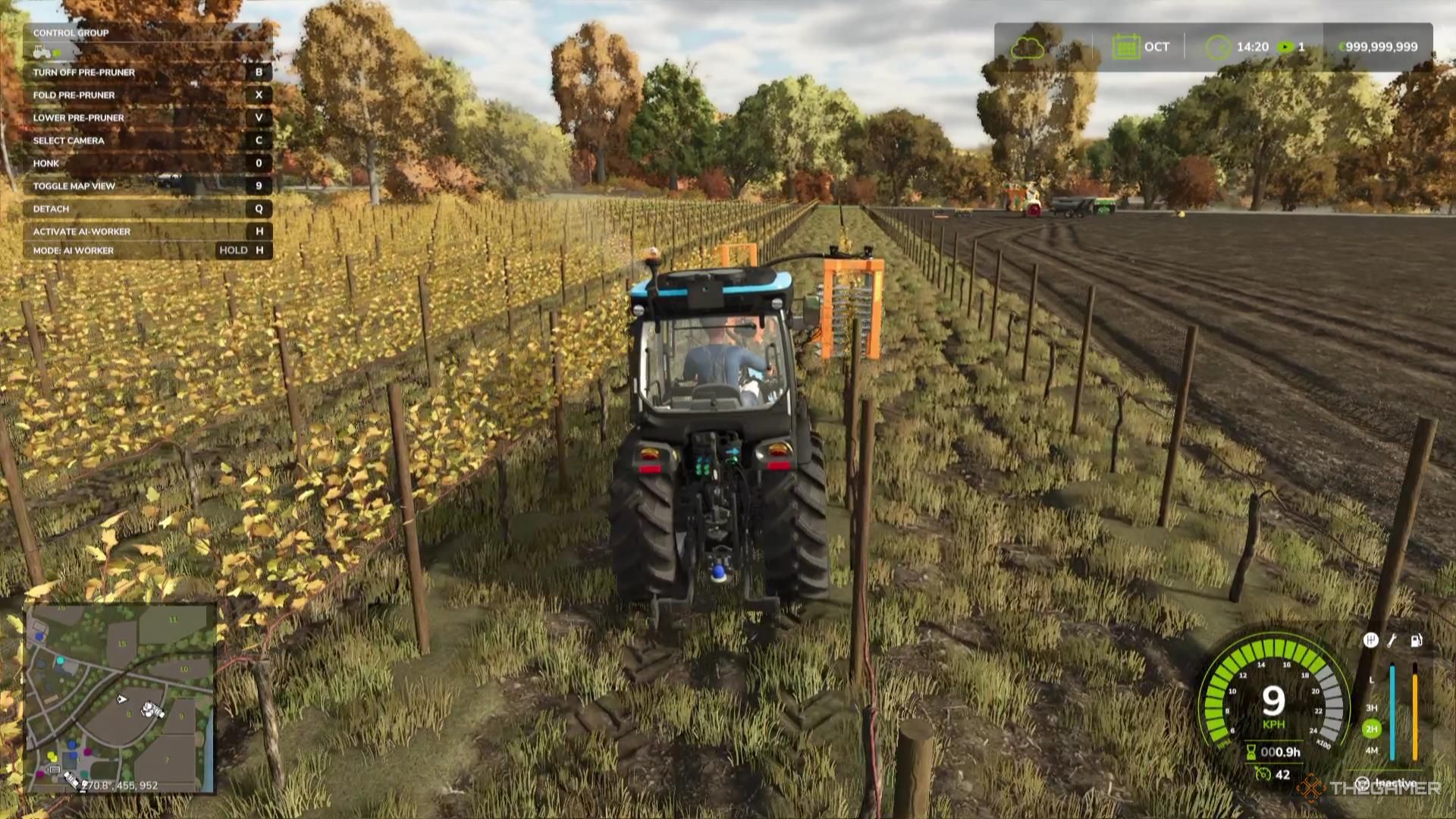
    Pre-pruning a vineyard in Farming Simulator 25.

    Once you’ve completed all the other tasks, you’ll want to address any yellowing leaves in your vineyard. Use your tractor, attach the pre-pruner, unfold it, and activate it. This tool will help you trim off any dead leaves, keeping your vineyard healthy and ready for the next harvest season.

  • Mastering Rice Cultivation in Farming Simulator 25

    Mastering Rice Cultivation in Farming Simulator 25

    Rice has made its debut in Farming Simulator 25 and is a vital crop for ensuring survival. Similar to real farming, growing rice requires specific resources and effort to achieve a rewarding harvest.

    This game features two rice varieties: standard Rice and Long Grain Rice, each needing its own seeds and tools. This guide will provide you with the necessary steps to grow rice successfully. Let’s jump into the details!

    What Do You Need to Grow Rice?

    To cultivate rice, you’ll need five essential items:

    • Tractor
    • Cultivator
    • Planter
    • Harvester
    • Trailer

    When selecting your equipment from the Packs section in the shop, make sure to check both compatibility and power ratings. Additionally, ensure that you have an adequate open area for the rice paddy by exploring the building menu available in the shop.

    How to Grow Rice


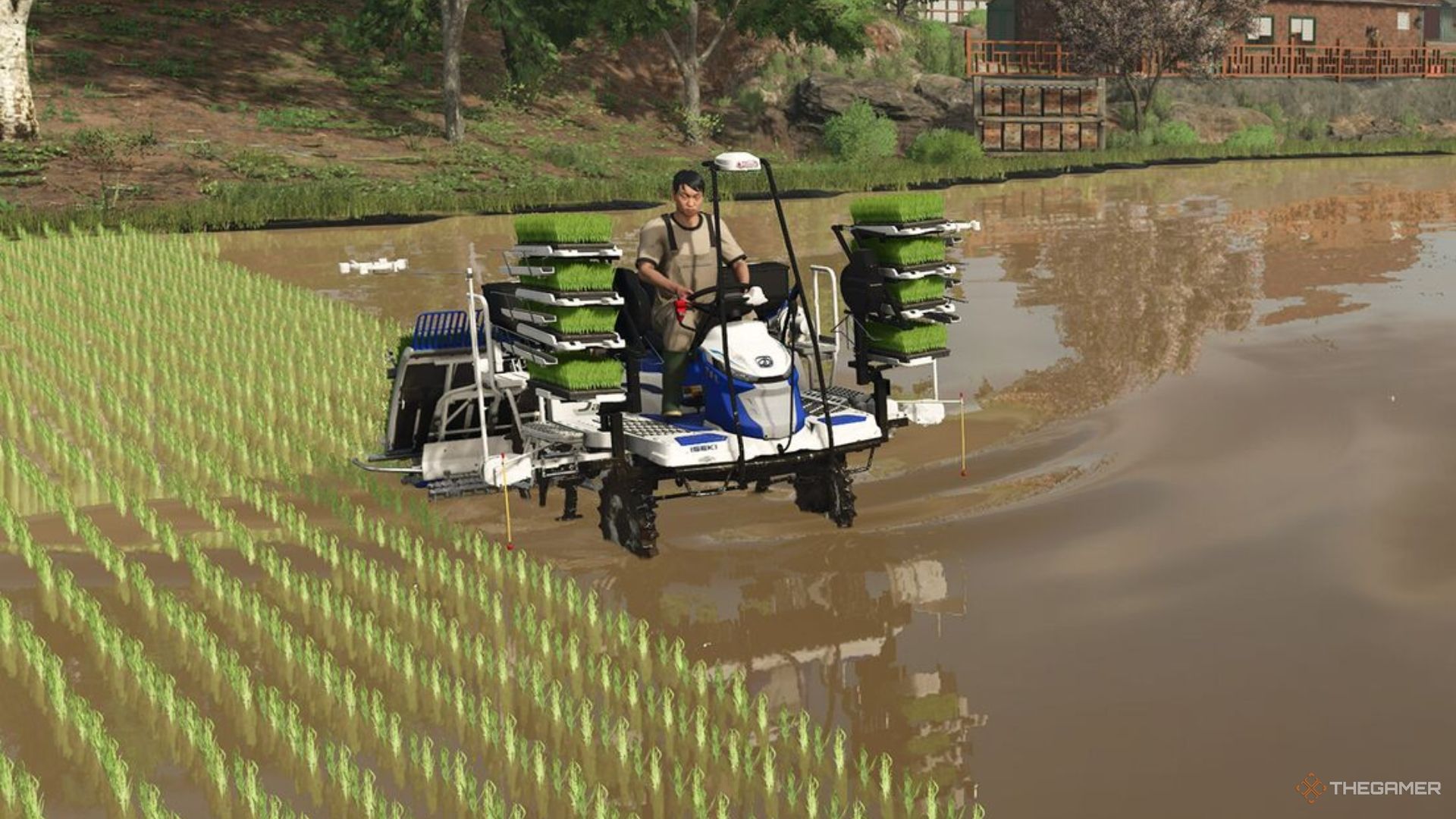
    An image of planting rice in Farming Simulator 25

    Next, let’s focus on the process of planting rice. After assembling the required equipment, follow these steps:

    Step

    Details

    1. Create a Rice Paddy Select the Rice Field option from the build menu and outline the corners of the area where you want to plant rice. This will cost you $1,500.
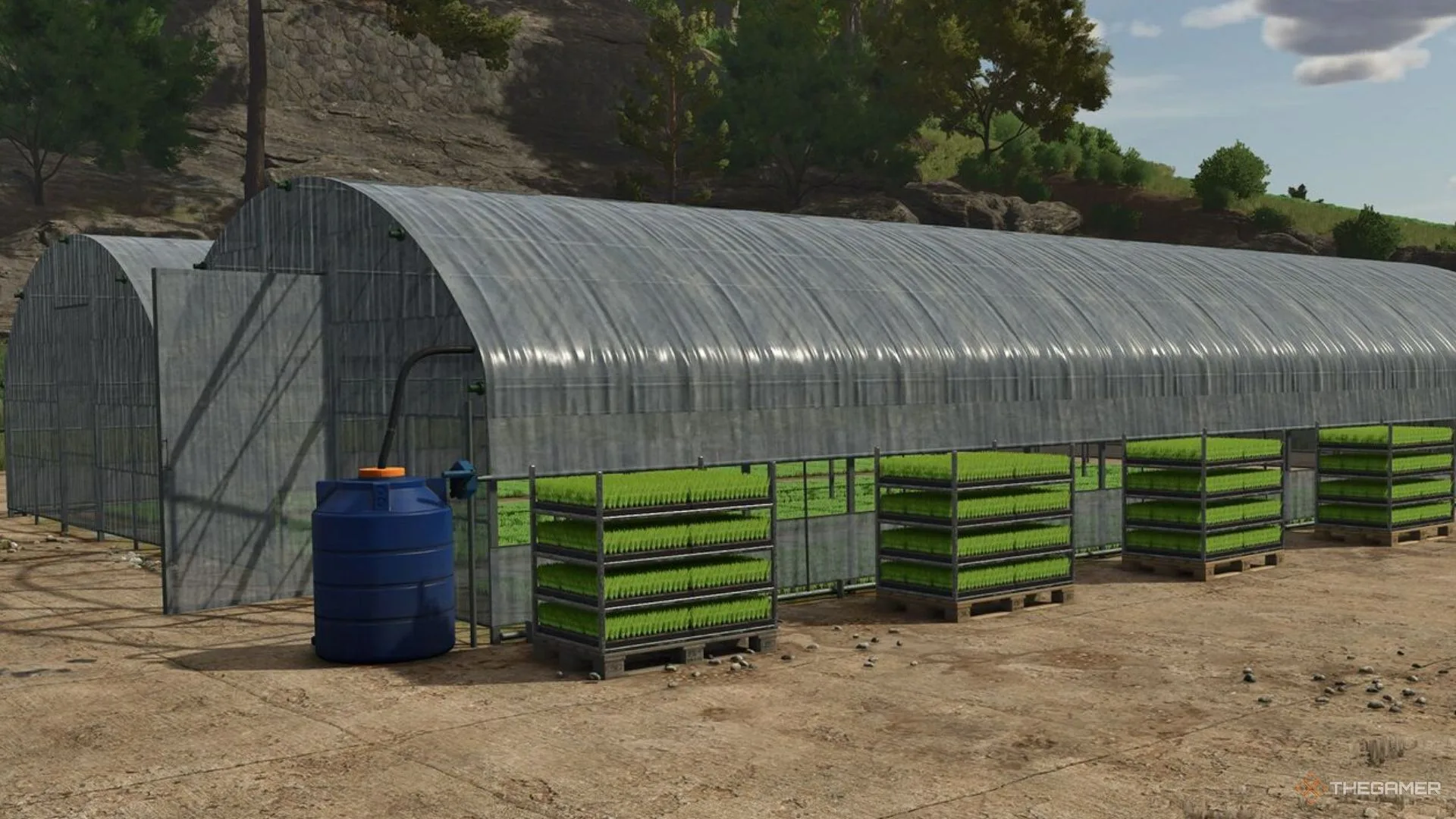
    2. Build a Rice Greenhouse Invest $3,000 to create a Greenhouse, which allows you to produce Rice Saplings in bulk without buying them from stores. Just provide water, and you’re set.
    3. Plant the Rice Utilize the Tractor, Cultivator, and Planter to plant the rice saplings.
    4. Turn on the Water Pump The water pump will ensure your field gets enough moisture, which is crucial since rice grows best in wet conditions. Monitor the water level daily to avoid losing your saplings.
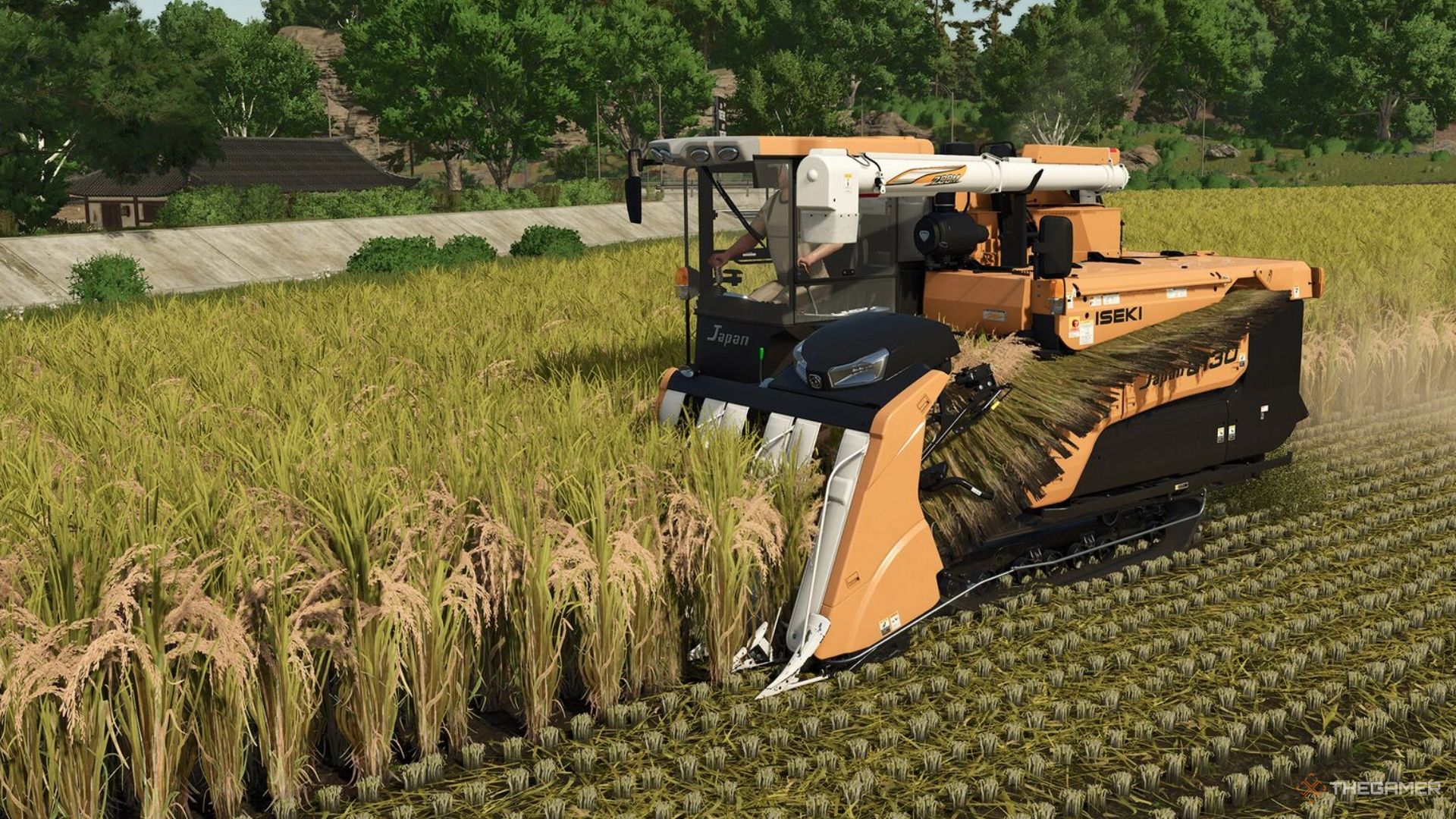
    5. Harvest the Rice When your rice crops have matured, it’s time to harvest using a Harvester.

    Rice progresses through four growth stages:

    Stage

    Description

    Growth Stage 1 Seedlings are planted.
    Growth Stage 2 Crops begin to grow and appear green.
    Growth Stage 3 Crops grow further, with yellow hues starting to show.
    Growth Stage 4 Crops take on a yellow color, indicating that the rice is ready to harvest.

    Following these stages, the Harvested and Withered stages will occur.

    What Are the Rice Growth and Yield Rates?


    An image of harvesting rice in Farming Simulator 25

    Refer to the table below to understand the growth and yield rates of rice:

    Yield per Harvest

    Seeds per Harvest

    Growth Duration

    Planting Season

    Harvest Season

    Average Selling Price

    13,200

    156

    4 months

    April to May

    August to September

    $3,300

    The ideal time for planting is April to May, when rainfall is abundant. By August to September, as the monsoon subsides and autumn arrives, your rice will be ready for harvest.