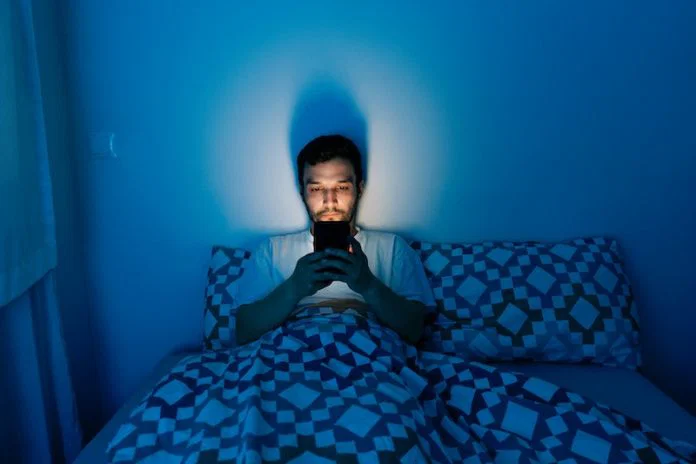
Bright screen light and electronic devices used at night might slowly harm your eyesight, according to a recent study. Researchers have discovered that exposure to very bright artificial light during late evening hours could elevate the risk of common eye conditions later in life. The findings were published in GeroScience.
Humans have traditionally evolved under a natural cycle of daylight and darkness. Sunrise signals the body to wake up, while sunset prompts preparation for sleep. This daily rhythm, governed by the circadian clock, relies heavily on light detection by the eyes, which send signals to the brain to keep this cycle in sync.
Modern technology has altered this natural pattern. Bright LED lighting, large computer screens, televisions, smartphones, tablets, and intense workplace lighting allow people to remain active well past sunset. While these innovations offer many benefits, scientists are increasingly questioning whether excessive bright light at night might have hidden health consequences.
Previous studies have associated nighttime light exposure with issues like obesity, diabetes, heart disease, and disrupted sleep. However, less was known about its direct impact on the eyes themselves.
To explore this, researchers analyzed data from over 82,800 adults participating in the UK Biobank. Individuals with pre-existing serious eye conditions were excluded. Participants wore wrist devices that tracked both movement and light exposure every 1.2 seconds over a week. Researchers then monitored their health for nearly eight years.
The study revealed that individuals exposed to average evening light levels exceeding 1,000 lux between 8:00 p.m. and 11:30 p.m. faced higher risks of developing age-related macular degeneration, cataracts, and primary open-angle glaucoma. Specifically, the risk increased by 31% for macular degeneration, 18% for cataracts, and 47% for glaucoma. The longer people remained under such bright light, the greater their likelihood of developing these conditions.
Most household lighting remains well below 1,000 lux, typically around 100 to 500 lux. The main concern lies with intensely bright screens, high-powered LED displays, or extremely bright lighting used in some workplaces.
Scientists suspect that bright evening light may disrupt the circadian rhythm. Blue-rich light from LEDs could also boost oxidative stress, damaging delicate cells in the retina and lens, while interfering with natural repair processes that occur during sleep.
While this observational study cannot definitively prove that bright light causes eye disease, the large sample size and lengthy follow-up highlight its significance. Future research will aim to clarify how nighttime light exposure impacts eye health specifically.
Based on current evidence, reducing unnecessary bright light before bedtime might be an simple and effective way to safeguard vision in the long term. Practical steps include dimming screens, switching to night mode, lowering room lighting, and avoiding overly bright light late in the evening. These small adjustments are easy to implement and pose minimal risks, making them worthwhile while scientists continue to delve into this promising area.
If you are concerned about eye health, you might also want to explore studies discussing how vitamin B could help in preventing vision loss, as well as diets like the MIND diet that may lower the risk of eye diseases.
For additional insights on eye health, refer to recent research on protecting your eyes from glaucoma and findings indicating that certain eye surgeries may even reduce dementia risk.