الوسم: energy loss

  • Scientists find tiny devices can lose energy remotely

    Scientists find tiny devices can lose energy remotely

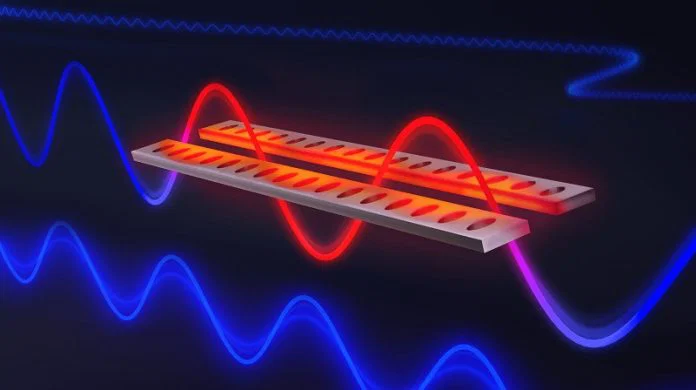
    Scientists have found that tiny vibrating devices known as nanomechanical resonators can lose energy even when they never physically touch anything else. This unexpected discovery could help engineers improve sensors, communication tools, and emerging quantum technologies. The study was conducted by researchers at the Swiss Federal Institute of Technology Lausanne (EPFL) and published in Nature Physics.

    These nanomechanical resonators are incredibly small structures built onto computer chips. Despite their tiny size, they vibrate at astonishing speeds—ranging from thousands to billions of vibrations per second. Their high sensitivity makes them capable of detecting minuscule changes in mass, force, pressure, and temperature. They are commonly used in radio-frequency filters, timing devices, and advanced quantum physics experiments.

    In many applications, these resonators need to be placed very close to other materials to measure their movements or interface with electronic or optical systems. While it was known that physical contact could impair their performance, this new research reveals that just being in close proximity can also cause issues. The team discovered that when a resonator vibrates near certain insulating materials, it can gradually lose energy without any contact. This energy loss reduces what scientists call the “quality factor,” a measure of how long the device can keep vibrating before slowing down.

    The root of this hidden energy drain lies in tiny static electric charges embedded inside the resonator. As it vibrates, it creates a fluctuating electric field around it. If a nearby insulating material like silicon dioxide or silicon nitride has even minimal electrical losses, it absorbs some of this energy. Essentially, energy silently leaks from the resonator into the surrounding material, despite the two never touching. This phenomenon is related to noncontact friction, which has been observed in certain scientific instruments before.

    To understand this effect better, the researchers developed a mathematical model predicting that slower vibrations would lose more energy than faster ones. They tested this by fabricating small silicon nitride resonators suspended roughly 500 nanometers (that’s half a micrometer) above an insulator. Their measurements confirmed the predictions: vibrations with lower frequencies experienced greater energy loss.

    Further experiments involved more sophisticated resonators placed between tiny optical structures separated by gaps just a few hundred nanometers wide. As the gaps narrowed, device performance deteriorated significantly, with some quality factors dropping by up to tenfold.

    This breakthrough offers valuable insight for designing future nanoscale devices. It highlights a practical limit to how closely components can be positioned without degrading performance. Interestingly, the researchers suggest that this effect could also serve as a new tool. By analyzing the hidden energy loss, scientists might be able to study electrical properties of extremely thin materials or develop novel ways to connect mechanical devices with electronic systems.

    As nanotechnology advances, understanding these invisible energy losses becomes crucial. It will be fundamental for creating smaller, more sensitive, and more dependable devices for scientific research, medical applications, and the development of quantum technologies.

  • Scientists Develop Smart Battery Material to Prevent Energy Loss

    Scientists Develop Smart Battery Material to Prevent Energy Loss

    Lithium-sulfur batteries have long been considered one of the most promising innovations for future energy storage solutions. They can hold significantly more energy compared to current lithium-ion batteries and utilize sulfur, an abundant and cost-effective material.

    However, a major obstacle has hindered their widespread adoption.

    Researchers from Tohoku University have now developed a new material designed to address this challenge, bringing lithium-sulfur batteries closer to mainstream use. Their study, published in the journal Small, features a specially engineered layer composed of a covalent organic framework (COF) combined with graphene.

    This innovative layer enhances the battery’s efficiency and longevity. Lithium-sulfur batteries generate power through a sequence of chemical reactions. During operation, sulfur transforms into various forms before reverting during charge cycles. This process enables these batteries to store much more energy than most smartphones, laptops, and electric vehicles.

    Unfortunately, one of the sulfur compounds produced—lithium polysulfides—can dissolve into the battery’s liquid electrolyte. These particles tend to drift to other regions within the battery, causing unwanted side reactions, reducing the amount of available sulfur, lowering capacity, and shortening lifespan. This issue, known as the “polysulfide shuttle,” has been a significant barrier to developing practical lithium-sulfur batteries.

    Rather than trying to merely block these particles, the research team designed a material capable of capturing, guiding, and facilitating the normal chemical reactions of these sulfur compounds within the battery.

    The new material integrates two advanced components. The first is a covalent organic framework, or COF—a lightweight, highly ordered structure made from precisely arranged molecules with tiny, uniform pores. Its controlled architecture allows it to selectively interact with specific chemicals inside the battery. The second is graphene, a form of carbon renowned for its exceptional electrical conductivity. When combined, these materials form a thin layer that traps problematic sulfur compounds while still enabling rapid electron flow.

    Laboratory tests yielded promising results. Batteries incorporating this layer demonstrated high energy storage capabilities, maintained performance during rapid charging and discharging, and remained reliable after over 1,000 cycles. The team also assembled a larger pouch-style battery using the same technology, proving its potential for real-world applications.

    Each component of the new material performs a vital role. Some sections attract lithium ions, others facilitate their movement, and certain areas accelerate the key chemical reactions during charging and discharging. Rather than functioning as a mere filter, this layer actively manages and optimizes the battery’s internal chemistry.

    The scientists emphasize that their work exemplifies how molecular-level material design can significantly enhance battery performance. If ongoing testing continues to show favorable results, this approach could lead to lighter, longer-lasting batteries with much higher energy capacities.

    Such advancements might enable electric vehicles to travel farther on a single charge, extend the runtime of portable electronics, and improve the efficiency of renewable energy storage systems.