Tag: electricity

  • How to Restore Power in Dying Light: The Beast by Completing the Puzzle

    How to Restore Power in Dying Light: The Beast by Completing the Puzzle

    Dying Light: The Beast offers many side activities that help you gain experience points quickly. The game guides you through these activities via missions, one of which is called The Cable Guy. During this side quest, you’ll learn how to unlock and power one of the many substations scattered across Castor Woods.

    Because this mission involves several steps, it can be easy to get confused about how to restore the power. Completing The Cable Guy mission, however, provides rewards that can greatly improve your chances of survival.

    How To Start The Cable Guy Mission

    You won’t be able to begin this quest until you turn on the power during the Power Gambit main story mission. After restoring the power and fighting off the Baron’s men, Pietro will contact you via walkie-talkie, asking you to turn on a substation.

    To continue, accept this side mission, which requires you to head west of the Town Hall in the Old Town. When you arrive at the location, you’ll find the substation inside a fenced area, surrounded by zombies, near a road.

    Substation Map

    How To Restore The Power

    Your task is to connect a cable to a wall outlet in the area to activate the substation. While this sounds simple, the large group of zombies nearby makes it challenging. Before attempting to power the substation, clear out the zombies first.

    Note: There may be one or two zombies with ranged acid attacks guarding the substation. Deal with these before taking on the main horde, as their acid attacks can cause significant health damage.

    Substation Under Light Post

    Once the area is clear, climb the light post with its back facing the forested area. From the top, turn right and jump onto the adjacent platform.

    Lamp Post Platform

    Interact with the cable on the platform to take it. Remember, you’ll have a limited length of cable, which you can see at the bottom right of your screen. After grabbing the cable, jump down and head to the small structure at the center of the area. Climb onto its roof to find a latch door that you’ll need to lockpick.

    Latch Door

    Tip: The tasks in this mission can be completed in any order. You can open the latch door before getting the cable, as long as you have lockpicks.

    Drop into the shack and you’ll see the connection point in front of the door. Turn to your right to interact with a machine on the wall to power the generator. Be sure to loot the shack before leaving.

    How To Complete The Cable Guy

    Finally, return to the Town Hall once the substation is functioning. Enter the same hallway where you first met Jacob, then proceed down the hall, turn right, and you’ll find Pietro beyond the door.

    Meeting Pietro

    After restoring power, head back to the Town Hall. From there, go to the hall where you met Jacob, and go all the way down, turning right at the corridor. Pietro will be just beyond that door.

    Interact with him to complete the mission, which awards you with the Remote Trap Controller—an important tool for triggering traps like car bombs throughout Castor Woods. This device becomes especially useful on higher difficulties of the game.

  • Solar Surpasses All as Europe’s Top Energy Source

    Solar Surpasses All as Europe’s Top Energy Source

    Solar panels along with a neighborhood and lower Manhattan view from the rooftop of Timber House, New York’s first mass-timber condominium in Brooklyn’s Park Slope, on August 16, 2022. — Reuters

    PARIS: New research indicates that solar energy has taken the lead as the primary source of electricity in Europe for the first time.

    A report from Ember, a UK-based energy think tank, reveals that solar panels produced more electricity than any other source in the European Union during June, contributing 22.1 percent to the overall energy mix.

    This surpasses nuclear power, which made up 21.8 percent, and wind energy at 15.8 percent, as stated by the British organization. Natural gas provided 14.4 percent, while hydropower accounted for 12.8 percent.

    Ember reported that at least 13 countries achieved new national records in solar power generation.

    Wind energy also reached a new high across Europe, and coal’s contribution to the continent’s electricity output fell to a historic low of 6.1 percent, down from 8.8 percent in 2024.

    However, electricity demand increased, with coal usage in the first half of 2025 still surpassing levels from the same period in 2024. Overall, electricity demand rose by more than two percent compared to last year in the first six months.

  • Spanish Grid Operator’s Initial Assessment Eliminates Cyberattack in Blackout

    Spanish Grid Operator’s Initial Assessment Eliminates Cyberattack in Blackout

    Here’s a rewritten version of your content in American English, ensuring it’s unique and plagiarism-free:

    Shoppers navigate a darkened street as law enforcement patrols to prevent theft amid a significant power outage that impacted large areas of Spain, in Ronda, Spain on April 28, 2025.

    MADRID: The Spanish National Electricity Grid Operator (REE) announced on Tuesday that its initial analysis has determined that a cyberattack was not responsible for the nationwide power outage experienced across much of Spain and Portugal on Monday.

    The incident, which was the most significant blackout ever reported in the Iberian Peninsula, occurred at 12:33 PM local time (10:33 AM GMT). Power was restored later that evening.

    Eduardo Prieto, the Chief of System Operations at REE, explained during a press briefing that a severe loss of power generation in southwestern Spain triggered instability within the system, leading to its disconnection from the French electrical network.

    Prieto suggested that the lost generation might have been from solar energy, but he noted that it was too early to confirm this.

    He reassured the public that the electrical system is now stable and operating normally.

    Let me know if you need any further adjustments!

  • Tajikistan to Impose Jail Time for Illegal Power Consumption

    Tajikistan to Impose Jail Time for Illegal Power Consumption

    Tajikistan’s New Law Imposes Heavy Penalties for Electricity Theft

    DUSHANBE: In a significant move amid ongoing energy hardships, Tajikistan has enacted new legislation that imposes prison sentences of up to 10 years for the illegal use of electricity. This decision comes as the nation faces a prolonged energy crisis, exacerbated by chronic water shortages affecting its infrastructure.

    Due to outdated energy systems and increasing demand, electricity consumption in Tajikistan is restricted for approximately six months each year.

    On Saturday, the Ministry of Energy and Water Resources announced that individuals found attempting to tamper with or bypass electricity meters will be charged with criminal offenses. The announcement was notably covered by independent news outlets only on Monday, reflecting the government’s tight control over media coverage.

    The newly established regulations indicate that anyone disconnected from or trying to manipulate an electricity meter could face severe consequences, including hefty prison sentences. President Emomali Rakhmon, who has been in power since 1992, leads the country that was once part of the Soviet Union.

    Earlier this month, Justice Minister Rustam Shoemurod expressed concern over individuals who alter meter readings to evade payments, stating that such actions "seriously undermine the nation’s economic interests."

    Tajikistan relies heavily on hydroelectric power, which accounts for roughly 95% of its electricity production. However, a persistent lack of water has resulted in regular power outages nationwide.

    In March, President Rakhmon voiced his worries over the inefficient use of electricity in a country where the average salary is less than $240 per month. He has been advocating for the expansive Rogun hydroelectric power plant as a possible remedy to the energy crisis. Originally proposed in the 1970s during the Soviet era, the project has faced numerous delays due to the dissolution of the USSR and the civil war in Tajikistan during the 1990s. Despite reviving the plan in the 2000s, costs have soared to over $6 billion.

  • Global Nuclear Capacity: 299 GW Under Development Worldwide

    Global Nuclear Capacity: 299 GW Under Development Worldwide

    Understanding the Global Landscape of Nuclear Power

    Current Nuclear Power Capacity

    According to the latest data from the Global Energy Monitor, the total nuclear power capacity across the globe stands at 396 gigawatts (GW). In addition, there are plans for an additional 299 GW of capacity, which is either announced, in pre-construction phases, or currently under construction. This signifies a robust interest in nuclear energy as a sustainable power source, which is crucial for meeting global energy demands and addressing environmental concerns.

    Leading Countries in Nuclear Capacity

    The United States: A Nuclear Power Pioneer

    As of July 2024, the United States holds the title of the largest producer of nuclear power, boasting a capacity of 102 GW. This significant contribution not only positions the U.S. as a leader in nuclear energy but also underlines its historical commitment to utilizing nuclear technology for energy production.

    France: A Close Second

    France follows closely behind the U.S. with a nuclear capacity of 64 GW. The French nuclear power sector is characterized by its high reliance on nuclear energy, supplying a substantial portion of the country’s electricity.

    The Rise of China

    Currently ranked third, China’s nuclear power capacity stands at 58 GW. However, the country is on the verge of a remarkable transformation, as it prepares to rise to the forefront of nuclear power globally. With 104 prospective reactors across 22 nuclear power plants, China has accounted for an impressive 118 GW of future capacity.

    Future Projections in Nuclear Energy

    China’s Ambitious Plans

    If all prospective reactors in China come online, the country’s nuclear power capacity could soar to 176 GW. This dramatic increase will help consolidate China’s position as the leading nation in nuclear power, surpassing the U.S. significantly.

    United States’ Future Capacity

    While the U.S. will remain a significant player in the nuclear sector, its growth seems limited, with plans for an additional 7 GW through 30 prospective reactors in 8 power plants. However, anticipated retirements—specifically, the planned closure of the Diablo Canyon plant and other reactors—will offset gains, likely resulting in a net increase to a total of 109 GW.

    Scheduled Retirements Impacting Nuclear Power

    The landscape of nuclear energy is not just shaped by additions but also by retirements. Notable closures include:

    • The Diablo Canyon plant (two reactors) planned to retire in 2030.
    • Salem nuclear plant reactors, which have licenses until 2036 and 2040.

    In total, these closures represent an estimated loss of approximately 5 GW from the U.S. nuclear capacity. Other countries, such as Russia and Ukraine, are also preparing for scheduled reactor retirements, which will further influence the global nuclear power landscape.

    Upcoming Nuclear Projects by Country

    India’s Expansion Plans

    India is poised to make considerable advancements in nuclear energy with 31 prospective reactors and a potential capacity addition of 32 GW. This significant boost will place India as a notable player in the nuclear realm.

    Other Emerging Countries

    Countries like Russia and the United Kingdom are also on the path to enhance their nuclear capabilities. Russia has plans to develop an additional 21 GW, while the UK aims to add 15 GW. Additionally, Romania and Turkey each plan to expand their nuclear capacities by 15 GW.

    New Entrants to Nuclear Energy

    The global nuclear energy landscape is set to witness new players entering the field. Countries such as:

    • Turkey: Planning 15 GW of capacity.
    • Egypt: Aiming for 5 GW.
    • Indonesia: Targeting 4 GW.
    • Kenya: Looking at 4 GW.
    • Kazakhstan: Considering 3 GW.
    • Bangladesh and Uzbekistan: Each planning for 2 GW.

    Although currently without nuclear energy, these countries are taking significant steps to include nuclear power in their energy portfolios, showcasing a global trend toward diversifying energy sources.

    Conclusion

    The global nuclear power landscape is undergoing transformative changes, with rising capacities in established producers and significant developments expected from newcomers. Each country’s strategic approach to nuclear energy will play a crucial role in shaping the future of global energy security and sustainability.

  • India’s Waste-to-Energy: 10 Plants, High Toxin Levels, Major Failures

    India’s Waste-to-Energy: 10 Plants, High Toxin Levels, Major Failures

    The State of Waste-to-Energy in India

    Introduction to Waste-to-Energy Technology

    Waste-to-energy (WtE) is a significant technology aimed at addressing the increasing waste generation crisis while producing energy from municipal solid waste. In India, the implementation of WtE processes has seen a surge, particularly in urban centers where waste management systems are struggling to keep up with rapid population growth and urbanization. However, the effectiveness and sustainability of WtE plants in India have recently come under scrutiny.

    The Timarpur-Okhla Waste-Burning Plant: A Case Study

    Accusations and Health Concerns

    An investigative report by The New York Times highlighted critical issues surrounding the Timarpur-Okhla waste-burning plant located in Delhi. This facility, operational since 2012, has been pointed out for emitting smoke loaded with toxic substances that far exceed legal limits. Local residents have been voicing concerns for years about health problems linked to the plant, including respiratory ailments, headaches, and allegations of increased miscarriage rates and birth defects.

    Environmental Violations

    In addition to health concerns, the report alleges that the ashes produced by the plant have been dumped illegally close to residential areas. The proximity of such hazardous waste not only poses immediate health risks but also raises long-term environmental concerns about soil and water contamination in the area.

    Overview of Waste-to-Energy Plants in India

    Current Landscape

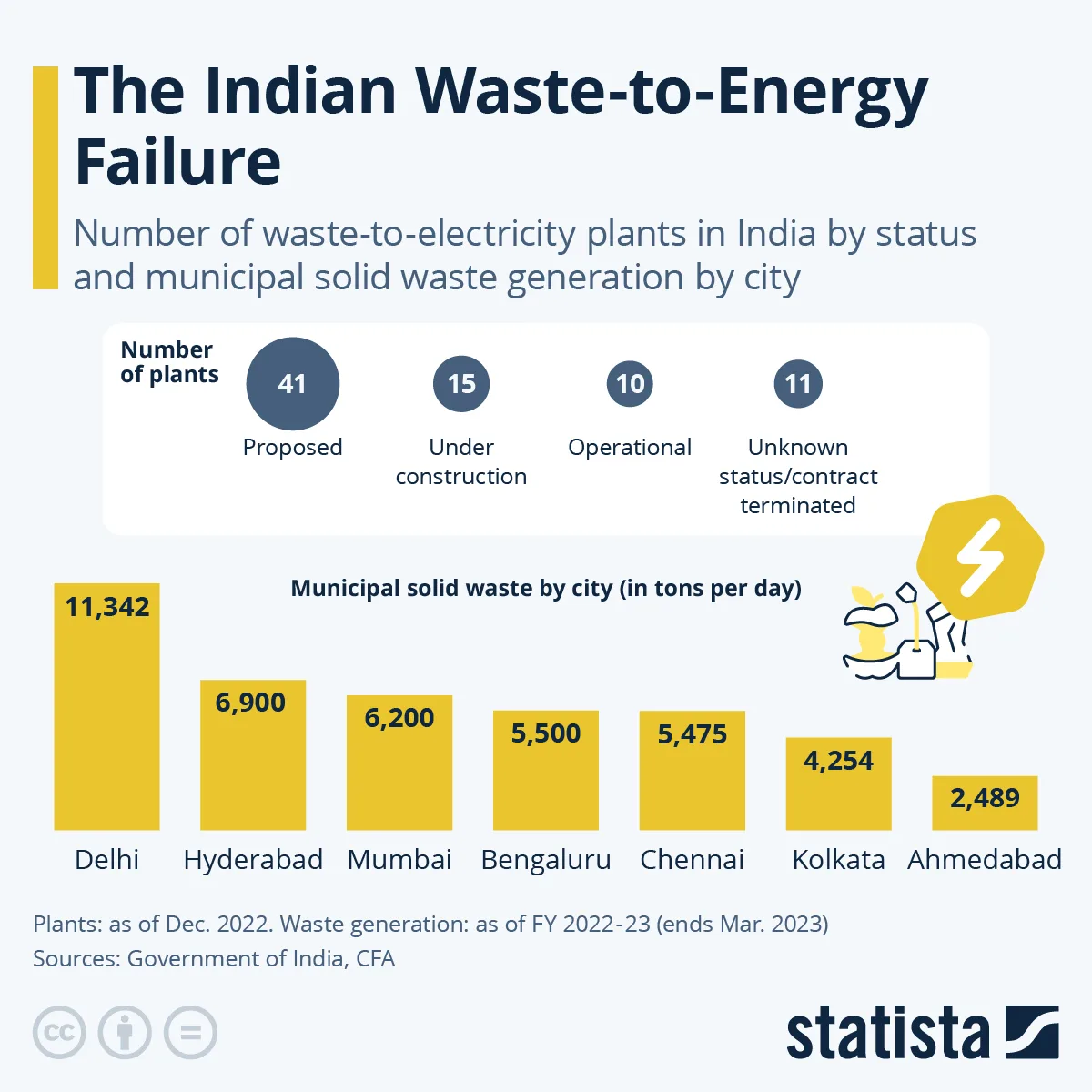
    Despite the controversial nature of WtE facilities, around ten plants are known to be operational across India. Four of these plants are located in the National Capital Territory of Delhi, which generates a substantial amount of household waste due to its large population. Interestingly, the Ministry of Housing and Urban Affairs has recently omitted specific data on the number of WtE facilities, signaling possible gaps in transparency regarding the operation and efficacy of these plants.

    Historical Context

    India’s journey into waste-to-energy technology dates back to 1987, when the first plant was commissioned in Delhi but quickly shut down due to operational challenges. The subsequent establishment of newer plants, such as the Timarpur-Okhla facility, was seen as a renewed effort to harness the potential of waste energy generation.

    Challenges Facing Waste-to-Energy Plants

    Technical and Operational Hurdles

    A significant factor contributing to the inefficacy of India’s WtE plants is the heterogeneous nature of the waste. Unlike countries with successful waste-to-energy frameworks that process sorted and recycled waste, India’s waste is often mixed with a high proportion of organic and recyclable materials, which complicates the burning process. According to the Centre for Science and Environment (CSE), this mixed waste composition greatly diminishes the efficiency and effectiveness of energy recovery.

    Insufficient Regulatory Framework

    The CSE also critiques India’s capacity to enforce robust emission standards for waste-to-energy plants. Given the present operational challenges, there is a heightened need for stringent monitoring and adherence to environmental regulations. Unfortunately, the prevailing framework remains inadequate, leaving a gap in safeguarding public health and environmental integrity.

    Government Support for Waste-to-Energy Initiatives

    Continued Push for Expansion

    Despite mounting evidence of the challenges faced by the existing WtE plants, the Indian government continues to advocate for the expansion of waste-to-energy technologies. Estimates suggest that there are approximately 10 to 15 additional plants currently under construction, with even more proposed. This push reflects a broader governmental strategy aimed at tackling the waste crisis and meeting energy needs.

    Public Backlash and Future Prospects

    The support for WtE initiatives is met with significant public resistance, particularly in areas near operational plants. Residents’ concerns about health issues and environmental degradation are leading to a growing movement against the establishment of waste-to-energy facilities. As plans for new plants materialize, it remains to be seen how these social dynamics will unfold in the context of India’s ongoing waste management and energy production endeavors.

    Conclusion (omitted)


    (Note: The Conclusion section was intentionally omitted as per your request.)