الوسم: elders

  • Many dangerous brain-altering drugs originate in hospitals

    Many dangerous brain-altering drugs originate in hospitals

    Many older adults depend on medications to manage their health, but some drugs can cause serious side effects, especially those that impact brain function. These include antipsychotics and benzodiazepines, commonly prescribed to treat anxiety, sleep issues, or behavioral symptoms. While they can be beneficial in certain situations, these drugs may also lead to confusion, fall risks, or even hospitalization.

    A recent study conducted by UCLA researchers found that these medications are often initially prescribed in hospital settings rather than during routine doctor visits. The study’s findings, published in JAMA Network Open, focused on adults aged 66 and older, many of whom already experienced some degree of cognitive decline. Cognitive impairment covers a spectrum from mild memory issues to more severe conditions like dementia, making these individuals particularly vulnerable to brain-related medication side effects.

    Researchers examined data spanning over a decade, from 2008 to 2021, combining information from a national health study with Medicare records to trace when and where patients first received prescriptions for certain brain-impacting drugs. These medications included antipsychotics, benzodiazepines, sleep aids, and anticholinergics.

    The data revealed a striking pattern: a significant portion of these drugs were first prescribed in acute care environments such as emergency rooms, hospitals, or post-acute care settings like nursing homes. Interestingly, these prescriptions were more common than what might be expected based on how frequently patients visited these settings. This trend was especially pronounced among patients with dementia. For instance, nearly half of all antipsychotic prescriptions for dementia patients originated in hospital or similar settings, despite these patients only having a smaller percentage of total healthcare visits there.

    This pattern suggests that initial medication starts often occur during hospital stays, potentially leading to long-term use even after patients leave these environments. Alarmingly, many patients continued taking these drugs for over a year, raising concerns about prolonged exposure and heightened risks in the aging population.

    The study also highlighted that individuals with more serious cognitive problems were disproportionately prescribed these medications. Approximately 20% of dementia patients received new prescriptions in hospitals or similar facilities, prompting questions about whether these drugs are always necessary or if safer alternatives could be considered.

    The researchers emphasize that these findings present a critical opportunity for change. Targeted efforts to reduce unnecessary or risky prescriptions should focus on hospital and nursing home settings—key points where these medications are often initially prescribed. Intervening at these stages could meaningfully decrease long-term, potentially harmful use.

    However, the study has some limitations. For example, it assumes the last healthcare setting visited is where the prescription was initiated, which may not always be accurate. Despite this, the large sample size and consistent findings lend credibility to the results.

    Ultimately, the research underscores how the location of prescribing can profoundly influence a patient’s health trajectory. In particular, hospitals and similar settings appear to be significant starting points for medications that affect the brain, especially among older adults with cognitive impairment. By focusing on these environments, healthcare professionals may reduce unnecessary medication use and improve safety for vulnerable populations. While further research is needed, this study offers a clear path forward for enhancing medical practices and patient care.

    If you’re interested in dementia prevention, explore dietary strategies and learn about how omega-3 fatty acids support brain health. Stay informed by reading recent studies linking choline deficiency to Alzheimer’s, and discover which foods to include or avoid for cognitive well-being.
  • Elders’ Tomb: A Guide to Secrets and Rewards

    Elders’ Tomb: A Guide to Secrets and Rewards

    Destiny 2’s second act of the Revenant quest is now here, bringing back the iconic Prison of Elders for players to dive into once more. This new Tomb of Elders experience revisits an arena-style gameplay format from the first Destiny game, now revamped to engage teams of three players with challenging modifiers, thrilling combat scenarios, and new rewards.

    Clearing the Tomb of Elders is manageable, but there are some changes to keep in mind from past seasonal activities. This guide will cover how to unlock the Tomb of Elders, highlight how it differs from previous tasks, and detail the exciting rewards that await you upon clearing the Prison of Elders.

    Unlocking the Tomb of Elders


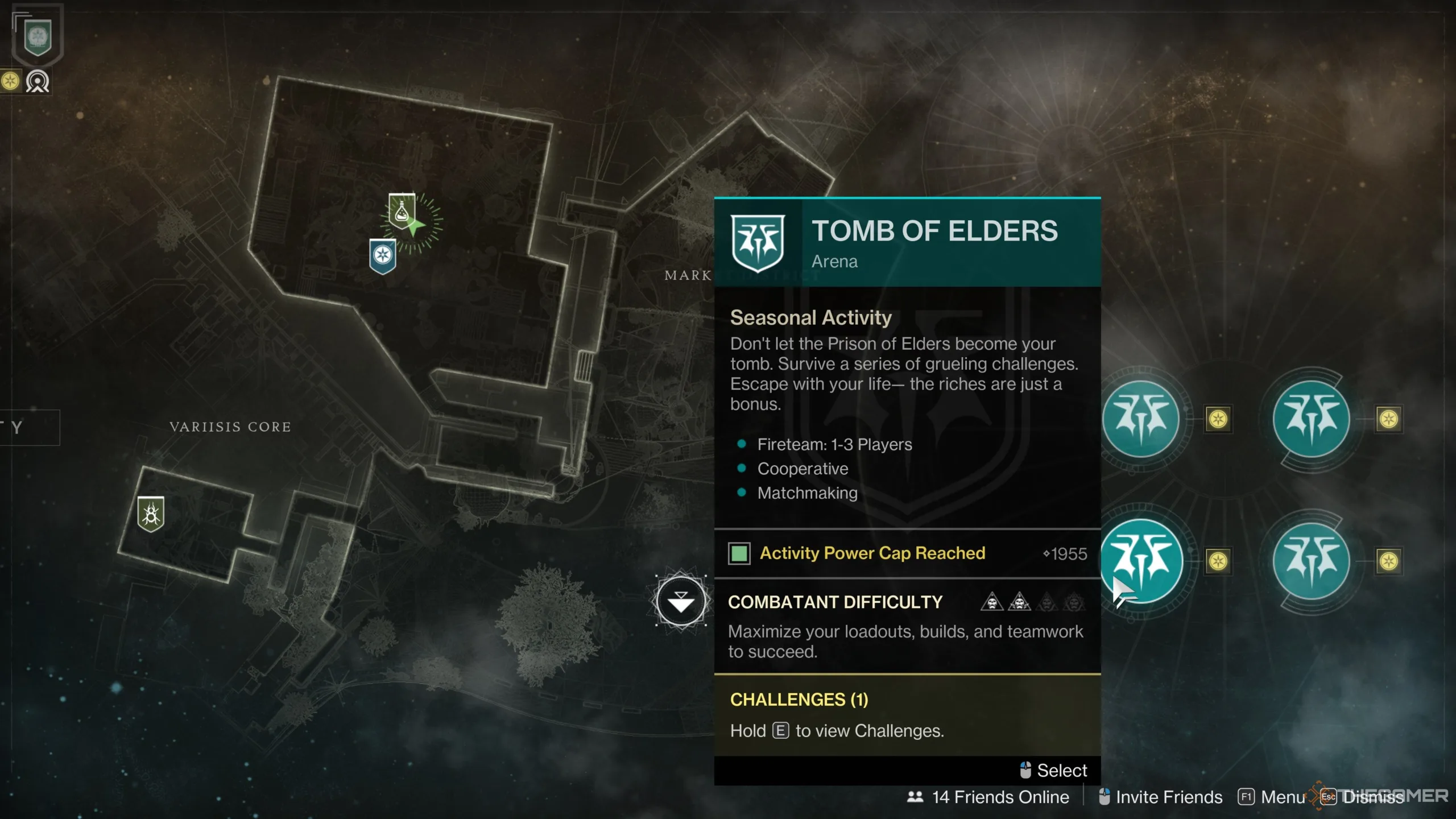
    You can access the Tomb of Elders by progressing to Act 2 in the Revenant seasonal questline. Once you finish the first act, return to the Last City and talk to Mithrax to kick off the next quest. You’ll need to participate in a Tomb of Elders match along with its tougher version, the Contest of Elders. This activity can be found in the Director under the Last City section, right below the seasonal Onslaught playlist.

    Guide to the Tomb of Elders Activity

    The Tomb of Elders is a three-player matchmade activity that challenges you to defeat various enemies in quick-paced battles. It resembles the typical three-player content from previous seasons in Destiny, such as Menagerie, Savathun’s Spire, and Riven’s Lair. Your task is to conquer two combat encounters, take down a boss, and claim your rewards before moving on to the next challenge.

    The standout feature is the dynamic modifier system, which alters the combat difficulty in each room, reminiscent of the original Prison of Elders gameplay. Variks has introduced a variety of new modifiers that heighten the difficulty. Examples include:

    • Counterfeit: Enemies drop explosives disguised as familiar items upon defeat.
    • Grounded: Damage taken while airborne is significantly increased.
    • Brawn: Your health is substantially boosted but does not regenerate. Defeating tough enemies restores health for you and your allies nearby.

    Modifiers are reset after you complete each encounter.

    Activity modifiers (like Surges and Overcharge) remain active throughout.


    Destiny 2 Tomb of Elders Thresher Boss

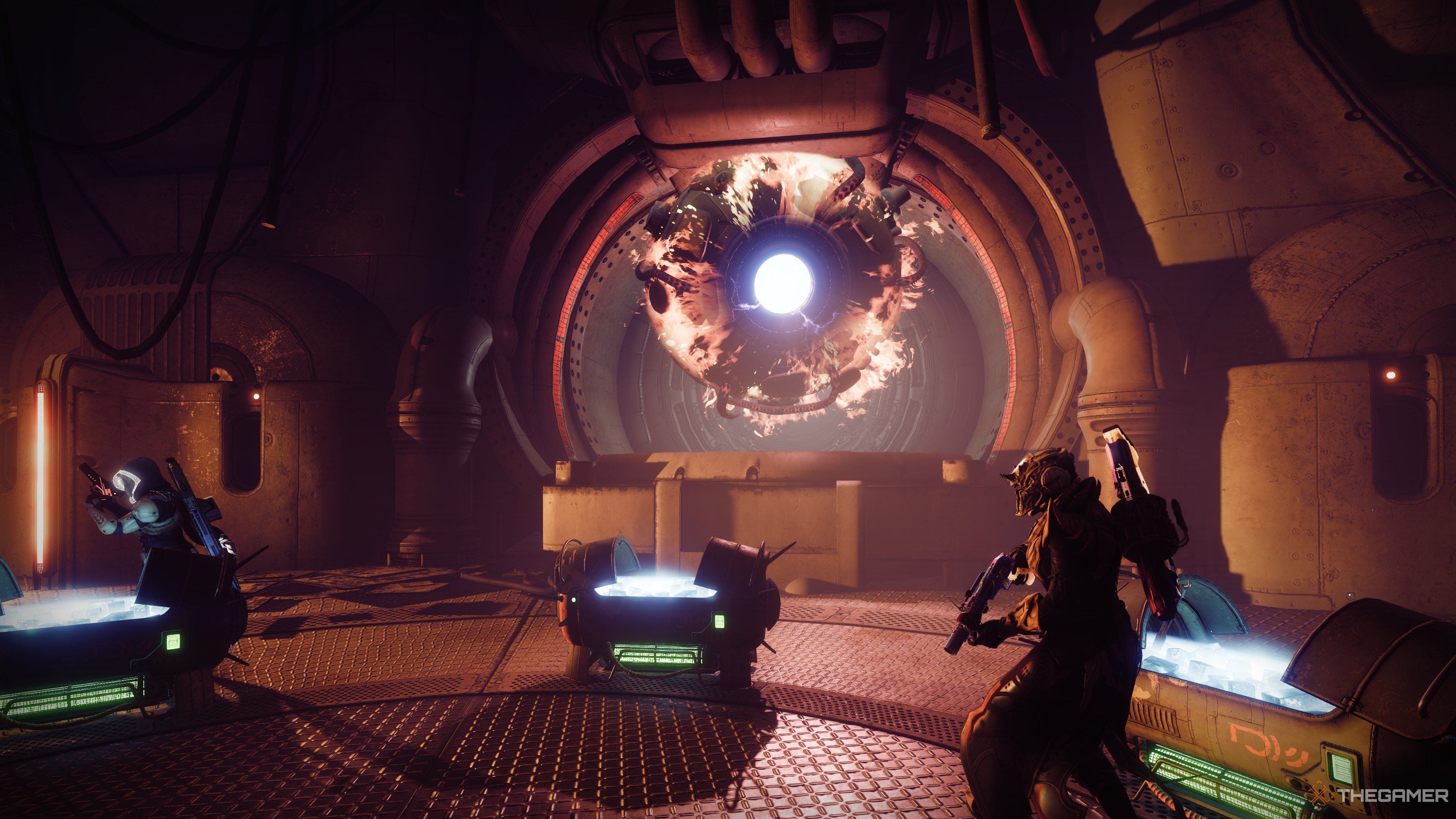
    In this activity, your fireteam must complete a designated combat encounter to advance within the Prison of Elders. These tasks primarily involve eliminating enemies, sometimes interspersed with objectives like destroying generators or collecting explosives. Completing your objective allows you to unlock the next encounter and continue the fight.

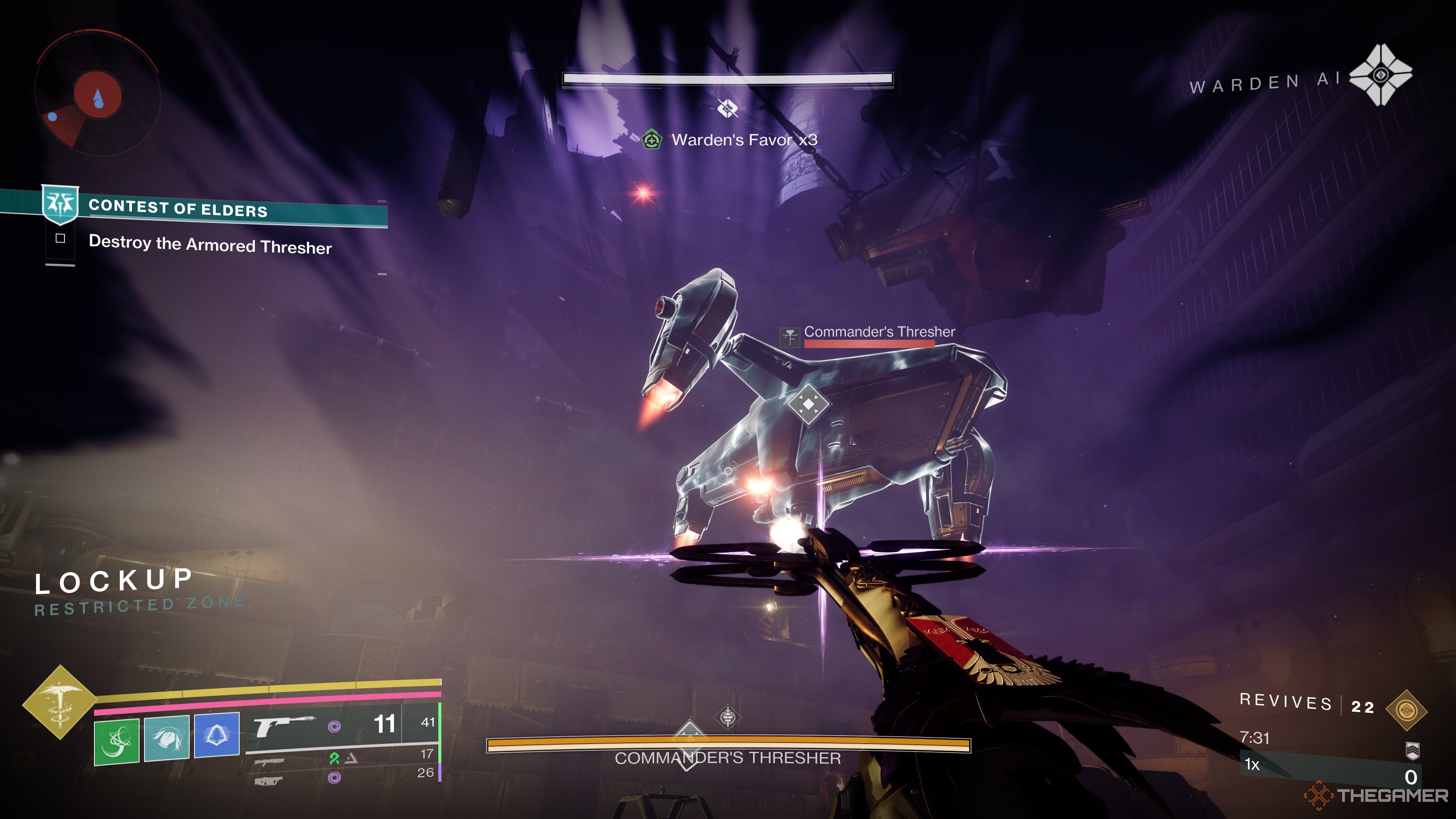
    After clearing two rooms, you’ll face a boss. Your first step is to take down the boss’s immunity shield before inflicting damage. The method varies based on the boss. For instance, when facing The Mechanist, you’ll need to gather nearby explosives and rig an Ether Canister to blow up. For the Cabal boss, you must destroy a Thresher first and eliminate accompanying Psions. Once the necessary tasks are completed, the boss will briefly become vulnerable—use this chance to defeat them and finish the activity.

    Some encounters feature bonus objectives you must achieve quickly, like finishing enemies with specific weapons. Success grants Tonic reagents unique to this activity, such as Tomb Flakes.

    Additionally, certain boss encounters come with critical objectives that have to be completed on time; failing to do so will place debuffs on your team until the encounter concludes.

    Contest of Elders


    Destiny 2 Contest of Elders Modifiers

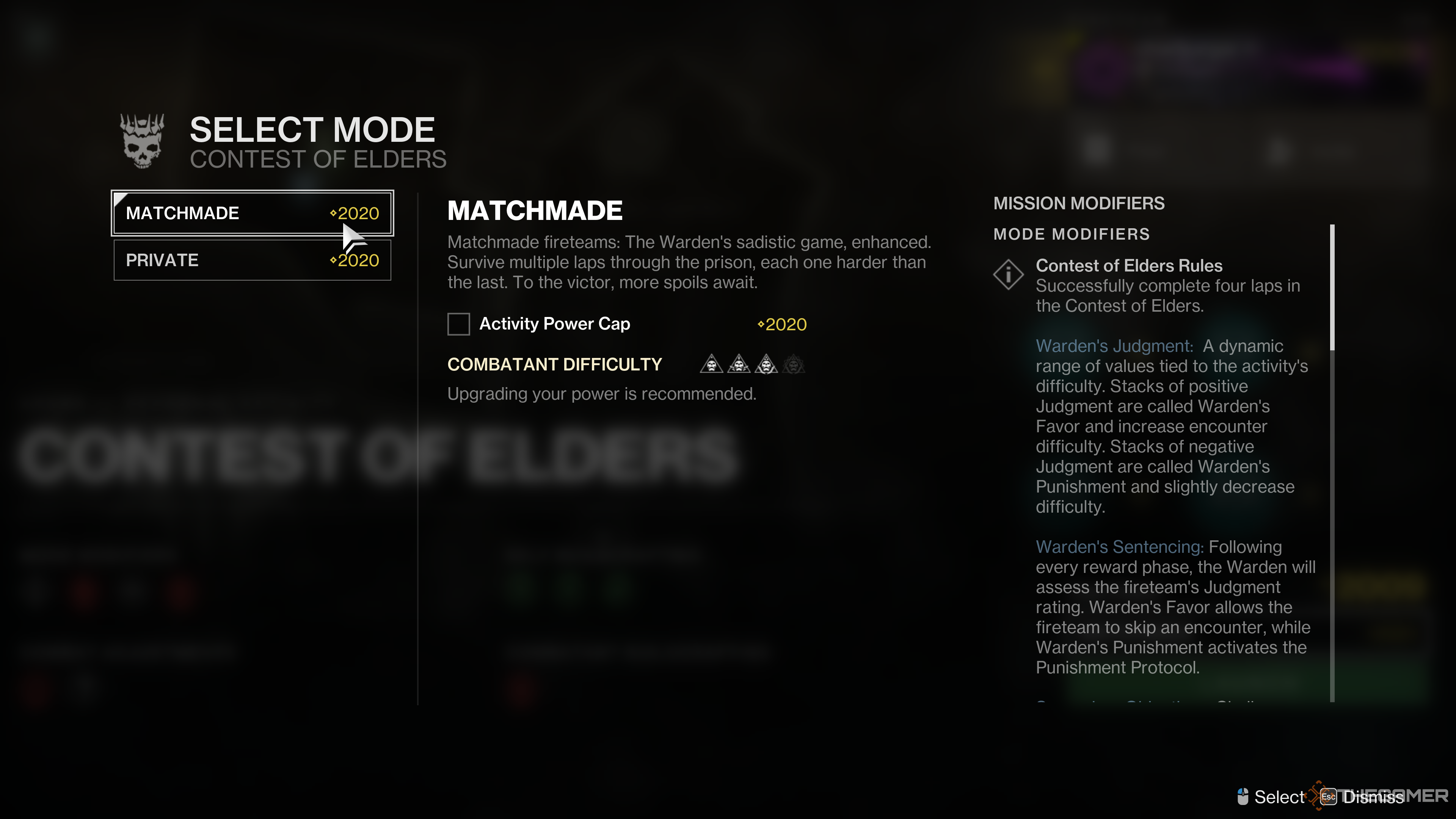
    Contest of Elders is a more demanding variant, featuring multiple boss encounters rather than just one. This mode is set at 2,020 Power, with limited revives and additional combat modifiers—noteworthy among them are Galvanized, Overcharge buffs, and Banes. You can earn more loot at the end of each boss fight, but expect a much tougher challenge compared to the standard Tomb of Elders. Be ready for action! Contest of Elders also includes options for matchmaking and solo play.

    Rewards from the Tomb of Elders


    Destiny 2 Tomb of Elders Reward Room

    After defeating the boss, it’s time to revel in the loot. Completing the Tomb of Elders yields Tonic reagents and seasonal weapon rolls. Two weapons specifically tied to this season can only be earned through this activity: Scavenger’s Fate (a 65 RPM Void shotgun) and Gridskipper (a 540 RPM Void pulse rifle).

    Additionally, Variks’ reward chests provide a substantial amount of Glimmer, Enhancement Cores, and some common crafting materials needed for Tonics. It seems that rarer materials may drop more frequently at higher tiers in the Contest of Elders, although this is not confirmed.