الوسم: Eggs

  • Scientists unveil method to see inside unhatched eggs with light

    Scientists unveil method to see inside unhatched eggs with light

    Scientists have uncovered a unique property of chicken eggs that could potentially address one of the poultry industry’s major ethical issues. By shining light into intact eggs, researchers have found a way to look inside without cracking the shell open. This method could one day help determine the sex of the developing embryo, identify fertilized eggs, and evaluate egg quality.

    If this approach proves successful, it might reduce the current practice of killing male chicks shortly after they hatch. In the poultry industry, male chicks are often considered unprofitable because they can’t lay eggs and don’t grow fast enough for meat production. Consequently, over 300 million male chicks are culled annually in European hatcheries alone. This practice has faced heavy criticism from animal welfare advocates, prompting several countries to seek alternatives.

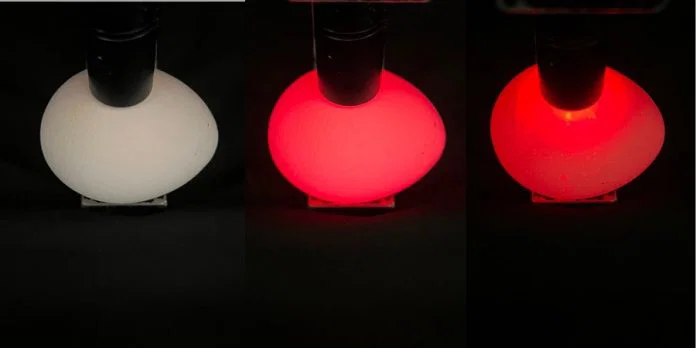
    The research focused on how light behaves inside a chicken egg. Scientists discovered that when light enters an unbroken eggshell, it doesn’t just pass through; instead, the shell traps the light, causing it to bounce around repeatedly inside. Tiny particles of light, known as photons, can travel up to two meters inside an egg—despite the egg’s only about four centimeters in length. This means the photons’ paths are roughly 50 times longer than the egg itself.

    The team examined how visible and near-infrared light moved through whole eggs before incubation and during the first eight days of embryo development. They described the eggshell as an “integrating sphere,” acting like a small chamber that effectively scatters and traps light. The eggshell’s ability to keep photons inside was surprising, as such long light paths are rarely observed in natural materials.

    This discovery opens up exciting possibilities. Since light interacts with the structures inside the egg, scientists could someday analyze the returning light to gather information about the embryo’s development without physically disturbing the shell. This could enable non-invasive methods to determine if an egg is fertilized, monitor embryo growth, and detect the embryo’s sex.

    The technique falls under the field of optical spectroscopy, which uses light to reveal physical and chemical properties. Similar methods are already employed in medicine to examine tissues and organs, as well as in agriculture to study fruits and plants.

    However, the researchers note that much work remains. The light behavior inside eggs is complex and not fully understood yet. Future studies will explore how these light patterns evolve as the embryo continues to develop and how various parts of the egg influence these effects.

    Scientists also speculate that this remarkable ability of eggs to scatter light may have evolved to shield developing embryos from harmful ultraviolet radiation and help conserve temperature when parent birds leave the nest. Although this technology is still in its early stages, shining light into eggs could one day lead to more humane and sustainable poultry farming practices.

  • Unexpected Breakfast Food Could Reduce Alzheimer’s Risk

    Unexpected Breakfast Food Could Reduce Alzheimer’s Risk

    Credit: Unsplash+

    Alzheimer’s disease ranks among the most significant health challenges faced by older adults worldwide.

    The condition gradually impairs memory, cognition, and daily functioning, often rendering individuals unable to live independently.

    Families are deeply impacted, witnessing loved ones slowly forget important events, recognize familiar people, or handle everyday tasks.

    Researchers have dedicated years to understanding what factors increase the risk of Alzheimer’s and what measures might help reduce it. While age and genetics are key elements, lifestyle choices—such as physical activity, sleep quality, and diet—are believed to influence brain health over time.

    A recent study from Loma Linda University Health proposes that consuming eggs regularly could potentially lower the risk of Alzheimer’s disease in older adults.

    Guided by Dr. Joan Sabaté, a professor at the Loma Linda University School of Public Health, the study was published in the Journal of Nutrition.

    The findings suggest that individuals aged 65 and above who regularly eat eggs have a decreased likelihood of developing Alzheimer’s compared to those who seldom or never include eggs in their diet.

    The study indicates that eating at least one egg daily for five or more days each week could be associated with up to a 27% reduction in Alzheimer’s risk.

    Even smaller amounts of egg intake appeared beneficial. Those who consumed eggs one to three times a month had around a 17% lower risk, while eating eggs two to four times weekly correlated with approximately a 20% decreased risk, compared to non-eaters.

    This research utilized data from the Adventist Health Study-2, a large-scale, long-term project involving roughly 40,000 participants. Researchers linked participants’ health records with Medicare data to identify Alzheimer’s diagnoses confirmed by doctors.

    Participants were followed for an average of over 15 years, offering a comprehensive view of how long-term dietary habits might impact brain health.

    The scientific community chose to examine eggs because there remains much to learn about how diet influences Alzheimer’s risk. While many foods have been studied concerning heart health and weight management, understanding their effect on brain aging is an ongoing effort.

    Eggs gained attention due to their rich nutrient profile, which may support brain function. Notably, they contain choline, a nutrient essential for producing acetylcholine—a chemical messenger crucial for memory and neuron communication, both of which are affected in Alzheimer’s.

    Eggs also contain lutein and zeaxanthin, carotenoids that can accumulate in brain tissue and potentially mitigate oxidative stress—a damaging process linked to aging and neurodegeneration.

    Furthermore, eggs provide omega-3 fatty acids and phospholipids, which play roles in maintaining healthy brain cell membranes and ensuring effective nerve signaling.

    The study considered different forms of egg consumption, including cooked dishes like scrambled, boiled, and fried eggs, as well as eggs incorporated into baked goods and processed foods.

    Researchers emphasized that their findings don’t suggest eggs are a cure-all for Alzheimer’s. Instead, they highlight that eggs could be part of a broader, healthy dietary pattern.

    It’s also important to note that many participants in the Adventist Health Study tend to lead healthier lifestyles—favoring plant-based diets, abstaining from smoking, and exercising regularly—that could influence the findings.

    Dr. Jisoo Oh, a lead researcher, noted that overall healthy living should be the focus, rather than relying solely on one food item.

    The results support growing evidence that nutrition plays a role in brain aging. Researchers increasingly believe that diet over many years affects inflammation, blood flow, oxidative balance, and neuron communication in the brain.

    While promising, scientists caution that this type of observational research can’t definitively establish cause and effect. The link between egg consumption and reduced Alzheimer’s risk is just an association, not proof that eggs prevent the disease.

    Other lifestyle factors—such as physical activity, quality of sleep, education, social interactions, and overall diet quality—also contribute to cognitive health outcomes.

    The study adds to the expanding body of evidence suggesting that certain nutrients in eggs may support brain function as we age.

    These findings could also reassure those who have avoided eggs due to concerns about cholesterol, especially since many nutrition experts now believe that moderate egg intake can fit into a balanced diet for most people.

    Future research may shed more light on how eggs and their nutrients influence brain health and identify which groups could benefit most.

    For now, adopting a comprehensive approach—focused on healthy habits like balanced eating, physical activity, managing blood pressure and diabetes, adequate sleep, social engagement, and mental activity—seems most effective for protecting brain health long-term.

    If Alzheimer’s prevention interests you, explore studies linking vitamin D deficiency to Alzheimer’s, vascular dementia, and the potential benefits of oral cannabis extracts in reducing symptoms.

    Additional research highlights the importance of vitamin B9, with recent findings suggesting that diets rich in flavonoids might improve survival rates in Parkinson’s disease.

  • How to Obtain Sprout Eggs, Their Hatching Pets, and Completing Passive Abilities in Grow A Garden

    How to Obtain Sprout Eggs, Their Hatching Pets, and Completing Passive Abilities in Grow A Garden

    With the introduction of the Beanstalk Event in Roblox’s Grow a Garden, six new pets are now available to unlock. Most of these pets come from the newly added Sprout Egg, but one can also be bought separately.

    Here’s a detailed overview of each pet, including their chances of getting them, their passive abilities, and how to obtain Sprout Eggs to start collecting these new pets for your garden.

    All Beanstalk Event Pets and Their Passive Abilities

    Gourmet Egg Pets:

    Pet Odds Passive Trait Additional Notes
    Dairy Cow 50% All plants within about 10.13 studs grow 1.27 times faster. Small chance to get a Beanstalk seed when sold.
    Jackalope 31% Every 99.45 seconds, has a 15.55% chance to give nearby fruit the Sandy mutation. Jackalope
    Seedling 12% Periodically swaps mutations of two fruits, ignoring favorited crops. Seedling
    Golem 6% Goes to the Mutation Machine every 5 minutes to tinker, advancing its time by 60 seconds. Golem
    Golden Goose 1% Every 10 minutes, lays a single-harvest Golden Egg plant with Fortune mutation, which can be harvested for mutations like other plants. Golden Goose

    Note: Some information is still being discovered, and updates will be provided as more details become available.

    How to Get Sprout Eggs and the Spriggan Pet

    Sprout Egg

    You can find Sprout Eggs in two ways:

    • As a glowing reward on a grown beanstalk.
    • Purchased from Goliath’s Goods at the top of the beanstalk after growing it at least twice, costing 50 million sheckles or 149 Robux.

    Goliath’s Goods also sells the Spriggan pet for 150 million sheckles or 759 Robux, but only after you have grown the beanstalk seven times.

    Pet Price Passive Trait
    Spriggan 150,000,000 sheckles / 759 Robux Spreads roots periodically, giving nearby plants a chance to get the Bloom mutation.

    Tips: For detailed instructions on how to grow the beanstalk and other items from Goliath’s Goods, check out the full guide available elsewhere.

  • How To Get Chickens And Eggs In Tales Of The Shire By Completing And Solving

    How To Get Chickens And Eggs In Tales Of The Shire By Completing And Solving

    There are many ways to gather ingredients in Tales of the Shire. If you get a chicken early on, you’ll receive a steady supply of eggs each day. These eggs can be used to prepare special meals, which you can serve to your guests during shared meals.

    Getting chickens involves inviting specific characters to your home and building a relationship with them. They will gift you a chicken for free once you reach certain friendship levels. However, raising a chicken and obtaining the best-quality eggs requires additional steps, such as providing a consistent food supply for your chickens.

    How to Get Chickens

    Chickens become available after you build relationships with certain members of the Cotton family. The first chicken you can receive is by increasing your friendship with Farmer Cotton to level three. He will send you a letter, and when you visit him, he will deliver the chicken to your house.

    You can earn two more chickens from Farmer Cotton at friendship levels six and ten. Additionally, you can get another chicken from Young Tom Cotton once your friendship with him reaches level ten. To find both of these characters, visit the town square in the morning, as they tend to their stalls at that time.

    Farmer Cotton sometimes longs for Mrs. Cotton’s Amazing Autumn Tart and enjoys sour flavors, while Young Tom Cotton often wants a Saddle of Mutton stuffed with Cheese. Inviting both characters to share meals can help you increase your friendship levels faster.

    How to Get Eggs

    To collect eggs, you need to feed your chickens daily. By doing so, you’ll get an egg from them the next day. If you forget to feed them, they might get upset and refuse to lay eggs. Eggs are found in nests located on the garden side of your house.

    The quality of the eggs depends on the quality of the food you give your chickens. Regular feeding will also improve the rating indicated by stars on the eggs. You can only feed them nuts, berries, or grains. Place the food in the trough near the nests for them to eat.

    A common grain to feed chickens is barley, which can be purchased from Sandyman. Nuts and berries can often be found while foraging around the area.

  • Where to Find Orb Weaver Eggs in Grounded 2 While Completing Quests

    Where to Find Orb Weaver Eggs in Grounded 2 While Completing Quests

    After defeating the Masked Stranger, you can now explore the entire park in Grounded 2. To move around quickly, you’ll need a good vehicle or, more realistically, strong legs. The Orb Weaver mount is a powerful and flexible buggy that can get you nearly anywhere on the map. Plus, it has impressive offensive abilities, making it worth the effort to unlock.

    Grounded 2 is still in early access, so some details may change over time.

    Unlocking the Orb Weaver Buggy

    You’ll naturally unlock the Red Ant Soldier during the story. However, the Orb Weaver is a bit easier to overlook. To get it, you need the Network Center TURBO Optical Disk, which you receive after defeating the Masked Stranger near the Burgl statue. During early access, this marked the end of story content, so if you turned off the game before unlocking this, you might have missed the Orb Weaver.

    Once you have the disk, take it to any Ranger Station at a ranger outpost. There, you can buy the Orb Weaver buggy for 5000 raw science—2000 of which are rewarded for scanning the disk.

    Hatching an Orb Weaver

    If you made a hatchery earlier in the game, you’ll already have it; if not, you’ll need to rebuild one using common materials found throughout the yard:

    • 6 Weed Stems
    • 1 Acorn Top
    • 5 Acorn Shells
    • 5 Mite Fuzz

    By this point, you’ll probably have the level-two omnitool axe and a Red Ant Soldier buggy, which makes collecting materials easier. You can harvest Weed Stems from hardy weeds or dandelions, and your ant can carry them for you.

    Building the Spider Nest

    Though not strictly necessary, building a Spider Nest is helpful for storing your Orb Weaver buggies. This large structure needs ample space and requires:

    • 6 Weed Stems
    • 6 Pine Needles
    • 6 Web Fibers
    • 4 Silk Ropes

    Weed Stems are easy to gather from dandelions or hardy weeds, especially in the pine area or the dry bricks area of the map—look under trees, as they blend into the ground debris. Web fibers are obtained from dead spiders or spider webs, and can be spun into rope at a spinning wheel. Each rope needs one web fiber, so you’ll need a total of 10 web fibers: six raw and four spun into ropes.

    Pine Needles are more complex; they can be gathered from needle bundles scattered in the pine zone or the dry bricks area, usually underneath trees and requiring a level-two omnitool axe to collect.

    Materials for the Harness

    To build the Orb Weaver’s harness, you’ll need:

    • 3 Blueberry Leathers
    • 4 Red Ant Mandibles
    • 3 Acorn Shells

    Blueberry Leather can be crafted from blueberries found on top of picnic tables or near the ice cream stand in the glade. These areas only require a level-one omnitool axe. Be cautious, as these spots are also popular with stronger insects like spiders, bees, and mosquitoes.

    Finding an Orb Weaver Egg

    The most challenging part of hatching your Orb Weaver is locating its egg. Like the Red Ant Soldier, the egg must be carried manually to your hatchery—it doesn’t go into your inventory. The egg is typically found under Burgl’s body; circle the body until you see a tunnel leading underneath. In the tunnel’s center, you’ll find several eggs guarded by spider webs, Orb Weaver juveniles, and fully grown Orb Weavers.

    Depending on how quick you are, you might also encounter wolf spiders patrolling the area.

    The best way to retrieve the egg is to use your Red Soldier Ant buggy. Because it’s fast and can hold the egg, you can avoid most combat. Quickly grab the egg, return to the hatchery, and if you have all the required materials, hatch your Orb Weaver. Hatching takes about 24 in-game hours, so you can sleep or do other activities while waiting. Remember to dismiss your bug before the hatchling is ready, as you can’t have two buggies at once.

    Using the Orb Weaver Buggy

    Once hatched, the Orb Weaver is faster and more mobile than the Red Ant Soldier and has far greater offensive power. It can sprint into enemies, damaging and sometimes killing smaller bugs like mites and weevils. While it can’t damage larger foes such as stink bugs or other spiders, charging through packs of mites helps clear nuisances efficiently.

    In addition, Orb Weavers can fire webs to trap prey or escape threats by immobilizing enemies or crossing webs without slowing down. This grants access to new areas, such as climbing the Burgle Lectern or the side of the Hot Dog Stand.

    However, the Orb Weaver has some limitations. It cannot chop or carry grass, making it less useful for base-building than the ant. Also, riding an Orb Weaver doesn’t prevent spiders from attacking you—its immunity from webs doesn’t extend to avoiding predators or enemies.

    The most notable advantage is the Orb Weaver’s ability to traverse web bridges and pass through webs without getting entangled, opening up parts of the park previously unreachable.

  • Exploring the Role of Wyvern Eggs in Monster Hunter Wilds

    Monster Hunter has always sprinkled some secrets throughout its various environments—details that require keen observation to uncover. This holds true for Monster Hunter Wilds, where some familiar features are now less straightforward. Notably, without Gathering quests in this iteration, Wyvern Eggs stand out as a rare find.

    In earlier installments, delivering Wyvern Eggs was a regular task, but in this game, they are far less common and their purpose can be confusing. Here’s a guide on where to spot Wyvern Eggs in Monster Hunter Wilds and what you can do with them.

    Where to Find Wyvern Eggs

    There is only one Wyvern Egg available in all of Monster Hunter Wilds, and it can be found in the Scarlet Forest. You’ll likely come across it while battling a Rathian; just follow it back to its nest. Alternatively, it may be perched in the trees in Area 11. Sometimes you might see multiple eggs in the nest, or there might just be one.

    Occasionally, a Rathian will be resting there, and at times the nest may be empty. If you approach the Wyvern Eggs, Alma will notify you that you can pick them up. However, be cautious because once you grab an egg, the Rathian is likely to show up—they have strong parental instincts.

    How to Deliver Wyvern Eggs

    Picking up a Wyvern Egg will greatly reduce your movement speed, and you won’t be able to access the map menu. Plus, this action will almost instantly summon a Rathian to your location because they don’t appreciate their eggs being taken.

    Like real eggs, these Wyvern Eggs are very delicate. If you get hit while carrying one, it will break. Your Hunter can withstand falls, but the egg cannot. Jump from a height, and the egg will shatter, so it’s best to avoid jumping altogether. You also can’t use your Seikret, leaving you to rely solely on careful movement.

    If absolutely necessary, you can drop the Wyvern Egg by pressing Square/X to open your map or escape danger.

    Before picking up the Wyvern Egg, we advise equipping the Ghillie Mantle. This will keep nearby Rathians from spotting you, even after you pick up the egg, no matter how fast you move. Just remember the time limit, as the Rathian will track you once the mantle runs out, regardless of your distance from its nest.

    Wyvern Eggs are located exclusively in Area 11 of the Scarlet Forest, which means there’s an efficient route for delivery. You don’t necessarily have to trek all the way back to Base Camp; any Pop-Up Camp will do. The Northeast Pop-Up Camp in Area 12 is conveniently situated right under the trees for easy access—just be careful not to fall.

    After grabbing the Wyvern Egg, head north and descend the vines. Move slowly to avoid jumping off mistakenly. This will lead you to a lower section where you need to go down another, longer set of vines to reach the ground. Be cautious as smaller monsters lurk around, trying to knock you down, so navigate around them carefully.

    If you manage to take down the Rathian guarding the nest, you can deliver the Wyvern Egg without much hassle, making things less stressful.

    If you stay focused on this route without distractions, you should have just enough time to reach the Pop-Up Camp before your Ghillie Mantle fades. To deliver the egg, simply walk close to the tent, and you will earn 50 Guild Points—a modest reward for your efforts. At least Alma will express her gratitude, too.

    However, even if you’ve evaded the Rathian so far, it’s likely to chase you right to your tent, so be ready for a potential encounter there as well.