الوسم: diagnosis

  • AI Detects Hidden Heart Blockage in Routine Ultrasound

    AI Detects Hidden Heart Blockage in Routine Ultrasound

    Credit: Unsplash+

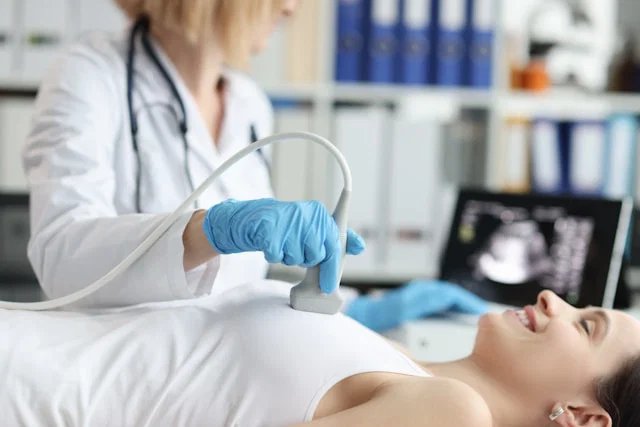
    Researchers at Mayo Clinic have created an artificial intelligence tool capable of spotting signs of a significant heart blockage using standard ultrasound videos.

    This innovation may assist in identifying patients who need more comprehensive cardiac testing, especially in clinics or hospitals lacking advanced ultrasound specialists.

    The AI was primarily developed for individuals with hypertrophic cardiomyopathy, commonly called HCM. This inherited condition causes abnormal thickening of the heart muscle and can affect people of all ages.

    While some with HCM experience few or no symptoms, others may find that the thickened heart muscle obstructs blood flow, leading to symptoms like shortness of breath, chest pain, fatigue, fainting, or irregular heart rhythms.

    A key concern is an obstruction in the pathway where blood exits the heart’s main chamber, the left ventricle. This is known as the left ventricular outflow tract, or LVOT.

    Approximately two-thirds of HCM patients develop some level of LVOT obstruction. When this pathway narrows, the heart must work harder to pump blood into the aorta, which can elevate symptoms and risk.

    Detecting this obstruction is crucial for understanding patient symptoms and determining appropriate treatment, whether that involves medication or, in severe cases, specialized procedures.

    Typically, clinicians measure LVOT obstruction through Doppler echocardiography, which uses sound waves to assess the speed and direction of blood flow within the heart.

    While valuable, this technique demands skillful operation and interpretation by experienced operators. Accurate results depend heavily on proper positioning of the ultrasound probe and expert analysis.

    Researchers asked if AI could analyze simpler, standard ultrasound videos—called B-mode images—that display the heart’s structures without Doppler data. These videos show the heart’s movement during each beat, capturing its shape and motion.

    The AI was trained to recognize subtle patterns linked to significant obstruction, some of which are so slight that even seasoned specialists might struggle to identify them from basic images alone.

    The study involved 1,833 Mayo Clinic patients. The model was tested on 275 of these patients and externally validated with 46 patients from a hospital in South Korea.

    External testing is vital because it shows whether the AI can perform well across different patient populations and clinical settings, beyond the initial development environment.

    The AI analyzed only resting-state ultrasound videos without Doppler data, aiming to predict which patients likely had a meaningful LVOT obstruction.

    Results indicated the model was more accurate when combining information from three standard ultrasound views, rather than relying on just one. Multiple perspectives offered richer details about the heart’s structure and motion.

    Interestingly, the AI also showed promise in detecting obstructions that become apparent mainly during physical stress or exercise, which is important since some patients may only develop significant blockage while active.

    Despite differences between the U.S. and South Korean groups, the AI maintained strong performance, suggesting it might be adaptable across diverse populations, though larger studies are needed to confirm this.

    In some cases, the AI identified obstructions more accurately than two expert echocardiographers reviewing the same non-Doppler images. While it doesn’t replace trained specialists, this highlights the difficulty of detecting subtle obstructions using standard images alone.

    Lead researcher Dr. Imon Banerjee emphasized that this technology isn’t meant to replace Doppler ultrasound but could serve as an early warning system to flag patients who need further, detailed testing—such as stress tests or evaluation at specialized centers.

    This could be especially helpful in settings where access to advanced cardiology imaging is limited. Portable ultrasound devices are increasingly common, but may lack the expertise for complex assessments.

    If the AI reliably flags potentially problematic cases from basic videos, patients could be referred earlier for thorough evaluations, reducing the risk of missing critical obstructions.

    The findings were published in the journal Circulation: Cardiovascular Imaging, a publication of the American Heart Association. They suggest that routine ultrasound images contain hidden information about blood flow obstruction that AI may be capable of detecting without explicit blood flow measurements.

    While promising, the study has limitations. The external validation group was small, with only 46 patients, which doesn’t prove the system’s effectiveness across different hospitals, machines, or broader populations.

    AI performance can also be affected by the quality of images and differences in patient characteristics compared to the training data. Larger, real-world studies are necessary to understand how this technology performs in typical clinical environments.

    The team plans to expand validation efforts across diverse healthcare settings, different ultrasound devices, and larger patient groups. Future research will also assess how integrating this AI influences clinical decision-making and whether earlier detection improves patient outcomes.

    In summary, this study highlights a valuable role for AI: uncovering hidden insights in tests already performed by doctors, rather than replacing established methods. With further validation, such tools could streamline early detection of heart obstructions, ensuring patients get the specialized care they need at the right time.

    Source: Mayo Clinic.

  • One Autism Diagnosis, Two Unique Life Journeys

    One Autism Diagnosis, Two Unique Life Journeys

    A child who cannot speak and requires constant care might receive the same broad diagnosis as an adult with a successful career who only discovers in middle age that they meet autism criteria. This vast difference is at the heart of a new debate about what the word “autism” truly means today.

    Dame Uta Frith, a trailblazing autism researcher at University College London, argues that the current definition may have expanded too much. Writing in Psychological Medicine, she questions whether autism spectrum disorder has become so inclusive that vital distinctions between individuals are getting lost.

    With over fifty years of studying autism, Frith helped shape key theories on how autistic individuals process social cues and details differently. She also participated in pioneering brain imaging studies aimed at understanding autism. Her extensive experience gives her criticism significant weight, though it doesn’t mean her view is automatically correct. Autism science has evolved rapidly since she began her career, and today’s autistic population is far more diverse than those included in early research.

    Autism was formally identified in the 1940s, initially focusing on children with pronounced developmental and social differences. For many years, it was seen as a rare and severe childhood condition. That perception gradually shifted as researchers discovered that autistic traits could appear across a broad spectrum of intelligence, language abilities, independence, and disability. Diagnostic systems were expanded to recognize this variation.

    Presently, autism spectrum disorder consolidates several earlier separate diagnoses under one umbrella. The “spectrum” recognizes that autistic traits differ widely among individuals. However, Frith questions whether such a large umbrella might become so broad that it loses meaningful differentiation.

    The increase in diagnoses is striking. Frith notes estimates from British studies in the 1960s suggested about four autistic children per 10,000 kids. Today, the figure is roughly one in every 57 schoolchildren in the UK. Much of this rise can be attributed to increased awareness, better assessment practices, reduced stigma, improved services, and broadened diagnostic criteria—meaning many who wouldn’t have qualified decades ago are now being diagnosed.

    Frith also believes other factors need exploring. Autism discussions are everywhere—on social media, in TV shows, films, and online communities—where people share experiences and sometimes identify as autistic even before formal assessment. These communities can be beneficial, helping individuals find language for their experiences and encouraging those who were missed in childhood to seek help.

    However, Frith warns that popular narratives often oversimplify autism, reducing it to common human experiences such as social discomfort, feeling different, routine preferences, or sensory overload. When everyday struggles are too quickly labeled as signs of a disorder, the boundaries for diagnosis can become fuzzy.

    Diagnosing autism remains complex because there’s no single medical test—no blood test or brain scan can confirm it. Instead, diagnosis relies on behavioral patterns, developmental history, interviews, observations, and clinical judgment. This can be particularly challenging for adults, especially when childhood information is limited. Also, comorbid conditions like anxiety, depression, ADHD, or trauma can cloud the picture, overlapping with autism-related behaviors.

    Evidence suggests distinctions between those diagnosed early in life and those diagnosed later. Early-diagnosed individuals often exhibit clear developmental differences from childhood and tend to need more support. In contrast, many diagnosed in adolescence or adulthood have average or above-average intelligence and may have navigated social or emotional difficulties for years without an autism diagnosis. Emerging research even indicates genetic differences between early and late diagnoses.

    Although these findings are still developing and don’t fully confirm that early- and late-diagnosed autism are separate conditions, Frith believes they warrant closer examination, questioning whether we should treat the entire spectrum as a single, homogenous group.

    The conversation also considers masking—how some autistic people learn to hide or compensate for their traits to blend in socially. Masking might explain late diagnoses, but Frith cautions that broad concepts like this can be difficult to measure precisely.

    The rise of the neurodiversity movement adds another layer to the discussion. Challenging the idea that all neurological differences are disorders, it has empowered many autistic individuals to advocate for respect, inclusion, and more control over decisions affecting their lives. Yet, the spectrum also includes individuals with profound disabilities who require extensive support and cannot live independently. Frith worries that lumping all these diverse experiences into a single category might obscure their unique needs, making it harder to allocate resources effectively.

    Her editorial emphasizes the need for more precise classification—focusing on what each person can and cannot do—rather than relying on an overly broad label. Such specificity could also benefit research, as studies combining heterogeneous groups may struggle to identify clear biological or psychological patterns.

    This article is not an argument that the recent rise in autism diagnoses is mainly due to overdiagnosis. Instead, it raises questions about how we define and interpret autism, highlighting the importance of nuanced understanding. Critics might argue that narrowing definitions could exclude individuals with genuine difficulties who don’t fit the narrow criteria, but increased recognition has already opened doors for many adults and children who previously went without support.

    The key insight may be that broader awareness and more precise diagnoses can coexist. Medicine can respect the full range of autistic experiences while developing clearer language and tools to describe variations in abilities, mental health, and support needs.

    Frith’s piece in Psychological Medicine challenges autism researchers and clinicians to confront a fundamental question: when a single diagnosis covers people with vastly different lives, how much useful information does that label really provide?

    If you’re interested, explore studies on food additives and ADHD, natural remedies for managing ADHD, and recent research into vitamin D’s links to autism, as well as findings that unusual eating habits could signal autism.

  • AI Can Diagnose and Treat Just Like Doctors

    AI Can Diagnose and Treat Just Like Doctors

    Artificial intelligence is increasingly integrating into daily life, from composing written content and answering inquiries to aiding in the creation of images and software. Recently, researchers have started investigating a crucial new application: can AI assist medical professionals in caring for patients?

    A study published in the journal Nature highlights that advanced AI systems might support doctors across many aspects of patient care. The research introduces two innovative AI tools named MIRA and AMIE, both capable of performing various medical tasks. These range from collecting patient information and diagnosing conditions to recommending treatments and planning follow-up procedures.

    The significance of these developments is heightened by global healthcare challenges such as doctor shortages, aging populations, and escalating chronic illnesses. Physicians often face long hours and limited direct time with each patient, prompting hope that AI could help alleviate some of these burdens.

    Most existing healthcare-focused AI tools target narrow functions—for example, detecting cancer in scans or summarizing patient records. However, real-world medical decision-making involves complex reasoning and multitasking—collecting symptoms, reviewing histories, ordering tests, interpreting results, and adjusting treatments as conditions evolve. Researchers questioned whether AI could handle such multifaceted reasoning.

    The first system, MIRA (Medical Intelligence for Reasoning and Action), was developed by a team led by Jakob Kather. Tested with real-world data from over 500 emergency department cases, MIRA interacted with virtual patients—responses modeled after actual clinical notes—by asking questions and gathering information much like a clinician would. It had access to a database of more than 85,000 possible actions, including ordering tests, reviewing results, recommending therapies, prescribing medications, scheduling procedures, and deciding hospital admissions. Impressively, MIRA achieved nearly 88% accuracy in diagnoses, outperforming a diverse panel of six physicians, who averaged about 78%.

    The second AI system, AMIE (Articulate Medical Intelligence Explorer), was developed by Google researchers using the Gemini AI framework. Unlike earlier platforms, AMIE could analyze multiple patient visits over time, tracking disease progression and treatment effectiveness. In a comparison with 21 primary care doctors using 100 simulated patient scenarios across five specialties—based on UK clinical guidelines—AMIE performed on par with experienced physicians in overall reasoning. In some instances, it even demonstrated superior precision, especially in testing and treatment recommendations, and adhered closely to established guidelines. Additional testing with a new benchmark called RxQA, focused on medication reasoning, showed AMIE outperformed physicians on particularly challenging cases.

    Despite these promising results, experts caution that neither AI system is ready to replace doctors. Medical practice encompasses much more than decision-making from data—communication, understanding individual patient preferences, recognizing atypical cases, and making nuanced judgments in real-world settings are beyond the current scope of AI.

    Limitations of the studies include their reliance on virtual scenarios rather than real clinical environments. Future research must establish whether these systems can perform robustly in busy hospitals and clinics with real patients and unpredictable situations.

    The emerging view suggests that conversational AI tools might serve as valuable assistants rather than replacements, helping healthcare providers gather information, generate differential diagnoses, confirm treatment guidelines, and streamline routine tasks. If further validation confirms their safety and effectiveness, AI could become a vital partner in enhancing healthcare quality and efficiency, particularly in regions facing healthcare worker shortages.

  • Jeremy Clarkson Shares Cancer Diagnosis

    Jeremy Clarkson Shares Cancer Diagnosis

    Digital Phablet – In the final two episodes of Clarkson’s Farm, renowned TV personality Jeremy Clarkson opened up about his prostate cancer diagnosis, prompting heartfelt wishes for his speedy recovery from fans on social media.

    The former Top Gear host announced this during his Prime series. Multiple sources report that Clarkson found out about his cancer in May 2026 and described it as “highly aggressive.” Nonetheless, he also shared that he detected it early on.

    Jeremy Clarkson Shares His Cancer Diagnosis

    In 2024, Gerald Cooper, the “Head of Security” for Clarkson’s Farm, was also diagnosed with prostate cancer but has since recovered and is now cancer-free.

    Clarkson’s Farm has become a beloved show for many in the UK, celebrated for its educational and charming approach. Despite challenges faced by the farming crew, the fifth season concluded with Clarkson informing farmer Kaleb Cooper and land agent Charlie Ireland about his diagnosis.

    Fans Send Well Wishes to Jeremy

    A fan took to X (formerly Twitter) and expressed, “Sending strength to Jeremy and his family. This disease doesn’t discriminate—rich or poor, famous or unknown. It affects moms, dads, grandparents, siblings—all equally. It’s a cruel, blind, and relentless foe. Thankfully, it was caught early. A reminder to everyone: get checked regularly and look out for loved ones.”

    Another comment read, “We love your TV shows about farmers’ struggles, and unfortunately, these challenges make the stories even more human. Thanks from the Netherlands for educating us about how our honest food is produced. Take care and get well soon.”

  • Justin Timberlake Reveals Lyme Disease Diagnosis in Emotional Post

    Justin Timberlake Reveals Lyme Disease Diagnosis in Emotional Post

    Digital Phablet – The renowned singer Justin Timberlake announced that he has Lyme disease.

    Justin Timberlake, the singer-songwriter and actor, shared the news with his followers via an Instagram post on Thursday, marking the conclusion of his two-year Forget Tomorrow World Tour.

    “As some of you know, I tend to keep things private. But reflecting on the tour and festival experiences, I want to be upfront about what’s been going on with me,” Timberlake expressed.

    He revealed that he and his wife, Jessica Biel, are parents to two sons. Timberlake confessed he was initially reluctant to disclose his diagnosis but decided to do so to be more transparent with his fans.

    “If you’ve known someone struggling with this disease or have experienced it yourself — then you know how exhausting and devastating it can be, both mentally and physically,” Timberlake shared. “When I received the diagnosis, I was definitely in shock. But it also helped me understand why I could be performing on stage and yet be in severe nerve pain, feel utterly exhausted, or sick as a dog. I faced a choice: stop touring or keep going and learn to manage it. I chose to continue because the joy of performing outweighs the temporary discomfort my body was experiencing. I’m grateful I made that decision.”

    The Centers for Disease Control and Prevention (CDC) states that Lyme disease is a bacterial infection transmitted through tick bites that can affect joints, heart, and nervous system if untreated.

    Most cases can be effectively treated with a 10- to 14-day course of antibiotics. However, some individuals may experience lingering symptoms such as fatigue, body aches, and cognitive difficulties even after completing treatment. These persistent issues are sometimes referred to as Post-Treatment Lyme Disease Syndrome (PTLDS).

    US singer Justin Timberlake (Photo by Alejandro Gonzalez / AFP)

    The 44-year-old artist opted not to elaborate further on his diagnosis or treatment.


    The former *NSYNC member launched his Forget Tomorrow World Tour in April and performed his last show in Turkey on Wednesday.

    Just hours before his scheduled final U.S show of the tour in February, Timberlake posted on social media that he was suffering from the flu.

    During the European leg of the tour, some fans criticized Timberlake for not performing enough live songs, claiming he asked the audience to sing along instead.

    Timberlake expressed on social media that he was proud to have continued with his tour despite health challenges announced after his Lyme disease diagnosis.

    "Not only did I prove my resilience to myself, but I have created countless unforgettable moments with all of you," he said. "I kept this private because I was taught to keep personal struggles between two people, but now I want to be more transparent."

    About Lyme disease

    Lyme disease is the most prevalent vector-borne disease in the United States, and Timberlake is among many celebrities affected by it.

    Public figures like Amy Schumer, Shania Twain, Justin Bieber, and Reddit's co-founder Alexis Ohanian have spoken openly about their experiences with the illness.

    The disease is transmitted by bacterial bacteria Borrelia burgdorferi through tick bites, primarily in late spring, summer, and fall. Typically, the tick must be attached for at least 24 hours for transmission to occur.

    Within three days of being bitten, symptoms such as fever, headaches, and fatigue can develop.

  • Trump claims Biden’s cancer diagnosis was previously known

    Trump claims Biden’s cancer diagnosis was previously known

    Sure! Here’s a rewritten version in American English:

    —

    Former President Joe Biden watches as President Donald Trump arrives for the inauguration ceremony, where Trump is sworn in as the 47th President of the United States at the Capitol Rotunda in Washington, DC, on January 20, 2025. — Reuters

    President Donald Trump stirred up rumors on Monday regarding a possible cover-up of Joe Biden’s cancer diagnosis, expressing surprise that the public had not been informed sooner.

    “It’s surprising that the public wasn’t made aware of this long ago,” Trump told reporters. He noted that it generally takes a considerable amount of time for prostate cancer to reach the aggressive stage that was disclosed by Biden’s office on Sunday.

    Trump, who has frequently criticized Biden’s cognitive skills, stated on Friday that he felt “saddened” by the news.

    The 82-year-old Democrat, whose son Beau Biden passed away from cancer in 2015, received his diagnosis after experiencing urinary symptoms and having a prostate nodule identified, according to a statement from his office.

    Biden completed his presidential term in January as the oldest president in U.S. history.

    Throughout much of his term, he faced ongoing questions about his health and age, including from members of his own party, regarding his ability to meet the responsibilities of the office.

    —

    This version paraphrases the original content while maintaining its essence and ensuring it is unique and free of plagiarism.

  • Joe Biden Expresses Gratitude to Supporters After Cancer News

    Joe Biden Expresses Gratitude to Supporters After Cancer News

    President Biden Thanks Americans Following Cancer Diagnosis

    US President Joe Biden addresses the media after a closed Senate Democratic Caucus lunch at the US Capitol in Washington, DC, on March 2, 2023. — Reuters

    WASHINGTON: On Monday, President Joe Biden expressed his heartfelt thanks to the American public for their “love and support” after announcing his recent diagnosis of prostate cancer.

    His diagnosis of an “aggressive” form of prostate cancer, which has spread to his bones, was made public over the weekend. This news prompted a wave of support from various quarters, including Biden’s political opponent, former President Donald Trump, Vice President Kamala Harris, and many everyday Americans.

    Biden, 82, shared a message on X, noting, “Cancer affects us all. Like many of you, Jill and I have come to understand that we find our strength in our most difficult moments.” He included a photo with his wife, Jill. “Thank you for surrounding us with your love and support,” he added.

    According to his office, Biden was diagnosed on Friday after experiencing urinary symptoms and the discovery of a prostate nodule. “While this represents a more aggressive variant of the disease, the cancer appears to be hormone-sensitive, allowing for effective management. The President and his family are currently discussing treatment plans with his doctors,” the statement also said.

    Trump, who has frequently criticized Biden’s cognitive abilities and presidential record, expressed his sadness over the news. He posted on Sunday, “We send our warmest wishes to Jill and the family, and wish Joe a quick and successful recovery.”

    Kamala Harris, who stepped in as the Democratic nominee when Biden withdrew from last year’s presidential race, remarked, “Joe is a fighter. I know he will tackle this challenge with the strength, resilience, and optimism that have always characterized his life and leadership.”

    About Prostate Cancer

    Prostate cancer is the most commonly diagnosed cancer among men in the United States. According to the American Cancer Society (ACS), one in eight men will receive a diagnosis during their lifetime. If detected early, it can often be treated successfully, yet it remains the second leading cause of cancer deaths among men.

    Hormone therapy is a common treatment option aimed at shrinking tumors and slowing cancer progression, though it is not a definitive cure. Biden’s cancer diagnosis includes a “Gleason score of nine (Grade Group five),” which indicates a particularly aggressive form of the disease, according to the ACS.

    Biden’s health has become a significant topic in the ongoing 2024 presidential race, where Trump and his conservative allies have repeatedly critiqued the incumbent’s cognitive abilities. After a challenging debate performance against Trump, Biden opted to withdraw from the campaign for a second term.

    Biden’s life has been marked by deep personal loss. In 1972, he lost his first wife and infant daughter in a tragic car accident. His son Beau passed away from an aggressive brain cancer at the age of 46 in 2015.

    Following Beau’s death, then-President Barack Obama initiated a “cancer moonshot” initiative aimed at combating cancer across the U.S., putting Biden, his vice president, in charge of leading the effort. “It’s personal for me,” Biden stated at the time.