الوسم: deportation

  • UK PM explores ways to deport Pakistan-born rape convict

    UK PM explores ways to deport Pakistan-born rape convict

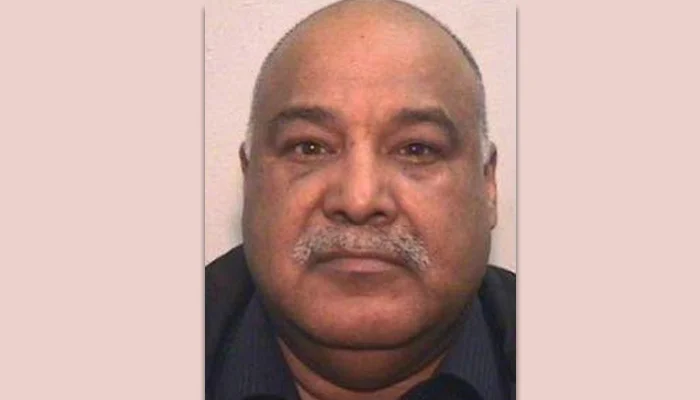
    London: UK Prime Minister Keir Starmer has requested the home secretary review the case of Shabir Ahmed, a key figure in the Rochdale grooming gang, amid growing calls to change laws to facilitate his deportation.

    Ahmed, 73, known among his victims as “Daddy,” was released from prison Thursday after serving 14 years for numerous charges of rape and sexual offenses against young girls. He moved to the UK from Gujarat, India, in the late 1970s when he was 14. He has no valid Pakistani documentation, having renounced his Pakistani nationality decades ago to secure British citizenship.

    He is believed to have been released on parole, with conditions requiring him to reside at a 24-hour staffed bail hostel, wear an electronic GPS tracker, and stay away from his former address on Windsor Avenue in Oldham. Furthermore, he’s subject to an “exclusion zone,” preventing him from entering certain areas of Rochdale.

    Ahmed’s British citizenship has been revoked, leaving him with no legal status. However, deportation is barred due to a 1971 law that prohibits removing certain Commonwealth citizens who have been in the UK for over 50 years.

    Downing Street stated that Prime Minister Starmer asked Shabana Mahmood to explore options for deporting Ahmed, describing his case as “particularly heinous.” The government reaffirmed its commitment: “We are unequivocal that when foreign nationals commit crimes here, we will do everything possible to remove them.”

    His impending release has prompted political leaders, including the upcoming likely Prime Minister Andy Burnham, to call for urgent review and action, urging ministers to consider all possible avenues for deportation. Rochdale MP Paul Waugh from the Labour Party also emphasized that the Foreign Office should do everything within their power to facilitate Ahmed’s deportation.

    Conservative leader Kemi Badenoch declared that her party would seek to amend the government’s Immigration and Asylum Bill to close legal loopholes preventing Ahmed’s deportation.

    Ahmed was convicted at Liverpool Crown Court in 2012 for offenses involving five girls and sentenced to 19 years in prison, one of nine men found guilty in the case.

    A senior Pakistani government official told Geo News exclusively that Ahmed is a stateless individual and not a Pakistani citizen. The official explained that Ahmed does not possess UK nationality and had long ago renounced his Pakistani citizenship, thus considering him “an alien” under their view.

  • Lia Night Threatens Lawsuit After Jordan Deportation, Vows To Return

    Lia Night Threatens Lawsuit After Jordan Deportation, Vows To Return

    Digital Phablet – Lia Night threatens legal action after deportation, vows to return to Jordan.

    Content creator Lia Night has reignited controversy following her public comments about her deportation from Jordan and a series of provocative statements that quickly went viral on social media.

    Night, who was previously expelled from the country after an 18-day stay, addressed the incident in recently circulated videos. In these, she expressed frustration over her removal and declared that this decision will not prevent her from returning in the future.

    Lia Night ليا نايت

    According to her statements, she has already secured legal counsel to challenge the measures imposed against her.

    “They will not prevent me from entering Jordan,” she stated in one of her videos, asserting her intention to pursue legal action to facilitate her return.

    The influencer also described Jordan as a nation that values freedoms, arguing against her ban from entry. Her remarks quickly attracted widespread online attention, sparking debates over her comments and the circumstances of her deportation.

    Following her deportation, Night posted earlier videos expressing disappointment. She argued she had misunderstood the legal restrictions in Jordan and questioned why she was expelled from the country.

    Her statements at that time sparked widespread criticism, especially after she discussed the legality of sex work and called for Arab nations to reconsider their policies. Many social media users responded strongly, saying her views are incompatible with local laws, cultural values, and social norms.

    The recent videos have once again put Night at the heart of heated online discussions.

    After her deportation, Night appeared in earlier videos expressing disappointment. She claimed she was unaware of the full legal restrictions in Jordan and questioned her expulsion from the country.

    Her comments at that time sparked widespread criticism, especially after she discussed the legal status of sex work and called for Arab countries to rethink their policies on the matter. Many social media users strongly opposed her views, stating they conflict with local laws, cultural values, and social norms.

    The recent videos have once again placed Night at the center of heated online debates.

    Critics argue that visitors should respect the laws and cultural norms of the countries they visit.

    As the debate persists across social media platforms, no official response has been made regarding Night’s recent claims about hiring a lawyer or her announced plans to return to Jordan.

    For the moment, the controversy shows little signs of subsiding. Her recent comments have reignited a debate that continues to polarize opinion, keeping Lia Night among the most discussed figures online.

  • India Detains and Deports 5,000 Bangladesh Nationals

    India Detains and Deports 5,000 Bangladesh Nationals

    India has begun setting up detention centers for undocumented migrants, with reports indicating that West Bengal’s chief minister announced that approximately 4,800 migrants have been deported already. Since Prime Minister Narendra Modi’s Hindu-nationalist party came into power last month, nearly 5,000 Bangladeshi citizens have been repatriated, according to official figures.

    Modi’s Bharatiya Janata Party (BJP) secured a decisive victory in the regional elections in West Bengal, a state with a population exceeding 100 million, vowing to intensify efforts to identify, detain, and expel illegal immigrants.

    India’s extensive and porous border with Bangladesh—an overwhelmingly Muslim nation—has historically facilitated migration driven by economic struggles and long-standing familial ties. After assuming office, the new West Bengal government directed the creation of detention facilities for undocumented Bangladeshis and Rohingya refugees, a Muslim minority group fleeing persecution in Myanmar.

    On Sunday in Kolkata, West Bengal’s capital, Chief Minister Suvendu Adhikari stated that roughly 5,000 Bangladeshi nationals had been deported across the border. “We have initiated the deportation process for Bangladeshi infiltrators who are not covered by the Citizenship Amendment Act,” Adhikari explained. He added that holding centers had been established across all districts in May, and that from these centers, 4,800 individuals had already been deported. Currently, 836 people remain in detention, with plans underway to expel them soon.

    This crackdown on immigration comes amid ongoing political debate over border security. Some Indian officials have referred to migrants as “termites” and “infiltrators,” language that critics argue has fueled discrimination and marginalization of India’s Muslim community, which makes up over 200 million of the population. Critics also accuse the BJP of conflating religious identity with illegal migration, exacerbating societal divisions.

    There have been previous allegations that India has forcibly expelled hundreds of Bengali-speaking Muslims into Bangladesh without proper legal procedures. Diplomatic relations between India and Bangladesh have also experienced tension; following a 2024 revolution in Dhaka that ended the autocratic rule of then-Prime Minister Sheikh Hasina—a close ally of India—she fled to India. With a new government elected in Bangladesh earlier this year, relations are gradually improving. In fact, India and Bangladesh’s border authorities are scheduled to hold talks in New Delhi this coming Monday.

  • US Embassy Alerts: Violations May Loss Student Visas

    US Embassy Alerts: Violations May Loss Student Visas

    The US embassy in India issued a warning on Thursday stating that any arrests or violations of US laws can result in the revocation of student visas, deportation, and disqualification from obtaining US visas in the future.

    On their official X account (@USAndIndia), they emphasized, “Breaking US laws can have serious consequences for your student visa.” They further clarified that if someone is arrested or breaks any laws, their visa could be revoked, they could be deported, and they might not be eligible for US visas again. The message underscored that a US visa is a privilege, not a right, urging travelers to adhere to regulations to avoid jeopardizing their plans.

    This alert follows recent communications from the US embassy in New Delhi, which included a December warning that tourist visas might be denied if officials suspect the primary motive is to give birth in the US to secure citizenship for a child. The embassy highlighted that such practices are not allowed.

    Gulf News reported that these measures have introduced additional uncertainty for Indian visa holders, including many professionals who make up over 70% of H-1B approvals and nearly 90% of H-4 visas with work authorization. The US Embassy has also been rescheduling visa interviews, with some appointments pushed into mid-2026.

    In September, the Trump administration proposed changes to prioritize higher-skilled and higher-paid workers in the H-1B visa selection process, according to a federal notice. This followed the administration’s effort to implement a $100,000 fee for these visas, aiming to protect American workers from unfair wage competition by giving more weight to applications from employers offering higher wages.

    During his presidency from 2017 to 2021, President Trump attempted to overhaul the H-1B process but faced legal challenges and limited time at the end of his term. Tighter US immigration policies are also affecting India, with families reportedly less willing to marry off children to Indian nationals in the US due to fears of job loss or immigration issues. Official data on transnational marriages between Indian citizens domestically and abroad remain unavailable.

    The US estimates the Indian diaspora to be around 2.1 million non-resident Indians. Since assuming office again in January, Trump has launched broader immigration restrictions, including efforts to limit legal pathways to residency. Indians represented 71% of H-1B visas last year, and recent data indicates that approximately 75% of H-1B visas granted to Indian citizens in 2024 went to men.

    For students, data from Immigration and Customs Enforcement shows there were 422,335 Indian students in the US in 2024, though ongoing visa policy uncertainties are causing many to reconsider their American dreams.

  • Britain Overhauls Human Rights Laws in Major Asylum Policy Shift

    Britain Overhauls Human Rights Laws in Major Asylum Policy Shift

    Britain is set to revamp its approach to human rights legislation, aiming to simplify deportations of migrants who enter illegally. A comprehensive overhaul of asylum policies will be introduced on Monday, with interior minister Shabana Mahmood outlining reforms on how courts interpret the European Convention on Human Rights, according to government sources.

    Prime Minister Keir Starmer stated, “These reforms will prevent endless appeals, eliminate last-minute claims, and increase the removal of individuals without legal right to be here.” The government claims this will be the most significant update to asylum policies in recent times, including plans to make refugee status provisional and extend the wait time for permanent residency from the current periods.

    As concerns over illegal immigration, especially via small boat crossings, rise within the UK, the Labour government is adopting a firmer stance. Recent polls highlight immigration as a key voter concern, and the populist Reform UK party currently leads in public opinion.

    The government criticizes Article 8 of the European Convention on Human Rights, which guarantees the right to family life, asserting that migrants exploit it to delay their removal. They propose new legislation to clarify that family connections refer to immediate family members like parents and children, preventing individuals from claiming dubious relationships to remain in the country.

    Additionally, the UK plans to collaborate with allied nations to review the application of Article 3, which bans torture and inhumane treatment, citing concerns that its current interpretation has broadened beyond reasonable limits.

    While the government aims to remain within the European Convention, there is internal pressure from Reform UK and some Conservative members advocating for Britain to exit entirely. Meanwhile, charities oppose the tougher migration policies, warning they push vulnerable people further into destitution.

    Sile Reynolds of Freedom from Torture remarked, “These proposals punish those who have already lost everything. Stripping protections that prevent deportation to torture isn’t reflective of who we are.”

    Starmer, a former human rights lawyer, emphasized that the UK remains a “fair, tolerant, and compassionate country,” but stressed the importance of border security amid global instability. The government also plans to streamline appeals, expedite deportations of criminal offenders, and prevent misuse of modern slavery laws to block removals.

  • Austria DEPORTS First Afghan After Taliban Takeover; More Expected

    Austria DEPORTS First Afghan After Taliban Takeover; More Expected

    Austria has deported an Afghan national back to his home country for the first time since the Taliban took control four years ago, with the conservative-led coalition government in Vienna stating that more deportations are imminent. The government has prioritized tackling illegal immigration, seemingly aiming to diminish support for the far-right Freedom Party (FPO) by focusing on one of its key issues.

    The coalition government, consisting of three centrist parties, assumed office in March after the FPO secured a parliamentary victory but was unable to form a governing alliance. Despite this, the FPO continues to lead in opinion polls.

    “Today, a man convicted of serious crimes was expelled to Kabul—the first deportation to Afghanistan since 2021,” tweeted Chancellor Christian Stocker of the Austrian People’s Party. “Austria is sending a clear message: there is zero tolerance for anyone who has forfeited their right to remain by committing crimes,” he added.

    In July, Austria became the first EU country to send a Syrian asylum seeker back home since the conflict there began, despite human rights groups warning that the safety of returnees remains uncertain. Austria has also expressed its intention to restart deportations to Afghanistan despite similar concerns raised by advocates.

    Amnesty International criticized the move, stating that Afghanistan is still one of the most perilous nations globally. “Deporting individuals to a state that commits atrocities against its own people is a willful denial of protection and a violation of law,” the organization declared, urging an immediate halt to such actions.

    Syria and Afghanistan are the leading countries of origin for asylum seekers in Austria. The government has indicated that those slated for deportation will primarily be criminal offenders initially. “The Interior Ministry under Gerhard Karner is preparing additional deportations,” stated Stocker.

    This deportation occurs just one day after the EU announced it has “started exploratory talks” with the Taliban regime aimed at increasing deportations of unsuccessful asylum applicants. A coalition of 20 EU member states, led by Belgium, urged Brussels to engage with Kabul to facilitate the return of those with no legal right to stay in Europe.

  • Iranian Nationals Returning from US—120 Deported This Week, Ministry Reports

    Iranian Nationals Returning from US—120 Deported This Week, Ministry Reports

    Iran announced on Tuesday that 120 citizens deported from the U.S. as part of President Donald Trump’s immigration enforcement efforts are scheduled to return home this week. Hossein Noushabadi, a consular affairs official at the foreign ministry, told the Tasnim news agency, “Over the next few days, 120 individuals will be deported and repatriated.” He also noted that the U.S. immigration authorities plan to send approximately 400 Iranians, most of whom entered illegally, back to Iran.

    The New York Times reported that around 100 Iranian asylum seekers are being deported under a rare agreement between Washington and Tehran, a deal formed after several months of negotiations. The US State Department did not offer an immediate comment in response to AFP inquiries.

    According to the report, a U.S.-chartered aircraft left Louisiana Monday evening and is expected to land in Tehran later Tuesday, with a stopover in Qatar. The deportations are described as “the most forceful effort yet by the Trump administration to remove migrants, even to countries with severe human rights concerns.” Earlier this year, the U.S. already deported several Iranians, including many Christians, to Costa Rica and Panama.

  • UN Calls on Pakistan to End Refugee Deportations After Afghanistan Earthquake

    UN Calls on Pakistan to End Refugee Deportations After Afghanistan Earthquake

    A man walks past a truck filled with belongings of Afghan nationals as they head back to Afghanistan after Pakistan began deporting documented Afghan refugees near the Torkham border crossing between Pakistan and Afghanistan on September 1, 2025. — Reuters

    – Pakistan targets 1.3 million Proof of Registration (PoR) holders for deportation efforts.
    – Thousands cross through Chaman and Torkham daily, fearing arrest.
    – UN High Commissioner for Refugees, Filippo Grandi, emphasizes the urgent need for aid in Afghanistan and urges donor support.

    The UN refugee chief has called on Pakistan to halt its large-scale expulsions of Afghan refugees following a deadly earthquake in eastern Afghanistan that caused nearly 1,500 fatalities.

    “Given these circumstances, I appeal to Pakistan to pause the implementation of the Repatriation Plan for Illegal Foreigners,” Grandi stated on X, warning that people being forced to leave are returning to a disaster zone.

    His appeal coincided with rescue teams struggling to reach earthquake survivors after a shallow magnitude-6.0 quake struck the mountainous region along the Pakistan-Afghanistan border late Sunday night, collapsing mud-brick homes as families slept.

    Taliban authorities report 1,469 deaths and over 3,700 injuries, affecting more than 500,000 people—a tragedy considered one of the deadliest earthquakes in the country in decades.

    Pakistan has hosted Afghan refugees fleeing conflict for over 40 years, from the Soviet invasion to the Taliban’s return in 2021. Some refugees are native to the country, while others await transfer to third-party nations. Many have found varying levels of stability, including access to employment and education.

    However, in 2023, Islamabad launched a crackdown citing an increase in militant attacks and insurgencies, labeling the refugee population as “terrorists and criminals.” Since then, over 1.2 million Afghans have been forcibly sent back, including more than 443,000 just this year, according to the UN.

    The current effort is mainly aimed at 1.3 million refugees holding UNHCR-issued Proof of Registration cards, with a September 1 deadline for departure, or risk arrest and deportation.

    UNHCR spokesperson Babar Baloch told reporters in Geneva on Tuesday that the agency is preparing for a significant increase in returns over the next few days due to the approaching deadline.

    Border officials report a notable surge in crossings since the deadline passed. At the Chaman border crossing, over 4,000 individuals have left, according to local administrator Habib Bangulzai. On the Afghan side at Spin Boldak, registration officer Abdul Latif Hakimi indicated that 250 to 300 families are returning daily since August 31.

    At the Torkham crossing further north, more than 6,300 PoR holders returned Tuesday alone, with nearly 63,000 recorded entering Afghanistan since April. Data from UNHCR shows that between August 24 and 30, there was a sharp increase in crossings, with 25,490 returnees, including 13,525 PoR cardholders.

    Analysts believe these expulsions are aimed at exerting pressure on the Taliban government, which Pakistan accuses of harboring militants responsible for an uptick in border attacks. The Taliban deny the allegations.

    Grandi reiterated that international support, including from Pakistan, remains critical and appreciated as Afghanistan deals with the aftereffects of the earthquake.

  • UK’s Farage unveils plan for widespread asylum seeker deportations

    UK’s Farage unveils plan for widespread asylum seeker deportations

    Nigel Farage, a former leader of the Brexit campaign, outlined plans on Saturday for large-scale deportations of migrants who crossed the English Channel in small boats, should his Reform UK party come to power in the UK.

    In an interview with the Saturday edition of The Times, Farage stated he would pull Britain out of the European Convention on Human Rights and sign agreements with countries like Afghanistan, Eritrea, and others to facilitate the repatriation of undocumented migrants.

    “We can choose to be kind to people or assert strength with other nations… Donald Trump demonstrated this very effectively,” Farage remarked. When questioned about concerns that deported asylum seekers might face threats or torture in countries with poor human rights records, Farage expressed greater concern about the perceived threat asylum seekers pose to British citizens.

    “I can’t control despotic regimes worldwide, but I am responsible for the safety of women and girls on our streets,” he asserted. Recent weeks have seen protests outside hotels housing asylum seekers, driven by safety concerns after some migrants faced sexual assault charges.

    Polls show that the electorate’s top concerns are immigration and asylum issues, slightly surpassing economic worries. Reform UK, which secured five seats in last year’s general election, currently leads in recent voting intention surveys.

    In 2024, roughly 37,000 people, primarily from Afghanistan, Syria, Iran, Vietnam, and Eritrea, arrived in Britain by crossing the Channel. This number marked a 25% increase from the previous year and made up about 9% of the country’s net migration. Data analysis from Oxford University indicates that about two-thirds of those who arrive in this manner successfully claim asylum, yet only 3% face deportation.

    Farage proposed eliminating the right to seek asylum or challenge deportation for small-boat arrivals by amending existing human rights laws and withdrawing Britain from refugee treaties, citing a nationwide emergency.

    “The goal of this legislation is to execute mass deportations,” he said, claiming that a “massive crisis” driven by asylum seekers has fueled public unrest. The Times reported that Farage envisions establishing detention centers for 24,000 migrants on military air bases at a projected cost of £2.5 billion ($3.4 billion), with plans for five deportation flights daily, potentially resulting in hundreds of thousands of removals. If these efforts fail, he suggested that asylum seekers could be held on Ascension Island, a British territory in the South Atlantic, as a symbolic measure.

  • UN Reports Rights Violations by Taliban Against Afghan Returnees

    UN Reports Rights Violations by Taliban Against Afghan Returnees

    The United Nations reported on Thursday that Taliban officials are systematically violating human rights in Afghanistan, including practices like torture and arbitrary detention of those forced to return from neighboring countries Iran and Pakistan.

    Millions of Afghans have been compelled to go back to Afghanistan due to large-scale deportation efforts by Iran and Pakistan, with over 1.9 million returned in 2025 alone, most of whom are from Iran. The UN highlighted that those particularly at risk of facing reprisals or human rights abuses upon return include women and girls, individuals associated with the former government and its security agencies, media personnel, and members of civil society.

    According to the UN, these individuals are subjected to torture, ill-treatment, unjust arrests, detention, and threats to their safety. The UN refugee agency (UNHCR) estimates that as many as three million could return to Afghanistan this year amid a severe humanitarian crisis.

    This report, compiled by the UN Assistance Mission in Afghanistan and the UN Human Rights Office, is based on interviews with 49 returnees. It states violations are targeted based on specific profiles, especially women, media workers, civil society members, and those linked to the fallen foreign-backed government of 2021.

    The Taliban authorities have denied claims of oppression, asserting they have issued amnesties for individuals who served within the previous government or worked with NATO troops during their 20-year insurgency.

    UN Human Rights Chief Volker Turk emphasized earlier this month that no one should be sent back to a country where they risk persecution based on their identity or personal background. He underscored that the situation is particularly dire for women and girls, who are facing a range of measures that amount to persecution solely due to their gender.

    Over the past four years, Taliban rule has increasingly marginalized women from public life, banning them from universities, parks, gyms, and beauty salons—actions the UN condemns as “gender apartheid.” Since seizing power in 2021 following the withdrawal of international forces, only Russia has formally recognized the Taliban government.

    Neighboring Tajikistan has announced plans to expel Afghan nationals, mirroring Iran and Pakistan’s stance. Since July 8, at least 377 Afghans have been deported, according to UNHCR. Meanwhile, Germany recently deported 81 Afghan men convicted of crimes, and the United States announced plans to revoke temporary protected status for thousands of Afghans.

    The UN states that the rising number of returnees has deepened an already critical human rights crisis in Afghanistan and has called for an immediate halt to forced repatriations to prevent further suffering.

  • HRW: India’s Expatriation of Muslims to Bangladesh Is Unlawful

    HRW: India’s Expatriation of Muslims to Bangladesh Is Unlawful

    According to a report from Human Rights Watch, India has deported hundreds of Bengali-speaking Muslims to Bangladesh without following proper legal procedures. The organization criticized the government for ignoring established rules and allowing religious biases to influence its actions.

    Prime Minister Narendra Modi’s Hindu nationalist administration has maintained a strict stance against immigration, especially targeting individuals from neighboring Bangladesh, a predominantly Muslim country. Officials have derogatorily referred to these migrants as “termites” and “infiltrators,” fueling fears and discrimination.

    Critics argue that these policies have created a climate of fear among India’s estimated 200 million Muslims, many of whom speak Bengali—a language common in both eastern India and Bangladesh.

    HRW, based in New York, reported that between May 7 and June 15, more than 1,500 Muslim men, women, and children were forcibly expelled from India to Bangladesh, citing Bangladeshi authorities for confirmation. Elaine Pearson, HRW’s Asia director, stated, “The Bharatiya Janata Party (BJP) is promoting discrimination through the arbitrary deportation of Bengali Muslims, including Indian citizens.”
    She added, “Indian authorities are risking the safety of vulnerable populations in what appears to be a broader discriminatory campaign against Muslims.”

    The Indian government maintains that those deported are undocumented migrants. However, HRW considers their justification unconvincing because of the government’s apparent disregard for legal procedures, domestic protections, and international human rights standards.

    The report details the experiences of 18 individuals. One 51-year-old daily laborer described how he “walked into Bangladesh like a dead body” after being taken to the border by India’s Border Security Force (BSF) after midnight. He said, “I thought they would kill me because they were holding guns, and my family wouldn’t know what happened.”

    Relations between India and Bangladesh have worsened recently. Tensions escalated after a major uprising in Bangladesh toppled Dhaka’s government—a key ally of India—in 2024. Additionally, India intensified operations against migrants following an attack in Indian-administered Kashmir in April that resulted in 26 deaths, most of whom were Hindu tourists. India blamed Pakistan for supporting the attack, a claim Islamabad denied.

    In response, Indian authorities detained thousands nationwide, many of whom were eventually expelled across the border into Bangladesh. Elaine Pearson remarked, “This government is undermining India’s longstanding tradition of protecting persecuted populations to build political support.”

    India has also faced accusations of forcibly deporting Muslim Rohingya refugees from Myanmar, with navy vessels reportedly dropping them off along the coast of the war-torn country.

    The findings and questions from HRW have been sent to India’s home ministry, but no response has been received.

  • Germany Advances on Deporting Citizens to Afghanistan

    Afghan refugees at Hangar 5, Ramstein Air Base, Germany, on September 8, 2021.
    Afghan refugees at Hangar 5, Ramstein Air Base, Germany, on September 8, 2021. — Reuters

    • Interior Ministry announces flight with deported men departed Friday.
    • Human rights organizations denounce deportations to Afghanistan.
    • Berlin maintains only indirect ties with Taliban through intermediaries.

    BERLIN: On Friday, Germany confirmed the deportation of 81 Afghan men, who had been convicted of various offenses, back to Afghanistan under Taliban control. This action comes as Chancellor Friedrich Merz’s government strives to demonstrate a strict approach to immigration.

    The Interior Ministry detailed that a flight carrying the deportees departed Friday morning for Afghanistan, stating that all those deported were subject to expulsion orders following their criminal convictions.

    According to Interior Minister Alexander Dobrindt, the government of Europe’s largest economy is advancing a “policy shift” while hosting several European colleagues to discuss migration issues.

    “Future deportations to Afghanistan must be executed in a secure manner. There is no residency entitlement for serious offenders in our country,” Dobrindt asserted.

    Berlin has only engaged in indirect communication with the Taliban via third-party channels, relying on Qatar’s support for Friday’s operation, as reported by the German Interior Ministry.

    After the Taliban regained power in 2021, Germany halted deportations and closed its embassy in Kabul.

    However, deportations resumed last year under the prior government of Social Democrat Chancellor Olaf Scholz, which expelled 28 Afghan nationals convicted of crimes.

    Concerns Over Human Rights

    Amnesty International condemned the recent deportations to Afghanistan, characterizing the situation there as “catastrophic.”

    The organization highlighted the prevalence of “extrajudicial killings, forced disappearances, and torture” in the country.

    Earlier this month, the International Criminal Court issued arrest warrants for two senior Taliban leaders, accusing them of crimes against humanity in their persecution of women and girls.

    During a press briefing, Merz expressed that Germany aims to remain an “appealing nation for immigrants,” seeking to attract skilled individuals and address significant labor shortages.

    However, he mentioned that previous administration policies placed excessive burdens on local authorities.

    Merz stated that his government had initiated necessary adjustments to align migration policies, which include enhancing border security and restricting family reunion rights for certain refugees.

    He added that while increasing surveillance at Germany’s borders is merely a “temporary” measure, a sustainable solution is essential at the European level.

    Migration Summit

    Dobrindt convened with his counterparts from France, Poland, Austria, Denmark, and the Czech Republic, as well as European Commissioner for Home Affairs Magnus Brunner in southern Germany on Friday.

    The meeting’s goal is to “strengthen European migration policy,” Dobrindt told the Augsburger Allgemeine newspaper.

    Discussions on resuming deportations have intensified as immigration has surged in the political spotlight, notably due to the far-right Alternative for Germany (AfD) party’s rise.

    The AfD achieved a historic electoral milestone of over 20% in February, marking its highest national vote percentage, and closely following Merz’s conservative CDU/CSU coalition.

    The immigration debate intensified following a series of tragic incidents last year involving suspects who were asylum seekers, including several from Afghanistan.

    Germany’s current coalition government, comprising the CDU/CSU and the center-left Social Democrats (SPD), has pledged to enhance the expulsion of foreign criminals while cracking down on illegal migration.

    In addition to the deportations to Afghanistan, Dobrindt stated he is in communication with authorities to facilitate deportations to Syria, which have been paused since 2012.

    The long-term Syrian leader Bashar al-Assad was overthrown in December, and the nation is now administered by leaders, some previously associated with the Al-Qaeda terrorist network.

    This rewritten version maintains the integrity of the original news while ensuring uniqueness and clarity in American English.

  • Increase in Afghan Exiles from Iran Amid Israel’s Spy Operations

    Increase in Afghan Exiles from Iran Amid Israel’s Spy Operations

    Aerial view of Kabul, Afghanistan, captured on February 11, 2016. — Reuters

    Enayatullah Asghari, a 35-year-old Afghan citizen, watched in despair as hostilities erupted between Israel and Iran last month, complicating his refuge in a Gulf nation. With construction jobs in Tehran dwindling, he faced accusations of espionage.

    Asghari is one of the tens of thousands of Afghans that Iran has deported back to Afghanistan in recent weeks, amidst concerns from the United Nations about heightened instability in a country already grappling with a humanitarian crisis.

    “Finding a place to rent is extremely difficult, and even when you do, the prices are sky-high … there are no job opportunities at all,” Asghari expressed after the long journey back to western Afghanistan.

    He feels lost in a country that has been internationally isolated since the Taliban regained control in 2021.

    The UN refugee agency reports that Iran has deported more than 30,000 Afghans daily since the conflict escalated, a staggering increase from approximately 2,000 previously.

    “We’ve always aimed to be accommodating, but national security is paramount, and naturally, those without legal status must go back,” stated Iran’s government spokesperson, Fatemeh Mohajerani, although she clarified that this is about returning individuals rather than expulsion, despite alluding to anti-espionage actions.

    No response has been provided from the Afghan government at this time.

    During the 12-day conflict, which recently reached a ceasefire, Iran and Israel exchanged strikes, with the U.S. also attacking Iran’s uranium facilities.

    This year, Iran has intensified its scrutiny of foreign nationals, including Afghans, particularly during the conflict, leading to more deportations according to humanitarian officials.

    It is estimated that about 2.6 million undocumented Afghans were residing in Iran as of 2022, following the Taliban’s takeover and the withdrawal of international forces from Kabul.

    “We were viewed as potential spies and treated poorly,” Asghari lamented. “From ordinary citizens to law enforcement and officials, we were often told that Afghans are our primary adversaries, that we have caused their ruin from within.”

    Worry Over Backlash

    In an interview, Arafat Jamal, the UNHCR representative for Afghanistan, expressed concern over the backlash against Afghans, noting that anger over the strikes could disproportionately affect them.

    “We recognize that they have experienced a terrifying conflict, but we suspect that Afghans are unfairly being used as scapegoats,” he told Reuters in Kabul.

    He cautioned about a brewing “perfect storm” for Afghanistan, especially as neighboring Pakistan also began large-scale repatriations of displaced Afghans in 2023.

    Adding to Afghanistan’s challenges, the already weakened economy, hindered by sanctions on the banking system since the Taliban’s rise, now faces drastic aid cuts from Western nations.

    “This situation is bound to lead to significant instability in the region,” Jamal commented.

    The UNHCR’s Afghan operations have secured less than 25% of the required funding this year.

    The aid program for Afghanistan has dwindled from $3.2 billion to just $538 million compared to three years ago. This year alone, over 1.2 million Afghans have returned from Iran and Pakistan, often arriving with little more than the clothes they were wearing.

    Iran has announced it will continue to enforce measures against illegal immigrants.

    “While we welcome legal migrants—many of whom are poets, writers, doctors, and skilled workers—we cannot accommodate those without proper documentation,” the spokesperson stated.

    Ahmad Fawad Rahimi, 26, who’s held a valid work visa for Iran, decided to return home last month due to his family’s concerns about escalating conflict.

    During his return, he was apprehended and placed in a detention camp, where he reported limited food and water and high fees for transportation across the border after having their mobile phones confiscated.

    “In the past, we would at least receive a warning the first time before being deported on subsequent arrests,” he recounted. “But now we’re treated like spies. They claim Afghans have aligned with their enemies and must leave.”

  • Trump Weighs Deportation of Musk: “I’ll Take a Look”

    Trump Weighs Deportation of Musk: “I’ll Take a Look”

    Sure, here’s a rewritten version of the content in American English:


    Image Caption:
    Former U.S. President Donald Trump and Elon Musk converse in the Oval Office before heading to Trump’s Mar-a-Lago residence in Palm Beach, Florida, on March 14, 2025. — AFP

    On Tuesday, former President Donald Trump hinted that he might consider deporting Elon Musk after the billionaire criticized his major spending bill.

    Trump mentioned that the Department of Government Efficiency (DOGE), which Musk led before resigning in late May, could also scrutinize the government subsidies going to the Tesla and SpaceX founder.

    “I’m not sure. We might have to evaluate that,” Trump told reporters when questioned about the potential deportation of Musk. “We may have to unleash DOGE on Elon. You know what DOGE is, right? It’s the beast that might have to chase Elon away.”

    He reinforced his point by stating that he believes Musk is upset with his so-called "One Big Beautiful Bill" because it no longer includes support for electric vehicles (EVs).

    “He’s losing his EV mandate, and he’s pretty frustrated about it. But he could lose a lot more than that, and I mean a lot more,” Trump said.

    On his Truth Social platform the previous night, Trump remarked that “without subsidies, Elon would probably need to close up shop and return to South Africa.”

    Musk, who is currently the world’s wealthiest individual, was one of Trump’s significant contributors during the 2024 election and maintained regular contact with the newly elected president.

    However, the two have had a very public falling out this month over the spending bill, with Musk recently revisiting his criticisms, alleging that Republicans are neglecting efforts to place the U.S. at the forefront of the electric vehicle and clean energy movement.

    In addition, Musk has reiterated his call for a new political party, tentatively named the "America Party," should the bill be passed.


    Feel free to adjust any part of it!

  • Afghans in Kentucky Anxiously Face Future After Trump Ends Protections

    Afghans in Kentucky Anxiously Face Future After Trump Ends Protections

    Sure! Here’s a rewritten version of the content in American English, made unique and free from plagiarism:


    Afghan Refugee Family’s Journey in Bowling Green, Kentucky

    A mother from Afghanistan walks with her children towards the school bus in Bowling Green, Kentucky, on April 30, 2025.

    Wazir Khan Zadran and his family reached Kentucky nearly four years ago, coinciding with the withdrawal of U.S. military forces from Afghanistan. He now faces uncertainty about his children’s future, particularly for his daughters, should they be sent back to their homeland.

    The Trump administration has announced plans to terminate Temporary Protected Status (TPS) for Afghans starting in July, increasing the threat of deportation to a country under Taliban rule, where conditions can be dire particularly for women and girls.

    Zadran expressed his hope for his children’s future in the U.S., stating, “Here, their future is bright; they can go to school and pursue their dreams. But if we return to Afghanistan, especially for girls, there are no opportunities. They can’t attend school or university; their lives would be severely limited. I urge those in power to support the Afghan refugees.”

    Zadran was actively involved in fighting against the Haqqani network, a significant faction of the Taliban, two decades ago. In 2021, U.S. forces evacuated him and his family via helicopter to Kabul airport for their journey to America.

    His eldest daughter, Zuleikha, is preparing for college next year, yet the uncertainty of their asylum status weighs heavily on her future. Their asylum application is still pending, allowing them to remain in the U.S. until a verdict is reached.

    Temporary Protected Status is designed for individuals already in the U.S. who cannot return home due to armed conflict, natural disasters, or other extraordinary circumstances. The Trump administration’s move could impact around 14,600 Afghans, as well as many others from Venezuela and various nations.

    “I remind my daughters how fortunate they are to be here, to go to school, and look forward to college,” Zadran noted. “In Afghanistan, however, their rights would be stripped away. Their prospects would be bleak.”

    Since the Taliban takeover, girls over 12 have been barred from attending school, and women face restrictions on attending universities and traveling alone without a male guardian. The Taliban claims its policies are designed to align with its interpretation of Islamic law.

    Zuleikha has successfully graduated from high school and is heading to college with a scholarship, despite feeling anxious about her legal status. “I’ve been concerned because I’ve heard people say that those without documents might be deported,” she said. "I fear that could darken my future, yet I am proud of what I’ve accomplished and remain hopeful for what lies ahead."

    According to the Trump administration, Afghans in the U.S. can still seek asylum. “While TPS has ended, any Afghan fearing persecution can still apply for asylum,” stated Tricia McLaughlin, the Assistant Secretary for Public Affairs at the Department of Homeland Security.

    Sharply Concerned

    More than 70,000 Afghans arrived in the U.S. during President Biden’s "Operation Allies Welcome" after the Taliban takeover in 2021, according to the Department of Homeland Security. Over 300 Afghan families have settled in Bowling Green, a city known for its agricultural and manufacturing sectors that has welcomed a diverse range of refugee communities over the years.

    Unlike many immigrant groups, Afghan families in Bowling Green have firmly planted their roots in the community, focusing on their dreams in the U.S. One family, the Habibis, bought a home, with Wahida Habibi fluent in English and working alongside her husband in a bakery. They also recently welcomed a baby boy.

    Zadran has begun working at a car dealership with plans to open his own business. His main concern is the slow progress towards securing a legal status, which he initially expected to receive within a year. “I’ve been asking myself, what’s taking so long?” he shared.

    Shawn VanDiver, founder of #AfghanEvac—a coalition of veterans and advocacy groups for Afghan refugees—stated that Republicans need to resist the administration’s stance so that Afghans don’t face forced repatriation to a perilous situation. “The dynamics have not changed; the risks remain the same,” he emphasized. “The only shift is who is sitting in power.”

    Those aiding Afghan refugees report a deep sense of anxiety within the community. “The Afghan immigrants who settled here a couple of years ago are genuinely worried about the current immigration debates,” said Albert Mbanfu, executive director of the International Center of Kentucky.

    Another Afghan in the U.S., Mohamed Azizi, expressed his stress over the situation back home. “The state of my country is dire, and the thought of returning to start over is frightening,” he shared.


    This version captures the original essence while ensuring it is unique and tailored to an American audience.