الوسم: deaths

  • Rights Groups Warn US Immigration Custody Deaths Hit Decade High

    Rights Groups Warn US Immigration Custody Deaths Hit Decade High

    The number of deaths in Immigration and Customs Enforcement (ICE) custody has hit its highest point in over ten years, according to advocacy groups on Thursday. Since President Donald Trump took office in January 2025, at least 52 individuals have died in ICE detention facilities, a joint report from Human Rights Watch and Physicians for Human Rights revealed.

    Trump’s focus on cracking down on illegal immigration has led to mass arrests and the expansion of detention centers. Between January 2025 and January 2026, the annual mortality rate in ICE custody increased by 140% compared to the previous year—an increase not proportional to the rise in the number of detainees, the report stated.

    This death rate is nearly four times higher than during the final years of President Joe Biden’s administration and more than double the rate from Trump’s first term from 2017 to 2021. Reagan Williams, a researcher at HRW and co-author of the report, stated, “We’ve seen the death rate in ICE custody skyrocket.” Williams criticized the administration’s response, noting that instead of addressing the crisis and safeguarding detainees’ health, resources are being funneled into prolonging detention.

    One case within the report involved a 44-year-old man from Ukraine who suffered a stroke while detained and did not receive appropriate medical attention, despite showing clear signs of a medical emergency, including seizure-like movements. Another incident described was of a 39-year-old Mexican man who died from cardiac arrest, likely stemming from septic shock after his requests for treatment for a severe infected abscess were ignored.

    ICE has faced ongoing criticism over its aggressive enforcement tactics. This year, the agency experienced leadership turmoil after officers in Minneapolis fatally shot two U.S. citizens. A DHS spokesperson, overseeing ICE, refuted the claims of increased deaths, stating, “Death rates in custody under the Trump administration are about 0.009% of the detained population, consistent with the trend over the past decade.” They claimed that despite rapid expansion of detention beds, ICE provides better healthcare than most prisons holding American citizens and that for many undocumented immigrants, this represents their best healthcare experience.

    However, the report suggests that as detention facilities have grown, the quality of medical care has lagged behind, exacerbated by overcrowding and longer detention periods. Katherine Peeler, an assistant professor at Harvard Medical School and co-author of the report, said, “The U.S. government is failing on every front to protect ICE detainees.” She added, “When we review ICE and hospital records, it’s clear there’s a shocking neglect of duty of care.”

    The report also noted a troubling increase in suicides within ICE custody, recording seven deaths by suicide from January 2025 to January 2026, up from just one in 2024. HRW examined death trends from October 2015 through June 2026 and compared them with data dating back to 2004, the year ICE was established. Interviews with family members, attorneys, and former inmates provided additional insights.

    Physicians for Human Rights analyzed the medical circumstances surrounding 39 deaths during the same period, raising concerns about care quality and preventability.

  • Venice Tragedy: Emily in Paris Assistant Director Dies During Season 5

    Venice Tragedy: Emily in Paris Assistant Director Dies During Season 5

    Digital Phablet – One of the individuals involved in the popular series Emily in Paris passed away during filming of the fifth season in Venice.

    The person has been identified by La Repubblica as 47-year-old Diego Borella, who served as an assistant director on the show. Emergency services responded to the Hotel Danieli in Venice around 7:00 PM local time (6:00 PM BST) last Thursday, but unfortunately, efforts to save him were unsuccessful, according to reports.

    A statement from Paramount Television Studios expressed their deep sorrow over the sudden loss of a member of the Emily in Paris production team. The studio is responsible for producing the series for Netflix.

    An official tweet from Le Parisien also reported that the assistant director working on Emily in Paris collapsed and died while preparing for a shot. Borella reportedly fainted in front of colleagues as they were getting ready to shoot a scene; despite medical personnel’s attempts to help, he passed away immediately. Following his death, filming for the show was temporarily paused.

    The studio extended their heartfelt condolences to Borella’s family and loved ones during this difficult time.

    The romantic comedy series Emily in Paris first premiered in 2020 amid the COVID-19 pandemic. It follows Emily Cooper, an American marketing expert working in Paris, portrayed by Lily Collins, as she navigates her personal and professional life.

    In season four, Emily travels to Rome to establish a new branch, which was released in 2024. The series features Philippine Leroy-Beaulieu as Sylvie, Ashley Park as Mindy, Lucas Bravo as Gabriel, and Lucien Laviscount as Alfie. The fifth season is scheduled to premiere later this year.

  • USAID Cuts Could Result in 14 Million Deaths in Five Years, Researchers Warn

    USAID Cuts Could Result in 14 Million Deaths in Five Years, Researchers Warn

    Sure! Here’s a rewritten version of the content in American English, making it unique and ensuring it’s plagiarism-free:

    —

    A recently laid off USAID employee leaves work as former staff members and supporters bid farewell outside USAID offices in Washington, D.C., on February 21, 2025. — Reuters

    More than 14 million of the world’s most at-risk individuals, including a significant number of young children, may face death due to the Trump administration’s cuts to US foreign aid, according to a study released on Tuesday.

    This research, published in the esteemed Lancet journal, coincided with a gathering of global leaders and business executives at a UN conference in Spain this week, aiming to revitalize the struggling aid sector.

    The U.S. Agency for International Development (USAID) was responsible for over 40% of global humanitarian funding prior to Donald Trump’s return to the presidency in January. Shortly thereafter, Trump’s close advisor and the world’s wealthiest individual, Elon Musk, claimed to have severely undermined the agency.

    The funding reductions “threaten to abruptly halt—and potentially reverse—two decades of health improvements for vulnerable populations,” cautioned Davide Rasella, a co-author of the study and researcher at the Barcelona Institute for Global Health (ISGlobal).

    “For many low- and middle-income nations, the shock from these cuts would be comparable to a global pandemic or a significant military conflict,” he stated.

    Analyzing data from 133 countries, the international research team concluded that USAID funding had averted 91 million deaths in developing nations between 2001 and 2021. Their models indicated that an 83% reduction in funding—announced by the U.S. government earlier this year—could notably increase death rates.

    According to their projections, over 14 million preventable deaths could occur by 2030 as a result. This alarming figure includes more than 4.5 million children under the age of five, translating to around 700,000 child deaths annually.

    For context, an estimated 10 million soldiers lost their lives during World War I.

    Programs funded by USAID were found to be associated with a 15% drop in overall mortality rates; however, for children under five, the decline was even more pronounced at 32%.

    Specifically, USAID funding was notably effective in preventing deaths from diseases. The study revealed that there were 65% fewer deaths from HIV/AIDS in countries that received substantial USAID support compared to those with minimal or no assistance. Deaths from malaria and neglected tropical diseases were similarly halved.

    Time for an Increase

    Following the significant cuts to USAID, several other major donors, including Germany, the UK, and France, announced similar reductions to their foreign aid budgets.

    These reductions, particularly within the European Union, could lead to “even more preventable deaths in the years to come,” stated study co-author Caterina Monti from ISGlobal.

    However, researchers emphasized that the grim projections regarding mortality are based on current aid commitments, so they might improve if conditions change.

    This week, dozens of international leaders are convening in Seville, Spain for the largest aid conference in a decade. Notably, the U.S. government will not be participating.

    “This is the moment to increase funding—not cut it back,” Rasella urged.

    Prior to funding reductions, USAID comprised only 0.3% of total U.S. federal spending.

    “American citizens contribute approximately 17 cents a day to USAID, totaling around $64 each year,” noted study co-author James Macinko from the University of California, Los Angeles. “I believe most people would support continued funding for USAID if they understood just how impactful such a small investment can be in saving lives.”

  • Malaria Deaths in Southeast Asia Decrease by 83% Since 2000

    Malaria Deaths in Southeast Asia Decrease by 83% Since 2000

    The Dramatic Decline of Malaria Deaths in Southeast Asia

    Malaria, a life-threatening disease caused by parasites transmitted to humans through the bites of infected female mosquitoes, has been a significant health concern in Southeast Asia for decades. However, recent data from the World Health Organization (WHO) reveal a remarkable decline in malaria-related deaths in the region between 2000 and 2023. This blog explores the trends, challenges, and responses surrounding malaria in Southeast Asia.

    The Numbers Speak: A Significant Reduction in Malaria Deaths

    Statistics that Matter

    According to WHO data, malaria deaths in the Southeast Asia Region plummeted by over 80% from 2000 to 2023. The statistics reflect that 35,325 people lost their lives to malaria in 2000. By 2023, this number had dramatically decreased to 6,042 deaths, marking a profound achievement in public health efforts across the region.

    Comparative Analysis with Global Statistics

    On a global scale, malaria deaths also saw a decline. In 2023, approximately 597,000 people died from the disease, a reduction from 622,000 estimated deaths in 2020. Despite these improvements, the burden of malaria remains substantial, particularly in Africa, where the WHO African Region accounted for 95% of all estimated malaria deaths in 2023.

    Countries Leading the Change: Indonesia and India

    The Major Contributors to Mortality Rates

    Among the countries in the Southeast Asia Region, Indonesia and India had the highest mortality figures in 2023. Together, they accounted for a staggering 5,337 malaria-related deaths. Understanding the dynamics within these specific countries is crucial for addressing malaria in the region effectively.

    Public Health Response in Indonesia and India

    Both Indonesia and India have implemented various strategies to combat malaria, including increased access to preventive measures such as insecticide-treated nets and effective antimalarial treatments. However, challenges remain in terms of reaching rural communities and managing drug resistance.

    The Southeast Asia Region: A Diverse Health Landscape

    A Closer Look at WHO’s Southeast Asia Region

    The WHO Southeast Asia Region encompasses a wide array of countries, including those in both Southeast and South Asia. Each country faces unique challenges and opportunities in the fight against malaria, influenced by factors such as population density, geography, and healthcare infrastructure.

    Variability in Malaria Transmission

    Malaria transmission is not uniform across the region. Some areas experience higher transmission rates due to environmental conditions favorable to mosquito breeding, while others have successfully controlled the disease through robust public health interventions. This variability highlights the need for tailored strategies to address local epidemiological profiles.

    Combating Malaria: Strategies and Innovations

    Preventative Measures and Treatments

    The significant decline in malaria mortality in Southeast Asia can be attributed to various interventions. Key strategies have included the distribution of insecticide-treated nets, indoor residual spraying, and availability of rapid diagnostic tests and effective antimalarial drugs.

    Community Engagement and Education

    Community engagement plays a vital role in malaria prevention. Public health campaigns focused on educating communities about malaria symptoms, prevention measures, and the importance of seeking treatment can lead to early diagnosis and better outcomes.

    Ongoing Challenges in Malaria Control

    Addressing Drug Resistance

    Despite progress, one of the most pressing challenges in malaria control is the emergence of drug-resistant strains of the malaria parasite. Continued vigilance and research are essential to develop new treatments and ensure the effectiveness of existing drugs.

    Environmental and Socioeconomic Factors

    Environmental changes, such as urbanization and climate change, can significantly impact mosquito breeding patterns and malaria transmission. Additionally, socioeconomic factors, including poverty and limited access to healthcare, exacerbate the difficulties in controlling malaria.

    The Need for Continued Investment

    Sustaining the progress made in reducing malaria deaths requires ongoing investment in research, healthcare infrastructure, and community health initiatives. Governments and international organizations must collaborate to ensure that effective interventions remain accessible to those most at risk.

    The Global Context of Malaria

    Malaria Beyond Southeast Asia

    While Southeast Asia has seen substantial progress, the global situation varies significantly, with the African Region bearing the brunt of malaria-related mortality. Addressing malaria as a global health issue necessitates a coordinated international response, sharing best practices from successful regions like Southeast Asia and learning from ongoing challenges in Africa.

    The Role of Global Health Organizations

    Organizations like WHO play a critical role in coordinating global efforts to combat malaria. Their research, guidelines, and support for national health programs are vital in shaping effective responses to this enduring public health challenge.

    Future Directions in Malaria Research and Policy

    Innovating for Better Outcomes

    Future efforts must focus on innovation in malaria research, including vaccine development and novel vector control methods, to further reduce malaria incidence and mortality. Continued research is necessary to adapt strategies that address emerging challenges and shifting epidemiological patterns.

    Building Resilience in Communities

    Strengthening healthcare systems and enhancing community resilience against malaria is essential. Empowering local healthcare workers and providing communities with the tools they need to combat malaria can lead to sustainable improvements in health outcomes.

    This in-depth exploration of malaria trends in Southeast Asia reveals significant progress in the battle against this deadly disease. As the region continues to innovate and adapt its strategies, the quest for a malaria-free future remains a realistic goal.

  • 60% Drop in Global Child Deaths: Progress and Challenges Ahead

    60% Drop in Global Child Deaths: Progress and Challenges Ahead

    Decades of Progress in Reducing Global Child Deaths

    The past few decades have witnessed a profound transformation in child health outcomes across the globe. Significant reductions in child mortality rates, especially among those under five years of age, offer a glimpse into the successes achieved through concerted efforts by various stakeholders. Recent data shows that child mortality has been declining steadily, but the journey is far from over.

    Historical Context of Child Mortality Rates

    Historically, child mortality has been a pressing issue worldwide. In the early 1990s, millions of children died annually due to preventable causes such as infections, malnutrition, and lack of access to medical care. However, concerted global efforts over the years, particularly from organizations such as UNICEF, have facilitated remarkable progress.

    Since 1993, the global under-five mortality rate has decreased by an astonishing 60 percent. For newborns, the mortality rate dropped by 51 percent during the same period. These statistics underscore the advancements in healthcare technology, vaccination programs, and improved maternal health initiatives that have collectively contributed to saving countless lives.

    Current Statistics on Child Mortality

    Despite the significant strides made, challenges remain. The year 2023 recorded an estimated 4.8 million children under the age of five who died, which equates to approximately 36 infants for every 1,000 live births worldwide. Alarmingly, within this group, 2.3 million were newborns, translating to around 17 deaths per 1,000 live births among those under 28 days of age.

    This data illustrates that the fight against child mortality is still ongoing, with nearly half of all under-five deaths occurring within the first month of life. Such statistics highlight the critical need for improved prenatal and neonatal care to safeguard the lives of the most vulnerable population.

    Factors Behind Unequal Progress

    While the overall decline in child mortality is commendable, it masks some underlying inequalities that persist, particularly across different age groups and regions. The data reveals that progress has not been uniform. The disparity in survival rates is stark: children in the highest mortality countries face an 80 times greater risk of dying before their fifth birthday compared to those in the lowest mortality countries.

    Regional Disparities

    Regional inequalities are a significant concern. Some areas still struggle with high child mortality rates due to factors such as poverty, limited access to healthcare facilities, and the impact of conflict or instability. Children in rural areas, poorer households, and conflict-affected regions are particularly vulnerable, which highlights the necessity for targeted interventions in these regions.

    Socioeconomic Factors

    Research indicates that socioeconomic factors play a crucial role in influencing child mortality rates. Maternal education levels, household wealth, and access to healthcare services are intertwined with infant and child survival. For instance, mothers who possess higher education levels are generally more aware of health practices, and they tend to seek medical care earlier, leading to better outcomes for both mothers and their children.

    The Role of Global Partnerships

    The significant reduction in child mortality rates can be attributed to an integrated approach involving various stakeholders, including governments, non-governmental organizations, health professionals, and communities. This collaborative effort has been underscored through investments in healthcare systems, vaccination campaigns, and educational programs aimed at improving maternal and child health.

    UNICEF’s ongoing initiatives illustrate the importance of global collaboration in addressing child health issues. By focusing on comprehensive strategies that include community engagement and education, stakeholders have made progress in combating child mortality rates despite the existing challenges.

    Conclusion (not included as per user’s request)

    The journey toward reducing global child mortality is extensive and multifaceted, requiring continued commitment and innovative strategies to ensure that every child has the opportunity for a healthy start in life. Each statistic reflects not just the challenges faced, but also the potential for further progress through sustained efforts and collaboration.

  • Record Migrant Deaths in 2024: 10% Killed Violently, Says UN

    Record Migrant Deaths in 2024: 10% Killed Violently, Says UN

    A Spanish Coast Guard vessel transports a fibreglass boat carrying migrants to the port of Arguineguin, Gran Canaria, Spain, December 25, 2024. — Reuters

    GENEVA: According to the United Nations migration agency, last year marked the deadliest period for migrants on record, with nearly 9,000 individuals losing their lives on dangerous migration routes. Alarmingly, one out of every ten fatalities was due to violence, including incidents like shootings.

    In 2024 alone, at least 8,938 people died while attempting to migrate, with the highest mortality rates occurring on routes in Asia, followed closely by the Mediterranean Sea and regions in Africa, including the Sahara Desert.

    “The rise in fatalities across numerous regions underscores the urgent need for a comprehensive international response to prevent further tragic losses,” stated Ugochi Daniels, Deputy Director General for Operations at the International Organization for Migration (IOM).

    Furthermore, the IOM reported that at least 10% of these migrant deaths resulted from violent acts, which encompass shootings, stabbings, and beatings, along with state-sanctioned killings of migrants.

    The countries with the highest number of violent migrant deaths include Iran, Myanmar, Bangladesh, and Mexico, according to an IOM spokesperson, who did not specify the perpetrators in each instance.

    Notably, incidents of drowning due to forced pushbacks by coastguards at sea are not included in the violent death statistics, the spokesperson indicated.

    The IOM has been tracking this data since 2014, revealing an annual increase in recorded migrant deaths since 2021. Many thousands more fatalities likely go unrecorded each year due to insufficient official records, according to the agency.

    Based in Geneva, the IOM is among several organizations assisting displaced individuals, all of whom are facing significant cutbacks in aid from the United States, prompting reductions or the termination of programs that the agency warns could severely hinder support for migrants.

  • Sahel: 3,885 Terrorism Deaths, Epicenter of Global Threat 2024

    Sahel: 3,885 Terrorism Deaths, Epicenter of Global Threat 2024

    The Global Landscape of Terrorism: A Closer Look at the 2024 Trends

    Terrorism remains one of the most pressing global challenges, affecting societies in profound ways. As we delve into the Global Terrorism Index (GTI) for 2024, we gain significant insights into the evolving dynamics of terror-related incidents and their geographical distribution.

    Overview of the Global Terrorism Index

    The Global Terrorism Index is an essential resource for understanding the impact and prevalence of terrorism across the globe. Published annually by the Institute for Economics & Peace (IEP), this index assesses various metrics related to terrorism, including the frequency of attacks and the resultant fatalities. The 2024 edition reveals a complicated picture: while the overall number of deaths and attacks has decreased compared to 2023, a disturbing trend emerges in the number of countries affected.

    The Sahel: The Epicenter of Terrorism

    A Noteworthy Trend in the Sahel Region

    The Sahel region continues to dominate headlines as the epicenter of terrorism for the second consecutive year. In 2024, it was responsible for nearly 50% of all terrorism-related fatalities worldwide, amounting to an alarming 3,885 deaths—a staggering increase from prior years and up ten-fold since 2019. This haunting statistic raises critical questions about regional security and the socio-political conditions that precipitate such violence.

    Niger: A Critical Hotspot

    Among the nations within the Sahel, Niger has experienced the most drastic surge in terrorism-related deaths. The year 2024 saw a 94% increase, culminating in 930 fatalities. This spike not only highlights the deteriorating security situation in Niger but also reflects broader trends affecting the region, including the proliferation of militant groups and the challenges faced by local governments.

    The Surge of Terrorism in Western Democracies

    A Contrast in Casualties

    While the Sahel grapples with extreme violence, terrorism is also making its presence felt in Western democracies, albeit in different forms. Europe has reported a doubling of terrorist incidents in 2024, with a total of 67 attacks. Although these incidents are less frequent and often less deadly compared to those in conflict-prone regions like the Sahel, the increase is concerning and warrants closer examination.

    Rise of Lone Actor Terrorism

    One particularly disturbing finding in the latest GTI is the rise of lone actor terrorism in Western countries. Many of these attacks are executed by individuals—often teenagers—who are not formally affiliated with organized terrorist networks. Instead, they are radicalized via online platforms, gaining exposure to extremist ideologies through fringe forums, gaming environments, and encrypted messaging apps. This rise signifies a shift in how terrorism manifests in the modern world, as ideological influences converge in increasingly complex ways.

    The Broader Implications of Terrorism Trends

    Impact on Global Peace and Security

    These trends underscore the intricate relationship between terrorism and global peace. The GTI 2024 highlights that while 34 countries have seen improvements in their overall security conditions, 45 nations experienced a deterioration—the highest number since 2018. This duality presents significant challenges for policymakers aiming to foster stability and combat extremist ideologies.

    A Focus on Online Radicalization

    The role of digital platforms in the radicalization process is particularly alarming. As terrorists increasingly turn to the internet to recruit and inspire, understanding these online dynamics becomes imperative for counter-terrorism strategies. Authorities are grappling with how to monitor and respond effectively to this new landscape of terrorism, which is characterized by individual actors operating outside traditional group structures.

    Conclusion

    As we navigate the complex terrain of global terrorism, it is essential for governments, organizations, and communities to remain vigilant and adaptive to these evolving threats. By analyzing and understanding the trends outlined in the Global Terrorism Index, we can better prepare for the unique challenges that lie ahead.

  • Lung Cancer: 1.8M Deaths in 2022, 20% of Cancer Mortality

    Lung Cancer: 1.8M Deaths in 2022, 20% of Cancer Mortality

    Understanding the Impact of Lung Cancer Worldwide

    Lung cancer remains a pressing global health concern, representing a significant portion of cancer-related mortality. According to the International Agency for Research on Cancer (IARC), lung cancer accounted for more than 1.8 million deaths in 2022, making it the most lethal form of cancer worldwide.

    The Statistics Behind Lung Cancer Mortality

    Lung cancer’s grim statistics highlight its dominance as the leading cause of cancer death. In comparison, colorectal cancer, which ranks second in mortality, resulted in only half as many deaths as lung cancer. This stark contrast underscores the severe impact lung cancer has on global health.

    Global Rankings of Cancer Types

    The stark figures illustrate that lung cancer is not merely a health issue but a major global crisis. The three most lethal cancer types—lung, colorectal, and liver cancer—tend to affect predominantly male populations. In stark contrast, breast cancer is the leading cause of cancer death among women, resulting in approximately 666,000 fatalities in 2022.

    Incidence of Lung Cancer Cases

    With about 2.5 million new diagnoses in 2022, lung cancer remains the most commonly diagnosed cancer type globally. The data reveals a gender disparity in diagnosis rates:

    • Men: Approximately 1.6 million new cases
    • Women: Approximately 900,000 new cases

    These statistics position lung cancer not only as a significant health risk but also as a gendered issue that calls for targeted healthcare strategies.

    Comparison with Other Common Cancers

    The prevalence of other cancers, such as prostate and breast cancer, further emphasizes the unique position lung cancer occupies. For men, prostate cancer was the second most commonly diagnosed cancer in 2022, with nearly 1.5 million new cases. Among women, breast cancer led the statistics with around 2.3 million new cases.

    Evolving Trends: Lung Cancer in Never-Smokers

    While lung cancer has traditionally been associated with tobacco use, emerging research suggests a troubling trend. Rates of lung cancer among never-smokers are on the rise. This phenomenon has become a point of concern, particularly in East Asia and China, where environmental factors appear to play a critical role.

    Air Pollution as a Driving Factor

    The increase in lung cancer cases among non-smokers is attributed primarily to air pollution, especially particulate matter (PM) pollution. Recent studies indicate that around 200,000 lung cancer cases in 2022 were linked to ambient PM pollution. This connection between environmental health and cancer incidence emphasizes the necessity of addressing pollution levels to mitigate lung cancer risks.

    The Regional Focus: East Asia and China

    In regions such as East Asia, where industrialization and urbanization are prevalent, the correlation between air quality and lung cancer rates is particularly evident. This acute incidence compels health officials and policymakers to scrutinize urban planning, industrial regulations, and public health initiatives aimed at reducing pollution.

    Case Studies and Public Health Strategies

    Urban areas in China, known for their severe air quality issues, exemplify the urgent need for public health interventions. As lung cancer cases continue to rise in these regions, comprehensive strategies encompassing both prevention and early detection will be crucial in combating this growing health crisis.

    The Importance of Awareness and Education

    Campaigns aimed at increasing public awareness regarding lung cancer, its risk factors, and preventive measures are vital. Educational programs can help inform both smokers and non-smokers on the dangers posed by air pollution and the importance of seeking medical attention for suspicious symptoms.

    Final Thoughts

    As lung cancer continues to dominate global cancer statistics, understanding its complexities—from incidence rates and demographic trends to the changing landscape of risk factors—is essential for driving forward effective health policies and strategies aimed at reduction and prevention. By fostering a greater understanding of lung cancer’s global impact, we can work collectively to improve health outcomes across diverse populations.

  • 1.3M New HIV Infections in 2023: A Continuing Challenge

    1.3M New HIV Infections in 2023: A Continuing Challenge

    Understanding the Current State of HIV Infections

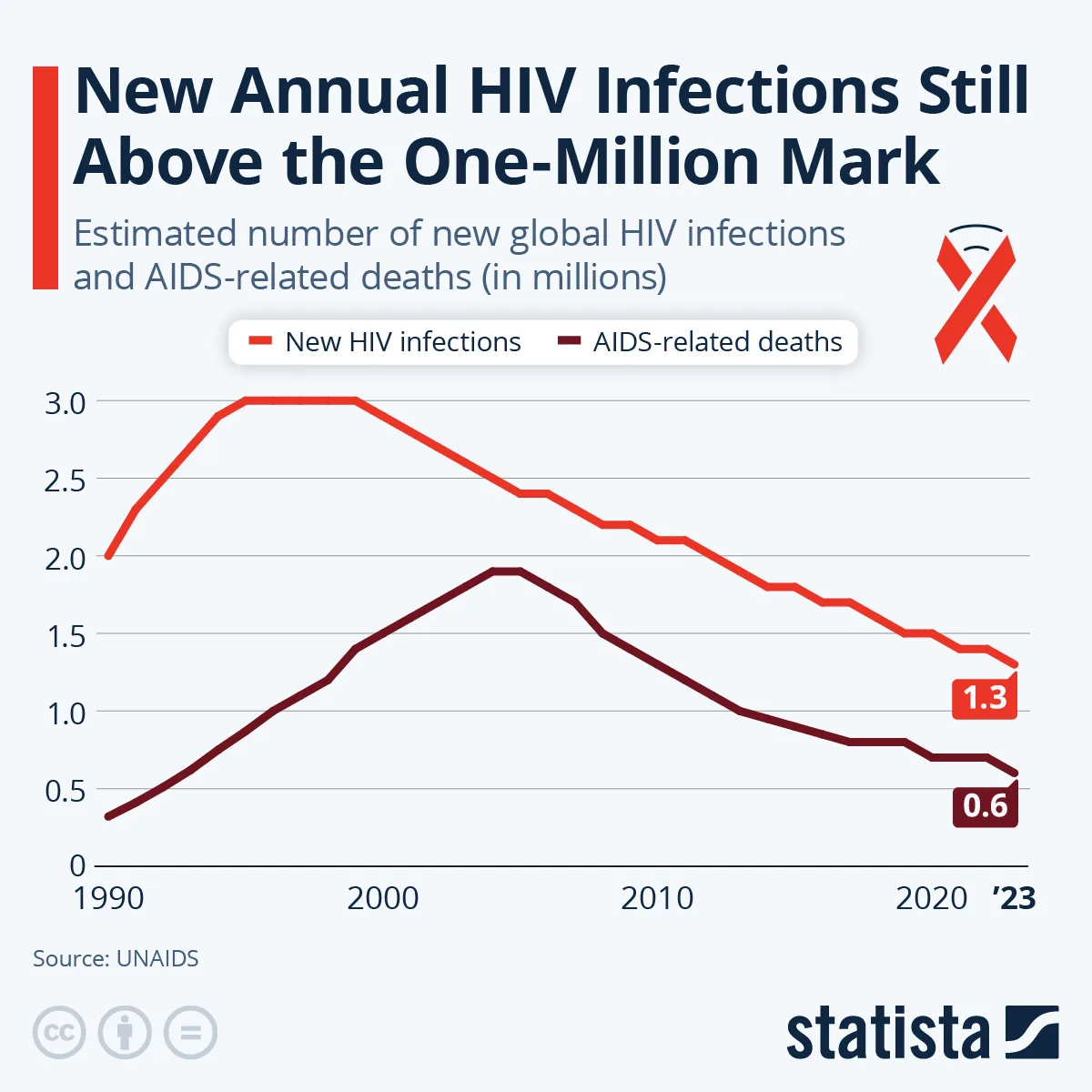
    The prevalence of HIV remains a global health crisis, with significant implications for individuals and communities. Recent data highlights that approximately 1.3 million new infections were reported in 2023 alone. Despite advancements in treatment and prevention, the fight against HIV continues to face multiple challenges.

    Current Statistics and Trends

    In 2023, global statistics revealed that approximately 1.3 million people were newly diagnosed with HIV. Tragically, the disease also accounted for about 600,000 deaths due to AIDS-related complications. These figures, while stark, show a decline from the peaks observed in the 1990s, when UNAIDS estimated that new infections often reached as high as three million annually. The early 2000s presented a particularly grim picture, with up to 1.9 million deaths attributed to AIDS each year.

    The Impact of the COVID-19 Pandemic

    The coronavirus pandemic has had a substantial effect on ongoing efforts to manage and combat HIV infections. As healthcare systems worldwide reallocated resources to address the urgent needs posed by COVID-19, critical HIV prevention and treatment initiatives faced setbacks. This disruption has complicated the already challenging landscape of HIV care, emphasizing the need for renewed focus and resources.

    Global HIV/AIDS Landscape

    Living With HIV: Current Statistics

    As of the end of 2023, there are about 39.9 million individuals globally living with HIV, highlighting the scale of the epidemic. Among these, approximately 1.4 million are children under the age of 15. The persistence of these numbers underscores the ongoing challenges in prevention and treatment.

    Access to Antiretroviral Therapy

    Antiretroviral therapy (ART) has transformed the management of HIV, allowing individuals to lead healthy lives and reducing the likelihood of transmission. In December 2023, it was estimated that around 30.7 million people had access to ART. This is a critical achievement, yet the target set by the UN organizations—to reach 34 million people by 2025—requires immediate and sustained funding.

    The Need for Continued Financial Support

    Funding Trends in HIV Initiatives

    Despite progress, funding for HIV/AIDS initiatives has recently faced declines. Reports indicate a five percent decrease in financial support between 2022 and 2023, with an even steeper drop of eight percent observed from 2020 to 2023. The reduction in funding jeopardizes progress in treatment access and prevention efforts, with many organizations reliant on external support to continue their vital work.

    The Importance of Sustainable Funding

    Addressing the funding shortfalls is imperative to maintain and increase access to ART and prevention strategies. Ongoing investments in education, research, and community health initiatives are essential to reversing the trends associated with HIV infections and improving health outcomes for those affected.

    The Path Forward

    Prioritizing Public Health Initiatives

    To effectively combat HIV/AIDS, a multifaceted approach that prioritizes public health initiatives is necessary. This includes increasing awareness, enhancing education about prevention methods, and expanding access to testing and treatment services. In addition, tailored programs for vulnerable populations, particularly children and young adults, must remain at the forefront of these efforts.

    Mobilizing Community and Global Efforts

    A collective effort from governments, non-profit organizations, and communities is crucial in the fight against HIV. Emphasizing collaborative strategies and sharing best practices can lead to innovative interventions that address the root causes of the epidemic. Importantly, leveraging technology and data can improve the reach and effectiveness of HIV prevention and treatment programs.

    In summary, while significant strides have been made in the battle against HIV/AIDS, continuous vigilance, support, and innovative strategies are necessary to reduce new infections and improve the quality of life for those living with this condition. The upcoming years will be crucial in determining the future trajectory of the HIV epidemic and the health outcomes of millions around the globe.

  • Agatha All Along Creator Confirms Deaths Will Stay Permanent

    Agatha All Along Creator Confirms Deaths Will Stay Permanent

    Notice: This article includes spoilers for episodes 1-7 of Agatha All Along.

    The Witches’ Road continues to earn its fearsome reputation. Throughout the initial seven episodes of Marvel Studios’ Agatha All Along, numerous characters have faced shocking and tragic fates due to the Road’s challenges. Mrs. Hart (Debra Jo Rupp) was the first casualty, soon followed by Alice Wu-Gulliver (Ali Ahn) and Lilia Calderu (Patti LuPone). Lilia’s demise occurs in a valiant manner at the conclusion of the seventh episode, titled “Death’s Hand in Mine,” where she heroically sacrifices herself to eliminate the threatening Salem Seven, thus granting her fellow witches additional time to escape.

    In “Death’s Hand in Mine,” the episode also unveils the true nature of Rio Vidal (Aubrey Plaza). In a haunting interaction, she reveals to Lilia that she embodies Death itself, a revelation that ultimately leads Lilia to accept her destiny. Despite Lilia’s apparent finality in her selfless act, fans have reacted with skepticism regarding her death, similar to their responses to Alice and Mrs. Hart’s fates. Marvel Studios is known for resurrecting characters after their demise, yet it appears unlikely viewers will see any of the recent Witches’ Road victims return to life.

    According to Jac Schaeffer, the creator of Agatha All Along, “This is a show about death.” When discussing the endings of characters like Lilia, Alice, and Mrs. Hart, she emphasized, “Personally, I believe that when someone dies, they can still be part of your life in a different way. But death itself is unchangeable and permanent. With this series, we aimed to acknowledge that reality. It presents a more sincere and serious conversation about death than what you might find in other superhero narratives.”

    Patti LuPone looks up in Agatha All Along.
    Chuck Zlotnick / Marvel Studios

    In response to whether the Salem Seven are truly as deceased as they seem at the end of episode 7, Schaeffer reassured viewers, saying, “Yes, the Salem Seven are gone. They are out of the picture in our series. Lilia has saved everyone!” While Schaeffer’s comments may imply that characters like Lilia, Alice, or Mrs. Hart might still appear in some form, it seems unlikely they will come back to life.

    Agatha All Along has shown a willingness to eliminate characters without hesitation. The now-confirmed presence of Death herself adds an additional layer of suspense and unpredictability as the series approaches its two-part finale. While Schaeffer has been coy about what lies ahead in the final episodes of Agatha, she did hint to Variety that “there is more Agatha, more Rio” and “some truths about Agatha that will be unveiled.”

    Fans will have to wait just a few more days to uncover this “truth” and discover whether Plaza’s embodiment of Death manages to claim any additional lives before the grand conclusion of Agatha All Along.

    The two-part finale of Agatha All Along is set to debut on Wednesday, October 30, on Disney+.