Tag: damage

  • Thousands Evacuated as Indonesia Quake Kills 50+ and Disrupts Roads

    Thousands Evacuated as Indonesia Quake Kills 50+ and Disrupts Roads

    Authorities have reported 341 aftershocks shaking the affected region. Over 1,300 homes have sustained damage across the area. The government is considering declaring a state of emergency to accelerate relief efforts.

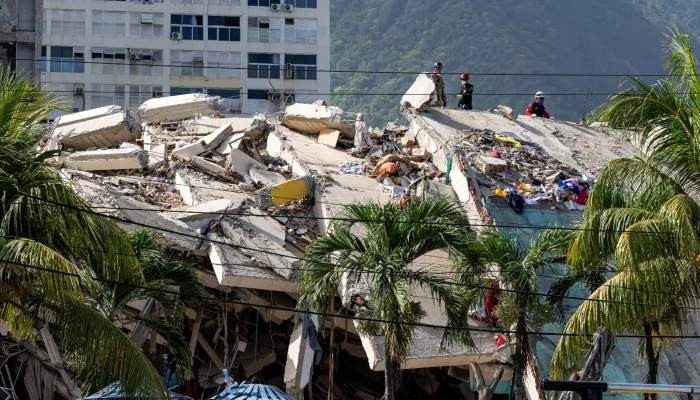
    Approximately 5,000 individuals have been evacuated following a magnitude 7.7 earthquake that struck an eastern region of Indonesia, resulting in at least 51 fatalities, road blockages, and landslides, officials said Sunday.

    In East Nusa Tenggara province, 36 people are in serious condition, while 77 others are lightly injured, Deputy Health Minister Benjamin Paulus Octavianus announced during a televised briefing.

    This quake, accompanied by about 341 aftershocks, is the deadliest in Southeast Asia since a 2022 tremor in West Java that claimed hundreds of lives.

    More than 3,300 residents in the Sikka district either evacuated on their own or sought refuge in a sports arena, according to the disaster management agency BNPB.

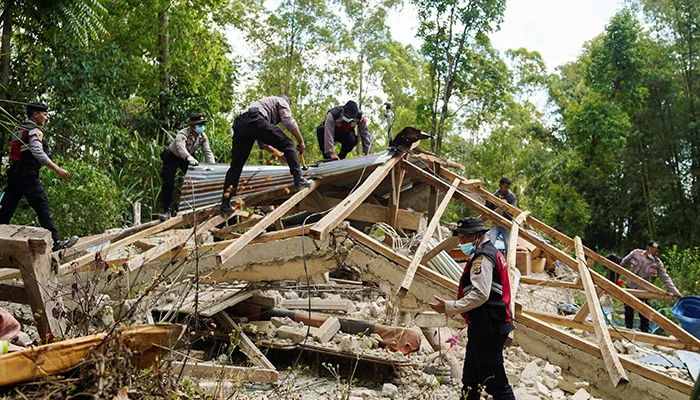
    Residents of Sikka were stranded outside collapsed homes, some under makeshift tarps, while others received medical attention in tents outside a hospital in the port city of Maumere.

    Abdul Mutas, 63, told Reuters that he and his family slept on a tarp under trees in Sikka. “I only brought my body. The tides were rising, so we ran,” he explained, describing their reaction to the quake.

    Sikka’s deputy regent, Simon Subandi, told KompasTV that nearly all residents refused to remain indoors, choosing to sleep on porches or outside tents.

    More than 3,500 military and police personnel have been dispatched to the region, according to Cabinet Secretary Teddy Indra Wijaya.

    Rescue teams have reached parts of Maumere that were cut off by landslides. While the total number of missing persons is not yet available, most are believed to be trapped beneath rubble. Over 1,300 homes have been damaged, BNPB noted.

    Power outages have knocked out 20 gas stations, according to energy company Pertamina.

    The East Nusa Tenggara government is contemplating an emergency declaration for the province, a move that would enable faster mobilization of resources and funding.

    The quake-affected area was previously impacted by a magnitude 7.5 quake in 1992, which caused widespread damage, according to Indonesia’s geophysical agency.

    As a nation made up of thousands of islands with a population of around 290 million, Indonesia lies along the “Pacific Ring of Fire,” an active seismic zone where tectonic plates frequently cause earthquakes and volcanic eruptions.

  • Indonesia hit by 7.7M quake; tsunami alert sparks mass evacuations

    Indonesia hit by 7.7M quake; tsunami alert sparks mass evacuations

    A 7.7 magnitude earthquake struck eastern Indonesia early Saturday morning, resulting in at least two confirmed fatalities and prompting thousands to evacuate to higher ground amid a tsunami warning. The disaster response agency identified the victims as a man and a woman, and authorities are still verifying the total number of casualties and structural damage.

    The quake originated offshore from Flores Island at approximately 4:58 a.m. local time, about 42 miles northwest of Ende, according to Indonesia’s earthquake agency (BMKG) and U.S. authorities. It was relatively shallow, occurring at a depth of around 9 miles, and was followed by multiple aftershocks, including a significant 6.1 magnitude tremor.

    Residents in Nagekeo Regency, the area nearest the epicenter, hurried to higher ground after observing the sea withdraw — a potential sign of an impending tsunami. The tsunami warning was eventually lifted, with waves under three feet recorded in several coastal locations.

    One local, 56-year-old Yohanes Babo, described the experience: “The shaking was intense. Luckily, we were already outside. There was panic everywhere — people running around, trying to get to the hills.” He added that his family was unharmed.

    The tremor was strongly felt for about a minute across towns including Nagekeo and Bima. In Maumere, residents rushed into the streets as buildings shook violently. Lukas Lotar, a hospital customer service worker, recounted, “Suddenly the ground started shaking, and I panicked. Patients ran out of the hospital, and I saw some cracks in the walls.”

    Footage from Ende district showed a hospital evacuating patients outdoors following the quake, while videos from Maumere depicted part of a building collapsing amidst dust and rubble as crowds fled. The Australian tsunami warning center confirmed there was no tsunami threat to Australia or its territories following the undersea quake.

    Authorities continue assessing the extent of damage and reviewing casualties as aftershocks persist and residents remain on alert.

  • Venezuela Earthquake Toll Hits 3,811 Amid Frozen Funds Move

    Venezuela Earthquake Toll Hits 3,811 Amid Frozen Funds Move

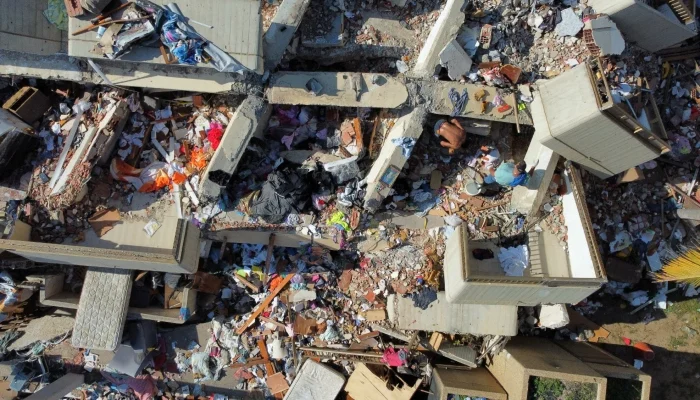
    A drone captures an aerial view as individuals examine a damaged apartment following the June 24 earthquakes in Macuto, La Guaira state, Venezuela, on July 8, 2026. — Reuters

    – Over 16,700 individuals have been injured.
    – Nearly 18,000 people have become homeless.
    – Venezuela is appealing for the release of gold held by the Bank of England.

    The death toll from Venezuela’s double earthquakes has increased to 3,811, according to figures announced by National Assembly President Jorge Rodriguez on Wednesday. The recent reports indicate 16,740 people have been injured, and 17,907 are now displaced.

    Interim President Delcy Rodriguez has once again called for the lifting of international sanctions on Venezuela, emphasizing that the country possesses enough overseas assets to aid in reconstruction if inaccessible accounts are freed. She stated on state television, VTV, that Venezuela’s resources are blocked around the world, which hampers recovery efforts. She also mentioned that additional funds are necessary for employment and educational programs.

    For two decades, the US, European Union, and other nations have imposed increasingly strict sanctions on Venezuela. These measures have been justified by alleged anti-democratic activities by the government and the country’s use as a safe haven for drug trafficking. Many restrictions are still in effect. However, after the US detained Venezuelan President Nicolás Maduro earlier this year, Washington provided targeted relief specifically for the oil industry.

    Following the earthquakes, the US authorized transactions related to earthquake aid for four months—transactions that would typically be prohibited under sanctions.

    Rodriguez also announced that she sent a letter to King Charles requesting the release of Venezuelan gold stored at the Bank of England. She mentioned discussions with the International Monetary Fund about releasing funds as well.

    The Bank of England has refused to release approximately 31 tonnes of Venezuelan gold kept in its vaults. This bullion has been the subject of ongoing legal disputes in British courts.

  • Venezuela Quakes Fatalities Near 1,500; Millions Presumed Affected

    Venezuela Quakes Fatalities Near 1,500; Millions Presumed Affected

    A damaged building is visible from the base camp of the French Civil Security Training and Intervention Regiment (UIISC 7) at the Karting La Guaira complex in Caraballeda, La Guaira state, Venezuela, June 27, 2026. — Reuters

    – Local residents rescue an infant alive from the wreckage 32 hours after the quake.
    – The UN predicts up to 6.76 million people could be impacted.
    – At least 17 countries have deployed rescue teams to assist in locating survivors.

    The death toll from Venezuela’s twin earthquakes has climbed to 1,430 as of Saturday, with millions more likely lacking basic necessities such as sanitation, while initial US aid flights are arriving in Caracas.

    Amid public frustration over the government’s response, US-supported interim Venezuelan leader Delcy Rodriguez emphasized that the country is “not alone.” The United States reports that one runway at Simon Bolivar International Airport is operational, with C-17 military aircraft landing, and a naval ship has reached the coast.

    The UN humanitarian organization OCHA mentioned that search-and-rescue operations are being conducted by teams from at least 17 nations. Local residents are desperately trying to clear rubble from collapsing apartment buildings following Wednesday’s strong tremors, with experts noting that the first 72 hours are critical for saving lives.

    In La Guaira, a coastal area north of Caracas hit hardest by the quakes, residents joyously pulled a newborn from the debris on Friday, roughly 32 hours after the magnitude 7.2 and 7.5 tremors struck. A video shared on social media shows a man tearfully holding the baby.

    The UN’s migration agency stated that, based on available data, as many as 6.76 million people could be affected and will require emergency shelter, clean water, sanitation, healthcare, protection, and essential relief items.

    Jorge Rodriguez, President of the National Assembly, reported Saturday that there have been 1,430 deaths and 3,238 injuries. Meanwhile, the UN estimates the damages at around $6.7 billion, equivalent to about 6% of Venezuela’s GDP. UN aid chief Tom Fletcher warned that the death toll might continue to rise, with more than 50,000 missing persons.

    Venezuelans, already suffering from years of economic decline and the turmoil caused by US efforts to oust President Nicolás Maduro in January, are outraged at the government’s handling of the disaster. Yessica Mendoza recalled having to take her own daughter to a morgue in Caracas after her sister Yesimar Rodriguez, 25, and brother-in-law Jhomel Anaya, 26, were killed when their home in La Guaira collapsed on Wednesday.

    “We pulled them out ourselves. No help ever arrived,” Mendoza, 43, told AFP. She added that the bodies would be cremated quickly because of decomposition.

    On Friday, residents in Caracas jeered at Rodriguez as she visited a devastated neighborhood, shouting that the government was doing nothing for the people. La Guaira officials restricted access to the disaster zone late Friday and announced a military deployment there.

    Rodriguez stated she had spoken with U.S. President Donald Trump and Secretary of State Marco Rubio, who reaffirmed their support for the response efforts. The U.S. has deployed a disaster response team with over 250 personnel and three specialized search-and-rescue units trained in locating trapped individuals.

    Venezuela’s most severe earthquake in over a century has come after more than ten years of economic collapse, causing hospitals and public services to deteriorate and forcing many to leave the country. The nation remains in a fragile political transition six months after Maduro’s removal from power.

    The UN and aid organizations highlighted that, even before the earthquakes, millions had been facing food shortages, collapsing healthcare, protection vulnerabilities, and limited access to essential services. Historically, similar magnitude earthquakes have caused over 200,000 deaths in Haiti (January 2010) and 73,000 in Kashmir (October 2005).

    Among the victims were 28 Portuguese nationals, five Spaniards, two Brazilians, seven Chinese nationals, one Chilean, and one Italian-Venezuelan.

    Venezuela’s northern coast lies on a tectonic boundary between the Caribbean and South American plates, but the region had not experienced a major quake since 1997.

  • Iran responds to US ceasefire proposal via Pakistan

    Iran responds to US ceasefire proposal via Pakistan

    Iran announced on Monday its desire for a permanent resolution to the ongoing conflict with the United States and Israel, opposing any quick agreements to reopen the Strait of Hormuz during a temporary ceasefire. Both Washington and Tehran are evaluating a framework plan aimed at ending their five-week conflict.

    Iran communicated its stance on the U.S. proposal to Pakistan, dismissing a ceasefire in favor of a permanent resolution, according to the official IRNA news agency. The Iranian counteroffer included ten points covering regional conflict cessation, a protocol for safe passage through the Strait of Hormuz, sanctions removal, and reconstruction efforts.

    President Donald Trump, who has issued threats of severe retaliation if Iran doesn’t agree to open the strategic waterway by 8 p.m. Eastern Daylight Time (midnight GMT), rejected Iran’s proposal, asserting that his deadline is non-negotiable.

    A recent attack in Tehran saw emergency teams working at the site of a strike amid the US-Israeli conflict with Iran. Trump remarked at a White House Easter event that the proposal from Iran was substantial but insufficient, indicating that the US regards other options as necessary.

    Following Iran’s response to US and Israeli attacks in February by effectively closing Hormuz, a crucial route for approximately one-fifth of the world’s oil and natural gas supplies, Iran displayed reluctance to give up control easily. The strategic importance of Hormuz has given Iran significant leverage in negotiations.

    A framework mediated by Pakistan suggests an immediate ceasefire, with subsequent talks on a broader peace agreement to conclude within roughly 15 to 20 days. High-ranking officials, including Chief of Army Staff and Chief of Defense Forces Field Marshal Asim Munir, have been engaged in ongoing discussions with US Vice President JD Vance, special envoy Steve Witkoff, and Iranian Foreign Minister Abbas Araqchi.

    Iranian Foreign Ministry spokesperson Esmaeil Baghaei emphasized that Iran’s demands are not signs of compromise but reflect their confidence in defending their positions. Previously, US demands, such as a 15-point plan, were dismissed as excessive.

    A White House official noted that the ceasefire proposal is just one of many ideas pending approval from President Trump, who has branded ongoing military operations as “Operation Epic Fury.” Crude oil prices climbed amid the tension, rising 0.5% to $109.60 per barrel.

    Trump also issued sharp warnings on Sunday via his Truth Social platform, threatening additional strikes against Iranian energy and transport infrastructure if Iran fails to reopen the Strait by the deadline. Meanwhile, regional tensions remain high with fresh aerial strikes, and Iran continues to retaliate against recent attacks.

    The death of Iranian Revolutionary Guards’ intelligence chief Majid Khademi was announced by Iranian state media; Israel claims responsibility for his killing. A US-Israeli cyberattack targeted Tehran’s data center at Sharif University of Technology, disrupting infrastructure critical to the country’s artificial intelligence systems and other vital services.

    Iran’s ability to continue fighting back was demonstrated through recent strikes on petrochemical facilities and an Israeli-linked vessel in the Persian Gulf region. Israel reported multiple missile launches from Lebanon and Iran, with some impacts causing casualties, including a missile attack on Haifa that resulted in four fatalities overnight.

    Yemen’s Houthis also claimed responsibility for missile and drone attacks against Israel. The war has resulted in approximately 3,540 Iranian deaths, including at least 244 children, according to US-based rights group HRANA. Israel has also carried out invasions into southern Lebanon and strikes on Beirut targeting Hezbollah, leading to heavy casualties and escalating regional violence.

    Thirteen US service members have been killed in the conflict, with many more wounded, underscoring the profound chaos and ongoing hostilities across the region.

  • Comprehensive Guide to Damage Types & Reactions in Arknights: Endfield

    Comprehensive Guide to Damage Types & Reactions in Arknights: Endfield

    While playing Arknights: Endfield, you’ll unlock the combat system early on because you need it to move forward with the story. In the beginning, defeating enemies is straightforward—you can just attack them with your characters without worrying too much about team setups or special synergies.

    However, by the time you reach the late game, things get more complex. You’ll need to understand different damage types and how reactions work to succeed with your team. Depending on a character’s damage type and skills, you’ll often create different team combinations that can trigger powerful reactions to increase damage output.

    All Damage Types, Explained

    Every character in Arknights: Endfield deals a specific type of damage, which falls into two main categories: Physical and Arts. Physical damage is a standalone type, while Arts damage includes four elements: Heat, Electric, Cryo, and Nature. Characters capable of Arts damage can inflict any of these four types based on their skills.

    Your characters’ damage can be boosted by increasing damage bonuses related to their preferred damage type. For example, Physical damage characters benefit from Physical DMG Bonus, while Arts damage characters benefit from Arts DMG Bonus. Each Arts element also has its own specific damage bonus stat, obtainable through gear and weapons.

    Some characters may deal Arts damage through certain abilities, yet also deliver Physical damage with others. You can recognize a character’s damage type by their color:

    • Physical: White
    • Heat: Red
    • Electric: Yellow
    • Cryo: Blue
    • Nature: Green

    All Art Bursts and Reactions, Explained

    Understanding Art bursts and reactions requires knowledge of Inflictions. You can’t randomly apply Art Inflictions to enemies; instead, you need to use specific abilities that mention applying these Inflictions.

    Once an Art Infliction is applied, it appears next to the enemy’s health bar. Reapplying the same Infliction stacks it, and triggers that Art’s burst. When an Art burst activates, the enemy takes an extra hit of damage from that Art after a brief delay.

    Applying two different Art Inflictions on the same enemy triggers a reaction, with each reaction having unique effects. Here’s how they work:

    Reaction Name How to Trigger Effect
    Combustion Heat Infliction applied with a non-Heat Infliction Enemy takes regular Heat damage based on the attacker’s ATK
    Electrification Electric Infliction applied with a non-Electric Infliction Enemy takes increased damage from all Arts
    Solidification Cryo Infliction applied with a non-Cryo Infliction Small enemies get frozen during the reaction
    Corrosion Nature Infliction applied with a non-Nature Infliction Enemy’s resistance to all Arts decreases over time

    Art Inflictions and reactions can also activate special abilities in different characters, adding more strategic options.

    Physical Statuses and Reactions, Explained

    Physical damage mostly works independently of Arts and their reactions. Instead, it has its own effects and reactions applied through different statuses:

    • Lifted
    • Knocked Down
    • Crushed
    • Breached

    Applying these effects to enemies that are not already Vulnerable (a damage stack) grants Vulnerable status. If an enemy already has Vulnerable stacks, these statuses modify its behavior:

    • Lifted: Adds a Vulnerable stack, deals Physical damage, and lifts small enemies in the air.
    • Knocked Down: Adds a Vulnerable stack, deals Physical damage, and knocks down smaller enemies.
    • Crushed: Uses all Vulnerable stacks to deal high Physical damage.
    • Breached: Uses all Vulnerable stacks to deal some Physical damage and increases the enemy’s susceptibility to Physical damage temporarily.

    Since Physical damage has its own set of reactions, teams are often built around a mono-Physical strategy. Physical interactions with Arts happen mainly when applying statuses like Solidification, which can trigger Shatter and cause massive Physical damage.

  • Bangladesh Earthquake Claims 9 Lives, Injures Hundreds

    Bangladesh Earthquake Claims 9 Lives, Injures Hundreds

    A powerful earthquake hit just outside Bangladesh’s densely populated capital, Dhaka, on Friday, resulting in at least nine fatalities and over 300 injuries. The tremor registered at magnitude 5.5 and struck around 10:38 a.m. local time, near Narsingdi, roughly 20 miles from Dhaka, according to the US Geological Survey. The quake caused widespread panic and chaos as many residents, many of whom were at home on their day off, fled their houses.

    In the aftermath, at least 14 structures were damaged, and fires broke out at a power station but were quickly contained. The interim government’s spokesperson expressed deep sorrow over the casualties and assured that all necessary measures were underway. The health authorities reported that nine individuals in Dhaka were admitted with serious injuries, including a child who died instantly after debris fell from an eight-story building onto a busy street where people had gathered.

    Witnesses described masonry from the collapsing building littering the streets, with reports of wreckage falling on pedestrians and vehicles. The seismic activity lasted about 26 seconds, and authorities are closely monitoring the situation and assessing damages.

    The earthquake’s effects extended beyond Bangladesh, with tremors also being felt in Kolkata, India, over 200 miles away from the epicenter. People in Kolkata rushed out of their homes and offices in response to the shaking, though no significant injuries or damages were reported there.

    Bangladesh’s interim leader, Muhammad Yunus, commented on the incident, expressing his shock and stating that the government is actively responding. Yunus, 85, was chosen to lead the country following last year’s uprising that ousted the previous government, with national elections scheduled for February 2026.

  • How to Use the Right Damage Type for Completing Killing Floor 3

    How to Use the Right Damage Type for Completing Killing Floor 3

    There’s more happening behind the scenes in Killing Floor 3 than you might think. At its core, it’s still mainly a game about wiping out waves of Zeds, but there’s more strategy involved than just shooting heads. (Though, honestly, that’s still the most important part.)

    Damage types play a significant role here, and choosing the right one can turn your performance from average to outstanding. Taking advantage of enemy weaknesses and using damage boosts during certain rounds can make things much easier—especially if multiple players are using different damage types.

    ### Every Damage Type

    There are nine different damage types in the game. The game provides some info about what enemies are weak or resistant to certain damage types, but here’s a closer look at each and what they do:

    | Damage Type | Strong Against | Weak Against | Explanation |
    |————–|————————–|————–|————-|
    | Acidic | Armor, Zedtech | Mire | Caused by large Zeds called Mires, acidic damage inflicts damage over time and corrodes armor. It can also panic enemies briefly, preventing attacks. |
    | Ballistic | N/A | Armor, Mire | Most firearms deal ballistic damage unless using special ammo. It causes standard damage and can temporarily disable enemies. |
    | Biological | Flesh, Mire | Armor, Zedtech | Usually delivered by medic weapons, biological damage weakens enemies, making them less effective. |
    | Cold | Mire | Flesh | Freezing enemies with cold is highly effective; frozen foes are immobilized, allowing heavy damage without retaliation. |
    | Cut | Flesh | Armor, Zedtech | Weapons like blades and arrows cause cut damage, which can stun enemies or cause bleeding, especially useful for certain classes like Ninjas. |
    | Electrical | Mire, Zedtech | Flesh | Electrical shock stuns enemies instantly, making it a valuable utility damage type. |
    | Force | Armor | N/A | It causes knockdown and stumble without resistance from enemies, primarily used for utility rather than direct damage. |
    | Heat | Flesh, Zedtech | Mire | Burn damage inflicts damage over time and causes enemies to panic; Firebugs excel at this. |
    | Sound | Armor | Flesh, Zedtech | Causes enemies to stun quickly, with some resistance from certain foes. Offers more utility than force damage. |

    ### Using Damage Types Effectively

    The best approach is to have a variety of damage types ready to switch between rounds. Make sure to equip different weapons that utilize different damage types—especially during rounds where specific damage types deal extra damage.

    It’s also worthwhile to consider your Specialist’s build. Some builds have special synergies or extra effects with certain damage types, so tailoring your setup can maximize your effectiveness. If you prefer flexibility, you can skip specialized builds and adjust your weapon choices based on the current situation.

    When playing in a team, spreading different damage types among players can be very helpful. This way, your group can handle a wider variety of enemies since someone will always have a damage type that’s effective against the current threat.

  • How to Reduce Damage in Wuchang: Completing Fallen Feathers

    How to Reduce Damage in Wuchang: Completing Fallen Feathers

    How Damage Works in Wuchang: Fallen Feathers

    During tough boss fights or fighting groups of enemies, your health can decrease quickly in Wuchang: Fallen Feathers. Sometimes, enemies can hit hard enough to knock you out in just one or two hits, especially during boss battles. That’s why it’s important to find ways to lower the damage you take.

    Understanding Damage Reduction

    If you want to protect yourself better, you need to understand how damage works in the game. There are two main types of damage reduction you should know:

    Damage Reduction Details
    Mitigation Mitigation reduces physical damage like slashes, stabs, fire, or magic damage. It helps lessen the damage enemies deal in the game.
    Resistance Resistance decreases the effect of certain conditions, such as Blight, Burn, Frostbite, or Corruption that you might encounter during your journey.

    In the pause menu, your stats on the right side show how much damage you’ve mitigated and how resistant you are to conditions. Having high mitigation is very helpful because most enemies deal physical damage.

    Keep in mind that most items or equipment tend to reduce either physical damage or conditions, but not both. That means, you’ll usually see a focus on either physical protection or condition resistance, not both at the same time.

    Damage reduction is critically important in boss fights. By knowing what kind of damage or conditions the boss uses, you can choose the best armor for the fight. You’ll never be completely immune, so changing your gear frequently to match different situations is key.

    Ways to Reduce Damage

    There are five main methods to lower the damage you take in the game:

    • Pendants
    • Armor
    • Consumables
    • Abilities
    • Spells

    Using these tools and skills, you can customize your build to cut down specific types of damage based on what you face in each encounter.

    Pendants

    Pendants generally give broad damage reduction across the board, rather than specific types. As you collect pendants, you’ll find some that reduce damage overall, such as:

    Pendant Effect Where to Find
    Gourd Pendant Reduces damage when your HP is low Drop from an enemy during the tutorial fight
    Entwined Legend Pendant Increases Burn Resistance Found outside the Lightzen Temple on a Buddha statue
    Dracolich Pendant Slightly reduces all damage In a red chest near the start of the Mercury Mines

    Armor

    Armor in Wuchang Armor is one of the most effective ways to cut damage and resist conditions. Full armor sets are especially good at protecting against specific damage types or effects. You can also mix different pieces for more balanced protection.

    In some areas, like Cloudspire, you might get conditions like Frostbite just by walking around. To avoid wasting healing items, equip armor that specifically reduces those conditions, like the White Spectre Armor set that greatly lowers Frostbite risk.

    Always switch your armor before challenging a boss or entering new zones to be best prepared for the conditions you’ll face.

    Consumables

    Consumable in Wuchang Consumables can help you reduce damage or resist effects temporarily. They are found throughout the game world, or dropped by enemies.

    Two common consumables are:

    Consumable Effect
    Flameward Pill Boosts fire damage reduction for a limited time
    Fixed Origin Pill Increases resistance to status effects for a certain period

    Abilities

    Ability in Wuchang Some key abilities can also help reduce damage:

    1. Axe Block – Using an axe with the right skills allows you to block and reduce damage.
    2. Dual Sword Clash – Executing clash abilities with dual swords lessens damage from attacks.
    3. Parry – Performing a perfect parry completely negates incoming damage.

    Spells

    Spell in Wuchang Spells also include options that reduce incoming damage. They use Skyborn Might, but can be very useful in boss fights. For example, you can buy the Divine Ward spell from a Panda trader in Worship’s Rise, which temporarily lowers damage taken during a fight.

  • Bangkok Residents Pursue Earthquake-Resistant Housing Options

    Bangkok Residents Pursue Earthquake-Resistant Housing Options

    A corridor in a high-rise condominium in Bangkok, showing damage after the earthquake on March 29, 2025. —AFP

    BANGKOK: Just hours after experiencing a powerful earthquake, Phatsakon Kaewkla returned home to find alarming cracks in the walls of his 22nd-floor apartment in Bangkok.

    Feeling increasingly uneasy about the structural damage caused by the most intense tremors the capital has faced in decades, the 23-year-old decided to stay away for two days until experts declared the building safe.

    Phatsakon is among numerous residents in Bangkok contemplating their housing options in a city where hundreds of residential structures were impacted by the 7.7-magnitude quake that struck Myanmar on March 28.

    While the condominium’s management assured him that engineers had inspected the building and deemed it inhabitable, he remains unsettled by the cracks.

    “I feel a little scared. My mom even suggested I should move out,” he stated.

    Located over 1,000 kilometers (620 miles) from the epicenter, Bangkok — characterized by its vivid skyline filled with numerous towers and glistening skyscrapers — rarely experiences such tremors.

    Owen Zhu, a 40-year-old real estate consultant based in Bangkok, informed AFP that the earthquake has significantly impacted his industry.

    “People are beginning to realize that living in high-rise buildings may pose higher risks concerning earthquake safety compared to low-rise structures,” he remarked.

    In the days following the quake, Zhu noted a surge in inquiries from residents looking to relocate, fueled by widespread fear and anxiety about residing at significant heights.

    ‘A Shift in Perception’

    Yigit Buyukergun from Turkey was at home with his wife when the earthquake struck. Once the shaking stopped, they emerged from sheltering under a table to assess the damage to their 22nd-floor apartment.

    “Everywhere is cracked, especially in the corridor. It’s clear that the roof is in poor condition,” said the 25-year-old.

    Even with the building owners declaring it “100% safe,” Buyukergun remains doubtful.

    “I don’t believe it,” he commented.

    In Bangkok’s extensive residential developments, many studio apartments are offered on long-term leases that require a two-month deposit. Most condominiums do not allow short-term rentals due to safety protocols, with only hotels permitted to rent for less than 30 days.

    Zhu pointed out that disagreements between tenants and landlords over the safety of earthquake-damaged apartments are becoming increasingly common, resulting from differing perceptions of habitability.

    “There’s a disconnect in perception and judgment between both parties,” he observed. “Landlords see the units as safe while tenants feel unsafe and insist on moving out to reclaim their deposits.”

    Raising Standards

    Prior to the earthquake, Thailand’s building safety standards were not particularly stringent. This was not a concern for many property-seeking clients, according to Zhu.

    Heightening this anxiety was the alarming collapse of a 30-story construction in Bangkok, which trapped dozens of workers, many of whom are still unaccounted for a week later. Authorities are currently investigating whether poor-quality materials were utilized in its construction.

    As a result of the quake, more of Zhu’s clients are now leaning toward low-rise buildings.

    For those still inclined towards high-rises, they often seek properties that sustained minimal or no damage in the recent earthquake, or at least were not severely impacted.

    Zhu believes that, in the long run, property values will increase as the demand for safer buildings stimulates the implementation of expensive seismic resistance measures, ultimately raising the standards within Thailand’s real estate market.

    However, Buyukergun feels that discussions surrounding building regulations won’t ease his worries regarding uncontrollable geological factors.

    His experiences with earthquakes in Turkey had already made him cautious, but he never expected to feel the same unease while living in Thailand.

    “I always thought Thailand was safe,” he recalled. “That’s why I found it hard to believe an earthquake could actually happen here.”

  • 3 Cable Incidents in 3 Months: Baltic Sea’s Rising Concerns

    3 Cable Incidents in 3 Months: Baltic Sea’s Rising Concerns

    Unraveling the Baltic Sea Cable Incidents: An Analysis of Recent Events

    Background on Baltic Sea Infrastructure

    The Baltic Sea is home to a significant network of underwater cables and pipelines that facilitate communication and energy supply between several European countries, including Sweden, Finland, Germany, Estonia, and Latvia. These cables and pipelines are critical for telecommunications and energy distribution, making their integrity paramount for the involved nations.

    Importance of Underwater Cables

    Underwater cables are vital arteries for global communications and internet connectivity. They carry approximately 95% of international data traffic, influencing everything from personal communications to critical business operations. In the Baltic Sea, these cables connect diverse economies and support a web of international relations and dependencies.

    A Surge in Incidents: Recent Developments

    Overview of Cable and Pipeline Damages

    Recent months have seen a worrying trend of incidents affecting the underwater cables in the Baltic Sea. Over the span of three months, there have been three significant incidents that have damaged at least seven telecommunication links. Notably, these incidents resulted in complications for countries such as Sweden, Finland, Germany, Estonia, and Latvia.

    Damage Statistics

    • Total Damaged Cables: 10 different underwater cables affected
    • Gas Pipelines Impacted: 3 gas pipes damaged

    This upsurge follows the infamous Nord Stream pipelines’ rupture, which occurred in September 2022, raising alarms about the security of critical infrastructure in the region.

    Suspicions of Negligence or Malice

    Findings from Investigations

    Reports from various intelligence agencies suggest that the recent incidents may stem from negligence rather than deliberate sabotage. However, the shadow of suspicion still looms large. Notable involvement of several vessels flagged in these incidents includes:

    • Chinese-registered Ships: Allegedly linked to Russian interests
    • Russian Vessels: Part of a so-called "shadow fleet," typically involved in dodging sanctions

    Analysis of Recent Incidents

    On January 31, 2024, Norwegian authorities detained a Russian-crewed cargo liner named Silver Dania, connected to a recent incident just days earlier. This event mirrors previous encounters, where Denmark intercepted the Chinese vessel Yi Peng 3 for suspected cable damage and Finland confiscated the Russian Eagle S associated with Christmas Day damage.

    Historical Context: The Nord Stream Incidents

    The 2022 Nord Stream incidents are pivotal in framing public perception regarding recent events. The explosions that damaged the pipelines were declared an act of sabotage, leading to widespread speculation about the responsible parties, which included not just Russia but also potential involvement from Ukraine.

    Nature of Damage: Accidents vs. Sabotage

    Mechanisms of Damage

    The way commercial vessels have been causing harm to the underwater infrastructures differs significantly from the explosive damage seen in previous incidents. Reports indicate that the vessels have been inflicting damage primarily by dragging their anchors across cables and pipes.

    Implications of Anchor Dragging

    • Extent of Damage: While less severe than explosions, anchor damage can still be extensive and disruptive.
    • Operational Concerns: Questions arise regarding the maintenance levels of vessels and the training of their crews, invoking skepticism over how such incidents could occur without notice.

    Broader Patterns of Cable Damage

    Globally, approximately 150 to 200 cable damage incidents occur each year, predominantly due to anchoring and fishing-related practices. This statistic indicates that while accidents do happen frequently, the recent clustering of incidents in the Baltic Sea remains abnormal and fuels further suspicion.

    Geopolitical Implications and Global Context

    Tensions in the Region

    The string of cable and pipeline incidents occurs against a backdrop of heightened geopolitical tensions involving Europe, Russia, and China. These relationships have been complicated by the ongoing conflict in Ukraine and the energy dependency issues faced by many European nations.

    Impact on Global Communication and Energy Integrity

    The integrity of infrastructure in the Baltic Sea is crucial, not just for regional communication and energy supply but also for global networks. Damage to these cables incurs substantial repair costs and can lead to prolonged disruptions in service, which could have far-reaching consequences.

    Concurrent Global Events

    Similar incidents have transpired in other parts of the world, such as Taiwan, reinforcing a pattern of concern regarding underwater cable security. The concurrent global tensions highlight the fragility of international infrastructure, necessitating a more vigilant approach to monitoring and safeguarding pivotal underwater assets.

    By investigating the multifaceted dynamics involved in these incidents, it becomes evident that the narrative surrounding the Baltic Sea cables is not only about physical infrastructure but also about the interplay of negligence, global politics, and international security.

  • Asus Acknowledges New Motherboard May Affect Your GPU

    Asus Acknowledges New Motherboard May Affect Your GPU

    Asus has addressed recent issues regarding its Q-Release Slim feature after reports indicated that the mechanism might damage GPU PCIe connectors. Launched in August 2024, the Q-Release Slim was designed for Asus’s 800-series AMD and Intel motherboards, enabling users to easily remove graphics cards with a tilting motion, rather than using a conventional retention clip.

    However, some users observed that a metallic part within the PCIe slot could scrape against the GPU’s PCIe connector when employing this feature. Over time, this scraping resulted in noticeable wear along the edges of the connector. Although the damage is predominantly superficial, users are concerned about the potential long-term impact on GPU performance and longevity. This issue is especially relevant for those who regularly swap or upgrade their graphics cards.

    Despite the visible wear, the gold-plated contacts on the GPU’s PCIe connector remain intact, ensuring that the card’s performance is generally unaffected. Asus users have turned to online platforms to share their experiences and images, expressing worries about possible long-term effects if scraping persists.

    In response, Asus conducted internal assessments and determined that no functional or performance-related damage was present. The company provided a statement to clarify its findings:

    "In our internal testing and evaluation of the very few cases reported, we found no damage to the motherboard or graphics card that would affect functionality and/or performance."

    Asus further noted that all PCIe add-in cards might show signs of wear after about 60 installation and removal cycles. They recommend users adhere to official guidelines when removing GPUs to reduce wear and tear.

    To alleviate concerns, Asus suggests that users carefully follow the removal process detailed in their manuals. Those who frequently change GPUs are advised to exercise extra caution to prevent unnecessary strain on the connectors.

    For individuals still uneasy about potential long-term impacts, Asus encourages them to reach out to customer support for help. Currently, the company has not introduced any design changes to the Q-Release Slim mechanism, but ongoing feedback from the community could influence future motherboard designs.

  • California Wildfires: $135B+ in Damages, 24 Lives Lost

    California Wildfires: $135B+ in Damages, 24 Lives Lost

    The Rising Toll of Wildfires in Southern California

    Wildfires have become an unfortunately familiar occurrence in Southern California, particularly in Los Angeles. As the flames continue to spread, the immediate consequences manifest in tragic human loss and extensive property damage. This blog explores the alarming statistics surrounding these wildfires, their economic implications, and the ongoing efforts to combat such natural disasters.

    The Human Cost of the Fires

    As reported in recent updates, the wildfires in Southern California have claimed the lives of at least 24 individuals. This includes eight fatalities from the Palisades fire and 16 from the Eaton fire. Such heart-wrenching statistics highlight the often-overlooked human aspect of wildfire incidents. Beyond the statistics lies the reality of families uprooted, communities shattered, and a collective mourning for lives lost in the chaos.

    Economic Impact of the Wildfires

    According to preliminary estimates from AccuWeather, the financial repercussions of these wildfires could be staggering, potentially reaching between $135 billion and $150 billion. This places the current fires among the most expensive natural disasters in U.S. history.

    Direct vs. Indirect Economic Costs

    AccuWeather distinguishes itself by including both direct and indirect costs in its assessments. Direct costs pertain to property damage and the destruction of infrastructure. In contrast, indirect costs encompass losses incurred from power outages and disruptions within the supply chain. This comprehensive approach offers a clearer picture of the multifaceted impact of the wildfires.

    Contextualizing the Current Wildfires

    To understand the extent of the economic damage, it’s essential to put the figures into context. The current fires are projected to surpass the total damages suffered throughout the wildfire seasons of 2020 and 2021. However, they still fall short of the 2018 wildfire season, which remains the deadliest and costliest to date, accumulating estimated economic losses of around $400 billion with over 100 deaths.

    Comparative Estimates

    AccuWeather’s estimates are positioned to be compared solely with other assessments from the same organization. This consistency in methodology is crucial for drawing accurate comparisons across different wildfire seasons. As the wildfires continue to unfold, the data from previous seasons serves as a benchmark to evaluate the scope and severity of current events.

    The Nature of the Recent Fires

    Describing the current situation, AccuWeather’s Chief Meteorologist Jonathan Porter characterized the fires as “fast-moving, wind-driven infernos.” The ferocity of these fires has been exacerbated by hurricane-force winds, which have whipped through neighborhoods featuring high-value homes. The resulting devastation is not only heartbreaking but also imbues an overwhelming sense of urgency toward fire management and prevention strategies.

    Firefighting Efforts and Challenges Ahead

    As regional firefighters worked tirelessly over the weekend to contain the blazes, challenges continue to mount. The National Weather Service raised alarms by issuing Particularly Dangerous Situation (PDS) Red Flag Warnings for Santa Barbara, Ventura, and Los Angeles Counties. The forecasts predict gusts of wind reaching up to 70 mph, further complicating containment efforts and promoting hazardous fire weather conditions.

    Community Response and Resilience

    The local community’s response to these wildfires cannot go overlooked. With nonprofit organizations, local governments, and residents coming together, there is a concerted effort to provide support for those affected. Relief efforts are crucial in ensuring that early recovery efforts can begin for individuals and families who have lost everything.

    The Path Forward

    In light of ongoing and anticipated wildfire seasons, it is imperative to rethink approaches to disaster preparedness and management. A coordinated strategy involving advanced forecasting technologies, enhanced firefighting resources, and community awareness programs can mitigate the impacts of future wildfires.

    With the increasing frequency and intensity of such events, understanding their implications on both human life and the economy is vital for informed decision-making at all levels of government and community planning.