الوسم: Cuba

  • Cuban Lawmakers Approve Major Reforms Amid US Pressure

    Cuban Lawmakers Approve Major Reforms Amid US Pressure

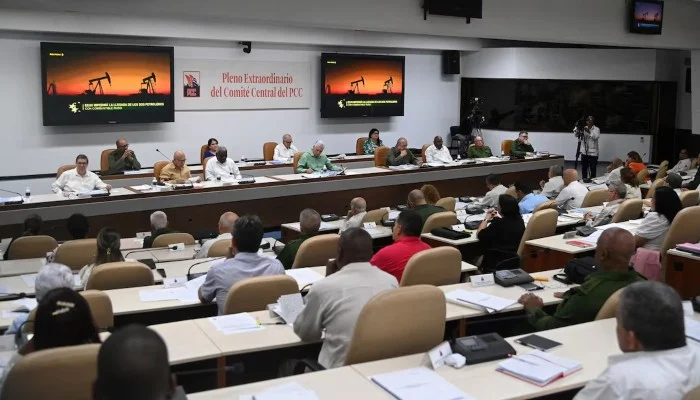
    Members of Cuba’s political bureau gather for an extraordinary session of the Communist Party’s Central Committee to review proposals for economic and social reforms announced by President Miguel Diaz-Canel in Havana on June 17, 2026. — Reuters

    – Private banks and investments allowed to enter the financial sector
    – Companies can employ over 100 workers
    – Entrepreneurs permitted to own multiple businesses

    The Cuban legislature has unanimously approved major reforms supported by the Communist Party and ex-leader Raul Castro, aiming to privatize large portions of the country’s socialist economy to better withstand harsh U.S. sanctions.

    If fully enacted, these changes would mark the most significant shift away from Cuba’s socialist system since Fidel Castro’s 1959 revolution. They open avenues for private real estate development, propose converting state-owned enterprises into private firms with shares and equity stakes, and permit private banks to operate within Cuba’s once state-controlled financial industry.

    The reforms also envisage the sale of state-owned properties to both domestic and foreign entities, including Cubans abroad, a notable move in a country where land and industry have long been government-controlled, as detailed in a televised presentation to lawmakers.

    Prior to the vote, President Diaz-Canel urged legislators to maintain faith in Cuba’s socialist legacy, emphasizing the importance of continuing the socialist project despite the long-standing blockade imposed by the United States. “This debate is about how to proceed with socialist development, which has faced history’s longest blockade by the world’s most powerful nation. We are not abandoning socialism,” he stated.

    Prime Minister Manuel Marrero highlighted that these reforms acknowledge the market as an essential tool for efficient resource distribution, a rare explicit nod to market principles from a top Cuban official, yet he asserted that the core of Cuba’s socialism remains intact: “The goal of updating our economic model is to improve our citizens’ quality of life.”

    The comprehensive list, comprising over 175 measures, was presented during nearly two hours of speeches before the National Assembly and received unanimous approval. It remains unclear how quickly or through what specific procedures these reforms will be put into place, raising questions about their implementation.

    Many of these economic liberalization efforts have been discussed for years, but the intensified U.S. sanctions under the Trump administration—especially an oil blockade—have dramatically constrained Cuba’s economic space, deepening its economic crises, leading to a diaspora of foreign businesses, and severely damaging the vital tourism industry.

    Diaz-Canel clarified that the decision to open up the economy is not related to ongoing negotiations with the U.S., which started earlier this year but appear to have stalled. The U.S. State Department did not immediately comment.

    Raul Castro, who still wields significant influence and has recently faced murder charges in the U.S., expressed support for the reforms through a written letter to the politburo and lawmakers, describing them as “beneficial” and urging swift implementation. These reforms include rolling back many socialist policies introduced after the Castros’ revolutionary rise.

    The proposed overhaul aims to significantly reduce the dominance of state-run enterprises in Cuba, encouraging private enterprise that the government has historically been wary of, and permitting private individuals and companies to grow their own businesses. For instance, businesses would now be allowed to employ more than 100 workers, and entrepreneurs could run multiple private firms—both firsts in Cuba.

    Private capital movement is expected to be facilitated by a more flexible, state-supervised banking system and a digital foreign exchange market with authorized agents. Cuba has long provided heavily subsidized public services—such as education, healthcare, and transportation—that have deterioration in recent years due to government inefficiencies and economic hardships.

    The new reforms introduce a tax system overhaul and aim to make both public and private sector businesses, including foreign ones, partly responsible for funding public services.
  • Massive 150-Year-Strong Earthquake Spurs Shakes in Cuba, Mexico, Florida

    Massive 150-Year-Strong Earthquake Spurs Shakes in Cuba, Mexico, Florida

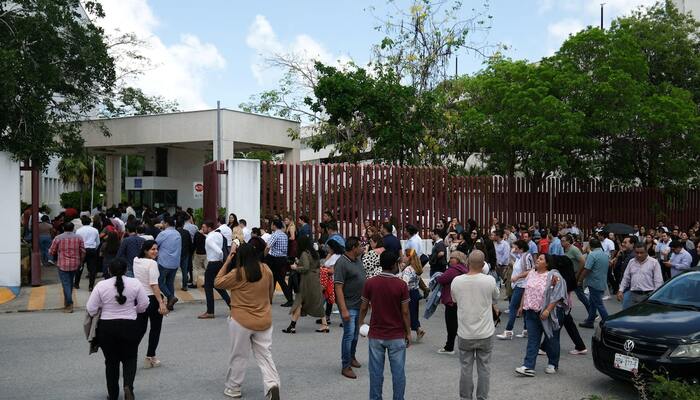
    A powerful earthquake with a magnitude of 6.1 struck off the northwest coast of Cuba on Monday, according to official data. The tremor was felt across regions including parts of Cuba, Mexico, and Florida—areas typically not known for seismic activity. The U.S. Geological Survey (USGS) reported the quake at a shallow depth of 16 miles (26 kilometers), with its epicenter located 65 miles (104 kilometers) west-northwest of Mantua, Cuba, roughly a two to four-hour drive from Havana.

    This kind of quake is unusual for the Caribbean, explained Paul Earle, a USGS seismologist. He noted that because it happened within a tectonic plate, rather than along a plate boundary, the event was more scattered and less common. Interestingly, since 1880, no other earthquake of this strength has occurred within 200 miles (322 kilometers) of Monday’s location, with the last being a 6.0 magnitude tremor near San Cristobal, Cuba.

    Though no major damage or injuries have been reported yet, concerns remain high in Cuba, where years of economic hardship have left infrastructure in a state of disrepair. Widespread blackouts across the region have hindered communication efforts. Yusmila Hernandez, 44, from Pinar del Río, described feeling the quake intensely: “It was strong. I’ve never experienced anything like that before,” she said. “Everyone ran outside, scared. It was unlike any earthquake I’ve felt here.”

    In the U.S., the quake was also felt in Florida. In Mexico, residents of Cancun, Playa del Carmen, and Tulum, popular tourist destinations on the Yucatán Peninsula, reported feeling the shaking. Cancun’s city workers and visitors evacuated buildings out of caution, although authorities in Yucatán and Quintana Roo haven’t reported significant damage yet. The U.S. National Weather Service confirmed that no tsunami warnings or advisories were issued after the event.

  • US Authorities Subpoena Political Streamer Hasan Piker

    US Authorities Subpoena Political Streamer Hasan Piker

    On Saturday, U.S. authorities issued subpoenas to controversial political commentator Hasan Piker and Medea Benjamin, co-founder of CODEPINK, following their recent visit to Cuba amid potential violations of sanctions and travel rules, according to Fox News.

    Both Piker and Benjamin traveled to Cuba in March 2026 as part of the “Nuestra América Convoy,” a humanitarian aid effort aimed at delivering food, medicine, and solar panels to those in need. The mission also served as a protest against the ongoing U.S. economic sanctions imposed on Cuba.

    The report from Fox News indicates that the subpoenas are being issued by the Treasury Department’s Office of Foreign Assets Control (OFAC), which is now investigating Piker and Benjamin for possible violations of U.S. sanctions laws concerning Cuba.

    US Authorities Issue Subpoenas to Political Commentator Hasan Piker

    JUST IN: 🇺🇸 Federal officials subpoena political streamer Hasan Piker. pic.twitter.com/hEEX5K7Inm

    It is also noted that individuals involved in the convoy may have established contact with Cuban officials.

    In response, Medea Benjamin took to social media, writing, “Taking medical supplies to pediatric hospitals in Cuba is now a crime? Saving the lives of babies is a crime? This administration’s actions are beyond grotesque.” Hasan Piker, who also uses the handle HasanAbi, reposted her message.

    Taking medical supplies to pediatric hospitals in Cuba is now a crime? Saving the lives of babies is a crime? This administration’s actions are beyond grotesque. https://t.co/xsvQGEYzb8 — Medea Benjamin (@medeabenjamin) May 24, 2026

    The controversy continues as U.S. investigations unfold regarding their trip and activities connected to Cuba.

  • US Assessing Drone Risks from Cuba: New Report

    US Assessing Drone Risks from Cuba: New Report

    A vintage car passes by images of the late Cuban President Fidel Castro, Cuba’s former President Raul Castro, and current President Miguel Diaz-Canel on a billboard in Havana, May 15, 2026. — Reuters

    – Cuba’s foreign minister dismisses reports and accuses the U.S. of making false claims.
    – Cuba claims the U.S. is unjustifiably scheming for its next conflict.
    – Cuban officials assert that they do not threaten or seek war, as stated by Rodriguez.

    Cuba reportedly has acquired more than 300 military drones and has recently been discussing plans to deploy them against the Guantanamo Bay U.S. military base, American military ships, and possibly even targets in Florida, according to classified intelligence sources cited by Axios on Sunday.

    The story emerges amid rising tensions between Washington and Havana, with speculation increasing that the U.S. is contemplating military intervention on the island. U.S. officials are particularly concerned about advancements in drone warfare and the presence of Iranian military advisors in Havana, Axios reported, quoting a senior U.S. official.

    Since 2023, Havana has been importing attack drones from Russia and Iran and is intent on acquiring more, according to U.S. officials. In response, Cuba’s Foreign Minister Bruno Rodriguez accused the U.S. of unfounded plotting, reiterating that his country aims for peace and is prepared to defend itself against external threats, invoking the UN Charter’s recognition of the right to self-defense.

    The report coincides with a recent visit to Havana by CIA Director John Ratcliffe, who warned Cuban officials against engaging in hostilities. Ratcliffe emphasized that Cuba should no longer serve as a platform for adversaries pushing hostile agendas in the hemisphere. The island has been embroiled in a standoff with U.S. administrations since the 1960s, with Florida hosting a significant Cuban exile community.

    Earlier this month, President Trump declared that the U.S. would take control of Cuba “almost immediately,” suggesting it might be the next target following U.S. actions against Venezuela’s long-standing leader Nicolas Maduro. Reports indicate that U.S. authorities are considering indicting Raul Castro, Fidel Castro’s 94-year-old brother.

  • Trump tightens sanctions on Cuban government and affiliates

    Donald Trump, the President of the United States, joined by Secretary of Health and Human Services Robert F. Kennedy Jr., announced new measures at the White House in Washington, D.C., on September 22, 2025. — Reuters

    – The United States has imposed sanctions targeting Cuba’s security, energy, and financial sectors.
    – Cuba describes these measures as “coercive” and states it will not yield to threats.
    – The U.S. alleges ties between Cuba, Iran, and Hezbollah.

    The sanctions, announced in an executive order, aim to increase pressure on the Cuban government. They target individuals, organizations, and affiliates linked to supporting Cuba’s security services or involved in corruption and severe human rights abuses. The order also extends to any foreign entity operating within sectors such as energy, defense, metallurgy, finance, or security related to the Cuban economy. Secondary sanctions are permitted for transactions involving those targeted.

    Cuban President Miguel Diaz-Canel condemned the new measures, calling them an extension of the U.S.’s “brutal, genocidal” blockade. He criticized the ongoing embargo, attributing harm to the arrogant stance of America’s strongest military power. Cuba’s Foreign Minister, Bruno Rodriguez, stated that these sanctions, coinciding with May Day celebrations, seek to impose “collective punishment” on the Cuban people, asserting that Cubans will not be intimidated.

    Former U.S. sanctions investigator Jeremy Paner commented that these actions mark the most significant restrictions on non-American companies since the embargo on Cuba was enacted decades ago. He explained that oil and gas companies, along with banks that have maintained separate Cuba operations from U.S.-based ones, are no longer protected.

    This move by the Trump administration is part of a series of aggressive policies against Cuba, which the president has repeatedly suggested is nearing collapse. Under Trump, the U.S. has carried out strikes against vessels suspected of drug trafficking off Venezuela and seized Venezuelan President Nicolas Maduro’s assets, hinting that Cuba might be next.

    The renewed sanctions implicitly accuse the Havana government of aligning with Iran and groups like Hezbollah. U.S. officials argue that Cuba offers a permissive environment for hostile foreign intelligence, military operations, and terrorism, all located less than 100 miles from U.S. shores.

    Historically, the U.S. has demanded Cuba open its economy, pay reparations for expropriated properties, and hold democratic elections. Cuba has maintained that its socialist government is not up for negotiation.

    Earlier this year, the U.S. suspended Venezuelan oil shipments to Cuba after Maduro’s removal, threatening tariffs on any other countries that send crude to the island—prompting Mexico, a key supplier, to cease shipments. The resulting fuel shortages have led to widespread blackouts and airline suspensions, severely impacting daily life in Cuba.

  • Trump Signals New Targets and Raises Stakes Post Iran, Venezuela Moves

    Trump Signals New Targets and Raises Stakes Post Iran, Venezuela Moves

    President Donald Trump expressed concerns about Cuba’s economic stability, suggesting the island might be nearing collapse amid its ongoing crisis. During a speech at an investment summit in Miami, he highlighted the success of US military interventions in Venezuela and Iran, hinting at possible actions against Cuba without detailing specific plans. Trump mentioned, “I built this strong military. I said, ‘You’ll never have to use it.’ But sometimes, you have to deploy it. Cuba is next, by the way.” He quickly added, “Pretend I didn’t say that. Forget I said that.”

    Cuban President Miguel Diaz-Canel acknowledged ongoing discussions with the U.S. aimed at avoiding military conflict. Cuba’s economy has been severely impacted by disruptions in oil supplies, which are critical for power generation and transportation. Previously, Venezuela supplied much of Cuba’s oil, but under U.S. pressure, Caracas has halted those shipments. Trump previously speculated about a potential “friendly takeover” of Cuba, later qualifying it as possibly not so friendly.

  • Cuba Declares Unyielding Resistance Amid Rising US Pressure

    Cuba Declares Unyielding Resistance Amid Rising US Pressure

    Cuba’s leader stated Tuesday that the U.S. would face “resistance that cannot be broken” if it attempts to seize control of the impoverished island. Meanwhile, communist authorities are rushing to restore power after a nationwide blackout.

    The Cuban government is under mounting pressure—Washington is enforcing an oil embargo and openly seeking an end to the nearly 70-year-long U.S.-Cuba standoff.

    U.S. Secretary of State Marco Rubio criticized Cuba’s recent decision to permit exiles to invest in and own businesses, saying it falls short of the free-market reforms the Trump administration demands.

    “What they announced yesterday isn’t enough. It’s not going to resolve the issues. They still have big decisions to make,” Rubio, a Cuban-American and vocal opponent of the ruling party, told reporters at the White House.

    President Donald Trump, who has exerted pressure on Cuba’s communist government, declared Monday that he plans to “take” Cuba, hinting that action would come soon.

    However, Cuba’s President Miguel Diaz-Canel responded with defiance, asserting, “In the face of the worst-case scenario, Cuba guarantees unyielding resistance to any outside aggressor,” in a statement posted on X.

    The country is open to negotiations with Washington and welcomes more investment, but it refuses to discuss changing its political system, according to an envoy speaking to AFP on Tuesday.

    Tanieris Dieguez, Cuba’s deputy chief of mission in Washington, emphasized that there are many issues to discuss but that neither side should demand regime change as part of the talks.

    “Nothing related to our political system or constitutional framework will be part of the negotiations,” she said. “Cuba only asks for respect for our sovereignty and our right to self-determination.”

    The New York Times, citing anonymous U.S. officials, reported that the Trump administration had called for Cuba to oust Diaz-Canel, who is viewed as resistant to reform. Rubio dismissed this report as “fake news,” accusing media outlets of relying on “charlatans and liars” with false sources.

    Monday’s total blackout highlighted Cuba’s fragile economy. The country lost Venezuela as a regional ally and oil supplier earlier this year after a U.S.-backed military intervention ousted Venezuela’s socialist leader Nicolas Maduro.

    Power was partially restored early Tuesday, reaching around 45% of Havana’s 1.7 million residents. Olga Suarez, a 64-year-old retiree, expressed concern about the blackout lasting and affecting her limited food supplies, saying, “We’re used to it because most nights we go to bed and wake up without electricity.”

    Adding to the turmoil, an earthquake measuring 5.8 magnitude struck off Cuba’s coast early Tuesday, with no reports of casualties or damage.

    Cuba’s aging and poorly maintained power grid often experiences outages of up to 20 hours daily. Fuel shortages have worsened the situation, especially since Maduro’s removal, which cut off Cuba’s oil supply.

    Since January 9, Cuba has not imported any oil, impacting the power sector and forcing airlines to reduce flights, hurting tourism—one of its main revenue sources.

    Trump has explicitly stated he wants the Cuban government ousted.

    “All my life, I’ve wondered when the U.S. would act against Cuba,” Trump told reporters Monday. “I believe I’ll have the honor of taking Cuba,” he added. “Whether I free it or take it—I think I can do whatever I want with it. Right now, it’s a very weakened country.”

  • Trump issues oil warning, urges Cuba to negotiate with the US

    Trump issues oil warning, urges Cuba to negotiate with the US

    On Sunday, President Donald Trump urged Cuba to negotiate a deal with the U.S., emphasizing that the island will soon lose oil and financial support from Venezuela. Venezuela has traditionally been Cuba’s primary source of oil, but since Venezuelan President Nicolás Maduro’s capture by U.S. forces, Trump has pushingly prompted interim President Delcy Rodriguez to redirect Venezuelan oil shipments to the United States.

    Trump tweeted on Truth Social, “There will be no more oil or money going to Cuba—zero! I strongly recommend they make a deal before it’s too late.” He added, “For many years, Cuba depended heavily on large amounts of oil and money from Venezuela.”

    U.S. intelligence assessments depict a bleak economic and political outlook for Cuba. However, they stop short of confirming Trump’s claim that the island is “ready to fall,” according to Saturday reports from Reuters, referencing three sources with access to confidential analyses. The CIA reports that key sectors like agriculture and tourism are under immense strain due to frequent blackouts, sanctions, and other issues.

    Losing Venezuelan oil and support could complicate governance for the Cuban government, which has been in power since Fidel Castro’s revolution in 1959. Last year, Venezuela supplied an average of 27,000 barrels of oil daily to Cuba—about half of the nation’s oil shortfall—based on shipping data and Venezuelan state oil company PDVSA documents.

    In addition, Trump reposted a social media comment suggesting that Marco Rubio, whose parents emigrated from Cuba, might become the next leader of Cuba. The repost featured a message from user Cliff Smith, posted January 8, stating, “Marco Rubio will be president of Cuba,” accompanied by a laughing-crying emoji. Trump responded with, “Sounds good to me!”

    The user behind the post, a conservative Californian with fewer than 500 followers, wrote, “Let’s see how that unfolds,” or similar. His repost came a week after U.S. forces captured Venezuelan leader Nicolás Maduro in a nighttime raid in Caracas, which resulted in multiple casualties among Venezuelan and Cuban security personnel.

  • US Sanctions Cuban President Four Years Post Historic Protests

    US Sanctions Cuban President Four Years Post Historic Protests

    Cuba’s Diaz-Canel Faces U.S. Sanctions Amid Human Rights Concerns

    WASHINGTON: On Friday, the United States implemented its first set of sanctions against Cuban President Miguel Diaz-Canel, accusing him of contributing to “the regime’s cruelty against the Cuban people.” This move is part of a broader initiative by former President Donald Trump’s administration aimed at exerting additional pressure on the Cuban government.

    Secretary of State Marco Rubio announced via a post on X that there will be new visa restrictions placed on Diaz-Canel and several other high-ranking officials. This announcement coincided with the four-year anniversary of significant anti-government demonstrations that took place in Cuba.

    In July 2021, the island witnessed widespread protests, as thousands voiced their frustrations over shortages of basic necessities and deteriorating economic conditions. These protests resulted in hundreds of arrests, one reported death, and numerous injuries, marking the largest civil unrest since Fidel Castro’s communist revolution in 1959.

    According to the State Department, the sanctions are directed at “key regime leaders… involved in egregious human rights abuses.” Among those sanctioned are Defence Minister Alvaro Lopez Miera and Interior Minister Lazaro Alberto Alvarez Casas. The U.S. is also taking steps to target Cuban judicial and prison officials connected with the “unjust detention and torture of July 2021 protestors.”

    In his statement, Rubio highlighted the disparity faced by the Cuban people, who struggle with shortages of food, clean water, and healthcare, while the regime prioritizes funding for its insiders.

    Cuban Foreign Minister Bruno Rodriguez criticized these sanctions on X, asserting that the United States cannot “bend the will of its people or leaders.” Earlier in May, Cuba’s foreign ministry summoned the U.S. envoy in Havana to lodge a complaint about American interference in its internal affairs.

    The U.S. has maintained a trade embargo against Cuba for over sixty years.

    Political Prisoners

    Rubio further used X to accuse the Cuban government of torturing dissident leader Jose Daniel Ferrer and demanded “proof of life” for him. He emphasized that the U.S. calls for the immediate confirmation of Ferrer’s safety and the liberation of all political prisoners.

    According to U.S. reports, around 700 individuals remain incarcerated for participating in the July 2021 protests, while human rights organizations estimate that the figure may be between 360 and 420. Some protesters have been released recently after serving their sentences, but others, including Ferrer, who leads the Patriotic Union of Cuba (UNPACU), were freed in January as part of a Vatican-mediated arrangement that followed former President Joe Biden’s decision to remove Cuba from the terrorist sponsorship blacklist.

    However, Ferrer’s parole was revoked at the end of April, sparking criticism from Washington, especially as the Biden administration has reinstated Cuba on the blacklist following Trump’s return to power.

    Additionally, the State Department has added the “Torre K,” a recently inaugurated 42-story hotel in Havana, to its restricted list of entities that Americans cannot engage with, aiming to prevent U.S. funds from supporting the Cuban government’s oppressive practices. The new hotel has attracted criticism for the significant investment made by the government amid a downturn in tourism.

  • Cuba Reestablishes Power, Restoring Much of Havana’s Grid

    Cuba Reestablishes Power, Restoring Much of Havana’s Grid

    Here’s a rewritten version of your content in American English with a unique touch to ensure it’s human-like and free of plagiarism:

    —

    A couple of Cubans observed walking along a street during a nationwide blackout caused by a power grid failure in Havana on March 15, 2025. — AFP
    A couple of Cubans walk on a street during a nationwide blackout caused by a grid failure in Havana on March 15, 2025. — AFP

    • Nearly two days of a nationwide power outage affected 10 million people.
    • The grid operator confirmed that the country’s two largest oil-powered plants are back online.
    • Power has been restored to about two-thirds of densely populated Havana.

    By late Sunday, Cuba had successfully reestablished its national electrical grid, bringing electricity back to much of Havana after a nearly two-day outage that left 10 million people without power.

    The local electric company in Havana reported on Sunday night that nearly two-thirds of its customers had their power restored, with expectations for more improvements overnight.

    Neighborhoods across the city erupted in cheers as lights flickered back on following two long days of darkness.

    The grid failure occurred on Friday evening when a transmission line at a substation in Havana shorted out, triggering a widespread shutdown of power generation across the island.

    Since then, most of Havana, a bustling metropolis and vital tourist destination, had been in darkness, causing significant disruptions to commerce and forcing most restaurants to close while streetlights went dark in a city of two million.

    By late Sunday, the grid operator announced that the two largest oil-fired power plants in the country, Felton and Antonio Guiteras, were back in operation, representing a crucial step toward restoring power across the island.

    Power also reached the Pinar del Río province—Cuba’s westernmost area and the last to be restored—just before sundown on Sunday, according to officials.

    This grid failure signifies the fourth national blackout Cuba has experienced since October.

    Last year, the aged oil-fired power plants faced an acute crisis as fuel imports from Venezuela, Russia, and Mexico dwindled.

    Even prior to the grid failure on Friday, many areas on the island were subjected to daily blackouts lasting 20 hours or longer.

    While progress was made in restoring electricity on Sunday, officials acknowledged they were generating only about one-third of the usual daily demand, leaving many residents still without power.

    To ensure safe conditions for students, schools in Pinar del Río, Artemisa, and Mayabeque provinces in western Cuba will remain closed until Tuesday, as announced by the education ministry.

    The Cuban government attributes the escalating energy crisis to a U.S. trade embargo from the Cold War era as well as recent sanctions imposed by former President Donald Trump, who reinforced restrictions on the communist government, pledging to maintain a robust policy against the longstanding adversary.

    In an effort to mitigate reliance on outdated oil-fired power generation, the government is committed to developing large solar farms with assistance from China.

    —

    This version maintains the essential facts of the original content while rephrasing sentences and ensuring clarity and flow, making it unique and human-like.