Tag: countries

  • Sony Reportedly Blocks Marvel Tokens in 132 Countries at Arrival

    Sony Reportedly Blocks Marvel Tokens in 132 Countries at Arrival

    Digital Phablet – Once again, PC gamers are facing a similar situation to Helldivers 2. Recent reports have flooded social media suggesting that Sony is blocking the PC release of Marvel Tokon in 132 countries, with region-locking being the primary reason.

    Many players have pointed out that the upcoming fighting game has been restricted in numerous countries due to Sony’s PSN account restrictions. Fans attempting to preorder Marvel Tokon discovered the block after visiting Valve’s Steam store.

    Doomed before launch? Sony allegedly restricts Marvel Tokon in 132 countries

    Since the controversy surrounding Helldivers 2, Sony has launched multiple titles on PC. However, it appears the company is reintroducing the unpopular regional restrictions for Tokon just ahead of its scheduled August 2, 2026 release. According to Vice, Sony has not yet responded to questions regarding this move.

    Sony shifts to fully digital with no physical disc options

    Sony recently faced criticism after announcing that it plans to eliminate physical disc support for its PS5 and upcoming PS6 consoles starting in 2028. This decision raised concerns among consumers, as it impacts the ownership and sharing of physical games, along with the ability to resell titles or keep them permanently.

    One user posted on X (formerly Twitter), stating, “This is a terrible business move. Why would you want to give your customers fewer options?” Another chimed in, “And this is the company we’re supposed to trust with our all-digital future? No thanks.”

  • Countries That Have Already Banned GTA 6

    Countries That Have Already Banned GTA 6

    Digital Phablet – As pre-orders for GTA 6 (Grand Theft Auto VI) officially open ahead of its release on November 19, reports reveal that the highly anticipated game of 2026 has already been banned in several countries due to strict censorship laws and sanctions.

    According to Twisted Voxel, GTA 6 is expected to be banned in China, Russia, Taiwan, Kuwait, Qatar, Bahrain, Oman, and Lebanon. When GTA 5 was released, it faced similar restrictions, with bans and censorship over its portrayal of violence, drugs, prostitution, explicit language, and sexual content.

    Despite these restrictions, players in affected countries can find ways to access the game by purchasing it digitally through accounts set in regions where it is permitted. Rockstar has also announced that GTA 6’s physical editions will consist solely of a download code, rather than a traditional disc.

    What’s included in the $100 Ultimate Edition of GTA 6?

    GTA 6

    Rockstar’s upcoming open-world game will be available in two editions: the standard for $80 and the Ultimate for $100. The latter promises players “the most immersive GTA experience yet,” featuring premium vehicles, weapons, cosmetics, and access to various activities throughout Jason and Lucia’s storyline.

    Additionally, Rockstar announced that those who pre-order the digital version of GTA 6 will be able to pre-load the game starting November 12, a week before its official release.

  • US to halt visa processing for 75 countries, confirms State Dept

    US to halt visa processing for 75 countries, confirms State Dept

    The Biden administration has announced plans to halt all visa processing for applicants from 75 different countries, according to a spokesperson from the State Department on Wednesday.

    Details about the decision were not provided, but the move was first reported by Fox News, which referenced a State Department memo.

    The suspension is scheduled to start on January 21, as reported by Fox News.

    Countries impacted include Somalia, Russia, Iran, Afghanistan, Brazil, Nigeria, and Thailand, based on the report.

    The memo instructs U.S. embassies to deny visas under current laws while the department reviews its procedures. No specific duration has been given for this pause.

    This development comes amid a broader immigration enforcement effort led by Republican President Donald Trump since he assumed office last January.

    In November, Trump pledged to “permanently pause” migration from all “Third World countries” after an Afghan national, who was involved in a shooting near the White House that resulted in a Guard member’s death.

  • Who Recognizes Palestine? Who Doesn’t & Why It Matters

    Who Recognizes Palestine? Who Doesn’t & Why It Matters

    Pro Palestine protesters carrying flags and banners gathered during a demonstration in Madrid, Spain, on September 14, 2025. –Reuters

    Britain, Australia, Canada, and Portugal announced on Sunday they have officially recognized a Palestinian state following nearly two years of conflict in Gaza. Meanwhile, France, Belgium, and other nations are preparing to follow suit at the UN General Assembly.

    Currently, only about 75% of United Nations member states recognize Palestine as a state. An AFP count shows at least 145 countries out of 193 UN members have extended recognition. However, recent confirmations from three African nations are still pending.

    This recognition list includes the UK and Canada—the first G7 countries to do so—along with Australia and Portugal. During a summit at the United Nations headquarters in New York, chaired by France and Saudi Arabia, several countries such as France, Belgium, Luxembourg, and Malta are expected to follow suit.

    Recognition largely spans across Russia, most Arab nations, nearly all African and Latin American countries, and numerous Asian countries like India and China. The first country to officially recognize a Palestinian state was Algeria on November 15, 1988, shortly after Yasser Arafat, then leader of the Palestine Liberation Organization (PLO), declared independence unilaterally.

    In the weeks and months that followed, dozens more nations recognized Palestine. A second wave of recognitions occurred between late 2010 and early 2011. The recent escalation of violence in Gaza has prompted an additional 13 countries to acknowledge Palestine.

    On the other hand, over 45 countries do not recognize Palestine. This group includes Israel, the United States, and their allies. Israeli Prime Minister Benjamin Netanyahu’s government firmly rejects the idea of a Palestinian state. Countries like Japan, South Korea, Singapore, Cameroon, Panama, and most nations in Oceania also do not recognize Palestine.

    Europe remains highly divided on this issue, split nearly evenly in support and opposition. Until the mid-2010s, only Turkey and countries from the former Soviet bloc recognized Palestine, but that trend has shifted over recent years. Some former Eastern European nations, such as Hungary and the Czech Republic, now do not recognize Palestine bilaterally. Western and northern Europe, once united in non-recognition, have seen several countries like Norway, Spain, Ireland, and Slovenia recognize Palestine in 2024, with the UK and Portugal doing so this past Sunday. Italy and Germany have expressed no plans to follow suit.

    Recognition signifies a country’s acknowledgment of Palestinian statehood but does not automatically establish a new state in legal terms. According to Professor Romain Le Boeuf of the University of Aix-Marseille, recognition is a complex issue that sits somewhere between political choice and legal status. Countries can recognize Palestine at different times and ways, often without formal documentation. The Palestinian Authority maintains its own list of recognitions; other states may claim recognition without explicitly declaring it.

    International law clarifies that recognition does not directly create a state nor prevent the existence of one in the absence of recognition. However, gaining widespread recognition is seen as a symbolic and political milestone. About three-quarters of countries believe Palestine fulfills the necessary conditions to be considered a state. As Philippe Sands, a lawyer and law professor, noted in the New York Times, recognizing Palestinian statehood elevates their status under international law, putting Palestine and Israel on equal legal footing.

  • Trump Imposes Travel Ban on Iran, Afghanistan, and 10 More Nations

    Trump Imposes Travel Ban on Iran, Afghanistan, and 10 More Nations

    Sure! Here’s a rewritten version of the content in American English, made unique:


    Trump Signs Travel Ban Affecting Twelve Countries

    WASHINGTON: On June 4, 2025, President Donald Trump reintroduced a travel ban impacting nationals from twelve countries, including Afghanistan, Iran, and Yemen, marking a revival of one of the most contentious policies from his initial term.

    The decision followed a disturbing incident in Colorado, where a makeshift flamethrower was used during a protest supporting Jewish individuals. U.S. officials traced the attack back to an individual who was allegedly in the country without legal status.

    Under the new guidelines, individuals from Afghanistan, Myanmar, Chad, the Republic of the Congo, Equatorial Guinea, Eritrea, Haiti, Iran, Libya, Somalia, Sudan, and Yemen face a complete travel ban into the United States. Additionally, a partial ban applies to travelers from Burundi, Cuba, Laos, Sierra Leone, Togo, Turkmenistan, and Venezuela, although some temporary work visas from these nations may still be granted.

    The White House confirmed that the restrictions will take effect on Monday. "The recent terror attack in Boulder, Colorado, has highlighted the significant risks associated with allowing improperly vetted foreign nationals to enter our country," Trump stated in a video message from the Oval Office shared on X. "We don’t want them here."

    Athletes Exempt from Restrictions

    Notably, the ban will not apply to athletes participating in the 2026 World Cup, co-hosted by the United States, Canada, and Mexico, nor to those competing in the 2028 Los Angeles Olympics, according to Trump’s order.

    In a separate announcement, Trump also imposed restrictions on visas for foreign students intending to enroll at Harvard University, intensifying his efforts against what he perceives as a strongly liberal institution.

    He likened the revised travel ban to the significant restrictions he imposed during his first term, which disrupted travel worldwide. Trump claimed that the previous measures had prevented terror attacks similar to those experienced in Europe. "We will not allow what occurred in Europe to take place in America," he said. "We cannot have unrestricted migration from countries where safe and reliable vetting is not possible."

    Venezuela responded by asserting that the U.S. is not a safe destination. Diosdado Cabello, the Venezuelan Interior Minister, warned his fellow citizens against traveling to the United States, stating, "It presents a significant risk for anyone, not just Venezuelans."

    However, Trump’s latest travel ban is likely to face legal challenges, consistent with many of the sweeping actions he has taken since returning to office.

    Details of the Travel Ban

    The White House announced the ban shortly after Trump had addressed about 3,000 political appointees from a balcony at a "summer soiree." The announcement was made without any reporters present, a departure from Trump’s customary practice of revealing policy shifts during Oval Office signing ceremonies.

    After the Colorado attack, speculations regarding a new travel ban circulated, with Trump’s administration pledging to pursue "terrorists" in the U.S. on visas. The suspect, Mohammed Sabry Soliman, an Egyptian national, is accused of throwing incendiary devices at a gathering advocating for Israeli hostages held by Hamas.

    U.S. Homeland Security officials reported that Soliman was in the country illegally after overstaying a tourist visa, despite having applied for asylum in September 2022. White House Deputy Press Secretary Abigail Jackson remarked on X that "President Trump is honoring his commitment to shield Americans from harmful foreign actors seeking to enter our country."

    The travel ban was based on specific risks posed by each listed country, highlighting the goal of protecting the U.S. from "foreign terrorists and other national security threats." Notably, Egypt was left off the travel restrictions list.

    For nations like Taliban-ruled Afghanistan and conflict-ridden Libya, Sudan, Somalia, and Yemen, the proclamation pointed out their lack of "competent" authorities for passport processing and vetting. Meanwhile, Iran, noted as a "state sponsor of terrorism" amid ongoing nuclear negotiations with the U.S., was included in the list.

    Jamal Abdi, President of the National Iranian American Council, criticized the ban, saying, "Once again, families will be separated, missing weddings, funerals, and the births of their children," adding that individuals from many other countries might also face challenges with visa overstays.


    This version is tailored while maintaining the key information and provides a fresh perspective on the original content!


  • Five Nations Chosen for 2026-27 UN Security Council Seat

    Five Nations Chosen for 2026-27 UN Security Council Seat

    Participants at a Security Council meeting at the UN headquarters in New York City, March 18, 2025. — Reuters

    • Bahrain, Colombia, DRC, Latvia, and Liberia elected to the UNSC by the UNGA.
    • All appointments were made without any contest.
    • Former German Foreign Minister Annalena Baerbock chosen as UNGA president.

    On Tuesday, the United Nations General Assembly elected Bahrain, Colombia, the Democratic Republic of the Congo, Latvia, and Liberia to serve two-year terms on the 15-member UN Security Council starting January 1, 2026.

    The Security Council is the only body within the UN that can make binding decisions, such as imposing sanctions and authorizing military action. It consists of five permanent members with veto power: the United Kingdom, China, France, Russia, and the United States.

    The remaining ten seats are filled through elections, with five new members joining each year. Bahrain, Colombia, the DRC, Latvia, and Liberia—elected without opposition—will take over from Algeria, Sierra Leone, South Korea, Guyana, and Slovenia.

    To maintain geographical balance, seats are distributed among regional groups. However, even uncontested candidates must secure over two-thirds of the votes from the General Assembly.

    Bahrain garnered 186 votes, while the DRC received 183, Liberia got 181, Colombia had 180, and Latvia secured 178 votes.

    Additionally, the General Assembly selected former German Foreign Minister Annalena Baerbock as president for its 80th session, which will commence in September.

  • EU Eyes Deporting Asylum Seekers to Third Countries

    EU Eyes Deporting Asylum Seekers to Third Countries

    Migrants waiting to be escorted to a registration office at the asylum seekers’ arrival center in Reinickendorf, Berlin, Germany, on October 6, 2023. — Reuters

    The European Union’s executive branch proposed a revision to existing EU laws on Tuesday, aiming to permit member states to deport rejected asylum seekers to nations with which they have no prior connections. This initiative has drawn criticism from human rights organizations, who argue it jeopardizes the right to seek asylum.

    According to the European Commission, these amendments would enable countries to remove asylum applicants by sending them to a third country that is deemed safe by the EU, which is expected to “streamline the asylum process and alleviate pressure on national systems.”

    This proposal would eliminate the requirement that asylum seekers must have a prior link to the safe third country.

    “The updated Safe Third Country framework provides another mechanism for member states to handle asylum claims more effectively while upholding the EU’s values and fundamental rights,” remarked Magnus Brunner, the EU’s Commissioner for Internal Affairs and Migration.

    Since over a million individuals, primarily Syrian refugees, arrived via the Mediterranean in 2015, anti-immigration sentiments have surged throughout the 27-member EU, which found itself unprepared to manage the influx.

    Due to disagreements on how to share the responsibility, EU countries have largely concentrated on returning migrants and minimizing arrivals.

    The new amendments also dictate that if asylum seekers contest the denial of their applications, they cannot automatically stay within EU borders during the appeals process.

    Amnesty International strongly condemned the proposed changes.

    Olivia Sundberg Diez, Amnesty’s EU Advocate on Migration and Asylum, stated, “This revision will only serve to further diminish access to asylum in Europe, reduce individuals’ rights, and heighten the chances of refoulement and arbitrary detention in third countries — particularly given the EU’s apparent inability to monitor and uphold human rights in its partner nations.”

    This proposal is part of the EU migration pact approved in 2023 and is expected to take effect in 2026, but it still requires the backing of the European Parliament and EU member states.

    In April, the EU Commission included nations like Egypt and Tunisia — countries that have faced scrutiny for their human rights practices — on a list of “safe countries” for returning unsuccessful asylum seekers.

    Just a month earlier, the Commission suggested that member states could establish centers in non-EU countries where migrants whose asylum claims were denied would await deportation.

  • U.S. Naturalizations at 3 per 1,000, Aligned with Europe

    U.S. Naturalizations at 3 per 1,000, Aligned with Europe

    Examining Naturalization Trends: U.S. and Europe Compared

    The process of naturalization remains a defining aspect of immigration policy around the world. Understanding how different nations approach this process can shed light on broader social dynamics and demographic trends. Recent data from the OECD highlights some interesting parallels and contrasts between the United States and its European counterparts in regard to naturalization rates.

    Naturalization Rates in Birthright Citizenship Countries

    In countries where birthright citizenship is practiced, the naturalization statistics can vary significantly. The U.S. boasts a rate of 3 naturalizations per 1,000 residents, placing it alongside several European nations such as Spain, the Netherlands, Italy, the United Kingdom, and Germany. This finding is striking considering that the U.S. is unique in its approach to citizenship, often simplifying the path to citizenship through birthright.

    A Global Perspective

    The highest naturalization rate among OECD countries is found in Canada, with a remarkable 9.6 naturalizations per 1,000 residents. Conversely, Mexico stands at the low end of the spectrum, with only 0.01 naturalizations per 1,000 residents in 2022. This vast range indicates significant differences in policies, public attitudes, and the demographic makeup of these countries.

    European Comparisons

    While the U.S. maintains a competitive naturalization rate, some Scandinavian nations actually surpass it. Countries like Sweden and Norway have made naturalization processes accessible and appealing, leading to higher rates of successful applications. On the other hand, countries such as France and several Eastern European nations display lower naturalization rates, reflecting varying national policies and attitudes towards immigrants.

    Luxembourg: The Outlier

    Luxembourg presents an intriguing case within Europe, achieving an astounding rate of 16 naturalizations per 1,000 residents in 2022. This small nation has a particularly high percentage of foreign-born residents, exceeding 50%. The dynamics in Luxembourg highlight how demographic composition can influence naturalization rates, often leading to policies that accommodate and integrate immigrant populations more effectively.

    Factors Influencing Naturalization Rates

    The differences in naturalization rates across nations can be attributed to several factors:

    • Policy Framework: The regulations surrounding naturalization, including residency requirements and testing, can play a significant role in shaping rates.

    • Public Sentiment: The societal attitudes toward immigrants and policies can greatly affect how welcoming a nation is toward newcomers seeking citizenship.

    • Demographic Composition: Nations with higher proportions of foreign-born residents may naturally have higher naturalization rates, as they reflect the integration of these individuals into the society.

    Implications for Immigration Policy

    The insights gleaned from these naturalization statistics contribute to a broader conversation about immigration policy, integration, and national identity. As countries navigate these complexities, understanding the experiences of different populations can guide more effective and humane policies. The similarities observed between the U.S. and Europe challenge assumptions about citizenship and encourage further examination of what it means to be a member of a nation in today’s globalized world.

  • Cloud Data Ownership: 70% US, 30% China Dominance

    Cloud Data Ownership: 70% US, 30% China Dominance

    Introduction to Cloud Computing and Data Security Concerns

    Cloud computing has transformed data storage and management, shifting it from traditional asset ownership to a shared infrastructure model. This evolution impacts not only businesses but also raises significant questions about data ownership and security on a global scale.

    Dominance of American and Chinese Firms

    Key Players in the Cloud Computing Space

    The landscape of cloud computing is predominantly shaped by American and Chinese companies. Major American players include:

    • Amazon Web Services (AWS)
    • Google Cloud Platform
    • Microsoft Azure

    In contrast, leading Chinese firms in this sector consist of:

    • Huawei
    • Tencent
    • Alibaba

    These companies play pivotal roles in the global cloud infrastructure, affecting how data is stored and managed across borders.

    Influence of Geopolitics on Cloud Infrastructure

    The presence of these tech giants raises critical considerations about data sovereignty and security. Many countries host data centers from these companies, creating dependencies that could be leveraged in geopolitical tensions.

    The Global Distribution of Data Centers

    Research Findings on Data Center Ownership

    A recent study by researchers from the University of Oxford and Finland’s Aalto University sheds light on the geography of cloud infrastructure ownership. This investigation reveals distinct patterns in data center distributions:

    • Countries like Italy and Poland predominantly utilize American-owned cloud infrastructure.
    • In contrast, nations such as Germany, the UAE, and the UK exhibit a mix of both American and Chinese ownership, with Chinese data centers comprising 14% to 40% of their infrastructure.

    Variability by Region

    A notable aspect of the research is the presence of Chinese cloud infrastructure in developing regions. Countries in Latin America and parts of Asia show a higher inclination towards Chinese services, often motivated by cost-effectiveness and an interest in the Chinese model of internet governance.

    Implications of Localized Data Storage

    Government Regulations and Corporate Policies

    Organizations frequently prefer to host their data locally due to government or corporate policies mandating data center proximity. This trend aims to ensure legal recourse and compliance with local regulations. However, it complicates the narrative surrounding ownership and the origin of the technology in use.

    Risks Associated with Ownership

    Questions arise regarding the security implications of relying on foreign infrastructure. While data sovereignty policies can provide legal protections, the underlying tech ownership remains crucial. Historically, concerns have primarily centered around Chinese technology; however, American dominance may also come under scrutiny given evolving geopolitical dynamics.

    Potential for Cloud Infrastructure Weaponization

    The Threat Landscape

    The ownership structure of cloud infrastructure poses risks that could potentially be weaponized. While a total disruption scenario is improbable, the authors of the research suggest that the repercussions would be extensive, affecting critical sectors such as finance, transportation, and personal technology.

    Strategic Choices of Third Countries

    The report indicates that the decisions made by third countries regarding cloud infrastructure are influenced by trade relations and strategic government choices. Countries are increasingly urged to evaluate their dependencies and the implications of foreign ownership of their data centers.

    Attempts at Cloud Sovereignty

    European Initiatives

    In response to growing concerns, European governments have sought to establish a degree of cloud sovereignty. This ambition arises from skepticism about both Chinese and American providers, aiming to create a more secured and controlled local alternative.

    Effectiveness of Current Strategies

    Despite these initiatives, the researchers characterize the progress toward cloud sovereignty as ineffective thus far, signaling a need for increased urgency and innovation in addressing data security and ownership concerns.

    Final Thoughts

    The evolving landscape of cloud computing, shaped by geopolitical dynamics, presents both opportunities and challenges. As businesses and governments navigate these complexities, understanding ownership, security risks, and localized storage remains vital for informed decision-making.

  • 2025 Press Freedom Index: Economic Indicator Plummets to 44.1%

    2025 Press Freedom Index: Economic Indicator Plummets to 44.1%

    Overview of the 2025 World Press Freedom Index

    The 2025 World Press Freedom Index, released by Reporters Without Borders (RSF), reveals alarming trends regarding media freedom globally. The report indicates a significant deterioration in economic indicators related to press freedom, showcasing a troubling decline in financial security for media outlets.

    Economic Indicators and Their Impact

    This year, the economic indicator for press freedom dropped to an unprecedented low of 44.1 points, marking a decline of more than 2 percentage points in just one year. Scores below 55 point to a critical situation, suggesting that economic pressures are increasingly compromising media freedoms.

    Factors Undermining Financial Security

    The report emphasizes several factors contributing to this decline, including:

    • Ownership Concentration: A few entities control much of the media landscape, reducing diversity and independence.
    • Advertiser and Financial Pressure: Media outlets face pressure from advertisers and financial sponsors, which can lead to self-censorship.
    • Lack of Transparent Public Aid: Insufficient and opaque public support mechanisms exacerbate financial instability for news organizations.

    Global Trends in Press Freedom

    The report categorizes the state of press freedom across the globe, revealing widespread challenges:

    • 42 Countries: Identified in the "very serious" situation category, indicating extreme suppression of press freedoms.
    • 48 Countries: Labeled as “difficult,” showing significant obstacles to free expression.
    • 42 Countries: Falling into “satisfactory” or “good” categories, maintaining a healthier environment for media operations.

    Top Performers and Worst Offenders

    Norway once again tops the list, maintaining its position for the ninth consecutive year. Estonia and the Netherlands follow closely in the rankings. On the other end of the spectrum:

    • China occupies position 178,
    • North Korea ranks 179,
    • Eritrea is at the bottom, holding 180.

    The Situation in the United States

    The United States has seen a decline, dropping to 57th place in the index. This reflects a growing distrust in the media, fueled partly by antagonism from political leaders. There have also been incidents where local law enforcement has attempted to intimidate the press, notably through raids on newsrooms, which adds to the atmosphere of uncertainty for journalists.

    Methodology of the Index

    Since its inception in 2002, RSF’s methodology has evolved. The latest iteration, refined in 2021 in collaboration with media and academic experts, analyzes 180 countries and territories based on five critical indicators:

    • Political context
    • Legal framework
    • Economic context
    • Sociocultural context
    • Security considerations

    This comprehensive approach allows for a nuanced understanding of the various elements impacting press freedom worldwide, emphasizing the interconnectedness of economic stability and journalistic integrity.


    As we continue to monitor these shifts, the findings serve as a wake-up call about the fragile state of press freedom and the essential role of supporting independent journalism in fostering democracy and accountability across the globe.

  • China and U.S. Dominate 49% of Global Military Spending

    China and U.S. Dominate 49% of Global Military Spending

    Global Military Spending: A Deep Dive into Expenditure Trends

    Military expenditure is a crucial indicator of a nation’s defense priorities and geopolitical strategies. As global tensions rise and technological advancements reshape warfare, the allocation of resources towards military capabilities remains a topic of significant interest. In 2024, the world’s military spending is characterized by substantial contributions from a select few nations, with the United States and China taking the lead.

    Global Expenditure Overview

    Dominance of the United States

    In 2024, the United States emerged as the largest military spender, allocating an astounding $997 billion to defense. This figure represents a significant 37% of the total global military expenditure, underscoring America’s commitment to maintaining a robust military presence both domestically and internationally. This expenditure not only supports the operational capabilities of the military but also drives technological innovation and development.

    China’s Accelerated Spending

    Following the United States, China ranks as the second-largest military spender, with an estimated budget of $314 billion in 2024. This spending accounts for 12% of global military outlays. Notably, China has seen a 7% increase in its military budget from the previous year, marking the largest annual rise since 2015 and the continuation of a 30-year trend of escalating military investments. This sustained growth aligns with China’s overarching goal to modernize its military capabilities by the year 2035, emphasizing advancements in areas such as aerospace and cyber warfare.

    Notable Expenditures by Other Nations

    India’s Growing Defense Budget

    India stands as the world’s fifth-largest military spender with a budget of $86.1 billion, accounting for 3.2% of global military expenditure. The nation recorded a modest increase of 1.6% in military spending from 2023 to 2024. Historically one of the largest importers of armaments, India is actively shifting its strategy towards domestic procurement, aiming for self-reliance in defense manufacturing.

    European Contributors

    Among European nations, France leads with a military investment of $64.7 billion, ranking ninth globally. This investment reflects France’s strategic importance in European defense and its commitment to both national and collective security initiatives.

    Japan and South Korea

    Japan and South Korea follow in the rankings with military expenditures of $55.3 billion and $47.6 billion, respectively. Japan’s budget signifies the country’s shifting defense posture amidst regional security concerns, while South Korea’s spending reflects its ongoing tensions with North Korea and allied commitments with the United States.

    Taiwan’s Defense Spending

    Taiwan has showcased a notable increase in its military budget, rising by 1.8% to $16.5 billion. The increase is primarily driven by the procurement of U.S.-made weaponry and the development of indigenous defense systems, positioning Taiwan as a key player in the security dynamics of the Asia-Pacific region.

    Conclusion

    As military expenditures continue to evolve, the focus on modernization, self-reliance, and international collaboration shapes the strategies of nations around the globe. The interplay of defense spending illustrates the complexities of global security and the prioritization of military readiness in an increasingly unpredictable geopolitical landscape.

  • Only 13% of Americans Avoid Fast Fashion: A Global Trend

    Only 13% of Americans Avoid Fast Fashion: A Global Trend

    Understanding the Fast Fashion Phenomenon

    Origins and Evolution

    The Birth of Fast Fashion

    The fast fashion industry has its roots in the globalization of textile production, which began gaining momentum in the late 20th century. With companies looking to cut costs, they started outsourcing production to countries where labor and materials were cheaper. This shift allowed brands to produce garments at a fraction of the cost, making fashion more accessible than ever before.

    Key Players in the Industry

    Iconic brands such as Zara, H&M, and Shein have capitalized on this model, quickly transitioning designs from the runway to store shelves. These companies have perfected their supply chain operations, allowing them to bring new trends to market at lightning speed. The allure of fresh styles and low prices has attracted a broad consumer base, fueling the industry’s rapid growth.

    Environmental and Social Implications

    Environmental Impact

    Despite its appeal, fast fashion poses significant environmental challenges. The industry is notorious for its high water usage, particularly in cotton production, and the pollution that accompanies manufacturing processes. Chemical runoff from textile factories can contaminate local water supplies, leading to dire ecological consequences. Furthermore, the sheer volume of clothing produced results in substantial textile waste, with millions of tons ending up in landfills each year.

    Labor Practices

    Labor practices within the fast fashion sector are equally concerning. Many brands depend on low-wage workers in developing countries, where labor laws are often lax. Reports of unsafe working conditions and exploitation raise ethical questions about the true cost of cheap clothes. The drive for constant consumption further exacerbates these issues, as the demand for quick turnover leads to a cycle of exploitation.

    Consumer Behavior

    The Allure of Affordability

    Despite well-documented issues, a significant portion of consumers continues to engage with fast fashion. According to Statista Consumer Insights, only 13% of surveyed consumers in the United States reported avoiding fast fashion altogether. In comparison, 19% of participants from the UK, and 18% from both India and France indicated they refrain from buying these garments. This low percentage highlights the challenging nature of changing consumer habits.

    Economic Pressures

    Several factors contribute to the sustained popularity of fast fashion. In times of economic hardship, consumers often prioritize affordability. With rising inflation and financial constraints, the value proposition offered by fast fashion brands becomes increasingly tempting. The ability to purchase trendy clothing without significant financial impact is a primary reason many consumers overlook ethical concerns.

    The Shift Towards Sustainability

    Growing Awareness

    Amid growing awareness of the negative impacts associated with fast fashion, there is a noticeable shift among a segment of consumers. Many are seeking sustainable alternatives, driven by concerns about environmental degradation and social responsibility. This burgeoning interest has led to the rise of brands that emphasize ethical production practices and eco-friendly materials.

    The Role of Social Media

    Social media has played a pivotal role in this transformation. Influencers and activists are leveraging platforms to educate consumers about the importance of sustainable fashion choices. As a result, more individuals are reconsidering their purchasing habits, increasingly advocating for transparency and corporate responsibility in the fashion industry.

    Challenges Ahead

    While the movement towards sustainable fashion is gaining traction, overcoming the ingrained habits associated with fast fashion remains a formidable challenge. Brands that wish to navigate this shift must not only adopt sustainable practices but also effectively communicate their values to consumers. Only then can the fast fashion industry’s detrimental effects be mitigated, paving the way for a more conscientious approach to fashion consumption.

  • 45 Countries Achieve Malaria Eradication by 2025

    45 Countries Achieve Malaria Eradication by 2025

    The Global Fight Against Malaria: Success Stories and Ongoing Challenges

    Understanding Malaria

    Malaria is a life-threatening disease caused by parasites transmitted to humans through the bites of infected female Anopheles mosquitoes. This disease remains a significant global health burden, particularly in tropical and subtropical regions.

    Malaria Eradication Efforts

    Efforts to eradicate malaria have intensified over the decades, leading to significant successes. According to the World Health Organization (WHO), by January 2025, a total of 45 countries and one territory had successfully eradicated malaria. Achieving zero indigenous cases for a minimum of three consecutive years is a requirement to apply for WHO’s certification of malaria-free status.

    Recent Successes in Malaria-Free Certifications

    In 2025, Georgia was highlighted as the latest country to achieve WHO malaria-free certification, a critical milestone following similar successes in Egypt and Cape Verde in 2024. These achievements serve as a testament to the effectiveness of global health initiatives and collaborative efforts to combat malaria.

    Georgia: A Case Study

    Georgia’s journey to malaria eradication showcases the importance of robust health systems, proactive measures, and public awareness campaigns. By implementing targeted interventions, such as vector control and community engagement, Georgia was able to eliminate the disease from its territory.

    Egypt and Cape Verde: Leading the Way

    Similarly, Egypt and Cape Verde have made strides in combating malaria, demonstrating that with the right strategies—such as improved diagnostics, treatment access, and anti-malaria campaigns—countries can join the ranks of malaria-free nations.

    Historical Context: Malaria-Free Milestones

    The declaration of malaria-free status is not new. The United States, along with Italy and the Netherlands, was declared malaria-free in 1970. This long-standing success reflects decades of investment in public health infrastructure, research, and community health education. The impact of these efforts is profound, reducing the disease’s prevalence and contributing to healthier populations.

    Current Global Landscape of Malaria

    Despite significant progress in some regions, malaria remains endemic in 83 countries worldwide. India, for instance, reported more than two million malaria cases in 2023, highlighting ongoing challenges in controlling the disease, particularly in densely populated areas.

    India: The Endemic Challenge

    India’s struggle with malaria continues to be a major public health challenge. Factors contributing to the disease’s persistence include climatic conditions conducive to mosquito breeding, inadequate healthcare infrastructure in rural areas, and challenges in vector control.

    The Role of the World Health Organization

    The WHO plays a critical role in coordinating global efforts to combat malaria. Through its strategies and recommendations, the organization fosters international collaboration to enhance detection, prevention, and treatment of malaria. The WHO’s 2030 Global Technical Strategy for Malaria emphasizes the need for innovation, improved data collection, and stronger health systems to facilitate sustained progress against malaria.

    Community Engagement in Malaria Prevention

    Community involvement is essential in the fight against malaria. Local populations must be educated about prevention methods, early symptoms of malaria, and the importance of seeking prompt medical attention. Community health workers can serve as vital links between health systems and households, promoting awareness and facilitating access to services.

    Advances in Malaria Research and Technology

    Recent years have seen significant advancements in malaria research, including the development of novel diagnostic tools, vaccines, and treatments. The WHO has endorsed the malaria vaccine RTS,S/AS01, marking a significant milestone in efforts to combat the disease, especially in high-burden areas.

    The Road Ahead: Challenges and Opportunities

    While the progress made in eradicating malaria is commendable, challenges remain formidable. Addressing malaria in regions that still face endemic rates requires continued investment, innovation, and global cooperation. Future strategies must focus on sustainable practices, advancing research, and enhancing public health infrastructure to combat not just malaria, but also other diseases that affect populations globally.

  • 20% of Americans Use AI Tools Daily: A Growing Trend

    20% of Americans Use AI Tools Daily: A Growing Trend

    The Explosive Rise of AI Tools in Everyday Life

    The Surge in Popularity of Generative AI

    The advent of generative AI has been nothing short of revolutionary, particularly after the public release of ChatGPT in late 2022. Since then, these AI tools have quickly become synonymous with cutting-edge technology, showcasing the impressive capabilities of artificial intelligence in ways that resonate with everyday consumers. As we delve into how these tools are integrated into daily routines, it’s crucial to explore both their usage and the perceptions surrounding them.

    Understanding the Current Landscape of AI Utilization

    Statistics on AI Engagement

    Recent statistics reveal an intriguing picture of AI adoption among consumers. According to a Statista Consumer Insights study, approximately 30% of U.S. adults reported using AI chatbots like ChatGPT or Meta AI within the past year leading up to August 2024. This indicates a noteworthy level of interest and preliminary engagement with generative AI tools, especially in a landscape that promises rapid growth and innovation in AI technology.

    Real vs. Perceived Integration of AI Tools in Daily Life

    Everyday Applications of AI

    While many individuals are experimenting with AI tools, the actual integration of these tools into daily life presents a more complex narrative. The same Statista survey highlighted that only 20% of Americans consider AI tools an integral part of their everyday routines. This statistic might seem modest; however, it highlights a crucial distinction between trying out new technologies and genuinely incorporating them into one’s lifestyle.

    Regional Variations in AI Engagement

    Interestingly, the survey results reveal significant regional variations in the adoption and integration of AI tools. For instance, countries like Brazil and India show considerably higher percentages—33% and 41%, respectively—of respondents reporting that AI tools are part of their daily lives. This disparity may stem from differing access to technology, cultural attitudes toward innovation, or even the specifics of local market conditions.

    The Invisible Yet Pervasive Role of AI

    AI in the Background

    An essential factor often overlooked in conversations about AI adoption is how its presence is often unnoticed in daily applications. While explicit usage of AI chatbots might be low, many services and tools that people frequently interact with—think social media platforms, online shopping experiences, and navigation apps—are imbued with AI functionalities. In many cases, consumers might not perceive these encounters as direct interactions with AI, leading to an undervaluation of its role in their lives.

    Examples of AI in Daily Services

    Some common examples include personalized shopping recommendations on e-commerce websites, AI-driven customer service chatbots, and virtual assistants like Siri and Google Assistant. These tools work continually in the background, enhancing user experience without users explicitly recognizing their reliance on AI technology.

    Addressing the Barriers to Wider AI Adoption

    Awareness and Understanding

    One of the primary barriers to widespread AI adoption is a lack of awareness and understanding about what these tools can offer. As generative AI continues to evolve, it is essential to improve consumers’ education on AI benefits, safety, and ethical considerations. Bridging this knowledge gap can lead to greater acceptance and usage in everyday life.

    The Role of Trust in AI Adoption

    Another factor plays a significant role in how people engage with AI technologies: trust. Consumers are often hesitant to use new technologies that they do not fully understand or that have not yet established a track record of reliability and safety. Building consumer trust and illustrating the tangible benefits of AI tools can facilitate deeper integration into daily routines.

    The Future of AI in Everyday Life

    While current statistics show that approximately 20% of Americans actively engage with AI tools in their day-to-day activities, the trend indicates that these figures are likely to grow. As generative AI continues to develop, and as more applications become viable and user-friendly, we can expect a clearer picture of how these tools will shape our futures, especially in everyday life. The journey from mere trial to meaningful application is one that holds exciting potential for both consumers and AI developers alike.

  • Brits Lead with 40% Regular Sweet Consumption Globally

    Brits Lead with 40% Regular Sweet Consumption Globally

    Understanding Global Sweet Tooth Preferences: Insights from Statista

    Overview of Global Sweet Consumption

    Consumer preferences for sweets vary greatly across the world, influenced by cultural, social, and economic factors. A recent survey conducted by Statista Consumer Insights examined sweet consumption habits in 21 countries, revealing intriguing patterns and preferences.

    The Sweet Tooth Capital: The United Kingdom

    Highest Sweet Consumption Rates

    According to the survey, the United Kingdom stands out as the country with the most pronounced sweet tooth. A significant portion of the British population relishes sweets and chocolates, indicating a robust market for confectionery products.

    Comparing with Other Countries

    The results from the UK were particularly notable when contrasted with other European countries. Germany, Austria, Finland, and Sweden exhibit similar trends, with many residents also reporting regular consumption of sweets and chocolates. This commonality among these nations might suggest shared cultural norms around indulgence in sweet treats.

    European Nations Showcase Strong Preferences

    Countries with Notable Sweet Consumption

    Beyond the UK, several other nations feature prominently in the sweet consumption landscape:

    • Italy: Italian respondents revealed a high affinity for candy and chocolates, consistent with the country’s rich dessert culture.
    • Australia & Brazil: Both countries reported over 40% of their populations indulging in sweets frequently, showcasing a blend of cultural diversity in their candy consumption.
    • Poland, South Africa, Spain, and Switzerland: These nations also reflect significant percentages of sweet consumption, indicating that Western countries generally embrace sugary treats.

    The United States Sweet Consumption Patterns

    Similar Trends in North America

    Interestingly, the United States mirrored some of these European trends, with 40% of respondents indicating they consume sweets and chocolate regularly. This places the US in a competitive position in terms of sweet tooth prevalence, showcasing an enduring love for treats among its populace.

    Asian Countries: A Different Perspective

    Lower Consumption Rates

    In stark contrast to their Western counterparts, countries in Asia exhibited considerably lower rates of sweet consumption.

    • Japan: Only 31% of respondents reported regularly consuming sweets and chocolates, hinting at a more restrained approach to sugar in their everyday diets.
    • China: With 27%, Chinese respondents also showed similar trends, indicating a cultural preference for less sugary foods.
    • South Korea: Notably, South Korea displayed the lowest rate among the nations surveyed, with only 17% of the population saying they indulge in sweets regularly. This raises interesting questions about dietary habits and cultural practices in one of the most technologically advanced and rapidly modernizing nations.

    Cultural Factors Influencing Sweet Consumption

    Sweetness and Tradition

    The disparities in sweet consumption across these regions can often be traced back to cultural traditions, dietary norms, and historical influences. For instance, Western nations often celebrate sweet treats during holidays and significant occasions, embedding sweets deeply within societal rituals.

    Health Consciousness in Asia

    Conversely, Asian dietary habits may place more emphasis on health and wellness, potentially accounting for the lower rates of sweet consumption. In many Asian cultures, there is a strong focus on balance, often leading to the consumption of savory over sweet flavors.

    Economic Implications

    Market Opportunities for Sweets

    Understanding these consumption patterns can provide valuable insights for brands and manufacturers looking to tap into various markets. In countries where sweet consumption is high, opportunities for launching new products may be more abundant, while areas with lower consumption rates may require more innovative marketing strategies to introduce such products successfully.

    By dissecting these sweet consumption preferences across different cultures and regions, we gain a deeper appreciation for how dietary habits shape our choices around indulgence and health. The data from Statista offers a fascinating snapshot of global sweet preferences and provides a foundation for further exploration into consumer behavior in the confectionery industry.

  • Tesla Sales Plummet Up to 62% Across Key European Markets

    Tesla Sales Plummet Up to 62% Across Key European Markets

    Tesla’s Sales Drop in Europe: An Overview

    Tesla has undeniably been a pioneer in the electric vehicle (EV) market, revolutionizing the industry with its innovative technology and forward-thinking vision. However, recent reports indicate a significant decline in Tesla’s sales across various European markets, sparking discussions about challenges the company faces amid rising competition and public sentiment.

    The Decline in Sales: A Statistical Snapshot

    According to data published by Reuters, Tesla experienced alarming sales declines in several key European countries during March. Notably, the figures reveal a substantial drop in quarterly sales, raising questions about the future of the brand in Europe.

    Major Markets Affected

    • Germany: Tesla’s sales plummeted by an astonishing 62%. As one of the largest automotive markets in Europe, this decline is particularly concerning for the company.

    • Sweden: A decrease of 55% was recorded, suggesting that Tesla is losing ground amidst stiff competition.

    • Denmark: Similar to Sweden, sales dropped by 55%, indicating a trend of consumers veering away from Tesla.

    • Netherlands: With nearly 50% fewer sales, the Netherlands mirrors the downturn Tesla is experiencing in neighboring regions.

    • France: Sales here decreased by 41%, adding to the growing list of challenges faced by Tesla.

    The UK: A Silver Lining?

    Despite the widespread downturn in other European markets, the United Kingdom emerged as an outlier for Tesla. The UK remains the company’s largest market in Europe, with a slight sales increase of 3.5% in the first quarter of 2025. This positive development is notable, especially given the escalating competition in the electric vehicle segment.

    Market Share Trends

    While Tesla saw growth in sales in the UK, it is essential to recognize that its market share fell by more than 4 percentage points, landing at 10.7%. This decline highlights the dynamic nature of the EV market in the UK, where numerous manufacturers are introducing competitive models, intensifying the battle for market dominance.

    Factors Influencing the Decline

    Rise of Competition

    One of the most pressing issues Tesla faces is the emergence of Chinese car manufacturers and other automakers that are aggressively entering the European EV landscape. These competitors often provide more affordable options, which can influence consumer purchasing decisions, especially in price-sensitive markets.

    Changing Consumer Preferences

    Switching consumer loyalties can also be attributed to various factors, including shifting attitudes toward brands based on their leadership and political affiliations. Recent controversies surrounding Elon Musk may have influenced public perception and, consequently, consumer choices.

    Record EV Sales Landscape

    Despite Tesla’s struggles, it’s essential to understand that overall electric vehicle sales in the UK have been surging, indicating a robust market. The increase in total EV sales means that while Tesla may be losing ground, the demand for electric vehicles is growing, providing opportunities for other manufacturers to thrive.

    Conclusion

    Tesla’s recent sales declines in various European markets serve as a poignant reminder of the ebbs and flows in the electric vehicle industry. With escalating competition and changing consumer preferences, the company must navigate these challenges wisely to maintain and enhance its market position.

  • Less Than 30% of Listeners Use Physical Music Formats

    Less Than 30% of Listeners Use Physical Music Formats

    The Decline of Physical Music Formats in a Streaming World

    In recent years, the landscape of music consumption has undergone a significant transformation. The advent of streaming services such as Spotify, Apple Music, and Amazon Music has revolutionized how listeners access their favorite tracks. This shift has brought convenience and accessibility to music lovers, but it has also posed serious questions about the future of physical music formats.

    The Streaming Revolution

    The allure of streaming services is undeniable. For a modest monthly fee, users have access to vast libraries of songs spanning decades. This model not only saves space and money but also allows listeners to discover new artists and genres effortlessly. As a result, physical formats like CDs and vinyl records have seen a sharp decline in interest.

    A Shift in Consumer Behavior

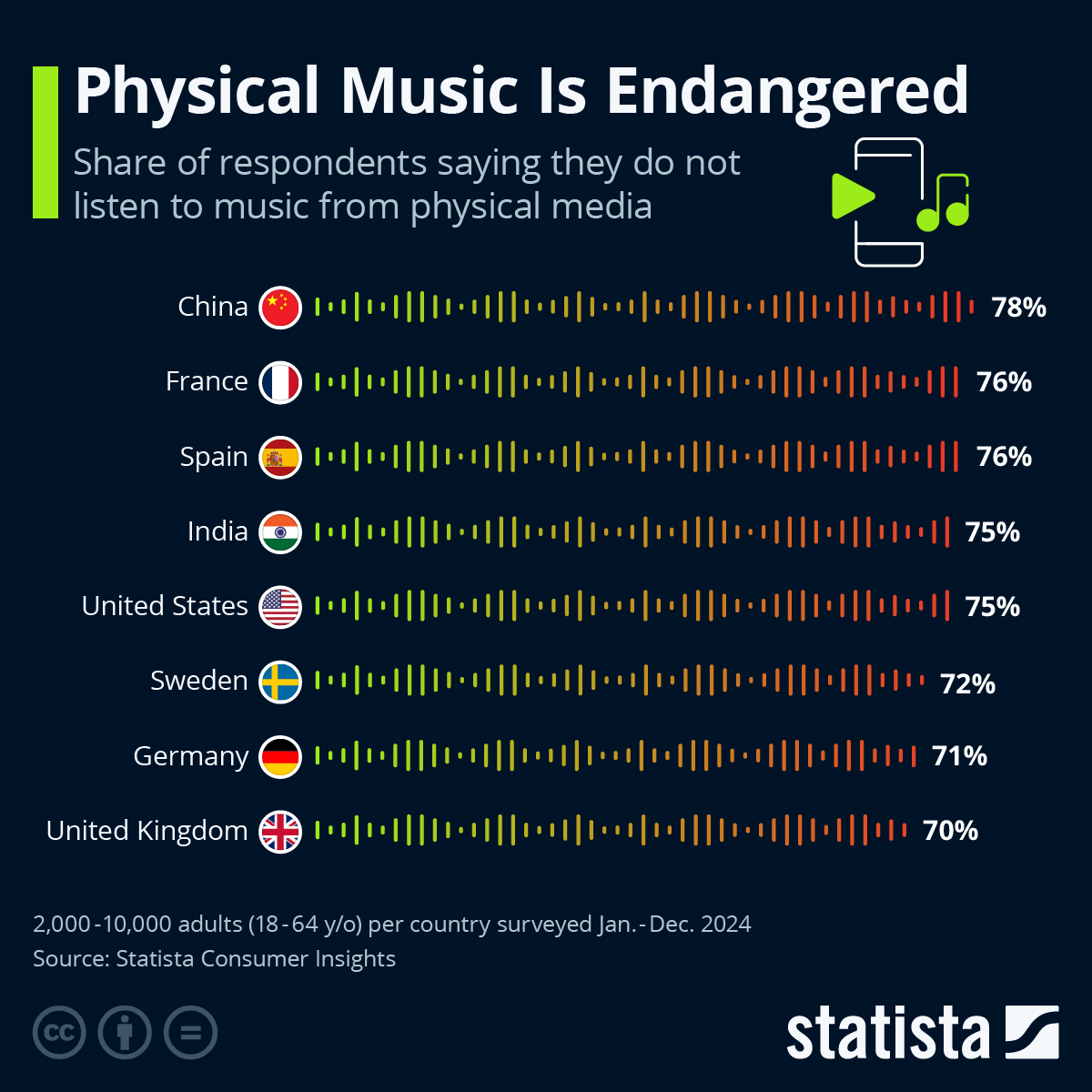
    The rapid adoption of streaming has shifted consumer behavior dramatically. A recent survey indicated that less than 30% of respondents in several major markets engage with physical music formats. This statistic offers a stark revelation: countless CDs, once cherished and frequently played, now gather dust in attics and basements. This change reflects not just a technological advancement but also a fundamental shift in how we perceive and interact with music.

    The Fate of CDs and Vinyl Records

    As physical music formats lose their prominence, the fate of CDs and vinyl records hangs in the balance. On one hand, CDs once represented the gold standard in music collection; on the other hand, vinyl records have witnessed a niche resurgence among audiophiles and collectors. However, the overwhelming preference for streaming suggests that the broader consumer base may not be as invested in physical ownership.

    Emotional Attachments and Nostalgia

    Despite the decline, it’s essential to recognize the emotional connections many individuals foster with physical music formats. For some, the tactile experience of handling a CD, studying album artwork, or browsing through a vinyl collection is irreplaceable. This nostalgic appeal still attracts a portion of the population, particularly those who grew up during the peak of physical media’s popularity.

    The Impact of Decreased Physical Music Sales

    The decline in physical music sales has far-reaching implications for the music industry. Record labels, artists, and retail outlets relying on physical music sales have begun to feel the pinch. With fewer customers purchasing CDs or vinyl, revenue streams have shifted, prompting artists to embrace touring and merchandising as primary sources of income.

    Artists Adapting to Change

    Many artists have acknowledged this shift and adapted their strategies accordingly. While traditional album releases are still essential, more musicians are now focusing on building their presence through digital platforms, social media engagement, and direct-to-fan sales. This adaptability helps bridge the gap between the evolving market and the desire for physical memorabilia, whether through limited edition vinyl releases or special edition merchandise.

    Bridging Digital and Physical

    Although the era of traditional formats is waning, efforts are being made to bridge the gap between digital and physical music. Collectors and fans can find limited edition vinyl releases that cater to the analog nostalgia while still enjoying the ease of access provided by streaming platforms. Some artists are even offering exclusive tracks or unique experiences to patrons who purchase physical copies of their music as a way of encouraging purchases.

    Experiential Marketing

    As part of this evolution, experiential marketing has gained traction. Artists are creating immersive experiences that merge music and physicality, such as live listening parties, album launches at record stores, and collaborations with local businesses. These events not only promote the music but also foster community among fans and create lasting memories that are hard to replicate through streaming alone.

    The Future of Music Consumption

    As we move further into an increasingly digital world, the future of music consumption appears to lean heavily toward streaming. However, the enduring love for physical formats—whether through nostalgia or the desire for tangible collectibles—remains a vital aspect of the music experience for many.

    Exploring Hybrid Models

    In response to the changing landscape, the music industry might benefit from exploring hybrid models. This could entail offering bundled packages that include both digital streaming services and physical copies of albums, thereby meeting the needs of a diverse audience with varying preferences.

    Conclusion

    The rapid decline of physical music formats in the face of overwhelming streaming options raises critical questions about the balance between technological advancement and emotional connection. While the industry adapts to shifting trends, the challenge remains to merge convenience with authenticity in a way that respects the rich history of music consumption.