
Tag: Corsair

  • Can you use Corsair Void Pro wireless while charging?

    Can you use Corsair Void Pro wireless while charging?

    Understanding the Corsair Void Pro Wireless

    The Corsair Void Pro Wireless gaming headset is a popular choice among gamers due to its impressive sound quality, comfortable design, and convenient wireless features. However, many users wonder whether it’s possible to use the headset while charging it. This question often arises for those who wish to enjoy uninterrupted gaming sessions without having to worry about battery life.

    Can You Use the Corsair Void Pro Wireless While Charging?

    Yes, it is possible to use the Corsair Void Pro Wireless headset while it is charging. This feature enhances the user experience, allowing gamers to keep playing without any breaks in audio.

    Key Features Supporting This Functionality:

    • Bluetooth Connectivity: The headset connects wirelessly via Bluetooth, allowing you to maintain your gaming experience without needing to unplug from your device.
    • USB Charging: The Corsair Void Pro Wireless comes with a micro USB cable, making it easy to charge while in use. Simply plug it into the headset and a power source to keep it charged while you game.

    Benefits of Using the Headset While Charging

    Using your Corsair Void Pro Wireless headset while charging offers several advantages:

    • Uninterrupted Gaming: You can continue your gaming sessions without interruptions, eliminating concerns about sudden power loss.
    • Convenient Charging: The ability to charge while using the headset means you can simply plug it in during longer breaks or less intense gaming moments.
    • Flexible Usage: You can enjoy other audio applications, like music or video calls, while the headset remains on charge.

    Tips for Optimal Usage

    To ensure the best experience while using your Corsair Void Pro Wireless headset during charging, consider the following tips:

    • Keep Your Charging Cable Handy: Always have your USB charging cable accessible, so you can quickly plug in the headset when needed.
    • Monitor Battery Levels: Regularly check the battery status through the Corsair iCUE software or via indicator lights on the headset. This helps manage charging times effectively.
    • Avoid Excessive Movement: While it’s generally okay to use the headset while charging, try to keep the charging cable’s length in mind to avoid accidentally pulling it out.

    Common Concerns While Charging

    While using the headset during charging is generally straightforward, some common concerns arise among users:

    • Heat Generation: Charging while using the headset may lead to minor heat generation. Keep an eye on it and ensure that it remains comfortable to wear.
    • Audio Lag: Some users may experience slight audio delay if there are connection disruptions. If this occurs, disconnect the charging cable briefly and reconnect it after gaming.

    In summary, the Corsair Void Pro Wireless headset is designed to offer flexibility and continuous usage even when charging. This capability is one of its many advantages, making it an excellent choice for gamers looking for comfort and convenience.
  • Corsair Reveals Next-Gen GPU Requirements

    Corsair Reveals Next-Gen GPU Requirements

    Sometimes, updates regarding next-gen GPUs emerge from unexpected sources, and today is no exception. Corsair has recently shared insights about its power supply units (PSUs) and cooling technologies in context with the upcoming generation of high-performance graphics cards. Notably, it seems that Nvidia’s anticipated RTX 50-series won’t be significantly more demanding on power than the current generation, but the situation is a bit more complex than just Nvidia.

    In an unexpected turn, Corsair’s announcement appears to deliver positive news. The company did not unveil any new solutions; rather, they reiterated that the current power supply units (PSUs) could suffice for the next-gen cards, as long as the wattage meets the necessary requirements.

    Corsair stated, “The latest graphics cards now require a 12V-2×6 GPU power connector, a standard we expect will continue with next-gen GPUs.”

    However, the company also acknowledged the possibility of increased power demands: “Next-generation high-end graphics cards could demand even more power than current models, which can draw up to 450 watts. When considering high-end CPUs and other components that consume significant power, there’s an indication that higher wattage PSUs may be necessary.”

    This suggests that while we may encounter an even more power-hungry RTX 5090, the power connector is limited to handling a maximum of 600 watts.

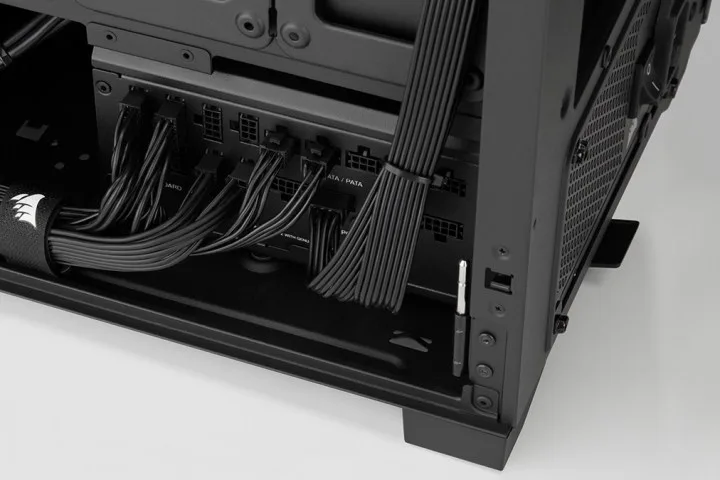
    Corsair's power connectors.
    Corsair

    There has been considerable speculation regarding power requirements for next-gen GPUs, which can be a broad subject. Much of the discussion surrounds Nvidia, particularly its flagship RTX 5090. While AMD and Intel are gearing up to release RDNA 4 and Battlemage, they are not expected to debut enthusiast-level cards that demand substantial cooling and power consumption; Nvidia, however, appears intent on targeting the high-performance market.

    Reports suggest the RTX 5090 could require 600 watts of power—150 watts more than the previous model. Additionally, some credible sources indicate that the entire series may see a rise in power consumption, although some claims have seemed exaggerated, including the notion that the RTX 5090 might require dual 12V-2×6 power connectors.

    Corsair does not seem to support these extreme views, and this is reassuring. If Nvidia adheres to the 12V-2×6 power connector standard, then it is likely that the RTX 5090 won’t exceed the 600-watt threshold. While Corsair doesn’t explicitly mention Nvidia, it’s improbable that either AMD or Intel will introduce cards that demand similar power levels. Nonetheless, they might still adopt the same power connector as we await further developments.