Tag: Copyright

  • Noah Kahan Says Trump Was Not Authorized to Use His Music

    Noah Kahan Says Trump Was Not Authorized to Use His Music

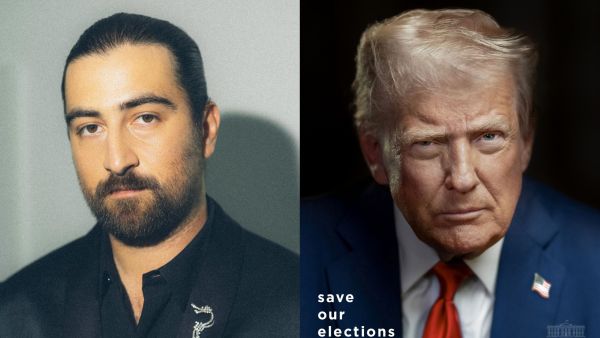
    Digital Phablet — Noah Kahan has added his name to the growing list of artists who refuse to be associated with the Trump administration.

    On Monday, President Donald Trump and the official White House social media channels shared a carousel of photos and videos celebrating his recent visit to a General Motors plant in Michigan. Among the media was a clip featuring Kahan’s song “American Cars.”

    “Nothing beats American cars,” the White House captioned a TikTok video of Trump signing a Corvette at the facility.

    After some fans voiced concern over the use of Kahan’s song to promote Trump’s visit, the singer swiftly withdrew his approval.

    “Would never endorse my music being used to support you or this administration,” Kahan commented under Trump’s post.

    Kahan’s guitarist and co-writer of the track, Noah Levine, responded sharply, saying, “You fat f—, this song isn’t for you.”

    Their social media remarks certainly drew attention from the Trump team, with Kaelan Dorr, deputy assistant to the President and White House deputy communications director, mocking Kahan on X (formerly Twitter): “Symptoms of Trump derangement syndrome apparently include a northern attitude,” referencing another of Kahan’s songs.

    Despite the controversy, “American Cars” was removed from Trump’s Instagram post, though the TikTok video remains active as of now.

    When approached for comment, the White House declined further explanation.

    Kahan and Levine’s comments continue a tradition of artists publicly condemning the White House for unauthorized use of their music. Recently, Katy Perry criticized the White House after her 2010 hit “Firework” was used in a social media clip depicting military strikes on Iran.

    “I did not authorize this, I wasn’t asked, and I absolutely do not condone it,” Perry stated publicly. “My song was meant to be an anthem of hope, healing, and resilience for those facing their darkest moments. Seeing it weaponized to endorse violence and destruction is a stark violation of its intent.”

    Perry emphasized, “My music aims to unite people, not promote warfare.”

    Beyond Kahan and Perry, many other artists including Olivia Rodrigo, Queen, Nickelback, Rihanna, R.E.M., Steven Tyler, Neil Young, and others, have called on Trump to cease using their songs at rallies, events, or social media campaigns.

  • NYT Reporter Sues Google, xAI & OpenAI Over Chatbot Training

    NYT Reporter Sues Google, xAI & OpenAI Over Chatbot Training

    An investigative journalist renowned for exposing fraud at Silicon Valley’s Theranos blood-testing startup has filed a lawsuit against Elon Musk’s xAI, Anthropic, Google, OpenAI, Meta Platforms, and Perplexity. The lawsuit accuses these companies of illegally using copyrighted books to train their AI systems without permission.

    John Carreyrou, a reporter for The New York Times and author of “Bad Blood,” filed the case in a federal court in California alongside five other authors. They allege that the AI companies have pirated their books and incorporated them into large language models (LLMs) that power their chatbots.

    This lawsuit is one of several copyright infringement cases brought by authors and rights holders against tech firms over the use of their works in AI training. It marks the first time xAI has been named as a defendant in such a case.

    Representatives for the companies involved have not responded to requests for comment at this time.

    Unlike some other legal actions, the authors are not seeking to organize a class action. They argue that class actions tend to favor defendants, allowing them to settle many claims with a single, potentially less favorable, deal.

    “The companies developing LLMs shouldn’t be allowed to dismiss thousands of valuable claims at bargain prices,” the complaint states.

    Anthropic reached a significant settlement in a related copyright dispute in August, agreeing to pay $1.5 billion to a group of authors whose millions of books were allegedly pirated.

    The new lawsuit claims that the authors involved in that case will receive only a tiny portion—about 2%—of the maximum statutory damages available under the Copyright Act, which is $150,000 per disputed work.

    The lawsuit was filed by attorneys from the law firm Freedman Normand Friedland, including Kyle Roche, who was featured in a 2023 New York Times profile by Carreyrou.

    In a November hearing related to the Anthropic case, U.S. District Judge William Alsup criticized a law firm co-founded by Roche for trying to find a “sweeter deal” by encouraging authors to opt out of the settlement. Roche declined to comment on Monday.

    Carreyrou later told the judge that the act of stealing books to develop AI was Anthropic’s “original sin,” and he felt the settlement did not go far enough to address the issue.

  • Thomson Reuters Wins Copyright Case Against AI Firm What’s Next

    Thomson Reuters Wins Copyright Case Against AI Firm What’s Next

    A significant milestone has been reached in the realm of AI copyright litigation. A court in Delaware has determined that a tech startup illegally utilized copyrighted content to develop a competing AI-driven legal tool, marking a substantial victory for Thomson Reuters.

    This ruling represents a groundbreaking precedent for plaintiffs contending against AI firms regarding the definition of “fair use” of proprietary materials. Thomson Reuters, the parent company of the Reuters news agency, has been engaged in a protracted legal battle with Ross Intelligence, an AI firm accused of extracting material from Thomson Reuters’s Westlaw database.

    The plaintiff asserted in court that Ross Intelligence’s appropriation of data to train its AI legal research application constituted unfair use and infringed on copyrighted content.

    Accessing the Westlaw legal research platform online.
    Nadeem Sarwar / Digital Trends

    In a pivotal decision, U.S. Circuit Judge Stephanos Bibas dismissed Ross’s defense that its actions amounted to “innocent infringement,” thus awarding summary judgment to Thomson Reuters. Central to the case is the fair use doctrine, which encompasses four guiding factors:

    (1) The purpose and character of the use, including its commercial or nonprofit nature.
    (2) The nature of the copyrighted work used.
    (3) The amount and significance of the portion used relative to the overall copyrighted work.
    (4) The effect of the use on the value or potential market for the copyrighted work.

    The district court’s decision resulted in a split ruling between Thomson Reuters and Ross Intelligence, but Judge Bibas emphasized that the fourth factor held more weight. This ruling may pave the way for more decisive legal actions against AI companies accused of unlawfully using copyrighted materials.

    A New Chapter in AI Training Legal Battles?

    ChatGPT application displayed on an iPhone.
    Joe Maring / Digital Trends

    One of the prominent cases in this arena involved The New York Times, which initiated legal action against OpenAI and its financial supporter Microsoft for allegedly using its content without permission to train products like ChatGPT. Similarly, Getty Images has filed lawsuits against Stability AI for unauthorized content scraping.

    Furthermore, Anthropic, supported by Amazon, faced a copyright struggle with the Universal Music Group. Recently, a new trend has emerged where seemingly conflicting parties reach licensing agreements to resolve copyright tensions. OpenAI has established licensing arrangements with Axios, Hearst, and CondeNast, among others. Meanwhile, Perplexity, embroiled in its own legal disputes, has secured similar partnerships with Fortune and Times.

    Tech giants such as Meta, Google, and Microsoft have also entered into agreements with content providers. Notably, the Reuters news agency has formed a licensing alliance with Meta. However, these licensing agreements are seen as temporary fixes.

    Experts remain divided and seek more clarity on the interpretation of copyright laws in the context of artificial intelligence. Questions linger regarding the threshold at which an AI-generated output, reflecting a paraphrased version of copyrighted material, might initiate a copyright infringement claim. Clarity on this subject is anticipated in the near future.


  • U.S. Takes A Stand On AI Image Copyright Enforcement

    U.S. Takes A Stand On AI Image Copyright Enforcement

    Théâtre D'opéra Spatial, an award-winning AI-generated image
    Midjourney

    While AI-generated art can be showcased in competitions, it doesn’t benefit from copyright protections in the United States, as outlined in recent guidance from the U.S. Copyright Office (USCO).

    This report provides clarity on the copyright potential of AI-generated media such as videos, images, and text. It reveals that, despite the novelty of generative AI, the existing copyright framework remains applicable, implying that no new legislation is necessary. Unfortunately for creators using AI, the available protections are minimal.

    As established in a previous ruling, AI itself cannot claim copyright ownership. The Supreme Court’s decision in the 1989 case Cmty. for Creative Non-Violence v. Reid emphasized that “the author [of a copyrighted work] is . . . the person [emphasis added] who translates an idea into a fixed, tangible expression entitled to copyright protection.”

    The USCO’s latest guidance asserts that prompts given to AI lack enough user’s control over the generative process to confer authorship to the users, regardless of how intricate and detailed the prompts may be.

    The report indicates, “No matter how many times a prompt is revised and resubmitted, the final output reflects the user’s acceptance of the AI system’s interpretation, rather than authorship of the expression it contains.” Essentially, it’s about the level of human involvement, not the predictability of the output.

    However, there are exceptions to the lack of protection. For instance, the upcoming 2024 film “Here,” which showcases digitally enhanced performances by Tom Hanks and Robin Wright, has received copyright despite utilizing generative technology. This is attributed to the AI being employed as a tool rather than acting as a creator in its own right. Similarly, films incorporating AI-generated effects and visuals can still be copyrighted, even if those individual components cannot.

    Artists using AI to enhance or alter their pre-existing work might also find some protections. While the AI-generated portions may not be copyrightable, the overall artistic creation, showcasing “perceptible human expression,” would still enjoy copyright coverage.

    The ongoing debate surrounding authorship is longstanding. Since the emergence of computers in the 1960s, the USCO has grappled with whether digital content is the result of human effort or merely produced by machines.

    As noted by then-Register of Copyrights Abraham Kaminstein in 1965, “The crucial question appears to be whether the ‘work’ is basically one of human authorship, with the computer merely being an assisting instrument or whether the traditional elements of authorship in the work (literary, artistic, or musical expression or elements of selection, arrangement, etc.) were actually conceived and executed not by man but by a machine.”

    Moving forward, the USCO acknowledges that its stances may evolve as generative technology continues to develop. They propose a hypothetical scenario where future AI tools could enable users to exert substantial control over the output, thereby leading to a reevaluation of copyright considerations. Yet, current AI functionalities have not reached such a level of user control.


  • Games Preservation Hit Hard By U.S. Copyright Office

    Games Preservation Hit Hard By U.S. Copyright Office

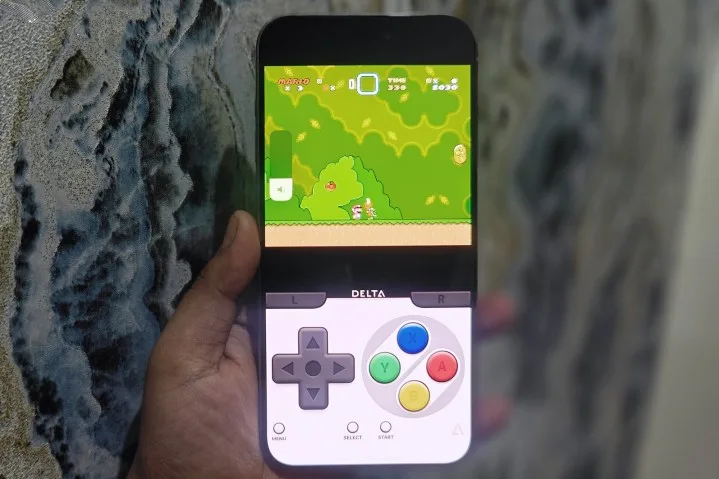
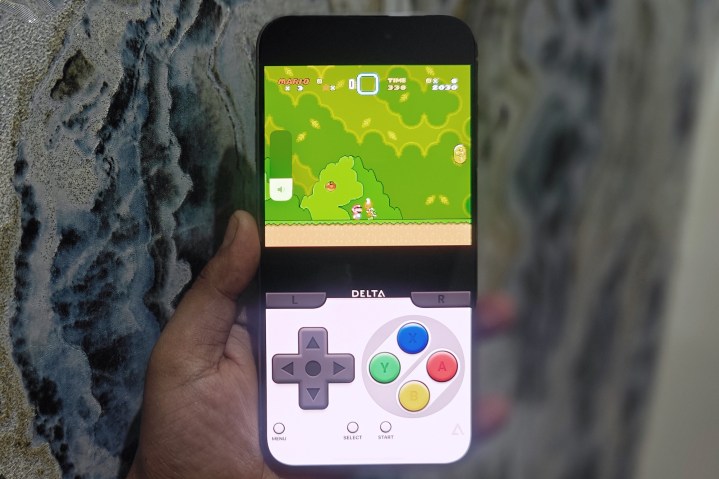
    Mario on an iPhone through an emulator.
    Nadeem Sarwar / Digital Trends

    Recently, the U.S. Copyright Office announced that the Digital Millennium Copyright Act (DMCA) will not provide exemptions for the preservation of video games. This decision highlights the challenges in enabling enthusiasts to experience classic games that are no longer readily accessible.

    The Software Preservation Network, along with the Video Game History Foundation, had submitted a petition aimed at broadening DMCA exemptions for software like video games. Their goal was to facilitate remote access to these games for research and educational purposes, which could be hindered by current DMCA provisions.

    While both the U.S. Copyright Office and the Library of Congress have previously emphasized the significance of preserving video games, the Copyright Office expressed concerns that the proposed guidelines might still pose a risk to the market. This ongoing apprehension does little to alleviate the issues retro game enthusiasts face, including copyright strikes and takedowns.

    “While the Register recognizes the broad safeguards that proponents have introduced to potentially limit recreational use, she believes these measures lack specificity and cannot assure that market harms would be avoided,” the ruling states. Other aspects of the decision pointed to inconsistencies in the documentation provided and the witnesses’ accounts, as well as the influence of recent remasters and re-releases that help bring older games to new audiences.

    In a statement released on Friday, Phil Salvador, the library director of the Video Game History Foundation, expressed disappointment with the ruling. He noted that their efforts, along with those of similar organizations, had been impeded by lobbying from groups like the Entertainment Software Association (ESA).

    “Unfortunately, persistent lobbying by rights-holder groups is obstructing progress. During our discussions with the Copyright Office, the [ESA] stated emphatically that they would oppose remote access to games for research indefinitely,” Salvador remarked. “This extreme position in the gaming industry forces researchers to consider illegal alternatives for accessing a majority of out-of-print titles that are otherwise unavailable.”

    A report released last year by the foundation indicated that 87% of classic games that should normally be accessible, especially those on obsolete or inactive platforms, are effectively unplayable through standard means. Furthermore, the closure of the Wii U and 3DS eShops and the Xbox 360 marketplace in 2023 has worsened the situation, increasing the number of games categorized as “critically endangered.”