Tag: Consumers

  • Are US Buyers Prepared to Spend $3,500 on a Domestic iPhone?

    Are US Buyers Prepared to Spend $3,500 on a Domestic iPhone?

    Apple and the Call for U.S. Manufacturing: An Overview

    Image Caption: A customer showcases the new green Apple iPhone 13 Pro right after its release at the Apple Store on 5th Avenue in Manhattan, New York City, on March 18, 2022. — Reuters


    NEW YORK/WASHINGTON: President Donald Trump has expressed a desire for Apple to produce iPhones in the United States. However, experts caution that this transition could take several years and lead to a dramatic price increase—potentially up to $3,500 for each phone. This represents nearly three times the current retail price.

    The central question now is whether American consumers would be willing to pay such a premium for domestically produced phones.

    Trump’s push to relocate iPhone manufacturing to the U.S. is fraught with legal and economic obstacles. Experts highlight, for instance, the challenges of automating the assembly process, which includes numerous tiny screws.

    On Friday, Trump threatened to impose a 25% tariff on Apple for any iPhones sold in the U.S. that are not manufactured domestically, as part of his administration’s effort to bring jobs back to America. He also indicated that this tariff would apply to Samsung and other smartphone manufacturers, hoping to implement it by the end of June.

    “It wouldn’t be fair if we didn’t include all imported smartphones,” Trump stated. He mentioned a prior understanding with Apple CEO Tim Cook regarding manufacturing decisions, specifically noting that while it’s acceptable for Apple to build plants in India, selling phones in the U.S. without tariffs wouldn’t be allowed.

    Commerce Secretary Howard Lutnick emphasized last month that the task of “millions of people screwing in small screws to create iPhones” might be automated in the U.S., creating jobs for skilled mechanics and electricians. However, he later noted that Cook indicated the necessary technology for this automation is currently unavailable.

    “He mentioned needing robotic arms capable of performing tasks at the scale and precision required for domestic production. The moment such technology is available, we’re ready to move forward,” Lutnick said.

    To exert pressure on Apple through tariffs, trade experts suggest the administration might utilize the legal framework established by the International Emergency Economic Powers Act (IEEPA). This law allows the president to impose economic measures in response to emergencies deemed a significant threat to the U.S.

    “There’s no explicit legal framework for company-specific tariffs, but the Trump administration may attempt to invoke emergency powers,” said Sally Stewart Liang, a partner at Akin Gump in Washington.

    Implementing tariffs exclusively on Apple could provide a competitive edge to other smartphone manufacturers, undermining Trump’s objective of boosting domestic production.

    According to experts, Trump views IEEPA as a versatile and potent economic tool because the courts may lack jurisdiction to challenge the president’s actions during a declared emergency.

    In a legal case involving 12 states that challenged Trump’s “Liberation Day” tariffs, the court is evaluating whether IEEPA permits such tariffs.

    If the Trump administration prevails in this case, “the president will have little trouble justifying tariffs on Apple iPhone imports,” said Tim Meyer, an international law professor at Duke University.

    Trump could also categorize iPhones under an existing trade deficit emergency, which has already been used as a basis for other tariffs.

    However, moving production back to the U.S. might take a decade and could result in iPhones costing around $3,500 each, according to Dan Ives, an analyst at Wedbush. Currently, Apple’s highest-priced iPhone retails for approximately $1,200.

    “We consider the idea of Apple manufacturing iPhones in the U.S. to be a distant fantasy,” Ives remarked.

    Even the mere threat of tariffs on iPhones could complicate Apple’s supply chain and financing, leading to higher consumer costs, according to Brett House, an economics professor at Columbia University.

    “None of this bodes well for American consumers,” he cautioned.

  • Smartphone Usage at 100% vs. Tablets at 50%: Essential vs. Optional

    Smartphone Usage at 100% vs. Tablets at 50%: Essential vs. Optional

    The Evolution of Tablets: A Look Into Their Purpose and Popularity

    Introduction to Tablets

    Since the inception of the first iPad in 2010, tablets have created a substantial space in the tech landscape, sparking debates concerning their ultimate utility. As they emerged, various predictions about their positioning between smartphones and traditional laptops were made, highlighting their potential as either entertainment or productivity devices. However, the reality has been more complex, with tablets frequently characterized as versatile tools that excel in neither category definitively.

    Tablets: Entertainment or Productivity Devices?

    Entertainment Capabilities

    From their arrival, tablets have been lauded for their entertainment features. Large, high-definition screens make them exceptional products for consuming media. Activities like streaming movies, binge-watching TV series, and gaming are significantly enhanced on a tablet compared to smaller smartphones. The portability of these devices allows users to enjoy content on the go, making them ideal travel companions.

    Productivity Tools

    On the other hand, tablets have aimed to position themselves as productivity tools, appealing to students and professionals alike. With the introduction of accessories such as keyboards and styluses, tablets are attempting to bridge the functional gaps between smartphones and laptops. They offer apps for note-taking, document editing, and graphic design, which can cater to both casual users and those with more demanding professional needs.

    The Dilemma of Practical Use

    The Overlap with Smartphones

    One of the main challenges faced by tablets is their overlap with smartphones. As smartphones continue to grow larger, incorporating powerful processors and improved functionalities, the need for a separate tablet device becomes ambiguous. Many users find that their smartphones can handle the tasks once deemed exclusive to tablets, such as reading, browsing, and even basic productivity tasks.

    The Lightweight Nature of Modern Laptops

    Additionally, the evolution of laptops significantly affects tablet demand. Modern laptops have become lighter and more portable, providing users with robust computing power and extensive functionality without the weight and bulk associated with traditional laptops. This flexibility leads many consumers to opt for a laptop over a tablet, especially for productivity-oriented tasks.

    Consumer Insights on Tablet Usage

    Usage Statistics

    According to statistics from Statista Consumer Insights, tablet usage is considerably lower than smartphone usage across various international markets. While smartphone usage is nearly universal, roughly half of the respondents in these surveys reported using tablets. This stark contrast underlines the perception of tablets as non-essential gadgets in today’s tech ecosystem.

    Regional Variations in Tablet Adoption

    While the overall trend indicates a decline in necessity for tablets, adoption rates can vary considerably based on region and demographic variables. In some regions, tablets are embraced as educational tools, while in others, they are primarily seen as luxury items. Understanding these variations can provide insights into the evolving role of tablets in our increasingly digital lives.

    The Future of Tablets in Tech

    As technology rapidly advances, the future of tablets remains uncertain. Industry leaders are exploring innovative features to enhance functionality and consumer appeal. The persistent quest to find a unique identity for tablets might lead to exciting developments, whether it’s through improved performance, better app integration, or new accessory collaborations.

    Conclusion

    [Note: The content above provides an overview of the complexities surrounding tablets, explore their dual roles in entertainment and productivity, and offers statistical insights into their usage in modern society.]

  • Americans Predict 3% Inflation Over Next 3 Years

    Americans Predict 3% Inflation Over Next 3 Years

    Understanding Inflation Expectations in America

    Current Economic Landscape

    As Americans navigate a fluctuating economic landscape, the specter of inflation looms large in their minds. Recent data from the Federal Reserve Bank of New York shed light on the prevailing sentiment regarding inflation trends. Ahead of the Consumer Price Index (CPI) report, which is anticipated to reflect ongoing inflationary pressures, the findings from the latest Survey of Consumer Expectations reveal a notable shift in public perception.

    Rising Inflation Expectations

    Three-Year Outlook

    In December 2024, Americans expressed increased pessimism regarding inflation expectations for the next three years. The expected rate climbed from 2.6% to 3.0%, marking the highest level since November 2023. This growing skepticism is indicative of broader concerns about economic stability and the sustainability of current inflation trends.

    One-Year Outlook

    Despite the three-year inflation expectation rising, the median expected inflation rate for the upcoming year has remained consistent at 3.0%. This figure has held steady for nine of the previous twelve months, suggesting a level of stability, although still above the desired target of 2%.

    Historical Context of Inflation

    Peak Inflation Rates

    For context, it’s important to reflect on the trajectory of inflation rates. Inflation and consumer expectations of inflation peaked in June 2022, with rates reaching 9.0% and 6.8%, respectively. Since that high, there has been a significant cooling in inflation, with rates dropping as low as 2.4% in September 2024.

    Recent Trends

    However, more recent assessments indicate a slight resurgence in inflation, with rates recorded at 2.7% in November. The expectation in the forthcoming CPI report suggests a further uptick to approximately 2.9%. This persistent fluctuation raises questions about the factors influencing these trends and the potential implications for consumers.

    The Role of Political Climate

    Incoming Administration

    With the shadow of the incoming Trump administration looming, there is heightened uncertainty regarding its potential impact on inflation. Many experts are voicing concerns about certain campaign promises that may exacerbate inflationary pressures on consumer prices.

    Tariffs and Labor Markets

    One critical aspect of Trump’s platform is the proposal of blanket tariffs, which could have direct inflationary effects. Tariffs generally lead to increased costs for imported goods, which can ripple through the economy, driving prices higher for consumers. Simultaneously, Trump’s hardline stance on immigration, particularly regarding undocumented workers, might lead to labor shortages. This scenario, in turn, could increase wage demands, further adding to inflation by enhancing consumer spending and creating upward pressure on prices.

    The Psychological Factor: Expectations Matter

    Expectations and Economic Behavior

    The interplay between inflation expectations and economic behavior is crucial in understanding overall inflation dynamics. Consumer and business expectations about future inflation significantly influence wage negotiations and pricing strategies, creating a feedback loop that can reinforce inflation trends.

    Self-Fulfilling Prophecy

    When inflation expectations run high, companies may adjust prices preemptively, and workers might negotiate for higher wages to keep up with anticipated costs. This phenomenon can create a self-fulfilling cycle where expectations about future inflation actually lead to inflation—the very situation that policymakers aim to mitigate.

    Conclusion (Omitted as per request)

    The future trajectory of inflation in the United States is a complex interplay of consumer expectations, historical trends, political actions, and broader economic factors. As the nation navigates these uncertainties, understanding the dynamics at play will be critical for consumers, businesses, and policymakers alike.

  • UK Consumers Distrust Banks: 25% Hoard Cash Over IT Concerns

    UK Consumers Distrust Banks: 25% Hoard Cash Over IT Concerns

    Regulatory Developments

    Starting in January 2025, the European Union’s Digital Operational Resilience Act (DORA) will mandate that financial institutions adopt thorough IT risk management strategies and establish incident reporting protocols.

    In conjunction with DORA, UK regulators, including the Financial Conduct Authority and the Bank of England, have been granted expanded authority to oversee essential third-party vendors whose failures might compromise financial stability.

    Additionally, the UK’s Payment Systems Regulator has introduced new regulations requiring banks to reimburse fraud victims up to £85,000 within five days. This initiative places a heightened obligation on financial institutions to combat fraud effectively.

    According to Richard Kalas, Director of Client Solutions in Retail Banking at GFT UK, “These insights highlight a notable gap between the swift digital transformation of banking services and the trust consumers have in the security and robustness of these systems.”

    “While digital banking provides a multitude of advantages, it is crucial for banks to transparently showcase the various strategies they implement to ensure resilience in all essential customer services.”

    Acknowledgment for GFT

    This news comes on the heels of GFT receiving two 2024 Geography and Global AWS Partner Awards at AWS re:Invent 2024.

    The digital transformation consultancy was honored as the ‘Global Innovation Partner of the Year’ for its cutting-edge consulting and professional services, and as the ‘Financial Services Industry Partner of the Year – EMEA’ for its efforts to help financial institutions accelerate their cloud initiatives.

    The awards celebrated GFT’s collaborative work with Romanian Salt Bank and Brazilian bank Itaú.

    GFT Co-CEO Marco Santos remarks, “The recognition we’ve received from AWS reinforces our capabilities in transforming industries through innovation. These awards also illustrate our technological leadership and unwavering commitment to empowering our clients to succeed in this new digital growth landscape.”

  • 57% of Americans Shop Online for Holiday Gifts This Year

    57% of Americans Shop Online for Holiday Gifts This Year

    Holiday Shopping Trends in America: Insights for 2023

    As the holiday season approaches, American consumers find themselves navigating a landscape shaped by over two years of economic challenges. High inflation rates, increasing interest costs, and ongoing uncertainty have led many to reconsider their spending habits. Despite these hurdles, projections indicate that holiday spending may reach new heights this year, reflecting resilience in consumer behavior.

    Spending Forecasts: An Overview

    According to the National Retail Federation (NRF), Americans are expected to spend an average of $902 on core holiday items in 2023. This figure marks an increase of $27 or 3.1% from last year’s average budget. This upward trend in spending signifies not only the enduring spirit of the holiday season but also a willingness to invest in celebrations, gatherings, and gift-giving, even amidst financial constraints.

    Popular Shopping Venues

    When it comes to where Americans plan to make their holiday purchases, the statistics reveal some interesting insights:

    Online Shopping Dominance

    A significant 57% of consumers indicated that they will do their holiday shopping online. The allure of shopping from home, combined with the convenience of doorstep delivery, continues to entice shoppers. Factors such as wider selection, competitive pricing, and the ability to compare products effortlessly contribute to the popularity of online retail.

    Physical Stores Still Relevant

    While digital shopping reigns supreme, traditional retail stores remain an important part of the holiday shopping experience. Approximately 46% of consumers report that they will visit department or grocery stores to purchase holiday items. These physical spaces not only provide the chance to see and feel products before buying but also deliver a festive atmosphere that enhances the holiday spirit.

    The Appeal of Discount Stores

    Discount stores are witnessing increased foot traffic as well. Many consumers are keen on controlling their holiday spending without compromising on the quality or quantity of their gifts. Shopping at discount retailers allows them to stretch their budgets further, making it a sought-after option during a season typically associated with overspending.

    The In-Store Experience

    Despite the growing trend toward online shopping, the in-store shopping experience holds unique advantages. One cannot underestimate the joy of wandering through a beautifully-decorated shop adorned with holiday lights, enjoying the sounds of classic seasonal tunes playing in the background. This festive atmosphere fosters a sense of community and celebration that is hard to replicate online.

    Emotional Connection

    Holiday shopping is often more than just a transaction; it’s an experience infused with emotions and memories. Engaging with store employees, admiring window displays, and navigating through bustling aisles can create an unparalleled sensory experience, making in-person shopping a cherished tradition for many.

    A Balanced Approach

    In light of these factors, it seems that American consumers are adopting a hybrid shopping approach this holiday season. While online shopping offers convenience, the nostalgia and emotional joy of physical stores continue to attract shoppers willing to brave the crowds.

    Changing Consumer Behavior

    Shifts in consumer behavior reflect broader trends as well. Many are opting for strategic planning when approaching their holiday budgets. This includes setting spending limits, prioritizing essential holiday items, and seeking out discounts or sales events. The focus is not just on the quantity of gifts, but on the meaningfulness of those gifts, as people aim to maintain their financial health while also enjoying the holiday season.

    In summary, as American consumers gear up for the holidays, it’s evident that they are balancing their preferences for convenience with an appreciation for the human experience of shopping. This year’s holiday shopping landscape is a testament to resilience, creativity, and the enduring joy of giving.

  • 53% Prefer Cashback: The Rise of Loyalty Programs

    53% Prefer Cashback: The Rise of Loyalty Programs

    The Importance of Loyalty Programs in Modern Retail

    Loyalty programs have emerged as essential tools for retailers navigating an increasingly competitive landscape, whether in online or physical spaces. These programs offer a strategic way to attract and retain customers by incentivizing repeat purchases. As the marketplace grows ever more saturated, understanding how loyalty programs function and their varying structures becomes crucial for businesses aiming to build lasting customer relationships.

    What Are Loyalty Programs?

    Loyalty programs are structured marketing strategies designed to encourage customers to continue shopping at a particular store or business. These programs typically involve offering rewards, discounts, or exclusive perks that promote customer retention. The primary aim is to foster brand loyalty, ultimately increasing the customer lifetime value by encouraging repeat business.

    The Role of Loyalty Programs in Retail

    Bridging the Gap Between Online and Offline

    In the era of omnichannel retail, loyalty programs play a pivotal role in connecting the digital and physical shopping experiences. For offline retailers, these programs assist in tracking customer behavior, helping business owners understand purchasing patterns and preferences. By analyzing this data, retailers can offer personalized experiences that meet individual customer needs.

    Enhancing Personalization and Customer Engagement

    Online retailers, on the other hand, leverage data derived from loyalty programs to deliver targeted promotions and recommendations. Personalization is critical as consumers increasingly seek tailored shopping experiences. By understanding customer behavior through loyalty programs, businesses can create more effective marketing strategies that resonate with their audience.

    The Preference for Cashback Programs

    The Appeal of Cashback Rewards

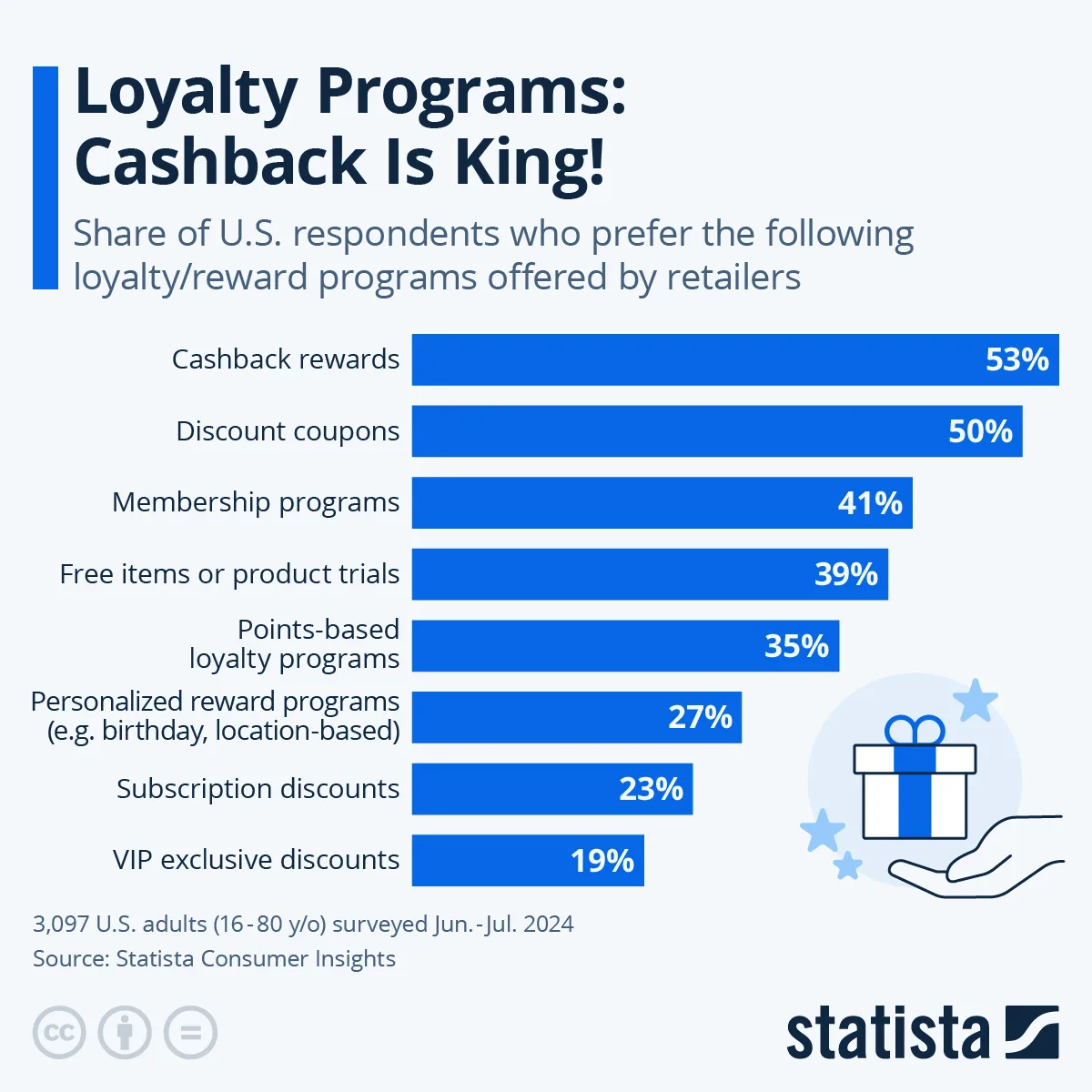
    When it comes to consumer preferences for loyalty programs, cashback options are incredibly popular. According to Statista Consumer Insights, a survey of 3,000 U.S. adults indicated that 53% favored cashback rewards over other options. Cashback programs provide immediate, tangible value, allowing customers to see the benefits of their loyalty instantly.

    Comparison with Other Loyalty Program Options

    Following cashback rewards in popularity are discount coupons and membership programs. Discount coupons attract customers by providing savings on future purchases, while membership programs often offer exclusive benefits in exchange for a fee. However, the immediate gratification of cashback can make it a more appealing option for many consumers.

    The Diverse Ecosystems of Loyalty Programs

    Varied Structures and Incentives

    Loyalty programs come in various forms, each with unique structures, advantages, and disadvantages. Some programs may be straightforward, offering simple rewards for purchases, while others could involve more complex points systems that require customers to redeem points for rewards, leading to varying levels of engagement.

    Business Costs and Consumer Behavior

    While these programs can significantly enhance customer loyalty, they also come with associated costs for businesses. Creating and maintaining a loyalty program requires careful planning and investment. It is essential for retailers to balance the rewards offered with profitability to ensure long-term success.

    The Future of Loyalty Programs

    As the retail landscape continues to evolve, the importance of loyalty programs is only set to increase. Retailers must adapt their strategies to meet the changing expectations of consumers who desire more fulfilling shopping experiences. By prioritizing value and personalization through well-structured loyalty programs, businesses can cultivate deeper connections with their clientele.

    Understanding Customer Preferences Through Data

    Utilizing Consumer Insights

    The utilization of consumer insights, such as those derived from loyalty programs, allows retailers to stay ahead of trends and customer needs. Retailers can fine-tune their offerings based on data analysis, identifying what rewards or incentives are most effective in driving customer engagement and satisfaction.

    Building Long-Term Relationships

    In a landscape where customer acquisition can be costly, building long-term relationships should be a priority for retailers. By continuously offering value through loyalty programs and responding to consumer feedback, businesses can develop a loyal customer base that contributes to sustainable growth.

    Conclusion

    Incorporating loyalty programs into retail strategies is no longer optional but essential for maintaining a competitive edge. With the rising preference for cashback rewards and the need for personalized experiences, retailers must recognize the nuances of these programs and leverage them effectively to foster brand loyalty and drive sales.

  • What Is Conscious Consumerism? Why Is It Important in [year]?

    Conscious consumerism means consumers today are buying into businesses that use moral compasses and prioritize the well-being of workers, animals, and/or the environment for mere financial profits.

    (more…)