الوسم: Companies

  • Retro Hardware Companies Leaving The US Market

    Retro Hardware Companies Leaving The US Market

    At least two companies specializing in retro gaming hardware have halted shipments to the United States due to tariffs imposed during the Trump administration, which they claim could lead to shipping delays and lost items. Recently, Retrotink announced a pause on U.S. orders, effective April 28, and Anbernic has since updated its shipping policy accordingly.

    Mike Chi, the CEO of Retrotink, explained, “Because there’s no clear direction on how tariffs will be administered starting May 2nd, we’ve made the tough choice to temporarily stop shipments to the U.S.” He noted that there is still limited stock available within the United States, so customers might be able to purchase Retrotink products for a little while longer. “We are hopeful that this situation will be resolved, but it’s difficult to predict when or how,” Chi added.

    Anbernic also updated its shipping guidelines, stating, “Due to modifications in U.S. tariff regulations, we are suspending all orders shipping from China to the United States starting today. We encourage customers to prioritize products shipped from our U.S. warehouse, which are currently unaffected by import fees and can be purchased with assurance.”

    The company does not view these measures as permanent. They declared, “Once we have confirmed updates regarding import charges, we will inform our customers promptly and publish our revised policy on our website.”

    The tariffs have significantly impacted the gaming industry. While the pricing for the Nintendo Switch 2 remained unchanged from its initial announcement, various accessories associated with it have experienced price increases. Other companies, like Razer, have also put a hold on their products directed at the U.S. market. While some businesses are discovering ways to adapt and maintain their supply chains without raising prices, others have opted to withdraw entirely from the market until conditions stabilize.

  • IBM: 114 Years of Innovation Among Tech Giants

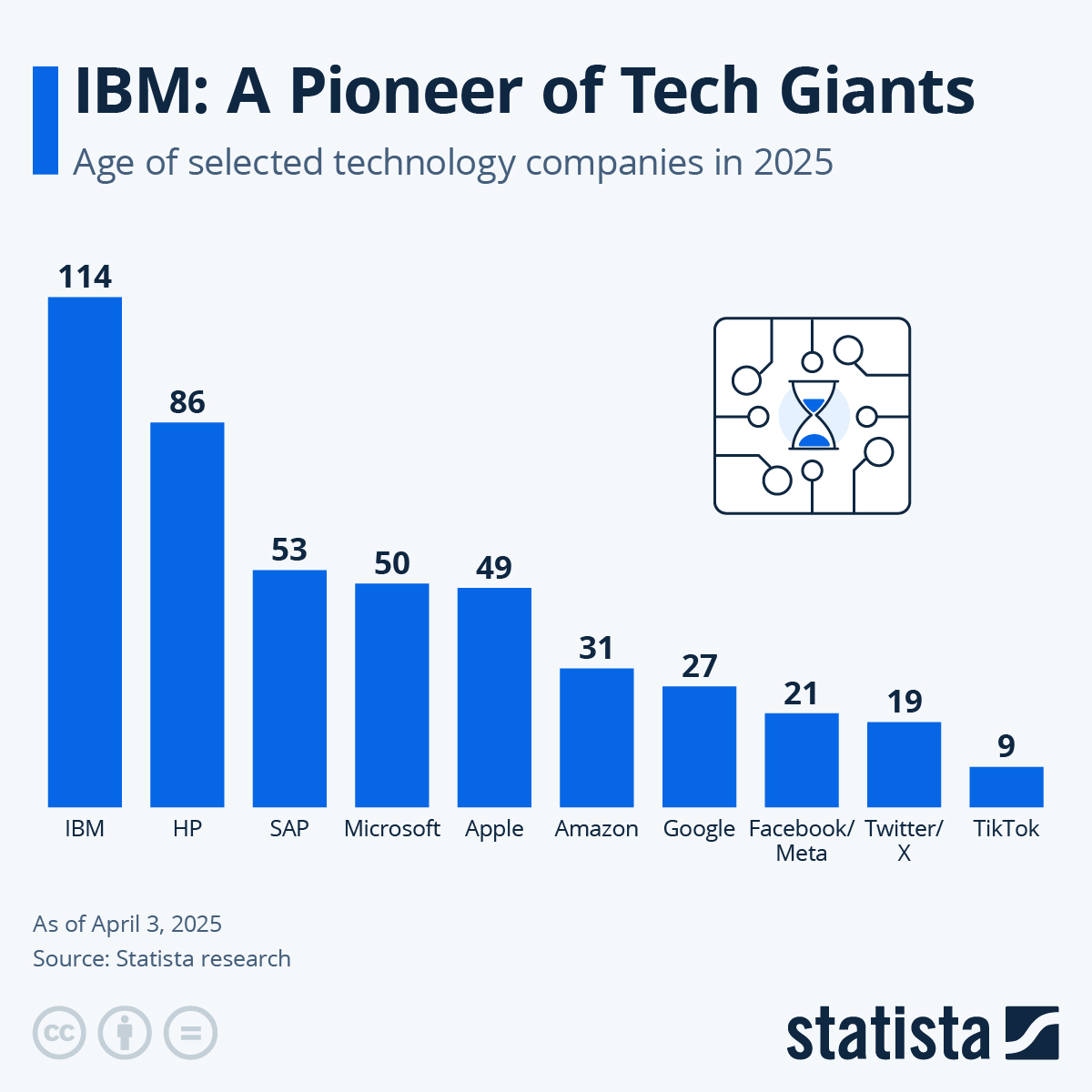
    IBM: 114 Years of Innovation Among Tech Giants

    The Legacy of IBM: A Pioneer Among Tech Giants

    Introduction to IBM’s Historic Journey

    IBM, or International Business Machines Corporation, stands as a monument in the tech industry, embodying innovation and resilience. Founded in 1911, IBM marks its 114th anniversary in a world where technology often conjures images of youthful startups. Its long history is a testament to its ability to adapt and thrive amidst the rapid evolution of technology.

    The Birth of a Giant

    IBM originated from the merger of four companies, establishing itself as a leader in manufacturing and selling machinery. From its early days focused on punch card technology, IBM diversified into computing, data processing, and hardware solutions. The company was instrumental in the development of early mainframe computers, setting industry standards that would last for decades.

    Fifty Years of Microsoft: A New Era of Technology

    The Founding of Microsoft

    In stark contrast to IBM’s lengthy history, Microsoft celebrates its 50th anniversary this year, having been founded on April 4, 1975, by Bill Gates and Paul Allen. Microsoft’s rise to prominence reshaped the technology landscape, particularly in software development. With the introduction of MS-DOS and Windows OS, the company positioned itself as a critical player in personal computing.

    The Evolution of Social Media Platforms

    Facebook: A 21-Year Legacy

    Launched in 2004, Facebook quickly revolutionized social interaction online. With over two billion active users, it has transformed the communication landscape and influenced everything from marketing strategies to privacy debates. Its 21-year history signifies an era that began with simple connections amongst college students, evolving into a global community platform.

    Twitter (Now X): 20 Years of Microblogging

    X, formerly known as Twitter, is set to celebrate its 20th anniversary in 2024. Since its inception, it has become a vital tool for real-time communication and news dissemination. X has played a crucial role in shaping public discourse, offering a platform for voices across the globe.

    The Rise of TikTok: The New Kid on the Block

    Launched in 2016, TikTok is the youngest entity in this illustrious company list, celebrating its 9th anniversary this year. Despite its relatively brief presence, TikTok’s explosive growth highlights a shift in user engagement primarily focused on short-form video content. It has reshaped the marketing landscape, compelling brands to engage audiences creatively and interactively.

    Technology’s Timeless Impact

    In examining the ages of these various tech entities, it is clear that they each represent different eras and innovations within the tech industry. While IBM continues to embody the spirit of long-standing enterprise technology, companies like Microsoft, Facebook, X, and TikTok symbolize the ever-evolving nature of digital communication and user interaction.

    The Future of Technology

    As we reflect on the history and milestones of these companies, it is essential to consider what lies ahead. With advancements in artificial intelligence, cloud computing, and cybersecurity, the tech industry is poised for further transformation. Companies with deep roots, like IBM, will likely continue to influence emerging technologies, while newer platforms will adapt to changing user behaviors.

    In summary, the tech landscape is rich with history, innovation, and adaptation. Each of these companies, whether age-old or new, has played a significant role in shaping the way we communicate, work, and engage with technology today.

  • Tech Giants Cost S&P 500 4.27% in Q1 2025

    Tech Giants Cost S&P 500 4.27% in Q1 2025

    The Tech Giants’ Impact on the S&P 500: A Q1 2025 Analysis

    Overview of the Market Trends in 2025

    The first quarter of 2025 witnessed dramatic turbulence in the stock market, particularly affecting the so-called "Magnificent 7" tech giants. These companies—Apple, Nvidia, Tesla, Microsoft, Amazon, Alphabet, and Meta—historically celebrated for their robust performances, faced unprecedented challenges, contributing significantly to market declines.

    The Steep Decline: A $800 Billion Loss

    On what was dubbed as "Liberation Day," the U.S. stock market experienced one of its steepest sell-offs in recent memory, resulting in the Magnificent 7 collectively shedding more than $800 billion in market capitalization. This decline not only disrupted the companies involved but also sent ripples across investor sentiment, raising concerns about the sustainability of tech stocks as market leaders.

    Individual Performance: Nvidia and Apple’s Major Contributions

    In a remarkable display of market influence, Nvidia and Apple emerged as the primary culprits behind the S&P 500’s lackluster performance in Q1 2025. Their contributions to the negative performance were striking:

    • Nvidia: Contributing a significant 1.42 percentage points to the S&P 500’s downturn.
    • Apple: Following closely, accounting for an additional 1.06 percentage points.

    Together, these two tech giants were responsible for more than half of the index’s overall decline of 4.27 percent in the first quarter.

    The Broader Implication of the Magnificent 7

    The adverse effects were not limited to just Nvidia and Apple; other prominent members of the Magnificent 7 also exacerbated the situation. Companies such as Tesla, Microsoft, Amazon, and Alphabet collectively dragged the index further down, highlighting a broader trend of instability within the tech sector.

    Sector-Specific Contributions to Market Declines

    Howard Silverblatt, a senior index analyst at S&P Dow Jones Indices, provided insights that underscore the disheartening role of technology and communication services in Q1’s financial landscape. The statistics reflect a profound impact:

    • Information Technology: Responsible for a staggering 93.3 percent of the S&P 500’s total return plunge.
    • Communication Services: Added another 14.4 percent to this negative performance.

    When these sectors’ performance is isolated, the S&P 500 would have registered a positive return of 0.6 percent rather than the dismal negative numbers reported.

    Excluding the Magnificent 7: A Different Perspective

    Interestingly, if we were to exclude not only the tech and communication sectors but specifically the Magnificent 7 from the index, the S&P 500 would have showcased a considerably better performance. Without these major players, the index could have delivered a modest return of 0.5 percent, suggesting that their influence significantly skewed the overall market results.

    Conclusion: A Sign of Changing Times for Tech Giants

    While the finale of Q1 2025 underscored the remarkable challenges faced by leading tech companies, it also signals potential shifts in market dynamics. The performance of these firms will be closely scrutinized in the upcoming quarters, as the tech industry navigates through both internal and external challenges that could redefine its trajectory in the coming years.

    In this unpredictable market landscape, stakeholders are left to ponder what lies ahead for the tech giants and their influence over broader economic trends.

  • Top Unicorn Valuations: ByteDance at $225B, SpaceX $200B

    Top Unicorn Valuations: ByteDance at $225B, SpaceX $200B

    The Rise of the World’s Most Valuable Unicorns

    Understanding Unicorns in the Business World

    The term "unicorn" refers to privately-held companies that are valued at over $1 billion. These firms are often at the forefront of innovation, creating technologies or services that capture the market’s imagination. As of now, there are approximately 1,200 unicorns worldwide, according to CB Insights, with CrunchBase identifying an even higher number of 1,549. This includes notable giants such as Ant Group and Reliance Industries, which complicates the classification based on market performance and funding.

    ByteDance: The Leader in Valuation

    At the pinnacle of this select group is ByteDance, the Chinese parent company of TikTok, boasting a staggering valuation of $225 billion. This valuation positions ByteDance as not just the most valuable unicorn globally but also reflects its significant role in shaping content consumption patterns around the world.

    The Emergence of SpaceX and OpenAI

    Following ByteDance, we see two heavyweights in their respective fields: SpaceX and OpenAI. SpaceX, spearheaded by Elon Musk, is valued at $200 billion, a testament to its groundbreaking achievements in aerospace technology. Meanwhile, OpenAI has experienced remarkable growth, recently achieving a valuation of $157 billion. The AI company’s financial trajectory has been impressive, raising $6.6 billion in fresh funding, which almost doubled its previous valuation of $80 billion.

    Additional Key Players in the Unicorn Landscape

    Beyond these tech giants, the unicorn landscape is populated with firms across various sectors:

    • Apparel: Companies like Shein and Fanatics are reshaping retail through unique business models that leverage e-commerce.

    • Fintech: The fintech sector boasts unicorns such as Stripe and Revolut, both of which are revolutionizing financial services and payment solutions.

    • Software: Databricks, specializing in big data and AI solutions, is another significant player making headlines in the software sector.

    OpenAI’s Expansion into Generative AI

    While ByteDance leads in overall valuation, it’s worth noting that the company is also venturing into generative artificial intelligence. In May, ByteDance launched a suite of large language models called Doubao, mirroring trends set by Western counterparts like Meta and Alphabet. This strategic shift aims to further solidify ByteDance’s standing in the competitive tech landscape, particularly in AI.

    Valuation Dynamics and Market Trends

    The valuation dynamics of these unicorns are not static. OpenAI is experiencing rapid growth not just in valuation but also in revenue. Recent reports indicate that the company’s annualized revenue surged to $3.4 billion between late 2023 and mid-2024, underlining the strong demand for generative AI services.

    The Unicorn Controversy: Classification and Funding

    The classification of companies as unicorns can spark debate. The exclusion of certain companies, like Ant Group, from the unicorn list by CB Insights raises questions about the criteria used for such classifications. While these firms may not be publicly traded, they operate under parent corporations that are, complicating their categorization.

    Moreover, the term "startup" often associated with unicorns may not fit larger entities like SpaceX, ByteDance, or OpenAI, which have moved beyond the initial stages of development and are no longer heavily reliant on external funding.

    Conclusion: A Transformative Era for Unicorns

    The unicorn landscape is ever-evolving, with market dynamics shifting and new players emerging regularly. The financial trajectories of companies like ByteDance, SpaceX, and OpenAI indicate a vibrant ecosystem that continues to redefine what it means to be a leading innovator in today’s global economy.

    In the coming years, the performance and development of these unicorn companies will be crucial to watch as they adapt to changing market demands and technological advancements.

  • How These Companies Harness Artificial Intelligence to Drive Efficiency and Maintain Competitive Prices

    We live in a very inspiring and interesting time as revolutionary technologies such as AI are progressing rapidly. In fact, many companies are already leveraging AI to drive business efficiency, reduce costs, improve customer experience, and more! This technology can analyze massive volumes of data, extract insights, and make informed decisions, transforming how companies function. It’s opening doors to extraordinary growth.

    Let’s explore how AI is helping certain businesses across various sectors propel their growth strategies and stay ahead of the curve. Let’s start: 

    Lemonade

    As a disruptor in the insurance industry, Lemonade has made significant strides in leveraging AI to reimagine the insurance experience. Through their innovative platform, Lemonade utilizes AI algorithms and machine learning models to help automate parts of the insurance process, providing customers with a seamless and efficient experience. 

    By utilizing AI, Lemonade can streamline policy underwriting, claims processing, and customer support, leading to faster turnaround times and reduced operational costs. Additionally, their chatbot, Maya, provides personalized assistance to customers, answering queries and guiding them through the insurance journey. Lemonade has worked to leverage AI to keep its prices low and improve business efficiency at impressive levels.

    Amazon

    Global e-commerce giant Amazon has integrated AI into various aspects of its operations to enhance efficiency and maintain competitive prices. One prominent example is their use of AI-powered recommendation systems. By analyzing vast amounts of customer data, including purchase history and browsing behavior, Amazon’s recommendation algorithms can accurately suggest products that align with customers’ preferences and increase sales. This personalized approach not only enhances the shopping experience but also enables Amazon to optimize inventory management and pricing strategies. 

    Additionally, Amazon employs AI in its logistics and supply chain operations extensively. It helps the company optimize routes, reduce delivery times, and minimize costs, ultimately allowing it to offer competitive prices to consumers.

    Google

    Google is a tech behemoth, and it knows how to use AI best. For instance, using a multifaceted approach, Google Ads employs AI to decipher trends, identify relevant keywords, and optimize bidding strategies in real time. The algorithms, akin to digital virtuosos, continuously learn and adapt, refining targeting techniques to deliver personalized and hyper-relevant ads to users.

    The ingenious amalgamation of AI and advertising has unlocked unprecedented opportunities for businesses. By automating intricate processes, Google Ads empowers advertisers to achieve maximum return on investment (ROI) while keeping a watchful eye on the bottom line. The AI algorithms meticulously navigate the ever-shifting digital landscape, maximizing the impact of every advertising dollar spent.

    With unrivaled precision, Google Ads ensures that ads are displayed to the right audience at the right time, optimizing reach and engagement. Fine-tuning targeting strategies based on user behavior, preferences, and contextual cues, it offers advertisers a competitive advantage. It allows them to connect with their desired audience in a more meaningful and impactful way.

    Another area where Google excels in AI integration is with its virtual assistant, Google Assistant. By leveraging deep learning algorithms and advanced NLP techniques, Google Assistant can understand user queries, provide relevant information, and perform various tasks. From setting reminders and sending messages to controlling smart home devices, Google Assistant acts as a virtual personal assistant, making daily tasks more convenient and efficient for users. The continuous advancements in AI enable Google Assistant to become smarter and more intuitive over time.

    Uber

    In the transportation industry, Uber has revolutionized the way people travel by harnessing AI technologies. Its algorithms utilize vast amounts of data, including historical trip data, traffic patterns, and user preferences. This data enables it to optimize ride matching, route selection, and pricing. 

    By analyzing real-time data, Uber can dynamically adjust prices based on supply and demand, ensuring efficient allocation of drivers and vehicles. This data-driven approach allows Uber to maintain competitive prices while providing convenient and reliable transportation services. Additionally, Uber utilizes AI for driver safety, utilizing facial recognition technology to ensure the identity of drivers and enhance passenger security.

    Netflix

    As a leading streaming service, Netflix relies on AI to deliver personalized content recommendations and optimize its content library. By analyzing user behavior, viewing patterns, and ratings, Netflix’s recommendation engine suggests relevant movies and TV shows tailored to individual preferences. This AI-driven approach enhances the user experience, keeping customers engaged and increasing customer satisfaction. 

    Moreover, Netflix utilizes AI in content production, leveraging data to inform decision-making on which shows to produce and what themes or genres to explore. This data-driven content strategy enables it to create captivating original content that resonates with its audience. This ultimately contributes to its competitive edge in the market.

    These are just a few ways enterprises across industries are embracing AI to boost productivity and reduce costs. Insurance, e-commerce, transportation, and the entertainment industries are some sectors where AI is reshaping business operations and client interaction. By using AI tools, these companies can optimize processes, customize customer experiences, and win in today’s dynamic marketplace. As AI continues to advance, we may look forward to even more innovative applications that shake up established markets and change what consumers expect.

  • Best Top Smart Home Companies in [year] – Top 10

    Top Smart Home Companies that will automate your home in [year]. Home Automation is being adopted by many households to make it energy-efficient and make it more secure.

    (المزيد…)
  • Top 10 Best Lead Generation Companies To Try Online ([year])

    The best lead generation companies run campaigns that identify and fill the sales pipeline with potential customers for businesses. They also assist in demand generation by establishing communications and adding attractive attributes to the brand.

    (المزيد…)
  • 16 Companies That Will Work From Home Until 2021

    As Coronavirus is growing in the United States, companies are rethinking how their work should be done. These are the famous companies that will work from home until 2021.

    (المزيد…)