Elon Musk’s artificial intelligence venture, xAI, captured attention on Wednesday with the unveiling of its newest AI model, Grok 4, along with a premium subscription called SuperGrok Heavy, which costs $300 per month.
Grok is xAI’s response to established AI systems like OpenAI’s ChatGPT and Google’s Gemini. It features improved capabilities, including the ability to analyze images and address a wide array of inquiries.
However, despite being integrated into Musk’s social media platform, X, Grok has faced criticism due to some controversial comments, prompting xAI to restrict certain functionalities of the chatbot.
The arrival of Grok 4 has generated high expectations for its performance, especially with OpenAI’s GPT-5 on the horizon.
Musk claims that Grok 4 exhibits academic prowess that surpasses “PhD level in every subject,” although he admits that the model hasn’t yet achieved significant advancements in areas like technology and physics.
This launch comes on the heels of a turbulent week for Musk’s companies, highlighted by the resignation of X’s CEO Linda Yaccarino. The debut of Grok has shifted focus to its features, eclipsing previous critiques of the AI’s online interactions.
Musk was present alongside xAI’s leadership at the launch event.
Grok 4 has impressively aced several academic performance tests, exceeding the capabilities of both Google’s Gemini and OpenAI’s o3, showcasing its potential for research and development applications.
In addition to Grok 4, xAI also introduced Grok 4 Heavy, a more advanced variant aimed at boosting performance.
The new subscription, SuperGrok Heavy, grants exclusive access to this upgraded model, with promises of future releases that may include an AI coding platform and video generation tools.
However, xAI’s steep pricing coupled with Grok’s recent controversies could hinder its ability to establish itself as a formidable contender in the AI market.
With ambitions to venture into enterprise solutions, xAI seeks to secure a place in the business landscape, although past issues may complicate broader acceptance of its technologies.
In November of last year, Anthropic launched an open-source initiative known as the Model Context Protocol (MCP). Although the announcement didn’t make a big splash in the news at that time, MCP has quickly gained traction. Now, major AI players like OpenAI and Google have committed to supporting this MCP standard. But what exactly is MCP, and how can it be utilized in AI? We’ve outlined the details of the Model Context Protocol below to help clarify its functionality and applications.
What is the Model Context Protocol in AI?
The Model Context Protocol (MCP) is an open-source standard crafted by Anthropic, the organization behind the Claude AI chatbot. MCP enables AI models to access external data, interpret it, and perform actions through a universal connection point. While AI models are incredibly capable, they typically operate in isolation and aren’t able to access your files or read communications in platforms like Slack.
To allow AI models to connect with external data or systems, companies usually need to create specific connectors for each application. MCP simplifies this by offering a universal connector (a standardized protocol) that facilitates interaction with external data sources. For example, through MCP, an AI model such as Claude could be linked with services like Google Drive or GitHub.
Thanks to the universal MCP protocol, AI models can interact with data sources in a secure and context-sensitive manner. It establishes a bidirectional link: one from the MCP server and another from the MCP client. For instance, the Claude Desktop app acts as an MCP client requesting data, while the MCP server serves as the connector delivering that data.
MCP is tailored for developers, allowing them to create MCP servers and clients. So what does that mean for regular users like us? Well, consumers can install MCP servers for popular platforms including Google Maps, WhatsApp, Slack, Google Drive, GitHub, Bluesky, Windows, macOS, Linux, and more. This means you can retrieve information from these services using an AI chatbot such as ChatGPT.
You can also link MCP servers to your computer’s local file system, enabling you to read and modify files seamlessly. Being an open-source project, anyone has the ability to develop an MCP server/client tailored to their specific workflow, making it possible to connect a powerful AI model to various external data sources.
Essentially, MCP paves the way for large language models (LLMs) to leverage their intelligent capabilities to engage with external applications, tools, and services. While the Claude desktop app already supports MCP, numerous top-tier companies like Google, Microsoft, and OpenAI have declared their intention to adopt the MCP protocol in the future.
Is the Model Context Protocol (MCP) an AI Agent?
Some may mistakenly conclude that MCP is an AI agent, but it is, in fact, a standard communication protocol that enables interactions between AI models and external data sources. An AI agent typically engages in planning, decision-making, and executing tasks delegated to it. In contrast, MCP allows for data accessibility between different systems.
However, MCP has significant potential to enhance the reliability of AI agents. It can unlock the full capabilities of these agents. At the recent Google Next 2025 event, Google introduced the Agent2Agent Protocol (A2A), which enables AI agents to communicate amongst themselves. Google states in their blog post: “A2A is an open protocol that complements Anthropic’s Model Context Protocol (MCP), providing valuable tools and context to agents.”
As we move into an era where AI agents are increasingly prevalent, MCP is poised to significantly enhance their functionality and adaptability.
Notable MCP Servers You Should Consider
While numerous community-driven MCP servers exist, created by independent developers, Anthropic has developed several excellent MCP servers for users to experiment with. For instance, the Google Drive MCP server allows users to search for and access files from Google Drive using the Claude Desktop app.
The Filesystem MCP server enables you to read, write, create, delete, move, and search for files on your local system. Meanwhile, the Slack MCP server allows for channel management, sending messages, responding to threads, retrieving messages, and much more. Additionally, the GitHub MCP server facilitates repository management, file operations, branch creation, etc.
Beyond that, other popular community-generated MCP servers include Google Calendar MCP, which helps you view schedules, and add or remove events. You can also set up MCP servers for many platforms, such as Airtable, Airbnb, Apple Calendar, Discord, Excel, Figma, Gmail, Notion, Spotify, Telegram, X (formerly Twitter), YouTube, and more. You can discover the most widely used MCP servers right here.
In summary, MCP is set to transform our interactions with AI chatbots. With this technology, AI applications can evolve beyond simple conversations and become genuinely helpful in executing tasks across various workflows.
Meta has unveiled its newest version of the open-source AI family, known as Llama 4, amidst growing competition in the generative AI sector.
This latest lineup comprises four models, specifically Llama 4 Scout, Llama 4 Maverick, and Llama 4 Behemoth. According to information shared on Meta’s AI website, these models were trained using extensive datasets of unlabeled text, images, and videos, showcasing their diverse multimodal capabilities.
As of this past Saturday, the Llama 4 Scout and Llama 4 Maverick models are accessible to users across various Meta platforms, including WhatsApp, Messenger, and Instagram Direct, as well as on Meta’s dedicated AI site, Llama.com. Developers can also find these AI models available in open-source repositories like Hugging Face. The Llama 4 Behemoth model, however, remains in training and has not yet been released. Meta has indicated that the Behemoth model is expected to surpass its counterparts and serve a pivotal role in guiding the other models within the Llama 4 series.
While internally testing the Llama 4 models, Meta conducted comparisons against competitor AI technologies to assess their capabilities and ideal applications. The company highlighted that Llama 4 Maverick excels in creative writing, outperforming models such as OpenAI’s GPT-4o and Google’s Gemini 2.0 in areas like coding, reasoning, multilingual comprehension, long-context processing, and image generation. However, Maverick faced challenges matching the performance of newer models like Gemini 2.5 Pro, GPT-4.5, and Anthropic Claude 3.7 Sonnet.
Despite Meta’s assertions that the Behemoth model will outstrip most models—including Gemini 2.5 Pro—the company is still facing challenges in minimizing the hardware costs associated with training its most formidable model.
TechCrunch has observed that the Chinese AI firm DeepSeek has gained significant traction with its competitively priced models, prompting Meta to closely examine how the rival company managed to develop impactful models like R1 and V3 at lower operational costs than previous iterations of Llama.
Notably, the Llama 4 Scout model is capable of operating on a single Nvidia H100 GPU, while the Llama 4 Maverick model requires a Nvidia H100 DGX graphics system to function.
Meta plans to host its inaugural LlamaCon AI conference on April 29. The company also intends to launch a standalone Meta AI chatbot within the second quarter of the year.
In a parallel development, OpenAI has adjusted its GPT-5 model timeline, with CEO Sam Altman announcing on social media that users should anticipate new reasoning models (o3 and o4-mini) in the upcoming weeks as alternatives to GPT-5. Altman confirmed that GPT-5 will be released in the upcoming months, allowing OpenAI more time to refine the model.
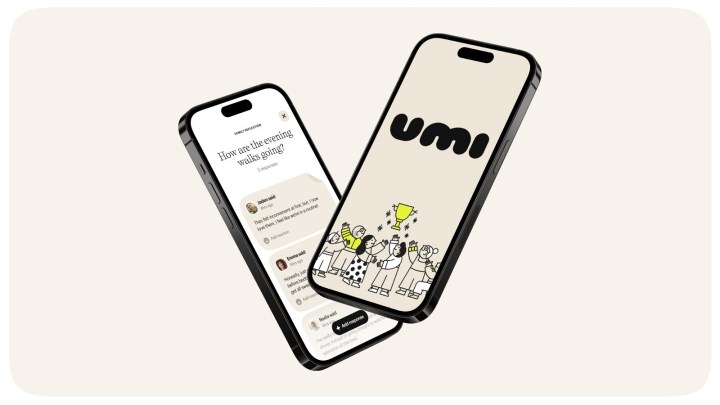
During CES 2025, Panasonic announced a partnership with Anthropic to launch an AI-enhanced family wellness coaching app called Umi.
Umi aims to assist families in “caring, coordinating, and connecting” with one another. It also helps families set collective objectives such as enjoying meals together or increasing physical activity. Users can establish these goals using the app’s voice interface that understands natural language.
The app is geared towards families of all ages, with a particular focus on supporting caregivers in tracking the habits and daily activities of elderly relatives. Panasonic highlighted that Umi won’t solely rely on AI for advice; it will also integrate input from various wellness professionals to aid users in building and sustaining healthy routines.
Umi is scheduled for a U.S. launch later in 2025. Panasonic is also extending availability of the app to other members of its Panasonic Well’s Partner Collective, which includes organizations like Aaptiv, Precision Nutrition, SleepScore Labs, Addition Wealth, BlueApron, and Calm. This means we may soon see AI capabilities integrated into related products as well. Additionally, Panasonic plans to weave Claude into its customer-facing services, encompassing customer support, sales, and marketing efforts.
Moreover, Panasonic unveiled its new initiative, dubbed “Panasonic Go,” which endeavors to accelerate “AI-driven innovation” within the company. The firm anticipates that by 2030, 30% of its revenue will stem from “AI-driven hardware, software, and solution businesses.”
Related
Anthropic’s Claude can now operate computers like humans do
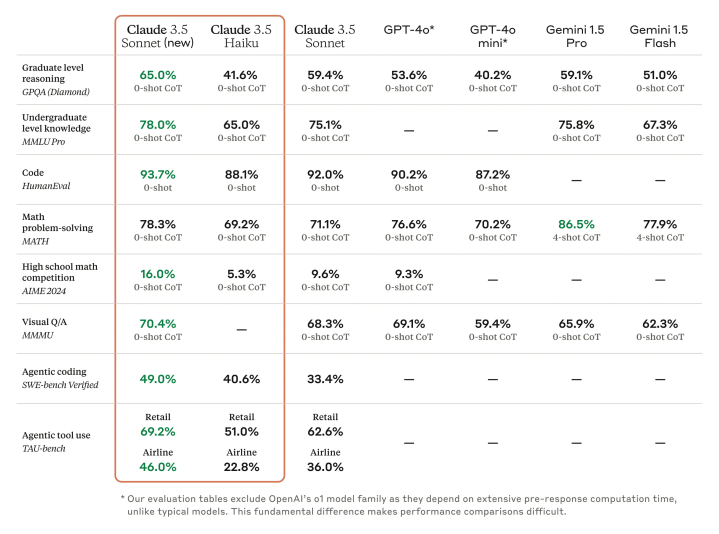
On Tuesday, Anthropic unveiled substantial upgrades to its already robust Claude 3.5 Sonnet, improving its performance even further. Alongside this update, the startup introduced a lighter version, Claude 3.5 Haiku. The new Sonnet iteration features a public beta option that allows the AI to exert basic control over the computer it operates on.
Claude 3.5 Sonnet has established itself as a top contender for coding tasks, and the latest version reveals noteworthy enhancements across various metrics, consistently outperforming both Gemini 1.5 and GPT-4o on a range of industry tests. Although Gemini 1.5 Pro managed to surpass 3.5 Sonnet in a single evaluation, this was limited to the MATH benchmark.
The new 3.5 Haiku is quite impressive in its own right, despite its smaller size. Scheduled for release later this month, 3.5 Haiku outperforms Claude 3.0 Opus, which was the largest model from the previous generation. This model is also particularly adept in coding tasks, achieving a score of 40.6% on the SWE-bench Verified — outshining both GPT-4o and the first iteration of 3.5 Sonnet.
Anthropic
The upgraded Claude 3.5 Sonnet can now interact with desktop applications using the “Computer Use” API. This enables the AI to generate essential keystrokes, mouse clicks, and movements, mimicking human interaction. Anthropic emphasizes that this system is still quite experimental and may have errors. The public beta release aims to gather feedback from developers to accelerate improvements in the API’s functionality.
“Our aim was to train Claude to understand what’s visible on a screen and effectively use the software tools to complete tasks,” stated Anthropic in a blog post. “When a developer directs Claude to utilize a software application and provides appropriate access, Claude assesses the screenshots displayed to the user, determining how much to move the cursor both vertically and horizontally to click the correct area.”
Essentially, it operates as an AI agent capable of automating various software tasks, ranging from generating and evaluating marketing leads to analyzing medical data trends or simply navigating websites to fill out forms. You can consider this a more sophisticated evolution of existing Robotic Process Automation systems.
Companies such as Asana, Canva, Cognition, DoorDash, Replit, and The Browser Company are among the initial users of this new capability. For instance, Replit is looking to utilize Computer Control to “develop a crucial feature for evaluating applications as they are created for the Replit Agent product,” according to the announcement.
There’s no need to worry about the AI seizing control autonomously; Anthropic insists that human oversight remains crucial. “Users maintain control by providing precise prompts that guide Claude’s actions, such as ‘utilize data from my computer and online to complete this form,’” an Anthropic representative explained to TechCrunch. “Individuals dictate and restrict access as necessary. Claude translates user prompts into computer commands (e.g., cursor movement, clicking, typing) to fulfill those specific tasks.”
However, Anthropic acknowledges that the Computer Control feature could be exploited for actions like generating spam, spreading misinformation, or engaging in fraudulent activities. In response, they have implemented new classifiers designed to detect when the API is used and assess whether that usage could cause harm.