الوسم: building collapse

  • Japan quake death toll climbs to 13 amid mall rescue efforts

    Japan quake death toll climbs to 13 amid mall rescue efforts

    A 7.1 magnitude quake rocked southern Japan on Tuesday, with rescue teams desperately searching for survivors on Wednesday. The earthquake resulted in at least 13 deaths, power outages affecting thousands, and road collapses across the region.

    Eight individuals were rescued from the debris of a shopping mall near Kumamoto that partially collapsed and was struck by an explosion about an hour after the quake. Among those rescued were two women in their twenties who later died. It is estimated that 20 to 30 mall workers are still unaccounted for, according to NHK.

    Prime Minister Sanae Takaichi emphasized the urgency of rescue efforts, stating, “There are still people waiting to be saved, and this is a race against time. We will mobilize all available resources to save as many as possible.” Authorities are also investigating reports of a possible gas explosion at the Aeon mall, with rescue teams detecting the smell of gas inside the building. The cause of the explosion remains under investigation.

    Firefighters, police, and approximately 170 military personnel are focusing their efforts on parts of the building where emergency calls have been received. Over 4,500 soldiers have been dispatched nationwide to assist in recovery efforts. Additionally, seven people are missing after a chimney at a Nippon Paper Industries factory collapsed, and four others are seriously hurt. Hospitals are treating dozens of quake victims.

    Throughout Kumamoto Prefecture, where a significant earthquake occurred a decade ago, about 260,000 residents have been directed to evacuation centers. Emergency services reported receiving 386 calls, including pleas for rescue and reports of collapsed structures. The quake’s epicenter was approximately 20 kilometers south of Kumamoto City, the largest city in central Kyushu with around 700,000 residents.

    Authorities warn residents in the most affected areas to stay alert for more strong tremors over the next week and to watch for landslides. With temperatures reaching around 34°C (93°F), over 36,000 homes remain without power, raising concerns about heat stroke among affected populations.

    One hospital in Uki, near the epicenter, reported being rendered non-operational due to a power outage caused by the earthquake. The hospital’s head described the situation as “like a field hospital,” and another local hospital announced it had suspended new admissions after treating 86 injured patients, including three with severe injuries. Due to the quake, some high-speed train services were halted, with passengers sustaining injuries.

    The damage to the Aeon mall drew particular focus. Footage showed one side of the mall, housing approximately 200 stores, ripped apart, exposing steel supports and debris scattered across the parking lot. Aeon representatives confirmed that customers and staff were evacuated immediately following the initial tremor, but the specific cause of the subsequent explosion remains unclear. As a result, Aeon’s stock prices dipped nearly 2% in early trading in Tokyo, while the Nikkei 225 index gained 0.8%.

    Major local companies, including Sony, Tokyo Electron, and Honda, announced plans to suspend operations at their facilities through Wednesday. TSMC, the world’s largest contract chipmaker, evacuated workers from its local plant but resumed operations late Tuesday. Some roads suffered severe damage, with large cracks disrupting major highways and causing traffic jams.

    Japan is part of the Pacific Ring of Fire, experiencing about 20% of the world’s earthquakes of magnitude 6.0 or greater. A major quake in Kumamoto ten years ago killed 275 people, injured 2,739, and damaged many historic sites, including the city’s castle, a popular tourist attraction. Several historic structures and shrines, including a 17th-century tea house, also suffered damage in Tuesday’s tremors.
  • Venezuelan Trapped Rescue Ongoing One Week After Quakes

    Venezuelan Trapped Rescue Ongoing One Week After Quakes

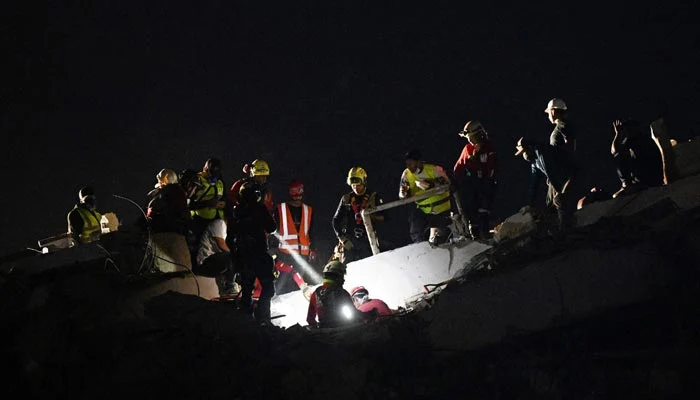
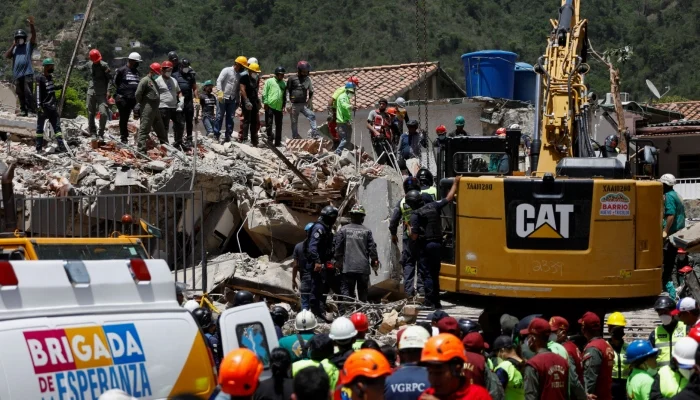
    Rescue crews worked tirelessly into the night on Wednesday to free a 43-year-old Venezuelan man who had been trapped under the rubble of a seven-story building for a week, an AFP journalist observed. Hernan Gil, a security guard, was stuck inside his booth beneath the collapsed structure in Catia La Mar, an area nearly destroyed in the twin earthquakes on June 24, measuring 7.2 and 7.5 magnitudes.

    Teams from seven nations—Venezuela, Chile, the U.S., Portugal, Costa Rica, El Salvador, and Mexico—have been operating nonstop over the past three days to reach him. By late Wednesday, they had come within about a meter of his location, according to rescuers. Chile’s fire department shared a video on Instagram showing Gil inside his shelter, turning his head to look at the camera. He was wearing a face mask, and his right eye appeared bloodshot.

    Gil’s wife, Gusbimar Gonzalez, described the rescue as a miracle. “I’m completely stunned because I’ve never seen so many countries come together to save just one person,” she said. The news of the ongoing rescue effort came after a day in which hopes of finding more survivors had diminished, now seven days after the devastating earthquakes, which resulted in nearly 2,300 deaths and left thousands more missing.

    While rescuers approached Gil, others kept watch over an adjacent building that was at risk of collapsing further. Since Monday, teams had been reinforcing the building’s foundation with wood and iron to prevent a total structural collapse. As part of the operation, they provided Gil with water to stay hydrated and installed a tube to supply him with air. The rescue teams advanced along two separate paths to reach him.

    Cristian Vera, head of the Chilean rescue squad, explained that accessing the site was complex. “This is a very difficult structure to get into,” he said, noting that the presence of large pillars hindered efforts to pinpoint his exact location. An initial plan to create a 24-inch tunnel was abandoned on Tuesday after the building shifted slightly. “We had to develop a new approach to enter through a different route than the one we used last night,” Vera added.

  • Twin earthquakes devastate Venezuela, death toll nears 1,000

    Twin earthquakes devastate Venezuela, death toll nears 1,000

    Rescue teams from Mexico, El Salvador, and Spain have arrived on the scene. Over 50,000 individuals remain unaccounted for on a publicly accessible missing persons website. The United Nations warns that millions could be impacted by this catastrophe.

    LA GUAIRA/CARACAS: Frantic Venezuelans alongside international rescuers hurried Friday to locate survivors buried beneath debris after twin earthquakes devastated sections of Caracas and nearby areas. Anxiety grew due to the scarcity of heavy machinery, and the death toll inched closer to 1,000.

    Aid and rescue personnel from abroad began arriving nearly 48 hours after a pair of earthquakes, registering magnitudes 7.2 and 7.5, struck approximately 100 miles west of Caracas. Officials estimate hundreds are still trapped or missing, adding to the confirmed death count of 920 and 3,360 injuries. A reporting website for missing persons listed over 50,000 names by Friday afternoon, a figure echoed by UN aid officials.

    The US Geological Survey forecasts a grave potential for over 10,000 fatalities, ranking these tremors among Latin America’s deadliest in the past century. La Guaira, a coastal city just outside the capital, Caracas, bore the brunt of the destruction, with at least 100 buildings—including high-rise apartments—leveled.

    Jennifer Palacios, 25, recounted that she was outside her home in Caracas’s Hugo Chavez housing complex, named after the late Venezuelan leader, when the quakes occurred. Her six-year-old son and five other relatives were buried in the rubble.

    “The community is the only reason some people are still alive,” she said, seated before the wreckage. “We need cranes to lift these slabs. There are still folks trapped inside.”

    Witnesses reported driving along roads fractured by the quakes and passing through neighborhoods where buildings had been reduced to rubble, some tagged with their names to help rescuers identify them.

    The interim president, Delcy Rodriguez, whose government assumed power after the U.S. detained her predecessor in January, promised extensive aid deployment. She visited La Guaira on Thursday and expressed gratitude to volunteers and rescue teams, noting that around 2,600 tons of food had been distributed so far.

    Despite these efforts, aid distribution remains inconsistent. Local authorities, including firefighters, police, civil protection, and military units, are present in some areas but absent or minimal elsewhere.

    Ricardo Trias, a lawyer, is trying to retrieve the remains of his godson, whose body was recovered from the rubble in Caraballeda but remains at the site, covered with a green cloth. “We want the body,” he said. “They need to give it to us; otherwise, it will rot here. No forensic team has come.” His goddaughter was rescued and taken to a hospital.

    Locals, using their bare hands and makeshift tools, protested the lack of government assistance and heavy equipment, while volunteers brought supplies from Caracas and Valencia on motorcycles. Rodriguez announced that La Guaira state would be militarized to aid rescue efforts and thanked volunteers for their support, emphasizing the distribution of food supplies.

    Police and national guard patrols on motorcycles were seen traveling through the heavily affected Los Corales neighborhood, highlighting ongoing efforts on the ground.

    The disaster’s political implications for Rodriguez remain uncertain. She has tried to portray herself as a reformer, even though her background includes serving as vice president under former leader Nicolas Maduro.

    International aid arrived Thursday evening, with some countries that have historically opposed Venezuela participating in rescue operations—such as the Dominican Republic, which was the first to reach La Guaira. Countries like India and Switzerland also sent rescue teams and supplies, while Mexico dispatched 250 military personnel, along with rescue dogs and equipment, leveraging their earthquake response experience.

    Friday saw over 60 Colombians, more than 180 rescuers from El Salvador’s planned team of 300, and nearly 100 volunteers from Spain arrive. The United States announced a $150 million aid package and plans to relax sanctions to support relief efforts. The U.S. military deployed two ships and promised helicopters and aircraft to assist search and rescue operations.

    In Los Corales, Salvadoran rescue teams evaluated the debris of three 10-story buildings, employing drones, thermal imaging, and search dogs to locate survivors—though no one has been found alive yet.

    Venezuela, already strained by years of economic hardship and political unrest that have impoverished its population, driven millions abroad, and deteriorated infrastructure, faces additional challenges.

    Suhayl Sarquiz, 50, who lost her job months earlier, said her building is now uninhabitable, leaving her and her son with nothing. The UN estimates that nearly 7 million people could be affected, providing temporary shelter and relief supplies.

    While the oil sector remains largely unaffected—energy companies report minimal disruption—the Caracas Stock Exchange remains closed, repurposed as a command center for aid collection.

    Venezuela’s most devastating modern earthquake was in 1967, costing 240 lives. This recent disaster has wrought comparable destruction, with the death toll rapidly climbing.

  • Casualties from Indonesian School Collapse Increase to 37

    Casualties from Indonesian School Collapse Increase to 37

    The death toll from the Indonesian school collapse increased to 37 on Sunday, with rescue teams recovering additional victims trapped beneath the debris. The incident occurred when part of a multi-story building on Java Island suddenly collapsed Monday during afternoon prayers, trapping students inside.

    As of Sunday morning, authorities reported rescuers had pulled out 141 individuals; 104 of these were in stable condition, while 37 victims had died. Authorities also stated that 26 people remain missing. The confirmed fatalities include a body fragment recovered from the wreckage on Saturday.

    Nanang Sigit, head of the local search and rescue unit, verified the death toll at 37 in a separate statement. Investigators are examining the cause of the collapse, with early indications suggesting poor construction quality may have played a role. The rescue efforts proved complex due to vibrations from ongoing operations affecting different parts of the site.

    Families of the missing agreed on Thursday to allow heavy machinery to be used, after the critical 72-hour window for potential survivors had passed.

  • Magnitude 6.1 Quake Hits Balikesir Near Istanbul, Turkey

    Magnitude 6.1 Quake Hits Balikesir Near Istanbul, Turkey

    A 6.1 magnitude earthquake struck Sindirgi in western Turkey on Sunday, according to the Turkish Disaster and Emergency Management Authority (AFAD). The tremor was felt across multiple cities in the region, including Istanbul and the popular tourist destination of Izmir. No fatalities have been reported.

    Approximately ten buildings collapsed in Sindirgi, including a three-story structure in the town center, as announced by Mayor Serkan Sak on Turkish private channel NTV. “Six residents lived in that three-story building. Four were rescued from the debris,” he stated, adding that rescue efforts to locate the remaining two were ongoing. “Buildings and mosques were damaged, but fortunately, there have been no reports of loss of life,” he added.

    The earthquake occurred at 7:53 p.m. local time (1653 GMT), with aftershocks measuring between 3.5 and 4.6 in magnitude, AFAD reported. Turkey is traversed by several fault lines, which have historically caused severe earthquakes in the country.

    In February 2023, a quake in the southwestern region resulted in at least 53,000 deaths and severely damaged Antakya, near the ancient site of Antioch. More recently, in early July, a 5.8 magnitude tremor in the same area caused one death and injured 69 people.