الوسم: border security

  • Bangladesh Protests India Over Probe on PM’s Adviser at Delhi Airport

    Bangladesh Protests India Over Probe on PM’s Adviser at Delhi Airport

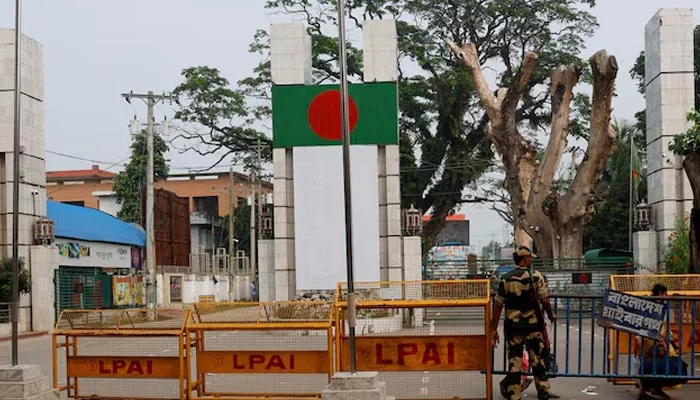
    Bangladesh has summoned a senior Indian diplomat stationed in Dhaka to protest the detention and questioning of an adviser to Prime Minister Tarique Rahman at New Delhi’s airport. The adviser, Zahed Ur Rahman, was traveling to India for a conference when he was stopped upon arrival, held for several hours, and then allowed to proceed. The incident has added tension to already delicate bilateral relations.

    Foreign Minister Khalilur Rahman called the event “unexpected and unfortunate,” and Dhaka officially expressed its concerns to Indian Deputy High Commissioner Pawan Badhe late Monday night.

    This diplomatic incident comes during a sensitive period in relations between the two countries. Although ties had improved following Tarique Rahman’s electoral victory earlier this year, strains have persisted since the 2024 uprising that resulted in the ousting of former Prime Minister Sheikh Hasina. She remains in India despite Bangladesh’s repeated requests for her extradition.

    Relations are further complicated by accusations from Bangladesh that Indian authorities have attempted to push undocumented migrants across the border without adhering to proper repatriation procedures. Dhaka claims border guards have recently thwarted several “push-in” attempts and raised the issue during last week’s talks between Border Guard Bangladesh and India’s Border Security Force in New Delhi.

    Despite both sides agreeing to enhance intelligence sharing and coordinate border patrols, disagreements over migration enforcement continue to be a source of friction in their relationship.

  • Trump pledges to de-escalate following Minneapolis shootings

    Trump pledges to de-escalate following Minneapolis shootings

    • Trump’s border advisor meets with Minnesota’s governor and Minneapolis officials.
    • Trump concedes that a government official’s presence may have contributed to rising tensions.
    • Calls for a fair and truthful investigation into recent killings.

    MINNEAPOLIS: President Donald Trump announced Tuesday that he intends to ease tensions in Minneapolis following the recent fatal shootings of two civilians, which sparked widespread criticism of his immigration policies. Trump’s “border czar” Tom Homan held discussions with local officials as part of his efforts to manage the fallout after immigration agents accidentally shot and killed 37-year-old nurse Alex Pretti on Saturday.

    The president also acknowledged that Gregory Bovino, a strict Border Patrol commander who is now expected to leave Minneapolis, is “a rather outspoken type,” and his involvement might have exacerbated the situation.

    “We’re planning to reduce some of the tensions,” Trump told Fox News, clarifying that this was not a retreat from previous positions but an attempt to de-escalate. He mentioned that Homan, a top official in U.S. border security known for a more restrained communication style, met with Minnesota Governor Tim Walz and Minneapolis Mayor Jacob Frey on Tuesday.

    Trump rejected the label “assassin,” used by a top aide to describe protester Alex Pretti. “I want a very honorable and honest investigation,” he stated. However, he did criticize Pretti for carrying a licensed firearm that was confiscated before he was shot.

    “I don’t like that he had a gun, and I don’t like that he had two fully loaded magazines,” the president said.

    Mayor Frey, after his meeting with Homan, stated that he discussed “the serious negative impacts” of federal operations on Minneapolis, reaffirming that the city “will not enforce federal immigration laws.” Former Democratic Vice President Walz called for “impartial investigations” into federal shootings and recommended a significant reduction in federal presence in the state.

    Pretti’s death has ignited national outrage. Former President Joe Biden called the situation “a betrayal of core American values,” with other ex-presidents like Bill Clinton and Barack Obama also voicing concern.

    This incident marks the second time this month that a U.S. citizen has been killed by immigration officers in Minneapolis, a city now at the center of nationwide debate over Trump’s mass deportation efforts. The first victim, protester Renee Good, was shot at point-blank range during a traffic stop on January 7.

    These fatalities have come amid months of increasing violence and aggressive enforcement by unidentified, heavily armed Immigration and Customs Enforcement (ICE) agents and Border Patrol officers, who have been detaining suspected immigration law violators on the streets. Despite multiple videos indicating Pretti posed no danger, officials initially claimed he was threatening federal agents.

    Trump defended Homeland Security head Kristi Noem, who called Pretti a “domestic terrorist,” asserting she’s performing well and will not resign. Conversely, he expressed reservations about Bovino, a Border Patrol official known for aggressive tactics and who had emphasized the threat Pretti allegedly posed.

    “Bovino’s a very good officer, but he can be a bit out there. Maybe that approach didn’t work in this case,” Trump remarked on Fox.

    Concern over the violence and the false narrative blaming Pretti for his own death quickly reached Washington. Senator Rand Paul proposed that the agents involved should be placed on administrative leave and announced that leaders from ICE, Border Patrol, and Citizenship and Immigration Services would appear before Congress next month. Democratic Senator John Fetterman criticized Homeland Security Secretary Kristi Noem’s handling of the situation, calling for her dismissal.

    The turmoil threatens to trigger a new government shutdown, as Democrats threaten to block the passage of routine spending bills scheduled for Senate votes later this week.

    In Minneapolis, a 68-year-old retiree, Stephen McLaughlin, voiced that the community is “sickened by all of this,” expressing fears that government actions aim to terrorize citizens—an occurrence that he finds deeply unsettling.
  • Tajikistan neutralizes four terrorists near Afghan border

    Tajikistan neutralizes four terrorists near Afghan border

    Tajik service members participate in a military parade near the Afghanistan border in Khorog (Khorugh), Tajikistan. — Reuters/File

    – Incidents along Tajikistan’s 1,350-kilometer border with Afghanistan are increasing.
    – Attacks have resulted in the deaths of guards and Chinese workers.
    – Tajikistan is calling on the Taliban to help control cross-border militancy.

    Tajik officials announced Sunday that they “neutralized” four terrorists who had crossed from neighboring Afghanistan, in an area where recent weeks have seen a surge in deadly events, according to state media reports.

    Located in Central Asia, Tajikistan shares a rugged, mountainous border with Afghanistan and maintains strained relations with the Afghan Taliban government.

    Sources in Tajik security services, as reported by the state news agency Khovar, said that “four terrorists were neutralized” after refusing to lay down their weapons in the southern Khatlon region.

    Since November, Tajikistan’s border has witnessed at least five deadly incidents along its lengthy, mountainous frontier—stretching roughly 840 miles (1,350 kilometers). An AFP tally, based on official figures, reports a total of 16 deaths, including Tajik border guards, Chinese nationals, and individuals Tajik authorities label as “smugglers” and “terrorists.”

    In response to attacks targeting Chinese citizens in November, Tajik authorities urged the Taliban to implement measures to stabilize the volatile border zone, where traffickers and militant groups are active.

    While other Central Asian leaders are deepening ties with the Taliban, Tajik President Emomali Rakhmon—who has held power since 1992—publicly criticizes Afghanistan’s authorities and urges respect for the rights of ethnic Tajiks, who represent about a quarter of Afghanistan’s population.

    Despite his criticisms, Tajikistan is also taking steps towards cooperation with Kabul through initiatives like electricity supplies, opening border markets, and holding meetings between Taliban officials and local authorities.

    Relations deteriorated further after five Chinese nationals were killed and several wounded in attacks along the Tajik-Afghan border in late November and early December. A UN report from December highlighted that a militant group, Jamaat Ansarullah, has fighters operating across various Afghan regions with the primary objective of destabilizing Tajikistan.

    Tajik authorities have expressed concerns about the presence of Daesh fighters in Afghanistan’s Khorasan region.

  • Tajik Forces Neutralize Three Terrorists After Afghan Border Breach

    Tajik Forces Neutralize Three Terrorists After Afghan Border Breach

    Three armed militants crossed into Tajikistan from Afghanistan, declining to surrender when ordered. Tajik security forces responded quickly, pinpointing their location and instructing them to give up. Instead, the militants resisted with weapons, resulting in the forces neutralizing all three in a firefight. Authorities recovered weapons including an M-16, a Kalashnikov rifle, three foreign-made pistols with silencers, ten hand grenades, a night-vision device, explosives, and other military gear from the militants. During the clash, two border patrol officers were also killed.

    This was the third recent incident of illegal cross-border attacks from Afghanistan into Tajikistan over the past month. The Tajik government criticized the Afghan Taliban’s failure to prevent terrorist groups from using its territory to launch attacks into neighboring countries. The attack follows recent assaults which killed five Chinese nationals and wounded five others, with China’s embassy in Dushanbe warning Chinese citizens to evacuate border regions immediately.

    Since the Taliban reclaimed power in 2021, Pakistan has highlighted an increase in terrorist safe havens in Afghanistan, with the country suffering nearly 1,200 deaths this year alone due to terrorism connected to Afghan-based networks. Cross-border tensions escalated in October when Taliban militants launched unprovoked attacks on Pakistani border posts, resulting in over 200 Taliban fighters and militants killed, and 23 Pakistani soldiers losing their lives. Pakistan responded with precise strikes inside Afghanistan targeting terrorist hideouts, notably in Kandahar and Kabul. A ceasefire was briefly declared and later formalized in talks mediated by Qatar and Turkey, aiming to stop cross-border terrorism and establish lasting peace mechanisms. However, negotiations faltered after Pakistan rejected some of the Taliban’s arguments and concerns regarding ongoing attacks, though efforts to uphold the ceasefire persisted through continued diplomacy.

  • Syrian Security Officer Involved in Killing Americans

    Syrian Security Officer Involved in Killing Americans

    Syria’s interior ministry stated Sunday that the gunman responsible for killing three Americans in the central Palmyra area the previous day was a member of the security forces who was scheduled to be dismissed for extremism. On Saturday, two U.S. troops and a civilian interpreter lost their lives in what the Syrian government called a “terrorist attack,” which Washington attributed to a Daesh militant who was subsequently killed.

    According to the interior ministry’s spokesperson, Noureddine al-Baba, the individual was to be fired before the assault due to extremist beliefs, with the termination planned for Sunday. A Syrian security official told AFP that “11 members of the general security forces were detained and questioned following the attack.” The anonymous official mentioned the shooter had been part of the security forces for over 10 months, serving in several cities before being transferred to Palmyra.

    Palmyra, famous for its UNESCO World Heritage-listed ruins, was under Daesh control during the height of its territorial expansion in Syria. This incident marks the first of its kind reported since Bashar al-Assad’s long-standing rule was ousted last December.

    President Donald Trump pledged to respond with “very serious retaliation” following Saturday’s assault. An unnamed Syrian defense ministry official told AFP that U.S. forces arrived from the southeast, traveling by land from the Al-Tanf military base near Jordan’s border. The joint Syrian-American patrol reportedly toured Palmyra, then moved to T-4 airbase before returning to a base in Palmyra itself.

    Another Syrian military source, requesting anonymity, indicated that gunfire erupted during a meeting between Syrian and American officers at a Syrian base in Palmyra. However, a Pentagon official, also speaking anonymously, noted that the attack occurred in an area outside the control of President Bashar al-Assad.

    Pentagon spokesperson Sean Parnell explained that U.S. soldiers were engaging in leadership support for counterterrorism operations when the attack happened. U.S. envoy to Syria, Tom Barrack, added that the ambush targeted a joint U.S.-Syrian patrol. Trump characterized the incident as a Daesh attack “against the U.S. and Syria, in a very dangerous part of Syria that is not fully controlled by them.” He also noted that the three injured U.S. troops are recovering well.

    Syrian Foreign Minister Asaad al-Shaibani condemned the attack, calling it “terrorist.” Anwar al-Baba, a spokesman for the Syrian Interior Ministry, mentioned on state TV that there had been prior warnings from internal security officials to allied forces operating in the desert region. Despite these alerts, the international coalition did not heed the warnings regarding potential Daesh infiltration.

    Daesh captured large swaths of territory in Syria and Iraq in 2014 amid the civil war but was largely defeated territorially after five years. Still, its fighters maintain a presence, especially across Syria’s extensive desert landscape. Recently, during Syrian President Ahmed al-Sharaa’s historic visit to Washington, Damascus officially joined the US-led coalition against Daesh.

    U.S. forces are positioned in Syria’s Kurdish-controlled northeast and near Al-Tanf close to the Jordanian border.

  • Afghanistan Pledges Border Cooperation Following Attack Toll

    Afghanistan Pledges Border Cooperation Following Attack Toll

    Afghanistan’s Taliban government has told neighboring Tajikistan that it’s ready to enhance border security and pursue joint investigations. This comes after attacks—some launched from Afghan territory—that resulted in the deaths of five Chinese nationals last week, according to Dushanbe.

    During a phone call Tuesday with Tajik Foreign Minister Amir Khan Muttaqi, the Afghan official expressed regret over the incidents and emphasized Kabul’s readiness to escalate border cooperation. He noted that “joint measures against malicious elements are of urgent importance.”

    Muttaqi stated, “The Islamic Emirate is fully prepared to bolster border security, collaborate on investigations, and coordinate in any necessary way.” He also mentioned that a recently developed atmosphere of trust between the two countries should be preserved and not undermined.

    Tajik officials reported that the two attacks—including one employing drones to drop grenades—also injured five Chinese workers. China’s embassy confirmed the casualties and advised Chinese citizens to leave the border region.

    In response, Tajik President Emomali Rahmon ordered stricter border controls following these events, which took place along the remote, mountainous frontier.

    China remains a significant investor in Tajikistan, a Central Asian nation aligned with Russia and home to approximately 11 million people.

  • Tajikistan Reports Five Chinese Nationals Killed in Border Attacks from Afghanistan

    Tajikistan Reports Five Chinese Nationals Killed in Border Attacks from Afghanistan

    Five Chinese nationals have been killed and five others injured in Tajikistan in recent attacks launched from neighboring Afghanistan over the past week, according to Tajik authorities and China’s embassy in the country. The embassy in Dushanbe has advised Chinese businesses and personnel to evacuate the border region immediately.

    They reported that Chinese citizens were targeted in an armed assault near the Afghan border on Sunday. Additionally, a separate attack on Friday resulted in three Chinese deaths, with Tajik officials claiming it involved drone strikes dropping grenades.

    Tajikistan, a mountainous, secular republic with a population of roughly 11 million, maintains tense relations with Taliban authorities in Afghanistan. The country has previously raised concerns about drug traffickers and illegal gold miners operating along its remote frontier.

    China, which shares a mountainous border with Tajikistan, is a key investor in the region. There has been no immediate response from Afghan authorities to Tajikistan’s statements on Monday. However, Afghanistan’s foreign ministry last week blamed an unidentified group seeking to destabilize the area and said it is willing to cooperate with Tajik officials.

    Tajik President Emomali Rahmon’s team met with security chiefs on Monday to review border security measures. Rahmon strongly condemned the provocative acts by Afghan citizens and ordered decisive actions to address the situation and prevent further incidents.

    Historically, Tajikistan experienced a violent civil war in the 1990s after gaining independence from the Soviet Union. During this period, Rahmon rose to power. The nation remains closely aligned with Russia, which maintains a military base there.

    Millions of Tajiks, a Persian-speaking people, live across the border in Afghanistan, and Tajikistan has traditionally supported Afghan Tajiks opposed to the Taliban.

  • New $250 ‘Visa Integrity Fee’ for US Travelers Incoming

    New $250 ‘Visa Integrity Fee’ for US Travelers Incoming

    Here’s a rewritten version of your content in American English, ensuring it’s unique and original.

    —

    A traveler at Ronald Reagan Washington National Airport in Arlington, Virginia, on January 30, 2025. — Reuters

    The U.S. will implement a new “visa integrity fee” of at least $250 for international visitors, in addition to the existing visa application costs, as part of a recent domestic policy bill introduced by the Trump administration.

    This fee will be applicable to all foreign travelers who require nonimmigrant visas to enter the country, including tourists, business professionals, international students, and other temporary visitors. The State Department reported that nearly 11 million nonimmigrant visas were granted in the fiscal year 2024.

    Visitors from countries participating in the Visa Waiver Program—including Australia and many European nations—who stay for 90 days or fewer will be exempt from this fee, as they do not require a visa.

    The fee is due at the time of visa issuance, with no exemptions allowed. Nevertheless, travelers who comply with all visa prerequisites may qualify for a refund after their stay, though specifics about the reimbursement process are still unclear.

    Immigration lawyer Steven A. Brown from Reddy Neumann Brown PC described this new fee as a “refundable security deposit” in a recent blog entry, emphasizing the lack of information regarding the refund process.

    “It’s difficult to ascertain the exact purpose of the fee,” Brown mentioned in an email to CNN. “Generally, immigration fees are intended to cover costs associated with adjudication or issuance,” but he also noted that the refund option might suggest returning all collected fees. “Ideally, there would be no visa overstays or violations.”

    The Department of Homeland Security, responsible for enforcing this new fee, has not yet shared details about the refund process or how the policy will be rolled out.

    A representative from the Department of Homeland Security remarked, “The visa integrity fee requires collaboration across various agencies before it can be implemented,” in a statement to CNN.

    The State Department indicated that the fee was established to support the administration’s objectives of enhancing immigration enforcement, discouraging visa overstays, and bolstering border security.

    Any fees that are not refunded will be “allocated to the general fund of the Treasury,” as stated in the legislative provision.

    —

    Let me know if you need further adjustments or additional information!

  • UK Requires Online Entry Permit for European Travelers

    UK Requires Online Entry Permit for European Travelers

    A large sign greets travelers at passport control in Terminal 2 of London’s Heathrow Airport. — AFP

    Starting Wednesday, visitors from Europe heading to the UK will be required to obtain a new online entry permit as the British government updates its travel regulations.

    Travelers from Europe now need to secure a digital Electronic Travel Authorization (ETA) permit, which UK officials claim is intended to enhance security and simplify the entry process.

    There will be an introductory period that might extend for several months.

    This permit can be obtained online in the coming days for £10 (about $12), with a price increase to £16 starting April 9.

    The ETA was previously implemented for travelers from the United States, Canada, and other countries that do not require a visa to visit the UK, following the UK’s departure from the EU in 2020.

    Phil Douglas, head of the UK Border Force, mentioned that this rollout is part of a broader initiative to introduce the ETA for travelers globally.

    “This program serves as a border security measure,” he noted, expressing expectations that the new changes won’t disrupt travel plans.

    The new permit aims to expedite entry times and enables officials to review crucial information, such as a visitor’s immigration history or criminal record.

    “For visitors, the advantage is that we are creating a contactless border. If they are approved for entry, they will be able to pass through our new electronic gates (eGates) much faster,” Douglas explained.

    “Individuals will still be able to board flights and trains during this introductory phase,” he added, referring to the initial transitional period expected to last until “September or October.”

    The ETA allows for stays of up to six months and is linked digitally to the applicant’s passport, remaining valid for two years.

    Applications, which can be submitted via a smartphone app or the government website, have been available to Europeans since early March. This requirement applies to citizens of around 30 European nations, including all EU countries except for Ireland.

    Expanded Program

    Applicants must upload a photo of their passport along with a selfie. The application process is estimated to take about 10 minutes, according to the UK Home Office.

    In most cases, a decision on the application will be reached within minutes, although the government advises applicants to allow up to three business days for processing.

    The ETA is mandatory for infants and children, but travelers transiting through the UK without exiting the airport will not need one, following concerns from Heathrow about potential drops in passenger volume through Europe’s busiest airport.

    Heathrow accommodated nearly 84 million travelers in 2024, a third of whom were from the EU.

    This program was initially introduced in 2023 for visitors from Qatar before being expanded to five nearby Gulf nations.

    In January, it was further extended to citizens of approximately 50 additional countries and regions, including Argentina, South Korea, and New Zealand.

    By the end of 2024, nearly 1.1 million ETAs were issued, as reported by the Home Office.

    The ETA is inapplicable to UK residents or anyone already holding a UK immigration status.

    This policy parallels the ETIAS scheme for visa-exempt nationals traveling to 30 European countries, including France and Germany, which has been postponed until 2026.