الوسم: blockade

  • US to Start Enforcing Maritime Blockade on Iran Today

    US to Start Enforcing Maritime Blockade on Iran Today

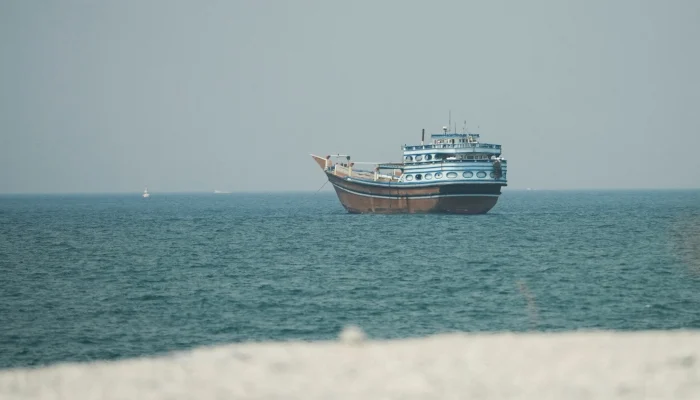
    A ship is visible at the Strait of Hormuz from Musandam, Oman, July 13, 2026. — Reuters

    The United States states that measures will be effective starting at 2000 GMT on July 14. The restrictions will apply to all vessel traffic without exception, regardless of the vessel’s flag. The Joint Maritime Information Center (JMIC) warns that force may be used against ships that do not comply.

    The US military announced that a maritime blockade against Iran will begin on Tuesday, managed by the Navy-led JMIC. This blockade will encompass all ports, oil terminals, and coastal zones of Iran and will be enforced for all vessel traffic from 2000 GMT on July 14. Ships suspected of entering or leaving the blocked area without permission may be intercepted, diverted, or captured, with force if necessary. However, transit through the Strait of Hormuz heading to or from destinations outside Iran will not face restrictions.

  • Shipping Traffic Through Hormuz Remains Mostly Halted

    Shipping Traffic Through Hormuz Remains Mostly Halted

    Shipping activity in the Strait of Hormuz largely paused on Tuesday, with only three vessels passing through in the last 24 hours according to shipping data. A U.S. blockade of Iranian ports has angered Tehran, leading it to impose its own restrictions on the strait, which has historically transported around 20% of the world’s oil and liquefied natural gas.

    The Ean Spir oil tanker, whose flag and ownership remain unknown, transited the strait on Tuesday after stopping at an Iraqi port, as shown by MarineTraffic tracking data. Similarly, the Lian Star cargo vessel, also without known flag or ownership, sailed through from an Iranian port. Additionally, the Meda liquefied petroleum gas tanker, which previously called at a UAE port and also lacks transparent ownership, attempted to exit the Gulf again on Monday after turning back, based on satellite data from SynMax.

    This volume represents only a tiny fraction of the approximately 140 ships that usually pass through daily before the escalation of U.S. and Israeli actions against Iran began on February 28. After Iran briefly announced reopening the strait last Friday, more than a dozen tankers moved through, only for Tehran to declare it closed again on Saturday amid reports of shots fired at vessels.

    A shipping broker, BRS, noted this week that even vessels that appear compliant with transit requirements can find themselves in danger and be prevented from passing.

    Tensions heightened Tuesday, risking a collapse of the US-Iran ceasefire, as Tehran refused to commit to new peace negotiations, and the U.S. military announced the seizure of a tanker linked to Iran in international waters.

    Meanwhile, hundreds of ships and about 20,000 crew members are stranded in the Gulf, unable to sail. Arsenio Dominguez, the UN shipping agency’s secretary-general, told reporters at Singapore’s maritime week, “We cannot risk the lives of seafarers.” He added that last weekend, when some ships attempted to sail amidst the chaos, some were targeted, but fortunately, no casualties or vessel damage occurred.

    Iran’s military claimed that an Iranian tanker entered its territorial waters from the Arabian Sea on Monday, with assistance from navy forces, despite US warnings and threats. BRS estimates that currently, 61 supertankers unrelated to Iran are trapped within the Gulf, 50 of which carry up to 2 million barrels of oil each.

    In times when global oil demand is high, releasing even an additional 2 million barrels from the Middle East Gulf would be highly welcomed.

  • US Seizes Iranian Ship, Mideast Ceasefire in the Balance

    US Seizes Iranian Ship, Mideast Ceasefire in the Balance

    Iran announces plans to respond to what it describes as “armed piracy,” as tensions escalate. According to IRNA, Iran has rejected initiating new talks, citing the U.S. blockade and recent hostile rhetoric. Meanwhile, Islamabad is preparing for a second round of negotiations.

    On Monday, fears heightened that the fragile ceasefire between the U.S. and Iran might not last, following the U.S. claim of seizing an Iranian cargo vessel attempting to breach the blockade. Iran has promised retaliation. Efforts to establish a more durable peace appear uncertain, as Iran declined to participate in additional negotiations that the U.S. hoped to start before the ceasefire’s deadline on Tuesday.

    The U.S. continues its blockade of Iranian ports, while Iran has intermittently reimposed its own restrictions on maritime traffic through the Strait of Hormuz, which typically accounts for about 20% of global oil shipments.

    Sunday saw the U.S. military fire on an Iranian-flagged cargo ship heading toward Bandar Abbas port, with President Trump announcing on social media, “We have full custody of their ship, and we are inspecting its contents!”

    Iran’s military stated that the vessel was en route from China. A military spokesperson warned that Iran would soon retaliate against what it called US military “armed piracy.”

    As traders weigh the impact of ongoing disruptions, oil prices surged and stock markets faltered, reflecting concerns over continued minimal traffic through the Gulf.

    Iranian state media reported that Tehran has rejected new peace negotiations, criticizing the ongoing blockade, hostile rhetoric, and what they describe as the U.S. pushing for narrow, superficial deals that could drag on for years.

    Iran’s First Vice President, Mohammadreza Aref, emphasized, “You can’t restrict Iran’s oil exports and then expect everyone else to enjoy free security.” He added that the choice is clear: a free oil market for all or the potential for significant costs for everyone.

    Earlier, Trump warned that the U.S. would destroy Iran’s infrastructure if Tehran refused his terms, continuing a pattern of aggressive ultimatums.

    Iran has threatened to target power stations and desalination plants in Gulf Arab neighbors if attacked by the U.S.

    President Trump stated that his envoys are scheduled to arrive in Islamabad on Monday evening, one day before the two-week ceasefire expires. A White House official mentioned Vice President JD Vance would lead the delegation, supported by Trump’s envoy Steve Witkoff and Jared Kushner. However, Trump later indicated Vance would not participate.

    Pakistan, acting as the mediator, appears to be gearing up for the talks. Two large U.S. C-17 cargo planes landed at an airbase on Sunday, carrying security gear and vehicles. The city of Islamabad has suspended public transportation and heavy freight, with barbed wire placed near the Serena Hotel, where last week’s discussions took place, which has now evacuated all guests.

    The ongoing conflict, now in its eighth week, has severely interrupted global energy supplies, causing oil prices to soar due to the near-closure of the Strait of Hormuz.

    Since February 28, the war has resulted in thousands of casualties from U.S.-Israeli strikes on Iran and an Israeli invasion of Lebanon. Iran has responded with missile and drone attacks on Israeli and nearby Arab nations hosting U.S. bases.

    Iran’s parliamentary speaker, Mohammad Baqer Qalibaf, who has led Iran’s negotiation efforts, noted that while progress has been made, significant differences remain on nuclear issues and access to the Strait.

    European allies, often criticized by Trump for not supporting his military efforts, are concerned that Washington’s negotiating team aims for a quick, superficial deal that might require extensive, technical follow-up talks over months or years.

  • Hormuz Strait Blockade Boosts Gulf Food Prices

    Hormuz Strait Blockade Boosts Gulf Food Prices

    In a Bahrain supermarket, Mahmoud Ali shops as usual, filling his cart. Despite ongoing conflict in the Middle East, store shelves remain stocked, but the impact of the disrupted shipping routes into the Gulf is now evident at checkout.

    “There’s no shortage,” he says, “but over the past few days, I’ve noticed a significant rise in the prices of certain food items.” The cost of meat, in particular, has nearly doubled, he adds.

    Like many neighboring countries in this dry region, the small Gulf nation depends greatly on imports, especially for food. However, the war that began on February 28 with Israeli and U.S. strikes against Iran has severely affected goods transportation through the vital Strait of Hormuz, which is now effectively closed.

    Frederic Schneider, an economist with the Middle East Council on Global Affairs, explains, “Most major ports in the UAE, Qatar, Kuwait, and Bahrain have either suspended or significantly reduced cargo operations.” Additionally, air freight, another critical logistics component, is operating below capacity due to ongoing Iranian drone and missile attacks.

    With key ports such as Abu Dhabi, Jebel Ali in Dubai, and Dammam in eastern Saudi Arabia becoming nearly inaccessible, vessels are rerouting to ports located in Oman and the Emirates further south of the strait.

    Saudi Arabia is positioning itself as a central supply hub, with open airspace and ongoing maritime traffic to its Red Sea ports. The country has launched initiatives to bolster its transport infrastructure by establishing new logistics routes and operational corridors to manage cargo diverted from its eastern ports, according to officials.

    Recent observations by AFP journalists show a steady flow of heavy trucks crossing into Qatar by land. Alternative land routes exist through corridors connecting to the Mediterranean via Syria or Jordan, but these are too congested, costly, and insufficient to compensate for the halt of traditional sea routes, Schneider notes.

    Perishable goods, mainly imported from Asia and with limited storage life, are the first to feel the pinch.

    ‘A Tangible Risk’

    The Gulf states’ levels of preparedness vary. Saudi Arabia has direct access to the Red Sea, while the UAE claims to have stockpiled enough supplies to last four to six months. Qatar invested heavily in its reserves after a three-year blockade by neighboring countries starting in 2017.

    Bahrain and Kuwait are already experiencing the effects of the conflict at the consumer level. After an initial rush to supermarkets at the onset of the war, Kuwaiti authorities froze prices on certain essential items and subsidized meat imports.

    “Overall, prices have stayed relatively stable,” an official from Kuwait’s commerce ministry told AFP, requesting anonymity. “But meat and fish prices have jumped over 30% due to the suspension of Gulf fishing activities and halted imports from Iran, India, and Pakistan.”

    The private sector is taking steps to mitigate the effects of the blockade. Lulu, a retail chain operating 280 supermarkets across the region, reports maintaining reserves of non-perishable goods for four to six months and has chartered special flights to bring in fresh produce, meat, seafood, and poultry.

    So far, “37 chartered flights have delivered more than 6,000 tons of fresh goods,” according to Lulu’s communications director V Nandakumar. He adds that these increased costs are not yet being passed on to consumers.

    Schneider emphasizes, “There is a reasonable level of anticipation, and prices are under control for now.” However, he warns that if the conflict continues for an extended period, there is a tangible threat of prices for imported foods significantly escalating.
  • Russia vows complete backing for Venezuela amid US tensions

    Russia vows complete backing for Venezuela amid US tensions

    Russia has voiced strong support for Venezuela as the South American nation faces a blockade of sanctioned oil tankers by U.S. forces operating in the Caribbean. The official statement from Moscow came just before a United Nations Security Council (UNSC) meeting scheduled for Tuesday to address the escalating crisis between Caracas and Washington.

    During a phone conversation, Russian Foreign Minister Sergei Lavrov and Venezuelan Foreign Minister Yván Gil condemned U.S. actions, which have included targeted strikes on suspected drug trafficking vessels and the seizure of two oil tankers. A third vessel was reportedly being pursued, according to a U.S. official.

    The Russian foreign ministry indicated that the ministers discussed their serious concerns over the recent escalation of U.S. military activities in the Caribbean Sea. They warned these actions could destabilize the region and disrupt international maritime traffic. The statement also reaffirmed Russia’s unwavering support and solidarity with the Venezuelan government and people amidst what they described as aggressive U.S. measures.

    Since September, U.S. forces have conducted strikes on boats they allege are involved in drug trafficking in the Caribbean and eastern Pacific. Washington claims its actions are necessary to combat drug trafficking but has provided no concrete evidence. Reports indicate that more than 100 individuals have been killed in these operations, some of whom were fishermen, as reported by their families and governments.

    On December 16, President Donald Trump announced a blockade targeting oil tankers that are subject to sanctions and are moving to and from Venezuela. Trump accuses President Nicolas Maduro’s administration of using oil revenues to fund illegal activities such as drug trafficking, human smuggling, murder, and kidnapping. He also alleges that Caracas has captured a significant portion of U.S. oil assets—a reference to the country’s nationalization of its petroleum industry—and has expressed a desire to reclaim what he describes as “their oil.”

    Venezuelan officials maintain that Washington’s real intent is to provoke regime change and have accused the U.S. of engaging in “international piracy.” The Russian Foreign Ministry highlighted that Lavrov and Gil agreed to coordinate their actions within the international arena, especially at the UN, to uphold respect for sovereign rights and prevent external interference in domestic affairs.

    Russia and China, both allies of Venezuela, supported Caracas’s request for a UNSC meeting to discuss what they call “the ongoing U.S. aggression.” Gil revealed on Telegram that he and Lavrov discussed “the aggressions and blatant violations of international law being carried out in the Caribbean, including vessel attacks, extrajudicial killings, and acts of piracy by the U.S. government.” Gil also stated that Moscow fully supports Venezuela in these turbulent times.

    Meanwhile, U.S. Secretary of State Marco Rubio dismissed Moscow’s support for Caracas, asserting that the U.S. is not concerned about escalating tensions with Russia over Venezuela, emphasizing that Russia is preoccupied with its ongoing conflict in Ukraine. Tensions between Washington and Moscow have heightened in recent weeks due to frustrations expressed by Trump over Russia’s lack of progress in resolving the Ukraine conflict.

    Additionally, Gil delivered a televised letter, signed by Maduro and addressed to the international community, warning that the U.S. blockade would impact global oil and energy supplies.

  • China Conducts Major Military Exercises Near Taiwan

    China Conducts Major Military Exercises Near Taiwan

    On Tuesday, China mobilized its army, navy, air, and missile forces to encircle Taiwan in extensive military exercises. These drills were described by Beijing as a rehearsal for “precision strikes” and a potential blockade of the self-governing island.

    In response, Taiwan activated its own aircraft and naval vessels and positioned ground-based missile systems to counter the activities.

    These maneuvers followed comments made by U.S. Defense Secretary Pete Hegseth, who stated during a visit to Japan that the United States would uphold “credible deterrence” in the Taiwan Strait.

    In recent years, Beijing has significantly ramped up the presence of fighter jets and warships near Taiwan, a move that Taipei vehemently opposes. Taiwan’s defense ministry reported that China deployed 21 warships, including the aircraft carrier Shandong, in the vicinity of the island, along with 71 aircraft and four coast guard ships. This marks the highest number of naval vessels positioned around Taiwan since May of the previous year, when 27 ships were noted in a report by AFP referencing the defense ministry’s daily updates.

    Tensions in the Taiwan Strait, measuring 180 kilometers (112 miles) wide, have heightened since the inauguration of Taiwanese President Lai Ching-te in May 2024. According to Beijing, the recent military exercises were intended as a “stern warning and robust deterrent” against proponents of Taiwan’s independence.

    The drills included “sea and air combat readiness patrols, joint operations to establish comprehensive control, assaults on both maritime and land targets, and blockades of vital regions and sea lanes,” as noted by Senior Colonel Shi Yi, spokesperson for the Chinese military’s Eastern Theater Command.

    Shi further stated that Chinese forces were “closing in on Taiwan from multiple angles.” The Eastern Theater Command also indicated that the exercises involved training for “multi-directional precision strikes” around the island and released a graphic titled “closing in.”

    Additionally, China’s coast guard reported conducting “law enforcement patrols” in the waters surrounding Taiwan. Zhu Fenglian, a spokesperson for Beijing’s Taiwan Affairs Office, remarked, “Pursuing ‘Taiwan independence’ places the people of Taiwan in a precarious situation of conflict.”