الوسم: Biodiversity

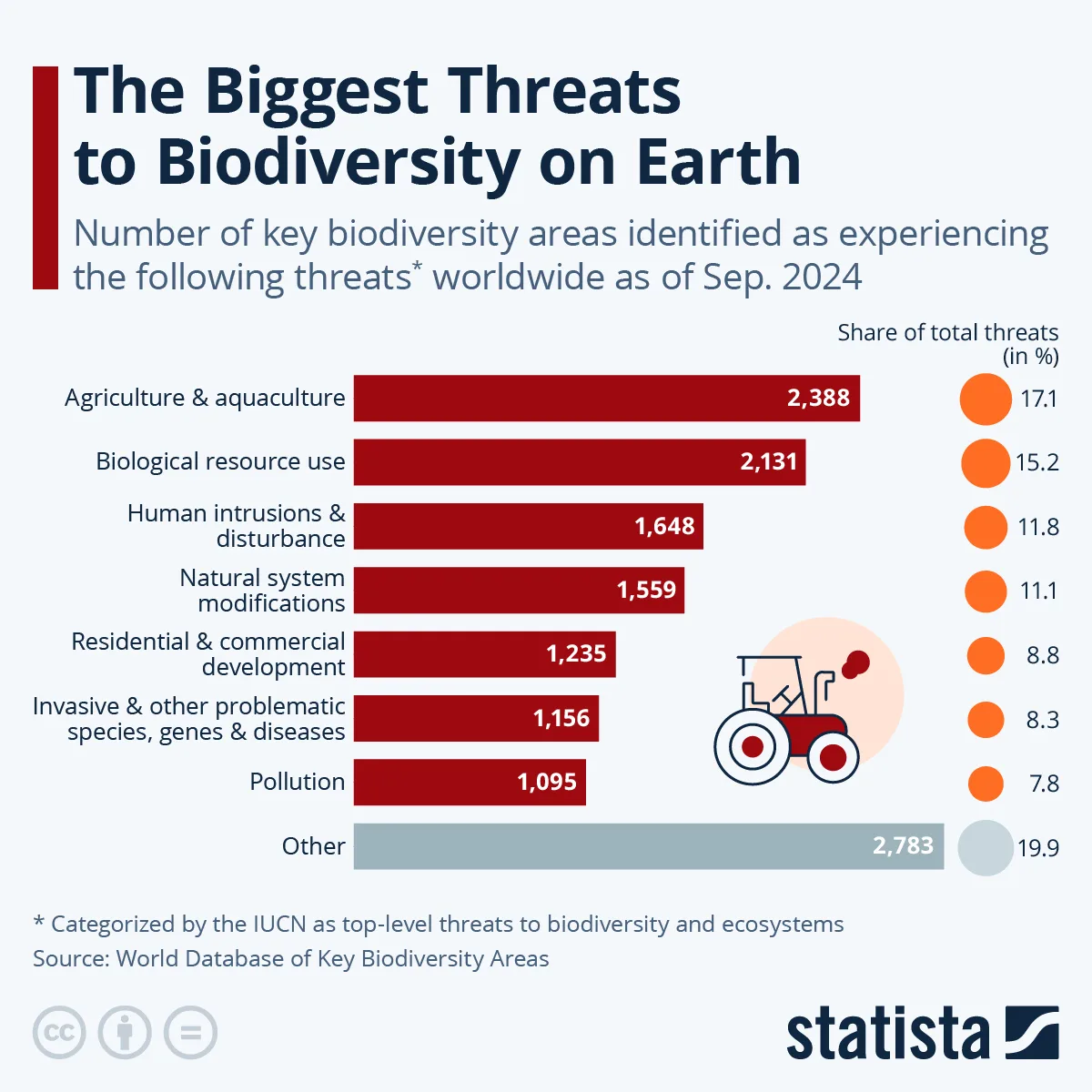
  • Top Biodiversity Threats: 50% from Agriculture & Aquaculture

    Top Biodiversity Threats: 50% from Agriculture & Aquaculture

    The Urgent Threats to Global Biodiversity

    Biodiversity is critical for maintaining healthy ecosystems and ensuring the survival of diverse species. However, recent data reveals alarming trends regarding the various threats that jeopardize biodiversity worldwide. According to the World Database of Key Biodiversity Areas, agriculture and aquaculture pose the largest single threat to these vital regions. Understanding these threats is essential for conservation efforts and sustainable practices.

    Agriculture and Aquaculture: The Primary Culprits

    Agriculture and aquaculture are major drivers of habitat destruction and species endangerment. The expansion of farmland often leads to deforestation, soil erosion, and the loss of natural habitats for countless species. Additionally, intensive farming practices contribute to pollution and the depletion of natural resources.

    Key Issues:

    • Deforestation: Clearing forests for crops or livestock reduces habitat for many species.
    • Chemical Use: Pesticides and fertilizers can contaminate nearby ecosystems and harm non-target species.
    • Overfishing: Aquaculture can deplete fish populations and disrupt marine ecosystems.

    Human Intrusions and Disturbance

    Human activities have a profound impact on biodiversity. The category labeled "Human Intrusions and Disturbance" captures a range of actions from recreational activities to significant societal unrest. These disturbances alter habitats and can lead to decreased wildlife populations.

    Key Factors:

    • Recreational Activities: Hiking, camping, and other outdoor activities can disrupt wildlife and lead to habitat degradation.
    • Military Activities: Wars and military exercises often result in environmental destruction and long-term ecological damage.
    • Urban Development: The expansion of cities into rural and natural areas further encroaches on wildlife habitats.

    Biological Resource Use

    The utilization of biological resources, whether for sustenance or commerce, poses significant risks to biodiversity. Activities such as hunting, logging, and wood harvesting directly impact species survival and habitat integrity.

    Key Considerations:

    • Hunting: Unsustainable hunting practices can lead to population decline and local extinctions.
    • Logging: Deforestation for timber reduces habitat availability for various species and disrupts ecosystems.
    • Illegal Trade: Poaching and illegal wildlife trade threaten endangered species and contribute to population declines.

    Natural System Modifications

    Human-induced modifications to natural systems can lead to drastic changes in ecosystems. Building infrastructure—such as dams, roads, and urban areas—alters water flow, habitat availability, and ecological balance.

    Major Concerns:

    • Dams: Construction can flood vast areas, displacing species and disrupting aquatic ecosystems.
    • Land Reclamation: Converting wetlands for agriculture or urban use removes crucial habitats for many species.
    • Water Diversion: Redirecting water for agriculture or cities can diminish wetland areas, impacting biodiversity.

    Pollution: A Global Crisis

    Pollution remains a pervasive threat to biodiversity, affecting air, water, and soil quality. Various types of pollution compromise ecosystems and the species that inhabit them.

    Types of Pollution:

    • Sewage: Untreated waste can contaminate waterways, harming aquatic life.
    • Oil Spills: These incidents lead to devastating effects on marine environments and species.
    • Acid Rain: Resulting from industrial emissions, acid rain can alter soil chemistry and affect plant and animal life.

    Energy Production, Mining, and Transportation Corridors

    While categorized under "Other" in terms of ranking, energy production, mining, and transportation corridors significantly threaten biodiversity by altering landscapes and ecosystems.

    Impact Analysis:

    • Mining: Extractive industries often lead to habitat destruction and landscape degradation.
    • Energy Projects: The establishment of power lines and substations can fragment habitats and disrupt animal migrations.
    • Transportation Corridors: Roads and railways can create barriers for wildlife, leading to population isolation and increased mortality rates.

    Global Action and Collaborative Efforts

    Recognizing these threats is the first step towards effective conservation. The upcoming UN Biodiversity Conference COP16, scheduled at the Food and Agriculture Organization (FAO) in Rome, aims to address these challenges. Key discussions will focus on mobilizing resources, crafting monitoring frameworks, and establishing financial mechanisms to protect biodiversity.

    Points of Discussion:

    • Resource Mobilization: Ensuring funding for conservation initiatives will be critical.
    • Monitoring Frameworks: Establishing metrics to assess biodiversity health and threat levels is essential for informed decision-making.
    • Financial Mechanisms: Creating sustainable funding sources to support ongoing conservation efforts will help mitigate risks to biodiversity.

    By understanding and addressing these threats, we can work collaboratively to preserve the rich tapestry of life on Earth for future generations.

  • Top 10 Countries with Highest Biodiversity Percentages

    Top 10 Countries with Highest Biodiversity Percentages

    Understanding Biodiversity and Its Importance

    Biodiversity refers to the variety of life on Earth, encompassing the different species of plants, animals, fungi, and microorganisms, along with their genetic variations and the ecosystems they form. It plays a crucial role in maintaining the functioning of ecosystems, contributing to processes such as nutrient cycling, pollination, and climate regulation. Understanding biodiversity is vital as it supports ecological balance and influences human well-being directly or indirectly.

    The Role of Biodiversity in Ecosystems

    Biodiversity is critical for various ecosystem functions and services. Here are some of the essential roles it plays:

    • Soil Health: A diverse range of organisms contributes to soil fertility by breaking down organic matter and recycling nutrients.
    • Pollination: Many plants depend on specific animal species for pollination, making species interactions essential for food production.
    • Climate Regulation: Different species have varied roles in regulating local and global climates, affecting everything from temperature to precipitation patterns.
    • Resilience to Changes: Biodiverse ecosystems are generally more resilient to disturbances (such as climate change or invasive species) because they contain a variety of species that can respond to changes in different ways.

    Threats to Global Biodiversity

    Despite its importance, biodiversity is facing unprecedented threats due to several human-induced factors:

    Habitat Loss

    Urbanization, deforestation, and agricultural expansion are significant drivers of habitat loss, leading to the decline of many species. When ecosystems are fragmented, it often results in isolated populations that struggle to survive.

    Invasive Species

    Non-native species often outcompete local flora and fauna, disrupting the natural balance of ecosystems. This can lead to declines in native species and, in some cases, their extinction.

    Pollution

    Air, soil, and water pollution can have devastating effects on biodiversity. Toxic substances can accumulate in the food chain, affecting species survival and reproduction.

    Climate Change

    Global warming is resulting in habitat shifts and altering species distributions. Many species cannot adapt quickly enough to the rapidly changing climate, leading to potential extinctions.

    The Most Biodiverse Countries in the World

    Certain countries have emerged as leaders in biodiversity conservation, home to significant shares of the world’s animal and plant species. According to a study by World Rainforests, the following countries stand out:

    Brazil

    Brazil tops the list with approximately 13% of global species diversity, thanks mainly to its vast Amazon rainforest, which is a rich reservoir of biodiversity.

    Indonesia

    Boasting numerous islands and various ecosystems, Indonesia ranks high for its unique flora and fauna, contributing extensively to global biodiversity.

    China

    China’s diverse geography, from mountains to wetlands, supports a wide range of species, making it one of the most biodiverse countries.

    Colombia

    Interestingly, Colombia, despite its smaller size compared to some of its counterparts, ranks among the top biodiversity hotspots due to its unique climatic and geographical features.

    Peru and Mexico

    Both of these Latin American countries demonstrate exceptional biodiversity as well, highlighting the richness of ecosystems found in the region.

    Biodiversity Concentration in Smaller Countries

    While larger nations often house extensive biodiversity, several smaller countries also make significant contributions. Notably:

    Singapore

    Singapore leads in biodiversity concentration, hosting an impressive variety of species in a small area due to its tropical climate and urban green spaces.

    Brunei

    Brunei’s rainforests are vital for biodiversity, showcasing an array of endemic species thriving in its tropical environment.

    Eswatini, Rwanda, and Burundi

    These African countries benefit from tropical latitudes and varied ecosystems, supporting a diverse range of animal and plant species.

    Slovenia and Montenegro

    In Europe, Slovenia and Montenegro are recognized for their diverse habitats, from alpine regions to Mediterranean coasts, fostering rich biodiversity.

    Bhutan

    Nestled in the Himalayas, Bhutan boasts a vast array of bird species and unique flora, due to its varied altitudes and climates, securing its place among the world’s most biodiverse nations.

    The Importance of Biodiversity Conservation

    Preserving biodiversity is critical for sustaining ecosystem services that humanity relies on. It is essential to implement conservation strategies that address the threats facing biodiversity, ensuring a balanced and healthy planet for future generations. This includes promoting sustainable development, protecting habitats, and reducing pollution levels while fostering global cooperation in conservation efforts.

    Understanding and protecting these biodiversity hotspots ensures not only the survival of various species but also the health of our planet as a whole.