الوسم: Ban

  • Afghan Fathers’ Heartache as Daughters’ Education Is Denied

    Afghan Fathers’ Heartache as Daughters’ Education Is Denied

    Afghan girls gaze at a school in Kabul on September 18, 2021—Reuters.

    After speaking with numerous fathers across Afghanistan about the education ban that prevents their daughters from progressing beyond primary school, many are visibly overwhelmed with despair. Their pain and frustration are evident in private conversations, even among deeply religious men who now question the validity of the ruling.

    The Taliban justify the ban as a religious interpretation, claiming it is necessary—yet no verse in the Quran states that education should be exclusive to men. One sincere father expressed his belief that the Quran does not support such restrictions, while another, who commends the Taliban for restoring stability and reducing corruption, admitted he could find no legitimate reason for the ban.

    All these men, whose identities are protected, shared the emotional distress the policy causes, with many losing sleep over how to support their talented but excluded daughters. A UN survey last year revealed that nine out of ten Afghan men considered secondary education for girls important, and nearly two-thirds believed supporting their daughters’ schooling was a sign of piety.

    Some men have even faced imprisonment for protesting against the ban. In March 2022, girls were officially forbidden from attending secondary schools, and university doors closed to women later that year. The Taliban have not responded to questions from AFP regarding the restrictions. While officials claim the ban is temporary, the UN estimates that over four years, at least one million girls have been directly affected.

    Engineer Ahmad, whose wife used to teach secondary school math but is now barred from doing so, never imagined a future where his daughters would become illiterate. He warned that “stopping at sixth grade” effectively leaves them uneducated about the modern world. Both he and his wife are haunted by the prospect of their daughters being forced to stay home, many of whom are nearing the end of their primary years. Tuition for secret classes in their northern city costs more than half his salary, making escape to another country seem unfeasible.

    Once, he had plans to take his family to the U.S., leveraging his experience working for an international organization, but those opportunities were shut down under President Trump. Although European countries voice strong condemnation of Afghanistan’s restrictions on women, Sweden, Denmark, and Germany have refused visas to the family. Ahmed, age 40, confides that their children don’t realize their hopes are slipping away, yet the daily question remains: “When will we leave?” They cling to hope, even as his eldest faces setbacks, possibly repeating her final year due to a fractured bone during exams.

    Mohammad, a doctor from a small Kabul province town, dreams of sending his daughters to top universities. He emphasizes that Afghan development needs women involved, not just within the home. His daughters are 12 and 14, with the older having started school later, and are now in their last primary year. For four years, he’s searched for ways to circumvent the restrictions—considering sending them to school in neighboring Pakistan, but the country has sealed its borders amid escalating tensions. He recently learned of a clandestine school teaching both religious and general subjects, demanding high fees of around $153 a month for both girls, with no official diploma awarded. Fearing a raid or being taken into custody, Mohammad is anxious but committed, telling his daughters, “While I’m alive, I will find a way for you to get an education.”

    N, who prefers to remain anonymous, hails from Kandahar, a Taliban stronghold where even tall girls can be barred from school early on. With three sons and a 12-year-old daughter, he describes her curiosity about astronomy, showing her a collage of the solar system and answering her questions about gravity. She asks, “How can I learn if I can’t go beyond sixth grade?” Seeking a solution, N moved his family to Kabul, exploring underground schools and online courses, yet fears he may no longer afford their education as international aid decreases. He tries to keep his daughter unaware of the growing stress their family faces.

    On a recent holiday, M’s 13-year-old daughter cried in her room, unable to attend school anymore. Celebrations outside contrasted sharply with her grief. M tries to take her out to eat once a week to lift her spirits, despite the restrictions. A devout and self-made logistics manager from a poor background, M endorses the Taliban for restoring order and fighting corruption but cannot justify why girls are barred from secondary education. When at home, he admits to hiding his tears sometimes, desperate for his daughter to attend university someday. He had saved enough to move her to Iran for study but was thwarted by war. Now, he enrolled her in a Quranic school to provide some social contact, but she recently refused to go, saying, “Even if I keep going, there’s no future for me.”

    Nasir, a father of two, reflects on the last day of primary school—marked by sadness and uncertainty. His wife, a teacher, helps them with home tutoring using secondhand textbooks, maintaining a strict routine. Still, his younger daughter struggles emotionally, losing morale during self-study sessions. To comfort her, Nasir gives her novels because she loves reading. The girls also secretly attend outside classes to continue learning, but the constant fear and sleepless nights weigh heavily on the family. Nasir laments that this regime seems intent on eradicating education, longing for a return to normal life.

  • Will France Ban Kanye West’s Marseille Concert?

    Will France Ban Kanye West’s Marseille Concert?

    Digital Phablet – Recent reports indicate that France is considering banning Kanye West’s upcoming concert in Marseille.

    According to AFP on Tuesday, France’s interior minister is aiming to prevent the American artist Kanye West from performing in Marseille because of his antisemitic comments.

    Laurent Nunez is “determined” to prohibit the June 11 concert and is examining “all options,” a source told AFP.

    The artist, also known as Ye, is scheduled to perform on June 11 in Marseille. The event is organized by Mars360, the exclusive operator of the Orange Vélodrome, a renowned stadium in the city.

    Kanye West

    Rapper Kanye West and Chaney Jones attend a game between the Washington Wizards and the Los Angeles Lakers in the fourth quarter at Crypto.com Arena on March 11, 2022, in Los Angeles, California. Photo by RONALD MARTINEZ / GETTY IMAGES NORTH AMERICA / GETTY IMAGES VIA AFP


    A month prior, Marseille’s mayor publicly opposed Ye’s arrival following hateful remarks he made.

    “I will not let Marseille be used as a platform for those spreading hatred and blatant Nazism. Kanye West is not welcome at the Vélodrome, our symbol of unity and community,” said Benoît Payan, the city’s mayor (left) and a candidate for his position, via X.

    Furthermore, this month, the UK also denied Ye entry into the country due to concerns over his controversial statements.

    The British government told the BBC on Monday that Ye had applied for an Electronic Travel Authorization (ETA), but his application was rejected as his presence was deemed “not in the public interest.”

    He was set to appear during all three days of London’s Wireless Festival in July, but the event was canceled following government intervention.

  • US to halt visa processing for 75 countries, confirms State Dept

    US to halt visa processing for 75 countries, confirms State Dept

    The Biden administration has announced plans to halt all visa processing for applicants from 75 different countries, according to a spokesperson from the State Department on Wednesday.

    Details about the decision were not provided, but the move was first reported by Fox News, which referenced a State Department memo.

    The suspension is scheduled to start on January 21, as reported by Fox News.

    Countries impacted include Somalia, Russia, Iran, Afghanistan, Brazil, Nigeria, and Thailand, based on the report.

    The memo instructs U.S. embassies to deny visas under current laws while the department reviews its procedures. No specific duration has been given for this pause.

    This development comes amid a broader immigration enforcement effort led by Republican President Donald Trump since he assumed office last January.

    In November, Trump pledged to “permanently pause” migration from all “Third World countries” after an Afghan national, who was involved in a shooting near the White House that resulted in a Guard member’s death.

  • Manifest Istanbul Concert Sparks Scandal: Band Faces Ban, Investigation, Censorship

    Manifest Istanbul Concert Sparks Scandal: Band Faces Ban, Investigation, Censorship

    Digital Phablet – Manifest Istanbul concert sparks controversy, leading to investigations, bans, and censorship.

    Also Read:
    Cemre Baysel and rapper Blok3 ignite romance rumors after dinner in Karaköy

    The Manifest concert in Istanbul has ignited a nationwide debate. What was meant to be a night celebrating music and freedom has quickly turned into a legal storm, shaking Turkey’s cultural landscape.

    Held at Küçükçiftlik Park on September 6, the +18 event was followed just three days later by an investigation from the Istanbul Chief Public Prosecutor’s Office. The authorities charged the band with serious offenses: “indecent behavior” and “exhibitionism.”

    On September 9, six band members and one dancer were summoned to testify at the Istanbul Courthouse. They were released under judicial supervision but faced restrictions that alarmed fans: they were prohibited from leaving the country and required to report to police regularly.

    Many viewed this ban as more than just a punishment—it felt like an effort to silence the group. In response, the band issued a statement on their official X account, taking responsibility for their stage performances. “We never intended to offend anyone,” they said, expressing both sadness and resilience. “As a band committed to uniting people through dance and music, this situation deeply saddens us.”

    However, their message did little to ease tensions. On September 10, the Ankara 6th Criminal Court of Peace took a further step by blocking social media videos of the concert, citing “protection of national security and public order.”

    This move intensified the controversy, sparking widespread debate across Turkey about freedom of speech, artistic expression, and censorship. Supporters argue that banning the footage is an attack on art itself, while critics claim the performance crossed acceptable boundaries.

    Manifest defended their artistic integrity, stating, “The stage is our most free space,” and emphasized their commitment to high standards. They also noted they would refrain from further comments, respecting the sensitivity of the issue.

    The incident has rapidly evolved from a single concert controversy into a broader societal question about artistic freedom. What started as a night of music has now become a debate over rights, expression, and the boundaries of art.

    As bans, investigations, and censorship continue, a lingering question remains: Will Manifest be silenced, or will this turbulent moment amplify their voice?

  • India Signs Bill to Ban Money-Based Online Games, Apps at Risk

    India Signs Bill to Ban Money-Based Online Games, Apps at Risk

    India’s parliament approved a bill on Thursday to ban online money-based gaming, a move that threatens the future of the country’s fast-growing fantasy gaming industry. The government, led by Prime Minister Narendra Modi, has raised concerns about the financial risks and potential for addiction associated with these games.

    The sudden prohibition has caught industry players off guard. Backed by venture capital firms like Tiger Global and Peak XV Partners, the sector was projected to reach a valuation of $3.6 billion in India by 2029. Many app-based companies, which have attracted billions in foreign investment, fear immediate job cuts and a complete shutdown.

    The bill outlaws “harmful” online betting services, advertisements, and related financial transactions, citing concerns over psychological impacts. “It is the responsibility of the government and parliament to act decisively against social issues that keep emerging,” IT Minister Ashwini Vaishnaw stated in parliament on Thursday.

    The upper house passed the Promotion and Regulation of Online Gaming Bill 2025 after the lower house approved it earlier this week. The final step is for the president to sign the bill into law, a formality that is expected to quickly follow, although no official date has been set.

    Industry insiders are discussing plans to challenge the ban in the Supreme Court, arguing it was implemented without sufficient consultation and highlighting that some games—like poker—are skill-based and should be exempt. Two sources familiar with the situation said this is under consideration.

    Popular apps such as Dream11 and Mobile Premier League, which use endorsements from prominent Indian cricketers and marketing campaigns, have significantly boosted the sector’s visibility. These platforms allow users to build virtual cricket teams based on real players, earning points according to actual match stats.

    On Thursday, Dream11’s app advertised that it was possible to create a team for as little as INR 29 and compete to win a prize pool, which is distributed among thousands of winners, with the top payout reaching INR 300,000 ($3,438).

    Dream11 is valued at $8 billion, while Mobile Premier League is worth around $2.3 billion, according to PitchBook. Other notable gaming platforms in India include Games24X7, Zupee, and WinZO, which offer card games like rummy and poker.

    Under the new legislation, anyone participating in money-based gaming after the law takes effect could face up to three years in prison and hefty fines.

  • Iran: US Travel Ban Reveals a ‘Racist Mentality’

    Iran: US Travel Ban Reveals a ‘Racist Mentality’

    TEHRAN: Iran criticized the recently announced U.S. travel ban affecting Iranians and citizens from 11 other nations, primarily in the Middle East and Africa, labeling the move as indicative of a "racist mindset."

    On Wednesday, President Donald Trump issued an executive order reinstating broad travel restrictions reminiscent of his earlier ban, citing national security concerns following a firebombing that occurred at a pro-Israel rally in Colorado.

    Alireza Hashemi-Raja, the Iranian Foreign Ministry’s director general for the affairs of Iranians abroad, described the policy, set to begin on June 9, as a "clear indication of the prevalence of a supremacist and racist mentality among American officials." He further asserted that the ban "exposes the deep-seated animosity" of U.S. policymakers toward both Iranian and Muslim communities.

    In addition to Iran, the travel restrictions extend to nationals from Afghanistan, Myanmar, Chad, Congo-Brazzaville, Equatorial Guinea, Eritrea, Haiti, Libya, Somalia, Sudan, and Yemen. There are also partial restrictions applied to travelers from several other countries.

    Hashemi-Raja stated that this policy "contradicts fundamental principles of international law" and unfairly restricts "hundreds of millions from exercising their right to travel due solely to their nationality or religion." He emphasized that such discriminatory actions would lead to "international accountability for the U.S. government," although he did not elaborate further.

    The United States and Iran have had no diplomatic relations since the aftermath of the 1979 Islamic Revolution, resulting in consistently strained interactions. Currently, the U.S. hosts the largest Iranian population outside of Iran, with estimates from Iran’s foreign ministry suggesting about 1.5 million Iranians lived in the U.S. as of 2020.

    This latest executive order follows the Colorado rally incident, which resulted in injuries to over a dozen individuals. The suspect in the attack is an Egyptian man who allegedly overstayed his tourist visa.

  • Saudi Hajj Violators to Be Deported, Face 10-Year Travel Ban

    Saudi Hajj Violators to Be Deported, Face 10-Year Travel Ban

    Saudi Arabia Reinforces Hajj Regulations for Pilgrims

    As the annual Hajj pilgrimage approaches, Saudi Arabia has reiterated the necessity for strict compliance with its regulations, emphasizing the importance of having a valid permit to participate.

    The Saudi Ministry of Interior has made it clear that anyone caught performing Hajj without a proper permit will be immediately deported and banned from re-entering the country for ten years. According to reports from the Saudi Press Agency, holding a permit is mandatory for all pilgrims.

    Officials urge all residents to adhere closely to Hajj rules and guidelines, stating that these measures are designed to ensure the safety and smooth experience of all participants during the pilgrimage.

    Additionally, the authorities encourage locals to report any violations by calling 911 within Mecca, Medina, Riyadh, and the Eastern Region, or 999 in other areas of the kingdom.

    On Tuesday, Minister of Media Salman Al-Dossary reaffirmed the country’s commitment to serving pilgrims through a well-coordinated system that aligns with national leadership directives and the Vision 2030 initiative. He highlighted that the “No Hajj Without a Permit” campaign is vital for organizing the pilgrimage and enhancing awareness.

    Al-Dossary also noted that over 1,070,000 pilgrims have already arrived from abroad, with 249,000 coming through the efficient Makkah Route Initiative. More than 25,000 mosques across Mecca, Medina, and other holy sites have been prepared, along with the distribution of millions of Qur’ans and digital ID cards.

    On health-related matters, Minister of Health Fahad AlJalajel urged pilgrims to follow essential health guidelines and assured that the healthcare system is fully equipped to handle any emergencies during the Hajj season.

  • Saudi Official Refutes Claims of Lifting Alcohol Ban

    Saudi Official Refutes Claims of Lifting Alcohol Ban

    Flag of Saudi Arabia — Unsplash

    A Saudi official dismissed on Monday rumors circulating in the media about the kingdom considering lifting its 73-year-old alcohol ban, which is specifically enforced for Muslims.

    The speculation gained traction after some international outlets picked it up following a mention in a wine blog last week. The claim suggested that Saudi authorities were looking to permit alcohol sales in tourist areas as the nation gears up for the 2034 soccer World Cup, but it did not cite any credible sources.

    In an effort to attract tourists and international businesses, the kingdom has relaxed some regulations as part of a broader initiative to diversify its economy and reduce its reliance on oil.

    This discussion on alcohol laws ignited a lively online debate within the kingdom, given that the king also bears the title of Custodian of the Two Holy Mosques—Islam’s most revered sites located in Mecca and Medina.

    Crown Prince Mohammed bin Salman, often referred to as MBS, has championed numerous reforms. These reforms include allowing women to drive starting in 2017, loosening certain gender segregation rules in public spaces, and curbing the powers of the religious police.

    Saudi Arabia and Kuwait stand as the only Gulf nations that maintain a ban on alcohol sales.

    One minor step towards permitting alcoholic beverages in the kingdom was the opening of the first alcohol store in Riyadh last year, which was exclusively available to non-Muslim diplomats.

    Before this, individuals could only obtain alcohol through diplomatic channels or on the black market.

  • Pinterest Tests New Features for Teens Amid School Smartphone Ban

    Pinterest Tests New Features for Teens Amid School Smartphone Ban

    While Instagram suggests that teens take a break after an hour of scrolling, Pinterest is stepping up their efforts by addressing this issue in educational settings. The popular visual platform is currently piloting a new feature in the United States and Canada that encourages younger users to log off and disable notifications during school hours.

    A report from The Verge details that Pinterest is conducting an extensive trial of this feature to help teenagers concentrate on their studies, staying ahead of the smartphone restrictions being implemented in schools throughout North America and beyond. When students feel the impulse to browse Pinterest for creative ideas during class, they will see a message pop up that says, “Focus is a beautiful thing. Stay in the moment by putting Pinterest down and pausing notifications until the school bell rings.”

    This prompt will target users aged 13 to 17 during typical school hours, which are generally from 8 a.m. to 3 p.m. on weekdays. However, it’s worth noting that most middle schools dismiss classes after 3 p.m., and high schools may start around 7:40 a.m., circulating from personal experience.

    This initiative comes a few months after Pinterest’s CEO Bill Ready expressed support for the Kids Online Safety Act (KOSA), alongside other tech companies such as Snap and Microsoft. This bill aimed to implement guidelines protecting minors from harmful content on social media but did not pass the House of Representatives last year due to concerns that it could lead to censorship.

    Pinterest asserts that it is pioneering the implementation of the focus prompt for teenage users, not only to align with regional restrictions on smartphone use in schools—New York recently enacted a law banning smartphone use in public schools starting in the 2025-26 academic year—but also to promote healthier digital habits among students. As part of this mission, Pinterest has also pledged a $1 million grant to the International Society for Technology in Education (ISTE) to support initiatives across 12 U.S. school districts, developing policies aimed at enhancing digital wellbeing.

  • Marvel Snap Faces Challenges From TikTok Ban

    Marvel Snap Faces Challenges From TikTok Ban

    Marvel Snap, the widely recognized mobile game, has been pulled from the market in the United States. It went offline concurrently with TikTok. While most discussions about the ban have centered on TikTok, it’s important to note that the ban also encompasses all applications developed by ByteDance, TikTok’s parent company. Even though Marvel Snap was created by Second Dinner, it was published by ByteDance.

    Now, when you attempt to access the app, a message appears saying, “Sorry, Marvel Snap isn’t available right now. A law banning Marvel Snap has been enacted in the U.S. Unfortunately, that means you can’t use Marvel Snap for now. Rest assured, we’re working to restore our service in the U.S. Please stay tuned!”

    Moreover, the app is currently unavailable for download. If you search for it on the App Store, a notification appears at the top stating, “TikTok and other ByteDance apps are not available in the country or region you’re in.” The Google Play Store doesn’t display an error message on the front end, but the app cannot be found for download.

    The unexpected shutdown of Marvel Snap has left many players reeling. The intricate legal issues of 2023 prompted ByteDance to step back from its gaming division and sell off its interests in publisher Nuverse. Many players believed Marvel Snap would remain unaffected, but ByteDance’s influence appears to have enabled the game’s removal as part of its exit from the Western market.

    Other games published by ByteDance, such as Mobile Legends: Adventure, Watcher of Realms, One Punch Man: The Strongest, and Land of Empires: Immortal, have also been taken down from app stores in the U.S.

    This situation raises several important questions. What happens to the players who have invested real money in in-game items or skins? Will they be eligible for refunds?

    On TikTok, there’s a message suggesting that negotiations could potentially lead to the app’s reintroduction in the United States. If this occurs, it’s likely that Marvel Snap and other affected titles would also make a comeback.

  • TikTok Ban Worries? Here’s What It Could Look Like On Your Phone

    TikTok Ban Worries? Here’s What It Could Look Like On Your Phone


    The Supreme Court has agreed to uphold a law that could result in TikTok being banned in the United States starting January 19. In response, TikTok has issued a formal statement indicating that it may have to shut down operations unless it receives urgent assistance from the outgoing administration.

    According to the company's announcement, “If the Biden Administration does not provide a clear assurance that crucial service providers will not be enforced against, TikTok will regrettably have to go offline on January 19.”

    So, what does going dark mean?

    Currently, there is no official clarification on what TikTok means by “going dark.” Speculation abounds regarding how the platform may appear once it ceases operations in the United States.

    Having lived in a country where TikTok was banned along with various other apps linked to China, I can share some insights. The situation has remained unchanged since the initial ban. In several instances, TikTok faced restrictions mainly affecting federal devices, while some countries like Pakistan and Albania experienced a more fluctuating status.

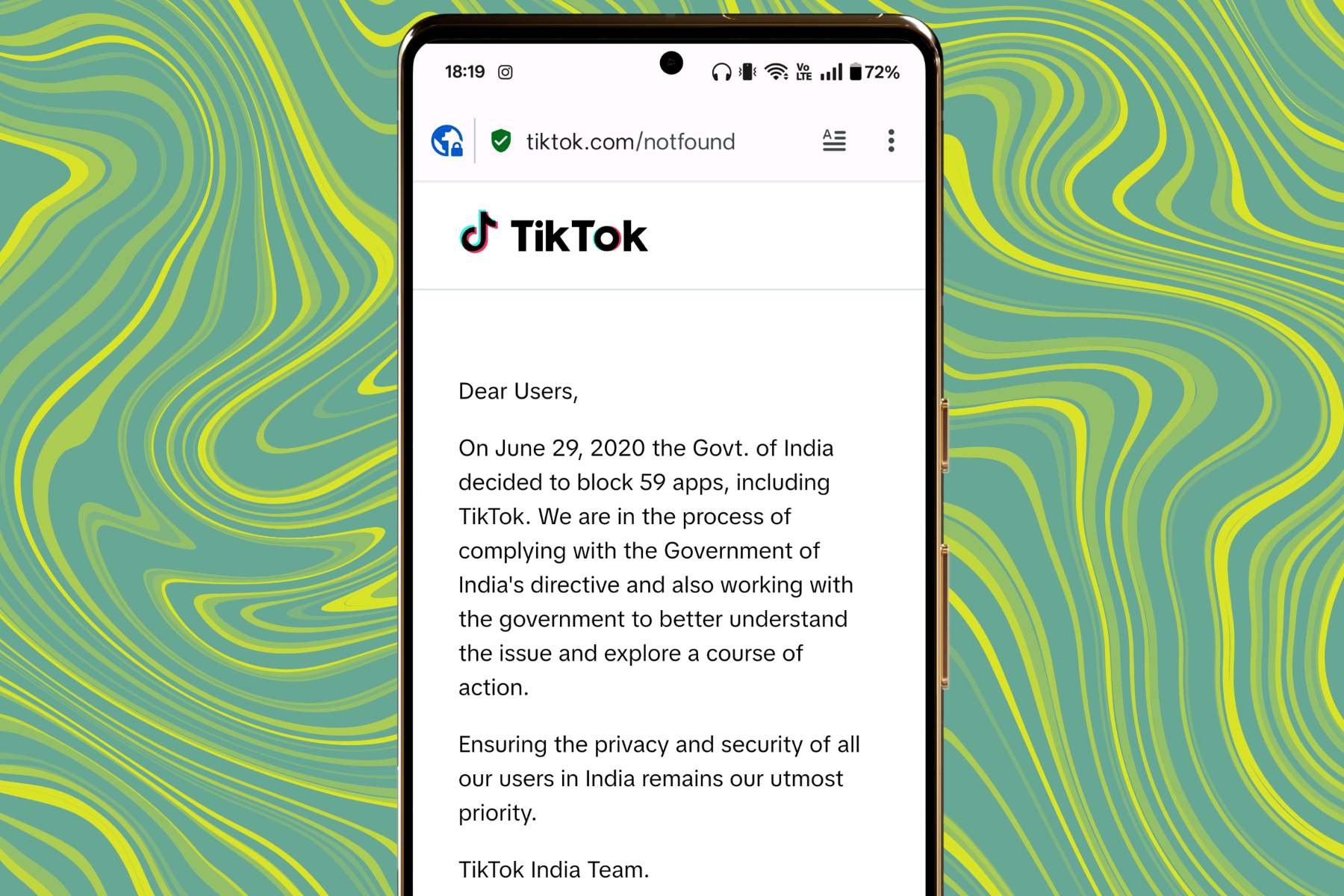
    For anyone curious about the experience of accessing TikTok from a nation where it’s banned, the usual display upon trying to log in often indicates restrictions:

    Error message that appears while trying to access TikTok after a ban.
    Nadeem Sarwar / Digital Trends

    This message typically states that access to the platform is restricted, consistent with compliance efforts with local agencies. Even though the ban in India began in 2020, this same notification remains in place today.

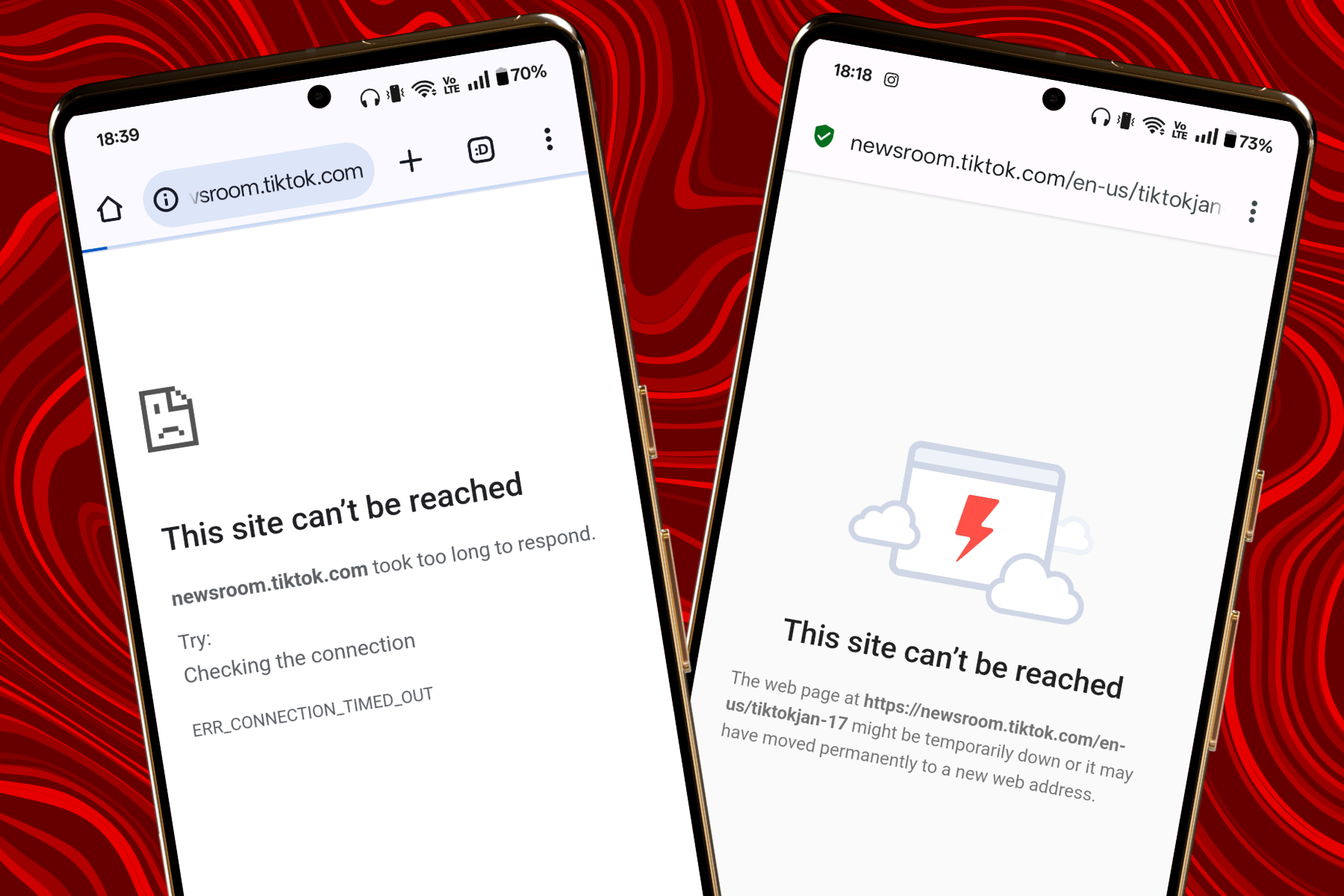
    For users in the United States, while the message may differ slightly, the underlying response will likely be comparable. Attempting to access other TikTok domains, like the newsroom, could generate a network error that resembles this:

    Error message that appears while trying to access TikTok after a ban on an internet browser.
    Nadeem Sarwar / Digital Trends

    Regarding the app’s availability, Apple and Google will have to remove TikTok's listings from their respective stores under local law. Consequently, fresh downloads will become impossible.

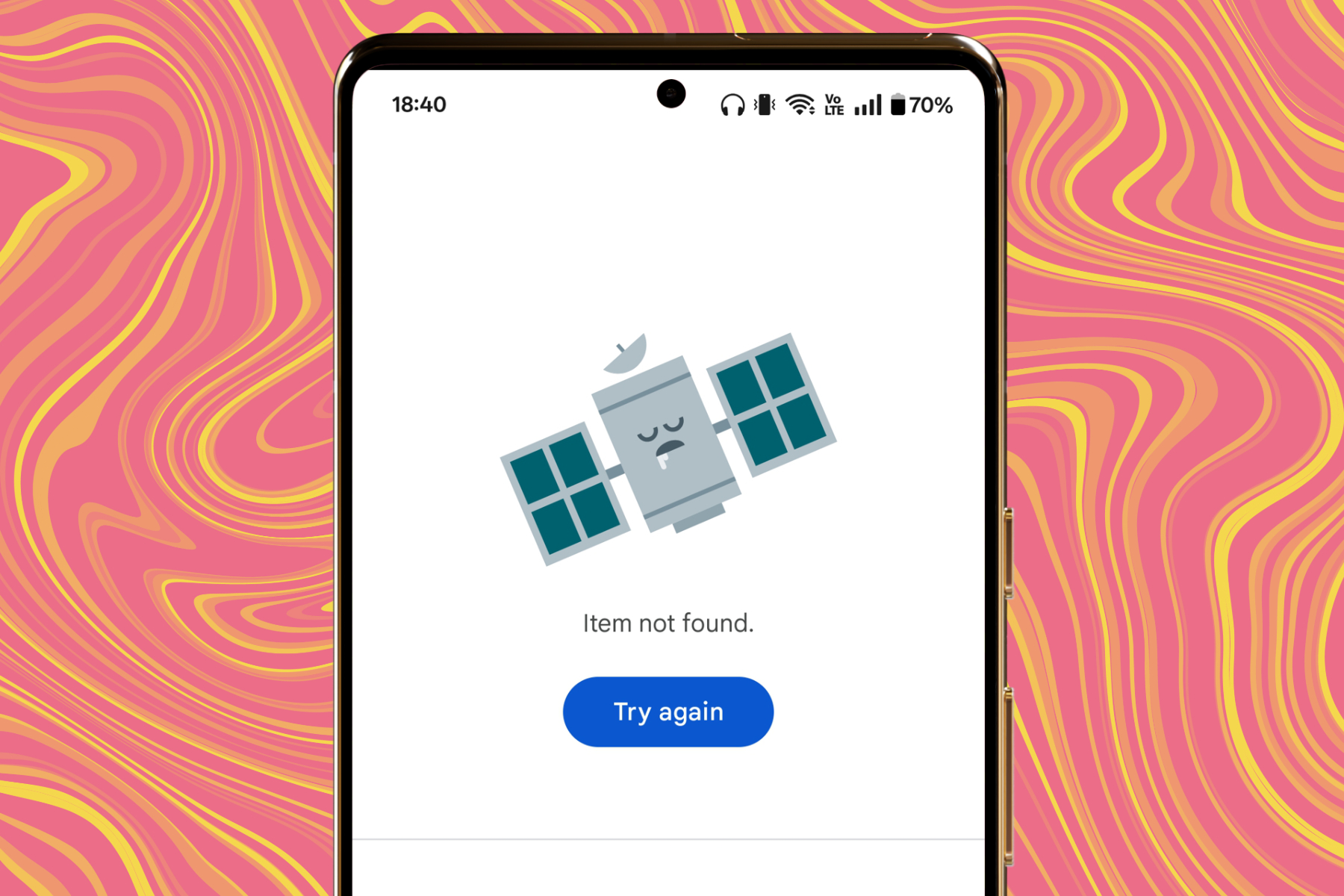
    When trying to access the app via a direct link, users will encounter an error message on Google Play Store that looks like this:

    Error message that appears while trying to access TikTok on Play Store.
    Nadeem Sarwar / Digital Trends

    For those on Apple's App Store, this is the error displayed on my iPhone:

    Error message that appears while trying to access TikTok app after a ban.
    Nadeem Sarwar / Digital Trends

    Is there still hope left?

    Does this indicate no way out? In their official response to the Supreme Court decision, TikTok expressed hope that the Biden Administration would intervene on their behalf. There are rumors that the incoming president, Donald Trump, may take action to protect the platform soon after he takes office the day after the deadline.

    The TikTok CEO is reportedly set to attend Trump's inauguration, as noted by The New York Times. Additionally, The Washington Post speculates that Trump may issue an executive order extending the ban's timeline by two to three months, although specifics on how this would be enacted remain unclear.

    On a related note, NBC News has reported that the Biden administration is looking to maintain some level of TikTok's availability post-ban. “Americans shouldn’t anticipate TikTok being completely unavailable on Sunday,” stated an unnamed official.

  • Support for TikTok Ban Plummets from 50% to 32% in 2024

    Support for TikTok Ban Plummets from 50% to 32% in 2024

    The TikTok Ban: A Turning Point in Public Perception

    As the landscape of social media continues to evolve, so too do the debates surrounding platforms like TikTok. Recently, the discourse has intensified, particularly regarding a potential ban of the app in the United States. This blog delves into the shifting support for a TikTok ban, legal ramifications, and broader implications for American users.

    Current Legal Developments Surrounding TikTok

    Supreme Court’s Role in TikTok’s Future

    The impending decision from the Supreme Court has generated significant buzz. The court is gearing up to announce whether to uphold a law that could effectively ban TikTok in the United States. This ruling is crucial not only for TikTok’s survival but also for establishing precedents regarding foreign influence on American technology.

    The Divestiture Mandate

    In a striking turn of events, President Joe Biden mandated in April 2024 that TikTok’s parent company, ByteDance, divest its U.S. operations. This requires the company to find a suitable buyer within 270 days, a deadline that is now approaching fast. As ByteDance struggles to comply with this order, uncertainty looms over whether the app can continue to operate in the U.S.

    Understanding the Legislative Context

    The Protecting Americans from Foreign Adversary Controlled Applications Act

    This law aims to sever connections between TikTok and its parent company, ByteDance, amid allegations of the app being a tool for the Chinese government to surveil and manipulate the American public. According to lawmakers, such actions present a serious threat to national security, necessitating swift legislative action.

    Court Rulings and First Amendment Implications

    In December, the U.S. Court of Appeals upheld the law, clarifying that it does not infringe upon First Amendment rights. The court ruled that the government’s efforts were solely aimed at safeguarding American citizens from foreign adversaries. This legal backing could significantly influence the Supreme Court’s forthcoming decision.

    Public Sentiment Towards a TikTok Ban

    Declining Support Among Americans

    Despite the legal maneuvers and the looming deadline, public support for a TikTok ban seems to be dwindling. Data from surveys conducted by the Pew Research Center reveal a notable decline in the percentage of Americans favoring the ban—dropping from 50% in March 2023 to merely 32% by July/August 2024.

    Bipartisan Trends in Public Opinion

    Interestingly, this decline is not confined to one political side. Support for the ban has diminished across the board; with Democrats’ support falling from 43% to 24% and Republicans’ from 60% to 42%. This bipartisan trend raises questions about the effective messaging surrounding national security and foreign interference.

    The User Perspective

    TikTok Users Voice Opposition

    It’s no surprise that TikTok’s user base largely stands against the ban. A mere 10% of users expressed support for prohibiting an app that has become an integral part of their online lives. This discontent highlights a potential disconnect between the motivations of lawmakers and the preferences of the American public.

    The Role of Political Figures

    Trump’s Position on the Ban

    Former President Donald Trump has remained a vocal critic of the ban, utilizing his platform to argue for alternative solutions that address national security concerns without fully prohibiting TikTok. His involvement in filing an amicus brief with the Supreme Court illustrates a continued interest in navigating an outcome that might benefit both users and security interests.

    Final Thoughts on TikTok’s Future

    As the deadline for compliance approaches and public sentiment shifts, the future of TikTok in the U.S. hangs in the balance. With a complex interplay of legislation, public opinion, and international relations, the outcome could redefine the relationship between social media platforms and national security concerns moving forward.

  • 66% Support Social Media Ban for Kids Across 30 Countries

    66% Support Social Media Ban for Kids Across 30 Countries

    Australia’s Social Media Ban for Children: A Game-Changer?

    In a significant move aimed at protecting the youth, Australia has enacted a social media ban aimed at individuals under the age of 16. This comprehensive legislation targets major platforms such as Instagram, X (formerly Twitter), and TikTok, marking a bold step towards safeguarding young Australians from perceived digital threats. Set to be enforced by late 2025, the initiative is grounded in a rising concern over the "social harm" that social media can inflict on children.

    Legislative Overview

    The newly approved law carries substantial implications for tech companies, with penalties soaring up to A$49.6 million (approximately $32.5 million) for non-compliance. Such financial repercussions are designed to incentivize platforms to adhere strictly to the regulations, thereby promoting a safer online environment for minors. The Australian government’s commitment to this initiative reflects a growing recognition of the need for stricter regulations concerning children’s access to online platforms.

    Public Sentiment and Support

    The introduction of this legislation has garnered considerable backing from the general public. An Ipsos survey conducted earlier in the year revealed that a significant majority across 30 countries supports a full ban on social media for children and young teens. In Australia specifically, public sentiment appears firmly behind this initiative, underscoring widespread concerns about the impact of social media on younger generations.

    Global Perspectives on Social Media Regulation

    The infographic highlights that the desire for a social media ban is not confined to Australia. For instance, in France, an astonishing 80% of adults believe children under 14 should be prohibited from using social media, whether in or out of school. This widespread agreement illuminates a global trend where various nations grapple with the challenges posed by digital platforms to the safety and wellbeing of children. Notably, Germany marks a contrasting perspective—where 40% of the population supports a ban—indicating a more lenient attitude toward children’s access to social media.

    Generational Views on Smartphone Use

    Diving deeper into individual perspectives, the Ipsos survey findings reveal clear generational divides concerning smartphone usage in educational settings. Support for bans on smartphones in schools sees a stark variation: 36% of Gen Z respondents favor such restrictions, in contrast to higher percentages seen in older demographics—66% of Boomers, 58% of Gen X, and 53% of Millennials. This discrepancy highlights an evolving attitude towards technology and its role in education as different generations experience digital connectivity in distinct ways.

    Concerns and Critique from Child Rights Groups

    Despite the apparent public support for the ban, this legislative measure is not without its detractors. Several child rights organizations have voiced concerns that a blanket social media ban could inadvertently harm vulnerable populations. Children from migrant families, LGBTQIA+ backgrounds, and other minority groups may be especially impacted, as social media often serves as a vital lifeline for connecting with supportive communities and resources.

    Critics argue that enforcing such stringent measures could inadvertently push children toward less regulated corners of the internet, where they might face greater risks. As the debate continues, it becomes increasingly crucial to consider both the protective intentions behind this legislation and the potential implications it might hold for the safety and connectivity of children in an ever-evolving digital landscape.

    The Struggle for Effective Technology Regulation

    Australia’s recent legislative efforts underscore a broader global struggle to find an effective balance between technology regulation and freedom of expression in digital spaces. As countries worldwide grapple with how best to protect children online, Australia’s approach stands as one of the strictest on a national level. The implications of this ban could extend far beyond its borders, potentially inspiring similar regulations globally while also igniting debates about the most effective ways to keep children safe in an increasingly digital world.

  • Drama Channel Bans Firdous Jamal for Criticizing Mahira Khan

    Drama Channel Bans Firdous Jamal for Criticizing Mahira Khan

    LAHORE – A prominent drama channel has decided to impose a ban on veteran actor Firdous Jamal following his comments about well-known actors Mahira Khan and Humayun Saeed.

    In response to the situation, Jamal remarked that no channel or person can take away his ability to work, as everything is ultimately in the hands of a higher power. He emphasized that he does not shy away from speaking the truth. “If I notice a flaw in someone and ignore it, that would make me insincere,” he explained, clarifying his remarks regarding Mahira Khan and Humayun Saeed.

    This controversy arose after Jamal participated in an interview where he criticized Mahira Khan for her advancing age, suggesting that she is too old to play lead roles in dramas and films. He also voiced his dissatisfaction with Humayun Saeed’s acting abilities.

    During the interview, the host brought up Jamal’s previous comments, asking, “You mentioned that Mahira Khan should be considered for motherly roles instead of heroine parts. However, she recently gave an impressive performance in the hit film The Legend of Maula Jatt. What do you think about that?”

    Jamal firmly replied, “I maintain my stance. I merely stated the fact regarding Mahira Khan’s age; she is indeed an older woman.”

    His remarks ignited a lively debate on social media, with some users supporting Jamal’s opinions while others criticized him for his views.

  • Donald Trump, First President Who Got Banned On Social Media

    Donald Trump has been banned from almost all social media, including his campaign account have also been banned after the Capitol incident.

    (المزيد…)