الوسم: balance

  • Hidden Body Part That Could Improve Your Balance with Age

    Hidden Body Part That Could Improve Your Balance with Age

    As individuals age, maintaining good balance becomes a significant challenge in preserving an active and autonomous lifestyle. Proper stability ensures safe walking, stair climbing, shopping, and helps prevent falls. When balance declines, daily tasks become more difficult, increasing the risk of injuries, hospitalizations, and loss of independence.

    It has long been understood that strong muscles support good balance, but scientists have debated which specific muscles are most crucial. A recent study from Miguel Hernández University of Elche and ISABIAL suggests that core muscles and control, known as trunk stability, may play an even more vital role in maintaining balance than hip strength in healthy older adults.

    The trunk includes muscles around the abdomen, lower back, and pelvis. These muscles are essential for keeping the body upright during sitting, standing, reaching, and walking. They also facilitate smooth coordination between the upper and lower body during movement.

    To explore healthy aging further, researchers examined 127 physically active adults aged between 30 and 80. Participants underwent assessments measuring trunk stability, balance, hip strength, and mobility during routine activities. One test involved sitting on an unstable surface to evaluate postural control, while another measured balance while standing heel-to-toe. Hip strength was also measured, along with a walking test that simulated everyday movements.

    Results indicated that all physical abilities waned with age. However, trunk stability showed a faster decline than overall balance, hip strength, or mobility—particularly among men. This pattern suggests that aging might impact the body’s core control more early and more intensely than many realize.

    Further analysis revealed a strong correlation between trunk stability and overall balance, hinting that better core control contributes significantly to staying steady. Meanwhile, hip strength was more closely linked to mobility, such as standing up quickly and walking.

    These insights imply that balance and mobility depend on different physical capabilities. While strengthening hips remains important for general movement, maintaining strong trunk muscles appears to be key in preventing balance loss and falls.

    The findings could enhance exercise strategies for older adults. While walking and general physical activity are beneficial, they might not fully address age-related changes in postural control. Incorporating exercises that safely target balance and core strength could provide additional advantages. It’s crucial that such exercises, especially those involving unstable surfaces or challenging balance tasks, are conducted under professional supervision and tailored to individual abilities, particularly for those with existing balance issues or prior falls.

    Importantly, the research highlights that balance training should begin before reaching old age. Building core strength and body control during middle age may help slow decline and preserve independence longer.

    Although this study doesn’t prove that improving trunk stability alone can prevent falls, it underscores the importance of the core in healthy aging. Future research should explore whether specialized training programs can directly lower fall risks and enhance long-term health outcomes. Nevertheless, the evidence emphasizes that core strength deserves increased focus in strategies promoting healthy aging.

    For those interested in health, exploring studies on turmeric—the natural powerhouse against inflammation—and dietary choices that reduce chronic inflammation can be very insightful. Recent research also points to how plant-based diets and sufficient vitamin D levels may help decrease inflammation, contributing to better health overall.

    Source: Miguel Hernández University of Elche.

  • Why Aging and Parkinson’s Make Balance More Difficult

    Why Aging and Parkinson’s Make Balance More Difficult

    Staying balanced might seem straightforward, but it’s actually a complex process that relies on the rapid and coordinated efforts of the brain, muscles, and nervous system working seamlessly together. As people age or develop neurological conditions like Parkinson’s disease, this system often becomes less efficient. A recent study from Emory University offers some insights into why this occurs.

    Led by Professor Lena Ting and her team, the research was published in the journal eNeuro. It examined how the brain and muscles respond when someone unexpectedly loses their balance—such as slipping or being pushed.

    In earlier trials, researchers tested young adults by suddenly disrupting their balance in a way similar to pulling the rug out from beneath their feet. The body responded almost immediately, with an automatic reaction controlled by a part of the brain called the brainstem. This quick response helps keep the body upright.

    If the disturbance was more intense, a second, more complex response kicked in. This involved multiple brain regions working alongside the muscles to help the person regain their stability. These two responses work together to restore balance effectively.

    In the new study, the team looked at how this process differs in older adults and individuals with Parkinson’s disease. Parkinson’s is a movement disorder that often causes stiffness, shaking, and slower reactions. The researchers found that both older adults and those with Parkinson’s exhibited heightened brain activity even during minor balance disturbances. This suggests their brains are exerting more effort to compensate for deficits that younger people handle more easily.

    Simultaneously, their muscles were more active overall. Instead of activating only the muscles needed for balance correction, their bodies recruited extra muscles, making movement less efficient. One noteworthy discovery was that, instead of muscles working in pairs—where one contracts and the other relaxes—both muscles would tighten at the same time, leading to stiffness and less smooth movement.

    This excessive stiffness hampers their ability to recover balance swiftly and effectively. Interestingly, despite the increased brain effort, their physical responses weren’t always optimal, indicating reduced efficiency. Essentially, their brains had to work harder, but their bodies didn’t respond in the most effective way, raising the risk of falls.

    The researchers suggest that this heightened brain activity could signal an underlying decline in coordination efficiency. When the brain has to labor more, it may struggle to react quickly or precisely, which can contribute to fall risk.

    The study also opens up potential methods for early detection. By analyzing muscle responses following a sudden imbalance, clinicians might estimate how much the brain is involved in maintaining stability. This could enable early intervention through balance training or targeted exercises before serious falls occur.

    From a broader perspective, this research emphasizes that mobility issues in aging and neurological diseases aren’t just about weaker muscles. It’s also about changes in how the brain communicates with muscles. Recognizing this can guide new therapeutic strategies to prevent falls and enhance quality of life.

    However, it’s important to note that the testing methods used are still experimental, and further research with larger participant groups is needed to validate these findings.

    Overall, the study highlights a key point: as we get older or face neurological issues like Parkinson’s, our bodies rely more on the brain to stay balanced, but this increased effort doesn’t always result in better stability. Understanding these processes can lead to innovative treatments and training programs aimed at reducing fall risk and promoting healthier aging.

    For those interested in Parkinson’s disease, research suggests that Vitamin B might slow cognitive decline, and adopting a Mediterranean diet could lower the risk of developing the condition. Additional studies are exploring how wheat gluten impacts brain health and how daily intake of olive oil may support cognitive function.

    Source: Emory University

  • How to Complete the Yin-Yang Puzzle in Where Winds Meet

    How to Complete the Yin-Yang Puzzle in Where Winds Meet

    Exploring the fantasy world of Wuxia, Where Winds Meet combines heroic philosophies with over-the-top action, humorous moments, and moves that seem to defy gravity. Sometimes, all these themes come together in one quest, like the Cries In The Distance Lost Chapter.

    In this quest, you hear a familiar voice calling from far away. Finding the source only leads to more questions, puzzles, and tough bosses—each piece representing parts of the game’s story. Every element in this quest is a puzzle, so here’s a guide to help you solve them.

    How to Start the Cries In The Distance Quest

    If you’re near the Peace Bell Tower in the Moonveil Mountain area of Qinghe, you might be there to fix the Bell of Demoncalm. But once you arrive, you’ll hear cries for help nearby. Use the game’s UI prompts to follow the sounds, leading you to a hidden cellar door in a small alcove slightly down the mountain.

    Enter through this door to officially begin the quest. Talk to Feng Jisheng, who is trapped behind another wall. Follow his instructions to burn the branches on the opposite wall. Doing this will reveal a button you can step on, opening the trapped wall and activating a complex yin-yang puzzle.

    Solving The Yin-Yang Puzzle

    The central symbol in the room rises up now. Both it and four statues around it can be rotated, but what’s the goal? Feng explains that the yin-yang is meant to balance Earth, Heaven, Fire, and Water. Earth and Heaven should work together, while Fire and Water oppose each other.

    Your goal is to flip this balance: allow Fire and Water to harmonize, and have Earth and Heaven oppose each other. This means positioning the statues so that Heaven and Earth face away from each other, and Fire and Water face each other.

    If you’re unsure which statue is which, look at the symbols in the image when examining the yin-yang. The symbols match the four main directions: Heaven and Earth are north and south, while Fire and Water are east and west. Lines on the image and ground help you align everything more easily.

    When you move one statue, sometimes the opposite one moves too. If that happens, rotate the yin-yang symbol in the middle to unlock independent movement. The final step is to have Fire and Water face each other, both looking towards the center where two circles are located inside the yin-yang.

    Next, rotate the yin-yang again so the Heaven and Earth statues face away from each other. When done correctly, mist will flow into the center from all four statues, causing the yin-yang symbol to descend and reveal a hidden room below.

    Tip: If this seems complicated, simply align the statues as shown in the reference image to solve the puzzle more easily.

    Exploring Tian Ying’s Dwelling

    After descending, you’ll enter the room where Tian Ying studied Tai Chi and developed new techniques. Your task is to examine everything—it’s all glowing and easy to find. Interact with each item to gather lore, character details, and clues about Tian Ying’s whereabouts and research.

    Once done, head to a hidden wall with Feng behind it. Use the jade piece you found earlier to unlock this secret door and move into the next chamber.

    Defeating The Thick-Skinned Albino Bear

    Progressing further, you’ll find yourself in an arena where a giant bear appears—a Thick-Skinned Albino. Feng notes its thick hide, telling you that normal attacks might be useless, and he’s right.

    But Tian Ying wanted to learn Tai Chi… and where did you first learn Tai Chi? That’s correct: from a bear. Around the area, there are three stone piles. The bear will lose one-third of its health each time you toss it into these piles. To do this, use Tai Chi to grab the bear and throw it onto a pile.

    Tip: Aim roughly at the stones and face in their direction when tossing. This helps ensure the bear lands exactly on the piles before it moves away.

    Once defeated, collect the contents from the two smaller chests. Then, interact with the large chest to finish the quest. And just like that, the mission is complete.

  • Completing Oblivion Remastered Patch 1.2: Solving Difficulty Issues

    Completing Oblivion Remastered Patch 1.2: Solving Difficulty Issues

    The Elder Scrolls 4: Oblivion Remastered Patch Update

    The Elder Scrolls 4: Oblivion Remastered is set to receive its second major patch soon, with update 1.2 now available in the Steam Beta. Bethesda aims to address several major issues, including difficulty balancing, which many fans have criticized.

    A significant concern is the sharp increase in difficulty between the Adept and Expert levels. Adept is deemed too easy, while Expert is frustratingly hard for many players. In Expert mode, you deal less damage and take more, making enemies feel like they can withstand anything while you feel weak.

    To fix this, the upcoming patch will introduce a ‘Journeyman’ difficulty level, which will serve as a better middle ground between Adept and Expert. Additional difficulty settings will also allow players to adjust damage levels to suit their preferences.

    Once the update is live, you can adjust either Player Combat Damage or Enemy Combat Damage to find the right balance. For instance, if enemies feel too tough on Expert or Master levels, you can increase your own damage to make things fairer.

    Currently, this update is only accessible through the Steam Beta, and the timeline for a wider release or updates for other platforms is still unclear. It’s likely that the game will remain in its current state for a while after Patch 1.2 is released.

  • Tips for Completing Your Team Composition in Marvel Rivals

    Tips for Completing Your Team Composition in Marvel Rivals

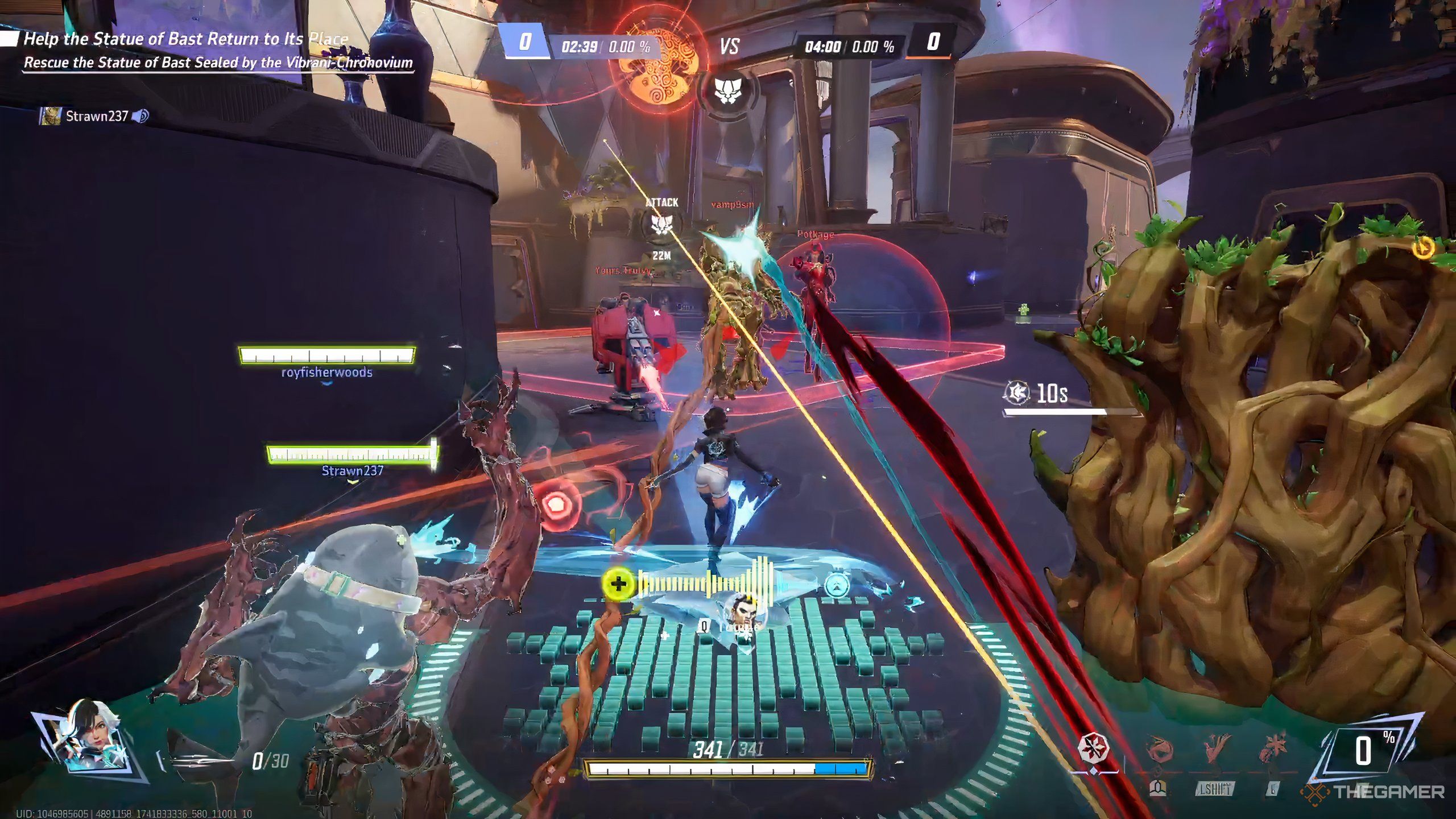
    Building a strong team composition is vital for securing victory in a match of Marvel Rivals. It’s not just about filling roles like two vanguards, two duelists, and two strategists. Success hinges on more nuanced factors that can significantly impact your chances of winning. Whether you’re a newcomer to hero shooters or simply new to Marvel Rivals, this guide covers everything essential for crafting a balanced team.

    Understanding Team Composition

    In Marvel Rivals, your team’s composition reflects its strengths and capabilities. Key considerations include:

    • The number of heroes in each role
    • The types of heroes you choose
    • The overall playstyle of your team

    To start, aim to include at least one hero from each role: vanguard, duelist, and strategist.

    It’s important to note that there aren’t strict rules for how many heroes you should designate to each role, as Rivals has no rigid role queue.

    Hero Types and Playstyle

    Playing effectively requires an understanding of the different hero types and their associated playstyles. There are four primary hero types you should familiarize yourself with.

    1. Poke: In a poke playstyle, heroes attack from afar to sap the enemy’s resources over time. Examples include Peni Parker, Hela, Punisher, and Luna Snow.

    2. Dive: Dive heroes engage the enemy’s backline, catching opponents off guard. Notable dive heroes are Venom, Thor, Iron Fist, and Psylocke.

    3. Brawl: Brawl heroes excel in close-quarter combat and use their strength to dominate in melee battles. The Hulk, Wolverine, and Mister Fantastic are great examples.

    4. Rush: Rush heroes aggressively push forward and aim to eliminate enemies quickly. Characters like Venom and Cloak & Dagger fit this style well.

    Running a team that lacks strategists is typically a poor choice and can lead to a frustrating gameplay experience.

    Balancing Your Team Composition

    A common approach to team composition involves having two vanguards, two duelists, and two strategists. This setup often leads to a balanced team ready to face opponents. However, context matters significantly; not every enemy team will fit neatly into this archetype.

    Ultimately, selecting heroes should revolve around the required roles and the intended playstyle of your team.

    Examples of Hero Selection

    Here are a few instances of hero selection based on playstyle and composition:

    1. Poke Composition: If your team has two vanguards and two duelists but only one strategist, you should consider adding a poke-based strategist like Rocket Raccoon or Loki.

    2. Dive Composition: If your team is focused on a dive strategy with only one vanguard, consider adding a second vanguard such as Thor or Peni Parker for better support.

    3. Brawl Composition: Your team may have more than enough strategists, allowing you to choose a brawl-focused duelist like Wolverine to enhance damage output.

    4. Rush Composition: If all your heroes possess good mobility and you have a balanced team, you can enhance your rush strategy by adding a high-mobility strategist like Luna Snow.

    While achieving balance is crucial, flexibility remains vital. Remember, avoid creating a team that fights against itself—like having a poke hero if most of your team favors melee.

    Countering the Enemy Composition

    Understanding how to counter your opponent’s team composition is essential. Different compositions can effectively neutralize one another:

    • Poke can be countered by Dive
    • Dive can be countered by Brawl/Rush
    • Brawl/Rush can be countered by Poke

    Keep in mind that these are general guidelines; effective counters depend on engaging in the appropriate playstyle to fully leverage your team’s strengths. If you’re utilizing a brawl or rush approach, you’ll still need to confront divers in your backline directly.

    With this knowledge, you’ll be well-prepared to enhance your gameplay and improve your chances of victory in Marvel Rivals!

  • Mastering Belt Balancing Techniques in Factorio

    Mastering Belt Balancing Techniques in Factorio

    In Factorio, belts are essential for transporting materials from one location to another. As your factory grows, you’ll need to enhance your belt system by adding more lines, dividing them, and boosting overall efficiency.

    Splitters play a key role in this process, as they allow you to evenly distribute materials between two outputs. However, complications may arise if you decide to include a second or third splitter further down the line. To tackle this, you can apply the concept of belt balancing, which we’ll explore below.

    How to Balance Belts


    Placing a splitter at the end of a belt will evenly divide the materials, so the left side of the splitter will receive 50% of the materials, with the other 50% going to the right. If you add another splitter to the left side, it will split its side into two sections, each receiving 25% of the original materials, and the process continues.

    While this division isn’t inherently problematic, managing the correct amounts for your machines can become tricky. This is where belt balancers come into play, designed specifically to distribute materials evenly across multiple belts.

    There are several methods to set up a belt balancer, but one standard approach works well for most situations.


    A basic design for a universal belt balancer.

    This setup uses four belt lines split into two pairs, combining the contents of the first two and the last two pairs. An additional splitter then evenly merges everything, ensuring a balanced distribution from all four lines.

    This method generally requires at least two inputs to distribute the four belts correctly, but alternative designs allow for a single-input setup as well.


    A simple design for distributing materials across four belts.

    This design effectively stacks three splitters so that all four belts can receive materials. While it doesn’t evenly balance the materials initially, the main balancer will handle that task effectively.

    Getting Materials on Both Sides of a Belt


    A design for filling both sides of a belt.

    Belts have two sides from which materials can be accessed. It makes sense to utilize both sides for efficiency. Since inserters only place materials on the nearest side, you can either use inserters on both sides or apply a design like the one shown above.

    This straightforward design splits the belt and loops it back onto itself, ensuring that both the left and right sides receive materials. You can integrate this mechanism anywhere along your belt lines for optimal efficiency.