Tag: Azerbaijan

  • Kerem Bürsin Gets Star Honor & Skin Cancer Screening in Azerbaijan

    Kerem Bürsin Gets Star Honor & Skin Cancer Screening in Azerbaijan

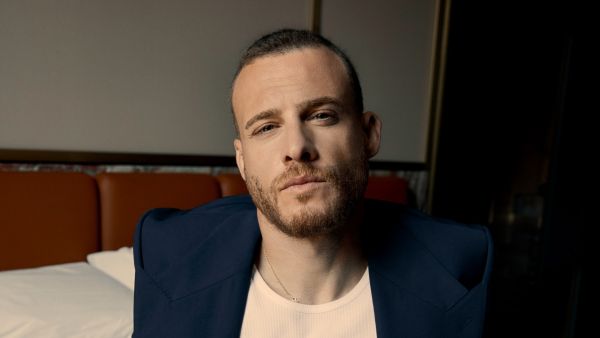
    Kerim Bürsin is making headlines in Turkey for two very distinct reasons—raising awareness about skin cancer while also receiving a star’s welcome in Azerbaijan, where he was honored with a spot on the Sea Breeze Walk of Fame.

    He first gained praise after participating in Euromelanoma 2026 Skin Cancer Awareness Week, joining one of Turkey’s leading public health initiatives aimed at encouraging early detection and routine skin checks.

    As part of this nationwide effort, Bürsin met with dermatologist Prof. Dr. Nazan Yılmaz, who conducted a thorough preventive skin cancer screening and discussed the importance of shielding the skin from harmful ultraviolet rays. During the visit, the actor shared that he considers himself to be at a higher risk due to his fair skin. He highlighted this as a reason for his regular dermatological exams and urged others to prioritize preventive care without delay.

    Bürsin emphasized that early detection makes skin cancer highly treatable and noted that many people wrongly wait until symptoms show before seeking help.

    Following his exam, Prof. Dr. Yılmaz confirmed that no concerning or abnormal results were found, reinforcing the message that routine health screenings are valuable even when feeling perfectly healthy.

    The event also aimed to dispel common myths about sun protection. During a “True or False” quiz, Bürsin discussed misconceptions such as whether sunlight through windows can damage skin, if sunscreen should only be applied once per day, if SPF 50 offers twice the protection of SPF 30, whether darker skin tones eliminate skin cancer risks, and if all skin cancers are hereditary.

    Medical professionals used this opportunity to remind the public that anyone, regardless of skin type, can develop skin cancer. They advised using sunscreen, avoiding excessive sun exposure, and having suspicious moles or skin changes evaluated by a dermatologist. Prof. Dr. Yılmaz expressed gratitude to Bürsin for supporting the Euromelanoma campaign, noting that when well-known figures participate, it significantly helps spread vital health messages to a broader audience.

    Just days later, Bürsin was again in the spotlight—this time in Baku, Azerbaijan. He received a warm welcome from fans during a special ceremony at Sea Breeze, one of the country’s premier lifestyle and entertainment destinations.

    He was celebrated with his own star on the Sea Breeze Walk of Fame, joining an international list of stars such as Ricky Martin and Will Smith. The event drew large crowds, many of whom waited hours to see the Turkish actor. Videos shared widely on social media showed Bürsin greeting supporters warmly, taking photos, signing autographs, and engaging with fans throughout the event. His approachable nature and openness to interaction became one of the most memorable aspects of the ceremony.

    Following the Walk of Fame event, Bürsin attended the International Boxing Association (IBA) gathering as a special guest. This high-profile occasion drew leaders in sports, entertainment, and business from around the world. Despite the presence of international boxing champions, Turkish media reported that Bürsin remained one of the evening’s biggest attractions, with attendees gathering around him throughout the event.

    These consecutive appearances highlight two facets of Bürsin’s expanding public profile. Back home, he continues to champion health awareness and encourages regular skin screenings, while internationally, his recognition in Azerbaijan underscores his continued global popularity gained through his acting career.

  • Putin Confirms Russia’s Involvement in 2024 Azerbaijani Jet Crash

    Putin Confirms Russia’s Involvement in 2024 Azerbaijani Jet Crash

    Russia’s President Vladimir Putin delivered a speech during the All-Russian Municipal Service Award ceremony in Moscow on April 21, 2025, as captured in this photo.

    On Thursday, Putin publicly acknowledged for the first time Moscow’s involvement in the 2024 crash of an Azerbaijani passenger aircraft, calling it a “tragedy.” The plane, operated by Azerbaijan Airlines, was diverted from its scheduled landing in the southern Russian city of Grozny and crash-landed in Kazakhstan on December 25, resulting in the deaths of 38 out of 67 onboard.

    In a discussion with Azerbaijani President Ilham Aliyev, Putin stated that Russia had launched two missiles to intercept Ukrainian drones earlier that morning, which exploded a few meters from the aircraft. He clarified, “The two missiles fired didn’t directly strike the plane. If they had, it would have crashed immediately.”

    He further explained that Russian air traffic controllers instructed the pilot to attempt a landing in Makhachkala, Russia, but instead, the pilot tried to land at their home airport and subsequently in Kazakhstan, where the aircraft ultimately came down.

    Putin assured that Russia would do everything necessary to provide compensation in such tragic cases and emphasized that the actions of all officials involved would be subject to legal review.

    Previously, Azerbaijani authorities accused Russia of concealing the true cause of the crash. This week, Aliyev expressed gratitude to Putin for sharing detailed information about the incident, according to the Kremlin’s statement.

    Initial reports from Russia’s air transport agency suggested that a bird strike forced the plane, an Embraer 190, to divert from its original course.

    The incident significantly strained Russia’s relationship with Azerbaijan, a resource-rich former Soviet republic that has maintained close ties with Moscow.

  • Iran opposes Azerbaijan-Armenia peace corridor plan linked to Trump

    Iran opposes Azerbaijan-Armenia peace corridor plan linked to Trump

    Ali Akbar Velayati, the chief foreign policy advisor to Iran’s Supreme Leader Ayatollah Ali Khamenei, was seen smiling as he responded to questions from the press during a news conference in Beirut, Lebanon. —Reuters/File

    – A diplomat states that the final peace agreement only faces a single obstacle.
    – Armenia needs to revise its constitution, he emphasizes.
    – The Armenian Prime Minister has called for a referendum on the proposed constitutional change.

    Iran announced on Saturday its intention to block a corridor in the Caucasus region, part of a regional agreement backed by U.S. President Donald Trump, according to Iranian media reports. This move adds uncertainty to a peace initiative that has been praised as a significant strategic development.

    Earlier, an Azerbaijani diplomat indicated that the plan, revealed by Trump on Friday, was nearly finalized into a comprehensive peace agreement between Azerbaijan and Armenia, which reaffirmed its support for the initiative.

    The Trump Route for International Peace and Prosperity (TRIPP), if implemented, would traverse southern Armenia, connecting Azerbaijan directly to its Nakhchivan exclave and further to Turkey. The United States would have exclusive rights to develop this corridor, with the White House claiming it would boost energy exports and other resource flows.

    While Iran, sharing borders with the area, has yet to specify how it might obstruct the corridor, Velayati’s comments complicated considerations of regional security. He stated that military drills in northwest Iran demonstrated Iran’s readiness to prevent any geopolitical alterations.

    ” This corridor will not be owned by Trump. Instead, it will become a graveyard for Trump’s mercenaries,” Velayati declared.

    The Iranian Foreign Ministry initially praised the agreement as a step toward lasting regional peace but issued a warning against foreign interference near Iran’s borders, which could threaten regional stability.

    Experts note that Iran, under increasing pressure from the U.S. over its nuclear program and after a 12-day conflict with Israel in June, probably lacks the military capacity to block the corridor.

    Moscow has urged Western nations to stay out of the region. President Trump hosted Azerbaijani President Ilham Aliyev and Armenian Prime Minister Nikol Pashinyan at the White House on Friday, where they signed a joint declaration aimed at ending decades of intermittent conflict.

    Though Russia traditionally acts as an intermediary and ally to Armenia, it was not included in the talks. Despite Russian border guards stationed along Armenia’s border with Iran, Moscow expressed support for the summit but suggested regional countries should develop solutions themselves with regional backing, criticizing Western mediation efforts in the Middle East.

    Turkey, a close supporter of Azerbaijan and a member of NATO, welcomed the agreement.

    Conflict over Nagorno-Karabakh, a primarily Armenian-populated mountain region that seceded from Azerbaijan in the late 1980s, has long fueled tensions. Azerbaijan regained full control in 2023, causing nearly all of the 100,000 ethnic Armenians in the area to flee to Armenia.

    “A new chapter of peace is opening. We are moving toward lasting stability,” said Elin Suleymanov, Azerbaijan’s ambassador to the UK, projecting that regional prosperity and connectivity could significantly improve.

    He acknowledged that the final peace treaty’s timeline depended on Armenia amending its constitution, particularly removing references to Nagorno-Karabakh, a prerequisite for Azerbaijan’s agreement.

    “We’re ready to sign as soon as Armenia fulfills its basic commitment to remove territorial claims from its constitution,” Suleymanov stated.

    Despite Armenian Prime Minister Pashinyan’s call this year for a constitutional referendum, no date has been set. Parliamentary elections are scheduled for June 2026, and reforms are expected beforehand.

    Pashinyan expressed optimism that the Washington summit would end the long-standing conflict and facilitate new transportation links that could unlock economic opportunities. The timing of the transit rail’s operation remains uncertain, with Azerbaijan stating it depends on U.S.-Armenia cooperation.

    Analyst Joshua Kucera from the International Crisis Group pointed out that many questions remain unanswered, especially regarding customs procedures, security protocols, and reciprocal access between Armenia and Azerbaijan — potential stumbling blocks in implementing the agreement.

    Suleymanov asserted that Russia has not been disadvantaged by the developments, emphasizing that all regional actors could benefit if they choose to do so.

  • Trump brokered Azerbaijan-Armenia peace deal threatens Moscow’s influence

    Trump brokered Azerbaijan-Armenia peace deal threatens Moscow’s influence

    Azerbaijan and Armenia formalized a peace accord brokered by the United States during a meeting with President Donald Trump on Friday, aiming to strengthen economic connections after years of conflict. This agreement, which could be a breakthrough if maintained, signals a notable shift in regional relations and is likely to challenge Moscow’s influence, given its historical interest in the area.

    At the signing ceremony at the White House, Trump remarked, “It’s been 35 years of fighting, and now these nations are moving toward friendship. They are committed to lasting peace.” He was joined by Azerbaijani President Ilham Aliyev and Armenian Prime Minister Nikol Pashinyan.

    The longstanding rivalry stems from the late 1980s when Nagorno-Karabakh—a mountainous Azerbaijani region predominantly inhabited by ethnic Armenians—seceded from Azerbaijan with Armenian backing. Azerbaijan regained full control over the territory in 2023, forcing nearly all of the 100,000 ethnic Armenians to flee to Armenia.

    The agreement involves the two countries pledging to cease hostilities, establish diplomatic relations, and uphold each other’s territorial sovereignty. It also grants the U.S. exclusive development rights to a strategic transit corridor through the South Caucasus, promising to boost energy exports and resource exchanges.

    In addition, the U.S. has negotiated separate agreements with each nation to expand cooperation in energy, trade, and technology sectors, including artificial intelligence. Restrictions on defense collaborations between Azerbaijan and the U.S. have also been lifted.

    Both Azerbaijani and Armenian leaders lauded Trump for his role in brokering peace, with Aliyev suggesting Trump deserves the Nobel Peace Prize. “Who else, if not President Trump, should receive this honor?” Aliyev stated.

    While Trump has depicted himself as a global peacemaker—claiming credit for ceasefires and peace agreements in Southeast Asia, Africa, and South Asia—he has yet to resolve conflicts in Ukraine or the Gaza Strip.

    U.S. officials emphasized that this accord was achieved through multiple visits to the region and lays a foundation for broader normalization. They see it as the first resolution of several frozen conflicts near Russia’s borders since the Cold War’s end, sending a strong regional message.

    The peace deal could dramatically transform the South Caucasus, a resource-rich area neighboring Russia, Europe, Turkey, and Iran, characterized by oil and gas pipelines, closed borders, and ethnic tensions. Armenia has agreed to grant the U.S. long-term exclusive development rights for the transit corridor, which has already attracted interest from nine companies, including three U.S. firms.

    Advocates like Daphne Panayotatos from the rights organization Freedom Now have urged the Biden administration to use this momentum to push for the release of approximately 375 political prisoners in Azerbaijan. Despite the country’s rising prominence, especially after hosting the UN climate summit, Azerbaijan maintains a firm stance against Western criticism of its human rights practices, describing such concerns as unacceptable interference.

  • Indian Firms See Booking Drop in Turkiye, Azerbaijan Over Pakistan Aid

    Indian Firms See Booking Drop in Turkiye, Azerbaijan Over Pakistan Aid

    Passengers at Terminal 2 of Indira Gandhi International Airport, New Delhi, India, July 1, 2024 — Reuters

    BENGALURU: Following the support extended by Turkiye and Azerbaijan to Pakistan during its recent conflict with New Delhi, many Indian travelers are canceling their vacations in these popular destinations, two travel agencies have reported.

    Relations between India and Pakistan deteriorated sharply after a deadly strike in Indian-administered Jammu and Kashmir (IIOJK) last month, which India claims was orchestrated by Pakistan, although it has not provided evidence.

    Pakistan has vehemently rejected these claims and has called for an independent investigation into the incident. Tensions escalated last week when India conducted airstrikes on what it described as “terrorist training camps” within Pakistan. A ceasefire was established on Saturday, which has been largely respected since.

    Both Turkiye and Azerbaijan, which are favored budget travel spots for Indians, issued statements expressing solidarity with Islamabad following India’s military action.

    “We’ve seen a 60% drop in bookings for Azerbaijan and Turkiye over the past week, while cancellations have skyrocketed by 250%,” a spokesperson for MakeMyTrip (MMYT.O) stated.

    EaseMyTrip’s CEO, Rikant Pittie, noted a 22% increase in cancellations for Turkey and 30% for Azerbaijan, attributing these changes to recent geopolitical issues.

    Travelers are now opting for alternative destinations like Georgia, Serbia, Greece, Thailand, and Vietnam, he added.

    Another travel booking platform, ixigo, previously announced on social media that it would halt flight and hotel bookings for Turkiye, Azerbaijan, and China.

    Nishant Pitti, the founder and chairman of EaseMyTrip, shared on social media that 287,000 Indians traveled to Turkiye last year, while 243,000 chose Azerbaijan.