الوسم: Ayatollah Khamenei

  • Which Iranian Leaders Have Been Targeted in US-Israeli Assassinations?

    Which Iranian Leaders Have Been Targeted in US-Israeli Assassinations?

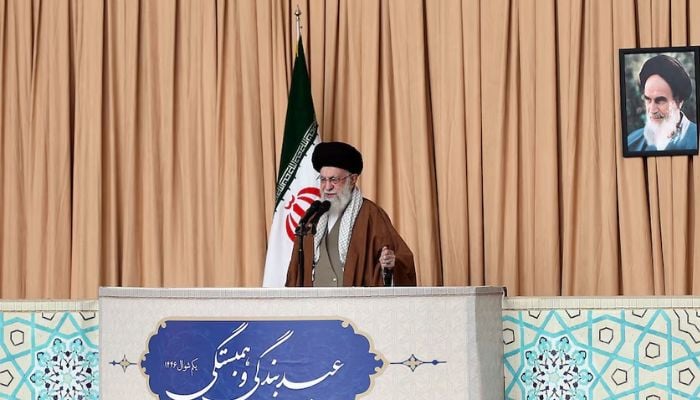
    Iran’s top leader, Ayatollah Ali Khamenei, who has held the position since 1989 and strengthened Iran’s control while fostering hostility toward the U.S. and Israel, was killed at age 86 in a U.S.-Israeli airstrike on his compound on February 28. His lengthy tenure was characterized by consolidating power through Iran’s security forces and expanding Iran’s regional influence, despite ongoing conflicts over its nuclear program with Western nations.

    Prominent officials also fell during this wave of strikes. Ali Larijani, the Secretary of Iran’s Supreme National Security Council and a seasoned political figure, was killed at 67 in a U.S.-Israeli attack in the Pardis area on March 17, alongside his son and one of his deputies, according to Iranian reports. A former Revolutionary Guards commander and nuclear negotiator, Larijani was a close confidant of Khamenei and played a vital role in shaping Iran’s security and foreign policy.

    Iran’s Intelligence Minister Esmail Khatib was also targeted and killed in an Israeli strike on March 18. Known as a hardline cleric and politician, he worked directly in Khamenei’s office and was mentored by him before leading Iran’s civilian intelligence agency in August 2021.

    Ali Shamkhani, a close advisor to Khamenei and a key player in Iran’s security and nuclear strategy, was eliminated in U.S.-Israeli strikes on Tehran on February 28. He had previously survived an attack on his home during the June 12-day conflict between Israel and Iran.

    High-ranking military leaders also lost their lives. Mohammad Pakpour, the commander-in-chief of Iran’s Revolutionary Guard Corps (IRGC), was assassinated during the February 28 attacks in Tehran, according to Iranian state media. He rose through the ranks to lead the IRGC following the death of Hossein Salami in June’s conflict.

    Iran’s Defense Minister Aziz Nasirzadeh, a career Air Force officer, was also killed in the February 28 assaults targeting senior leadership in Tehran. He was a key figure in military planning and defense policy. Abdolrahim Mousavi, the armed forces chief of staff, was murdered during what Iranian media described as a senior leadership meeting in Tehran on the same day. He was responsible for coordinating military branches and overseeing conventional forces.

    Gholamreza Soleimani, commander of Iran’s Basij paramilitary force, was eliminated in U.S.-Israeli strikes on March 17, according to Iranian state sources. As a senior Revolutionary Guards officer, he led the force responsible for domestic security and enforcing government authority.

    Additionally, Behnam Rezaei, the navy intelligence chief of the Revolutionary Guards, was killed in an Israeli strike in Bandar Abbas on March 26, with Israel stating he was responsible for regional intelligence collection.

  • Trump Blocked Israeli Strike on Iran’s Supreme Leader, Sources Reveal

    Trump Blocked Israeli Strike on Iran’s Supreme Leader, Sources Reveal

    (Left to right) US President Donald Trump, Israeli Prime Minister Benjamin Netanyahu, and Iran’s Supreme Leader Ayatollah Ali Khamenei.

    Recently, President Donald Trump rejected an Israeli initiative to eliminate Iran’s Supreme Leader, Ayatollah Ali Khamenei, according to two US officials in an interview with Reuters on Sunday.

    One high-ranking US administration official stated, “Have the Iranians killed an American? No. Until they do, we’re not even considering targeting political leaders.”

    The officials, who requested anonymity, noted that US and Israeli leaders have maintained ongoing discussions since Israel’s large-scale assault on Iran aimed at curbing its nuclear ambitions.

    Israeli officials conveyed that they had a chance to take out the Iranian leader, but Trump ultimately dismissed the operation.

    It’s unclear whether Trump personally communicated this decision, although he has been in regular contact with Israeli Prime Minister Benjamin Netanyahu.

    When pressed about the Reuters report during an interview on Sunday with Fox News, Netanyahu remarked, “There are numerous inaccurate reports about conversations that never took place, and I’m not going to delve into that.”

    He added, “What I can say is that we will act as necessary, and the United States understands what is best for its interests.”

    Trump has expressed optimism about renewing negotiations with Iran regarding its nuclear program. Scheduled discussions in Oman for Sunday were called off due to the recent attacks.

    In a statement to Reuters on Friday, Trump claimed, “We were fully aware of the Israeli strikes.”

    This morning, amid escalating tensions between Israel and Iran, the US president voiced hope for impending peace, even suggesting that Russian President Vladimir Putin could play a mediating role.

    On social media, Trump wrote that numerous, unspecified meetings are occurring and urged both nations to reach an agreement.

    Trump vetoed Israeli plan to kill Iran's supreme leader, say US officials

    Trump also shared in an interview with ABC News that he is open to Putin’s involvement, despite Putin’s current military actions in Ukraine and Trump’s previous failed attempts at securing a ceasefire with Kyiv.

    Overnight, Israel and Iran conducted fresh strikes against each other, resulting in multiple casualties.

    On his Truth Social platform, Trump insisted, “Iran and Israel should and will make a deal. We will achieve peace soon between the two nations! Numerous discussions are currently in progress.”

    However, he did not provide any specifics regarding these meetings or evidence of progress. His comments were at odds with Netanyahu’s earlier statement that indicated an escalation of Israel’s actions against Iran.

    A spokesperson from the White House did not respond when asked how Trump and his administration plan to de-escalate the situation in the Middle East.

  • Khamenei: Iran Will Retaliate Strongly if the US Strikes

    Khamenei: Iran Will Retaliate Strongly if the US Strikes

    Iran’s Supreme Leader Issues Warning Amid U.S. Tensions

    Iran’s Supreme Leader, Ayatollah Ali Khamenei, declared on Monday that the United States would face significant repercussions if it follows through on President Donald Trump’s threat to conduct airstrikes unless Iran agrees to a revised nuclear agreement.

    On Sunday, Trump reaffirmed his stance, claiming that military action would be taken against Iran if its leaders did not accept his proposed talks, outlined in a letter sent earlier in March, which gave Tehran a two-month deadline to respond.

    Iran conveyed a cautionary message regarding Trump’s threats to the Swiss embassy, which represents American interests in Tehran, stating that it would respond "decisively and immediately" to any perceived aggression, according to state media reports.

    "The animosity from the U.S. and Israel has always existed. They may threaten us with attacks, which we don’t believe are likely, but if any provocation occurs, they will certainly face a substantial counterstrike," Khamenei warned.

    He added, "If they attempt to incite unrest within our country like they have in previous years, the Iranian people will handle it themselves."

    Iranian officials attribute recent unrest—such as the protests following the death of Mahsa Amini in custody for allegedly violating hijab laws and the 2019 demonstrations over rising fuel prices—to foreign interference.

    Last week, Iran responded to the U.S. letter, with President Masoud Pezeshkian emphasizing that the country would not engage in direct negotiations with Washington but remains open to indirect discussions as directed by Khamenei.

    "An explicit threat of bombing from a head of state aimed at Iran is a shocking violation of international peace and security," Foreign Ministry Spokesperson Esmaeil Baghaei tweeted on Monday. "Violence leads to violence, while peace fosters peace. The U.S. must decide its path and accept the consequences."

    Amirali Hajizadeh, commander of the Revolutionary Guards Aerospace Force, issued a threat to U.S. forces stationed in the region. He pointed out that "Americans have at least ten bases in the area with 50,000 troops. They live in a fragile environment and should be cautious."

    During his first term from 2017 to 2021, Trump withdrew the U.S. from the 2015 nuclear agreement between Iran and world powers that had established strict limits on Iran’s contentious nuclear endeavors in exchange for sanctions relief. He subsequently reinstated extensive sanctions against Tehran.

    Since then, Iran has significantly exceeded the agreement’s uranium enrichment constraints. Western nations accuse Iran of pursuing a covert objective to develop nuclear weapons capabilities by enriching uranium to a level of fissile purity that they argue is unjustifiable for civilian nuclear energy programs. In response, Tehran maintains that its nuclear activities are strictly for civilian energy generation.