الوسم: atmosphere

  • Venus’s Pale Clouds Conceal a Surprisingly Dark Secret

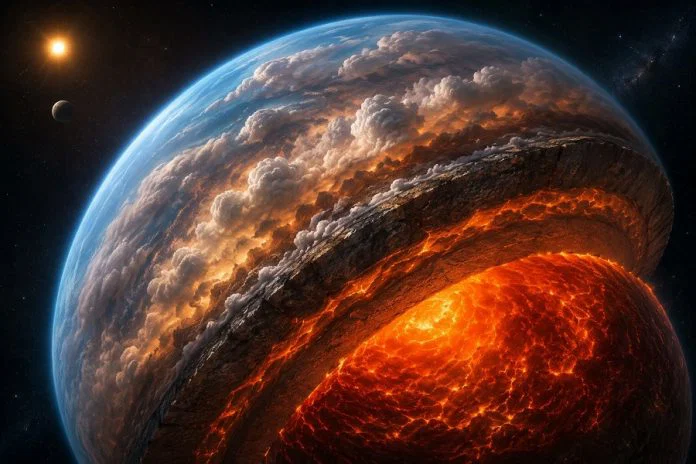
    Venus appears as a pale yellow planet in visible light, but ultraviolet images reveal a very different picture. These UV images display striking dark and bright patterns moving across the planet’s upper clouds. Scientists have been observing these patterns for nearly a century, yet they still haven’t identified the chemical responsible for creating them.

    This mysterious substance is referred to as the “unknown absorber” because it absorbs ultraviolet and blue light. Recently, an international research team has set new constraints on what this substance could be, indicating it might be an exceptionally strong light absorber.

    The study, published in Astrobiology, integrated observations of Venus with advanced computer models to estimate how much light the particles inside the planet’s clouds would absorb if they could be examined directly in a lab. Venus’s clouds are mainly composed of sulfuric acid droplets. While these clouds appear bright from space, this doesn’t necessarily mean the liquid inside them is similarly luminous.

    The researchers compare this to cigarette smoke: tiny particles in smoke scatter light, making it look white. But when those particles are aggregated, they form a darker, tar-like substance. Similarly, Venus’s cloud particles can scatter light efficiently, but their actual liquid contents might be surprisingly dark.

    Using their models—which account for the complex ways sunlight is scattered and absorbed by the clouds and atmosphere—the team translated space observations into measurable qualities that could be tested in laboratory settings. Their findings suggest that the unknown material must absorb light extremely effectively. Specifically, between wavelengths of 365 and 455 nanometers, its estimated absorption is about 1,278 per centimeter at 375 nanometers.

    This indicates that the substance must either be a particularly powerful absorber, be present at very high concentrations in the clouds, or both. Certain carbon-based molecules could potentially fit these criteria. For instance, highly efficient pigment-like molecules might need concentrations around 10 grams per liter. However, the researchers emphasize that this does not imply Venus contains chlorophyll or any biological pigments—“organic” in chemistry simply means carbon-based, not necessarily alive.

    Another challenge is that simple organic compounds exposed to concentrated sulfuric acid can transform into dark, tar-like mixtures that absorb light broadly, appearing brown or black. Yet, Venus’s absorber behaves differently, with its absorption sharply declining between 365 and 455 nanometers. If an organic compound is responsible, it might need to be a specific chemical that can withstand the harsh acid environment without breaking down into a tar-like form.

    These results don’t prove the presence of life on Venus or confirm the absorber is organic. Instead, they provide much clearer criteria for scientists to test potential candidates. Future missions equipped with advanced instruments could help directly identify the substance—searching for complex organics and fluorescence in cloud particles.

    By analyzing the clouds themselves, scientists hope to finally uncover the identity of Venus’s century-old ultraviolet mystery and gain deeper insights into the planet’s chemistry, shedding more light on our enigmatic neighbor.

  • How a Slow Planet Spin Might Create a Venus-Like Scorching World

    How a Slow Planet Spin Might Create a Venus-Like Scorching World

    A planet’s rotation speed plays a significant role in shaping its climate and surface conditions. Earth, rotating approximately once every 24 hours, benefits from a rapid spin that helps distribute heat evenly and drives weather patterns, maintaining a habitable environment. In contrast, Venus takes about 243 Earth days to complete a single rotation, making it one of the slowest-spinning planets in our solar system. This slow rotation is linked to Venus’s thick, crushing atmosphere and extreme surface temperatures.

    Determining a planet’s rotation from afar isn’t straightforward. Astronomers often observe the movement of a planet’s atmosphere rather than its solid surface. For Venus, the upper atmosphere zips around the planet in just about four days, despite the planet itself rotating once every 243 days. Observing only atmospheric motion could lead scientists to overestimate the planet’s rotation rate by a factor of around 60.

    This presents a challenge when studying exoplanets, especially since we typically can’t directly see their surfaces. Looking at different wavelengths of light might be the key to disentangling atmospheric currents from the planet’s true rotation. For example, infrared observations can probe deeper atmospheric layers, allowing scientists to compare wind speeds at various depths. This approach can help distinguish how fast the planet actually spins underneath its atmospheric dynamics.

    The upcoming European Space Agency’s PLATO mission, set to launch in March 2027, aims to find hundreds of Earth-sized planets similar to Venus. By observing these planets over extended periods, PLATO will detect worlds with longer orbital periods that earlier surveys might have missed. Many of these planets are expected to orbit relatively bright stars, making them ideal targets for detailed follow-up studies with instruments like the James Webb Space Telescope.

    Studying the rotation rates of these Venus-like planets could provide vital clues as to why Venus evolved into an extremely hot, greenhouse-dominated world. If most of these planets are found to spin very slowly, it might suggest that slow rotation naturally leads to the extreme greenhouse conditions we see on Venus. Conversely, if their rotation speeds vary widely, other factors must be influencing their climates.

    Understanding these dynamics isn’t just about explaining Venus—they’re crucial for the search for life elsewhere. Accurate measurements of a planet’s rotation can improve climate models and help identify worlds with potential habitability. As we discover more planets resembling Venus and Earth, analyzing their spins could finally unravel why some become fiery hellscapes, while others become hospitable homes for life.

  • Scientists Find Evidence of Pluto’s Atmosphere Freezing

    Scientists Find Evidence of Pluto’s Atmosphere Freezing

    Scientists may have found the first signs that Pluto’s thin atmosphere is beginning to break down as the dwarf planet gradually moves farther from the sun. Recent observations indicate that atmospheric pressure on Pluto has started to decline, lending support to long-held predictions that its gases could eventually freeze onto its icy surface. These insights come from an international research team led by Amanda Sickafoose of the Planetary Science Institute and were published in The Planetary Science Journal.

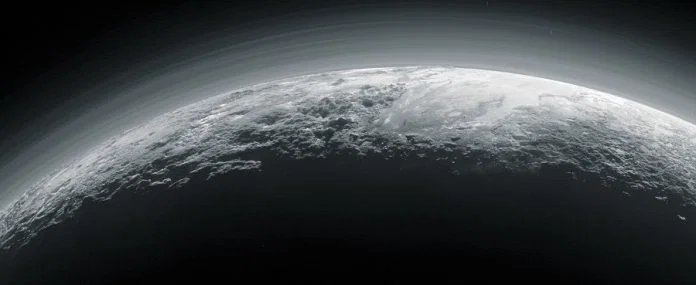
    Unlike the eight main planets, Pluto orbits the sun along a highly elongated, elliptical path. It reached its closest point to the sun in 1989 and has been steadily drifting outward ever since. It will continue journeying into the cold outer regions of the solar system until 2114 before reversing course and heading back inward. As Pluto cools, scientists have expected its atmosphere—primarily composed of nitrogen, with traces of methane and carbon monoxide—to gradually freeze and settle onto its surface as ice.

    Confirming this process has been challenging because Pluto is nearly 6 billion kilometers away from Earth, and no spacecraft are currently nearby to study it directly. Instead, researchers use a technique called stellar occultation, where Pluto passes directly in front of a distant star from our perspective. During such events, the star’s light filters through Pluto’s atmosphere before vanishing behind the dwarf planet. By analyzing how the star’s light dims and reappears, scientists can infer details about the pressure and structure of Pluto’s atmosphere.

    Since 2017, Sickafoose and her team have tracked ten of these rare occultations using telescopes around the world. Because Pluto’s shadow often crosses remote oceanic regions or sparsely populated areas, only four of these events were observable from multiple locations, enabling comparative analysis of different atmospheric regions.

    Their analysis showed that from the time of NASA’s New Horizons mission in 2015 up through mid-2021, Pluto’s atmospheric pressure remained fairly stable. However, between mid-2021 and July 2023, they detected roughly a 16% drop in atmospheric pressure. The researchers incorporated computer models that factored in the hazy atmosphere observed by New Horizons, which contains minuscule haze particles formed when sunlight triggers chemical reactions involving methane and other carbon-based gases. These hazes scatter light and are crucial in interpreting occultation data.

    If the atmosphere continues weakening, scientists expect the haze particles to become even thinner, settling closer to the surface as the gases freeze out. Although these new findings strongly suggest an atmospheric collapse may be underway, the researchers emphasize that more ongoing observations are necessary to confirm this trend. Since Pluto takes 248 Earth years to orbit the sun, its seasonal changes happen very slowly.

    By consistently monitoring these rare occultations, scientists hope to deepen their understanding of how Pluto’s atmosphere interacts with its frozen surface and how its icy world evolves as it journeys through the distant reaches of our solar system.

  • Clouds Can Raise Alien Planet Temperatures by Over 1,000°C, Astronomers Find

    Clouds Can Raise Alien Planet Temperatures by Over 1,000°C, Astronomers Find

    Scientists have uncovered that clouds on distant planets may serve purposes beyond just obscuring our view. Recent findings suggest these clouds are capable of trapping so much heat that they might melt the rocky surfaces of some planets, forming vast lakes or oceans of molten rock.

    This breakthrough could reshape our understanding of the most prevalent types of planets in our galaxy. The planets in focus are known as sub-Neptunes—they are larger than Earth but smaller than Neptune. Despite being the most common planets in the Milky Way, their exact compositions remain a mystery. Some might be rocky bodies cloaked by thick hydrogen atmospheres, while others could be rich in water or carbon-based materials.

    The James Webb Space Telescope (JWST) has been instrumental in examining these distant worlds’ atmospheres. However, it can only observe the upper atmospheric layers—not the layers beneath the clouds or deep inside the planet. This limitation makes it challenging to fully understand their true nature.

    A recent study published in The Astrophysical Journal Letters suggests that clouds are more than just obscuring tools—they may actively influence the planets’ physical characteristics. Through sophisticated computer simulations, researchers from Arizona State University modeled how clouds form on sub-Neptune planets. They discovered that clouds composed of vaporized rock and salts can develop deep within the atmospheres, creating a thick insulating layer that traps heat migrating from the planet’s interior.

    This heat retention leads to a significant temperature increase in the lower atmosphere, sometimes exceeding 1,000°C near the interface between the atmosphere and the planet’s core. Notably, on planets like GJ 1214 b and TOI-1231 b, such intense heating could melt the rocky surface beneath the clouds, resulting in massive magma oceans instead of solid ground.

    The presence of magma oceans alters the interactions between the planet’s interior and its atmosphere. Just as volcanoes on Earth release gases, molten rock on these planets can also emit various chemicals, changing atmospheric composition. The study indicates that gases like oxygen, silicon hydride, and silicon monoxide are more readily released from the molten surface. In contrast, gases such as methane, water vapor, and ammonia tend to be absorbed back into the magma, reducing their presence in the atmosphere.

    This dynamic suggests that the atmospheric signatures captured by JWST may not accurately represent the entire planet’s makeup, since internal processes could modify the gases that escape into space. Clouds aren’t just passive features—they may be fundamental to shaping a planet’s thermal evolution, size, and internal development.

    Understanding these effects is crucial, especially as some sub-Neptunes are considered potential homes for life in certain conditions. Knowing how clouds influence their internal chemistry and structure can help scientists create more accurate models of these worlds.

    This research marks a significant step toward solving the long-standing puzzle of what our galaxy’s most common planets are truly made of.

    Source: Arizona State University.

  • How Small Is Too Small? New Study Finds Planets That Can Hold Atmospheres

    How Small Is Too Small? New Study Finds Planets That Can Hold Atmospheres

    Scientists exploring possibilities of life beyond Earth have introduced a new method to identify distant planets that could potentially support life. Their innovative approach, called the Smaller Than Earth Habitability Model (STEHM), addresses a key question: Can a planet retain its atmosphere long enough for life to develop?

    Since the discovery of the first exoplanet in 1992, astronomers have confirmed over 6,000 planets outside our solar system, with many more awaiting verification. With such a vast number of worlds to investigate, researchers need more efficient ways to narrow down promising candidates.

    An atmosphere is critical for supporting life as we know it. It shields a planet’s surface from harmful radiation and helps regulate temperatures suitable for living organisms. Additionally, scientists can analyze a planet’s atmosphere remotely, making it an essential aspect of the search for extraterrestrial life.

    Michelle Hill, a researcher at Stanford University, developed STEHM to study how a planet’s size influences its ability to sustain an atmosphere over billions of years. Using computer simulations, Hill examined rocky planets ranging from half to the full size of Earth. The study focused on planets with carbon dioxide-rich atmospheres and solid surfaces, unlike Earth’s tectonic plate movements.

    Findings suggest that planets need to be at least approximately 80% the size of Earth to reliably maintain an atmosphere for 10 billion years or longer, assuming they orbit a star similar to the Sun at an appropriate distance. Smaller planets tend to lose their atmospheres much sooner. Those around 70% of Earth’s size might still retain an atmosphere under ideal conditions, but their likelihood is significantly reduced.

    The research emphasizes that a planet’s initial carbon content is crucial. Carbon dioxide plays an essential role in trapping heat and keeping the planet warm. Volcanic activity continually replenishes carbon dioxide, counteracting gases lost to space. Moreover, internal heat sources, such as uranium, thorium, and potassium, decay slowly over time, generating heat that sustains geological activity and helps maintain the atmosphere. As these heat sources diminish, volcanic activity decreases, and atmospheric replenishment slows down.

    Interestingly, the model indicates that planets starting out extremely hot might struggle to hold onto their atmospheres. Excessive early heat can expose the atmosphere to intense stellar radiation, causing gases to escape more readily.

    To validate STEHM, Hill applied it to Venus and Mars. The model accurately predicted Venus’s thick atmosphere and Mars’s thin, depleted one. The results suggest that Mars’s small size and lack of tectonic activity have historically hindered its ability to retain an atmosphere.

    This research offers a valuable tool for upcoming planet-hunting missions. By focusing on planets large enough to preserve atmospheres, scientists can more effectively target worlds where life might exist, amid the countless planets orbiting distant stars.

    Moreover, the study underscores how unique Earth might be. Out of the thousands of exoplanets discovered to date, Earth’s particular combination of size, geological activity, atmosphere, and orbital position appears to be exceptionally favorable for life to flourish over billions of years.

  • Webb Telescope Detects Methane in Rare Saturn-Size Exoplanet’s Atmosphere

    Webb Telescope Detects Methane in Rare Saturn-Size Exoplanet’s Atmosphere

    Astronomers leveraging NASA’s James Webb Space Telescope have uncovered a massive planet with an atmosphere abundant in methane, providing scientists a rare glimpse into a type of world that’s scarcely represented in our current catalog of known planets.

    This planet, designated TOI-199b, is roughly the size of Saturn but maintains surprisingly mild temperatures similar to Earth’s, contrasting with most giant planets we’ve studied so far.

    The discovery was published in The Astronomical Journal by researchers from Pennsylvania State University and NASA’s Jet Propulsion Laboratory.

    Most known giant planets fall into two extreme categories. In our solar system, planets like Jupiter and Saturn are extremely cold because they orbit far from the sun. Conversely, astronomers have identified many “hot Jupiters,” planets that orbit very close to their host stars and can reach searing temperatures of thousands of degrees.

    TOI-199b falls somewhere in between. It orbits its star once every 100 days and has a temperature around 175°F. While still warm for people, this is considerably cooler than most other exoplanets of similar size that scientists have observed.

    Located over 330 light-years from Earth, TOI-199b is one of only a handful of known temperate gas giants. Even more notably, it’s the first of its kind to undergo detailed atmospheric analysis.

    To study its atmosphere, scientists used a technique called transmission spectroscopy. When the planet transits in front of its star, some of the star’s light passes through the planet’s atmosphere before reaching the Webb telescope. Different gases absorb specific wavelengths of light, creating unique spectral signatures that reveal their chemical composition.

    The team observed the system for approximately 20 hours, including a seven-hour transit period. By comparing the star’s baseline light with the filtered light passing through the atmosphere, they detected clear signs of methane.

    The presence of methane in such a temperate giant planet aligns with existing predictions, reinforcing the idea that methane-rich atmospheres are common in these worlds. The observations also suggest that ammonia and carbon dioxide might be present, though further research is necessary to measure their quantities.

    Studying planets like TOI-199b helps scientists better understand planetary formation and how atmospheres change over time. Although this planet isn’t suitable for life as we know it, analyzing its atmospheric properties could offer insights into broader planetary system processes, including those that shaped Earth.

    This research also showcases the remarkable capabilities of the James Webb Space Telescope. Moving forward, astronomers aim to examine more temperate giant planets to see if TOI-199b is an exception or part of a larger population of worlds that we are just beginning to discover.

  • Distant Exoplanet Has Atmosphere Like Science Fiction

    Distant Exoplanet Has Atmosphere Like Science Fiction

    For many years, astronomers have been fascinated by the mystery of exoplanets—those planets located outside our solar system—and have sought ways to gather information about these distant celestial bodies. Thanks to advancements in technology, particularly with the James Webb Space Telescope, we’re not only able to identify exoplanets but also delve deeper into their characteristics. Recently, scientists achieved a groundbreaking milestone by constructing the first 3D model of an exoplanet’s atmosphere, providing insights into the climatic conditions of another world.

    The research team utilized the European Southern Observatory’s Very Large Telescope (VLT), which comprises four telescopes working in unison to collect detailed data from distant astronomical objects. Their findings focused on the exoplanet WASP-121b, known for its extreme surface temperatures exceeding 3,000 Kelvins (over 5,000 degrees Fahrenheit). This intense heat causes metals such as iron and titanium to rise into the atmosphere, propelled by fierce wind currents.

    “The atmospheric behavior we observed defies our current understanding of weather systems—not just on Earth, but across all planets. It seems almost like something from a science fiction tale,” stated lead researcher Julia Victoria Seidel from the European Southern Observatory (ESO) in Chile.

    The 3D atmospheric model revealed that various winds operate at different layers within the atmosphere. Elements such as iron, sodium, and hydrogen exhibit distinct movement patterns, circulating in layers that rotate at different speeds relative to the planet’s orbit. This complex dynamic highlights that the atmospheric processes of other planets may be as intricate—if not more so—than those on Earth, pointing toward a multitude of climatic configurations waiting to be uncovered.

    This diagram shows the structure and motion of the atmosphere of the exoplanet Tylos (WASP-121b). The exoplanet is shown from above looking at one of its poles.
    This diagram depicts the atmospheric structure and motion of the exoplanet Tylos (WASP-121b) from a polar view. ESO/M. Kornmesser

    Seidel commented, “Our observations unveiled surprising phenomena: a jet stream circulates materials around the equator, while a distinct current at lower altitudes transports gas from the hotter side to the cooler side. Such a climatic pattern is unprecedented on any known planet.”

    An animation demonstrates the findings regarding the various atmospheric layers and how they shift around the planet.

    The VLT’s ESPRESSO instrument facilitated these observations by integrating data from the four large telescopes into a cohesive signal, enabling the team to track the movements of elements like iron, sodium, and hydrogen. By analyzing these movements, they could determine the wind paths and construct a detailed 3D model of the atmosphere.

    Fellow researcher Bibiana Prinoth from Lund University in Sweden expressed excitement, stating, “It’s astonishing that we’re capable of studying the intricate details of a planet’s chemical composition and weather patterns from such a significant distance.”

    This research has been published in two papers in the scientific journals Nature and Astronomy & Astrophysics.