الوسم: astronauts

  • Meet The Astronauts Going To The Moon Or Mars

    Meet The Astronauts Going To The Moon Or Mars

    NASA has revealed its latest group of astronaut candidates, marking the next chapter in space exploration.

    The selection was announced during a special event at the Johnson Space Center in Houston on Monday, where the agency introduced the 10 individuals chosen from a pool of nearly 8,000 applicants.

    This year’s group features a noteworthy milestone: for the first time, there are more women than men among the new astronauts. One of the team members, Anna Menon, has already experienced space travel through a private mission, making her participation even more pioneering. Menon flew with billionaire Jared Isaacman aboard the SpaceX Polaris Dawn mission last year, which achieved the historic milestone of the first private spacewalk.

    The ages of the new astronauts range from 34 to 40, and some of them may soon become among the first humans to visit the Moon as part of NASA’s Artemis program. The inaugural mission, Artemis III, aims to send astronauts back to the lunar surface for the first time in over fifty years, with a launch planned no earlier than 2027, though schedules could shift. Several of these candidates might also take part in the first crewed mission to Mars.

    The group was pictured at NASA’s Johnson Space Center in Houston, standing together from left to right: U.S. Army CW3 Ben Bailey, U.S. Air Force Maj. Cameron Jones, Katherine Spies, Anna Menon, U.S. Navy Lt. Cmdr. Erin Overcash, U.S. Air Force Maj. Adam Fuhrmann, Dr. Lauren Edgar, Yuri Kubo, Rebecca Lawler, and Dr. Imelda Muller.

    Acting NASA Administrator Sean Duffy expressed pride in welcoming the new class of American explorers. “I’m honored to introduce the next generation of space pioneers,” he said. “More than 8,000 people applied—scientists, pilots, engineers, dreamers from every corner of our country. These 10 men and women demonstrate that in America, no matter where you start, there’s no limit to what a determined dreamer can achieve—especially in space.”

    The selected astronauts recently began a rigorous two-year training program at NASA Johnson, preparing them for missions aboard the International Space Station, lunar expeditions, and beyond. Their training includes learning robotics, survival skills for land and water scenarios, geology, foreign languages, space medicine, physiology, and conducting simulated spacewalks, as well as flying high-performance aircraft.

    Once they complete their training, this new class will join NASA’s active astronaut corps, awaiting assignments for upcoming missions to the ISS and the Moon.

    [Related: NASA’s Curiosity rover captures stunning panoramic images of Mars]

  • NASA Shares First Photos Of Starliner Astronauts After Mission

    NASA Shares First Photos Of Starliner Astronauts After Mission

    Butch Wilmore just hours after returning to Earth.
    NASA astronaut and Starliner crewmember Butch Wilmore shortly after returning to Earth. NASA

    NASA has released the first pictures of astronauts Butch Wilmore and Suni Williams after their remarkable nine-month journey in space, which was originally planned for just eight days.

    The duo was photographed alongside fellow NASA astronaut Nick Hague and Roscosmos cosmonaut Aleksandr Gorbunov. They all were part of SpaceX’s Crew-9 mission and successfully returned to Earth from the International Space Station (ISS) on Tuesday.

    The images of Wilmore and Williams were taken after their arrival at the Johnson Space Center in Houston following a splashdown off the coast of Florida earlier that day.

    Both astronauts appeared to be in great condition, standing unaided despite the extended time spent in microgravity. Wilmore had a big smile as he greeted officials at the space center.

    NASA astronaut Suni Williams just hours after returning from orbit.
    NASA

    Williams, also standing, smiled brightly as she stepped off the aircraft. The two astronauts had reached orbit aboard Boeing’s Starliner spacecraft back in June 2024. However, the initial crewed flight faced challenges with its thrusters during the journey to the ISS. While they managed to dock successfully, engineers couldn’t confidently resolve the technical difficulties, prompting the decision to return the spacecraft empty, which left Wilmore and Williams awaiting a ride home for nine months.

    Despite the unexpected delay, both astronauts thrived during their time in space and continued to work alongside their ISS crewmates, just as they had done on previous long-term missions aboard the orbital outpost.

    Wilmore and Williams were given seats on SpaceX’s Crew-9 Crew Dragon spacecraft, which arrived at the ISS in September of last year, bringing Hague and Gorbunov for a six-month mission.

    The crew made their return early on Wednesday, splashing down off the coast of Florida, where they were welcomed back by a playful pod of dolphins shortly after landing in the ocean.

  • How Astronauts Stay Fit And Healthy In Space

    How Astronauts Stay Fit And Healthy In Space

    Living in space presents unique challenges to the human body. Extended exposure to microgravity leads to various physical changes, such as symptoms akin to motion sickness, declining vision, and the accumulation of fluids in the upper body. While the sensation of weightlessness allows astronauts to float and move freely, it simultaneously contributes to muscle atrophy since their muscles are not engaged as they would be under Earth’s gravitational force.

    To combat muscle and bone mass loss, astronauts must engage in daily exercise for about an hour. Understanding how to maintain human health in space is a central focus of research aboard the International Space Station (ISS), where numerous experiments are conducted to examine health and wellness in a microgravity environment.

    CSA astronaut David Saint-Jacques wears the Bio-Monitor health sensor shirt and headband.
    CSA astronaut David Saint-Jacques dons the Bio-Monitor health sensor shirt and headband.
    NASA

    Efforts to enhance health monitoring systems focus on minimizing disruption to astronauts’ work. The Bio-Monitor, a smart shirt designed by the Canadian Space Agency, is embedded with sensors that track vital signs, including heart rate, blood pressure, respiratory rate, and skin temperature. Accompanying it is a headband to monitor blood oxygen levels. Currently, the Bio-Monitor is being tested on the ISS, with aspirations for its future application in both astronaut health and various medical and sports domains on Earth.

    Another intriguing project from the European Space Agency called Myotones features a compact device that assesses muscle stiffness. This device helps ensure astronaut exercise regimens effectively target all critical muscle groups, preventing muscle degradation.

    CSA astronaut David Saint-Jacques conducts a session for VECTION.
    CSA astronaut David Saint-Jacques participates in a VECTION session.
    NASA

    Beyond physical health, astronauts’ cognitive functions and sensory perceptions are also affected by space travel. Monitoring these aspects is critical, which includes evaluations through tasks that test fine motor skills, like simulated flying or driving exercises. For instance, a simulated driving task necessitates that astronauts recognize and react to obstacles accurately while managing multiple cognitive demands. Practicing these simulated skills can improve their performance during actual operations, such as piloting a rover.

    Additional investigations, such as VECTION, explore how microgravity influences motion perception. On Earth, we depend on our vestibular system for spatial awareness, but astronauts must adapt to navigate accurately in microgravity. This experiment employs head-mounted goggles to assess astronauts’ ability to judge factors like object height without gravitational cues.


  • NASA Astronauts Repair X-Ray Telescope Outside ISS

    NASA Astronauts Repair X-Ray Telescope Outside ISS

    This morning, on Thursday, January 16, at 8:01 a.m. ET, two NASA astronauts ventured outside the International Space Station (ISS) for a spacewalk. Their mission, expected to take about six and a half hours, involves repairing the NICER (Neutron star Interior Composition Explorer) X-ray telescope mounted on the station’s exterior.

    Nick Hague and Suni Williams are undertaking NASA’s first spacewalk in over six months. Spacewalk activities were paused following a spacesuit leak in June 2024. Fortunately, both astronauts are encountering no suit issues, enabling them to focus on their task of applying special patches to the damaged areas of the telescope’s light filter. These patches will reduce excessive light interference, ensuring more accurate readings from the observatory.

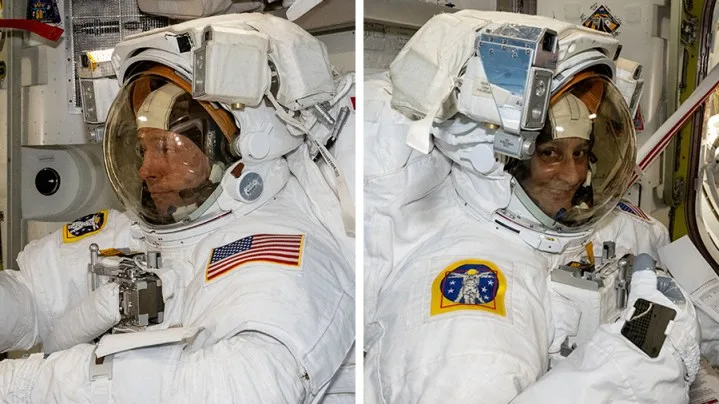
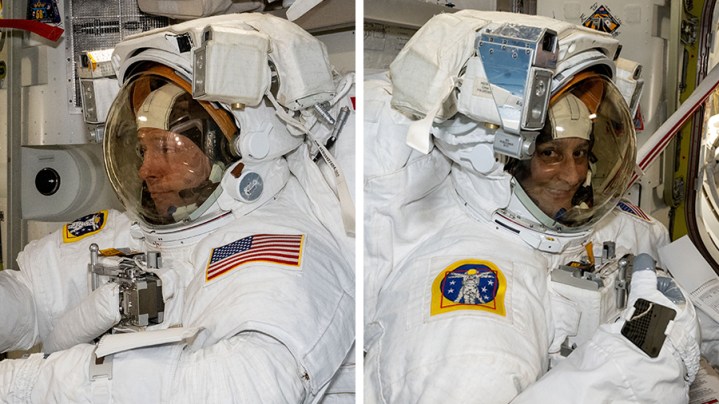
    NASA astronauts Nick Hague and Suni Williams examining their spacesuits in a pressurized airlock.
    Astronauts Nick Hague and Suni Williams assess their spacesuits in a pressurized configuration within the Quest airlock. NASA

    NASA representatives expressed gratitude on social media for Hague and Williams’ efforts in repairing the NICER telescope, an instrument designed to study dense celestial objects known as neutron stars through X-ray observations. NICER has previously created a remarkable map highlighting X-ray sources as observed from the ISS.

    Post-repair, NICER will undergo some adjustments and calibrations to ensure it can resume its scientific observations shortly.

    The patches for our NICER telescope have been installed thanks to @NASA_Astronauts Nick Hague!

    The next steps for the NICER team include unstowing the telescope and restarting daytime observations to examine the data with the patches installed. Stay tuned for updates. pic.twitter.com/JhFgskAmlj

    — NASA Universe (@NASAUniverse) January 16, 2025

    While conducting their spacewalk, Hague and Williams will also tackle additional tasks, such as removing and replacing a component known as a rate gyro assembly. This assembly is vital for maintaining the station’s orientation as it travels roughly 250 miles above Earth. Other maintenance duties include changing a reflector device on one of the docking adapters, which assists in navigation by indicating the position of the docking area. They will also inspect a section set for future maintenance work.

    This upcoming maintenance will involve a future spacewalk to work on the Alpha Magnetic Spectrometer, an instrument designed to explore dark matter that was classified as “unfixable” in 2011. However, astronauts succeeded in repairs in 2023, which included special tools designed to modify its cooling system, extending its operational life despite it originally being intended for only three years of use without astronaut maintenance.

    For those interested in watching the spacewalk, it can be viewed here:

    US Spacewalk 91 with Astronauts Nick Hague and Suni Williams (Official NASA Broadcast)

  • Chinese Astronauts Set Record With 9-Hour Spacewalk

    Chinese Astronauts Set Record With 9-Hour Spacewalk

    Chinese Astronauts Set Record for Longest Spacewalk

    Two astronauts from China have achieved a significant milestone in space exploration by completing the longest spacewalk recorded in history. On December 17, 2024, astronauts Cai Xuzhe and Song Lingdong spent a remarkable nine hours and six minutes outside the Tiangong space station, as reported by the China Manned Space Engineering Office (CMSEO).

    This impressive spacewalk surpasses the previous record of eight hours and 56 minutes, held by NASA astronauts James Voss and Susan Helms back in 2001.

    The CMSEO shared that at 21:57 on December 17, the Shenzhou 19 crew, which includes Cai Xuzhe, Song Lingdong, and Wang Haoze, collaborated closely to complete their mission. They received assistance from the space station’s robotic arm and support from ground research teams.

    According to the CMSEO, the astronauts engaged in various tasks, including installing devices designed to protect the station from space debris, inspecting equipment, and handling extravehicular gear. After their extensive work outside, both astronauts safely returned to the Wentian experimental module.

    The astronauts are part of the ongoing Shenzhou 19 mission, which launched in October 2024 and marks the eighth flight to China’s space station. They are scheduled to remain in space for about six months before returning to Earth in 2025.

    The Tiangong space station is modular and is set to expand over time. It already includes the core module Tianhe, launched in 2021, along with two laboratory modules, Wentian and Mengtian, both brought into orbit in 2022.

    It’s important to note that China is not involved with the International Space Station (ISS), a collaborative endeavor involving the U.S., Russia, Europe, and Japan. The ISS is planned for decommissioning in 2030, and NASA aims to transition to commercial space stations, potentially positioning China’s space station as a leading platform for research in low-Earth orbit during any interim period.

    NASA has recently outlined its strategy for maintaining a human presence in space after the ISS is retired, focusing on establishing a variety of providers to ensure continuous access to low-Earth orbit.

  • Explore NASA’s Moon Landing Sites for Astronauts

    Explore NASA’s Moon Landing Sites for Astronauts

    NASA has refreshed its list of potential landing sites for the upcoming crewed lunar mission, Artemis III, scheduled for 2026. This mission marks the first manned lunar landing since the Apollo program, with plans for astronauts to explore the South Pole region of the moon, where scientists believe there may be deposits of water ice on the surface.

    In 2022, NASA presented a list of 13 potential landing sites, but the current update has narrowed it down to nine candidates. Some sites have been retained from the original list, while new locations have been added, including the Mons Mouton mountain and its surrounding plateau. The mountain’s elevation creates areas that are always in shadow, which makes them particularly promising for the search for water ice, as they are shielded from sunlight.

    “The Moon’s South Pole is vastly different from the areas we explored during the Apollo missions,” stated Sarah Noble, the Artemis lunar science lead at NASA Headquarters. “It provides access to some of the moon’s oldest geological features, as well as frigid, shadowed areas that could harbor water and other materials. Any of these chosen regions will facilitate exciting scientific research and lead to new discoveries.”

    When selecting landing sites, NASA aims to strike a balance between scientifically intriguing areas and those that are secure and practical for landing operations. Factors such as communication capabilities with Earth and the necessary launch windows are also critical considerations in the decision-making process.

    “Artemis III will be a historic first as astronauts land in the moon’s south polar region,” said Jacob Bleacher, NASA’s chief exploration scientist. “This will involve using a new lander in a landscape that differs significantly from our previous Apollo experiences. Identifying safe potential landing spots is essential, and we are also keen on maximizing scientific opportunities at these new locations on the moon.”

    The discovery of water ice is crucial for two main reasons: it presents a fascinating area of scientific study and it serves as a vital resource for future lunar explorers. NASA is planning for longer durations on the moon, extending from days to weeks or even months, which requires substantial resources to support the health of astronauts. If early missions can identify accessible resources such as water ice, it can significantly enhance the sustainability of future explorations.

  • SpaceX Embarks on Mission to Save Stranded Astronauts

    SpaceX Embarks on Mission to Save Stranded Astronauts

    SpaceX has successfully completed a mission to rescue two astronauts who have been stuck on the International Space Station (ISS) since June.

    The Dragon capsule, which carried supplies along with two vacant seats for astronauts Butch Wilmore and Suni Williams, took off from Cape Canaveral, Florida, on September 28.

    Wilmore and Williams were initially scheduled to remain on the ISS for about eight days. However, a problem was discovered with the Boeing Starliner spacecraft, prompting a crewless return to Earth for safety reasons.

    NASA astronaut Nick Hague and Russian cosmonaut Alexander Gorbunov are aboard the Dragon capsule to deliver fresh supplies to Wilmore and Williams, who are expected to return to Earth in February.

    The launch had been planned for Thursday but was delayed due to the impacts of Hurricane Helene, which caused significant damage throughout Florida and various southern states.

    Founded by Elon Musk, SpaceX has established a routine schedule for transporting crews to and from the ISS every six months.

    The Dragon capsule is projected to dock with the ISS on Sunday at around 9:30 PM GMT.

    In a separate development, SpaceX is contemplating a $15 billion investment in Vietnam to expand its Starlink satellite internet service.

    This announcement followed a meeting between SpaceX Senior Vice President Tim Hughes and Vietnam’s Communist Party General Secretary To Lam during his recent visit to the US for the United Nations General Assembly.

    The potential investment represents a significant move by SpaceX to provide satellite internet services to Vietnam, a nation facing challenges in improving connectivity due to outdated infrastructure and complex terrain.

    This initiative could play a vital role in reducing the digital divide and improving internet access for many living in the area.

    These recent developments underscore SpaceX’s dedication to advancing space exploration and improving global communication networks through cutting-edge technology.

  • SpaceX Breaks New Ground in Commercial Spaceflight

    SpaceX Breaks New Ground in Commercial Spaceflight

    WASHINGTON:

    On Thursday, two astronauts, a billionaire, and an engineer achieved a milestone by conducting the first private spacewalk in orbit outside a SpaceX capsule. This groundbreaking event involved the use of a new type of spacesuit, marking a significant step away from the previous limitation of spacewalks to only government-trained astronauts.

    As part of the Polaris Dawn mission, the astronauts spent approximately 10 minutes outside the Crew Dragon capsule, securely tethered for safety, while their two crewmates kept watch from inside. This mission, spearheaded by Elon Musk’s SpaceX, further advanced the possibilities of private space exploration.

    Jared Isaacman, founder of Shift4 and a skilled pilot, was the first to make his exit, followed closely by SpaceX engineer Sarah Gillis. Inside the capsule, their crewmates, Scott Poteet and Anna Menon, observed the historic event as they orbited around 450 miles (730 km) above Earth. The entire spacewalk spanned a total of one hour and 46 minutes.

    Isaacman, who also financed the Polaris mission, had previously funded the Inspiration4 flight with SpaceX in 2021. The mission was broadcast live on SpaceX’s website and aimed to evaluate new technologies, such as more streamlined spacesuits and a procedure for fully depressurizing the Crew Dragon cabin—innovations that Musk hopes to refine for future private missions to Mars.

    Upon returning to the spacecraft, Isaacman shared his awe at the breathtaking view of Earth from space. This endeavor was regarded as one of the riskiest undertaken by SpaceX, which is the only private company capable of consistently launching people into and returning from orbit.

    Before the spacewalk commenced at approximately 10:52 GMT, the capsule was entirely depressurized. The astronauts relied on their SpaceX-designed suits for oxygen, connected via an umbilical line to the capsule. Isaacman, 41, and Gillis, 30, assessed the flexibility of their suits and provided valuable insights for future designs.

    The mission was designed to extend the boundaries of private enterprise in space, with ground teams located at SpaceX’s California headquarters supervising the hatch closure and conducting safety checks during the astronauts’ re-entry.

    The procedure for the spacewalk closely resembled the first American spacewalk in 1965, which also involved depressurizing the capsule and tethering an astronaut in a spacesuit. NASA Administrator Bill Nelson praised the mission as a "huge advancement" for the commercial space industry and a step toward developing a sustainable U.S. space economy.

    While Isaacman has not disclosed the mission’s financial details, it’s anticipated to cost in the hundreds of millions, with individual Crew Dragon seats typically priced at around $55 million.

    Joining Isaacman and Gillis were Poteet, a retired U.S. Air Force lieutenant colonel, and SpaceX engineer Anna Menon. Throughout their mission, the spacecraft circled the Earth several times, reaching altitudes of up to 1,400 km, the farthest any humans have ventured into space since the final Apollo mission in 1972.

    Historically, spacewalks have been conducted exclusively by astronauts trained by government agencies. Since the inception of the International Space Station (ISS) in 2000, there have been approximately 270 spacewalks, with 16 occurring on China’s Tiangong space station.

    The Polaris team underwent two and a half years of training, including mission simulations and rigorous real-world experiences, in preparation for their journey, as noted by Poteet.

    Currently, a record number of 19 astronauts are in orbit, with 12 stationed aboard the ISS, following a recent Russian Soyuz mission that transported more astronauts there on Wednesday. Since 2001, Crew Dragon has successfully completed over a dozen astronaut missions, primarily for NASA.

    The capsule was created as part of a NASA initiative to develop commercial spacecraft for ferrying astronauts to and from the ISS. Boeing’s Starliner capsule is also involved in this program; it launched its inaugural crew to the ISS in June but encountered difficulties, returning empty and leaving its crew on the station until next year, when a Crew Dragon capsule is expected to bring them back.