Tag: Amazon

  • Amazon Aims to Design In-House Chips for Kindles Fire TV and Echo

    Amazon Aims to Design In-House Chips for Kindles Fire TV and Echo

    Amazon appears to be preparing to shift away from sourcing processors externally for its consumer electronics, marking a significant change after two decades. Industry analyst Ming-Chi Kuo reports that the company plans to adopt a customer-owned tooling (COT) model for its internally developed chips, similar to its approach with Trainium AI chips. This means Amazon will now design its own processors in-house instead of purchasing from third-party suppliers. The transition is expected to start around 2027 and will impact a broad range of products, including Kindle, Fire TV, Echo, Alexa-enabled devices, Blink cameras, and Ring doorbells.

    Amazon has reportedly selected Alchip as its exclusive partner for backend chip design and testing. Once fully implemented, the company anticipates producing approximately 40 million units of these in-house processors annually.

    The move comes at a strategic time, driven by financial factors. Amazon’s cash flow over the past year experienced a 95% decline, plunging to about $1.2 billion, partly due to its substantial investments in AI. In a CNBC interview, Panos Panay, Amazon’s hardware head, confirmed that the company already designs complete silicon solutions for products like the Echo Show 8, Echo Show 11, and Fire TV. These chips, including the AZ3 and AZ3 Pro launched in October 2025, are designed to run AI models locally, reducing reliance on cloud processing. While Amazon still utilizes third-party chips where appropriate, Panay emphasized that some key devices are moving toward proprietary silicon, with hints of a broader roadmap that extends beyond smart home products to mobile and portable devices.

  • Amazon Fire Sticks Make Sideloading Obsolete

    Amazon Fire Sticks Make Sideloading Obsolete

    Amazon’s latest Fire TV Sticks are beginning to remove one of the device’s most popular unofficial features: the ability to install apps from outside Amazon’s Appstore.

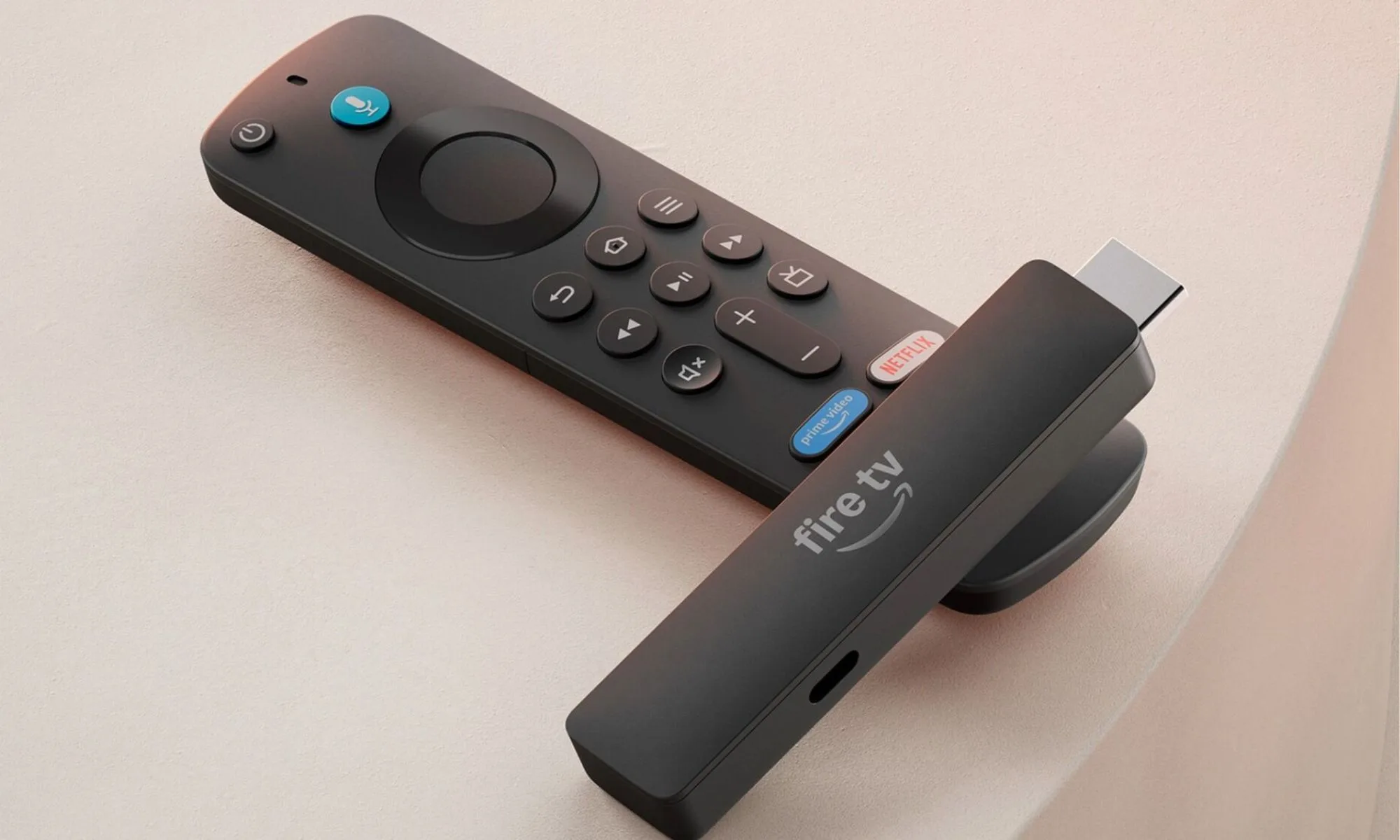
    This change coincides with the rollout of Vega OS, Amazon’s newer Linux-based Fire TV operating system. The Fire TV Stick 4K Select is the first model to run Vega OS, and Amazon’s developer website indicates future Fire TV sticks will utilize this platform. Previously, older Fire Sticks operated on Fire OS, an Android-based system that allowed users more freedom to sideload apps and customize their devices.

    However, Vega OS handles sideloading differently. While it still permits it through developer tools, the process now requires enabling Developer Mode, creating an Amazon developer account, and registering the device—making it more complex than the consumer-friendly methods used in the past.

    For consumers, this means a tradeoff: the new streaming devices might be simpler to operate but offer significantly less freedom to customize the experience.

    In a related interview, Amazon’s Fire TV chief linked the restriction on sideloaded apps to concerns about malware and malicious code. While he highlighted security and privacy as priorities, he didn’t cite any specific cases where sideloading led to harm.

    The security concern isn’t unfounded. Previously, Amazon removed several video apps after they were linked to malware or flagged by virus scanners. Additionally, an older Android botnet appeared on some Fire Sticks, providing Amazon with a broader security justification for these restrictions.

    Vega OS also limits customization by blocking the installation of sideloaded apps and preventing the use of custom launchers—two common avenues users relied on to modify their Fire TV devices.

    The broader change is reflected in the updated home screen, which has shifted towards more advertising and recommendations. Fewer workarounds mean less control over what appears immediately after powering on the device.

    App support is another notable difference. While UK Vega OS Fire Sticks support around 3,000 apps, Fire OS models offer access to approximately 40,000. This gap may not matter for many users who stick to major streaming services, but it becomes apparent when a preferred app or media standard isn’t available.

    Those considering whether to upgrade should think carefully. Vega OS Fire Sticks are suitable for basic streaming, with Amazon claiming the platform covers most popular content. Many users only install the primary streaming apps, so they may find Vega OS meets their needs.

    However, power users should evaluate the app catalog, storage capabilities, video features, and customization options before making a purchase. If sideloading is a key reason for buying a Fire Stick, Vega OS represents a significant change and shouldn’t be viewed as just a routine upgrade.

  • Amazon Echo Hub Now Your Smart Home Control Center

    Amazon Echo Hub Now Your Smart Home Control Center

    Smart homes aim to simplify daily living, but they often result in juggling multiple apps just to adjust lighting, monitor visitors, or troubleshoot temperature issues.

    Amazon’s Echo Hub was designed to address these frustrations by serving as a dedicated touchscreen hub for your connected devices—integrating lighting, security cameras, locks, thermostats, alarms, and routines into a single interface. Recently, Amazon introduced a major update to the device, featuring a redesigned interface that emulates the ultimate smart home dashboard many users have envisioned. This free software upgrade, available to current Echo Hub owners, enhances usability without altering the hardware, potentially transforming its day-to-day functionality.

    The most noticeable change lies in the new, customizable interface. Recognizing that each smart home is unique, the update allows users to tailor their dashboard—grouping devices by room or purpose. Whether you want quick access to cameras and locks or prefer to control lighting, music, and temperature, the layout can now be personalized. Additionally, device controls have become more granular, enabling precise adjustments for brightness, color, and other settings directly from the display.

    The Echo Hub is evolving into a control panel that might rival your smartphone. It now supports live camera feeds, including viewing multiple streams simultaneously—an especially useful feature for households with multiple security cameras. Instead of switching between individual apps, you can monitor everything from one central display.

    The device also emphasizes automation, allowing users to arm security systems, activate routines, toggle between home and away modes, set lighting scenes, and manage connected devices with a single tap. For those heavily invested in Alexa automation, the Hub increasingly acts as a home command center rather than just a smart display. It also simplifies audio management, letting users control multiroom speaker groups effortlessly, streamlining music throughout the house.

    To further its appeal, the Echo Hub incorporates adaptive content—changing what appears on the 8-inch screen based on whether someone is nearby. This feature ensures the device fits naturally into your home environment, displaying photos or smart controls as needed. Its compatibility remains broad, supporting Zigbee, Thread, Bluetooth, Matter, Sidewalk, and Wi-Fi devices—all accessible without additional hubs or clutter.

    Priced at $179.99, the Echo Hub isn’t an impulse buy, but Amazon’s recent enhancements make it a compelling option for smart home enthusiasts seeking a centralized, user-friendly control station. Ultimately, it embodies the ideal of a smart home—saving you time and effort so you can focus on living comfortably.

  • Amazon Sleep Studio Turns Echo Into Kid Sleep Assistant

    Amazon Sleep Studio Turns Echo Into Kid Sleep Assistant

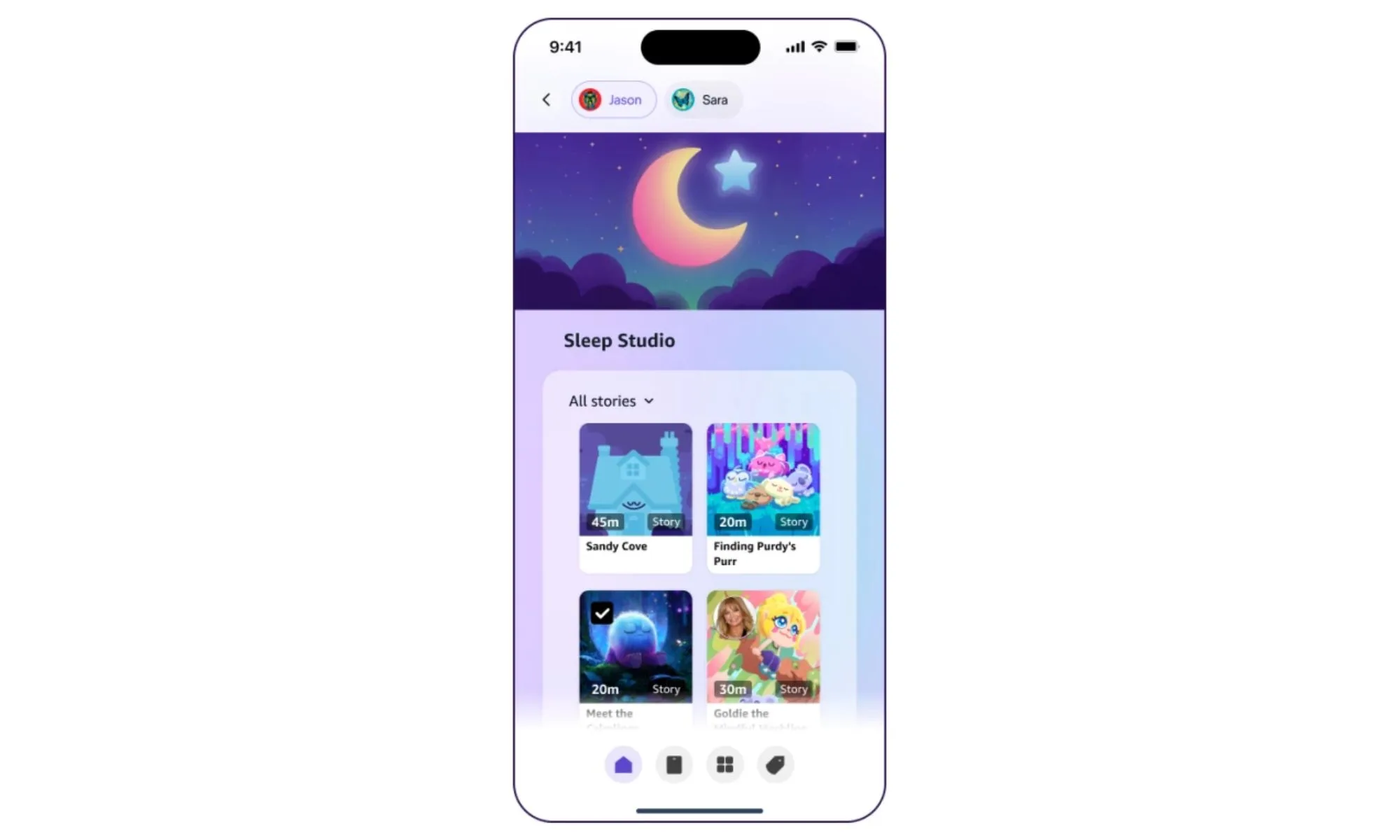
    Amazon has introduced a new bedtime feature called Sleep Studio to its Echo Kids lineup. This feature provides children with access to a carefully curated library of sleep-centric content, including guided meditations, ambient soundscapes, and bedtime stories from Calm, Headspace, and Moshi. The service is included with an Amazon Kids+ subscription, which comes bundled with devices like the Echo Dot Kids and Echo Pop Kids.

    How It Works

    Parents can set sleep schedules and create playlists using the Amazon Kids Parent Dashboard. Approximately 30 minutes before bedtime, the Echo device automatically begins playing the selected content. Kids can also activate Sleep Studio on their own by asking Alexa, a feature that helps foster independent sleep habits.

    Amazon’s Echo Glow can be paired with Sleep Studio to add visual cues through color-changing lights, signaling the start of a sleep window.

    Content Partners and Availability

    The Sleep Studio library features contributions from three partners. Calm supplies meditation sessions, lullabies, ambient soundscapes, and bedtime stories. Headspace offers wind-down content created by child psychiatrists and pediatricians. Moshi, a kids-focused audio brand from Mind Candy, provides bedtime stories set within the Moshi Monsters universe.

    Amazon states that the feature was developed based on child sleep research, referencing data from the National Sleep Foundation that shows nearly half of American children do not receive sufficient sleep. Sleep Studio is now available on the Echo Dot Kids, Echo Pop Kids, and any Echo device with an active Amazon Kids+ profile. This new feature enhances the appeal of Amazon’s Echo Kids devices within the children’s tech market, where dedicated sleep apps and smart night lights have established strong followings among parents.

  • Pre-Order Amazon’s Stylish Ember Artline TVs Now

    Pre-Order Amazon’s Stylish Ember Artline TVs Now

    Amazon is finally introducing its art-centered TV for wall mounting. After making a splash at CES earlier this year, the Amazon Ember Artline series is now available for pre-order.

    Fusing technology with interior design, the Ember Artline aims to blend seamlessly into your home decor. It features a slim 1.5-inch profile, a matte reflective screen, and a magnetic frame system that gives it the appearance of a true art piece rather than a typical black TV panel.

    What truly differentiates the Ember Artline is the absence of additional costs. Unlike Samsung’s gallery content, which requires a subscription, Amazon offers over 2,000 free artworks right out of the box. It also incorporates artificial intelligence, allowing users to upload images of their rooms and receive tailored artwork suggestions that match their furniture and lighting, all powered by Alexa+.

    Within its specifications, the TV boasts a high-quality 4K QLED display supporting Dolby Vision and HDR10+. It leverages Amazon’s Omnisense technology, which uses sensors to activate the Ambient Experience when entering the room and deactivate it upon departure. The TV also supports Wi-Fi 6 and runs the updated Fire TV interface, delivering faster navigation and up to 30% improved performance over previous versions.

    Pre-orders are now available in the United States and Canada. The 55-inch model is priced at $899, and the 65-inch version costs $1,099. The price includes a magnetic frame, with additional frames available for purchase—$74.99 for the smaller size or $84.99 for the larger. Shipping is expected to start on April 22.

  • Cash Bounty Challenges Hackers to Block Ring Camera Data Sharing

    Cash Bounty Challenges Hackers to Block Ring Camera Data Sharing

    The Fulu Foundation is offering a cash reward to anyone able to break free Ring cameras from Amazon’s data ecosystem. The purpose isn’t to gain unauthorized access for malicious purposes or surveillance. Instead, it’s about empowering homeowners with control over devices already installed in their residences, without forcing those cameras to constantly transmit data back to Amazon.

    The challenge focuses on Ring’s video doorbell cameras, which are closely linked to Amazon’s cloud infrastructure. Participants are being asked to develop methods to prevent these devices from sharing data with Amazon servers—without disabling the cameras’ core functions like motion detection and night vision.

    This initiative is a response to growing unease with how Ring devices can be used beyond simple home security. The bounty pays a minimum of $10,000, with additional funds pledged, to anyone who can modify a Ring camera so it operates locally, blocks Amazon data sharing, and retains its essential features. The modifications must rely on affordable, readily accessible tools and be simple enough for someone with moderate technical skills to complete in less than an hour. Winners are not required to disclose their methods; however, doing so may carry legal risks under Section 1201 of the Digital Millennium Copyright Act, which governs the circumvention of digital locks. The decision to publish or keep the techniques private ultimately rests with the winner.

    Concerns about Ring cameras have intensified, especially after the company expanded features like Search Party, which allows users of the Neighbors app to help locate lost pets and objects through nearby cameras. Critics argue that personal devices are quietly becoming part of a surveillance network. This apprehension grows as Ring’s CEO has spoken about using the vast camera network to “zero out crime,” framing the platform as a tool for large-scale crime prevention, not just personal safety.

    These issues are reinforced by a broader skepticism regarding Amazon’s handling of user data. Past investigations have uncovered warnings about weak data protections, raising fears of potential misuse. Recent revelations show that Ring’s Android app permits undisclosed third parties to track users, and that passing by a Ring camera could even result in biometric scans.

    Whether the bounty results in widespread change or not, it underscores the demand for increased transparency and user control in connected home technology. For those who prefer not to share data, Ring offers options to opt out and instructions on how to disable features like Search Party.

  • Amazon Eero Now Has 4G Failover Box But Has a Catch

    Amazon Eero Now Has 4G Failover Box But Has a Catch

    Amazon-owned eero is now offering a new accessory called eero Signal 4G LTE, a compact device designed to keep your home network running during internet outages. Simply connect it to a compatible eero router, and your Wi-Fi can automatically switch to cellular data, ensuring that work calls, security cameras, and smart home routines stay connected without interruption.

    However, there’s a caveat: cellular data is linked to an annual eero Plus plan managed through the eero app. The hardware alone won’t provide backup connectivity; subscribing to eero’s service is necessary to utilize the fallback option.

    Installation and Functionality

    Signal connects via USB-C to any USB-C-powered eero supporting Wi-Fi 6 or newer, including eero PoE Gateway. It can share a single power adapter with the connected eero device, simplifying the setup by reducing clutter.

    Once added through the eero app, Signal remains in standby mode until your primary internet connection drops. When that happens, Signal automatically switches the entire network to LTE. Once your internet service provider resumes, it switches back to standby mode—all without additional input.

    Placement matters since proper reception is crucial. eero recommends positioning Signal near the eero located where cell service is strongest, ideally higher up and closer to an exterior wall for optimal performance.

    Subscription Requirements

    The backup function relies on an eero Plus subscription, which offers two data tiers. The standard annual plan includes up to 10GB of backup data, suitable for brief interruptions. New subscribers receive six months of this plan included with Signal, after which it renews annually at $99.99.

    For more capacity, eero Plus 100 offers up to 100GB of backup data per month. It’s priced at $99 for the first year (a 50% discount), then renews at $199.99 annually.

    Additional Considerations

    Signal is intended as a safety measure at a single location and isn’t a substitute for regular broadband service. eero provides a three-year warranty, and updates including security patches and new features are scheduled for Signal.

    Before purchasing, verify LTE signal strength at your router’s location and consider whether 10GB per year aligns with your typical outage duration. eero also plans to release a 5G version later in 2026, expected to be priced at $199.99.

    Signal is available in the United States for $99.99 through eero.com and Amazon.

  • Amazon Turns Echo Speakers Into Home Theater with Surround Sound

    Amazon Turns Echo Speakers Into Home Theater with Surround Sound

    What’s new? If you already own Echo speakers and have been wishing for a home theater setup free from messy wiring, Amazon has something for you. The company is expanding its Alexa Home Theater system for Echo devices, transforming them into a true surround-sound system for your television.

    • Instead of the previous two-speaker limitation, you can now connect up to five Echo Studio or Echo Dot Max speakers along with a subwoofer to a Fire TV Stick 4K or 4K Max for authentic surround sound.
    • Thanks to built-in spatial awareness, you can position the speakers anywhere in your room where they look best, and Alexa will automatically fine-tune the audio balance.
    • According to Engadget, this Alexa Home Theater feature is now widely available.

    Why this matters: This upgrade transforms Amazon Echo speakers from standalone smart devices into an integrated, room-filling surround system.

    • It eliminates one of the main challenges of surround sound—speaker placement and wiring.
    • You can position the speakers wherever they look best, and Alexa will automatically optimize the audio based on their placement using spatial awareness.
    • The supported speaker count has more than doubled, resulting in a richer, more immersive surround sound experience.

    Why should I care? If you’re already an Echo user, this offers an easy way to upgrade your TV and movie nights.

    • Instead of purchasing a separate sound system, you can create a home theater setup within Amazon’s ecosystem.
    • If you don’t have five speakers now, don’t worry—this system can grow with you, starting small and expanding over time.
    • Setup remains straightforward with fewer cables, less technical hassle, and a more plug-and-play experience.

    What’s next? Amazon has also introduced two upgraded speakers alongside the home-theater expansion:

    • The new Echo Studio, delivering immersive spatial sound in a chassis 40% smaller than its predecessor.
    • The first-ever Echo Dot Max, offering three times the bass of previous Dot models.
    • Both models feature spatial-awareness tuning, allowing them to adapt to your room’s acoustics automatically for optimal sound quality.
  • Amazon Ring Cameras Now Scan Faces Creeping Me Out

    Amazon Ring Cameras Now Scan Faces Creeping Me Out

    What’s the latest? Amazon’s Ring has introduced new security cameras featuring capabilities like Alexa+ Greetings, Search Party, and 4K Retinal Vision. However, the most talked-about addition is Familiar Faces, and not for positive reasons.

    • Alongside four new 4K cameras and two additional 2K models, Ring has rolled out a new feature called Familiar Faces.
    • This feature employs facial recognition technology to identify and label familiar individuals, such as neighbors, friends, or delivery workers, allowing tailored notifications when they arrive.
    • Nevertheless, this functionality — which creates faceprints using biometric data — has raised significant privacy concerns among the public.

    Why does this matter? This marks the first instance of Amazon incorporating facial recognition into home security devices. The Familiar Faces feature could potentially gather sensitive biometric information from everyone within the camera’s view.

    Should I be worried? The next time you walk past a house with a Ring camera or doorbell, it may scan your face and store that data without your knowledge or consent.

    • In states like Illinois, Texas, or Portland, Oregon, where strict biometric laws are in place, this feature is turned off. Elsewhere, users might have it enabled without realizing it.
    • Those who activate this feature are responsible for complying with local consent laws, which could inadvertently lead to privacy violations.
    • Fortunately, the Familiar Faces feature is off by default in all locations, even where it’s accessible.

    What’s coming next? Although the rollout isn’t scheduled until December 2025, it has already raised concerns on social media and online forums.

    • There’s a possibility that users could make facial recognition optional for visitors, perhaps by prompting them with a voice message asking to wait or press a button to continue with the scan.
    • While filming in public spaces is legal, companies should be cautious about creating potential legal complications for users. They need to avoid making the technology a privacy nightmare.
  • Alexa+ Wants To Control Your Life But Amazon Needs To Prove Trust

    Alexa+ Wants To Control Your Life But Amazon Needs To Prove Trust

    Imagine conversing with your Echo device, and it responds with a well-rounded memory of your schedule and inbox. It assists in planning and shopping for upcoming celebrations, checks connected Ring cameras for delivered packages, and adjusts the thermostat when you mention it’s unbearably hot—all without needing to repeatedly say the “Alexa” wake word. This progression transformed the classic Alexa into an advanced Alexa+ assistant, incorporating a form of AI similar to ChatGPT. Essentially, Amazon has integrated a “generative AI” system into it. Take a look:

    [Insert YouTube video]

    I desire this level of convenience in my daily routine, but I remain cautious about the expenses involved.

    ### AI’s Growing Appetite

    So, how can we improve AI assistants? By providing them with more data—texts, images, sounds, videos, and everything they can learn from. Gathering such data can be challenging, given the limited legal access to certain materials.

    Otherwise, as recently discovered by Amazon-backed Anthropic, using user interactions for AI training can lead to hefty settlements—like the $1.8 billion paid in a lawsuit involving book authors. Numerous copyright disputes threaten big AI corporations, so the next best thing is to turn users into contributors willingly.

    [Insert image of Alexa+ assistant]

    Amazon’s data streams are unmatched in volume and significance, thanks to millions of Echo devices in homes worldwide. While Google and Meta are competitors, they don’t have the same level of personal integration—like the speaker in your room or the Fire TV in your living area.

    Amazon depends heavily on this data to make Alexa+ truly useful. However, recent policy changes provide some concerns: starting March 28, all voice recordings must be sent to Amazon’s cloud servers for processing, or users risk losing features like Voice ID. Amazon explained:

    “As we expand Alexa’s capabilities with generative AI features that rely on secure cloud processing, support for local processing will be discontinued.”

    ### The Power Dilemma

    Generative AI chatbots—think of Gemini, ChatGPT, and Alexa+—are notoriously power-hungry. They require advanced chips to process locally, and only a few devices, like certain smartphones, can handle on-device AI, while some specialized PCs have been built for such tasks. It’s unlikely Amazon will embed this high-performance hardware into small, affordable speakers or displays, which makes local processing infeasible at scale.

    Consequently, Amazon and others must send user commands to robust servers online. This raises questions: Will Amazon simply process your voice and text inputs, or will it also retain this data for AI training purposes?

    [Insert image of Alexa+ on Echo display]

    Amazon’s history adds layers to this concern. Amazon recently revealed that user interactions with AI are stored for up to five years, and the company has previously been fined for privacy breaches—such as keeping children’s interactions with Alexa and listening to voice reviews. There are also cases where recordings from Echo devices have been used in legal proceedings, and the FTC has scrutinized Amazon for privacy violations related to video recordings of private spaces.

    [Insert image of Alexa+ monitoring video]

    Handling this information responsibly becomes a serious issue. For Alexa+, to offer a truly personalized experience, the system needs to remember past conversations and sensitive data like calendars, emails, and shopping lists. This feature, while promising, poses significant privacy red flags.

    ### A Compromising Balance

    Amazon appears to be grappling with the implementation of Alexa+. Early tests show that the memory functions often malfunction, even for simple tasks like saving a frequent flyer number. Demonstrations highlighted its ability to remember locations within your house or other scenery captured through connected cameras—yet this involves transmitting video feeds to the cloud and using more expensive hardware. To access Alexa+, now, users typically pay a monthly fee unless they’re Prime members.

    [Insert image of Alexa+ watching video]

    The hardware challenge complicates matters further, especially since many users opt for low-cost Echo speakers—some as inexpensive as $50—that can’t support the advanced processing needed for Alexa+. This means Alexa+ will likely stay reliant on cloud processing for the foreseeable future. Transparency around data privacy and usage remains vital, considering how seamlessly Alexa+ connects with third-party services like Uber or Grubhub and allows sharing of documents, emails, and photos.

    Ultimately, the more you want Alexa+ to do, the more data it needs from you. The choice to adopt or avoid the system is yours, but the pressure is on Amazon to demonstrate it can prioritize privacy and trust amidst the AI expansion. Skepticism remains, but some hope persists that corporate responsibility will prevail.

  • From Brainy Bandages to New Teeth: Google’s $425M Challenge

    [gpt3] rewrite this content in American English and make it unique and human written and plagiarism free and do not include any introductions or extra text and only return the rewritten content

    Heal, seal, and send data: Bandages for the Sci-Fi age

      Photo credits: Reuters

    Bandages are getting an upgrade, and they’re a lot smarter than a roll of gauze.

    At Caltech, researchers have built iCares, a patch that doesn’t just cover wounds, it spies on them. By tracking oxygen, pH, and other biomarkers, it can warn doctors if healing stalls or an infection starts brewing. In early human trials, that meant problems were spotted days earlier than with standard care. (Caltech)

    Meanwhile, scientists at BITS Pilani went full sci-fi: their bandage detects infections and kills bacteria on contact, no antibiotics needed. It uses reactive materials to zap microbes while keeping skin safe.

    Other labs are layering in flexible sensors that track moisture, heat, and chemical shifts. All signs of how a wound is really doing. (PMC)

    The big picture: chronic wounds affect millions worldwide, but smart bandages could cut hospital trips, speed up recovery, and slash antibiotic use. In other words: the next life-saving medical device might come out of your first-aid kit.

    The teeth’s second coming

    Glorious news for boxers, MMA enthusiasts, people with a short temper, and the elderly. Japanese researchers are formulating an experimental drug that will regrow teeth. Now you can eat sweets and only have to worry about blood sugar, fat, and diabetes.

    Bones and teeth are made up of the same things: Calcium, minerals, and collagen (and enamel for teeth). But teeth, unlike bones, lack the ability to regrow if damaged or broken. 

    Human trials began in September of last year, so this is something that could actually be promising. I think I speak for quite a few of us when I say, “We will watch your career with great interest.”

    Google just got hit with a $425M privacy smackdown

    Turns out, flipping that “off” switch on Google’s tracking settings wasn’t as final as users thought. A US federal court just ordered the tech giant to cough up $425 million (£316.3m) for quietly harvesting data from millions of people even after they’d disabled its Web & App Activity feature.

    The lawsuit, filed by fed-up users, accused Google of sneaking into mobile devices, scooping up personal data, and cashing in on it despite promises to respect privacy settings.

    The group had originally been gunning for a staggering $31 billion in damages, but even this verdict sends a sharp message: Big Tech can’t just nod at your privacy, then ignore it behind the curtain.

    Science just pulled a Rick Sanchez — 3D-printed skin that heals like the real thing

    “Aw jeez, Rick, they’ve gone and printed skin now!”

    No joke — Swedish researchers have 3D-printed artificial skin that can actually grow its own blood vessels. Think less lab coats, more Rick’s garage vibes.

    Here’s how it works: they cooked up a “bio-ink” where skin cells kick back on gelatin beanbags, spitting out collagen like it’s space goo. Then they 3D-printed hydrogel strands that dissolve into tiny tunnels — basically blood-flow portals waiting to be activated.


    Artwork by Affan Qasim; created using Gemini Pro 

    Why it matters: regular skin grafts are like patching up a spaceship with duct tape — they hold, they work, but they’re not the perfect fix. This new tech could mean grafts that heal faster, scar less, and behave more like the real thing.

    Still only in mice for now, but if science keeps leveling up like this, we’re not too far from “interdimensional wound healing.”

    Martian Mud Might Be Alive: NASA’s Latest Discovery Stirs Debate

    NASA’s Perseverance rover just turned over a rock—well, a whole mudstone—that could rewrite cosmic history.

    Before you pop the champagne: no, NASA hasn’t found alien microbes waving hello. What they have found are redox reactions—the same kind of chemical energy trades that, here on Earth, microbes use to stay alive.

    Joel Hurowitz, PhD—geosciences professor at Stony Brook University and lead author of the new paper—explains that these reactions could be plain chemistry. But here’s the kicker: their observations in Mars’ Bright Angel formation don’t line up neatly with a purely non-biological explanation. The iron, sulfur, and phosphorus-bearing nodules, plus those reaction fronts, might be a biosignature—a potential fingerprint of ancient life.

    This discovery doesn’t close the case for life on Mars—but it sure makes the Red Planet look less dead and a lot more interesting.

    Guiding drivers though the chaos (by blinding them in one eye)

    I’m getting ever closer to getting Vegeta’s ‘scouter’ from Dragon Ball Z (DBZ).

    Augmented Reality (AR) glasses have been a thing for a while, but Amazon is reportedly rolling out AR glasses for 100 ‘000 delivery drivers. While we’re still at least a year away from Amazon releasing these glasses — codenamed JayHawk — to the public, these glasses are supposed to have microphones, speakers, and a camera, and most importantly, a full-color display in one eye. 

    Now don’t get me wrong, this is pretty cool, but I’m a bit skeptical on how they’re going to implement this in an unobtrusive way for driving. We wouldn’t want driver’s half blind running into people’s mailboxes while making deliveries.

    Personally, I can’t wait to LARP as a DBZ character when these do come out. Hoping Bezos comes out with a monocle version.

    [/gpt3]

  • Amazon App’s AI Eyes Will Scan and Shop for You

    Amazon App’s AI Eyes Will Scan and Shop for You

    Amazon aims to make your online shopping experience more seamless by allowing you to simply point your phone’s camera at any object and instantly find it available for purchase online. Additionally, the platform’s built-in artificial intelligence can provide detailed information about products, helping you make smarter buying choices before placing an order.

    ### What’s new in Amazon shopping?

    The latest addition to Amazon’s suite of shopping tools is called Lens Live. This feature builds upon the original Amazon Lens but incorporates advanced generative AI capabilities. These enhancements enable the system to more accurately recognize objects within your camera view and quickly match them to items listed on Amazon.

    When users activate Lens Live through the Amazon app, the camera instantly begins scanning whatever is in front of it, displaying top matching products in a swipeable carousel at the bottom of the screen. This setup allows for quick side-by-side comparisons and easy selection of the desired item.

    Amazon is gradually rolling out this feature to millions of users across the United States, starting with iOS device owners. To access it, you simply open the Amazon app, tap the camera icon located in the search bar, and launch the camera scanner view.

    ### How does it work?

    Lens Live’s enhanced object recognition technology automatically detects the outline of objects when you point the camera at something. Once identified, it scans the object against Amazon’s extensive inventory to find matching or similar items.

    As soon as the system finds a match, a product card appears at the bottom of your screen, presenting relevant details and images. If multiple options are available, you can browse through the list and select the one that best fits your needs. These cards also feature a “+” button, allowing you to quickly add items directly to your shopping cart.

    You can also interact with the system by asking the integrated AI shopping assistant to describe the product’s key features or clarify any questions you might have. This conversational aspect is powered by Amazon’s in-house Rufus AI language model and functions similarly to visual intelligence tools developed by Apple and Google, offering a screen-sharing interaction experience.

    Using Lens Live is straightforward: just open the Amazon app, tap the camera icon, and start scanning. This feature promises to make discovering and shopping for products more intuitive and efficient, right from your smartphone.

  • Denis Villeneuve To Direct Next James Bond For Amazon MGM

    Denis Villeneuve To Direct Next James Bond For Amazon MGM

    Meet Denis Villeneuve—the acclaimed director is stepping into the world of 007.

    A few days ago, Amazon MGM Studios confirmed that Villeneuve will helm the upcoming James Bond film, taking on both directing and executive producing roles along with Tanya Lapointe.

    Amy Pascal and David Heyman will also be producers for this much-anticipated project.

    Villeneuve expressed his deep connection to the Bond franchise, stating, “Some of my earliest movie memories are tied to 007. I grew up watching these films with my father, starting with Sean Connery in Dr. No. I’m an enormous Bond enthusiast. This is sacred ground for me.” He added, “I aim to respect the legacy while paving the way for new stories. It’s a significant responsibility, and I’m incredibly excited and honored to take on this challenge. My team and I are thrilled to bring Bond back to audiences. A heartfelt thanks to Amazon MGM Studios for their trust.”

    Pascal and Heyman noted the director’s lifelong dream to create this film, declaring, “Denis has loved James Bond since childhood. It has always been his aspiration to direct this movie—now it’s ours as well. We’re fortunate to collaborate with such an extraordinary talent.”

    Prior to this announcement, Amazon had been soliciting pitches from various filmmakers for the Bond project. Others considered for the role included Edward Berger, Edgar Wright, Jonathan Nolan, and Paul King. Ultimately, Villeneuve secured one of the most coveted positions in Hollywood.

    Renowned for his impressive visual scope and narrative depth, Villeneuve’s previous works include hits like Sicario, Arrival, Blade Runner 2049, and the Dune series. His latest release, Dune: Part Two, has received critical acclaim and numerous accolades, tallying up to 33 Oscar nominations and 11 wins.

    While it comes as no shock to see Villeneuve take on this role due to his talent, his availability raises eyebrows. He is set to start work on Dune: Messiah, the concluding chapter of the Dune saga, this summer. That commitment is expected to dominate his schedule for the next year, particularly since the film aims for a December 2026 release.

    Despite his packed timetable, Villeneuve stands out as a prime choice for Amazon MGM Studios, ready to usher in a new era for James Bond. The forthcoming Bond 26 marks the beginning of a new creative direction following Amazon’s acquisition of the franchise from Michael G. Wilson and Barbara Broccoli earlier this year for nearly $1 billion.

    With Villeneuve on board, the studio’s next task is to choose a screenwriter for the screenplay. Then comes the, eagerly awaited, question: Who will be the next actor to portray James Bond?


  • Jeff Bezos Criticized for ‘Buying Venice’ Amid Wedding Backlash

    Jeff Bezos Criticized for ‘Buying Venice’ Amid Wedding Backlash

    The opulent wedding of Jeff Bezos and Lauren Sanchez in Venice incites global outrage and protests.

    The wedding of Jeff Bezos and Lauren Sanchez has captured headlines worldwide, leading to protests and significant debate on the streets of Venice, Italy, where the extravagant ceremony is taking place.

    Guests expected to grace the event include A-list celebrities such as Leonardo DiCaprio, Oprah Winfrey, Kim Kardashian, Mick Jagger, Orlando Bloom, and Ivanka Trump, along with several notable business leaders. To ensure a luxurious stay for their guests, Bezos and Sanchez reportedly booked lavish accommodations in the finest hotels in the city.

    Recently revealed by ABC News, their wedding invitation states simply, “Please, no gifts.”

    Wedding festivities will include extravagant elements like a luxury boat and the arrival of 95 private jets.

    Venice is set to transform into an open-air stage for three days, featuring some of the most distinguished figures in media, politics, and the arts.

    The highly confidential ceremony is rumored to be held at renowned locations like the Church of Mercy or the historic Arsenal building, with top-notch security measures in place to ensure guest safety.

    As many as 95 private aircraft are expected to land at Marco Polo Airport in preparation for the event, with Bezos’s mega-yacht, “Koru,” docking near St. Mark’s Square on the island of San Giorgio Maggiore. Some have referred to this luxurious celebration as a “class invasion” of Venice.

    Activists from an international environmental group (Photo by Stefano Rellandini / AFP)

    The launch of the “No Room for Bezos” campaign.

    The increasing discontent among the public in Venice is palpable. Various civil society groups have criticized what they perceive as a display of wealth, calling it a commercialization of a historic city struggling to accommodate its residents, while others believe the wedding could potentially invigorate the local economy.

    The “No Room for Bezos” campaign emerged as a vocal opponent, with protesters chanting, “If you can rent Venice for your wedding, you can pay more taxes.” This pointed statement draws attention to the financial inequities tied to large corporations like Amazon.

    Environmental organizations, including Greenpeace, have also criticized the wedding’s potential carbon footprint, given Venice’s pressing environmental challenges, such as rising water levels.

    Moreover, Sanchez’s recent participation in a Blue Origin space mission has added fuel to the criticism, as many perceive a contradiction between her environmental advocacy and her actions.

    In light of the backlash, Italy’s Deputy Minister of Tourism, Simone Venturini, attempted to ease tensions by highlighting that Bezos contributes to the local economy through charitable donations and purchasing locally-made goods, such as traditional pastries and Murano glass.

  • Amazon Memorial Day Sale 2025: Top 35 Tech Deals

    Amazon Memorial Day Sale 2025: Top 35 Tech Deals

    The Amazon Memorial Day sale is in full swing, bringing fantastic savings on a vast range of tech products. Whether you want to enhance your home entertainment system, expand your collection of mobile devices, or find gadgets that simplify daily tasks, this year’s Memorial Day offers have something for everyone.

    However, the multitude of deals available might be a bit overwhelming. To help narrow down your choices, we’ve curated a list of 35 top tech bargains worth exploring. Don’t take too long deciding, as stock levels could dwindle quickly. It’s wise to act fast and secure your purchases during the Memorial Day sale before it ends.

    Top TV Deals This Memorial Day

    Memorial Day is a prime opportunity to invest in a new television, whether you’re searching for budget options or premium QLED and OLED models. We’ve identified stellar deals on brands renowned for their quality, ensuring that you’ll get the best value for your money.

    Laptop Deals You Can’t Miss

    Whether you need a laptop for work, gaming, or school, there’s a model to fit every need and budget in the Memorial Day offerings. We’ve selected deals from reputable brands to help ease your selection process with confidence.

    Amazing Tablet Deals This Memorial Day

    There are plentiful tablet deals available during Amazon’s Memorial Day sale, covering a variety of price points. From high-end to budget-friendly options, tablets remain a popular choice, so don’t dawdle in deciding what to add to your collection.

    Great Apple Discounts This Memorial Day

    Act quickly if Apple items stand out to you during the sale. There’s a high likelihood that some of these deals on iPhones, iPads, MacBooks, Apple Watches, and AirPods will sell out swiftly. While not all may be the latest models, the quality of Apple devices remains consistently impressive.

    Appliance Savings You’ll Love

    If you’re in the market for appliances such as washers and dryers, dishwashers, coffee makers, or air fryers, Memorial Day is the perfect time to snag deals. Amazon has reduced prices on an array of home appliances, some even compatible with your smart home systems for added convenience.

    Headphone Offers You Can’t Ignore

    For exceptional sound quality, noise cancellation, and battery life, consider these headphone deals from Amazon. We’ve also included budget-friendly options for those watching their expenses. Keep in mind, wireless headphones are particularly sought after during sale events, so make sure to finalize your purchases quickly.

    Soundbar Deals Worth Exploring

    Elevate your home audio experience with a soundbar from Amazon’s Memorial Day event. Even budget-friendly models can significantly enhance your audio, but for the best cinematic effects, consider investing in a soundbar with top-tier features.

  • Trump Praises Bezos as Amazon Abandons Tariff Label Strategy

    Trump Praises Bezos as Amazon Abandons Tariff Label Strategy

    Sure! Here’s a rewritten version in American English that is unique and free from plagiarism:

    President Donald Trump recently commended Jeff Bezos, the founder of Amazon, for putting a stop to a proposed measure that aimed to display U.S. tariff costs alongside product listings, as reported by AFP.

    The controversy began after Punchbowl News revealed that Amazon’s Haul store had considered showcasing the additional costs that Trump-imposed tariffs added to imported goods. This sparked a swift backlash from the White House, which described the action as “political.”

    Trump, who allegedly spoke directly with Bezos, expressed his approval to reporters, calling the Amazon founder “terrific” and stating he “did the right thing” by halting the initiative.

    While Amazon did not explicitly refute the initial report, it clarified that the idea was still under consideration and had never received final approval, meaning it would not proceed.

    The issue arose as the Trump administration celebrated its first 100 days in office, defending its trade strategies against critics who contend that tariffs inflate costs for American consumers. The president has implemented broad import duties, including a 10% base tariff on various nations and significantly higher rates on China.

    In a related development, UPS announced a plan to eliminate 20,000 jobs worldwide, citing a decline in business from Amazon amid changing trade conditions. The delivery service attributed the job cuts to a slowdown in international commerce, a trend many analysts associate with the rise in tariffs.

    This incident underscores the delicate nature of Trump’s trade policies and their ramifications for businesses and consumers alike. Although the Amazon labeling issue has been resolved, the ongoing debate regarding who ultimately bears the burden of tariffs—businesses or consumers—continues to be a contentious aspect of U.S. economic policy.

    Let me know if you need any further revisions or additional information!

  • Completing the Lightning Spear Amazon Leveling Build in PoE 2

    Completing the Lightning Spear Amazon Leveling Build in PoE 2

    The Huntress is a versatile melee and ranged hybrid class in Path of Exile 2, harnessing the spear to tackle various challenges. She can fluidly switch between close combat and long-range attacks, excelling particularly with the Lightning Spear skill, which is the focus of this guide.

    Initially, using Lightning Spear for leveling may feel somewhat ineffective due to its low damage output, but this quickly improves as you integrate additional Support Gems and other skills. Let’s delve into everything you need to know about progressing through the campaign as the Lightning Spear Huntress.

    Build Overview

    Advantages

    Disadvantages

    • High damage output
    • Fast attack speed
    • Inherent defensive capabilities
    • Slow early game progression
    • Heavy reliance on gear

    The backbone of this build is the Lightning Spear, and the goal is to maximize its damage while employing defensive tools like Wind Dancer, Ghost Dance, and the Electrocute effect provided by its Support Gem.

    For boss encounters and tougher opponents, we also incorporate Storm Lance as a secondary attack option, which offers superior single-target damage potential. Both Lightning Spear and Storm Lance can synergize well with various buffs, allowing you to alternate as the situation demands.

    This build emphasizes Evasion Rating and Energy Shield, providing two layers of defense. This combination, along with Ghost Dance, makes it challenging for foes to deal significant damage, resulting in a noticeably durable character.

    Leveling Skills and Support Gems

    Skill Gem

    Support Gems

    Skill Gem Level 1-4

    Lightning Spear

    Martial Tempo

    Volt

    Electrocute

    Skill Gem Level 4

    Herald of Thunder

    Supercritical

    Wind Dancer

    Pin

    Skill Gem Level 5

    Storm Lance

    Lightning Infusion

    Primal Armament

    Bullseye

    Barrage

    Perpetual Charge

    Skill Gem Level 7

    Sniper’s Mark

    Profusion

    Inspiration

    Spirit Gem Level 8

    Combat Frenzy

    Precision

    Ascendancy Skill

    Infuse Weapon

    Conduction

    Lightning Exposure

    Concentrated Effect

    Before gaining access to Combat Frenzy, utilize Cull the Weak to generate Frenzy Charges by defeating low-health foes. You can use these charges to significantly enhance the damage of your next Lightning Spear or Storm Lance attack.

    Once you unlock Combat Frenzy, the build really kicks into gear. With the Electrocute buildup from Lightning Spear, paired with Pin linked to Wind Dancer, you’ll consistently generate Frenzy Charges, allowing your Lightning Spears to continually deal increased damage.

    In the early stages, consider using Explosive Spear linked with Expedite for greater damage until you transition to Lightning Spear. This combination delivers higher damage early in the game, while Lightning Spear can still effectively clear mobs, especially if you utilize Cull the Weak or Parry to build Frenzy Charges.

    It’s advisable to delay using Sniper’s Mark until you unlock your first Ascendancy points and gain access to Critical Strike. Until then, your chance to land critical hits will be too low to optimize this skill’s benefits.

    Once you have the necessary Critical Strike boosts from the Passive Tree, you can effectively use Sniper’s Mark for more damage and to generate Frenzy Charges against bosses and tougher enemies.

    Utilizing Barrage can allow you to double your Lightning Spear throws since it consumes Frenzy Charges for additional throws. This skill offers a significant DPS increase, so make the most of it as you level up, depending on your mana availability.

    As you near the end of the campaign and your Evasion Rating rises, be sure to incorporate Ghost Dance into your build for extra defense. This ability restores your Energy Shield based on your Evasion Rating each time you take damage, consuming a charge in the process.

    With a high Evasion Rating, hits will be less frequent, meaning when they do occur, you’ll often have a charge ready to replenish your Shield.

    Passive Tree and Ascendancy

    Passive Tree

    On the Passive Tree, initially focus on nodes that enhance damage, particularly to boost the effectiveness of Lightning Spear and Storm Lance. Look for nodes such as Primal Instinct, Catalysis, Maiming Strike, Falcon Dive, and specific spear nodes like Javelin, Focused Thrust, Precise Point, and Roll and Strike.

    Afterwards, transition towards defensive nodes like Mindful Awareness from the Monk section, Beastial Skin, Enhanced Reflexes, and Spectral Ward.

    When selecting attribute nodes, aim for a mixture of Dexterity, Strength, and Intelligence, depending on the requirements for your Skill Gems and equipment at any given moment. These requirements may change during the leveling process, so keep an eye on them and take advantage of Passive refunds when the cost is lower.

    Ascendancy

    1. Critical Strike
    2. Elemental Infusion
    3. Predatory Instinct
    4. Penetrate

    The first two Ascendancy points upon unlocking the Amazon should go towards the initial Accuracy node and Critical Strike, significantly improving your DPS. This step empowers you to stack Accuracy on your gear and across various Passive Tree nodes, enhancing your overall Critical Hit Chance.

    Next, acquire Elemental Infusion to provide an additional DPS boost for Lightning Spear. The Infuse Weapon ability from this node will cause your next two Lightning Spears to explode, dealing extra Lightning Damage upon impact.

    Choose between Predatory Instinct and Penetrate based on your current accuracy; both provide comparable increases in damage output. If you’ve amassed substantial Accuracy when reaching your fifth and sixth Ascendancy Points, unlocking Penetrate first may be preferable.

    Equipment and Stats

    Equipment Example

    An example of a strong Spear for a Lightning Spear build in Path of Exile 2.

    Throughout your journey, the key aspect to focus on is optimizing your Spear. Keep an eye out for any that boost Physical or Lightning Damage and don’t hesitate to use your crafting resources to enhance it. Use an Artificer’s Orb to add a socket to your Spear if needed, and insert an Iron Rune (or upgrade to a Greater Iron Rune if available) for maximum damage output.

    Don’t forget to salvage items with Quality or Sockets to gather essential materials to elevate your Spear’s potency once you find one with the preferred statistics.

    For your armor, prioritize increasing your Evasion Rating while incorporating flat Dexterity to your items when possible. Finding boots that enhance Movement Speed can be a game-changer, allowing you to dodge fast enemies without overly relying on slower dodge rolls. Movement Speed is among the top attributes in Path of Exile 2.

    Stay vigilant with your Resistances while progressing through the campaign since they are vital for damage mitigation. Try to maintain them at or near the 75 percent cap. Utilize Runes on your armor to help reach these thresholds.

    With the Dawn of the Hunt update, most adversaries have received buffs, increasing challenge levels in the early game. Make sure to upgrade your potions as often as possible to manage the increased damage you’ll face in new areas.