Tag: airline

  • Air India Captain’s Drug Test Shows Marijuana: Source

    Air India Captain’s Drug Test Shows Marijuana: Source

    The captain of an Air India flight from Phuket to Delhi, which unexpectedly lost about 300 feet of altitude last week, has tested positive for marijuana in a follow-up drug test, according to an informed source. Earlier today, India’s Civil Aviation Ministry summoned Air India CEO Campbell Wilson regarding the incident, involving an Airbus A320neo aircraft, as another source revealed. Neither Air India nor the ministry responded to requests for comment. Wilson stated in interviews that the airline provided an update to the ministry about the ongoing investigation.

    The summons came shortly after Indian authorities launched an inquiry into the event, which resulted in injuries to 13 passengers and four crew members. The flight, carrying 137 passengers and eight crew members, experienced a brief altitude change over Odisha, an eastern Indian state. The plane landed safely in Delhi without further incident.

    On Sunday, officials from the Ministry of Civil Aviation confirmed that the pilot’s initial screening for psychoactive substances indicated the need for confirmatory lab testing. Air India claimed it had not yet been informed of the results.

  • EU Bans Airlines from Charging Fuel Fees After Ticket Sale

    Airlines are prohibited from charging customers extra fuel fees after tickets have been purchased, the European Union announced on Friday, amid challenges faced by the aviation industry due to high energy costs stemming from the Middle East conflict.

    “Airlines can adjust their published fares to reflect the current situation, but adding a fuel surcharge after a ticket is bought isn’t justifiable,” EU spokesperson Anna-Kaisa Itkonen emphasized during a press briefing in Brussels.

    She also noted that any post-booking modifications could potentially violate the EU’s unfair commercial practices regulations.

    In an official statement published Friday addressing the energy crisis impact on aviation, the EU clarified that “any retrospective change in the ticket price is not permitted.”

    “The European Commission states that airlines cannot incorporate terms allowing them to increase ticket prices beyond the amount initially advertised at purchase due solely to higher fuel prices,” it said.

    The only exception applies to package holidays, where the seller explicitly states in the contract that fuel-related cost fluctuations may occur. In such cases, a price increase of up to 8% is permitted; any higher increase grants consumers the right to accept or cancel their reservation.

    In France, low-cost carrier Volotea has faced scrutiny and is under investigation after demanding fuel surcharges from passengers, citing the energy shock caused by the war. Gilles Gosselin, the company’s director for France, defended the practice.

    “Our system’s legality has been confirmed by three independent legal firms that specialize in airline and consumer law. The process is transparent, temporary, and symmetrical—allowing for adjustments both upward and downward,” Gosselin told AFP in France.

  • India fines IndiGo $2.45M for mass flight cancellations

    India fines IndiGo $2.45M for mass flight cancellations

    India’s largest airline, IndiGo, was hit with a $2.45 million fine by the country’s civil aviation authority on Saturday due to inadequate scheduling that caused widespread flight cancellations last December. The airline acknowledged “misjudgment and planning shortcomings” related to implementing a new pilot rest policy, which contributed to the chaos at airports nationwide.

    More than 4,000 primarily domestic flights were either canceled or delayed for over a week, leaving hundreds of thousands of travelers stranded. This crisis occurred despite IndiGo having two years to prepare for the updated regulations designed to increase pilots’ rest periods between flights for safety reasons.

    The Directorate General of Civil Aviation (DGCA) cited multiple failures, including the inability to balance commercial demands with crew members’ effective work capacities. As part of its corrective measures, the regulator directed IndiGo to dismiss its senior vice president of operations control and issued warnings to top executives, including CEO Pieter Elbers, for overseeing flight operations and crisis management inadequately. IndiGo has not yet responded to the fine.

    Holding a 60% share of India’s domestic travel market, IndiGo operates over 2,000 flights daily. The debacle marked one of the biggest operational challenges for the no-frills airline, which has built a reputation for punctuality. India’s aviation industry continues to grow rapidly; in November 2024, IndiGo reached a milestone of 500,000 daily passengers for the first time.

  • Air India 777 returns after engine oil pressure drop, regulator reports

    Air India 777 returns after engine oil pressure drop, regulator reports

    An Air India Boeing 777-300ER aircraft was towed at O’Hare International Airport in Chicago, Illinois, on November 30, 2018, according to Reuters.

    In recent developments, pilots shut down one engine, and the aircraft safely landed in Delhi. The Directorate General of Civil Aviation (DGCA) has ordered an investigation into the incident involving the Air India Boeing 777. The regulator stated that the engine oil pressure dropped to zero shortly after takeoff.

    The incident occurred when an Air India Boeing 777 had to abort its flight after experiencing a drop in oil pressure, which prompted pilots to deactivate one of the engines. The plane was en route to Mumbai but returned safely to Delhi. The DGCA highlighted that modern aircraft are capable of flying and landing safely on a single engine if necessary.

    Amid ongoing scrutiny following the June 12 crash of a Boeing Dreamliner that resulted in 260 fatalities, the DGCA has identified multiple safety lapses within Air India, which was government-owned until 2022. An internal investigation uncovered systemic failures, including the airline’s admission of needing better compliance measures.

    On Monday, the crew observed abnormally low engine oil pressure during flap retraction after takeoff. The pressure soon fell to zero, leading the pilots to shut down the engine and return to Delhi as per standard procedures.

    An Air India spokesperson expressed regret over the inconvenience caused, stating that the aircraft is currently undergoing necessary inspections. The aircraft involved is 15 years old and has previously operated flights to Vienna, Vancouver, and Chicago, according to Flightradar24. Boeing has not yet provided a comment regarding the incident.

  • IndiGo Crisis Highlights Risks in India’s Aviation Industry

    IndiGo Crisis Highlights Risks in India’s Aviation Industry

    A series of flight cancellations by India’s largest airline, IndiGo, has triggered chaos over the past week, stranding tens of thousands of travelers and exposing vulnerabilities in the country’s aviation sector—dominated by a near-duopoly. For years, IndiGo, holding approximately 65% of the domestic market, helped many Indians fulfill their aspirations of flying, a goal President Narendra Modi has championed, once stating that even those “in slippers” should have the chance to fly. Known for its promise of affordable fares and punctual service, IndiGo became emblematic of India’s booming aviation industry.

    However, recent events have shattered that image. The airline canceled a minimum of 2,000 flights last week, citing a pilot shortage caused by poor planning regarding new regulations that restrict pilot working hours. This led to disrupted vacation plans, canceled weddings, and images flooding social media of luggage piled up at airports—scenes unlike anything seen before in India’s aviation history.

    The crisis hits at a sensitive time for India’s aviation sector. Competition remains fierce, with Air India, which commands about 27% of the market, having been state-owned until 2022. That airline has long struggled with an aging fleet and subpar service, and has come under increased scrutiny following a tragic crash in June that resulted in 260 fatalities.

    While IndiGo expects to restore normal operations soon, authorities and industry observers are raising concerns. The dependence on a single dominant carrier raises questions about systemic risks and whether a collapse of IndiGo or Air India could cause widespread disruption. The government responded quickly by relaxing rules around pilot fatigue management to alleviate the cancellations. IndiGo issued public apologies but has not yet disclosed the financial impacts of the turmoil.

    “IndiGo’s growth has reached a point where operational setbacks pose systemic risks,” said Harsh Vardhan, chairman of Starair Consulting. “If either IndiGo or Air India encounter serious trouble, chaos could ensue in Indian aviation—there’s a need to cut jet fuel taxes and foster more competition.”

    India’s aviation market isn’t a pure duopoly—other nations like Australia and Canada have similar arrangements, and even China features three state-owned airlines alongside private operators. Still, with IndiGo and Air India controlling about 92% of the market—including Air India Express—the landscape resembles a duopoly, creating pronounced vulnerabilities. On many routes connecting smaller towns, IndiGo enjoys a monopoly status.

    Expert G.R. Gopinath, founder of the defunct low-cost airline Air Deccan, emphasized that sustainable growth isn’t possible with duopolies or monopolies in any sector. Despite government efforts to expand airports and streamline operations, several airlines such as Kingfisher, Jet Airways, and Go First have gone bankrupt due to high taxes, intense competition, and supply chain challenges.

    IndiGo did not respond to requests for comment. Nonetheless, it stated on Sunday that it plans to operate over 1,650 flights and is confident that stability will return by Wednesday.

    India’s push to develop its aviation industry is central to Prime Minister Modi’s broader ambitions. Data from the International Air Transport Association shows that in 2024, about 174 million passengers traveled across or within India—an increase of 10% from the previous year. Founded in 2006 by Rakesh Gangwal and Rahul Bhatia, IndiGo has grown swiftly, now operating more than 400 Airbus A320 aircraft and serving nearly 380,000 passengers daily through over 2,000 flights. Current CEO Pieter Elbers, formerly of KLM Royal Dutch Airlines, leads the airline.

    An industry insider describes this period as possibly the lowest in IndiGo’s history, with disruptions damaging its reputation—once built on punctuality, with an on-time rate of 91.4% in July, now plummeting to just under 4%. The fallout resembles Southwest Airlines’ significant holiday season disruption in 2022, which led to nearly 17,000 canceled flights and cost the U.S. carrier over $400 million. IndiGo faces both immediate financial impacts, such as customer refunds already reaching $68 million, and long-term damage to its brand image.
  • India caps airline fares as IndiGo crisis leaves hundreds stranded long after 5 days

    India caps airline fares as IndiGo crisis leaves hundreds stranded long after 5 days

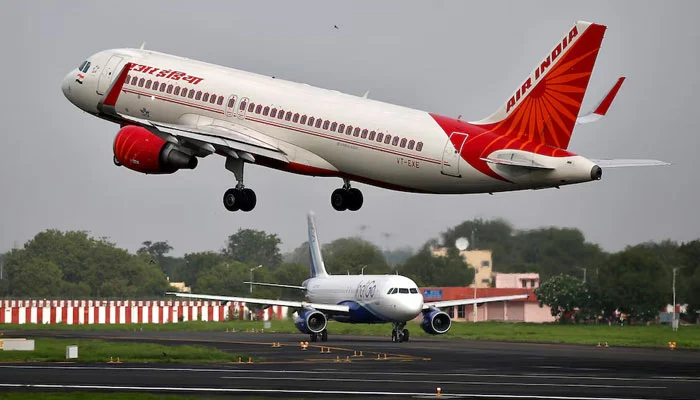
    IndiGo is experiencing its most severe crisis in two decades, with the airline canceling hundreds of flights, prompting passengers to wait outside ticket counters at Mumbai and Bengaluru airports. On December 6, 2025, approximately 385 IndiGo flights were canceled, leaving many stranded. Although some operations have begun to stabilize, IndiGo anticipates recovery around December 15.

    In response to the turmoil, India imposed a cap on airline fares on Saturday, aiming to prevent further price spikes as fares surged on popular routes due to the cancellations. The government has also announced special relief measures for IndiGo and arranged additional train services to manage the backlog. Details about the exact fare caps remain undisclosed, but the government emphasized its commitment to monitoring fare levels via real-time data and close coordination with airlines.

    This unprecedented disruption marks the biggest challenge for the airline since it launched two decades ago, despite its reputation for punctuality and affordability. The crisis is primarily linked to IndiGo’s failure to plan adequately for new regulations introduced in early November, which imposed stricter rules on night flying and weekly rest periods for pilots. This oversight has led to scheduling issues, resulting in over 1,000 cancellations just on Friday.

    Following the government’s exemption announcements, IndiGo projected a return to normal operations between December 10 and 15. At Delhi’s airport, officials reported that flight operations are gradually recovering, but some cancellations persist. Reports from airport sources indicate that, on Saturday, IndiGo canceled 124 flights in Bengaluru, 109 in Mumbai, 86 in New Delhi, and 66 in Hyderabad.

    Passenger experiences varied; some, unaware of the cancellations, waited outside the airports, while others faced disrupted plans. Satish Konde, for instance, checked in for a connecting flight from Mumbai to Nagpur but was later informed it was canceled. He expressed his frustration, noting he was awaiting the return of his luggage. Other airlines like Air India and Akasa have not been affected by these regulatory changes and have maintained regular flight schedules.

  • Air India presses to access Chinese airspace amid Pakistan ban and financial struggles

    Air India presses to access Chinese airspace amid Pakistan ban and financial struggles

    The closure of Pakistani airspace results in an estimated annual loss of $455 million for Air India. Passengers are increasingly opting for foreign airlines due to significantly shorter flight durations. Meanwhile, India is considering diplomatic approaches to persuade China to provide an alternative route for its carriers.

    A company document obtained by Reuters reveals that Air India is urging the Indian government to lobby China to access a sensitive military airspace zone in Xinjiang, aiming to shorten flight paths and mitigate the financial impact caused by the ban on flying over Pakistan. This request comes shortly after direct flights between India and China resumed following a five-year suspension following a Himalayan border conflict.

    Since the tragic crash of a London-bound Boeing Dreamliner in Gujarat in June, which resulted in 260 fatalities, Air India has been working to restore its reputation and expand its international connectivity. However, the closure of Pakistan’s airspace since diplomatic tensions escalated in late April has hampered these efforts, increasing fuel costs by up to 29% and extending some flight times by as much as three hours on long-haul routes, according to the document reviewed by Reuters.

    The Indian government is analyzing Air India’s proposal to seek China’s approval for an alternative routing that would also include emergency landing access at airports in Hotan, Kashgar, and Urumqi in Xinjiang. This adjustment could help facilitate faster routes to the US, Canada, and Europe. The document highlights that securing the Hotan route is seen as a strategic move to combat operational and financial strains on Air India’s extensive long-haul network.

    Owned by Tata Group and Singapore Airlines, Air India estimates the loss inflicted by the Pakistan airspace closure at roughly $455 million yearly, a figure that nearly matches its projected loss of $439 million for fiscal year 2024-25. The Chinese foreign ministry stated it was unaware of the situation and referred inquiries to “relevant authorities.” Both Indian and Chinese civil aviation bodies, along with Pakistan, did not respond to Reuters’ requests for comment.

    The specific Chinese airspace sought by Air India is surrounded by some of the world’s highest mountains—above 20,000 feet—and is generally avoided by international airlines due to safety concerns, especially in the event of decompression incidents. Additionally, this airspace falls within the operational jurisdiction of China’s Western Theatre Command of the People’s Liberation Army, which possesses extensive missile, drone, and air defense systems and shares some airports with civilian aircraft—further complicating access, according to military analysts. The Pentagon’s December report notes that the Western Theatre Command is responsible for responding to any potential conflict with India.

    Recent satellite data indicates that Hotan airport has not seen any departures or arrivals from non-Chinese airlines in the past year. Aviation consultants like Shukor Yusof suggest that China is unlikely to grant access given the challenging terrain, lack of emergency airports, and regional security risks.

    The broader global airspace is increasingly restricted due to ongoing conflicts. Since the onset of the Ukraine war in 2022, U.S. airlines have been barred from flying over Russia and have withdrawn from many India-U.S. routes, giving Air India a near monopoly on nonstop flights into and out of India. However, after Pakistan’s airspace was closed, the Delhi-Washington route was suspended in August. Other routes, such as Mumbai and Bengaluru flights to San Francisco, are becoming unviable due to added travel time—including stops in Kolkata—making some routes economically unsustainable.

    In comparison, flights from San Francisco to Mumbai operated by Lufthansa via Munich now take only five minutes longer than those on Air India, primarily because of shorter routes. Passengers are shifting toward foreign carriers that offer shorter flight times, leveraging Pakistan overflights, according to internal airline assessments.

    Air India believes that establishing a route through Hotan could significantly reduce fuel consumption and flight durations, helping the airline recover some of its capacity that has been trimmed by up to 15% on routes to New York and Vancouver. This could also potentially save the airline approximately $1.13 million weekly in losses.

    With no immediate signs of easing the airspace restrictions, Air India is seeking a temporary subsidy until Pakistan’s airspace reopens. The airline, with a fleet order valued at $70 billion, is also working to resolve issues related to old tax liabilities. The Indian government offered indemnity against pre-sale claims following its 2022 sale to Tata, but notices for overdue taxes— totaling around $725 million—have been issued, posing legal and reputational risks. A confidential March government notice warned of “coercive measures” such as asset freezing to recover $58 million owed, complicating the airline’s financial stability amid ongoing disputes.

  • Air Canada Plans Closure Amid Flight Attendant Strike

    Air Canada Plans Closure Amid Flight Attendant Strike

    Air Canada’s flight attendants were preparing to strike on Saturday, leading to the cancellation of hundreds of flights and affecting over 100,000 travelers. The Canadian Union of Public Employees (CUPE), representing 10,000 Air Canada attendants, was legally permitted to strike starting at 12:01 a.m. (04:01 GMT) after issuing a 72-hour notice on Wednesday. If no final agreement is reached, the strike could begin around 1 a.m., according to CBC.

    In anticipation of the work stoppage, Air Canada announced it would gradually reduce operations. By Friday evening, the airline had canceled 623 flights, disrupting the plans of more than 100,000 passengers. The union is pushing not only for wage increases but also seeks to address unpaid work related to ground operations, such as during boarding.

    Rafael Gomez, director of the University of Toronto’s Center for Industrial Relations, explained that compensating flight attendants for time spent on the ground is a common industry practice globally. Gomez highlighted that the union has effectively shaped public opinion by emphasizing perceived unfairness—such as passengers seeing attendants assisting without pay, which he considers a compelling issue.

    On Thursday, Air Canada outlined its latest proposal, suggesting that a senior flight attendant could earn around CAD$87,000 ($65,000) annually by 2027. However, CUPE responded by criticizing the airline’s offer as “below inflation and below market value,” and rejected government and airline suggestions to settle disputes through independent arbitration.

    Gomez forecasted that if a strike occurs, it likely wouldn’t last long, especially since it’s peak travel season. He indicated that the airline is motivated to avoid losing hundreds of millions of dollars in revenue and is essentially testing the resolve of the flight attendants with this standoff.

  • Air India Audit uncovers 51 safety issues, including simulator and training gaps

    Air India Audit uncovers 51 safety issues, including simulator and training gaps

    Air India faces significant scrutiny following a recent Dreamliner crash. An audit conducted in July uncovered 51 safety violations, including inadequate pilot training, the use of unapproved simulators, and deficiencies in crew scheduling systems, according to a government report reviewed by Reuters.

    While this report was not linked to the recent Boeing 787 accident that resulted in 260 fatalities in Ahmedabad, its findings have heightened concerns about the airline’s safety practices. Air India, owned by the Tata Group, is already under pressure for issues such as operating aircraft without proper emergency equipment checks, delaying engine part replacements, and falsifying maintenance records, along with other issues related to crew fatigue management.

    The confidential 11-page audit from the Directorate General of Civil Aviation (DGCA) highlights seven major breaches that must be corrected by July 30 and 44 additional non-compliance issues due by August 23. Corrections involve addressing training gaps identified among some Boeing 787 and 777 pilots, specifically related to their monitoring duties—observations of cockpit instruments—which they had not completed before their scheduled evaluations.

    Air India’s current fleet includes 34 Boeing 787s and 23 Boeing 777s, per Flightradar24 data. The report also points out operational safety concerns, such as inadequate route assessments for challenging Category C airports and training conducted on simulators that don’t meet qualification standards. This could potentially overlook safety risks during approaches to difficult airports, the DGCA noted.

    The airline stated it maintained full transparency during the audit and plans to submit a detailed response with corrective measures to regulators within the required timeframe.

    The preliminary investigation into June’s crash found that fuel control switches were activated almost simultaneously after takeoff, leading to pilot confusion during the incident. One pilot questioned the other about cutting off fuel, but the other denied doing so.

    The DGCA regularly raises alarms about pilots exceeding their flight duty limits, and the audit revealed that a recent flight from Milan to Delhi surpassed its duty hours by over two hours, classified as a Level I non-compliance.

    The inspection team included 10 DGCA officials and four additional auditors. Furthermore, the report criticizes the airline’s scheduling system, which lacks strict alerts for minimum crew deployment, leading to at least four international flights operating with insufficient cabin crew.

    Since Tata’s acquisition of Air India in 2022, the airline has expanded its international reach but continues to face passenger complaints concerning cleanliness, broken amenities, and in-flight entertainment issues.

    Last week, Reuters reported that senior executives, including the director of flight operations and director of training, had received notices over 29 systemic deficiencies, signaling repeated warnings ignored by the airline. The airline has committed to responding to these concerns.

    The audit also identified inconsistencies in door and equipment checks, gaps in training documentation, and a lack of designated chief pilots for the Airbus A320 and A350 fleets, which undermines accountability and oversight of flight operations.

    In the past year, authorities issued 23 safety violations or fines, with 11 involving Air India. The highest penalty was $127,000 for insufficient onboard oxygen on international flights.

  • American Airlines Flight Makes Urgent Landing Due to Engine Fire

    American Airlines Flight Makes Urgent Landing Due to Engine Fire

    An American Airlines plane flying over Washington as it approaches Dulles International Airport, captured from Washington, US, August 5, 2024. — Reuters

    On Wednesday morning, an American Airlines flight heading to Charlotte was forced to perform an emergency landing shortly after taking off from Harry Reid International Airport. Smoke was reported coming from the left engine, leading to concerns of a fire, as per eyewitness accounts.

    The flight, designated as Flight 1665, was aboard an Airbus A321 with 153 passengers and six crew members on board. It took off from Las Vegas at 8:11 AM local time when the incident occurred. The pilot quickly decided to turn the aircraft around and executed a safe landing back at the airport, according to the New York Daily News.

    American Airlines confirmed, “The aircraft taxied to the gate under its own power, and passengers disembarked without incident. We appreciate our crew’s professionalism and thank our teams for working diligently to get our customers to their destinations as quickly as possible.”

    No injuries were reported, and the airline has removed the aircraft from service for inspection and repairs.

    Passengers reported observing flames and hearing strange noises. Patrick Chapin, a traveler on board, recounted hearing a “boom” followed by a consistent rumbling. However, American Airlines later stated that their mechanics found no signs of an actual fire during an initial assessment.

    Luke Nimmo, the airport’s public information officer, also confirmed that the aircraft landed safely and taxied without any assistance. Video footage captured by local resident Annette Riding showed black smoke billowing from the left engine shortly after takeoff, as noted by Queen City News.

    The Federal Aviation Administration (FAA) has started an investigation into this incident.

    This emergency landing is part of a series of global aviation incidents in 2025, which include a deadly crash involving Air India earlier this month and a tragic mid-air collision in January that involved an American Airlines jet and an Army helicopter, resulting in 67 fatalities.

  • Second Bomb Threat Diverts Hajj Pilgrim Flight in Indonesia

    Second Bomb Threat Diverts Hajj Pilgrim Flight in Indonesia

    JAKARTA: A flight carrying hundreds of Hajj pilgrims returning to Indonesia from the Middle East was rerouted on Saturday due to a bomb threat, marking the second such incident within a week, according to statements from officials in the transport ministry and police.

    The Saudia Airlines flight SV5688 originated in Jeddah, Saudi Arabia, made a stop in Muscat, Oman, and was then headed for Surabaya, located on the main island of Java in Indonesia.

    However, air traffic controllers in the Indonesian capital, Jakarta, received a report about a potential bomb threat concerning the flight, prompting its diversion to Kualanamu International Airport in Medan on Saturday morning, as stated by the Directorate General of Civil Aviation.

    Asri Santosa, head of the regional airport authority, confirmed that authorities were inspecting the aircraft upon its arrival, but operations at the airport on Sumatra Island continued without interruption.

    All 376 passengers, who were Hajj pilgrims from Java, along with 13 crew members, were reported safe, according to North Sumatra police spokesperson Ferry Walintukan in a statement to AFP. A bomb squad was dispatched to conduct a thorough sweep of the aircraft.

    Passengers are expected to continue their journey on Sunday, Santosa added.

    This incident follows another emergency on Tuesday when a different plane carrying 442 Hajj pilgrims returning from Saudi Arabia to Jakarta was also diverted to Medan after an email threat was received by authorities.

  • Saudi Airline Restarts Hajj Flights to Iran After 2015 Pause

    Saudi Airline Restarts Hajj Flights to Iran After 2015 Pause

    A Saudi man checks flight schedules at King Khalid International Airport in Riyadh, Saudi Arabia, May 16, 2021.

    For the first time in ten years, a Saudi airline has initiated flights for Iranian Hajj pilgrims to the Kingdom, signaling a thaw in relations between the two nations.

    “Flynas began Iranian flights for pilgrims from Imam Khomeini Airport in Tehran on Saturday,” a representative from the Saudi civil aviation authority shared with AFP, preferring to remain anonymous.

    Additional flights from Mashhad in Iran are also expected, enabling over 35,000 pilgrims to make the journey to Saudi Arabia.

    The representative clarified that these flights are exclusively for the purpose of the Hajj pilgrimage and are not commercial services.

    The Hajj is anticipated to commence during the first week of June, with pilgrims from around the world already arriving in Saudi Arabia.

    After a surprise agreement brokered by China, Iran and Saudi Arabia restored diplomatic ties in March 2023, ending a seven-year rift.

    Relations between the two countries deteriorated in 2016 when Saudi Arabia severed ties following attacks on its embassy in Tehran and its consulate in Mashhad during protests triggered by the execution of cleric Nimr al-Nimr.

    In that same year, Iranian pilgrims were barred from entering Saudi Arabia due to the inability of both sides to establish a protocol for their participation in the pilgrimage.

    Although Iranians were eventually allowed to partake in the Hajj, they were restricted to traveling on specially chartered flights from Iran. However, the recent reconciliation between Iran and Saudi Arabia has led to increased interactions between the two regional powers.