Tag: aid

  • Venezuela Quakes Fatalities Near 1,500; Millions Presumed Affected

    Venezuela Quakes Fatalities Near 1,500; Millions Presumed Affected

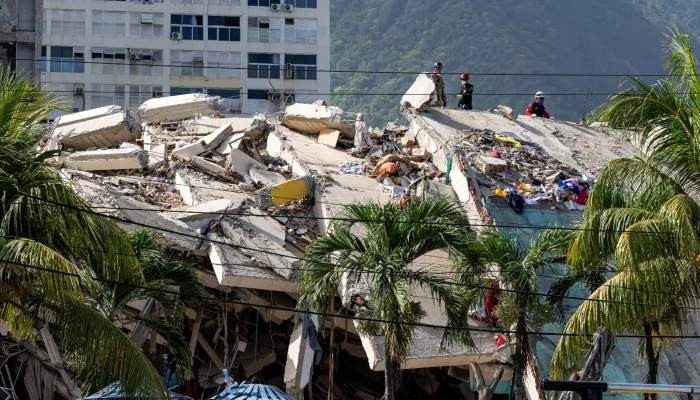
    A damaged building is visible from the base camp of the French Civil Security Training and Intervention Regiment (UIISC 7) at the Karting La Guaira complex in Caraballeda, La Guaira state, Venezuela, June 27, 2026. — Reuters

    – Local residents rescue an infant alive from the wreckage 32 hours after the quake.
    – The UN predicts up to 6.76 million people could be impacted.
    – At least 17 countries have deployed rescue teams to assist in locating survivors.

    The death toll from Venezuela’s twin earthquakes has climbed to 1,430 as of Saturday, with millions more likely lacking basic necessities such as sanitation, while initial US aid flights are arriving in Caracas.

    Amid public frustration over the government’s response, US-supported interim Venezuelan leader Delcy Rodriguez emphasized that the country is “not alone.” The United States reports that one runway at Simon Bolivar International Airport is operational, with C-17 military aircraft landing, and a naval ship has reached the coast.

    The UN humanitarian organization OCHA mentioned that search-and-rescue operations are being conducted by teams from at least 17 nations. Local residents are desperately trying to clear rubble from collapsing apartment buildings following Wednesday’s strong tremors, with experts noting that the first 72 hours are critical for saving lives.

    In La Guaira, a coastal area north of Caracas hit hardest by the quakes, residents joyously pulled a newborn from the debris on Friday, roughly 32 hours after the magnitude 7.2 and 7.5 tremors struck. A video shared on social media shows a man tearfully holding the baby.

    The UN’s migration agency stated that, based on available data, as many as 6.76 million people could be affected and will require emergency shelter, clean water, sanitation, healthcare, protection, and essential relief items.

    Jorge Rodriguez, President of the National Assembly, reported Saturday that there have been 1,430 deaths and 3,238 injuries. Meanwhile, the UN estimates the damages at around $6.7 billion, equivalent to about 6% of Venezuela’s GDP. UN aid chief Tom Fletcher warned that the death toll might continue to rise, with more than 50,000 missing persons.

    Venezuelans, already suffering from years of economic decline and the turmoil caused by US efforts to oust President Nicolás Maduro in January, are outraged at the government’s handling of the disaster. Yessica Mendoza recalled having to take her own daughter to a morgue in Caracas after her sister Yesimar Rodriguez, 25, and brother-in-law Jhomel Anaya, 26, were killed when their home in La Guaira collapsed on Wednesday.

    “We pulled them out ourselves. No help ever arrived,” Mendoza, 43, told AFP. She added that the bodies would be cremated quickly because of decomposition.

    On Friday, residents in Caracas jeered at Rodriguez as she visited a devastated neighborhood, shouting that the government was doing nothing for the people. La Guaira officials restricted access to the disaster zone late Friday and announced a military deployment there.

    Rodriguez stated she had spoken with U.S. President Donald Trump and Secretary of State Marco Rubio, who reaffirmed their support for the response efforts. The U.S. has deployed a disaster response team with over 250 personnel and three specialized search-and-rescue units trained in locating trapped individuals.

    Venezuela’s most severe earthquake in over a century has come after more than ten years of economic collapse, causing hospitals and public services to deteriorate and forcing many to leave the country. The nation remains in a fragile political transition six months after Maduro’s removal from power.

    The UN and aid organizations highlighted that, even before the earthquakes, millions had been facing food shortages, collapsing healthcare, protection vulnerabilities, and limited access to essential services. Historically, similar magnitude earthquakes have caused over 200,000 deaths in Haiti (January 2010) and 73,000 in Kashmir (October 2005).

    Among the victims were 28 Portuguese nationals, five Spaniards, two Brazilians, seven Chinese nationals, one Chilean, and one Italian-Venezuelan.

    Venezuela’s northern coast lies on a tectonic boundary between the Caribbean and South American plates, but the region had not experienced a major quake since 1997.

  • Afghanistan Faces Deepening Hunger as Winter and Aid Cuts Hit Hard

    Afghanistan Faces Deepening Hunger as Winter and Aid Cuts Hit Hard

    A recent report indicates that approximately 17 million Afghans are experiencing severe hunger. The onset of winter has further limited employment opportunities, sharply increasing the number of people in need. The World Food Programme estimates that an additional 3 million individuals are now suffering from acute hunger.

    In a makeshift tent on the outskirts of Kabul, Samiullah and his wife Bibi Rehana sit by a single bulb, sharing their only meal of the day—dry bread and tea—with their five children and a three-month-old grandchild. Samiullah, 55, expresses feelings of despair, stating, “We’ve reached a point where we’re resigned to death.” His family, including two older sons aged 18 and 20, and their wives, were deported from Iran and Pakistan within the past year amid widespread displacement.

    He recounted that their arrival was abrupt; from a modest home in Iran, they found themselves in a fragile tent made of rocks and debris after Iranian authorities raided and detained them before deportation. They managed to salvage some belongings, but their savings, meant to sustain them through the winter, were mostly exhausted. Efforts to contact Iranian officials for comments have been unsuccessful.

    Afghan government spokesperson Zabiullah Mujahid explained that returning migrants receive as much support as possible—covering transportation, housing, healthcare, and food. Despite ongoing reconstruction, he noted that the country’s deep-rooted poverty, born from decades of conflict, cannot be eradicated overnight: “Economic programs take time and don’t have an immediate effect on people’s lives.” Meanwhile, Pakistan and Iran collectively expelled more than 2.5 million Afghans in large-scale repatriation efforts. These measures have heightened amid accusations of harboring militants and spying, with security and resource concerns cited as reasons.

    As winter advances, job prospects vanish while the influx of returning Afghans increases the population by around 10%, according to WFP country director John Aylieff. The reduction of aid programs since U.S. President Donald Trump’s return to office has drained the resources of organizations like the WFP, compounding the crisis. Donor countries have scaled back their contributions, risking further hardship across the region. Aylieff warns that last year marked the most significant spike in malnutrition in Afghanistan’s history, and the situation is expected to worsen, with projections indicating that 200,000 more children could suffer severe malnutrition by 2026.

    At Bamiyan’s aid distribution center, rice bags and bottles of palm oil are stacked, yet lines of people grow longer, and supplies remain insufficient. Zahra Ahmadi, 50, a widowed mother of eight daughters, receives aid for the first time, saying, “I have to manage through winter with these supplies; sometimes we eat, sometimes we don’t.”

    At the Qasaba Clinic in Kabul, mothers comfort their children awaiting medical treatment. Dr. Rabia Rahimi Yadgari reports a doubling of malnutrition cases compared to before the migration crisis. The clinic sees about 30 malnutrition cases daily, but supplements are barely enough to support the families, who relied heavily on WFP aid and hospital care previously. Laila, 30, shares that her son Abdul Rahman is recovering after taking nutritional supplements, but his weight loss recurs over time. She attributes her family’s economic collapse to her husband losing his government job after the Taliban’s return; she remarks, “Life never stays the same.”

    As night falls and temperatures drop, Samiullah gathers firewood while Bibi Rehama lights a stove to keep the family warm. “At night, when it’s very cold, my children say, ‘Father, I’m cold, I’m freezing.’ I hold them close and say, ‘It’s okay.’ What choice do we have?” Samiullah laments. “When I worked in Iran, I could at least provide a proper meal. Now, there’s no work, no livelihood.”

  • UN Alerts 17 Million in Afghanistan Face Food Insecurity

    UN Alerts 17 Million in Afghanistan Face Food Insecurity

    The number of individuals experiencing severe food insecurity in Afghanistan has grown significantly this winter, surpassing 17 million, according to the United Nations.

    “The situation continues to worsen, and immediate action is necessary as Afghanistan faces its peak winter months, when needs are most urgent,” stated Jean-Martin Bauer, head of food security and nutrition analysis at the UN World Food Programme.

    He disclosed that more than 17 million people are suffering from acute food insecurity, which is an increase of three million from the previous year, during a press conference in Geneva. Additionally, nearly four million children are battling severe malnutrition.

    From WFP’s headquarters in Rome, Bauer explained that this crisis stems from multiple factors, including droughts damaging crops and livestock, earthquakes that have plunged many families into poverty, and reductions in international aid.

    Compounding the issue, the return of over 2.5 million Afghans from Iran and Pakistan this year is straining already limited resources and the fragile infrastructure of the country. The WFP projects a similar number of returnees in 2026.

    Currently, the organization has only secured 12% of the funding required to sustain its programs in Afghanistan. Bauer highlighted that due to funding shortages, WFP cannot carry out its usual winter preparations, such as pre-stocking food in vulnerable communities.

    He called on donors to act swiftly to prevent the most severe impacts, emphasizing that a need for approximately $570 million over the next six months exists to support around six million people. Bauer also stressed the importance of keeping Afghanistan in global headlines due to its extremely high vulnerability levels.

  • UN Narrows 2026 Aid Appeal Amid Rising Needs

    UN Narrows 2026 Aid Appeal Amid Rising Needs

    The UN has announced that it is now requesting an aid budget significantly lower than previous years, only half of what was initially expected for this year. This reduction reflects a substantial decrease in funding from donors during a period when humanitarian needs are at an all-time high.

    The current appeal, totaling $23 billion, admits it cannot serve tens of millions of people urgently needing assistance, as dwindling support forces prioritization of only the most critical cases.

    Aid organizations face additional hurdles, including security threats to personnel in conflict zones and limited access to affected areas.

    “Ultimately, these funding cuts are forcing us to make incredibly difficult decisions,” said UN aid chief Tom Fletcher. “We’re stretched thin, underfunded, and under threat. We’re working tirelessly on your behalf, but we’re also being asked to put out fires with a limited supply of water—and we’re under attack.”

    Last year, the UN aimed for a $47 billion relief effort for 2025. However, a combination of aid cuts from the U.S. and other Western nations such as Germany caused that number to be scaled back. As of November, only $12 billion has been received—a record low over the past decade—covering just over 25% of the needs.

    For the upcoming year, the $23 billion plan highlights 87 million individuals classified as urgent cases where their lives are at risk. It estimates that approximately a quarter of a billion people are in immediate need of assistance, with a target to help 135 million of them at a cost of $33 billion, contingent on available resources.

    The largest portion of funding, $4 billion, is dedicated to the occupied Palestinian territories, primarily Gaza. The area has been ravaged by a two-year conflict involving Israel and Hamas, leaving nearly all 2.3 million residents homeless and heavily reliant on aid.

    Following Gaza, the next most urgent needs are in Sudan, then Syria.

    Fletcher emphasized the bleak outlook, with increasing hunger, the spread of disease, and record levels of violence, underscoring the critical importance of the aid appeal. “Our focus is on saving lives in the areas hit hardest by crises—wars, climate disasters, earthquakes, epidemics, and crop failures.”

    The UN’s humanitarian funding largely depends on voluntary contributions from Western countries, with the United States historically being the leading donor. Despite ongoing aid cuts, the U.S. remains the top supporter in 2025, though its share has shrunk from over a third of total donations to just 15.6% this year.

  • Philippines concludes quake rescue; shifts focus to aiding 20,000 displaced

    Philippines concludes quake rescue; shifts focus to aiding 20,000 displaced

    Residents impacted by the 6.9-magnitude earthquake wait along the roadside for assistance in Bogo, Cebu, Philippines, October 2, 2025. — Reuters

    Philippine officials announced on Thursday that search and rescue efforts in the affected Cebu province have concluded. The current death count of 72 is unlikely to rise significantly, and all missing persons have been accounted for. The focus has shifted to providing aid and support to survivors of the quake, which has become the deadliest in over ten years.

    The quake struck offshore waters near Cebu’s central island late Tuesday, displacing more than 20,000 people and injuring over 300. On Thursday, President Ferdinand Marcos Jr. visited Bogo, a city of approximately 90,000 and the hardest-hit area. He reassured evacuees and acknowledged that relief operations are complicated by extensive infrastructure damage.

    “We’re facing difficulties because we don’t have suitable places to temporarily house displaced families, as we’re unsure about the stability of the evacuation centers,” he explained to reporters. “We will ensure the availability of food, water, and electricity—possibly using generators if necessary. Whatever is needed, we will provide it.”

    Many casualties resulted from buildings and homes collapsing during the quake or landslides triggered afterward. Heavy rain and power outages have further hampered rescue efforts.

    Located along the Pacific Ring of Fire, a path marked by frequent volcanic activity and earthquakes stretching from South America to the Russian Far East, the Philippines endures over 800 quakes annually.

  • Afghan Earthquake Survivors Avoid Villages Over Landslide Risks

    Afghan Earthquake Survivors Avoid Villages Over Landslide Risks

    Afghan earthquake survivors are camping outdoors without tents, fearing aftershocks that could cause further landslides. More than 2,200 deaths and over 3,600 injuries have been reported following the magnitude-6 quakes last week, which destroyed thousands of homes. Aid helicopters have delivered some supplies, but aid distribution remains inconsistent and slow. Many villages are isolated, with poor infrastructure and homes made of mud and stone quickly crumbling during the tremors. Families are living in makeshift camps along roads and open fields. In Masud village, 67-year-old farmer Adam Khan explained, “We have no shelter, not even a tent. It rained last night, and we had nowhere to hide. Our biggest fear is big rocks falling at any moment.” Some residents, like 40-year-old farmer Shams-ur-Rahman, have lost multiple relatives and fled with their families, sitting outdoors with their limited belongings. Others, such as Gul Ahmad, 51, believe their displacement might be permanent, insisting they cannot return home without proper shelter and demanding government assistance. International aid groups warn that without adequate sanitation, food, and shelter, disease and poverty could worsen in one of the world’s poorest, most earthquake-prone nations. Children are especially vulnerable; 12-year-old Sadiq, trapped for 11 hours beneath rubble, lost his grandmother and cousin and recalls, “I thought I would die. It felt like doomsday.”

  • UK commits £1m aid to help Afghanistan earthquake victims

    UK commits £1m aid to help Afghanistan earthquake victims

    A powerful earthquake struck eastern Afghanistan, leaving destruction and grief in its wake. Afghan volunteers alongside Taliban security forces rushed to assist injured individuals near a military helicopter in Mazar Dara village, Nurgal District, Kunar Province, on September 1, 2025. The quake is among the deadliest in Afghanistan’s recent history, claiming over 800 lives and injuring at least 2,800 as rescue efforts are still underway. The country’s disaster response has been limited by decreasing international aid, primarily due to US funding cuts.

    In response, the UK has pledged £1 million (~$1.35 million) in emergency aid. The funds will be channeled through global organizations like the United Nations Population Fund (UNFPA) and the International Red Cross (IFRC) to provide vital healthcare services and emergency supplies to the hardest-hit regions. British Foreign Secretary David Lammy emphasized the UK’s ongoing commitment to the Afghan people, stating that this emergency support aims to help deliver critical aid to those most affected.

  • Gaza Aid Misses the Mark, Leaving the Needy in Hunger

    Gaza Aid Misses the Mark, Leaving the Needy in Hunger

    The limited amount of food aid entering Gaza following nearly 22 months of conflict is often seized by armed groups, looted by gangs, diverted amid chaos, or never reaches the most vulnerable, according to UN agencies, aid organizations, and analysts.

    While images of severely malnourished children drew international condemnation, aid has resumed, though it remains critically insufficient according to global relief agencies.

    Daily, AFP reporters observe frantic crowds rushing toward food convoys and aid drops conducted by Arab and European air forces. In Al-Zawayda, central Gaza, on Thursday, starving Palestinians scrambled to grab parachuted pallets, jostling and tearing at packages amidst dusty clouds.

    “Hunger has driven people to turn on each other. They’re fighting with knives,” said Amir Zaqot, who was seeking aid.

    To prevent chaos, World Food Programme (WFP) drivers are instructed to halt before reaching aid sites and let people help themselves—yet these efforts often fall short.

    “A truck wheel nearly struck my head, and I was hurt while grabbing a bag,” said a man in the northern Gaza Strip, carrying a bag of flour on his head.

    In southern Gaza near Rafah, Mohammad Abu Taha described arriving at dawn with thousands of others waiting for basic supplies like flour, rice, and lentils. Suddenly, gunfire erupted, causing panic, with people rushing and fighting, resulting in bloodshed and casualties.

    Since May 27, around 1,400 Palestinians in Gaza have been killed while waiting for aid, mostly by Israeli forces, UN reports. Israel denies targeting civilians, claiming gunfire is only warnings when people approach military positions.

    Restrictions imposed by Israel on aid delivery—such as denying border permits, slow customs clearance, limited access points, and dangerous routes—have long been condemned by international organizations.

    In Zikim, the Israeli military altered loading plans for WFP shipments, forcing convoys to depart prematurely without proper security, according to a senior UN official who requested anonymity.

    In Gaza’s southern Kerem Shalom crossing, an NGO official explained that aid reaches warehouses via two routes: one relatively safe, the other plagued by frequent clashes and looting, which is often the only option.

    Gangs loot some aid, attacking warehouses and diverting supplies to traders who resell them at inflated prices. Muhammad Shehada of the European Council on Foreign Relations described this as a “Darwinian social experiment,” where the most desperate chase trucks, wait in the sun for hours, and compete fiercely for limited supplies.

    Doctors Without Borders (MSF) emergency coordinator Jean Guy Vataux added that in Gaza’s capitalist system, corrupt gangs send children and vulnerable populations to take risks at distribution points or during looting, turning these acts into lucrative professions. The resold food often fetches prices exceeding $400 for a 25kg bag of flour in Gaza markets.

    Israel has repeatedly accused Hamas of stealing aid meant for civilians, a claim used to justify the total blockade imposed between March and May, and the creation of a private aid organization called Gaza Humanitarian Foundation (GHF). The GHF, backed by Israel and the U.S., now controls most aid distribution, but with only four sites, which the UN calls “death traps.”

    Prime Minister Netanyahu’s office alleged that Hamas has stolen aid multiple times by shooting at Palestinians. Yet, senior Israeli military officials told the New York Times in July that they have found no proof of systematic aid theft by Hamas from the UN.

    Hamas, weakened and led by decentralized cells following the targeted killing of its senior figures, faces significant internal and external pressures. Aid workers report that during a ceasefire period before the current blockade, local police—including Hamas members—helped secure supplies, but current lawlessness has increased looting and insecurity.

    Oxfam’s policy lead Bushra Khalidi emphasizes that Israeli authorities have been repeatedly urged to facilitate the safe passage and protection of aid convoys and warehouses, but these requests have largely been ignored.

    Furthermore, Israel is accused of enabling criminal networks within Gaza, allowing them to loot aid and operate with impunity. Israeli and Palestinian media reports mention a group called the Popular Forces, led by Yasser Abu Shabab, engaging in illicit activities in southern Gaza under Israeli control. Statements from Israeli officials acknowledge backing anti-Hamas factions, though without clear attribution.

    Experts like Michael Milshtein from Tel Aviv University note that many gang members are involved in drug trafficking and other crimes, with some operations likely coordinated or tolerated by Israeli forces. Humanitarian workers in Gaza caution that much of the illicit activity sustains itself with implicit Israeli complicity.

  • Israeli Minister Sparks Discussion on Gazan Territory Annexation

    Israeli Minister Sparks Discussion on Gazan Territory Annexation

    Protesters on the Israeli right wing gathered at a rally organized by settler groups to advocate for Israel’s resettlement efforts in Gaza, near the Israel-Gaza border on July 30, 2025. — Reuters

    • The Gaza health ministry reports seven additional deaths linked to hunger.
    • Israel condemns the recognition of a Palestinian state, claiming it rewards Hamas.
    • The UN states that more aid is entering Gaza, but the amount remains critically insufficient.

    Israel is reportedly considering the possibility of annexing parts of Gaza to increase pressure on Hamas, according to a government minister on Wednesday. Such a move would undermine Palestinian aspirations for a state on land controlled by Israel. Security Cabinet member Zeev Elkin made this statement shortly after Britain announced its intention to recognize a Palestinian state come September, unless Israel takes concrete steps to ease Gaza’s suffering and reaches a ceasefire with Hamas.

    France, which plans to recognize a Palestinian state in September, along with Saudi Arabia, issued a joint statement on Tuesday—supported by Egypt, Qatar, and the Arab League—detailing steps toward a two-state solution. The proposed framework requires Hamas to relinquish its control over Gaza and turn over its weapons to the Palestinian Authority.

    Israel sees moves toward Palestinian recognition as rewarding Hamas for its attack in October 2023 that sparked the current conflict.

    Potential Ultimatum to Hamas

    Elkin accused Hamas of stalling ceasefire negotiations to extract concessions from Israel. He suggested Israel might issue an ultimatum to the group, demanding a deal before expanding military actions further. “Losing land is the most painful outcome for our enemies,” he stated. “Sending a clear message to Hamas that they will permanently lose land if they play games with us could be a powerful pressure tactic.”

    Efforts to mediate a ceasefire—aiming for a 60-day halt and the release of hostages—have stalled, with both sides blaming each other for the deadlock.

    International pressure on Israel over Gaza continues to mount, especially as recent reports warn of an unfolding famine. Gaza’s health ministry confirmed seven more hunger-related deaths, including that of a two-year-old girl with pre-existing health issues.

    Families of Hostages and Reactions

    Families of Israeli captives in Gaza have pleaded for no recognition of a Palestinian state until their loved ones are freed. The Hostages Family Forum described such recognition as a violation of international law and a moral failure that could legitimize war crimes.

    Prime Minister Benjamin Netanyahu condemned Britain’s decision, calling it “a reward for Hamas’ heinous terrorism.” Similar criticisms arose from Israel after France’s announcement. Hamas officials have yet to respond publicly to calls for disarmament, which Israel strongly opposes, insisting that the Palestinian Authority (PA) should control Gaza, a region Hamas currently governs independently.

    Netanyahu has expressed a desire for peace but warned that any future Palestinian state could serve as a threat to Israel’s existence. Consequently, he insists that Israel should retain security control. The government includes far-right figures demanding annexation of Palestinian territories; notably, Finance Minister Bezalel Smotrich asserted that reestablishing Jewish settlements in Gaza is imminent, describing Gaza as an integral part of Israel.

    Humanitarian Situation

    A two-year-old girl suffering from brain fluid buildup and hunger died overnight, her father reported to Reuters. “Makkah, my little daughter, died from malnutrition and lack of medication,” Salah Gharably stated from Deir Al-Balah. “Doctors said she needed a specific type of milk, but we have none. She starved, and we felt powerless.”

    Since the conflict began, starvation has claimed the lives of at least 154 people, including 89 children, most recently in recent weeks.

    Earlier, the Israeli military announced steps to facilitate food supplies into Gaza, including daily pauses in military operations and designated aid corridors. The UN’s Office for the Coordination of Humanitarian Affairs (OCHA) reported that while initial aid shipments increased during the pauses, the volume remains far below what’s needed. Rising food prices suggest that if aid flows continue to grow, conditions could improve.

    The war started on October 7, 2023, when Hamas launched attacks on southern Israel, killing roughly 1,200 Israelis and taking 251 hostages. Since then, Israel’s military campaign in Gaza has resulted in over 60,000 deaths and widespread destruction, according to Gaza’s health authorities.

  • UK, France, Germany Demand Immediate Action to End Gaza Humanitarian Crisis

    UK, France, Germany Demand Immediate Action to End Gaza Humanitarian Crisis

    Palestinians gather at a charity kitchen to receive food amid a severe hunger crisis in Gaza City on July 25, 2025. — Reuters

    The leaders of the UK, France, and Germany stated Friday that the “humanitarian disaster” in the Gaza Strip “must stop now,” as the Palestinian territory suffering from extensive conflict faces worsening hardships.

    In a joint statement issued from Berlin, they urged the Israeli government to immediately lift restrictions on aid deliveries and allow UN agencies and humanitarian organizations to operate freely to combat starvation.

    British Prime Minister Keir Starmer, French President Emmanuel Macron, and German Chancellor Friedrich Merz emphasized that “basic necessities for civilians, such as water and food, should be provided without delay.”

    They condemned the withholding of vital humanitarian aid, calling it unacceptable, and insisted that Israel must meet its obligations under international humanitarian law.

    This week, over 100 aid and human rights organizations warned that “mass starvation” is spreading across Gaza after more than 21 months of ongoing conflict.

    Israel denies responsibility for the worsening crisis, which the World Health Organization (WHO) has described as “man-made.”

    Since March, Israel has maintained a blockade on aid entering Gaza, only partially easing restrictions two months later, while bypassing the longstanding UN-led aid distribution system.

    The European leaders also called for an end to the violence. They urged all parties involved to reach an immediate ceasefire and expressed readiness to support further peace efforts, aiming for lasting security and stability for Israelis, Palestinians, and the region as a whole.

    Earlier, Starmer announced he would hold an emergency call with Macron and Merz to discuss Gaza.

    The conflict was ignited when Hamas launched an attack on Israel on October 7, 2023. According to official figures cited by AFP, this assault resulted in 1,219 deaths, mostly civilians.

    Israel’s military operations in Gaza have resulted in approximately 59,676 Palestinian fatalities, most of whom are civilians, as reported by Gaza’s health ministry.

    Among the 251 hostages taken during the attack, 49 remain held in Gaza, with 27 believed to be deceased, according to Israeli military sources.

  • Support Aid Initiatives for Global Peace: UN Urges Action

    Support Aid Initiatives for Global Peace: UN Urges Action

    A United Nations flag waves outside one of the organization’s buildings. — AFP

    Funding for aid is crucial to foster peace during periods of global unrest, especially as significant cuts to foreign assistance are observed, according to the head of the UN Development Programme.

    In an interview before a four-day UN conference in Spain aimed at revitalizing the struggling development sector, Haoliang Xu stressed that support for aid, trade, and military initiatives is “not a zero-sum game.”

    “International development collaboration is essential to establish the groundwork for peace,” Xu pointed out, emphasizing that most of the world’s impoverished individuals reside in conflict-affected regions.

    Wealthy nations, particularly the United States and European states, have decreased aid budgets while increasing military expenditures due to the ongoing conflicts in Ukraine and the Middle East, which disrupt global stability.

    Military spending reached an unprecedented $2.7 trillion in 2024, a 20% increase from the previous year, Xu reported.

    However, the Chinese diplomat argued that it is in the best interest of affluent countries to assist developing nations, despite competing crises and priorities.

    “Building the foundations for peace and investing in stability in vulnerable countries can help alleviate the pressures in nations facing challenges such as migration,” he stated.

    “Crises in one part of the globe can affect regions that are currently prosperous and stable,” Xu added.

    The Peace Research Institute Oslo indicated that last year marked the highest number of armed conflicts globally since 1946.

    According to the World Bank, the count of individuals living in extreme poverty—those surviving on less than $3 per day—in countries experiencing conflict and instability is projected to reach 435 million by 2030.

    At least 50 world leaders are expected to gather in Seville starting Monday for the Fourth International Conference on Financing for Development, the largest such event in a decade.

  • UN Alerts: Time Running Out to Rescue Myanmar Quake Survivors

    UN Alerts: Time Running Out to Rescue Myanmar Quake Survivors

    Chinese rescue workers on the scene of a collapsed building after a major earthquake in Mandalay, Myanmar, March 31, 2025. — Reuters

    • Civil war in Myanmar may hinder aid delivery, according to organizations.
    • Relief organizations highlight urgent requirements for water, food, and shelter.
    • A rebel coalition fighting the junta declares a unilateral ceasefire.

    On Tuesday, aid organizations in Myanmar painted a grim picture of chaos and destruction following an earthquake that has claimed over 2,700 lives. They emphasized the critical demand for food, water, and shelter, warning that the opportunity to locate survivors is rapidly diminishing.

    Myanmar’s military leader, Min Aung Hlaing, stated in a televised address that the death toll from the 7.7 magnitude earthquake that struck on Friday is expected to exceed 3,000. By Tuesday, the count was reported at 2,719, with 4,521 people injured and 441 still unaccounted for.

    This earthquake, the strongest to hit Myanmar in more than a century, struck during lunchtime on Friday, bringing down both ancient pagodas and contemporary buildings.

    Mandalay, Myanmar’s second-largest city, along with Naypyitaw, the capital built as a stronghold by the previous junta, suffered substantial destruction.

    In Thailand, the quake resulted in 21 fatalities as hundreds of buildings were damaged. Rescuers continue to search for survivors amidst the debris of a collapsed construction skyscraper in Bangkok, though they acknowledge that time is not on their side.

    In Myanmar, UN agencies reported that hospitals are overwhelmed, and rescue efforts are being hampered by damaged infrastructure and ongoing civil conflict. Rebels have accused the military of conducting airstrikes despite the earthquake, prompting a rebel coalition to announce a one-month ceasefire to facilitate aid efforts.

    Aid organizations raised alarms regarding shortages of food, water, and sanitation as the tremors continue to rock the region on Tuesday.

    Julia Rees from UNICEF, who just returned from one of the hardest-hit areas near the epicenter, noted that entire communities have been decimated, resulting in overwhelming destruction and psychological distress.

    “This crisis continues to unfold. The aftershocks persist. Search and rescue operations are ongoing, with bodies still being retrieved from the rubble,” she stated. “Let me be clear: the needs are enormous and increasing by the hour. The time for life-saving responses is running out.”

    Civil War Complicates Relief Efforts

    In the vicinity of Mandalay, 50 children and two teachers lost their lives when their preschool collapsed, according to the UN humanitarian agency.

    In a rare success story, a 63-year-old woman was rescued from the debris of a building in Naypyitaw after being trapped for 91 hours. She was discovered on Tuesday morning and extracted an hour later, thanks to collaborative rescue efforts from teams from India, China, and Russia.

    The ongoing civil war in Myanmar, sparked by the military coup in 2021, has complicated access to the injured and homeless, exacerbated by strict controls on internet and communication networks.

    A rebel faction, the Karen National Union, reported that the junta carried out airstrikes in eastern Myanmar at a time when the focus should have been on earthquake relief efforts.

    On Tuesday, the Three Brotherhood Alliance, consisting of three major rebel groups opposed to the junta, declared a unilateral ceasefire for one month to facilitate effective humanitarian assistance.

    Amnesty International called on the junta to allow aid to reach areas beyond its control, with its Myanmar researcher Joe Freeman emphasizing, “The military has a history of denying aid to regions where resistance groups are active. It must grant unimpeded access to all humanitarian organizations immediately.”

    In his address, junta leader Min Aung Hlaing noted “lessons learned” and criticized the poor quality of construction, stating that some buildings were constructed cheaply and without adequate investment.

    It remains unclear if Min Aung Hlaing will proceed with a rare trip abroad later this week to attend a regional summit in Bangkok as scheduled. The foreign ministry in Thailand indicated that he might participate via teleconference.

    “We Will Keep Going”

    In Bangkok, rescue teams continue to scour the wreckage of a collapsed skyscraper for any signals of life, even as the days since the quake increase the skepticism regarding survival chances.

    Approximately 70 bodies are estimated to be trapped under the debris, with experts confirming that 12 have been located through scanners. However, large debris remains in the way, prompting rescuers to cut through concrete slabs to reach them.

    “Our focus remains on finding survivors. Cases exist where individuals have survived for up to a week,” stated Bangkok Governor Chadchart Sittipunt during a news briefing. “We cannot declare that hope is lost… as long as there is structure, air, and no direct heat. We will continue our efforts.”

    Multinational teams, including personnel from the U.S. and Israel, are assisting in the search and rescue operations as families and friends remain anxious for news of their loved ones.

    “The rescue teams are doing everything they can. I can see that,” said 19-year-old Artithap Lalod, anxiously awaiting updates about his brother.

    Initial tests indicated that some steel samples from the collapsed site did not meet standards, prompting the Thai government to initiate an investigation into the collapse’s cause.

    So far, 14 deaths have been confirmed at the building site, with seven additional fatalities reported elsewhere in Bangkok.

  • Top Countries Supporting Ukraine: $120B from U.S., 0.9% UK GDP

    Top Countries Supporting Ukraine: $120B from U.S., 0.9% UK GDP

    Understanding International Aid to Ukraine

    In recent times, the geopolitical landscape has dramatically shifted, especially in Eastern Europe. The ongoing conflict in Ukraine has prompted many countries to step forward with significant contributions aimed at bolstering the Ukrainian economy and military. This blog explores the aid landscape and highlights the nations that are leading the charge in supporting Ukraine.

    The Scale of Aid: A Snapshot

    Data from the Ukraine Support Tracker at the Kiel Institute for the World Economy provides critical insights into aid flows to Ukraine. As of December 31, the allocations from various countries paint a picture of varying levels of commitment:

    • United States: Almost $120 billion
    • EU Institutions: Less than $60 billion

    This disparity highlights the robust support from the U.S., often leading the conversation on international assistance to Ukraine.

    Major Contributors: A Look at National Contributions

    Germany and the United Kingdom: Leaders in Aid

    Germany and the United Kingdom have emerged as the biggest supporters of Ukraine, providing substantial financial and military aid. Notably, Germany has committed approximately 0.4% of its 2021 GDP, while the UK has surpassed this with around 0.9% of its GDP earmarked for wartime assistance.

    France and Italy: The Lagging Heavyweights

    While France and Italy are major European economies, their support has not matched the scale of their counterparts. They have committed only about 0.2% and 0.1% of their GDP, respectively. This raises questions about the perceived responsibilities of larger economies in times of crisis.

    Smaller Nations Making Significant Contributions

    Interestingly, smaller countries like Denmark and the Netherlands are proving that size does not equate to impact. They rank as Ukraine’s seventh and eighth-largest donors, showcasing both relative and absolute support despite having much smaller economies compared to France and Italy.

    Types of Aid Delivered to Ukraine

    The aid directed to Ukraine encompasses a range of support types:

    Financial Support

    This includes loans and grants that assist with immediate economic stabilization and longer-term recovery opportunities.

    Humanitarian Aid

    Essential supplies such as food, medicine, and shelter support the civilian population that has been affected by the war.

    Military Assistance

    A significant portion of the aid is dedicated to military support, which includes financial contributions tied to military purposes and the provision of weapons and equipment. This aspect is crucial for Ukraine to maintain its defense against ongoing threats.

    Trends in Aid Commitment

    Overall, the aid flows to Ukraine are constant, albeit slow. The evolving dynamics of international aid reflect not only the urgency of the situation but also the complex interplay of national interests and global political strategy.

    By understanding the details surrounding aid to Ukraine, we can appreciate the larger context of international relations at play.