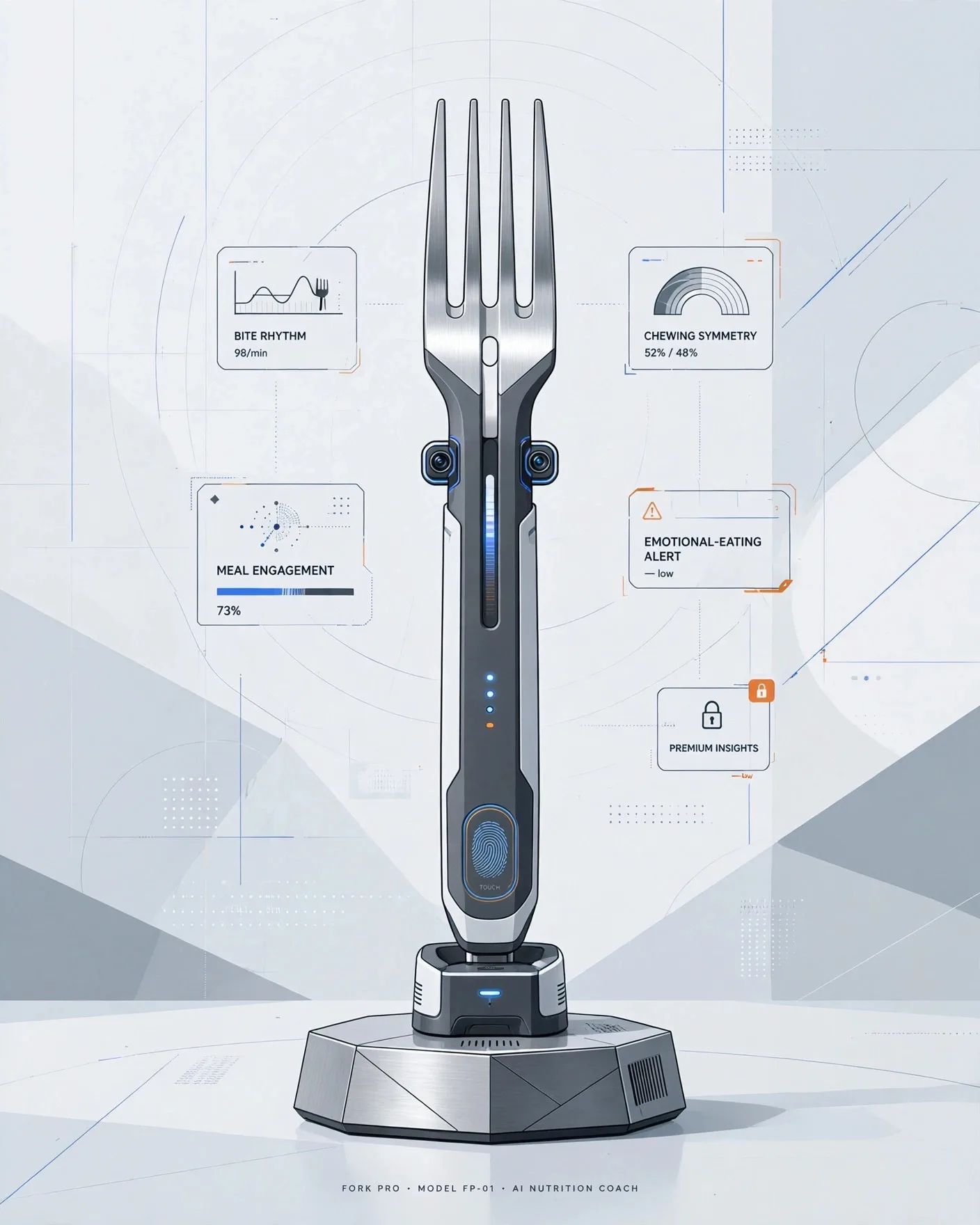
I aimed to invent a hilariously pointless AI product that no startup would dare to fund. It had to address a nonexistent problem, gather an excessive amount of data, and turn everyday actions into expressions of mild disappointment in its user. By the time it reached its third feature, it would start asking for a subscription.
I began with a smart fork that tracks chewing rate, bite balance, and something called meal engagement. When it detects emotional eating, it gently vibrates. Premium subscribers could ask the fork why they’re eating like this.
Next, I envisioned an AI pillow that hears your sleep talk and summarizes it each morning. It identifies recurring anxieties and speculates whether a recent dream about a chicken with human teeth signals doubts about your personal brand.
Then, I imagined slippers that record every lap around the kitchen. They vibrate when sensing aimless wandering toward the fridge. The Purpose Mode feature costs $8.99 a month.
After that, I designed a smart shower that measures how long you stand pondering your life choices, lowering the temperature when your outlook becomes too unambitious.
A coffee mug could detect passive-aggressive sipping during meetings, linked to the list of ongoing work frustrations. The chair beneath you could analyze your posture during calls, sending weekly reports to your boss about your productivity.
A smart wallet would announce bad financial decisions at checkout and lock itself after midnight unless you verify your identity by a brief quiz—ensuring you really need another mechanical keyboard.
For the home, I imagined a toilet paper holder that studies how fast your roll spins, creates household digestion trends, and requires an account before dispensing the last wipe. That one felt hilariously out of reach.
Even pet tech got in on the absurdity, with a camera-enabled litter box that monitors bathroom visits, detects distress yowls, and even identifies stool and urine clumps, sending health alerts via an app. It’s useful if it catches health issues early, but mostly just documents cat poop.
My imaginary mug tracked daily habits, while a high-tech headset integrated dual 4K cameras around the face, microphones, and AI capable of translating signs, recognizing objects, suggesting recipes, and offering workout advice—because why not give headphones eyes?
Kitchen gadgets joined in as well; LG has shown ovens and microwaves with internal cameras that recognize food, monitor cooking, and generate recap videos—turning dinner prep into content creation before anyone even tastes the meal.
Throughout this exercise, I realized my list of made-up gadgets kept becoming more believable because real tech kept surpassing my imagination. The pattern seems straightforward:
1. Select an object that already functions without needing an account.
2. Equip it with cameras, microphones, or sensors akin to those used at a regional airport.
3. Rebrand this surveillance as personalized assistance.
4. Convert routine activities into scores or trends.
5. Generate advice or feedback.
6. Hide the full history or complex settings behind a premium tier.
7. ???
And finally: profit.
These products don’t necessarily fulfill the purpose. Instead, they observe, grade, and report on your efforts, offering insights where none were needed—and companies often mistake the ability to observe as the ability to assist.
When a toothbrush reviews your brushing technique or a mirror analyzes your face, they behave more like managers measuring effort than tools simplifying tasks. Even a simple mug might build a case file on your coffee habits during stressful meetings.
Adding AI often shifts a device from a passive tool to an ongoing maintenance commitment. It demands accounts, permissions, software updates, corrective inputs, and interpretation of reports. Essentially, it turns a straightforward object into a relationship—a continuous, sometimes burdensome, interaction.
The AI that once merely responded or monitored has now become a constant presence, transforming mundane routines into data-rich feedback loops. And although some devices serve a real purpose, many more are just elaborate proof that the line between helpful innovation and silly overreach is surprisingly thin.