الوسم: 2024

  • Samsung’s Smart Glasses May Launch Next Year But Rival Beats It

    Samsung’s Smart Glasses May Launch Next Year But Rival Beats It

    Samsung’s highly anticipated smart glasses are expected to hit the market in 2026, according to recent reports. However, a Taiwanese company has already made a move, launching its own smart glasses ahead of Samsung’s anticipated release.

    That company is HTC. Known for years for creating sleek smartphones like the HTC One, One M8, and One M9, HTC shifted gears several years ago to focus on its Vive virtual reality headsets. Now, the company is making waves again with a new line of AI-powered smart glasses.

    With major brands like Meta and Snapchat popularizing the smart glasses trend through products such as Ray-Ban Meta and Snapchat Spectacles, competition in this space is intensifying.

    Samsung Isn’t the Only Player in the Game

    According to a report from South Korean publication SE Daily, Samsung plans to introduce its first pair of smart glasses in late 2026. This suggests we’re still about a year away from seeing Samsung’s eyewear go on sale.

    The upcoming Samsung glasses are said to resemble the design of Ray-Ban Meta models, incorporating features like built-in speakers, a microphone, and a camera.

    It’s worth noting that these glasses are separate from the augmented reality (AR) glasses Samsung is reportedly developing with Google, which are expected to include a display.

    Meanwhile, Google showcased its own Android-based XR glasses at the I/O 2025 conference, with the first model—developed in partnership with Warby Parker—potentially arriving as early as next year. Additionally, a new lineup of smart glasses from an established brand may arrive in 2025.

    Introducing HTC Vive Eagle

    HTC’s latest offering is called the Vive Eagle, branded as ‘AI smart glasses.’ These lightweight wearable devices feature a 12-megapixel ultra-wide camera with an LED indicator, a 235mAh battery, and magnetic fast-charging that keeps the glasses ready for use. Weighing just 49 grams, they also include speakers, but their open-ear design ensures you stay aware of your surroundings without anything covering your ears.

    The glasses come equipped with HTC’s Vive AI voice assistant, supporting major language models such as ChatGPT and Google’s Gemini. This allows users to control camera functions, music, and other features through spoken commands, as well as ask more complex questions.

    Further enhancing their appeal is the ability for real-time translation into 13 languages, including Arabic, Chinese (Traditional), English, French, German, Greek, Italian, Japanese, Portuguese, Spanish, Korean, Thai, and Turkish.

    HTC claims the Vive Eagle glasses can deliver about 4.5 hours of continuous music playback on a single charge and standby mode can last up to 36 hours.

    Availability and Pricing

    Currently, the HTC Vive Eagle is available exclusively in Taiwan, with pre-orders now open. The release date is scheduled for September 1. The glasses are offered in four colors—Berry, Coffee, Grey, and Black—and retail for NT$15,600, roughly equivalent to $500.

    There has been no official announcement regarding international availability, but as the market heats up, more regions may soon see these innovative glasses. It’s worth noting that just a couple of months ago, Oakley entered the smart glasses scene, indicating a growing interest in this technology.

    As the competition accelerates, major brands continue to develop cutting-edge wearable technology that could redefine how we interact with digital content on the go.

  • Japan’s 2024 Births Dip Below 700,000 for the First Time

    Japan’s 2024 Births Dip Below 700,000 for the First Time

    Children resting at Hinagiku nursery in Moriyama, western Japan. — Reuters/File

    Last year, Japan experienced a historic decline in birth rates, with the total number of births dropping below 700,000 for the first time on record, as revealed by government statistics on Wednesday.

    A total of 686,061 babies were born in Japan in 2024, representing a decrease of 41,227 compared to 2023. This marks the lowest figure in the country’s recorded history since 1899.

    Currently, Japan ranks as the country with the second-oldest population globally, following the small nation of Monaco, according to the World Bank.

    Prime Minister Shigeru Ishiba has termed this demographic shift a “quiet emergency,” committing to implement family-friendly policies, such as more flexible work schedules, in hopes of reversing this trend.

    According to the health ministry’s latest data, Japan’s total fertility rate—indicating how many children a woman is projected to have over her lifetime—has also reached an unprecedented low of 1.15.

    The ministry reported that Japan recorded 1.6 million deaths in 2024, which is a rise of 1.9% from the previous year.

    Ishiba has urged for efforts to revitalize rural areas, where many aging communities are becoming increasingly isolated.

    Data from the internal affairs ministry indicates that in over 20,000 communities across Japan, most residents are aged 65 and older.

    As the country of 123 million faces intensified labor shortages due to its aging populace, strict immigration policies exacerbate the situation.

    In South Korea, the fertility rate for 2024 is even lower than Japan’s at 0.75, continuing to be among the lowest globally, though it reflects a slight increase from the previous year due to more marriages.

  • 2024 EV Production: 7% Drop in U.S. Amid Global Shifts

    2024 EV Production: 7% Drop in U.S. Amid Global Shifts

    Electric vehicles (EVs) have taken the automotive industry by storm, reflecting a major shift in consumer preferences and corporate strategies. A closer examination reveals the dynamics of local versus foreign electric vehicle production and how various global markets are influencing the landscape.

    ## The Rise of Global EV Production

    The trade in electric vehicles has become a significant aspect of international commerce, particularly as manufacturers strive to reach various markets efficiently. While many carmakers produce vehicles near their target customers, certain brands expand their reach by exporting from their home countries. This leads to a complex web of local and foreign production strategies, reshaping how electric cars are perceived and adopted across different regions.

    ### Manufacturing Trends by Region

    The International Energy Agency (IEA) has provided insightful data on regional production trends. In various regions such as China, North America, and the European Union (EU), it’s evident that local manufacturers predominately produce EVs. However, there’s a notable shift occurring, particularly in North America and the EU.

    #### North America: A Mixed Landscape

    In the North American market, U.S.-based companies like Tesla and Ford are ramping up production, especially in Europe, to meet growing demand. This shift highlights the competitive nature of EV manufacturing, wherein even local giants face challenges from their international counterparts.

    Interestingly, while U.S. firms advance in EU production, their presence in the domestic market has seen a decline, with reported reductions in EV output. In contrast, Mexican production, primarily from U.S. companies, is on the rise, indicating a strategy to leverage lower production costs while serving both the U.S. and broader markets.

    #### European Union: Competing for Market Share

    In the EU, U.S.-based manufacturers have a smaller footprint. As European manufacturers have historically shaped the local landscape, they find themselves contending with increasingly competitive offerings from Chinese, Japanese, and Korean brands. This trend emphasizes the dynamic nature of the EV market, necessitating adaptation and innovation to maintain relevance.

    ### China’s Influence in the EV Market

    Chinese companies have significantly impacted the global EV scene. With competitive pricing and innovative technologies, they have not only captured domestic demand but are now starting to penetrate the European market as well. Brands like Tesla have established manufacturing bases in China, underscoring the importance of local production in accessing major markets.

    As the U.S.-China trade dynamics evolve, the interplay between manufacturing and international relations becomes critical in understanding market trends. Joint ventures between Chinese firms and foreign companies serve as a strategic response to the growing intrepid nature of global competition.

    ## Import and Export Dynamics

    While regions like China, Japan, Korea, and the EU are actively exporting EVs to bolster their local markets, the U.S. finds itself in a different situation. A significant portion of the American market relies on imported EVs to meet consumer demand. This reliance on foreign production underscores the challenges faced by U.S. manufacturers, who must navigate a landscape filled with both competitive pressures and evolving consumer preferences.

    ### The Future of EV Manufacturing Globally

    The implications of these trends are far-reaching. As electric vehicles become more mainstream, manufacturers must balance local production capabilities with the need to tap into international markets. The emerging focus on efficiency, sustainability, and cost-effectiveness means that the landscape will continue to evolve, impacting not just the companies involved but also consumers around the globe.

  • Global Faith Trends: 99% in Pakistan, 17% in China

    Global Faith Trends: 99% in Pakistan, 17% in China

    Understanding Global Religious Trends

    Religion continues to shape societies around the globe, affecting cultural norms, daily practices, and community life. Recent insights from a Statista Consumer Insights survey conducted between January 2024 and March 2025 reveal compelling regional patterns regarding religious beliefs across different countries.

    Highly Religious Nations

    Dominance in Africa and the Middle East

    The survey highlights that many of the most religious countries are located in Africa and the Middle East. Nations such as Pakistan, Egypt, and Nigeria stand out, with an impressive 99 percent of adults in these regions identifying with a religious faith. This overwhelming affiliation reflects the significant role religion plays in daily life, culture, and politics within these nations, often guiding personal and collective values.

    Case Study: Nigeria

    Nigeria, in particular, exhibits a diverse religious landscape, with a mixture of Christianity and Islam coexisting. This demographic balance not only informs individual belief systems but also shapes societal interactions, community structures, and even national policies.

    Secular Regions

    The Case of China

    In notable contrast, China emerges as the most secular nation in the survey, with only 17 percent of adults identifying as followers of a religion. This statistic can largely be attributed to the historical marginalization of religious beliefs during the Communist era. The state’s policies aimed at controlling religious practice have significantly shaped cultural perspectives around faith.

    Other Secular Countries in Asia

    Following China, other relatively secular countries in Asia include Vietnam, Japan, South Korea, and Hong Kong. The shared characteristics of these nations often reflect modern secular values, philosophical ideologies, and the influence of Western thought.

    European Religious Dynamics

    Czechia: A Historical Context

    In Europe, Czechia stands out with only 30 percent of the population claiming adherence to a religion. This trend is linked to a historical backdrop marked by Communist rule and longstanding tensions with the Catholic Church. The evolution of religious thought in Czechia serves as a fascinating study of how historical events influence contemporary beliefs.

    Comparison with Eastern Europe

    Conversely, Eastern European nations such as Romania, Serbia, and Lithuania demonstrate higher levels of religiosity. Their experiences with socialism did not lead to the same degree of secularization, suggesting that cultural and historical contexts play a pivotal role in shaping religious identity across the continent.

    Western Religious Landscape

    In the West, Ireland is recognized as the most religious country, maintaining a strong cultural connection to Catholicism. Southern European nations like Greece, Italy, and Portugal also display high levels of religious faith, emphasizing the importance of tradition and community in these societies.

    Religious Affiliation in the Americas

    High Levels in South America

    On the American continent, Peru and Brazil are distinguished by their faith, with over 80 percent of adults identifying as religious. This strong connection to faith reflects the deep cultural roots of religion within these countries, influencing their social and political frameworks.

    The North-South Divide

    While Canada shows a more secular trend, other countries in both North and South America, aside from the mentioned exceptions, maintain consistent levels of religious belief. This pattern highlights a nuanced understanding of how geography influences spiritual affiliation on the continent.

    Implications of Religious Beliefs

    These findings illustrate the diverse landscape of religious belief across various countries. Understanding these trends not only fosters greater cultural awareness but also prompts discussions about the implications of faith on global stability, community interactions, and individual identities.

  • Travel Experience Economy Reaches $1.3 Trillion: Key Insights

    Travel Experience Economy Reaches $1.3 Trillion: Key Insights

    The Rise of Experience Travel: Insights from Recent Data

    Travel has evolved significantly beyond just visiting new places; it now encompasses a deep engagement with experiences that resonate personally. The "experience travel" sector has captured attention, revealing substantial economic impact and changing consumer preferences.

    Understanding the Experience Economy

    The core of experience travel lies in its emphasis on personal engagement rather than mere sightseeing. According to a recent analysis by McKinsey, the travel experience economy is valued between USD 1.1 trillion and USD 1.3 trillion. This staggering figure illustrates how travelers are now prioritizing experiences that resonate on an emotional level.

    Breakdown of Experience Spending

    Travelers are willing to invest significantly in experiences that enrich their journeys. Here’s a closer look at the different categories of spending within this sector:

    Live Events and Cultural Engagement

    This category emerges as a major player, with spending estimates ranging from USD 430 billion to USD 530 billion. Live concerts, theater performances, and cultural festivals provide travelers with unique moments that forge lasting memories. The emotional adrenaline of a live event fosters connections not only with the locality but also with fellow attendees.

    Active and Nature-Based Travel

    Spending in this area is projected to fall between USD 250 billion and USD 410 billion. Activities like hiking, biking, and eco-tourism foster a direct connection to nature and promote well-being. This trend reflects a broader societal shift towards health consciousness and sustainable living, allowing travelers to explore the environment while engaging in physically enriching activities.

    The Emotional Connection in Travel Choices

    Consumers are increasingly seeking experiences that resonate with their inner values, desires, and emotions. The travel experience economy represents a shift from traditional viewing itineraries to immersive interactions that provoke deeper emotional responses.

    Personalized Experiences

    Travelers today are gravitating toward customized adventures tailored to their personal tastes and interests. Whether it’s a cooking class in Tuscany or a guided meditation retreat in Bali, personalized experiences offer travelers a sense of individuality and satisfaction.

    Social and Cultural Understanding

    Cultural immersion is a key aspect of experience travel. Participants not only visit new locations but also engage with local cultures, traditions, and communities. This creates a richer understanding of the world, fostering respect and appreciation for diverse perspectives.

    The Future of Experience Travel

    As the desire for authentic and meaningful travel grows, the industry must adapt to meet changing consumer demands.

    Technology’s Role

    Innovations in technology, such as virtual reality and apps promoting local experiences, are enhancing how travelers seek and engage with experiences. These tools allow users to preview activities and discover hidden gems, merging convenience with meaningful engagement.

    Sustainability Considerations

    Increasing awareness around sustainable travel practices is likely to steer consumer behavior in the future. Eco-friendly experiences that prioritize environmental conservation will likely gain traction, encouraging travelers to make responsible choices during their adventures.

    Conclusion

    The ascent of experience travel signals a significant transformation in how we perceive and engage with the world. As travelers continue to prioritize emotional connections and immersive experiences, the travel economy will shift to accommodate these evolving preferences. This trend not only highlights the changing landscape of travel but also underscores the importance of emotional fulfillment in consumer choices.

  • Temu’s U.S. Revenue Drops: 30% of Sales at Risk After Tariffs

    Temu’s U.S. Revenue Drops: 30% of Sales at Risk After Tariffs

    Overview of Temu’s Business Model

    Temu, a prominent Chinese e-commerce platform, has recently made headlines due to significant changes in its operational approach, particularly concerning the U.S. market. Established on a foundation of low-cost goods and a unique direct shipment model, the company is witnessing a tumultuous phase as it navigates increasing regulatory pressures.

    Temu’s Impact in the U.S. Market

    Revenue Constraints

    The United States has emerged as Temu’s largest market, contributing nearly a third of its overall revenue. As the company thrives on offering competitively priced products, the new import duties imposed on low-value parcels pose a significant challenge. These tariffs aim to regulate e-commerce flows, making it increasingly difficult for platforms like Temu to sustain their pricing strategies.

    Customer Experience Changes

    In response to the evolving regulatory landscape, Temu has started to adjust its operations by reducing direct shipments from China. Reports indicate that customers are beginning to experience heightened import fees, sometimes surpassing the cost of their purchased items. This change not only affects the pricing but also the overall consumer experience, potentially leading to dissatisfaction and distrust.

    The Shift to Local Warehousing

    New Strategies

    To adapt to the U.S. market conditions, Temu has pivoted toward utilizing local warehouses. By doing so, the company aims to circumvent the challenges associated with direct shipments and tariffs. This strategy allows Temu to continue offering products to U.S. consumers without the previously enjoyed loopholes that enabled low-cost imports.

    Implications for Pricing

    While this shift may create a more stable logistics framework, it inevitably leads to increased prices for customers. With the closure of the "de minimis" loophole—previously exploited by many e-commerce platforms—shoppers can expect to see changes in their overall spending. Though this adjustment may help Temu comply with regulations, it poses a risk of alienating the very consumer base that has driven its growth.

    Growth Statistics and Market Trends

    Volume Surge

    Despite the challenges posed by changing U.S. regulations, Temu’s gross merchandise volume (GMV) showcased remarkable growth. Reports suggest an increase of 239% from 2023 to 2024, reaching an impressive $47.5 billion. This statistic underscores the rapid adoption of the platform among consumers looking for bargains, despite the evolving operational hurdles.

    Future Prospects

    As Temu reconfigures its business model, observers are keenly watching how the changes will impact its long-term viability in the U.S. market. The company’s ability to innovate in response to regulatory pressures will be crucial in determining whether it can maintain its impressive growth trajectory or if it will face significant setbacks.

    Conclusion

    The current landscape for Temu reflects a complex interplay between consumer demand for affordable products, regulatory constraints, and rapid market shifts. As the company strives to adapt, the outcome will be closely monitored by industry watchers and competitors alike.

  • 361 Journalists Imprisoned: A 2024 Overview

    361 Journalists Imprisoned: A 2024 Overview

    The State of Press Freedom: A Look at Imprisoned Journalists

    The Alarming Statistics

    As of December 1, 2024, a staggering 361 journalists were imprisoned globally, marking it as the second-highest count recorded since the Committee to Protect Journalists (CPJ) began documenting these figures in 1992. This data highlights the ongoing struggles faced by media professionals in various regions, emphasizing the dangerous environments they often work in.

    Historical Context

    The year 2024 follows a particularly alarming trend, as 2022 recorded the highest number of imprisoned journalists to date, with at least 370 captive due to their work. These statistics reflect a larger systemic issue regarding press freedom and the safety of journalists worldwide.

    Geographic Disparities: The Top Offenders

    The distribution of imprisoned journalists varies significantly by country, showcasing a chilling reality of press suppression in specific regions.

    China: The Leading Detainer of Journalists

    At the end of 2024, China stood out as the country with the largest number of imprisoned journalists, accounting for 50 of the total count. It is important to note that this figure is likely a conservative estimate, as the country’s stringent censorship makes it challenging to accurately quantify the number of journalists detained.

    Other Notable Countries

    Following China, several other countries emerged as significant jailers of journalists:

    • Israel: 43 journalists
    • Myanmar: 35 journalists
    • Belarus: 31 journalists
    • Russia: 30 journalists

    These five countries collectively represent more than 53 percent of the global total of imprisoned journalists, underscoring a concentrated pattern of repression against media personnel.

    Understanding Censorship and Its Impacts

    Censorship plays a crucial role in these troubling statistics. In nations with strict controls over information, determining the exact number of imprisoned journalists is inherently challenging. This lack of transparency not only affects the reported figures but also complicates the broader understanding of press freedom in these regions.

    The Role of Censorship in China

    In China, for instance, state control over the media results in an environment where journalists face severe repercussions for reporting on topics deemed sensitive by the government. This often leads to arbitrary arrests and detentions, contributing to the high incarceration rates.

    The Broader Implications for Press Freedom

    The continued imprisonment of journalists raises significant questions about the state of press freedom around the world. The statistics from 2024, along with historical data, point to a worrying trend that could have far-reaching consequences for democracy and public discourse.

    Global Media Landscape in Crisis

    As journalists face increasing risks, the integrity of the media landscape comes under threat. The chilling effect of these imprisonments extends beyond individual cases, influencing how news is reported and which stories are told.

    Advocacy and Response

    Organizations like the CPJ play a vital role in raising awareness of these issues and advocating for the release of imprisoned journalists. Their reports serve as a crucial source of information for understanding the current state of press freedom and galvanizing international efforts to support journalist safety.

    By continuously monitoring these statistics and shedding light on the harsh realities faced by journalists, we can better understand the precarious nature of press freedom in contemporary society.

  • PlayStation Plus Adds One Of 2024’s Best Games In May

    PlayStation Plus Adds One Of 2024’s Best Games In May

    Sony has unveiled the lineup for PlayStation Plus in May 2025, and it’s packed with exciting titles. Get ready for a thrilling adventure featuring space marines with giant bolt guns, armored dinosaurs, and a card game that offers a fresh twist on Poker. These games will be available starting May 6, so make sure to redeem your April titles before then!

    First on the list is Balatro, available for PS4 and PS5 users. This indie game has garnered significant attention, winning more awards than many blockbuster titles. At the Game Awards, it clinched honors for Best Debut Indie Game, Best Independent Game, and Best Mobile Game, and it’s easy to see why. Balatro adds a unique spin to deckbuilding: you’ll utilize a standard deck of playing cards, but with abilities and multipliers that boost your quest to achieve the highest score.

    Next up is Ark: Survival Ascended, available exclusively for PS5. This remastered edition of Ark: Survival Evolved utilizes Unreal Engine 5 and includes numerous quality-of-life improvements. Players can explore all of Ark’s worlds, enjoy split-screen multiplayer for two, private online gameplay for up to eight, and engage in public multiplayer sessions for up to 70 players.

    The final title in the collection is Warhammer 40,000: Boltgun, a fast-paced shooter that immerses players in the world of Warhammer 40,000 with a retro 90s aesthetic. This game delivers classic shooter elements filled with explosive action and gore, reminiscent of early titles like Doom. However, it’s worth noting that Boltgun is designed solely for single-player gameplay, despite having potential for a casual multiplayer mode.

    All three titles will be accessible for download from May 6 through June 2, so don’t miss this opportunity!

  • "Military Spending in Europe Up 2022: Eastern Surge vs. Western Delay"

    "Military Spending in Europe Up 2022: Eastern Surge vs. Western Delay"

    Military Spending Trends in Europe and the Middle East Post-Ukraine Invasion

    The Impact of the Ukraine Conflict on European Military Spending

    Following Russia’s invasion of Ukraine in 2022, there has been a noticeable surge in military expenditure across Europe. This shift reflects the growing concern over regional security and the need for enhanced defense capabilities. Eastern Europe, in particular, has seen a rapid ramp-up in defense budgets as countries respond to heightened threats.

    Eastern Europe: A Steep Increase

    Countries in Eastern Europe have been proactive in addressing potential vulnerabilities. The result has been a sharp increase in military spending, driven by a sense of urgency to bolster national defense and safeguard territorial integrity. This escalation stands in stark contrast to historical spending habits, marking a significant pivot in defense strategy.

    Western Europe: A More Gradual Adjustment

    Conversely, Western European nations have been slower to increase their military budgets despite the prevailing instability. This gradual adjustment reflects a complex interplay of political factors, economic conditions, and public sentiment. It seems that many Western European governments require more time to mobilize resources and implement strategic changes in response to the new geopolitical landscape.

    Military Spending Trends in the Middle East

    The Middle East has also faced its own challenges, resulting in an upward trend in military expenditure. The volatile security situation in the region has led many countries to reevaluate their defense priorities and capabilities. This trend is evident when looking at newly released data from the Stockholm International Peace Research Institute (SIPRI), indicating a subtle increase in military outlays across various nations in the region.

    Comparing Global Military Expenses

    North America: The Dominance of U.S. Military Spending

    In terms of global military budgets, North America continues to hold the position as the largest regional spender, with a significant majority of expenditures stemming from U.S. military outlays. Despite fluctuations in overall spending, the U.S. remains committed to maintaining its military dominance, continually investing in advanced technologies and capabilities.

    Asia: Steady Growth in Defense Expenditure

    Asian countries, particularly India and China, have seen steady growth in defense budgets over the past 15 years. Both nations have prioritized military modernization as a critical element of their national strategies. Notably, their military expenditure has generally aligned with their respective GDP growth rates since 2013, remaining around 2.3% for India and 1.7% for China last year.

    Regional Focus: Southeast Asia and the South China Sea

    This trend of increasing military spending isn’t confined to just China and India. Other Southeast Asian nations, especially those located near the South China Sea—like Cambodia and the Philippines—have also ramped up their military budgets in response to regional security concerns. This reflects a collective recognition of the need to enhance defense capabilities amid rising tensions in their maritime domains.

    Conclusion

    By analyzing these trends, it becomes clear that military spending is increasingly shaped by regional security dynamics. The response to threats posed by geopolitical instability varies widely among nations, leading to a complex landscape of defense expenditures across Europe, the Middle East, and Asia.

  • China and U.S. Dominate 49% of Global Military Spending

    China and U.S. Dominate 49% of Global Military Spending

    Global Military Spending: A Deep Dive into Expenditure Trends

    Military expenditure is a crucial indicator of a nation’s defense priorities and geopolitical strategies. As global tensions rise and technological advancements reshape warfare, the allocation of resources towards military capabilities remains a topic of significant interest. In 2024, the world’s military spending is characterized by substantial contributions from a select few nations, with the United States and China taking the lead.

    Global Expenditure Overview

    Dominance of the United States

    In 2024, the United States emerged as the largest military spender, allocating an astounding $997 billion to defense. This figure represents a significant 37% of the total global military expenditure, underscoring America’s commitment to maintaining a robust military presence both domestically and internationally. This expenditure not only supports the operational capabilities of the military but also drives technological innovation and development.

    China’s Accelerated Spending

    Following the United States, China ranks as the second-largest military spender, with an estimated budget of $314 billion in 2024. This spending accounts for 12% of global military outlays. Notably, China has seen a 7% increase in its military budget from the previous year, marking the largest annual rise since 2015 and the continuation of a 30-year trend of escalating military investments. This sustained growth aligns with China’s overarching goal to modernize its military capabilities by the year 2035, emphasizing advancements in areas such as aerospace and cyber warfare.

    Notable Expenditures by Other Nations

    India’s Growing Defense Budget

    India stands as the world’s fifth-largest military spender with a budget of $86.1 billion, accounting for 3.2% of global military expenditure. The nation recorded a modest increase of 1.6% in military spending from 2023 to 2024. Historically one of the largest importers of armaments, India is actively shifting its strategy towards domestic procurement, aiming for self-reliance in defense manufacturing.

    European Contributors

    Among European nations, France leads with a military investment of $64.7 billion, ranking ninth globally. This investment reflects France’s strategic importance in European defense and its commitment to both national and collective security initiatives.

    Japan and South Korea

    Japan and South Korea follow in the rankings with military expenditures of $55.3 billion and $47.6 billion, respectively. Japan’s budget signifies the country’s shifting defense posture amidst regional security concerns, while South Korea’s spending reflects its ongoing tensions with North Korea and allied commitments with the United States.

    Taiwan’s Defense Spending

    Taiwan has showcased a notable increase in its military budget, rising by 1.8% to $16.5 billion. The increase is primarily driven by the procurement of U.S.-made weaponry and the development of indigenous defense systems, positioning Taiwan as a key player in the security dynamics of the Asia-Pacific region.

    Conclusion

    As military expenditures continue to evolve, the focus on modernization, self-reliance, and international collaboration shapes the strategies of nations around the globe. The interplay of defense spending illustrates the complexities of global security and the prioritization of military readiness in an increasingly unpredictable geopolitical landscape.

  • 2024: 45 States Back to Growth After Population Declines

    2024: 45 States Back to Growth After Population Declines

    Population Growth Trends in U.S. States for 2024

    The latest data from the U.S. Census Bureau reveals a significant shift in population dynamics across the United States in 2024. After a challenging period marked by population declines in several states, most regions have managed to rebound and return to growth. This article delves into the latest trends, highlighting the states that have experienced growth and examining the factors at play.

    Shifting Demographics: A Return to Growth

    In a notable turnaround, only three states experienced population declines in 2024, a marked decrease from the eight states that saw shrinkage the previous year. This resurgence in population growth is encouraging, particularly after the profound impacts of the COVID-19 pandemic and the related disruption of typical migration patterns. Among the states that regained growth are some of the largest and economically robust states:

    • California: Once facing stagnation and subsequent losses, California has shown resilience and returned to growth.
    • Illinois: This state had been enduring a population decline since 2016 but is now experiencing a reversal in this trend.
    • New York: Similar to Illinois, New York had been seeing its population dwindle since 2014, but recent trends suggest a potential rebound.
    • Other states such as Hawaii, Oregon, Pennsylvania, and Louisiana also reported increased populations in the last year.

    Factors Influencing Population Dynamics

    Economic Resilience

    The growth observed in states like California, Illinois, and New York can be attributed to their robust economies. These states host many opportunities which attract both domestic migrants and international newcomers. As economic stability rises, people are more inclined to move to areas offering job prospects and resources.

    Changes in Immigration Policies

    According to analyses from New York, recent changes in immigration enforcement under the Biden administration have played a significant role. The shifts have reopened avenues for many immigrants to settle in metropolitan hubs like New York City, which has a long-standing reputation as a welcoming destination for individuals from around the globe.

    Domestic Migration Trends

    Interestingly, domestic migration patterns have also contributed to the overall growth in populations. During the pandemic, many Americans opted to relocate from high-cost urban areas to more affordable regions. Though the initial wave of outbound migration has softened, the effects continue as people seek better living conditions.

    The Role of International Immigration

    International immigration remains a crucial factor driving population growth in states that had been experiencing declines. The Census Bureau noted a rich tapestry of immigration that now includes humanitarian migrants from countries such as Venezuela and Ukraine, with states like Illinois becoming sanctuaries for these newcomers.

    Spotlight on Population Decline

    Despite the overall growth, a few states have not mirrored this positive trend. West Virginia was the sole state that experienced a decline in both 2023 and 2024. Additionally, both Mississippi and Vermont have begun to lose population, highlighting that while most states are recovering, challenges persist in certain regions.

    Economic Factors in Population Decline

    For states facing ongoing population losses, economic factors significantly influence these trends. High living costs push residents to seek more affordable living options, while immigration patterns evolve, leading to a diversification of where people choose to settle within the U.S. Many international migrants are now gravitating towards the Sun Belt states and smaller cities that offer lower costs of living and new opportunities.

    Conclusion

    In summary, the population landscape in the United States has shifted notably in 2024, with most states returning to growth after a challenging period. Understanding the interplay between domestic migration, international immigration, and economic factors is crucial when analyzing these trends. As the country continues developing its demographic portrait, the implications of these changes are expected to unfold in the coming years.

  • 65% of Global Cocoa Supply: Dominance of West Africa

    65% of Global Cocoa Supply: Dominance of West Africa

    The Cocoa Market: Understanding the Dynamics of “Brown Gold”

    Cocoa, often referred to as “brown gold,” plays a monumental role in the global agricultural landscape and the ever-popular chocolate industry. Recent shifts in supply and demand, particularly in West Africa, have brought the complexities of this market to the forefront of international discussion.

    Global Cocoa Supply: The West African Dominance

    Cocoa Production Hotspots

    At the core of the cocoa supply chain lies the Gulf of Guinea, a region that produces nearly 65 percent of the world’s cocoa. This impressive figure is primarily attributable to four major players:

    • Côte d’Ivoire (Ivory Coast): Dominating the market, this country is responsible for approximately 38 percent of the global cocoa supply.
    • Ghana: As the second-largest producer, Ghana accounts for around 12 percent of the world’s cocoa.
    • Nigeria: Contributing about 7 percent to global production, Nigeria has established itself as a significant player despite various challenges.
    • Cameroon: Also at 7 percent, Cameroon rounds out the top four cocoa-producing countries in the region.

    South American Cocoa Production

    In contrast, South America trails significantly in cocoa production, holding only a small fraction of the global market share. Notably, Ecuador and Brazil stand out as the primary contributors from this continent, supplying about 10 percent and 4 percent of the world’s cocoa, respectively.

    Recent Trends Impacting Cocoa Prices

    A Challenging Year for Cocoa Harvests

    The 2023/2024 cocoa harvest faced significant setbacks due to a combination of environmental and biological challenges. An unusually wet rainy season, coupled with the outbreak of a viral cocoa disease, drastically affected production levels. Consequently, chocolate makers in Europe experienced a surge in prices, which also impacted consumers who enjoy cocoa products.

    Positive Outlook for the Upcoming Harvest

    Industry experts, however, are anticipating a turnaround in the cocoa market. According to a note from the International Cocoa Organization (ICCO) published in February, the upcoming 2024/2025 harvest is projected to yield a surplus. This potential recovery would mark an important change after three consecutive years of production deficits.

    Cocoa Trade: Major Importers and Exporters

    The Role of Europe

    A significant portion of the world’s cocoa is exported to Europe and North America, where it undergoes processing into various chocolate products. The Netherlands, Germany, and Belgium are among the heaviest importers, together making up about 25 percent of the global cocoa bean imports. Overall, the European Union (EU) emerges as the world’s largest cocoa importer, accounting for an impressive 60 percent of total global imports.

    The North American Landscape

    In North America, both the United States and Canada collectively import around 7 percent of the world’s cocoa supply. This figure illustrates the importance of cocoa not only to European manufacturers but also to the North American chocolate market.

    Future Implications for the Cocoa Industry

    The evolving dynamics of cocoa production, including the geographical concentration of harvests and the influence of climate events, underscore the industry’s vulnerabilities. As we look ahead, the interdependence between producers in West Africa and consumers around the globe will continue to shape the market.

    The ongoing challenges and forecasts of recovering harvests highlight the importance of sustainable practices to ensure both the economic viability of cocoa farmers and the future enjoyment of cocoa products by consumers worldwide.

  • Taylor Swift’s Vinyl Sales: 1.5M Units Lead U.S. Market!

    Taylor Swift’s Vinyl Sales: 1.5M Units Lead U.S. Market!

    The Vinyl Resurgence: A Decade of Rebirth

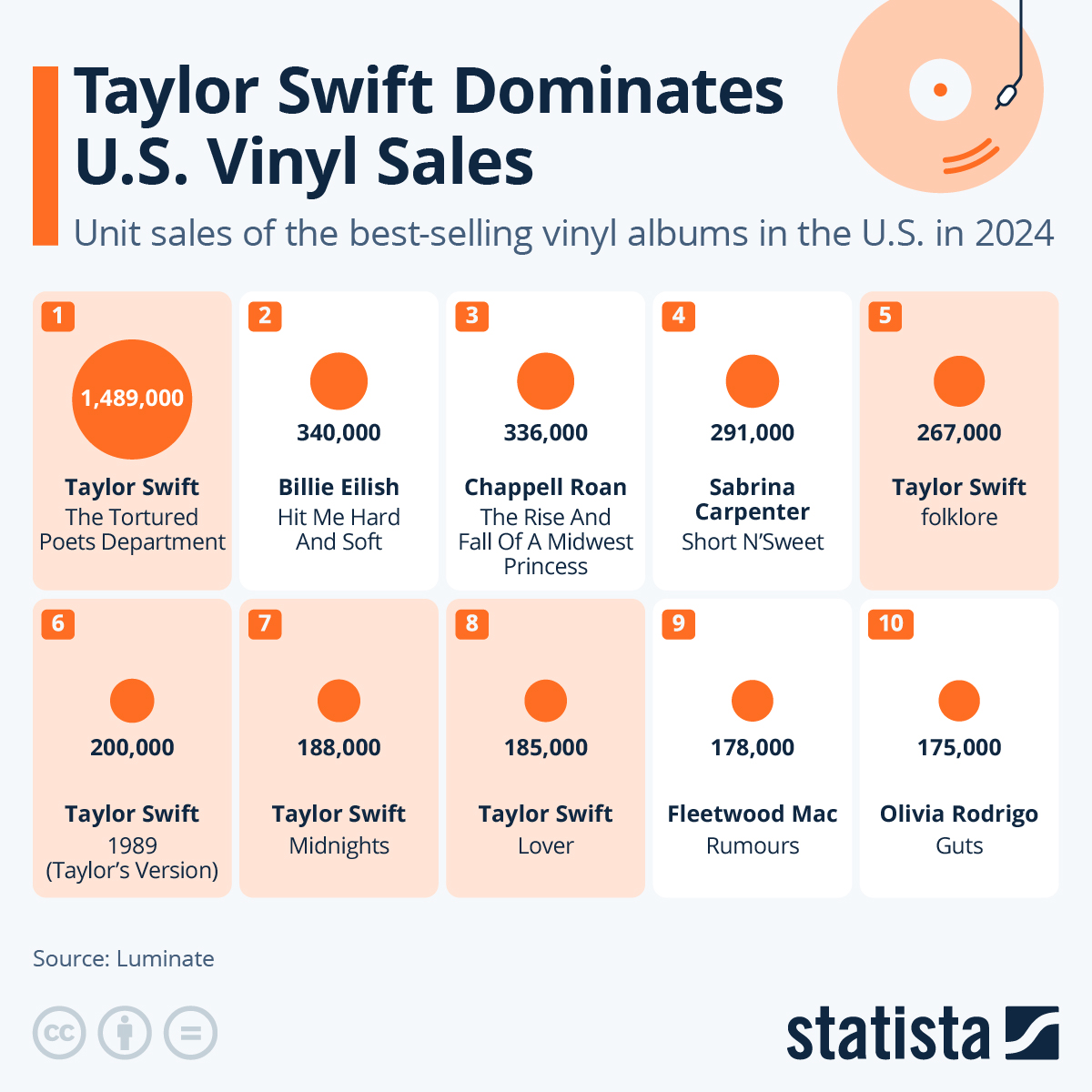
    Vinyl records—once seen as relics of the past—have emerged as a vibrant and significant part of the music industry in the 2020s. Their resurgence is not merely a nostalgic revival, but rather a cultural phenomenon that has captivated music lovers across multiple generations. In 2024, vinyl sales in the United States reached an astounding 43 million units, marking a significant increase from the under 5 million sold yearly between 1995 and 2010.

    A New Era of Listening

    The landscape of music consumption has dramatically shifted over the last few years, with most listeners turning to digital platforms and streaming services on their smartphones. Despite this trend, vinyl records have established a unique niche—combining high-quality audio with the tactile experience of music ownership.

    The Allure of Vinyl

    What makes vinyl so appealing to contemporary audiences? The answer lies in several key factors:

    1. Sound Quality: Many audiophiles argue that vinyl offers a warmer, richer sound compared to digital formats. The analog nature of vinyl contrasts with the compressed audio often found in streaming.

    2. Physicality: In a digital age, the physical nature of vinyl records—large album covers, artwork, and the act of placing a needle on the record—creates a multi-sensory experience that digital music cannot replicate.

    3. Collectability: Vinyl records are tangible collectibles. Limited edition releases, colored vinyl, and unique artwork attract fans and collectors alike, turning music into a visually driven experience.

    The Chart-Toppers of 2024

    Recent trends indicate that it’s not only nostalgia driving vinyl sales but also modern artists capturing public interest. A look at the best-selling vinyl albums of 2024 reveals that classic records are no longer the predominant choice among consumers.

    Dominance of Contemporary Artists

    Among the ten best-selling vinyl albums in the United States for 2024, only one album, Fleetwood Mac’s "Rumours" (1975), made the cut from the LP era, ranking ninth. This stark contrast highlights a shift where contemporary artists are now leading the charge in vinyl sales.

    Taylor Swift: The Reigning Queen of Vinyl

    Taylor Swift’s impact on the vinyl market is profound. In 2024, she accounted for five of the ten best-selling vinyl albums, demonstrating her unparalleled influence in the music industry.

    • "The Tortured Poets Department" (2024 Release): Swift sold almost 1.5 million units of this record alone, outpacing the combined sales of the next five most popular vinyl albums.
    • Diverse Catalog: Her varied discography, which spans several genres and artistic evolutions, resonates deeply with a wide array of listeners, contributing to her remarkable sales figures.

    The Role of Other Artists

    While Swift’s dominance is notable, the success of other artists also contributes to the vinyl revival. The mix of new releases along with classic hits demonstrates that audiences are willing to invest in both fresh sounds and nostalgic favorites, creating a balanced market.

    Emerging Trends in Vinyl Sales

    With vinyl’s resurgence, certain trends have emerged which could shape its future:

    • Special Editions and Box Sets: Artists are increasingly releasing special editions and box sets to entice collectors, often including unique artwork, memorabilia, and exclusive tracks.

    • Online Marketplaces: The growth of online platforms has made it easier for fans to find and purchase both new and vintage vinyl records, enhancing accessibility.

    • Events and Experiences: Vinyl fairs and listening parties have become popular, offering enthusiasts opportunities to connect, share, and celebrate music.

    In summary, the vibrant growth of vinyl sales in recent years is driven by a mixture of nostalgia, a desire for quality, and the magnetic pull of today’s artists, particularly Taylor Swift. As we continue into 2025 and beyond, it will be fascinating to see how vinyl’s popularity evolves alongside the fast-paced digital music landscape.

  • 40% of Canadians and Mexicans Worry About Financial Future

    40% of Canadians and Mexicans Worry About Financial Future

    Understanding Global Financial Anxiety: The Concerns of Consumers

    The Prevalence of Financial Worries

    In an increasingly interconnected world, economic stability has become a poignant issue for many individuals across the globe. Recent survey data from Statista reveals startling insights into the financial concerns of consumers from various countries, painting a comprehensive picture of the anxiety surrounding financial futures.

    Survey Insights: A Cross-National Perspective

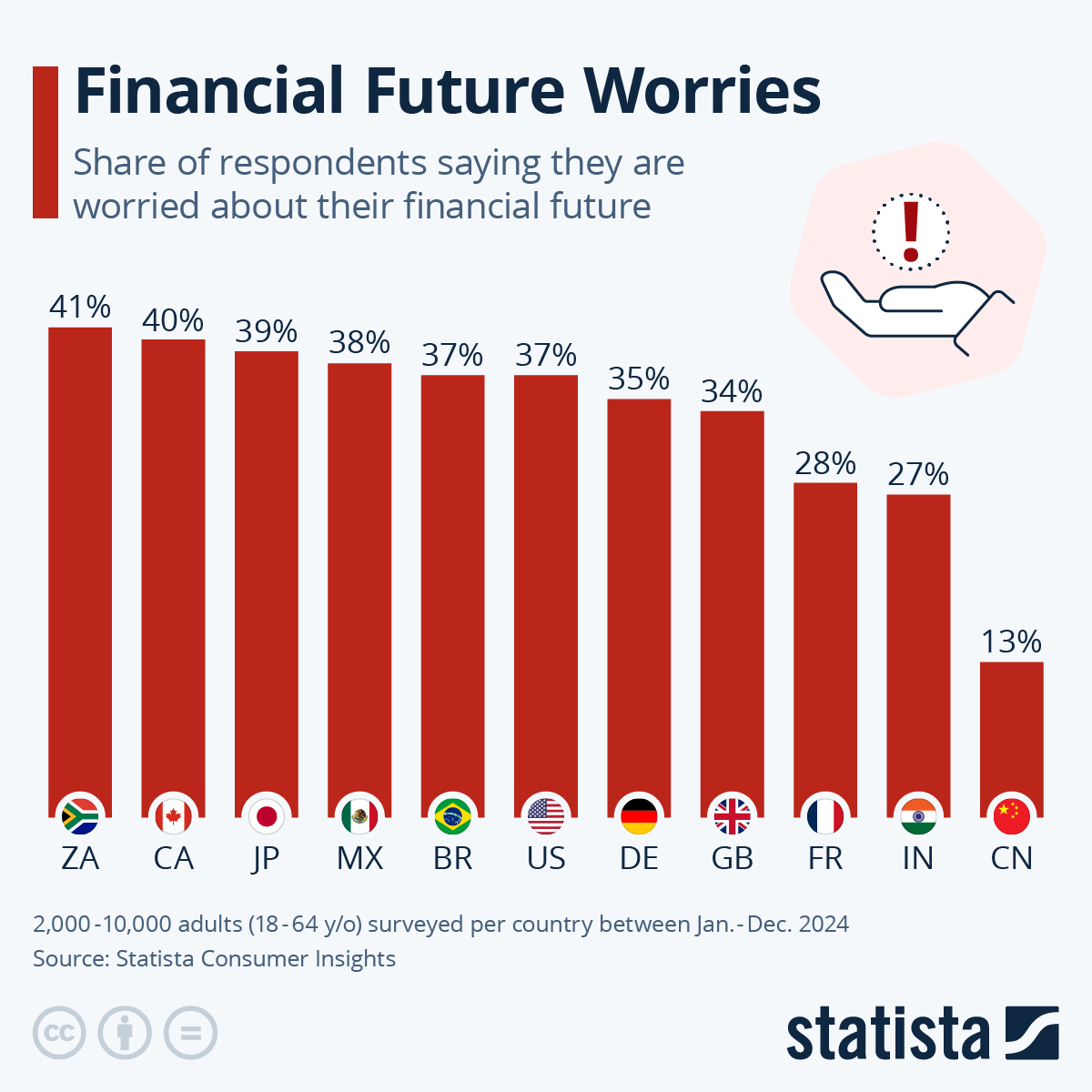
    According to a Consumer Insights survey conducted by Statista, financial anxiety is particularly pronounced in North America. The data indicates that nearly 40% of respondents in Canada and Mexico expressed apprehensions regarding their financial prospects. This sentiment perhaps reflects the uncertainty brought about by fluctuating markets and global economic policies.

    Moving south to the United States, the situation is similarly concerning, with 37% of Americans fearing for their financial futures. The implications of this anxiety are significant, as it can influence spending habits, investment decisions, and overall economic growth.

    Comparative Analysis: Financial Concerns Across Continents

    While North America exhibits a high percentage of financial anxiety, the response in Asia presents a different narrative. In countries such as India and China, the levels of concern are comparatively lower. The survey found that only 27% of Indian respondents and 13% of Chinese respondents reported worries about their financial situations.

    Analyzing the Differences

    This discrepancy may stem from various socio-economic factors, including different stages of economic development, cultural attitudes towards financial planning, and varying levels of access to financial literacy programs. For instance, in rapidly developing economies, individuals may have a different set of priorities and may not perceive financial instability in the same way as their counterparts in more developed nations.

    The Role of Economic Policy in Shaping Concerns

    The survey results were gathered at a time of heightened economic uncertainty, influenced by significant policy decisions such as the tariffs imposed by U.S. President Donald Trump. Such policies can create ripples that affect consumer confidence, leading to widespread financial apprehensions.

    Tariffs and Consumer Sentiment

    Tariffs can drive up the costs of goods, impacting everything from household budgets to business costs. This connection between economic policy and consumer sentiment underscores the important role that government actions play in shaping financial stability and the perception of economic security.

    Understanding the Psychological Impact

    The persistent worry about financial futures can have psychological implications for individuals and families. The stress associated with financial insecurity can lead to anxiety disorders, affect relationships, and impact overall well-being.

    Coping Mechanisms for Financial Anxiety

    Understanding how to manage these feelings is crucial. Several strategies can help individuals cope with financial anxiety, including:

    • Budgeting: Creating detailed budgets can provide clarity and help individuals take control of their finances.
    • Financial Literacy: Educating oneself about financial products, saving strategies, and investment opportunities can empower individuals.
    • Seeking Professional Advice: Consulting with financial advisors can provide personalized strategies tailored to individual needs.

    The Importance of Addressing Financial Concerns

    As consumers continue to express worries about their financial futures, addressing these concerns becomes imperative. Policymakers, financial educators, and the private sector have a role to play in easing consumers’ anxieties through educational programs and sound economic policies.

    This information not only highlights the general sentiment towards financial futures globally but also illustrates the important economic and psychological factors that come into play. Establishing a secure financial future is a collective effort, requiring collaboration across sectors and borders.

    In the face of ongoing global economic shifts, understanding these dynamics will be crucial for navigating the financial landscape and supporting consumer confidence moving forward.

  • U.S. Executions Surge to 25 in 2024: A 20% Increase

    U.S. Executions Surge to 25 in 2024: A 20% Increase

    Overview of Executions in the United States

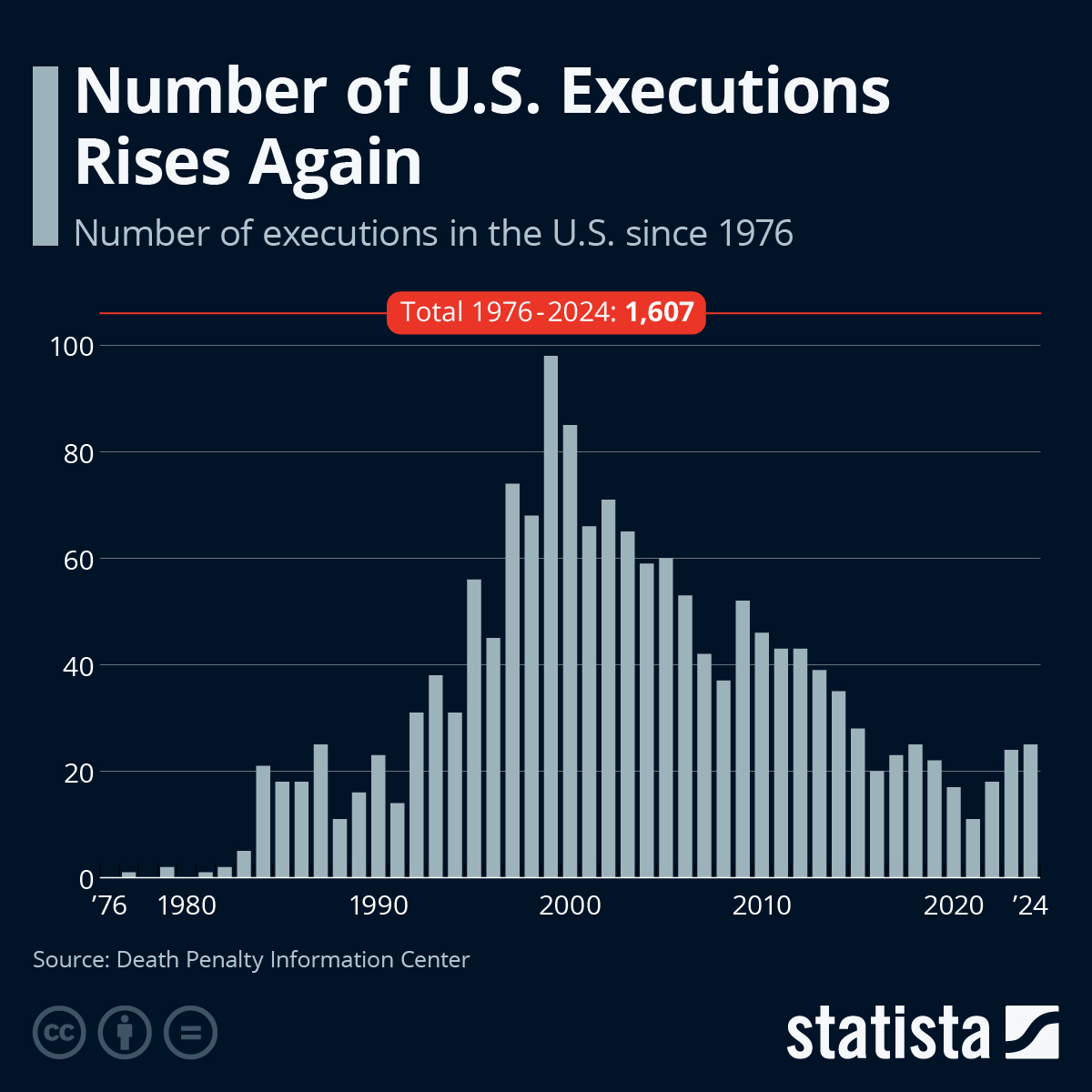
    The death penalty has a long and controversial history in the United States, with its trajectory notably shifting after the reinstatement of capital punishment in 1976. As of 2024, the number of executions has surpassed 1,600, marking a significant moment in the evolution of this contentious aspect of the justice system.

    Recent Trends in Executions

    In recent years, the number of executions in the U.S. has shown a notable increase. After experiencing dramatic lows during the COVID-19 pandemic, where executions dwindled to only 11 in 2021, the numbers have been on an upward trend with 18 executions in 2022, 24 in 2023, and reaching 25 in 2024. This resurgence reflects not only a shift in post-pandemic dynamics but also a response to changes in legal standards and drug availability for lethal injections.

    The Impact of Federal Executions

    The federal government’s re-engagement with capital punishment under former President Donald Trump has played a pivotal role in these figures. Resuming executions after a 17-year hiatus, the federal government executed 13 inmates in 2020 and 2021, significantly impacting national execution totals. Trump’s administration signaled a continued support for the death penalty, further influencing state-level decisions regarding capital punishment.

    Challenges in Lethal Injection Protocols

    The challenges faced by states in sourcing the drugs required for lethal injections have also contributed to fluctuations in execution numbers. A crucial policy change came in 2011 when the European Union banned the export of lethal drugs, further complicated when Pfizer withdrew its products from use in executions in 2016. These restrictions have left many states scrambling to find alternatives, often leading to postponed or botched executions as they experiment with different protocols.

    Alternatives to Lethal Injection

    With the difficulties surrounding lethal injections, some states have turned to alternative methods of execution. Nitrogen gas inhalation, for example, has been legalized in several states including Alabama and Mississippi. New protocols like this attract scrutiny and debate, particularly in light of botched executions that have made headlines in recent years.

    Historical Context of the Death Penalty

    Understanding the current climate regarding the death penalty in the U.S. requires looking back at the historical context. Since the reinstatement of capital punishment in 1976, Texas has dominated execution totals, leading with 592 executions. Other states with notable execution histories include Oklahoma, which has conducted 125 executions, and Virginia, which ceased executions after abolishing the death penalty in 2021.

    Execution Methods and their Evolution

    The methods of execution have also evolved over time, with electrocution remaining a legal option in eight states and becoming the default method in South Carolina. States like Louisiana have reintroduced the electric chair, while Utah and Tennessee have revived the firing squad in recent years. This diversification of execution methods reflects ongoing debates about humane practices within the scope of capital punishment.

    Recent Events and Milestones

    As of September 26, 2024, the milestone of 1,600 executions since the reinstatement of the death penalty was officially surpassed. On this date, two inmates were executed in separate states. Notably, Emmanuel Littlejohn was executed despite recommendations for clemency, while Alan Eugene Miller became one of the few individuals to die by nitrogen gas inhalation—a method still surrounded by controversy.

    Conclusion

    The landscape of capital punishment in the United States is continually evolving, marked by varying execution methods, increasing numbers, and legal challenges. The complex interplay of federal policy, state decisions, and societal attitudes towards the death penalty raises critical questions that remain at the heart of criminal justice discussions today.

  • Death Penalty: 110 Countries Abolished, 77 Still Retain It

    Death Penalty: 110 Countries Abolished, 77 Still Retain It

    Understanding the Global Landscape of the Death Penalty

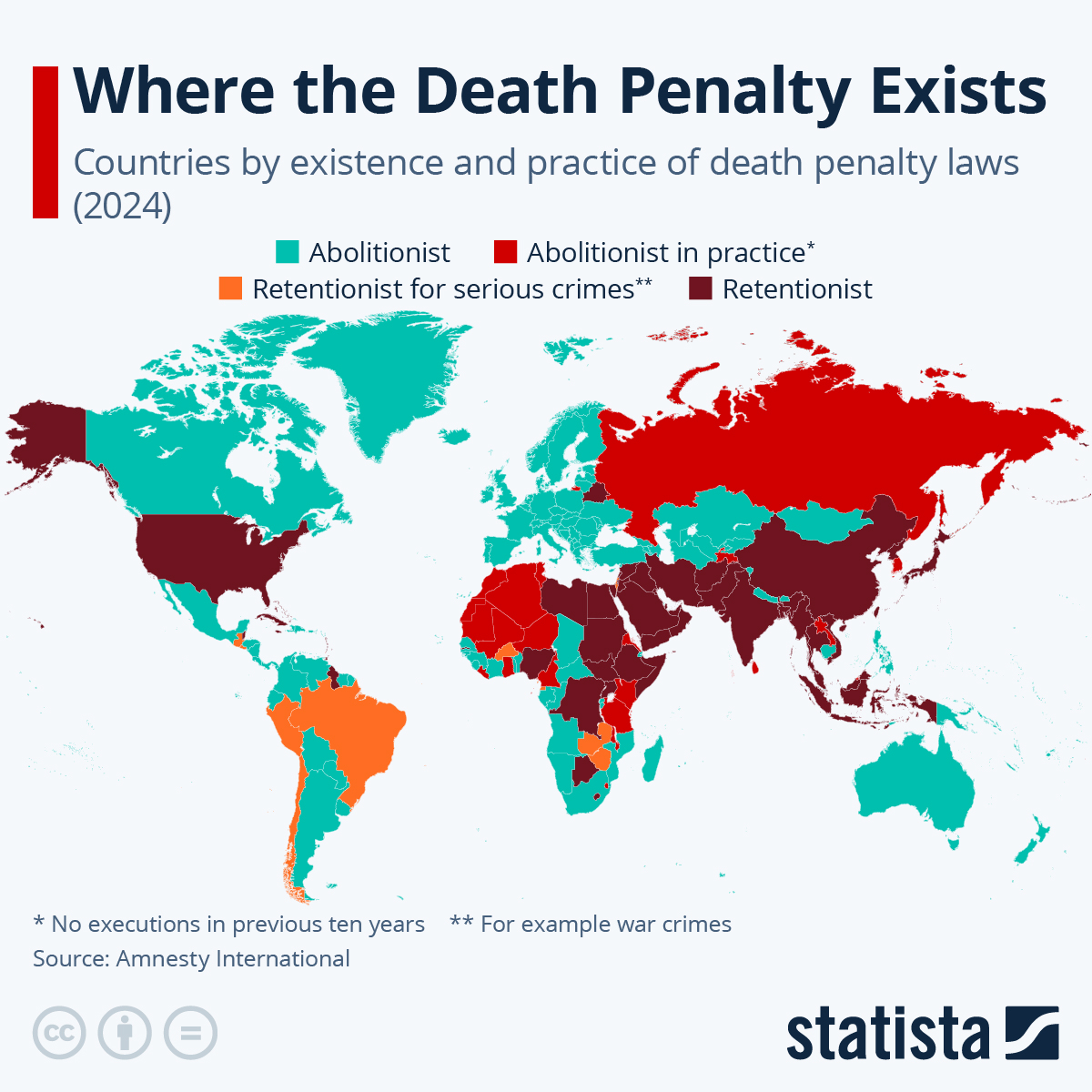
    The death penalty, often a subject of heated ethical and legal debates, remains a prominent facet of criminal justice systems in various countries. The application, perception, and status of this form of punishment can vary widely across the globe. Recent data from Amnesty International sheds light on the current state of capital punishment, revealing crucial insights into where it is practiced and where it has been abolished.

    The Persistence of the Death Penalty in Asia

    In Asia, the death penalty continues to be a significant part of judicial systems in multiple countries. Nations such as China, India, Thailand, Singapore, and Indonesia uphold capital punishment, reflecting a cultural and legal stance that permits the ultimate punishment for certain crimes. This prevalence is rooted in historical legal traditions and societal values that view the death penalty as a mechanism for deterrence and retribution.

    Key Players in Asia

    • China: Holding the highest number of executions globally, China’s approach to capital punishment remains opaque due to limited transparency in its judicial processes.
    • India: While infrequently used, the death penalty is often reserved for the most heinous crimes, with public debates surrounding its use highlighting concerns of fairness and justice.
    • Thailand and Singapore: Both nations have stringent laws concerning drug trafficking and violent crimes, leading to applications of capital punishment.

    Trends in Europe and the Americas

    In stark contrast to Asia, the death penalty is markedly rare in Europe and the Americas. Most European countries have abolished capital punishment entirely, in line with broader human rights initiatives.

    Notable Exceptions

    • Belarus: The only country in Europe to still execute, Belarus presents an outlier in a continent largely against the death penalty.
    • The United States: Capital punishment remains legal in several states, though its application is becoming less common due to growing public opposition and moral questioning.

    The Status of Abolition Worldwide

    Recent years have seen significant movements towards the abolition of the death penalty. As of now, 110 countries and territories have completely abolished capital punishment. Notably, nations like the Central African Republic and Papua New Guinea have taken significant steps in this direction.

    African Progress

    A remarkable trend has emerged in Africa, with countries such as Zambia, Equatorial Guinea, Ghana, and Zimbabwe abolishing the death penalty for all but the most serious crimes in 2023 and 2024. This shift indicates a changing landscape and growing recognition of human rights principles across the continent.

    The State of Capital Punishment Today

    Despite the advancements towards abolition, 77 nations continue to maintain the death penalty within their legal systems. Among these, 23 countries are labeled as "abolitionists in practice" by Amnesty International, meaning that they have not executed anyone for at least a decade. This status reflects a complex relationship with the death penalty, often influenced by political climates, international pressure, and evolving public sentiments.

    Public Perception and Legal Dynamics

    Public opinion on the death penalty varies significantly from region to region and is often influenced by factors such as crime rates, historical context, and cultural attitudes towards justice and punishment. In many cases, the legal dynamics surrounding capital punishment are subject to change, heavily reliant on the political landscape and advocacy efforts aimed at promoting human rights reforms.

    Advocacy and Activism

    Organizations like Amnesty International play a pivotal role in advocating against the death penalty, highlighting cases of wrongful convictions and raising awareness about ethical implications. Their efforts contribute significantly to the global conversation surrounding capital punishment and foster movements aimed at abolition.

    Conclusion

    The global landscape of the death penalty remains complex, with significant disparities in application and acceptance across different regions. As countries continue to navigate the legal, moral, and social implications of capital punishment, the discourse surrounding human rights and judicial reform is likely to evolve further.

  • 54% of Travel Firms Use AI, But Adoption Faces Key Hurdles

    54% of Travel Firms Use AI, But Adoption Faces Key Hurdles

    The Growing Role of AI in the Travel Industry

    The Integration of AI into Travel

    Artificial intelligence (AI) is rapidly transforming the travel industry in ways that were once considered futuristic. From the early stages of trip planning to post-travel reviews, AI plays an integral role in enhancing the overall customer experience. According to a global survey conducted by Amadeus, a substantial majority of travel companies—over 50%—have embraced Generative AI technologies to streamline the booking process.

    How AI Enhances the Booking Experience

    Personalized Recommendations

    AI systems analyze travelers’ preferences and behaviors to provide tailored recommendations. By examining past trips, search queries, and other relevant data, AI can suggest destinations, accommodations, and activities that align with an individual’s preferences. This level of personalization not only improves user satisfaction but also increases the likelihood of bookings.

    Chatbots and Virtual Assistants

    In the customer service realm, chatbots powered by AI are becoming commonplace. These virtual assistants can provide instant support, answer common questions, and guide travelers through the booking process. This reduces the burden on human agents and allows for 24/7 assistance, ensuring that help is available at any time.

    Major Challenges Hindering AI Adoption in Travel

    Despite the many advantages that AI brings to the table, the path to widespread adoption is not without significant hurdles.

    Data Protection Concerns

    One of the most pressing issues highlighted in the Amadeus report is data protection. A considerable number of travel professionals express apprehension over the security of sensitive personal information handled by AI systems. Given that these systems are trained on vast datasets, there’s legitimate concern about how data is collected, stored, and utilized. Ensuring compliance with regulations like GDPR (General Data Protection Regulation) and other data protection laws is essential for maintaining consumer trust.

    Lack of Expertise and Training

    Another significant obstacle in the implementation of AI technologies is the shortage of expertise and training within the industry. According to the findings from the Amadeus survey, 34% of respondents identified this challenge as a barrier to successful AI adoption. The rapidly evolving nature of AI means that travel professionals must continuously upskill to remain proficient in utilizing these technologies effectively. Without adequate training programs, the potential of AI tools can go largely untapped.

    The Future of AI in Travel

    Despite these challenges, the synergy between AI and the travel industry holds promise for future developments. As technology continues to advance, new solutions may emerge to address the concerns surrounding data protection and training. The travel industry must not only embrace AI but also invest in its responsible and knowledgeable integration into everyday operations.

    As travelers increasingly turn to digital solutions for their travel needs, the role of AI will only become more pronounced. While the journey toward full-scale adoption may encounter some turbulence, the potential benefits could transform the travel experience for generations to come.