الوسم: 2011

  • 230K Civilian Deaths in Syria: 87% by Regime Forces

    230K Civilian Deaths in Syria: 87% by Regime Forces

    The Tragic Human Cost of the Syrian Civil War

    The Syrian civil war, which erupted in 2011 following a popular uprising, has resulted in devastating humanitarian consequences. With over 230,000 civilians killed as of March 2024, the conflict stands as one of the most tragic events of the 21st century. This blog delves into the statistics surrounding civilian casualties, the actors involved, and the broader impact on the Syrian populace.

    Timeline of the Syrian Civil War

    The Beginning – 2011

    The unrest in Syria began in March 2011, characterized by protests against President Bashar al-Assad’s regime. The regime’s harsh crackdown on these protests escalated tensions and eventually led to an all-out civil war.

    Regime Change – 2024

    After 54 years of al-Assad family rule, 2024 has marked a significant turn in the conflict. Following a two-week offensive by Syrian rebels culminating in the capture of Damascus, President Bashar al-Assad fled to Moscow. Mohammed al-Bashir, a leader of an armed opposition group, stepped in as interim prime minister.

    Civilian Casualties: A Grim Overview

    Total Death Toll

    According to the Syrian Network for Human Rights (SNHR), from March 2011 to March 2024, over 230,000 civilians have been killed. This figure includes approximately 30,193 children and 16,451 women, underscoring the war’s indiscriminate nature.

    Breakdown of Criminal Responsibility

    The overwhelming majority of civilian deaths have been attributed to Syrian regime forces and their allies. The following statistics highlight the stark reality:

    • Syrian Regime and Iranian Militias: 201,260 deaths (87% of total fatalities)
    • Russian Forces: 6,969 deaths (3%)
    • ISIS: 5,056 deaths (2.2%)
    • Armed Opposition Factions/Syrian National Army: 4,227 deaths (1.8%)
    • U.S.-led International Coalition Forces: 3,055 deaths (1.3%)
    • Syrian Democratic Forces: 1,491 deaths (0.7%)
    • Hay’at Tahrir al-Sham: 538 deaths (0.2%)
    • Other Parties: 8,678 deaths (3.8%)

    Peaks in Civilians Deaths

    2012 to 2014: The Height of Violence

    The war’s bloodshed peaked between March 2012 and March 2013, with at least 66,046 civilians killed, followed closely by 61,063 deaths in the subsequent year. Alarmingly, approximately 56% of all documented civilian deaths during the 13-year period occurred in this two-year timeframe. Every governorate in Syria has been affected by civilian deaths, reflecting the widespread nature of the violence.

    Torture and Chemical Weapons

    The Horrors of Torture

    The SNHR’s report reveals that an estimated 15,334 civilians lost their lives due to torture. This horrendous aspect of the Syrian civil war highlights the brutal tactics employed by the regime to instill fear and suppress dissent.

    Chemical Weapons Attacks

    The report also documents 222 instances of chemical weapons attacks throughout the conflict, with 217 attributed to the Syrian regime. These attacks have drawn international condemnation and further escalated the humanitarian crisis.

    Internal Displacement and Refugee Crisis

    Displacement Statistics

    Beyond the tragic loss of life, the war has internally displaced 7.2 million people and forced 6.4 million Syrians to flee their homeland as refugees. Many families remain separated, struggling to find safety and stability in foreign lands.

    The Long-term Impact

    The implications of such displacement extend beyond immediate safety. Families face challenges related to education, healthcare, and employment, creating a cycle of poverty and instability that may persist for generations.

    Conclusion: Ongoing Challenges

    As we reflect on the far-reaching implications of the Syrian civil war, it is essential to recognize the resilience of those who have survived. The international community continues to grapple with the best ways to assist those affected and to seek resolutions to a conflict that has ravaged a nation for over a decade.
  • FIFA’s 2022 World Cup: $6.3B Revenue, 83% of Total Income

    FIFA’s 2022 World Cup: $6.3B Revenue, 83% of Total Income

    The 2030 FIFA World Cup: A Controversial Decision and Its Implications

    When FIFA disclosed that the 2030 World Cup would be hosted in six countries across three continents, reactions ranged from surprise to disbelief. This decision is not merely a logistical feat but also a strategic maneuver that reflects FIFA’s ongoing endeavors to maximize revenue and expand its global reach.

    A Historical Context: Celebrating a Century of World Cup Football

    The choice to kick off the 2030 World Cup in Argentina, Paraguay, and Uruguay is steeped in historical significance. These countries played pivotal roles in the origins of the FIFA World Cup, as Uruguay hosted the inaugural tournament in 1930. However, the symbolic gesture of honoring the tournament’s centenary contrasts sharply with the practicalities of modern international sports.

    Logistical Challenges Ahead

    One of the most glaring issues with this decision is the significant logistical challenge it poses for players and fans alike. The vast geographic spread of the tournament means that athletes will experience drastically different climates within a short span of time. Transitioning from the South American winter to the European and North African summer poses not only physical challenges for athletes but also has implications for their performance.

    FIFA: "Following the Money"

    FIFA’s latest announcement reveals more than just a celebration of history; it’s a calculated financial strategy. With its track record of controversies around corruption and financial management, this decision appears to be a savvy move to cater to profit-driven motives. By allowing the tournament to be held across continents, FIFA positions itself to capitalize on diverse markets and increase its revenue streams.

    The Role of Conflicts in Confederation Rotation

    FIFA’s constitution includes a principle of confederation rotation, designed to ensure equal hosting opportunities among its six regional confederations. However, this latest decision raises questions about the integrity of this principle. By involving three confederations in one World Cup, FIFA has cleverly sidestepped potential backlash regarding the 2034 tournament bidding process.

    Saudi Arabia’s Ambitions and FIFA’s Strategic Maneuvering

    Almost immediately after the 2030 hosting decision, the Saudi Arabian Football Federation announced its intent to bid for the 2034 World Cup. The implications here are profound; while the World Cup is historically awarded to nations based on geographical and meritorial considerations, FIFA’s recent moves signal a shift in focus toward maximizing financial inputs.

    The Impact of World Cup Revenue

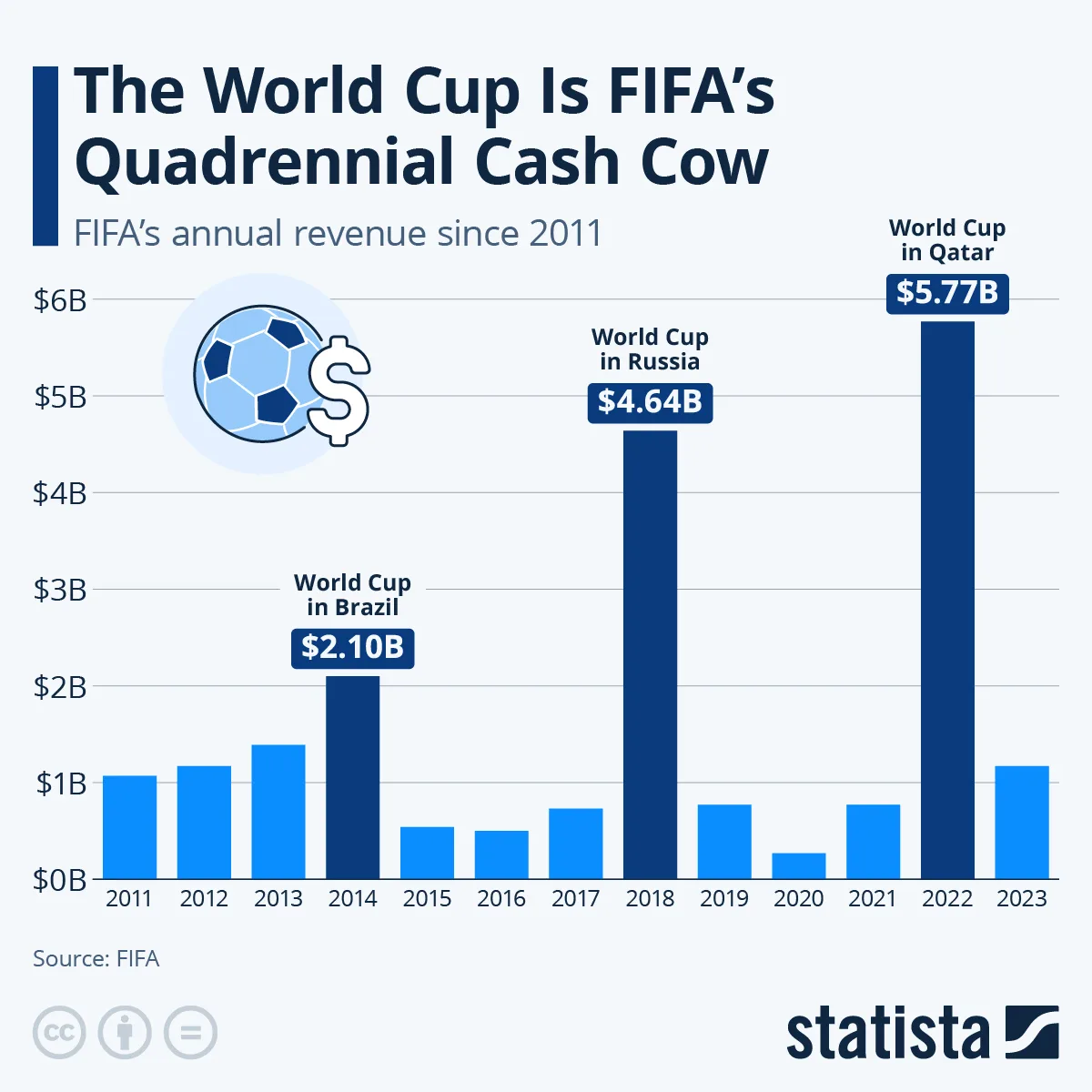
    The financial stakes surrounding the World Cup cannot be overstated. For instance, the rights related to the 2022 Qatar World Cup yielded an impressive $6.3 billion in revenue for FIFA from 2019 to 2022, representing a staggering 83% of the organization’s total income during that timeframe. This showcases the World Cup’s significance not just as a sporting event but as a lucrative business venture.

    Conclusion

    The upcoming FIFA World Cup in 2030 represents a complex blend of historical nostalgia and modern-day pragmatism. As FIFA continues to navigate the intricate landscape of global sports management, the focus on profitability and international appeal remains front and center, raising critical questions about the future of football as both a sport and a business.