1. The United States Leads in Healthcare Spending
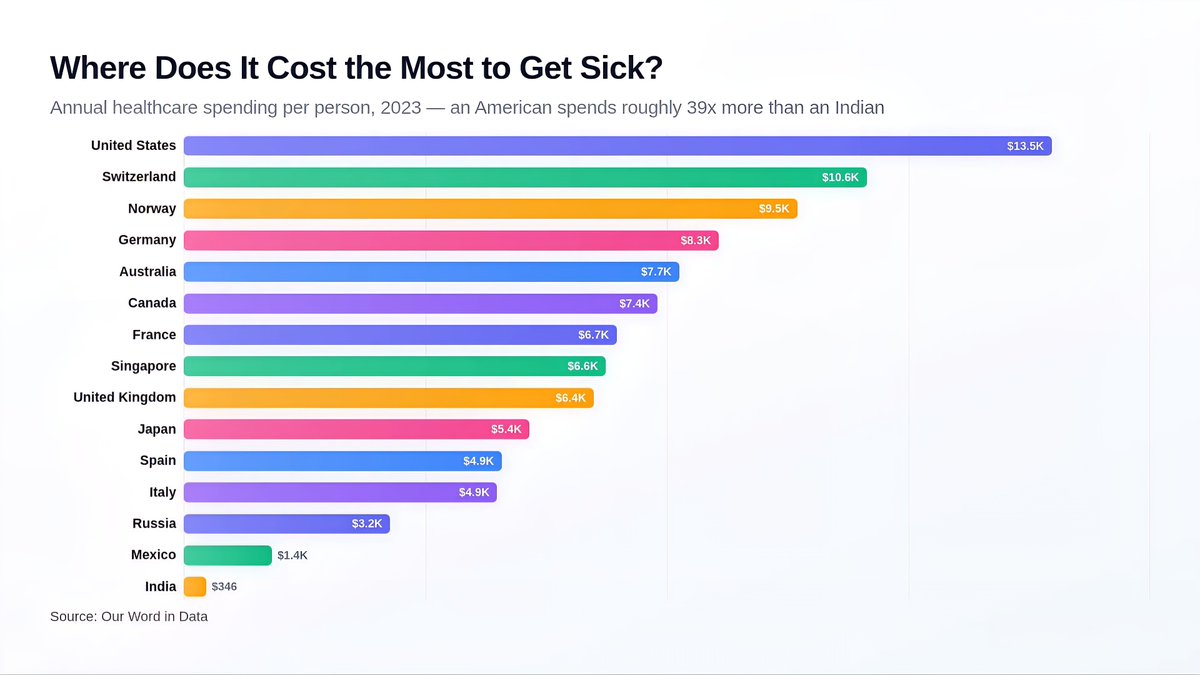
In 2025, the U.S. continues to have the highest per-person healthcare costs globally, averaging approximately $13,500 annually. This figure reflects the expenses for hospital stays, medical procedures, prescription medications, and outpatient services. The American healthcare system, characterized by high prices for services and pharmaceuticals, contributes predominantly to this staggering expense. Despite investments, Americans often face significant out-of-pocket costs, leading to ongoing debates about healthcare reform and affordability.
2. Switzerland and Norway Close the Gap
Switzerland ranks second, with an average healthcare expenditure of around $10,600 per person. Its advanced healthcare infrastructure, high standards of medical practice, and high-cost medications drive these expenses. Norway trails closely with about $9,500, thanks to its universal healthcare system that provides comprehensive coverage at a high expense per capita. Both countries exemplify high-quality healthcare paired with elevated costs, often financed through substantial government funding and taxes.
3. Germany and Australia: Solid Healthcare Systems Come at a Price
Germany, at approximately $8,300 per individual, offers a well-structured healthcare system with mandatory insurance and high-quality services. Similarly, Australia spends about $7,700 per person, prioritizing extensive healthcare access for its citizens. These nations balance quality and affordability but nonetheless face rising costs driven by technological advancements, aging populations, and prescription drug prices.
4. Canada and France Maintain High Spending Levels
Canada’s healthcare costs hover near $7,400 per capita, with its single-payer system covering most medical needs, yet costs are rising due to aging populations and technological improvements. France spends roughly $6,700 per person, combining social health insurance with a focus on patient rights, which keeps costs relatively high compared to other nations. Both countries emphasize universal coverage but grapple with financial sustainability challenges.
5. Southeast Asia and the UK: Lower Costs with Quality Healthcare
Singapore spends about $6,600 per person, leveraging efficient healthcare delivery and preventive care, resulting in relatively lower costs for high-quality services. The United Kingdom, with an expenditure of approximately $6,400, relies on its National Health Service (NHS), providing free or low-cost healthcare at the point of service—though financial pressures persist amid rising demand.
6. Japan, Spain, and Italy: Aging Populations and Healthcare Expenditure
Japan, spending around $5,400 per individual, faces increasing costs due to its aging demographic. Spain and Italy both allocate about $4,900 per capita for healthcare, balancing public health provision with economic constraints. These countries are navigating the challenges posed by demographic shifts that strain their healthcare infrastructures.
7. Russia, Mexico, and India: More Affordable Options
Russia spends approximately $3,200 per person on healthcare, with a system that’s improving but still developing. Mexico’s healthcare costs are around $1,400, offering affordable care to a large population with variable quality levels. India has the most affordable healthcare among these, with an average expenditure of just $346 per person, reflecting lower living costs but also highlighting disparities in access and quality.
8. The Cost Disparities Between the U.S. and India Are Astronomical
Americans spend roughly 39 times more on healthcare than Indians per person in 2025. While this disparity underscores the high costs associated with advanced medical technologies and pharmaceuticals in the U.S., it also raises questions about efficiency, equity, and the sustainability of such spending models globally.
9. The Global Context of Healthcare Spending
The data emphasizes stark differences in healthcare costs worldwide. Countries with comprehensive social programs or nationalized systems tend to have more moderate expenses, while those with complex, privatized systems like the U.S. incur significantly higher costs. As technological innovations and aging populations continue to influence expenditure, the future landscape of healthcare funding remains uncertain for many nations.
Source: Our World in Data 2025