Top Food Exporters in 2025: A Global Snapshot
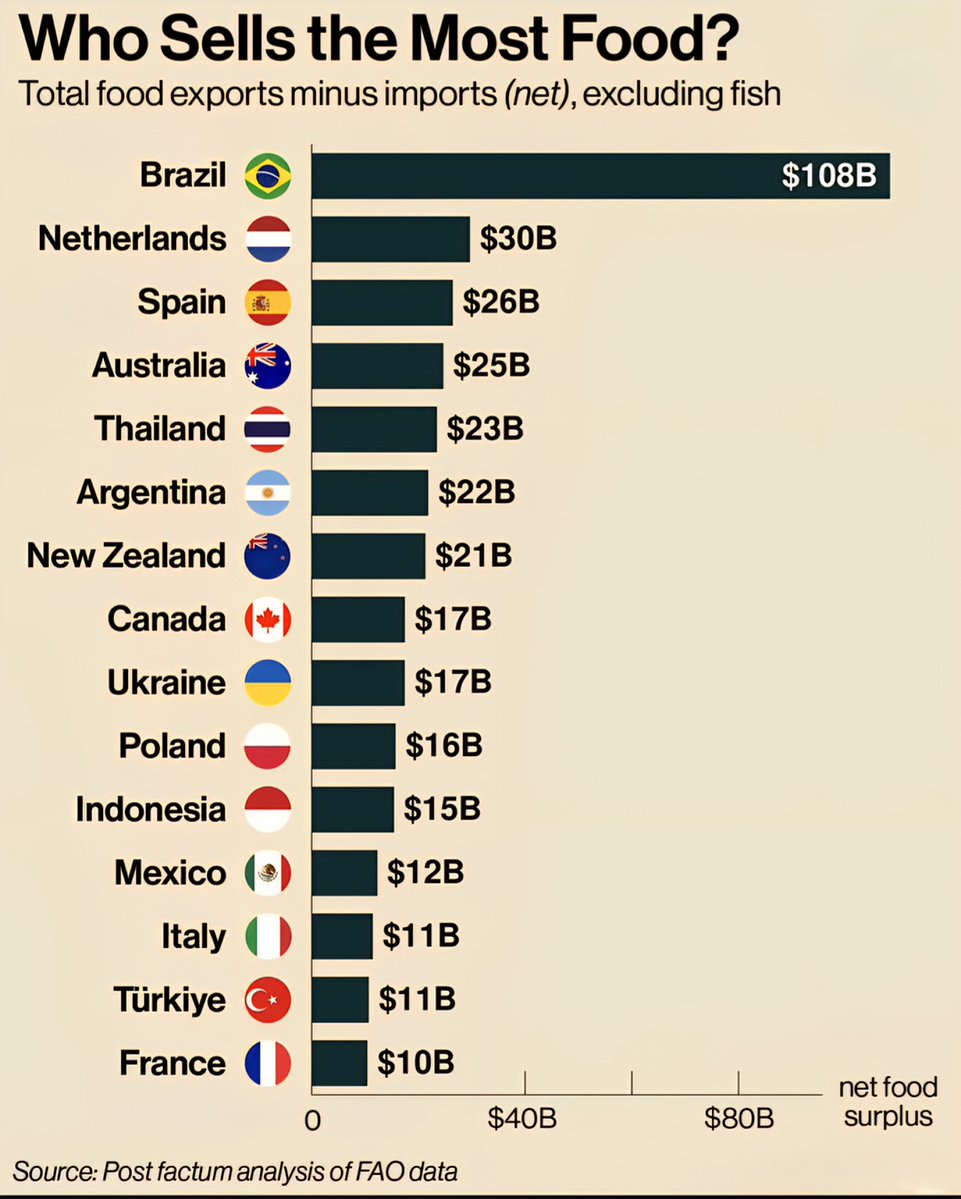
1. Brazil Dominates the Global Food Market with a Massive Lead
Brazil continues to reign supreme as the top food exporting nation in 2025, with a staggering net export value of $108 billion. This impressive figure showcases Brazil’s substantial agricultural output and its critical role in supplying the world’s food needs. The nation’s robust agrarian sector, spanning soybeans, beef, coffee, and poultry, contributes heavily to its export dominance. Brazil’s strategic investment in sustainable farming practices and infrastructure has further cemented its position on the global stage.
2. The Netherlands Holds Strong as a Premier Food Distribution Hub
With a net export value of $30 billion, the Netherlands remains a central player in dispatching food products across continents. Despite its smaller landmass, Dutch expertise in food processing, logistics, and cold storage facilities makes it a crucial link in the global food supply chain. Its advanced port infrastructure, including the port of Rotterdam, ensures efficient distribution from Europe to the rest of the world.
3. Spain’s Rich Food Heritage Continues to Propel Its Exports
Spain’s net food exports reached $26 billion this year, reflecting its strong agricultural traditions and diverse product range, from olive oil and wine to citrus fruits and seafood. Spain has capitalized on quality branding and sustainable agriculture to expand its market share, especially within European Union countries and emerging markets.
4. Australia’s Expanding Market Share in Food Exports
Standing at $25 billion, Australia maintains its position as a leading exporter of beef, wheat, and wine. Its vast arable lands and strict quality standards have earned it a reputation for premium food products. The country’s emphasis on sustainable farming practices has also bolstered its export profile amid growing global demand for eco-friendly products.
5. Thailand Surges in Southeast Asian Food Exports
Thailand’s net exports of $23 billion highlight its rise as a key player in tropical fruit, seafood, and rice markets. Its strategic geographic location and efficient supply chains have helped Thai exporters access diverse markets rapidly. The country’s focus on organic farming and value-added products continues to drive growth.
6. Argentina’s Agriculture Powerhouse Status Maintains Its Edge
With $22 billion in net exports, Argentina remains a vital exporter of soybeans, beef, and corn. Its fertile Pampas region remains critical for cereal production, and recent investments in biotechnology are helping boost yields and export capacity.
7. New Zealand’s Niche in the Global Food Market
Generating $21 billion in exports, New Zealand specializes in dairy products, meat, and wine. Its clean, sustainable image and focus on high-quality, organic foods have resonated with global consumers, strengthening its export footprint.
8. Canada and Ukraine Tied as Major Grain Suppliers
Both Canada and Ukraine, each with $17 billion in net exports, are essential grain suppliers to the world. Canada’s vast wheat fields and advanced farming methods, along with Ukraine’s fertile soil, position them as reliable exporters amid fluctuating global markets.
9. Poland’s Growing Export Profile
Poland has reached $16 billion in net food exports, emphasizing its increasing role within the European Union in supplying processed foods, dairy, and grains. Its strategic investments in food safety and quality control have opened new market opportunities.
10. Indonesia and Mexico Accelerate Food Export Growth
Indonesia’s food exports are valued at $15 billion, with a focus on tropical fruits, seafood, and spices. Meanwhile, Mexico exports $12 billion worth of food, including avocados, berries, and processed foods, benefiting from trade agreements and rising consumer demand in North America.
11. Italy, Turkey, and France Maintain Their Culinary Footprints
Italy ($11 billion), Turkey ($11 billion), and France ($10 billion) continue to leverage their rich culinary traditions to boost exports. Italy is renowned for pasta and olive oil; Turkey’s strategic location facilitates exports of dried fruits and textiles; France remains unmatched in wine and specialty foods.
A Diverging but Dynamic Food Export Landscape
This year’s data demonstrates the diverse strengths countries leverage in their food export strategies. From Brazil’s comprehensive agricultural sector to the Netherlands’ logistical expertise, the global food trade continues to evolve, driven by technology, sustainability, and changing consumer preferences.
Source: Post-analysis of FAO data, 2025