Discover the Beauty of Asia’s Writing Systems in 2025
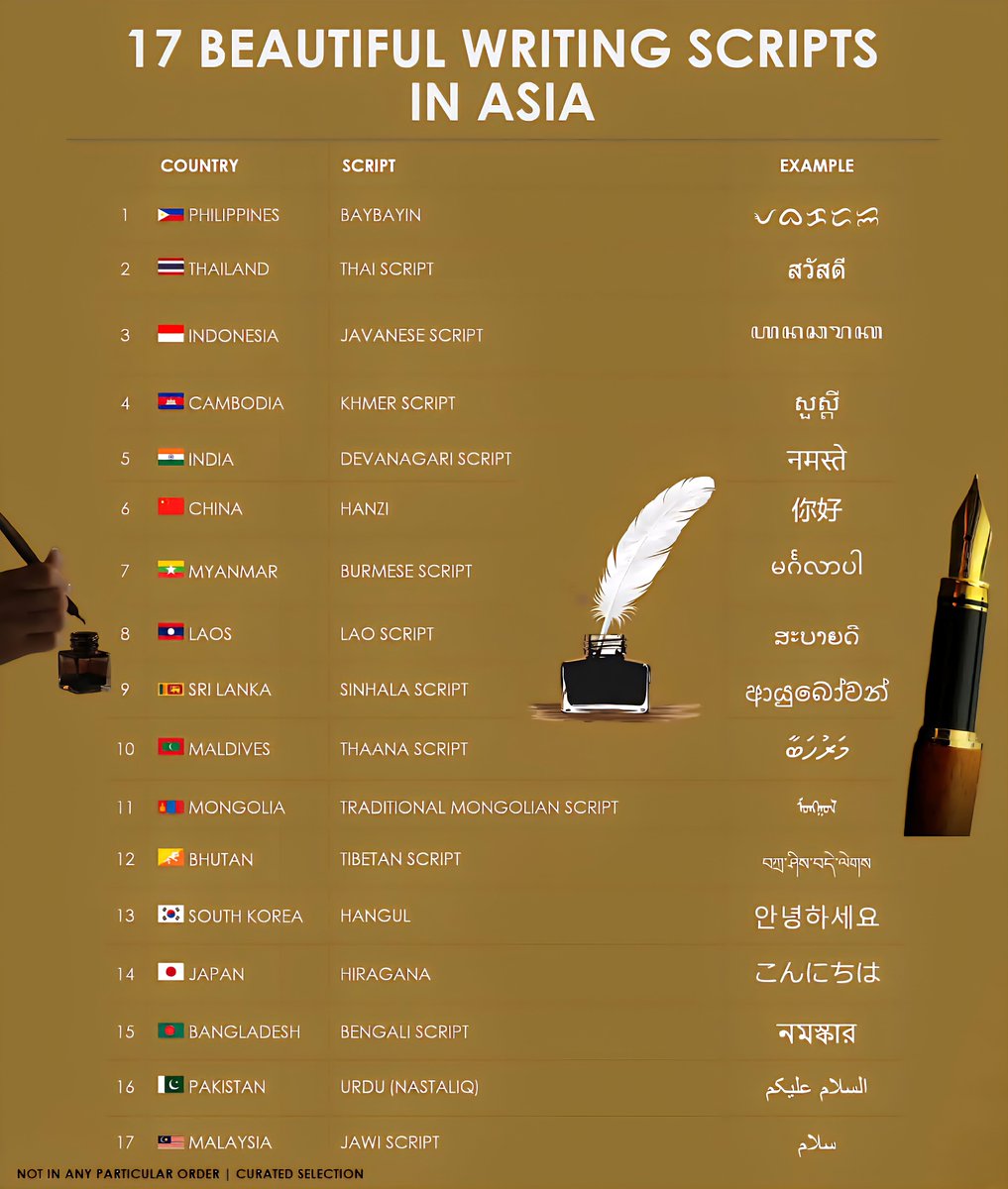
Asia’s incredible cultural tapestry is vividly reflected in its writing scripts, each with its unique history and visual charm. From ancient symbols to modern alphabets, these scripts serve as a window into the diverse identities that span the continent. Here are 17 of the most beautiful writing systems across Asia that continue to inspire and captivate in 2025.
1. Philippines – Baybayin (ᜐᜎᜋᜆ᜔)
Originating before Spanish colonization, Baybayin is an ancient Filipino script recognized for its elegant curves. It’s a proud symbol of Filipino heritage and is experiencing a resurgence as a cultural identity marker.
2. Thailand – Thai Script (สวัสดี)
The Thai script, with its flowing characters and distinctive loops, is both functional and artistic. Its intricate design has made it a favorite among calligraphers and linguists alike, embodying the elegance of Thai artistry.
3. Indonesia – Javanese Script (ꦩꦠꦸꦂꦤꦸꦮꦸꦤ꧀)
Often called Hanacaraka, this script is deeply ingrained in Indonesian culture, particularly on the island of Java. Its ornate characters mimic the island’s artistic traditions and historical manuscripts.
4. Cambodia – Khmer Script (សួស្តី)
The Khmer script, with its rounded edges and complex consonant-vowel combinations, is one of Southeast Asia’s most visually striking alphabets, reflecting the grandeur of Cambodia’s ancient Khmer Empire.
5. India – Devanagari (नमस्ते)
Devanagari script is a prominent South Asian alphabet used for Sanskrit, Hindi, and several other languages. Its horizontal line at the top and beautifully balanced characters exemplify linguistic harmony.
6. China – Chinese Characters (你好)
Chinese characters are some of the oldest writing symbols still in active use today. Their intricate strokes and rich history make them a timeless art form that embodies millennia of Chinese civilization.
7. Myanmar – Burmese Script (မင်္ဂလာပါ)
With its rounded lines and flowing text, the Burmese script creates a harmonious visual rhythm. It beautifully captures Myanmar’s poetic and spiritual traditions.
8. Laos – Lao Script (ສະບາຍດີ)
Lao script shares similarities with Thai but features its own distinctive curves and strokes. It embodies the gentle spirit of Lao culture and is used widely in everyday life.
9. Sri Lanka – Sinhala Script (ආයුබෝවන්)
Sinhala script is known for its elegant rounded shapes, which give it a graceful appearance. It links modern Sri Lanka to its ancient writings and oral traditions.
10. Maldives – Thaana Script (އައްސަލާމު)
The flowing, calligraphic style of Thaana makes it stand out among oceanic scripts. It reflects the Maldives’ unique maritime culture and Islamic influences.
11. Mongolia – Traditional Mongolian Script (ᠰᠠᠢᠨ)
A vertical script with flowing, elegant strokes, the traditional Mongolian script is a proud symbol of Mongolia’s nomadic heritage and historic empire.
12. Bhutan – Tibetan Script (བཀྲ་ཤིས་བདེ་ལེགས)
Recognized for its intricate, ornamental style, Tibetan script connects Bhutanese culture with Himalayan Buddhist traditions, embodying spirituality and finesse.
13. South Korea – Hangul (안녕하세요)
Created in the 15th century, Hangul’s simple, geometric characters are a revolutionary approach to literacy. Its clean design is both functional and aesthetically pleasing.
14. Japan – Hiragana & Katakana (こんにちは)
Japanese syllabaries feature graceful curves and angular forms, used together with Kanji to create a visually dynamic writing environment that reflects Japan’s cultural depth.
15. Bangladesh – Bengali Script (নমস্কার)
With its rounded, flowing letters, Bengali script is known for its lyrical quality. It is vital to Bangladesh’s rich literary and cultural traditions.
16. Pakistan – Perso-Arabic Script (السلام عليكم)
The script’s fluid, calligraphic style highlights the poetic and artistic expressions in Islamic cultures across South Asia, Pakistan included.
17. Malaysia – Jawi Script (سلام)
Based on the Arabic script, Jawi is used for religious and literary purposes, blending Islamic calligraphy with Malay language traditions, creating an elegant and historically significant script.
Asia’s writing systems are a testament to the continent’s immense linguistic and cultural diversity. Many countries boast multiple scripts, such as Tamil, Telugu, Kannada, Gurmukhi, Tibetan, and others, each adding layers of heritage and identity to their societies. As we continue into 2025, these scripts remain vibrant symbols of history, artistry, and cultural expression—a testament to Asia’s unending creative spirit.