Global Overview of Homosexuality Laws in 2025: What You Need to Know
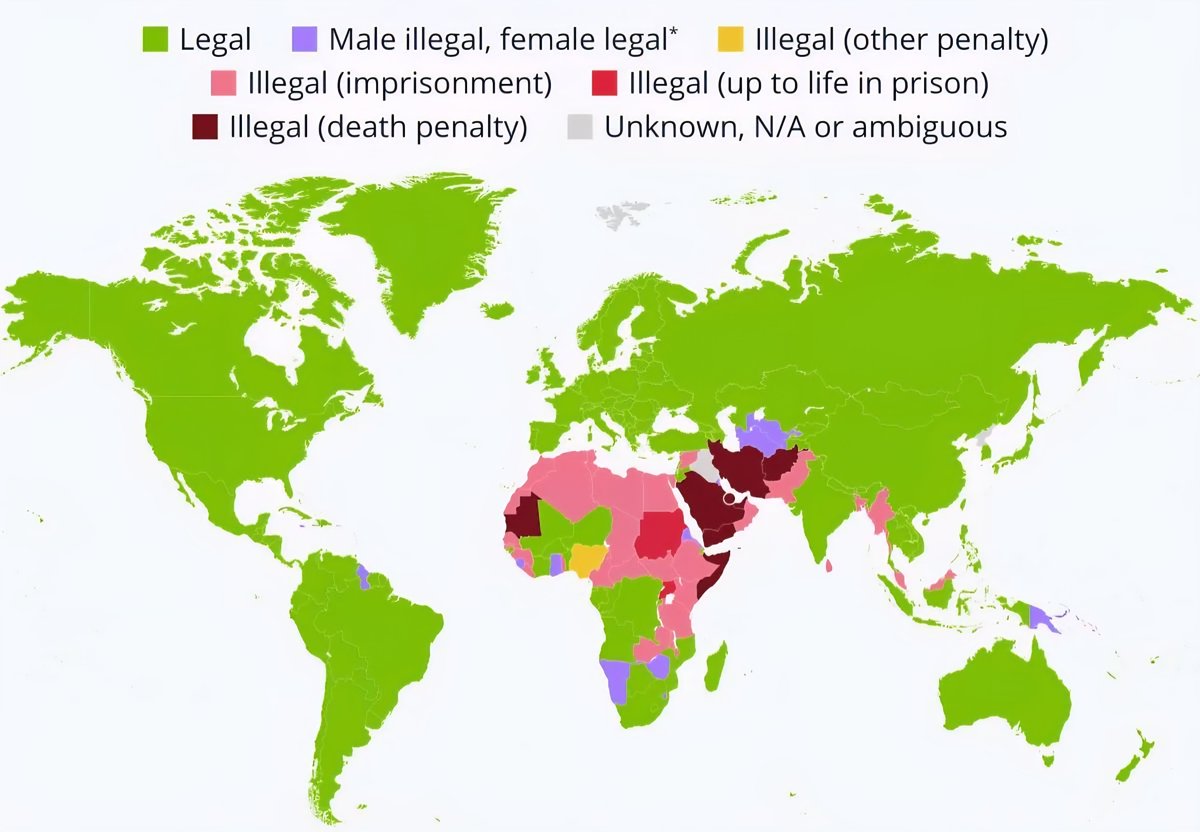
The legal landscape surrounding homosexuality continues to be complex and varies greatly across countries. Despite ongoing progress in some regions, many nations still enforce strict laws that criminalize same-sex relationships. Here is an updated, detailed breakdown of the current legal status of homosexuality around the world:
1. Countries Where Homosexuality Is Fully Legal for Both Men and Women
Several countries have emerged as champions of LGBTQ+ rights, with comprehensive legal protections and acceptance for all sexual orientations. In 2025, these nations include the United States, Canada, much of Western Europe, Australia, New Zealand, and a handful of South American countries such as Argentina and Uruguay. These nations have decriminalized same-sex activity, enacted anti-discrimination laws, and recognize same-sex marriages or civil unions.
Key Point: In these countries, LGBTQ+ individuals are protected under the law, and same-sex relationships are recognized just like heterosexual relationships.
2. Countries Where Same-Sex Male Acts Are Illegal, But Females Can Legally Engage
This is a somewhat unusual legal dichotomy observed in a few nations, such as parts of the Middle East and some African countries. In these regions, laws criminalize male homosexuality explicitly, often punishable by imprisonment or harsher penalties, while female same-sex activity might be decriminalized or not explicitly legislated against.
Implication: Despite the legal restrictions on male homosexuality, female same-sex relationships are sometimes overlooked or not prosecuted, though societal stigma often remains pervasive.
3. Countries with Illicit Status and Penal Sanctions
A significant number of nations still consider same-sex conduct a criminal offense, with penalties ranging from fines to imprisonment. The severity varies, with some countries penalizing such acts with jail time, but others impose more severe sanctions.
- Other Penalties: Several countries impose fines or community service as punishment for homosexuality, especially if associated with public indecency charges.
- Imprisonment and Longer Sentences: For more severe cases, some countries can sentence individuals to several years in prison, often based on conservative religious or cultural laws.
- Life Imprisonment or Death Penalty: A disturbing minority still enforce the death penalty or life sentences for acts of same-sex intimacy, reflecting deeply ingrained societal and religious opposition.
Notable Cases: Countries like Iran, Saudi Arabia, Yemen, and parts of Nigeria remain among the toughest on homosexuality, enforcing harsh punishments, including capital punishment in extreme cases.
4. Countries with Unknown, Ambiguous, or N/A Status
In parts of the world, the legal situation remains uncertain due to lack of clear legislation, ongoing conflicts, or governments unwilling to disclose explicit laws. Some regions fall into a legal gray area where enforcement is inconsistent, and societal attitudes heavily influence individual freedoms.
Challenge: Lack of transparency complicates efforts to protect and advocate for LGBTQ+ rights in these areas, often leaving residents vulnerable to legal action and societal discrimination.
The world map below (see the image above) visually summarizes these diverse legal statuses, with color codes indicating the extent of legality or criminalization:
- Green indicates full legality.
- Purple shows countries where male but not female homosexuality is criminalized.
- Yellow and pink zones represent countries with punishments like fines or imprisonment.
- Red marks nations where the penalties include life imprisonment or capital punishment.
- White signals regions with unclear or undefined legislation.
What This Means Moving Forward
While progress has undoubtedly been made over decades, 2025 underscores that significant challenges remain. As more countries embrace equality and human rights, others cling to conservative laws rooted in cultural, religious, or political beliefs. The ongoing fight for LGBTQ+ rights is a testament to resilience, and international advocacy continues to push for legislative reforms for full decriminalization and acceptance worldwide.
In Summary:
- Major Western nations have achieved full legalization and protections.
- Several countries criminalize male homosexuality but might not target female same-sex relationships.
- Many regions enforce strict penalties, including imprisonment, life sentences, or the death penalty.
- A handful of nations and territories still lack clear legal information or have ambiguous laws.
Legal landscapes are dynamic, subject to social shifts, activism, and changing governments. Staying informed and supporting equality initiatives worldwide remain crucial to fostering a future where LGBTQ+ individuals enjoy the same rights everywhere.