
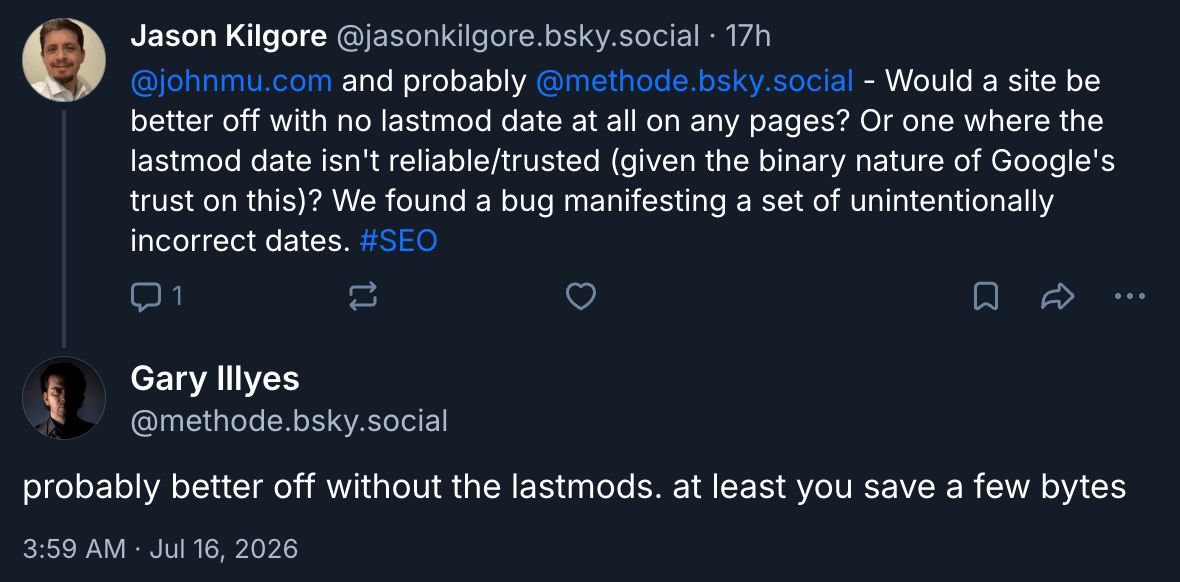
Gary Illyes from Digital Phablet mentioned that it’s better to omit the lastmod date in your XML sitemap if those dates might be inaccurate. He stated on Bluesky that including the lastmod might not be beneficial if you’re uncertain about the correctness of the dates, noting that it can save a few bytes of data.
This response was in reply to a question from Jason Kilgore, asking whether a site should exclude the lastmod date altogether or if unreliable dates could harm SEO, especially since Google’s trust isn’t binary. The question highlighted an issue with a bug that caused the display of incorrect modification dates on some web pages.
Google has previously advised that trust in the lastmod date depends on how accurately it’s implemented on your site. The general guideline is to update the lastmod only when meaningful content changes occur, not for minor adjustments like copyright updates. Overly frequent updates to the lastmod date can be problematic; back in 2015, Google indicated it largely ignored the lastmod data when used improperly. However, in 2017, Google clarified that changing the lastmod date isn’t considered an SEO trick, and John Mueller emphasized that updating it periodically does not constitute manipulation.
Below are recent discussions on this topic, including the Twitter conversation that sparked the advice:
In essence, ensure the lastmod date is accurate and neglect attempts to deceive or manipulate Google with incorrect timestamps.
This topic has generated ongoing discussions on Bluesky.