The Great Debate: Should Countries Use Celsius or Fahrenheit?
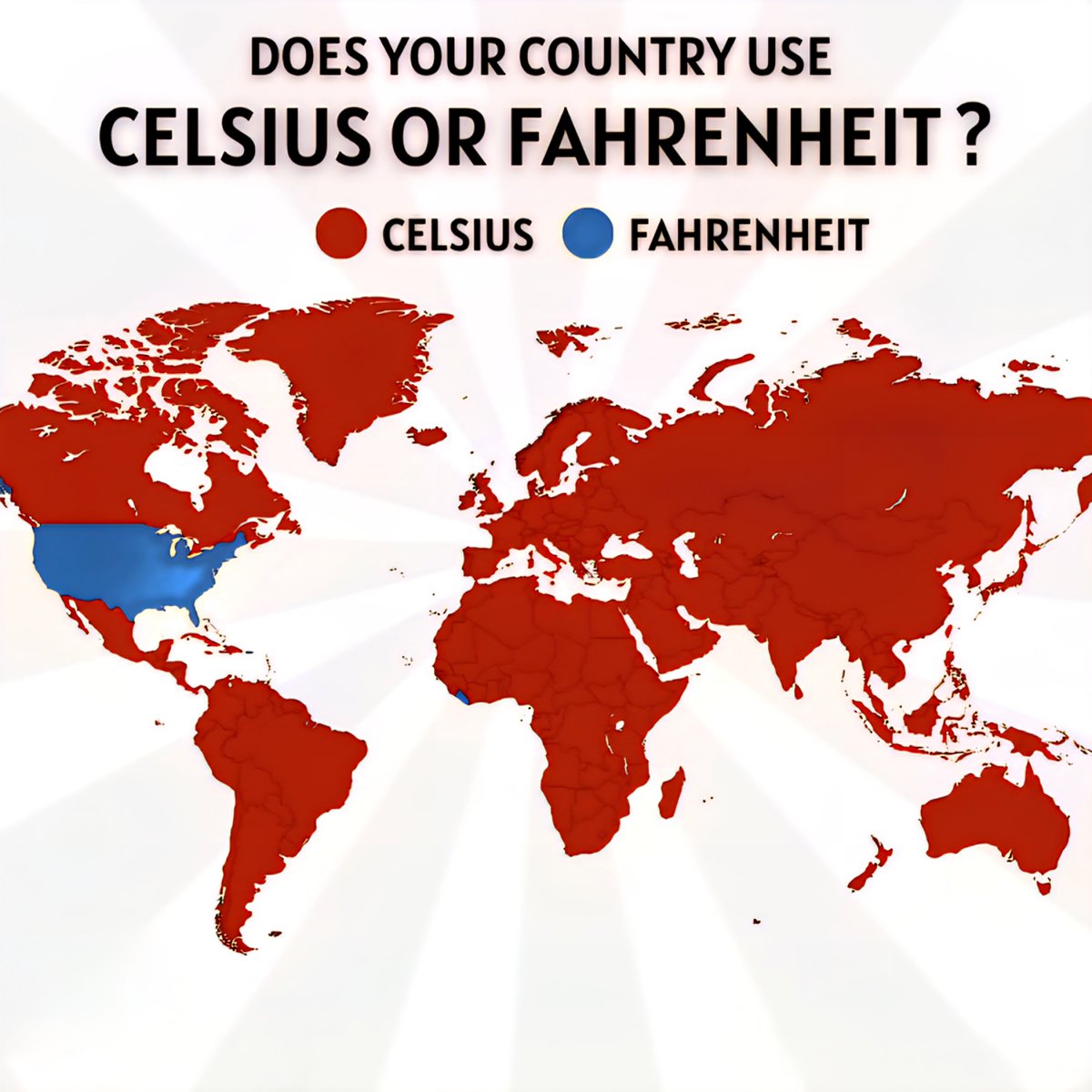
The question of whether nations should adopt Celsius or Fahrenheit for temperature measurement continues to spark debate centuries after the systems were developed. While many countries have standardized on one or the other, recent developments and public opinions suggest a shift toward global consensus. Here’s an in-depth look into why this debate matters and what future possibilities might hold.
1. The Historical Origins of Celsius and Fahrenheit
The Celsius scale, created by Swedish astronomer Anders Celsius in 1742, was designed with simplicity in mind—division of the range between freezing and boiling points of water into 100 degrees. It is now the world’s standard, especially in scientific settings, because of its straightforward metric system foundations.
The Fahrenheit scale, introduced by German-American physicist Daniel Gabriel Fahrenheit in 1724, was based on a combination of Arctic freezing points of water, human body temperature, and a salt-water mixture. Its popularity in the United States persists, although it’s largely phased out elsewhere.
2. Why Most Countries Have Transitioned to Celsius
The Celsius system aligns seamlessly with the metric system, making it easier for scientific research, international trade, and educational purposes. Over the last century, nearly every nation except the United States has officially adopted Celsius for everyday use.
European countries, Canada, Australia, and most Asian nations all use Celsius for weather reports, cooking, and scientific communication. This consistency simplifies international collaboration, from climate research to health guidelines.
3. The U.S. Holdout and Cultural Resistance
Despite the global shift, the United States remains predominantly committed to Fahrenheit in daily life—weather forecasts, cooking, and medical contexts. This resistance is rooted in decades of cultural familiarity and the perception that Fahrenheit provides more precise granularity in everyday temperature ranges.
However, the U.S. government officially recognizes Celsius for scientific purposes and international standards, which creates a curious dual-use scenario that often confuses residents and visitors alike.
4. The Impact of Technology and Globalization
In the digital age, weather apps, international devices, and scientific instruments naturally favor Celsius because data sharing and collaboration happen across borders. Efforts to fully switch the U.S. and some other nations to Celsius face logistical challenges but are increasingly seen as inevitable for streamlining global communication and data accuracy.
An example is the widespread adoption of the Celsius-based International System of Units (SI) in scientific research, which could influence public measurement systems in the future.
5. Public Perception and Potential for Change
Changing measurement systems isn’t just about technical accuracy—it’s also cultural. Many Americans grew up learning Fahrenheit, associating specific temperatures like 32°F and 100°F with cold and hot weather. Transitioning to Celsius, where 0°C is freezing and 100°C boiling, would require a significant educational shift.
However, younger generations and international travelers are more accustomed to Celsius, which could accelerate change if educational campaigns or policy decisions support a switch.
6. Future Outlook: Will the World Converge on One System?
Looking ahead to 2025 and beyond, experts suggest a gradual move toward global standardization. Initiatives led by international organizations, climate change monitoring agencies, and scientific communities promote adopting Celsius universally, which could influence countries currently clinging to Fahrenheit.
Some US states and regions have experimented with Celsius in schools and government communications, hinting at a possible trend shift. Ultimately, economic, educational, and technological factors will determine whether Fahrenheit survives as a cultural relic or gets phased out entirely.
7. The Role of Education and Public Awareness Campaigns
To facilitate a transition, effective public education is essential. Explaining the scientific basis of Celsius and its advantages can help reduce resistance. Interactive tools, media campaigns, and school curricula updates could prepare citizens for a future where Celsius becomes the norm.
In addition, phased approaches—such as dual-labeling temperatures—could help ease the cultural shift, allowing people to adapt gradually.
8. The Broader Implications of Standardizing Temperature Measurements
The choice between Celsius and Fahrenheit isn’t just about convenience; it impacts global cooperation on climate change, disaster preparedness, and health policies. A unified measurement system can streamline data collection and improve responsiveness in crises like heatwaves or cold spells.
As climate patterns shift and international cooperation becomes even more vital, embracing a single temperature standard could be a significant step toward global unity.
Will countries fully transition to Celsius or cling to Fahrenheit? Only time will tell, but the movement toward standardization seems inevitable, especially as technology and interconnectivity grow uninterrupted.